Two Students From Shegaon Are Working on Roads That Fix Their Own Potholes and Glow in the Dark — And They Have Already Tested It Near the Temple

Shegaon engineering students: Every monsoon season in India, the same story plays out on roads across the country. The rains arrive. The potholes appear. The complaints flood social media. Municipalities scramble to patch roads. The patches fail within weeks. The potholes return. And the cycle repeats itself — costing the government money, costing vehicle owners in repairs, and costing lives in accidents that would never have happened on a properly maintained road.

Two young engineering students from Shegaon — a town in Buldhana district best known as the home of the Sant Gajanan Maharaj Temple, one of Maharashtra’s most revered pilgrimage sites — have decided they are done watching this cycle repeat. Rajvardhan Thakur and Atharv Deshmukh have developed a project they call Bio-Based Self-Healing and Night Visibility Road Technology — a dual innovation that addresses two of India’s most persistent road problems simultaneously: potholes and night-time accidents caused by poor road visibility.

The project has already moved beyond a college presentation. Small-scale demonstrations have been conducted near the Sant Gajanan Maharaj Temple and at the Shegaon railway station. Local residents saw it in action and responded positively. The innovation has earned recognition at multiple technical competitions, including awards for project presentations and research paper events. And the two innovators have formed a company — Relvian Group — through which they intend to develop and commercialise the technology for use on highways, smart city infrastructure, village roads, and accident-prone areas across India.


The First Innovation: Roads That Glow Without Electricity

The more immediately deployable of the two technologies Rajvardhan and Atharv have developed is the glow-based road visibility system.

The concept addresses a problem that anyone who drives on Indian roads at night knows viscerally: beyond the range of your headlights and the occasional working streetlight, roads become genuinely dangerous. Lane markings fade. Road edges blur into the darkness beyond. Dividers and curves appear suddenly. Pedestrians and cyclists become nearly invisible until they are dangerously close. And in the absence of clear visual cues, drivers make misjudgements that result in accidents.

Conventional thermoplastic road markings — the white and yellow lines painted on roads — are intended to address this, but they have a well-documented weakness. Tyre friction erodes them. Rainwater washes them. Dust from traffic obscures them. Within months of application, markings that were clearly visible when fresh become nearly indistinguishable from the road surface around them, particularly at night and in poor weather.

Rajvardhan and Atharv’s solution is a special glow-based coating that changes the energy physics of the marking entirely. The coating is photoluminescent — it absorbs visible light during daytime exposure and re-emits it in dark conditions through a process that requires no electricity, no power source, and no maintenance. When a vehicle’s headlights illuminate the coating during the day, or when ambient sunlight falls on it, the material charges itself. After sunset, it emits this stored light as a visible glow — delineating road edges, marking dividers, indicating curves, and outlining pathways for drivers who are navigating with limited visibility.

The innovation is not a wholesale replacement of streetlighting — it does not produce the same illumination intensity as a functioning sodium or LED streetlight. What it does is provide continuous passive guidance along the road surface itself, in the places where drivers most need to see: the edges, the lane markings, the hazard indicators. This passive guidance is most valuable precisely in the situations where streetlights are most likely to fail or be absent — rural roads, accident-prone stretches outside town limits, areas where electricity supply is unreliable, and the gaps between functioning streetlights on urban roads.

The demonstrations conducted near the Sant Gajanan Maharaj Temple and the Shegaon railway station took this technology from a laboratory concept to a real-world trial in a location where it is genuinely relevant. The temple complex draws enormous footfall — particularly during festival seasons when pilgrims arrive throughout the night — and the surrounding roads see significant pedestrian and vehicle movement in low-light conditions. Testing the glow coating in this environment, rather than just in a controlled college lab, gave Rajvardhan and Atharv real-world performance data and community feedback that will inform further development.


The Second Innovation: Cement That Seals Its Own Cracks

The self-healing cement component of the project is at a more experimental stage than the glow coating — but its potential implications are even more significant for India’s infrastructure maintenance challenge.

The concept of self-healing concrete is not new to materials science. Researchers around the world have been working on it for over a decade, with various approaches including the use of bacteria, chemical capsules, and fibre-reinforced composites that activate when a crack forms. The idea in every case is the same: build into the road material itself a mechanism that responds to damage by filling, sealing, or bonding the damaged area before it develops into a significant structural failure.

In India’s road context, the practical value of this is enormous. Indian roads — particularly at the sub-national and municipal level — are built to standards that are frequently compromised by contractor cost-cutting, inadequate quality monitoring, and materials that do not account for the extreme stresses imposed by monsoon water infiltration, heavy truck traffic, and extreme temperature variations. A road built with conventional concrete or asphalt develops micro-cracks that water then enters, eroding the sub-base and causing the surface to collapse — creating the potholes that are so characteristic of post-monsoon India.

A concrete that can seal its own micro-cracks before water enters them attacks the pothole problem at its earliest stage. Rather than waiting for a micro-crack to become a full pothole and then sending a crew to patch it — a reactive, expensive, and often inadequate response — the road material itself prevents the progression from micro-crack to structural failure. The pothole never fully forms because the cement heals the crack that would have caused it.

Rajvardhan and Atharv’s bio-based approach to this technology — using organic or biological materials as the healing agent rather than purely synthetic chemistry — is aligned with a broader trend in sustainable construction materials that is gaining significant research and commercial attention globally. Bio-based self-healing concrete typically uses bacterial spores or plant-derived materials that activate in the presence of water — the same water that would otherwise infiltrate and damage the road — as the sealing agent. The biological mechanism is elegant: the material that threatens to damage the road triggers the protective response that prevents the damage.

The students are candid that this component of their project is still in its experimental stage and requires further testing before it can be scaled to real-road application. The variables in real-world road conditions — load intensity, temperature range, water chemistry, traffic frequency — are significantly more complex than laboratory conditions, and demonstrating reliable performance across these variables takes time and systematic testing that goes beyond what two students can accomplish alone. But the direction of the research is sound, the global scientific literature supports the potential, and the innovators have a clear path for what further development needs to look like.


Relvian Group — The Startup Behind the Innovation

One of the most significant aspects of Rajvardhan and Atharv’s project is that they are not treating it as a college competition entry to be filed away after the award ceremony. They have incorporated a company — Relvian Group — through which they intend to develop the technology commercially.

This step from innovation to enterprise is the critical transition that most student innovations never make. The history of Indian engineering colleges is full of technically impressive projects that earned awards at competitions and then disappeared into the archives because the students graduated, moved on to jobs, and had no mechanism for taking the technology further. Rajvardhan and Atharv have created that mechanism by forming a company.

Through Relvian Group, the two innovators are targeting specific market segments for their technology. Highways — where NHAI and state road development corporations manage thousands of kilometres and spend enormous sums on resurfacing — are an obvious target for both the glow coating and the self-healing cement, since the economic case for technologies that reduce maintenance frequency is strongest at the national highway level. Smart city infrastructure is another target — where municipalities implementing integrated urban development are actively looking for innovative materials and systems that align with sustainability and efficiency goals. Village roads — which in Maharashtra’s rural hinterland are often the most poorly maintained and the most dangerous for night travel — represent a socially impactful market where the glow coating could save lives at relatively low cost.

The startup path is not easy. Commercialising a materials science innovation requires moving through proof-of-concept trials, field testing, regulatory approvals, cost analysis, and eventually supply chain development — a process that takes years and funding. Rajvardhan and Atharv’s recognition at technical competitions is a start, but converting that recognition into the investment and institutional partnerships that scale a startup requires a different set of skills and connections than the engineering innovation itself.

Incubators at Nagpur’s engineering institutions — including VNIT (Visvesvaraya National Institute of Technology) and RTMNU (Rashtrasant Tukadoji Maharaj Nagpur University) — along with Maharashtra’s Startup Week and the MSME development programmes that support Vidarbha-based entrepreneurs, are potential resources that Relvian Group should be engaging with as it seeks to scale its technology from Shegaon demonstrations to commercial deployment.


Why This Matters for Nagpur and Maharashtra — The Road Safety Context

Rajvardhan and Atharv’s innovation needs to be understood against the backdrop of India’s road safety crisis — which, in Nagpur specifically, DCP Lohit Matani’s Operation U-Turn brought into sharp relief.

Nagpur recorded 345 road accident deaths in 2024 before Operation U-Turn’s enforcement-driven reduction to 259 in 2025. Of those deaths, a significant proportion occurred in conditions of poor visibility — night-time accidents, accidents at unmarked curves and intersections, accidents in the gaps between functioning streetlights. Poor road markings and inadequate night visibility are not marginal contributors to India’s road death toll. They are structural factors that claim lives reliably and predictably every year.

If Rajvardhan and Atharv’s glow coating technology can be deployed at scale on accident-prone stretches — the black spots that DCP Matani’s traffic data identified as disproportionate contributors to Nagpur’s accident toll — it would address a dimension of road safety that enforcement operations alone cannot reach. An enforcement officer can change driver behaviour at a specific intersection during the hours they are present. A passive glow marking can guide drivers safely through that same intersection 24 hours a day, 365 days a year, regardless of whether anyone is watching.

NHAI has been exploring self-healing road technology as a national priority. The global research community is converging on bio-based approaches as the most sustainable path forward. And two students from a small town in Vidarbha — working with the resources available to them, testing in their own community, and building a startup to take their idea to market — are contributing to that global conversation from a very local starting point.

That is a story worth telling. And if Relvian Group’s technology matures and reaches roads across Maharashtra — the pilgrimage routes connecting Shegaon to Nagpur, the accident-prone state highways of Vidarbha, the village roads where a painted edge line lasts one monsoon season and then disappears — the two innovators who demonstrated it near the Sant Gajanan Maharaj Temple in 2026 will have contributed something genuinely lasting to their region.


What Rajvardhan and Atharv Need to Scale This — And Who Should Help

The path from a promising student innovation to a deployed commercial technology requires specific inputs that government, industry, and academic institutions in Maharashtra can provide.

Research funding from CSIR, DST, or the Maharashtra government’s innovation support schemes would enable the systematic field testing that the self-healing cement component currently requires. Pilot project approval from NHAI or Maharashtra’s MSRDC for a monitored real-road trial of the glow coating — with rigorous before-and-after accident data collection — would generate the evidence base that procurement bodies need before adopting any new road material. Corporate partnerships with materials companies in Nagpur’s industrial network could provide manufacturing capacity and supply chain support that a two-person startup cannot build alone.

Nagpur Updates encourages any institution, investor, or government official who has read this story and sees the potential in Rajvardhan and Atharv’s work to reach out to them through Relvian Group. Innovations that address real problems with practical, locally tested solutions deserve more than competition awards. They deserve the support systems that can take them from Shegaon to the nation.

India’s First Soil-Degradable Milk Pouch: Mother Dairy Launches on World Environment Day — No Plastic, No Price Hike

Published: June 2, 2026 | Category: National | By: Nagpur Updates Desk


The humble milk pouch — a part of daily life for hundreds of millions of Indians — is about to become dramatically more planet-friendly.

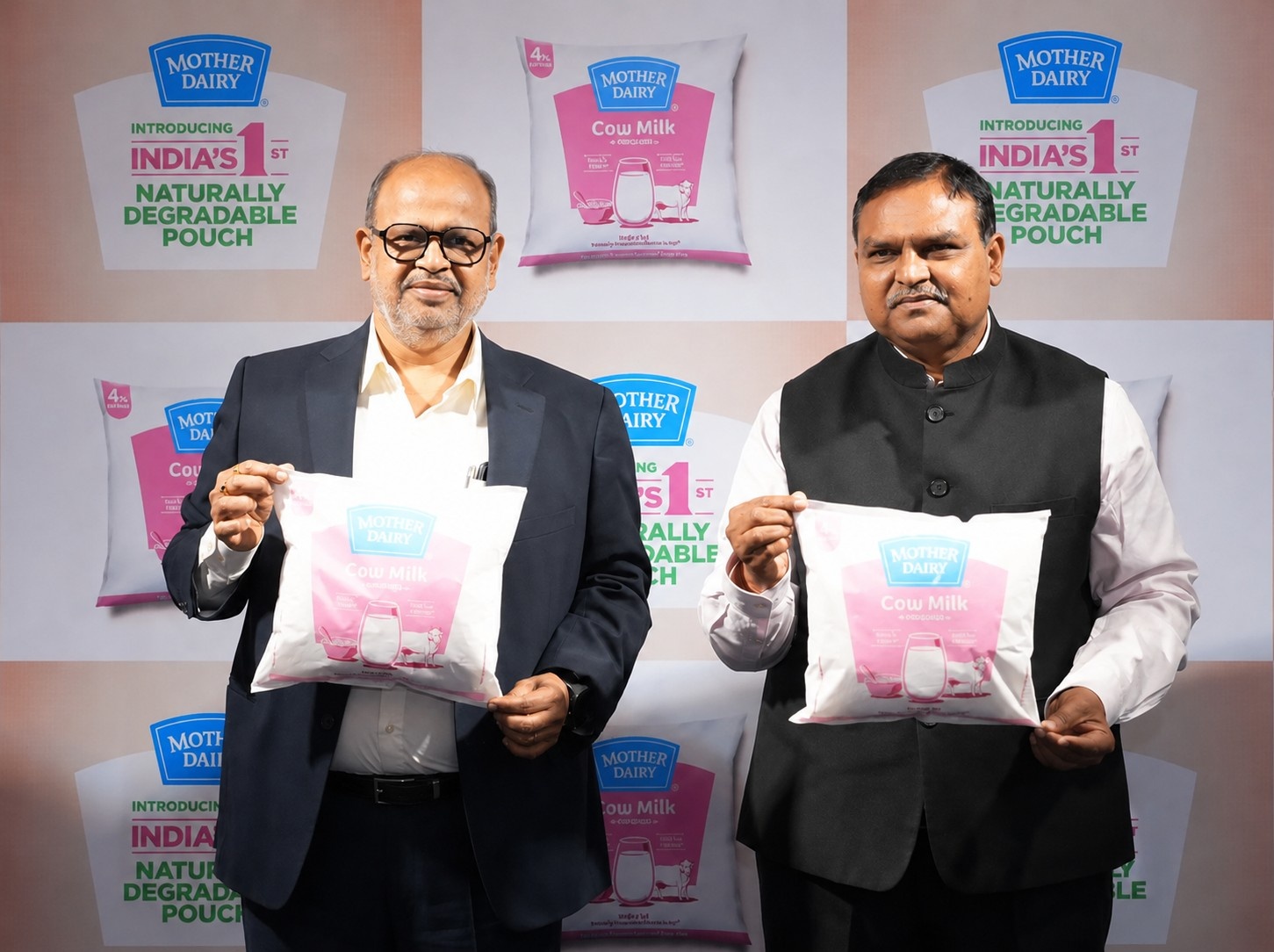
Mother Dairy on Tuesday, June 2, introduced an innovative milk pouch that is naturally degradable in soil as part of its commitment towards environment and sustainability. The company will introduce the new packaging innovation through its popular Cow Milk variant in the Delhi NCR market, along with a refreshed pack design, starting June 5, 2026, on the occasion of World Environment Day.

Most remarkably: this transition is being undertaken without any impact on consumer milk prices.


The Key Facts at a Glance

Detail Information
Company Mother Dairy (subsidiary of NDDB)
Product Cow Milk variant — new degradable packaging
Launch date June 5, 2026 (World Environment Day)
Launch market Delhi-NCR (first market)
Price change None — same price as before
R&D period Over 4 years
Daily milk sold 55 lakh litres across India
Key claim No plastic left in environment

How Does the New Pouch Work?

This is the question everyone is asking — and the science behind it is genuinely innovative.

According to the company, the new milk pouch uses a first-of-its-kind degradable packaging technology that enables the material to transform into bioavailable wax, which is then broken down by microbes in the soil into natural elements.

In simple terms:

Step 1: The used milk pouch is discarded — ideally in soil or compost, not in open drains or water bodies.

Step 2: Microorganisms naturally present in soil begin breaking down the pouch material.

Step 3: Instead of leaving behind persistent plastic fragments (microplastics), the pouch transforms into bioavailable wax — a substance that microbes can further break down into basic natural elements like carbon dioxide, water, and biomass.

Step 4: Within a few years (not centuries, as with conventional plastic), the pouch has completely degraded — leaving no trace of plastic in the environment.

The newly introduced packaging is designed to naturally degrade in soil within a few years rather than centuries.


Why This Matters: India’s Plastic Milk Pouch Problem

India uses an enormous number of plastic milk pouches every single day. Mother Dairy alone sells 55 lakh litres of milk daily — each litre typically packed in a single-use plastic pouch. Across all dairy companies in India, the number of plastic milk pouches entering the waste stream daily runs into the hundreds of millions.

Most of these pouches are made from LDPE (Low-Density Polyethylene) — a plastic that takes 400-1,000 years to degrade in the environment. While technically recyclable, a large proportion of milk pouches end up in landfills, water bodies, and open dumps — where they persist for centuries, contaminating soil and water, and breaking into microplastics that enter the food chain.

The degradable pouch directly addresses this problem. If it degrades in soil within a few years — and does so without leaving microplastic residue — it represents a fundamental shift in the environmental footprint of one of India’s most commonly consumed daily products.


Four Years of R&D — A Genuine Innovation

Rolls out in Delhi-NCR cow milk from June 5 at unchanged prices after over four years of R&D.

This is not a marketing gimmick. Mother Dairy spent over four years developing and testing this packaging technology before its commercial launch. The key challenges that required solving:

  • Maintaining food safety — the packaging must keep milk fresh and uncontaminated
  • Structural integrity — the pouch must not degrade during its shelf life, only after disposal
  • Controlled degradation — it must degrade in soil, not in the distribution chain or consumer’s refrigerator
  • Cost parity — the new packaging must not be significantly more expensive than conventional plastic, so the cost can be absorbed without a price hike

The fact that all four challenges have been solved — and that the product is launching at the same price — suggests that this is a commercially viable, scalable innovation.


What NDDB Chairman Said

“The newly introduced packaging is designed to naturally degrade in soil within a few years rather than centuries, and importantly, this transition is being undertaken without any impact on consumer milk prices,” Meenesh Shah, Chairman of NDDB, said.

Dr. Meenesh Shah, Chairman of the National Dairy Development Board and Mother Dairy, said India’s dairy sector reflects scale, inclusivity, and responsibility, with sustainability deeply embedded across the value chain.


When Will It Come to Nagpur?

The initial launch is limited to Delhi-NCR — through Mother Dairy’s Cow Milk variant from June 5, 2026.

Mother Dairy’s distribution in Nagpur is limited — the company is primarily a Delhi-NCR and North India brand. However, the technology demonstrated here is likely to influence packaging decisions by other dairy companies, including those operating in Nagpur and Maharashtra.

Mother Dairy, an NDDB subsidiary, sells 55 lakh litres daily and also offers Dhara oils and Safal produce. As the company scales this packaging innovation beyond Delhi-NCR, Maharashtra markets may be included in later phases.


FAQ: Your Questions Answered

Q: Is the Mother Dairy degradable milk pouch available in Nagpur? Not yet — the initial launch is in Delhi-NCR only, starting June 5. Expansion to other markets including Maharashtra will depend on how the Delhi launch scales.

Q: Will the price of Mother Dairy milk increase? No — Mother Dairy has confirmed there will be no price change. The new packaging is being introduced at the same consumer price.

Q: Is this truly “zero plastic”? The claim is that the pouch leaves no plastic residue in the environment after degradation in soil. Independent verification of this claim through peer-reviewed testing would add further credibility — something to watch for as the product enters the market.

Q: How should I dispose of the new pouch? For the degradation to work as designed, the pouch should be disposed of in soil — ideally in a composting setup or garden soil. Dumping it in water bodies or drainage systems will likely prevent the intended degradation process.

Q: What is “bioavailable wax”? It is the intermediate product formed when the pouch material begins breaking down. Unlike microplastics (which are harmful and persistent), bioavailable wax can be further digested by soil microbes into harmless natural elements.

Q: Are other dairy companies developing similar packaging? Yes — BAMUL (Bangalore-based dairy) conducted trials of biodegradable milk packets in June 2025. Mother Dairy’s commercial launch accelerates the industry’s shift towards sustainable packaging.


A Small Pouch, A Big Step

Every Indian family tears open a milk pouch every morning. That small act, multiplied by hundreds of millions of households every day, generates an almost unimaginable volume of plastic waste.

The degradable milk pouch does not solve India’s entire plastic problem. But it demonstrates something important: that practical, scalable, consumer-priced sustainable alternatives to everyday plastic products are possible — with sufficient R&D investment and commitment.

Just as Nagpur is investing in sustainable infrastructure — from the Bhandewadi waste-to-energy plant that turns garbage into CNG fuel for buses to cleaning Ambazari Lake of water hyacinth before monsoon — Mother Dairy’s degradable pouch is a reminder that environmental solutions can and do come from where we least expect them.

Nagpur Updates will track when the degradable milk pouch reaches Maharashtra markets and keep you updated on this packaging innovation.


Tags: Mother Dairy, Degradable Milk Pouch, India First, NDDB, World Environment Day 2026, Plastic Free India, Sustainable Packaging, Environment News India

Gadkari Unveils Ethanol Cooking Stove in Nagpur — Cheaper Than LPG? Here’s the Full Story

Published: May 27, 2026 | Category: Nagpur Local | By: Nagpur Updates Desk


Union Minister Nitin Gadkari has unveiled an ethanol-based cooking stove in Nagpur — claiming it can generate cooking flames at a cost lower than commercial LPG cylinders using just 7% ethanol mixed with water.

The announcement was made at the ‘Mitron Ke Bich’ programme held in Nagpur. It has since sparked significant debate online — with supporters calling it a breakthrough for affordable, clean cooking and critics questioning the science behind it.

Here is everything you need to know.


What Exactly Did Gadkari Announce?

At the Nagpur event, Gadkari demonstrated an indigenous ethanol-based cooking stove technology. The key claim:

  • A mix of just 7% ethanol and 93% water can fuel the stove
  • The cost of cooking with this stove is lower than a commercial LPG cylinder
  • The technology is indigenous — developed in India
  • It aligns with India’s broader ethanol push — from E20 petrol blending to reducing crude oil imports

Gadkari connected the stove directly to farmers — arguing that wider ethanol adoption boosts demand for sugarcane and other crops, increasing farmers’ incomes while reducing India’s dependence on imported crude oil.


How Does an Ethanol Stove Work?

Q: Can ethanol-water really burn?

Yes — but with nuance. Pure ethanol burns well. However, a 7% ethanol + 93% water mixture is significantly more complex to ignite and sustain as a cooking flame compared to pure ethanol or LPG.

Standard ethanol stoves typically require 95% ethanol to burn efficiently. At 7% concentration, the water content is very high — and sustaining a stable cooking flame requires either:

  • A specially designed catalytic burner that vaporises the mixture before combustion
  • A pressurised system to atomise and ignite the diluted fuel

The technology Gadkari unveiled appears to use such an advanced burner design — which is why this is being described as an innovation, not a standard ethanol stove.

Q: Is ethanol-water cheaper than LPG?

At current ethanol prices in India — approximately ₹65–70 per litre for fuel-grade ethanol — and with only 7% ethanol used per litre of fuel mixture, the effective cost per cooking use could potentially undercut LPG.

A standard 14.2 kg LPG cylinder costs approximately ₹900–₹950 in Nagpur currently. Independent verification of the stove’s actual cooking cost per unit has not yet been published — which is a key gap that needs to be filled before the claim can be confirmed.


Why Is There a Debate?

The announcement has divided opinion sharply — and here is why:

Supporters say:

  • Ethanol is a renewable, cleaner-burning fuel compared to LPG
  • If the cost claim holds up, it is a genuine breakthrough for millions of low-income households
  • Reduced LPG dependence = reduced crude oil imports = foreign exchange savings for India
  • More ethanol demand = better prices for sugarcane farmers
  • The technology could complement India’s existing ethanol blending programme

Critics question:

  • The science — burning a 7% ethanol mixture efficiently requires highly specific technology. Can it scale affordably?
  • Real-world cost — the claim of being cheaper than LPG needs independent lab verification, not just a demonstration
  • Cooking efficiency — LPG burns at very high temperatures. Does ethanol-water deliver comparable cooking speed and heat?
  • Stove cost — what does the stove itself cost? A cheap fuel with an expensive stove may not save money overall
  • Safety — ethanol flames are nearly invisible, raising safety concerns in home kitchens

These are legitimate questions — and they are not attacks on the concept. They are the standard tests any new energy technology must pass before being adopted at scale.


Gadkari’s Ethanol Vision: The Bigger Picture

This announcement does not come in isolation. It is part of Gadkari’s long-standing and consistent vision for ethanol as a transformative fuel for India.

Here is the broader context:

Initiative Status
E20 Petrol Blending Nationwide rollout underway — 20% ethanol in petrol
Ethanol from sugarcane/rice Production capacity being expanded aggressively
Flex-fuel vehicles Gadkari has been pushing automakers to manufacture flex-fuel cars
Ethanol cooking stove Newly announced — demonstration stage
Crude oil import reduction India imports 85% of its crude — ethanol can reduce this

The ethanol cooking stove is the latest piece of this puzzle. If it works at scale and at the claimed cost, it could be a genuinely significant development — particularly for rural and semi-urban households that still cook on LPG or biomass.

Gadkari has consistently delivered on ambitious energy targets — his role in the satellite-based toll collection system replacing traditional toll plazas by December 2026 and Nagpur airport’s ₹7,000 crore PPP modernisation show a track record of turning ambitious announcements into reality.


What This Means for Nagpur — and India

For Nagpur specifically:

Nagpur is Gadkari’s constituency. Announcements made here tend to get implementation priority. If the ethanol stove technology is piloted, Nagpur and the Vidarbha region — with its significant sugarcane farming base — are natural candidates for early adoption.

For India:

The implications are enormous — if the technology works at scale. India has over 300 million households. A significant portion still use LPG, biomass, or kerosene for cooking. A cheaper, cleaner, indigenous alternative that also benefits farmers would be transformative.

However, “if” is the operative word. The technology needs:

  1. Independent scientific verification of the 7% ethanol claim
  2. Cost auditing — stove cost + fuel cost vs LPG total cost
  3. Safety certification for home use
  4. Pilot deployment in real households before mass rollout

FAQ: Your Questions Answered

Q: Is the ethanol cooking stove available to buy now? No. The technology was demonstrated at the Nagpur event. It is not commercially available yet. No launch date or price has been announced.

Q: Will this replace LPG cylinders? Not immediately. This is at demonstration stage. Large-scale adoption — if it proceeds — would take several years of piloting, manufacturing scale-up, and distribution network building.

Q: How does ethanol cooking compare to LPG for health and environment? Ethanol burns more cleanly than LPG in terms of particulate emissions. However, an incomplete combustion at low ethanol concentrations can produce acetaldehyde — a concern that proper burner design must address.

Q: What is E20 petrol and how is it related? E20 petrol contains 20% ethanol and 80% petrol. It is part of India’s fuel blending programme to reduce crude imports. The cooking stove technology is a separate application of the same ethanol economy.

Q: Where can I follow updates on this technology? Nagpur Updates will track the ethanol stove technology as it develops. Bookmark our site for the latest updates.


Verdict: Promising, But Questions Remain

Gadkari’s ethanol cooking stove announcement is genuinely exciting — if the science holds up at scale.

The vision is compelling. The alignment with India’s ethanol programme is logical. The potential benefits for farmers, households, and India’s trade balance are real.

But extraordinary claims require extraordinary evidence. A demonstration at a public event is a beginning — not a conclusion. Independent verification, real-world pilots, and transparent cost comparisons are the next essential steps.

Nagpur Updates will bring you verified updates on this technology as they emerge. Stay tuned.


Tags: Nitin Gadkari, Ethanol Stove, LPG Alternative, Nagpur, Clean Cooking India, Ethanol Blending, E20 Petrol, Nagpur Local News 2026

Nagpur’s Satyanarayan Nuwal Conferred Padma Shri 2026 for Contributions to India’s Defence Manufacturing

Nagpur-based industrialist Satyanarayan Nuwal has been conferred the Padma Shri 2026, one of India’s highest civilian honours, by President Droupadi Murmu. The Satyanarayan Nuwal Padma Shri 2026 award recognises his outstanding contribution to strengthening India’s indigenous defence manufacturing ecosystem. The honour was awarded under the Trade and Industry category as part of the Padma Awards 2026, announced on the eve of Republic Day.

Who Is Satyanarayan Nuwal?

Satyanarayan Nuwal is the founder-chairman of Solar Industries India Limited, headquartered in Nagpur. He built the company from its roots in commercial explosives manufacturing into one of India’s most prominent private-sector defence conglomerates. His journey reflects decades of entrepreneurial vision combined with a deep commitment to supporting national security through industrial innovation.

Under his leadership, the Solar Group expanded far beyond its origins to become a key player in India’s Atmanirbhar Bharat defence push. Today, the group employs thousands of people and operates manufacturing facilities that supply critical defence products to the Indian Armed Forces.

Solar Group’s Rise in Defence Manufacturing

Solar Industries made a decisive pivot into defence manufacturing in 2010, entering the military-grade explosives and ammunition segment. Since then, the group has grown into one of India’s leading private-sector defence manufacturers. The company now produces a wide range of advanced defence products including drones, anti-drone systems, rocket systems, and cutting-edge defence technologies.

Solar Defence and Aerospace Limited (SDAL), a key group company, has supplied critical systems to the Indian Armed Forces. These include Pinaka rocket components, multi-mode hand grenades, and BrahMos missile boosters. Each of these products plays a direct role in strengthening India’s frontline military capabilities.

Nagastra: Nagpur’s Own Loitering Munition

One of the most significant achievements under Nuwal’s leadership is the development of the Nagastra, an indigenous loitering munition developed by Solar Group. The Nagastra gained national attention for its precision strike capabilities and was acknowledged during active defence operations. The weapon represents a major milestone in India’s effort to develop homegrown, cutting-edge battlefield systems.

The development of the Nagastra also placed Nagpur firmly on the map as a hub for advanced defence technology, with Solar Group leading the charge from the heart of Maharashtra.

Padma Shri Under Atmanirbhar Bharat

The Padma Shri conferred on Nuwal carries significance beyond personal recognition. It signals the Central Government’s acknowledgement of the private sector’s role in building India’s defence industrial base. The award reinforces the importance of the Atmanirbhar Bharat initiative in reducing India’s dependence on imported defence equipment and boosting domestic production.

Nuwal’s recognition also serves as an inspiration for other Indian industrialists to invest in strategic sectors that directly contribute to national security and self-reliance.

Nagpur’s Pride on the National Stage

The conferral of the Padma Shri on Satyanarayan Nuwal has been celebrated widely across Nagpur. Business leaders, political figures, and citizens have praised the recognition as a proud moment for the city and for Vidarbha. Nagpur, which hosts the Solar Group’s headquarters and key manufacturing operations, now stands as a symbol of India’s growing private defence manufacturing capability.

Solar Grid Support Charge in Maharashtra: Who Pays, Who Doesn’t — Mahavitran Clears the Air

Published: May 13, 2026 | Category: Nagpur Local | By: Nagpur Updates Desk


If you have a rooftop solar panel at home, there is something important you need to know.

A new Grid Support Charge (GSC) on rooftop solar users has been creating confusion across Maharashtra. Social media is full of claims that all solar panel owners will now have to pay this charge. Many Nagpur residents with rooftop solar are worried.

Here is the truth: 99.86% of Maharashtra’s electricity consumers will not pay a single rupee of this charge.

Mahavitran — officially known as MSEDCL (Maharashtra State Electricity Distribution Company Limited) — has issued a detailed clarification. Here is everything you need to know, explained simply.


The Key Fact: Only 0.14% Are Affected

Maharashtra has 3 crore 17 lakh electricity consumers in total. Of these, the Grid Support Charge has been applied to only 44,246 consumers. That is just 0.14% of the total consumer base.

So who are these 44,246 consumers? They are rooftop solar users who have a sanctioned load exceeding 10 kilowatts (kW). In simple terms, this means large installations — commercial establishments, factories, large bungalows with heavy power requirements, and industrial consumers with significant solar capacity.

If your home solar panel system is smaller than 10 kW — which covers the vast majority of residential rooftop solar installations across Nagpur and Maharashtra — you are not affected by this charge at all.


What Is the Grid Support Charge and Why Was It Introduced?

The Grid Support Charge (GSC) is not a new idea. Here is the full timeline:

2019: The Maharashtra Electricity Regulatory Commission (MERC) first decided to introduce the GSC for rooftop solar consumers. However, it set a condition — the charge would only kick in once the total rooftop solar capacity in Maharashtra reached 2,000 MW.

2023: As rooftop solar adoption grew rapidly, MERC revised the threshold upward — raising it from 2,000 MW to 5,000 MW.

Early 2026: Maharashtra’s rooftop solar capacity crossed the 5,000 MW mark. The trigger condition was met.

March 25, 2026: MERC issued its tariff order formally fixing the Grid Support Charge. Mahavitran then implemented the charge for the 44,246 consumers who meet the criteria — those with sanctioned loads above 10 kW.

The charge currently stands at approximately ₹1.96 per unit for low-tension consumers and ₹1.42 per unit for high-tension consumers.


Why Does This Charge Exist?

This is the question most consumers are asking. If someone has invested in solar panels and is generating their own electricity, why should they pay an additional charge?

The answer lies in how the electricity grid works.

Even rooftop solar users remain connected to the grid. They draw power from the grid at night, during cloudy days, and whenever their solar generation is insufficient. They also use the grid to export excess solar power back to Mahavitran — and receive credit for it.

Maintaining this grid — the transmission lines, substations, and infrastructure that allows solar users to both export and import electricity — has a cost. The Grid Support Charge is meant to recover a portion of this infrastructure cost from consumers whose installations are large enough to have a significant impact on grid operations.

For small residential consumers with panels below 10 kW, this cost is considered minimal and is not charged. For larger installations above 10 kW, the charge applies.


The Benefits Are Still Real: ₹129.57 Crore Earned by Solar Consumers

Mahavitran has also highlighted an important fact that is often overlooked in the debate about the GSC.

In the last one year, 4.90 lakh rooftop solar consumers across Maharashtra earned benefits worth ₹129.57 crore by exporting excess solar power to the Mahavitran grid. Of these, 4.72 lakh were domestic consumers who benefited from net metering.

This means that despite the new Grid Support Charge, the net metering system continues to work — consumers still earn credit for the excess power they generate and send to the grid. The financial benefits of rooftop solar remain substantial for the vast majority of users.


The Broader Picture: Maharashtra’s Solar Revolution

Maharashtra has crossed 5,000 MW of rooftop solar capacity — a milestone that reflects how dramatically solar adoption has grown across the state. Nagpur, with its high solar irradiance levels and some of the longest sunshine hours in Maharashtra, has been a significant contributor to this growth.

This achievement is remarkable. Just a few years ago, rooftop solar was a niche technology. Today, nearly 5 lakh households and businesses across the state are generating their own electricity from the sun.

However, this rapid growth has also created new challenges for grid management. When a large number of solar generators simultaneously feed power into the grid during peak sunshine hours and then draw heavily from it at night, it creates complex balancing challenges. The Grid Support Charge is one of MERC’s responses to these challenges.


What Else Is Changing for Solar Consumers?

The GSC is not the only change that Maharashtra’s solar consumers need to be aware of in 2026. Several other regulatory shifts are reshaping the economics of rooftop solar:

Same-Slot Banking: Under MERC’s new rules, solar credits earned during daytime hours (9 AM to 5 PM) can only be used to offset consumption during those same hours. Previously, daytime solar credits could offset evening and night electricity bills. This change affects consumers who rely on net metering to cover their night-time power costs.

Mandatory Battery Storage for New Projects Above 100 kW: From April 1, 2026, any new rooftop solar project above 100 kW must integrate battery storage of at least 50% of the solar capacity with a minimum of 2-hour discharge duration. This adds upfront cost but improves the project’s ability to manage grid interaction.

Electricity Duty Under Consideration: The Maharashtra Government has formed a 7-member committee to examine whether electricity duty should be applied to rooftop solar power. If implemented, this would be an additional cost for solar consumers — though a final decision has not yet been announced.


What Should Nagpur Solar Consumers Do?

If you are a residential rooftop solar consumer in Nagpur with a system below 10 kW, the immediate answer is simple: you are not affected by the Grid Support Charge. Continue enjoying your solar benefits as before.

If you have a system above 10 kW — typically a commercial or large residential installation — you will see the GSC reflected in your Mahavitran bill. Review your bill carefully and verify that the charge is being applied correctly based on your sanctioned load.

If you are planning a new rooftop solar installation, factor in the new regulatory environment:

  • Systems below 10 kW remain the most straightforward, cost-effective choice for residential users
  • Systems above 100 kW will require battery storage integration from April 2026
  • Factor in the possibility of electricity duty in your financial calculations

The Bottom Line

The Grid Support Charge is real — but it affects a very small number of consumers. The narrative that “solar users will all pay extra” is misleading and incorrect.

For most Nagpur residents who have invested in rooftop solar, the financial benefits remain significant. Net metering continues to work. Solar generation continues to reduce electricity bills. And Maharashtra’s rooftop solar sector — despite new charges and regulations — remains one of the most vibrant and fastest-growing in India.

Just as Nagpur’s infrastructure is being upgraded on multiple fronts — from the satellite-based toll collection replacing traditional toll plazas to the AI-powered IITMS traffic management system — Maharashtra’s energy sector too is evolving rapidly. Staying informed is the best way for Nagpur’s consumers to navigate these changes confidently.

Nagpur Updates will continue to track developments in Maharashtra’s electricity and solar sector and explain their impact on Nagpur’s consumers in simple, clear terms.


Tags: Mahavitran, MERC, Solar Grid Support Charge, Rooftop Solar Maharashtra, MSEDCL, Solar Consumers Nagpur, Electricity Tariff Maharashtra, Nagpur Local News 2026

Modi’s Gold Buying Appeal: 1 Crore Jobs at Risk, Says GJC Chairman Rajesh Rokde from Nagpur

Modi gold buying appeal: Prime Minister Narendra Modi’s gold buying appeal has triggered serious concern across India’s jewellery industry. Modi urged citizens to stop buying gold for one year to protect the country’s foreign exchange reserves amid rising tensions in West Asia. Now, the All India Gem and Jewellery Domestic Council (GJC) has warned that this appeal could put over one crore jobs at risk.

Who Is Rajesh Rokde and Why Does His Statement Matter?

GJC Chairman Rajesh Rokde, a prominent jeweller from Nagpur, is the president of India’s largest jewellery trade body. Speaking to media after Modi’s appeal, Rokde said the gems and jewellery industry provides direct and indirect employment to more than one crore people across the country. Any significant drop in gold jewellery purchases would directly affect their livelihoods.

What Exactly Did PM Modi Say?

PM Modi made the remarks while addressing an event in Hyderabad on Sunday, May 10, 2026. He asked Indians to avoid buying gold for a year, reduce fuel consumption, and cut down on unnecessary foreign travel. These requests came as global crude oil prices climbed sharply to around USD 105 per barrel due to escalating conflict in West Asia and disruptions near the Strait of Hormuz. Modi’s appeal was not a legal ban. Citizens remain free to purchase gold. However, it was a strong public call rooted in national economic interest.

How Did the Market React?

Markets responded immediately after the appeal. Major jewellery stocks on the National Stock Exchange came under heavy pressure on Monday. Shares of Kalyan Jewellers and PNG Jewellers dropped around 8 per cent each. Titan Company stock fell more than 6 per cent. Investors worried that consumer demand for discretionary gold purchases could fall sharply in the weeks ahead.

What Is the GJC’s Stand?

Rokde made it clear that he fully supports the Prime Minister’s intention. He stated that Modi’s call reflects genuine national concern over rising imports and pressure on foreign exchange. However, he drew an important distinction between investment gold and jewellery gold.

Rokde said stopping purchases of gold bullion and coins for investment is absolutely justified. At the same time, he pointed out that gold jewellery carries deep cultural significance in India, especially for weddings and festivals. A blanket drop in jewellery purchases would severely hurt millions of artisans, retailers, and workers employed across the sector.

GJC Proposes Gold Monetisation as a Long-Term Solution

Rather than reducing purchases, Rokde urged the Central Government to push the Gold Monetisation Scheme more aggressively. He noted that Indians currently hold an estimated 40,000 to 50,000 tonnes of gold across the country. If even 10 to 20 per cent of this existing gold is monetised, India could significantly reduce its dependence on gold imports. GJC has already submitted a detailed end-to-end monetisation proposal to the government. According to Rokde, if implemented effectively, India may not need to import gold for the next 10 years.

What This Means for Nagpur’s Jewellery Trade

Nagpur is home to a significant number of jewellery businesses and craftsmen. Rokde himself is based in Nagpur and leads the national industry body from here. Any sustained drop in consumer demand would directly affect jewellers, goldsmiths, and allied workers in the city and across Vidarbha.

👉 Also Read: Latest Business and Economy News from Nagpur – NagpurUpdates.in

From Railway Platform to $6.5 Billion Empire: The Inspiring Story of Satyanarayan Nuwal — Nagpur’s Solar Industries Chairman

Published: May 11, 2026 | Category: Nagpur Local | Satyanarayan Nuwal billionaire Nagpur | By: Nagpur Updates Desk


Some people inherit success. Others build it from scratch.

Satyanarayan Nuwal belongs firmly to the second category.

He once had no money to pay ₹3 as rent for a lodge. So he slept on a railway platform. The canteen worker at a nearby coal field gave him food. Today, he is worth over $6.5 billion and features on the Forbes Billionaires List.

This is the story of the Founder and Chairman of Solar Industries India Limited — headquartered right here in Nagpur — and how one ordinary man built an extraordinary empire.


A Quiet Beginning in Rajasthan

Satyanarayan Nuwal was born in a small village in Bhilwara, Rajasthan. His grandfather owned a kirana shop — the smallest in the area, but also the busiest.

“My grandfather treated every customer with immense respect. That’s what made us popular,” Nuwal recalled during an interview with The Hitavada.

At just 13 years of age, he began helping at the shop. School was never his passion. Business was. He eventually dropped out without passing Class X. Instead, at 13, he took a Guru mantra and spent a year with his Gurudev in Mathura.

“That year taught me patience. And that patience helped me survive the toughest phases of life,” he said.


Failures Before Fortune

His early attempts at business did not succeed. However, failure never broke him. It sharpened him.

In 1977, at just 18 years old, he travelled to Ballarshah — known for its explosives units — looking for work and opportunity. He had no money, no contacts, no security.

“I couldn’t afford ₹3 as rent. The railway platform became my bedroom. The canteen worker at a coal field was kind enough to give me food every day,” he said — openly, without trying to hide the struggles of those early years.

Most people would have returned home. Nuwal stayed.


The Turning Point: An Explosives Licence and a Leap of Faith

Ballarshah changed everything.

The young Nuwal — already married by then — absorbed everything he could about the explosives industry. Then came his turning point. He met Abdul Sattar Allah Bhai, a man who held an explosives magazine licence but no longer wished to run the business.

Nuwal saw the opportunity immediately. He negotiated, he persisted, and he secured the right to operate the business.

“I had no licence, no warehouse, no capital. But I started the explosives business,” he said.

It was a massive risk. But risk, for Nuwal, was never something to avoid. It was something to prepare for.

Slowly but steadily, the business grew. He learnt every aspect of the explosives industry himself — operations, logistics, safety, and compliance. There were no shortcuts. There never would be.


Solar Industries: From Nagpur to 90 Countries

In 1995, Nuwal laid the foundation stone of Solar Industries India Limited in Nagpur.

Today, Solar Industries is the largest manufacturer and supplier of industrial explosives in India — exporting to 90 countries across the world. The company operates from Nagpur as its nerve centre, with a global manufacturing and distribution network.

But Nuwal was not satisfied. A business supplying explosives to mines and infrastructure projects was not enough. He wanted Solar Industries to serve the nation in a deeper way.


The Defence Leap: Pinaka, Nagastra, BrahMos and Drones

India was importing nearly 70% of its defence products. For Nuwal, this was unacceptable.

“This is a precariously vulnerable situation for an independent nation to depend entirely on imports,” he said.

He decided to take Solar Industries into defence manufacturing — despite being warned by many not to enter what was seen as exclusively government territory. The decision aligned perfectly with Prime Minister Narendra Modi’s ‘Make in India’ defence push, and Nuwal has credited PM Modi for his personal support in enabling private sector participation in defence.

Today, Solar Industries manufactures and supplies some of India’s most significant defence products, including:

  • Pinaka rockets
  • Multimodal grenades
  • Nagastra drones
  • BrahMos components
  • Advanced explosive systems for the Indian armed forces

“We faced failures. We faced doubts. We faced resistance. But we never compromised on quality,” Nuwal said of the defence journey.


The Philosophy That Built the Empire

What sets Nuwal apart is not just his business success. It is the values he has carried unchanged from his grandfather’s kirana shop in Rajasthan to the boardroom of a billion-dollar multinational.

He repeated one statement multiple times during his interview: “Moral values and commitment matter. Success without ethics has no meaning.”

His core business philosophy rests on three pillars — which he calls Credibility, Competency and Capability:

  • Credibility: “If people cannot trust you, nothing lasts.”
  • Competency: “Constantly learning and improving.”
  • Capability: “Being prepared to deliver when responsibility comes.”

He also spoke strongly about technology: “You cannot stay relevant without evolving. The world changes rapidly. If you stop modernising, you get left behind.”


Wealth Without Arrogance

Despite a net worth exceeding $6.5 billion, Nuwal remains remarkably grounded.

He is most comfortable speaking Hindi. English was never his priority. Formal education was never the measure of his ambition. When he walks into a room, there is no flamboyance, no corporate polish — just a soft-spoken, deeply thoughtful man who still remembers every difficult night life put him through.

“I always believed that honesty, hard work, and patience can take a person very far,” he said.

He also spoke strongly about corporate responsibility: “Business organisations have a social responsibility. You cannot grow while ignoring society around you. Growth should contribute to communities and the nation.”


Nagpur’s Proudest Son

Solar Industries India Limited is not just a Nagpur-headquartered company. It is one of Nagpur’s greatest success stories — a testament to what this city can produce when talent, perseverance, and the right opportunity come together.

Nagpur has been making headlines recently for its ambitious development projects — from the New Nagpur IBFC township that promises to generate lakhs of jobs, to the AI-powered IITMS traffic management system transforming the city’s roads. But perhaps no story captures Nagpur’s spirit better than that of Satyanarayan Nuwal — a man who started with nothing on a railway platform and built a company that now helps defend the nation.

No dramatic speeches. No corporate polish. Just a quiet determination and unwavering resilience.

That is the Nagpur way.


Tags: Satyanarayan Nuwal, Solar Industries India, Nagpur Business, Nagpur Industrialist, Defence Manufacturing India, Forbes Billionaire Nagpur, Nagpur Success Story, Nagpur Local News

MIHAN-SEZ Nagpur Gets ₹150 Cr Boost from Local Firms

Nagpur jobs 2026: Nagpur is once again making headlines—and this time, it’s about growth, opportunity, and a brighter economic future. Four city-based companies have stepped forward to invest a significant ₹150 crore in the MIHAN Special Economic Zone (SEZ). But what does this really mean for the city and its people?

Think of MIHAN-SEZ like a growing ecosystem—when new businesses plant their roots, the entire environment thrives. From job creation to technological advancement, this move is set to transform Nagpur into an even stronger industrial hub.

Let’s break it down and explore why this investment matters more than you might think.

Sr# Headings
1 Overview of MIHAN-SEZ Nagpur
2 Total Investment and Land Allocation
3 Job Creation and Economic Impact
4 Company 1: V-5 Ideas Pvt Ltd
5 Company 2: Bhagyashree Home Appliances Pvt Ltd
6 Company 3: Ideal Mockups Pvt Ltd
7 Company 4: Anitra Software Firm
8 Why MIHAN-SEZ is Attracting Investments
9 Timeline for Project Completion
10 Impact on Nagpur’s Industrial Growth
11 Boost to Exports and Global Reach
12 Opportunities for Local Talent
13 Infrastructure Development in MIHAN
14 Future Outlook for MIHAN-SEZ
15 Challenges and Considerations

1. Overview of MIHAN-SEZ Nagpur

MIHAN (Multi-modal International Cargo Hub and Airport at Nagpur) is one of India’s most ambitious infrastructure projects. It combines an airport, cargo hub, and SEZ into one powerful economic engine.

The SEZ area is specifically designed to attract businesses by offering tax benefits, world-class infrastructure, and connectivity advantages. And clearly, it’s working.


2. Total Investment and Land Allocation

₹150 crore investment across 17.5 acres—that’s no small move.

  • Total land allocated: 17.5 acres
  • Number of companies: 4
  • Expected project completion: By end of next year

Each company has strategically selected plots based on their operational needs, ensuring efficient use of space and resources.


3. Job Creation and Economic Impact

Here’s the part that directly impacts people like you and me.

Around 400 new jobs are expected to be created. That means:

  • More employment opportunities
  • Increased local income
  • Boost in supporting industries

It’s like a ripple effect—one investment leads to multiple layers of growth.


4. Company 1: V-5 Ideas Pvt Ltd

The biggest player in this investment wave.

  • Land acquired: 13 acres (Plot 6B-3, Sector 11)
  • Specialization: Lithium-ion battery technology
  • Existing base: Katol Road (since 2023)

Why this matters

Lithium-ion batteries are the backbone of electric vehicles and renewable energy storage. With this move, Nagpur could become a key player in future energy solutions.


5. Company 2: Bhagyashree Home Appliances Pvt Ltd

  • Land acquired: 2.5 acres (Sector 12A)
  • Current location: Hingna
  • Business: Aircraft component supply

Key highlight

This company already supplies to major players like TCL and DRAL in MIHAN.

What changes now?

By moving into the SEZ:

  • Faster logistics
  • Better export capabilities
  • Increased production efficiency

6. Company 3: Ideal Mockups Pvt Ltd

  • Land acquired: 1 acre (Plot No. 28, Sector 18)
  • Established: 2011
  • Expertise: Consumer product prototypes & industrial design

Why it’s important

Every product you use—from gadgets to appliances—starts as a prototype. Companies like this are the silent innovators behind the scenes.


7. Company 4: Anitra Software Firm

  • Land acquired: 1 acre (Plot No. 30, Sector 18)
  • Current base: Butibori
  • Sector: Software development

Growth potential

With IT infrastructure in SEZ, Anitra can:

  • Scale operations faster
  • Tap into global markets
  • Create high-skilled jobs

8. Why MIHAN-SEZ is Attracting Investments

So, what’s the magnet here?

Key advantages:

  • Tax benefits
  • Strategic location (center of India)
  • Excellent connectivity (road, rail, air)
  • Ready infrastructure

For businesses, it’s like moving into a fully furnished house—everything is already set up.


9. Timeline for Project Completion

All four companies have a clear deadline:

👉 Completion by end of next year

This fast-paced development indicates:

  • Strong planning
  • High confidence in MIHAN
  • Urgency to scale operations

10. Impact on Nagpur’s Industrial Growth

Nagpur has long been called the “Orange City,” but it’s rapidly becoming an industrial powerhouse.

This investment will:

  • Strengthen manufacturing
  • Boost technology sectors
  • Attract more investors

11. Boost to Exports and Global Reach

SEZs are designed for exports—and this move aligns perfectly.

Expected benefits:

  • Increased international trade
  • Better supply chain efficiency
  • Stronger global presence for Nagpur firms

12. Opportunities for Local Talent

If you’re a student or job seeker in Nagpur, this is big news.

New opportunities in:

  • Engineering
  • IT & software
  • Manufacturing
  • Research & development

It’s like doors opening across multiple career paths.


13. Infrastructure Development in MIHAN

With more companies coming in, infrastructure will naturally improve:

  • Better roads
  • Advanced utilities
  • Enhanced logistics systems

This benefits not just businesses—but the entire city.


14. Future Outlook for MIHAN-SEZ

This is just the beginning.

Experts believe:

  • More companies will follow
  • Investment figures will grow
  • MIHAN could become a national benchmark

15. Challenges and Considerations

Of course, every growth story has its hurdles.

Possible challenges:

  • Timely project completion
  • Skilled workforce availability
  • Infrastructure pressure

But with proper planning, these can be managed effectively.

The ₹150 crore investment by four Nagpur-based firms in MIHAN-SEZ is more than just a business move—it’s a signal of confidence in the city’s future.

From creating 400 jobs to boosting exports and innovation, this development has the potential to reshape Nagpur’s economic landscape. If MIHAN continues on this trajectory, it won’t just be a local success story—it could become a national model for industrial growth.

So, whether you’re an entrepreneur, a job seeker, or just someone watching the city evolve, one thing is clear—Nagpur is on the rise.

1. What is MIHAN-SEZ in Nagpur?

MIHAN-SEZ is a Special Economic Zone designed to promote industrial growth, exports, and investment with world-class infrastructure.

2. How much investment has been made by the four companies?

The total investment is approximately ₹150 crore.

3. How many jobs will be created?

Around 400 new jobs are expected from these projects.

4. Which company has the largest land allocation?

V-5 Ideas Pvt Ltd has the largest allocation with 13 acres.

5. When will these projects be completed?

All four companies aim to complete construction by the end of next year.

Nagpur News: MIDC to Seize 301 Closed Industrial Plots – What It Means for the City

Nagpur MIDC news: If you’ve ever driven through an industrial area and noticed locked gates, rusted boards, and silent factories, you’re not alone. In Maharashtra Industrial Development Corporation areas of Nagpur, this has become a growing concern. Now, authorities are finally stepping in. Around 301 closed industrial units are set to lose their plots because the land has remained unused for years.

But what does this really mean for you, the city, and the future of Nagpur’s economy? Is this a strict action—or a long-overdue cleanup?

Let’s break it down in simple terms.

Sr# Headings
1 What Is the MIDC and Why It Matters
2 The Problem of Vacant Industrial Land
3 Why 301 Units Are Being Targeted
4 How Long Have These Units Been Closed
5 MIDC Rules on Land Usage
6 What Happens During Land Seizure
7 Impact on Nagpur’s Economy
8 Job Opportunities and Employment Boost
9 Challenges Faced by Industrial Owners
10 Government’s Long-Term Vision
11 Opportunities for New Investors
12 Real Estate and Infrastructure Growth
13 Public Reaction and Local Sentiment
14 Is This a Turning Point for Nagpur?
15 What Happens Next

1. What Is the MIDC and Why It Matters

The Maharashtra Industrial Development Corporation plays a huge role in shaping industrial growth across Maharashtra. It provides land, infrastructure, and support to businesses.

Think of MIDC as a landlord—but not just any landlord. It’s one that expects tenants (industries) to actually use the space productively.


2. The Problem of Vacant Industrial Land

Over time, many industries shut down due to financial issues, poor management, or market changes. But instead of returning the land, they simply held onto it.

This creates a problem.

Imagine a prime shop in a busy market staying locked for years. That space could have been used by someone else to run a successful business. The same logic applies here.


3. Why 301 Units Are Being Targeted

Authorities identified 301 industrial units that have either:

  • Completely shut down operations
  • Left land unused for years
  • Violated MIDC guidelines

These plots are valuable assets. Keeping them idle is a loss—not just for the government, but for the entire city.


4. How Long Have These Units Been Closed

Some of these units have reportedly been non-operational for several years—sometimes even decades.

Yes, decades.

This shows how long the issue has been ignored. Now, MIDC has decided it’s time to act.


5. MIDC Rules on Land Usage

MIDC has clear rules:

  • Land must be used for industrial purposes
  • Production should begin within a fixed timeframe
  • Long-term inactivity can lead to cancellation

If these conditions are not met, MIDC has the legal authority to reclaim the land.


6. What Happens During Land Seizure

When MIDC takes back a plot:

  • The allotment is cancelled
  • Ownership rights are withdrawn
  • The land is reallocated to new investors

This process ensures that land doesn’t remain wasted.


7. Impact on Nagpur’s Economy

This move could be a game-changer.

Unused land will now be:

  • Reintroduced into the market
  • Given to active businesses
  • Used for new industries

More activity means more money flowing into the local economy.


8. Job Opportunities and Employment Boost

Let’s be real—jobs are one of the biggest concerns today.

When new industries come in:

  • Factories reopen
  • New businesses start
  • Employment increases

This could directly benefit thousands of people in and around Nagpur.


9. Challenges Faced by Industrial Owners

Of course, not every closure was intentional.

Some owners faced:

  • Financial losses
  • Market downturns
  • Policy changes

For them, losing land may feel harsh. But from a broader perspective, unused land cannot stay locked forever.


10. Government’s Long-Term Vision

The government aims to:

  • Boost industrial productivity
  • Attract new investors
  • Improve infrastructure usage

This is not just about taking land—it’s about reviving economic activity.


11. Opportunities for New Investors

This is where things get exciting.

With plots becoming available:

  • Startups can enter
  • Small industries can expand
  • Big companies can invest

Nagpur could soon become a stronger industrial hub.


12. Real Estate and Infrastructure Growth

Industrial growth doesn’t happen in isolation.

It brings:

  • Better roads
  • Improved logistics
  • Increased property demand

Even nearby residential areas may see growth.


13. Public Reaction and Local Sentiment

People have mixed reactions.

Some say:

“Finally, something is being done.”

Others worry about fairness toward existing owners.

But overall, many see it as a necessary step forward.


14. Is This a Turning Point for Nagpur?

It definitely could be.

Nagpur has always had potential—but unused industrial land has held it back.

Now, with this action, the city might finally unlock that potential.


15. What Happens Next

The process has already begun.

In the coming months:

  • Notices will be issued
  • Legal steps will follow
  • Land redistribution will start

This is just the beginning of a larger transformation.

The decision to seize plots from 301 closed industrial units is not just an administrative move—it’s a bold step toward change. While it may seem strict, it addresses a long-standing issue of unused resources.

Think of it like clearing out dead branches from a tree so new ones can grow.

For Nagpur, this could mean more industries, more jobs, and a stronger economy. And for you, it could open doors to new opportunities—whether directly or indirectly.

1. Why is MIDC seizing industrial plots in Nagpur?

MIDC is reclaiming plots that have remained unused or inactive for years to ensure productive industrial use.

2. How many industrial units are affected?

Around 301 closed industrial units are being targeted in this action.

3. Will this create new job opportunities?

Yes, new industries on reclaimed land are expected to generate employment.

4. Can old owners reclaim their plots?

Only if they meet MIDC conditions or resolve issues before final cancellation.

5. How will this impact Nagpur’s development?

It can boost industrial growth, attract investment, and improve the local economy.

Air India Launches AI-Powered eZ Booking for Easy Ticket Reservations

Air India AI Booking: Booking a flight just got a whole lot simpler! Air India has unveiled its cutting-edge AI-powered eZ Booking feature, making ticket reservations faster, easier, and more personalized than ever before. Exclusively available for Maharaja Club members, this innovation is redefining how we think about travel booking.


What is eZ Booking and Why is it Revolutionary?

Gone are the days of tedious, step-by-step flight booking. Air India’s eZ Booking is a game-changer, offering users a conversational, intuitive experience. Think of it like chatting with your personal travel assistant—no complicated forms, no endless scrolling.

Designed for Simplicity

With eZ Booking, users simply need to speak or type their travel plans in plain language. Imagine saying, “Find me the first flight from Delhi to Mumbai tomorrow,” and voilà—the AI system creates your itinerary instantly.


How Does eZ Booking Work?

1. Natural Language Input

The eZ Booking AI agent allows you to communicate as if you were talking to a human. Whether through text or voice commands, the system understands your travel needs and preferences with ease.

  • Example:
    • Text Input: “I need a flight from Mumbai to Chennai next Friday.”
    • Voice Input: “Book my return ticket for Sunday evening.”

2. Instant Itinerary Generation

Once the details are received, the system generates a complete itinerary. No fuss, no confusion—just a seamless experience. Customers can review the itinerary, make adjustments if necessary, and proceed with payment in minutes.

3. Voice Commands for Effortless Use

Typing isn’t always convenient, right? With voice-enabled commands, you can literally “speak” your way to a confirmed ticket. This hands-free approach is especially helpful for busy travelers.


Why Choose eZ Booking?

1. Speed and Efficiency

Unlike traditional booking methods, which involve multiple screens and redundant entries, eZ Booking reduces the entire process to a few simple steps. Say goodbye to wasted time!

2. Personalized Experience

The AI agent tailors its responses to suit your preferences. Need a window seat? Prefer a vegetarian meal? Just let the system know—it’s like having a travel agent at your fingertips.

3. Easy Modifications

Plans change, and Air India gets that. If you need to tweak your itinerary, simply give additional input via text or voice. The system adapts instantly, saving you the hassle of starting over.


Exclusive Features of eZ Booking | Air India AI Booking

Available for Maharaja Club Members

This feature is currently a privilege for Maharaja Club members, Air India’s loyalty program. Members enjoy a seamless, exclusive booking experience that sets them apart from the crowd.

Visual Itinerary Presentation

The AI doesn’t just book flights; it presents your itinerary visually, allowing you to see every detail at a glance. No more second-guessing your travel plans!

Time-Saving Design

By eliminating repetitive entries, eZ Booking ensures a streamlined process. This innovation prioritizes customer convenience, making it the perfect choice for frequent travelers.


A User-Friendly Approach

Air India’s eZ Booking feature combines cutting-edge AI with a user-friendly design. Here’s why it’s worth your attention:

1. Conversational and Intuitive

The interface feels natural, as though you’re speaking with a knowledgeable travel assistant. This personal touch makes the system more approachable, even for first-time users.

2. Simplified Payment Process

Once the itinerary is finalized, completing the payment is a breeze. No confusing options—just straightforward, secure transactions.

3. Future of Travel Booking

eZ Booking represents the future of airline reservations, blending technology and convenience in a way that enhances customer satisfaction.


Why This Matters for Air India Customers

Air India’s introduction of eZ Booking is more than just a tech upgrade—it’s a commitment to innovation. By leveraging artificial intelligence, the airline is staying ahead in an industry that demands efficiency and customer-centric solutions.

The Bigger Picture

This move aligns with Air India’s broader vision of enhancing customer experience. With features like eZ Booking, the airline is setting a benchmark for competitors, proving that technology can truly transform travel.

Air India’s AI-powered eZ Booking feature is a groundbreaking tool for modern travelers. Whether you’re a frequent flyer or someone planning a last-minute trip, this innovative system ensures a fast, hassle-free, and personalized booking experience.

Why settle for outdated booking methods when you can enjoy the ease and efficiency of eZ Booking? If you’re a Maharaja Club member, this is your chance to explore a smarter way to travel. Ready to book your next flight? Give eZ Booking a try—you won’t look back!

1. What is Air India’s eZ Booking feature?

eZ Booking is an AI-powered tool that allows users to book flights by texting or speaking to an intelligent virtual assistant. It simplifies the reservation process, making it quick and effortless.

2. Is eZ Booking available to everyone?

Currently, this feature is exclusively available to members of the Maharaja Club, Air India’s loyalty program.

3. Can I modify my itinerary using eZ Booking?

Yes! eZ Booking lets you easily make changes to your itinerary through text or voice commands, ensuring a flexible booking experience.

4. Does eZ Booking support voice commands?

Absolutely! With voice-enabled functionality, you can communicate your travel needs without typing, making the process even more convenient.

5. Is eZ Booking secure for payments?

Yes, the system is designed with robust security measures, ensuring safe and seamless payment transactions.

Exit mobile version