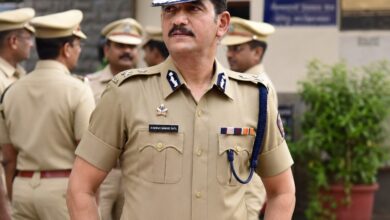
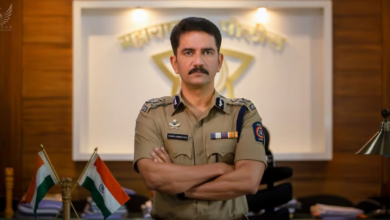
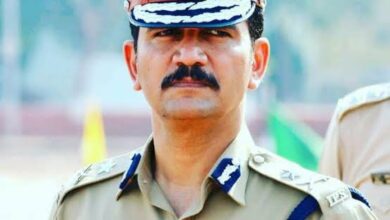
The Nagpur Police Officer Who Made the City’s Roads 25% Less Deadly — Now Honoured With Maharashtra’s Highest Police Recognition



Nagpur, April 30, 2026. DCP Lohit Matani | Operation U-Turn Nagpur : Road accident deaths in Nagpur had been climbing for years. From 268 deaths in 2021, the toll rose to 310 in 2022, barely dipped to 308 in 2023, and then surged alarmingly to 345 in 2024. The city’s roads were becoming progressively more dangerous — and neither enforcement campaigns nor awareness drives had managed to reverse the trend.
Then, in July 2025, DCP Lohit Matani took charge as Deputy Commissioner of Police (Traffic) for Nagpur and launched Operation U-Turn. By the end of 2025, road accident deaths had fallen to 259 — a reduction of 86 deaths in a single year, representing a 25% decline. Operation U-Turn had, by conservative official estimates, saved nearly 80 lives.
That achievement has now earned DCP Lohit Matani the Maharashtra Police Director General’s Insignia for 2025 — one of the highest formal honours the state police force awards to its officers.
Who Is DCP Lohit Matani?
Lohit Matani is not a typical traffic officer. He is an IIT graduate — a fact that immediately distinguishes him in a policing environment where engineering-level analytical thinking is rarely applied to traffic management. One of his professors at IIT used to quote a line he has carried with him throughout his career: “Never argue with an idiot. He will bring you down to his level and then beat you with his experience.” It is, he has said in interviews, a philosophy that has helped him navigate the many human challenges that policing presents daily.

When Matani took charge as DCP Traffic in Nagpur in July 2025, he was inheriting a department that had data, infrastructure, and personnel — but had not yet found the formula to turn enforcement into a sustained reduction in deaths. His first statement on taking charge was direct: reducing deaths on the roads was the main target. Not reducing challans issued. Not increasing fine revenue. Deaths.
The distinction matters. It defines the approach that followed.
Operation U-Turn: What It Was and How It Worked
Operation U-Turn was launched on July 10, 2025, under the overall leadership of Commissioner of Police Dr. Ravinder Kumar Singal and Joint Commissioner of Police Navinchandra Reddy. DCP Matani was the operational architect and day-to-day executor.
The operation targeted a specific and evidence-based list of life-threatening violations: drunk driving, wrong-side driving, helmetless riding, rash and negligent driving, and behaviour at accident-prone “black spots” across the city. These were not chosen arbitrarily. Matani’s team used data analytics to map exactly where accidents were happening, at what times, and what violations were most commonly involved. The enforcement plan followed the data — not assumptions.
The drunk driving component was particularly intensive. Nakabandi (checkpoint) operations were conducted daily at 33 locations across Nagpur between 7 PM and 2 AM — the hours when alcohol-related driving is most prevalent. This was not an occasional campaign. It ran every night, relentlessly, sustained over months. Matani has spoken about the importance of consistency: a deterrent that appears occasionally is not a deterrent. A checkpoint that a driver knows will be there every night changes behaviour.
Beyond enforcement, the operation incorporated what Matani describes as an educative dimension. Violators were not simply fined and released. Officers were directed to engage with offenders — explaining consequences, not just imposing penalties. The philosophy was that road safety begins with individual accountability, and you cannot build accountability purely through punishment. You need people to understand why the rules exist.
The operation also ran parallel awareness campaigns targeting residential areas, schools, and community groups. The goal was to build a culture of road safety that extended beyond the moments when a traffic officer was visibly present.
The Results: Numbers That Represent Real Lives
The impact of Operation U-Turn is best understood not through percentage figures but through what those figures represent.
In July 2024, Nagpur recorded 40 fatal road accident deaths. In July 2025 — just 21 days after Operation U-Turn launched — that monthly figure had fallen to 15. A 62.5% reduction in a single month. Serious injuries in the same period fell by 84.5%.
Across the full period from January to August 2025, fatal accidents fell from 253 to 195 compared to the same period in 2024. The number of deaths declined by 60 cases. Serious injuries dropped from 436 to 417.
Zone-wise, the results were dramatic in specific areas. Sonegaon recorded a 69% reduction in road accident deaths. Ajni saw a 40% reduction. Sakhardara recorded a 39% reduction. These were not marginal improvements — they were transformational shifts in specific parts of the city that had historically been among the most dangerous.
By the end of 2025, the full-year comparison was clear: deaths had fallen from 345 in 2024 to 259 in 2025. Official estimates across the force placed the number of lives saved by Operation U-Turn at nearly 80.
Matani himself has put it most starkly: in Nagpur, as in most Indian cities, deaths due to road accidents are almost four times higher than murders. Every one of those 80 lives saved was a family that did not lose a member. A child who still has a parent. A parent who still has a child.
The IIT Mindset Behind the Operation
What made Operation U-Turn different from previous traffic enforcement drives in Nagpur was its analytical foundation. DCP Matani’s engineering background is not incidental to his approach — it is central to it.
Most traffic enforcement campaigns in Indian cities operate on a broad-brush model: deploy more officers, conduct more checkpoints, issue more challans. The assumption is that more enforcement uniformly applied will produce results. What Matani brought was a data-driven targeting model. He and his team identified specific accident-prone locations across Nagpur — the black spots — and concentrated enforcement resources at those points during the hours when violations and accidents were statistically most likely to occur.
This is the difference between casting a wide net and precision fishing. The data told the team where to be, when to be there, and what to look for. Resources that might otherwise have been spread thin were concentrated where they had the highest probability of preventing a death.
The approach also influenced how success was measured. Rather than tracking the number of challans issued — a metric that can be inflated without producing safety outcomes — the team tracked accident data, fatality data, and injury data. The question was not “how many violators did we catch?” but “how many fewer people died this month compared to last year?”
Speaking to The Hitavada in December 2025, Matani said: “If you look at the statistics, deaths due to road accidents are almost four times higher than murders in a city. This holds true for Nagpur as well. Accidents are largely preventable. Most accidents occur because of human error — drunk driving and rash driving being the primary causes.” Operation U-Turn was designed to attack those root causes directly.
The Role of Commissioner Singal and the Nagpur Police Leadership
While DCP Matani was the operational leader of Operation U-Turn, it is important to understand the institutional support that made the operation possible. Commissioner of Police Dr. Ravinder Kumar Singal had established the broader “Smart Traffic Police” strategy for Nagpur — a framework that combined technology-driven monitoring, upgraded manpower deployment, and data analytics into a coherent approach to traffic management.
Operation U-Turn was launched within this strategic framework, with the active involvement of Joint Commissioner Navinchandra Reddy and senior officials including ACP Mahesh Thakur and inspectors from all 12 traffic divisions. Review meetings chaired by JCP Reddy brought together the full traffic leadership to analyse enforcement statistics and adjust deployment in real time.
This institutional depth — consistent leadership, data-driven review, and operational commitment sustained over months — is what allowed Operation U-Turn to move from an initial burst of enforcement intensity into a sustained, year-long transformation of Nagpur’s road safety outcomes.
Matani’s Other Portfolio: Cyber Policing and Garud Drishti
One of the more remarkable aspects of DCP Matani’s career in Nagpur is the range of his responsibilities. In addition to his work as DCP Traffic, Matani has been associated with the city’s cyber policing initiatives — including the Garud Drishti social media surveillance programme that monitors online content for incitement, criminal activity, and dangerous misinformation.
In a city where the March 2025 communal violence demonstrated how quickly social media can accelerate real-world unrest, Garud Drishti represents a critical layer of preventive policing. That the same officer who was redesigning traffic enforcement was also involved in building the city’s cyber intelligence capability speaks to a breadth of policing vision that is unusual and significant.
Matani has spoken about the growing importance of cyber vigilance in modern policing. “Cybercrime personnel must see themselves as integral to policing and not merely as officers awaiting a transfer,” he has said — a remark that reflects a clear-eyed understanding of how the nature of crime and civil disorder is changing in India’s cities.
What the DG Insignia Means — and Why Matani’s Selection Is Deserved
The Maharashtra Police Director General’s Insignia is awarded based on Government Resolutions issued by the Maharashtra Home Department. It recognises excellence in service, acts of bravery, and exceptional commitment to duty — and it is notified formally, making it part of an officer’s permanent service record.
For DCP Lohit Matani, the selection is a recognition of something that is rarer than it might appear in public service: a measurable, data-verified, sustained improvement in an outcome that directly affects the lives of ordinary citizens. Nagpur’s roads are statistically safer in 2025 than they were in 2024. The difference is 86 deaths that did not happen. That difference has a name attached to it — Operation U-Turn — and the officer who drove it is now formally recognised by the Director General of Maharashtra Police.
What Nagpur’s Roads Still Need
Recognition of DCP Matani’s achievement should not obscure the fact that Nagpur’s road safety challenge is far from solved. Even at 259 deaths in 2025, the city loses more than one person every day to road accidents — a statistic that should shock anyone who pauses to think about it.
Maharashtra as a state continues to rank among the highest in India for road accident fatalities. Nagpur’s 25% reduction is a remarkable achievement relative to its own recent history, but the baseline from which it has improved was dangerously high. Sustaining and extending the gains of Operation U-Turn — and addressing the structural causes of accident risk including road design, black spot remediation, and vehicle safety standards — will require the same intensity of commitment in the years ahead.
Matani himself has said that continued public cooperation is essential. Enforcement can change behaviour when it is consistent and credible. But ultimately, road safety in a city of Nagpur’s scale cannot be achieved through policing alone. It requires every driver and rider to internalise the understanding that the rule being enforced exists because someone died for not following it.
Nagpur Updates Will Continue Tracking Road Safety
Nagpur Updates will report on the Nagpur Traffic Police’s road safety data for 2026 as the year progresses, and will track the continuing implementation of Operation U-Turn and related initiatives.
If you have information about dangerous road conditions, accident-prone spots, or traffic safety concerns in Nagpur, write to us at admin@nagpurupdates.in.