


Published: May 10, 2026 | Category: Nagpur Local | Gorewada Zoo | By: Nagpur Updates Desk
As Nagpur continues to swelter under one of its most intense summers in recent memory — with temperatures frequently touching and crossing 45°C — the animals at the Balasaheb Thackeray Gorewada International Zoological Park are receiving some much-needed relief. The zoo management has rolled out an extensive and carefully planned set of cooling measures designed to protect its residents — from majestic tigers and elusive leopards to gentle herbivores — from the punishing summer heat that is turning Nagpur’s afternoons into a furnace.
Zoo Director Pandurang Pakhale confirmed that preparations for the summer season begin well before peak heat arrives, ensuring the animals are already accustomed to their cooling environments by the time temperatures reach their most extreme levels.
Artificial Ponds and Water Holes: Tigers’ Favourite Summer Retreat
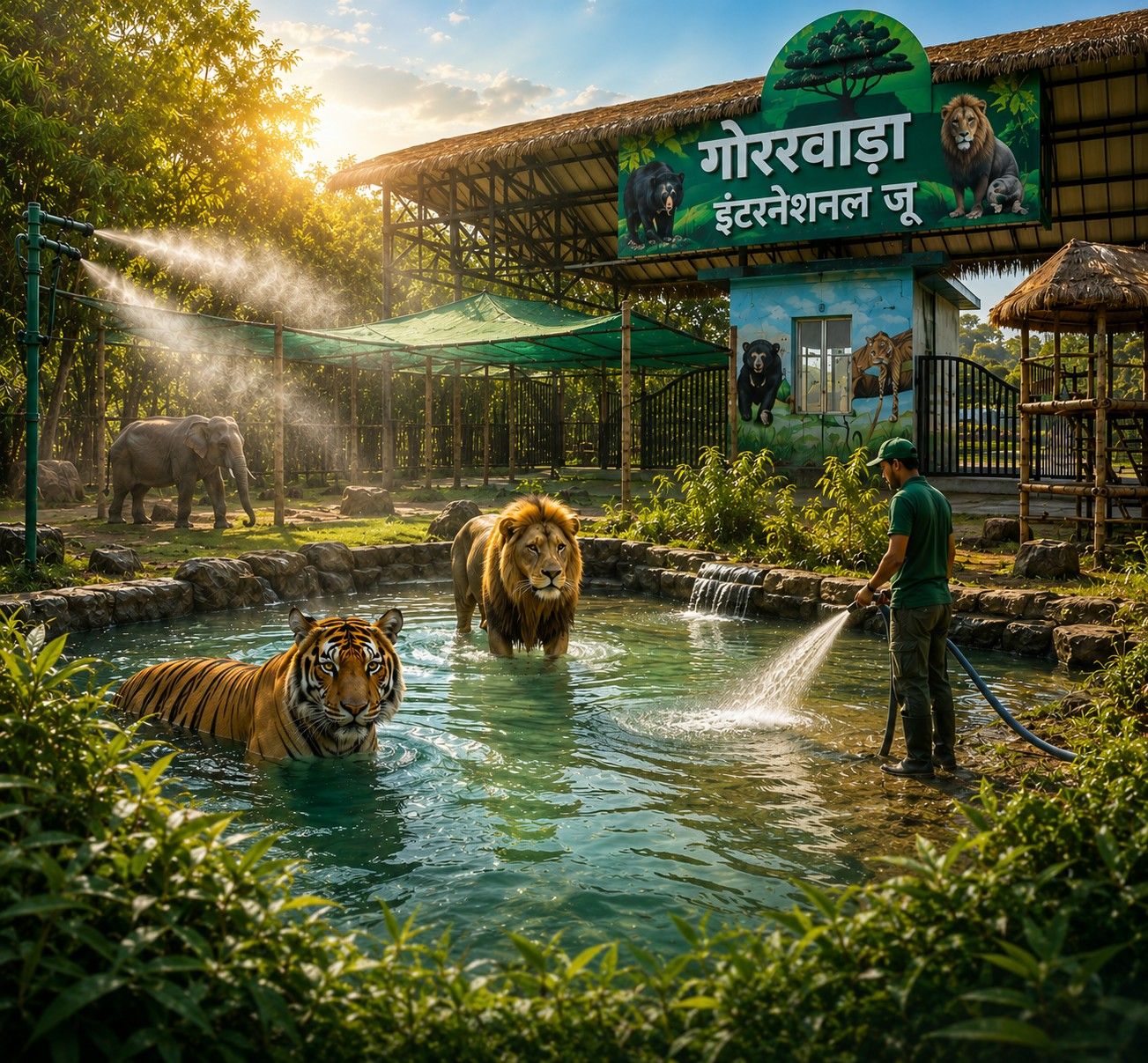
One of the most impactful and natural cooling solutions deployed at Gorewada this summer is the creation of artificial ponds and water holes inside the animal enclosures. For tigers — who are naturally drawn to water and are known to be strong swimmers — these artificial water bodies have become their favourite refuge during the hottest part of the day.
Zoo officials confirmed that tigers spend long hours inside these water holes during peak afternoon hours, when ambient temperatures are at their most extreme. The sight of a massive Bengal tiger leisurely soaking in a water hole while the mercury rages outside is both visually stunning and a testament to the zoo’s commitment to providing naturalistic, species-appropriate cooling solutions.
The creation of these water features is not just about immediate cooling — it is about recreating the natural behaviours and habitats of the animals in Gorewada’s care. In the wild, tigers routinely seek out water bodies during hot weather, and providing similar opportunities in a zoo setting is considered best practice in modern animal welfare.
Fogger and Misting Systems: Science-Backed Cooling for the Enclosures
Beyond the water holes, Gorewada has deployed an impressive technological solution to combat the summer heat: fogger and misting systems installed across animal enclosures. These systems work by releasing fine water droplets into the air — creating a cooling mist that simultaneously reduces ambient temperature and increases humidity levels in the immediate environment.
Zoo Director Pakhale explained the importance of these systems: “The fogger system lowers the temperature and increases humidity, creating a comfortable environment for tigers, leopards, and herbivores.”
This dual action — cooling and humidification — is particularly significant for Nagpur’s summer conditions. The city’s heat is characterised not just by extreme temperatures but also by very low humidity, which makes the heat feel even more intense. By introducing moisture into the air, the fogger systems replicate the conditions of a cooler, more forested environment — providing real physiological relief to the animals.
The fogger systems are especially beneficial for leopards and herbivores that may not be as instinctively drawn to water immersion as tigers, but still require relief from the heat in their enclosures.
Shade Nets and Ground Cooling: Blocking the Sun’s Direct Assault
Recognising that shade is as important as cooling, Gorewada’s management has erected large shade nets over the open sections of the enclosures. These nets significantly reduce direct sunlight exposure — cutting down on the radiant heat that otherwise beats down on the animals and their enclosure surfaces throughout the afternoon.
Complementing the shade nets is another simple but effective ground-level cooling measure: staff regularly spray water on the ground during peak afternoon hours to reduce surface temperatures. In extreme summer conditions, the ground surface in direct sunlight can reach temperatures far higher than the ambient air — creating a heat sink that makes the animals uncomfortable and can even cause paw or hoof burns in more severe cases. By keeping the ground moist and cool, the zoo staff are addressing this often-overlooked dimension of heat management.
Bamboo Plantations and Machaans: Nature-Inspired Solutions
Assistant Manager Sarika Khote highlighted another dimension of Gorewada’s summer preparedness — the deliberate use of natural elements to recreate habitat conditions inside the enclosures.
Bamboo plantations have been added in select areas of the zoo’s enclosures to provide natural shade and cover for the animals. Unlike artificial shade structures, bamboo creates a living, breathing microhabitat — the dense foliage provides shade while also creating a more naturalistic and visually enriching environment for the animals. It also keeps the surroundings cooler through the natural process of transpiration.
Inside the kraals — the off-display holding enclosures connected to night shelters where animals undergoing treatment or observation are housed — elevated wooden machaans and activity structures have been installed. These elevated platforms serve a dual purpose.
Khote explained: “The machaans provide a natural setting and help keep the animals physically active.”
For big cats, elevated platforms are not just physical enrichment — they are psychologically important too. Tigers and leopards in the wild regularly use elevated positions for resting and surveying their territory. By providing machaans inside the kraals, the zoo is maintaining the animals’ natural behavioural patterns even while they are in controlled holding areas — which is critical for their mental wellbeing during the summer stress period.
Gorewada’s Unique Safari Model: A Natural Advantage
What makes Gorewada’s summer management particularly interesting — and inherently different from conventional zoos — is the park’s unique safari model. Unlike traditional zoos where animals are confined in relatively small cages or enclosures, Gorewada functions as a forest safari spread across vast forested terrain, where tigers, leopards, and herbivores roam expansive, naturalistic enclosures as tourist buses move along designated routes.
This model gives the animals at Gorewada a significant natural advantage in dealing with summer heat. The forested surroundings — part of the larger 1,914-hectare Gorewada Reserve Forest — provide natural shade, cooler microclimates, and a sensory environment that is far more conducive to animal wellbeing than the concrete-heavy environments of traditional zoos.
Animals undergoing treatment or observation are housed in kraals, which allow controlled yet relatively free movement during recovery — ensuring that even animals temporarily removed from the main safari areas are not confined to restrictive, uncomfortable spaces during the hottest months.
Gorewada’s Broader Commitment to Animal Welfare
The summer cooling measures at Gorewada reflect a broader philosophy of animal care that prioritises naturalistic, species-appropriate welfare over mere confinement management. The combination of water holes, fogger systems, shade nets, ground cooling, bamboo plantations, and machaans represents a holistic, multi-pronged approach to summer management — addressing the challenge from multiple angles simultaneously.
This approach is consistent with international best practices in zoo animal management and positions Gorewada as one of India’s most forward-thinking zoological institutions in terms of animal welfare. The fact that preparations begin well before peak summer, as Director Pakhale emphasised, also reflects an institutional culture of proactive care rather than reactive crisis management.
Just as Nagpur’s civic administration has been taking proactive steps to address the challenges of summer for the city’s human residents — from Mayor Neeta Thakre’s intervention on facilities at the Morbhavan Bus Stand to Operation U-Turn ensuring safer roads — Gorewada Zoo is ensuring that Nagpur’s magnificent wildlife residents are also well cared for during the city’s most demanding season.
Planning a Visit to Gorewada This Summer?
For Nagpur residents and visitors who wish to see the big cats at Gorewada this summer, the zoo operates extended summer hours — 7:30 AM to 6:00 PM during the summer season. Early morning visits are highly recommended, as animal activity is highest in the cooler hours before 10 AM, and the afternoon heat can make the safari experience uncomfortable for visitors as well.
Tickets can be booked online at the official website wildgorewada.com to avoid queues at the counter. The zoo is closed every Monday.
Nagpur Updates recommends Gorewada as one of Nagpur’s must-visit destinations — and summer, with its extended hours and the spectacle of big cats cooling off in their water holes, offers a uniquely memorable experience for wildlife lovers.
Tags: Gorewada Zoo, Nagpur Summer 2026, Big Cats Nagpur, Tiger Leopard Care, Zoo Nagpur, Pandurang Pakhale, Fogger System, Nagpur Wildlife, Nagpur Local News

