


Nagpur, April 29, 2026.
Maharashtra Day 2026 Nagpur | Dr Vasantrao Deshpande Hall: On May 1, 2026, Nagpur will join the rest of Maharashtra in marking the 67th Maharashtra Day — the anniversary of the state’s formation on May 1, 1960. The occasion, which honours one of the most significant political movements in post-independence India, will be celebrated in Nagpur with an official flag hoisting ceremony in the morning and a cultural programme in the evening.
For Nagpur residents who want to be part of the celebrations, here is everything you need to know — the venue, the timings, the programme, and the history behind the day.
The Official Programme — Where, When, and Who
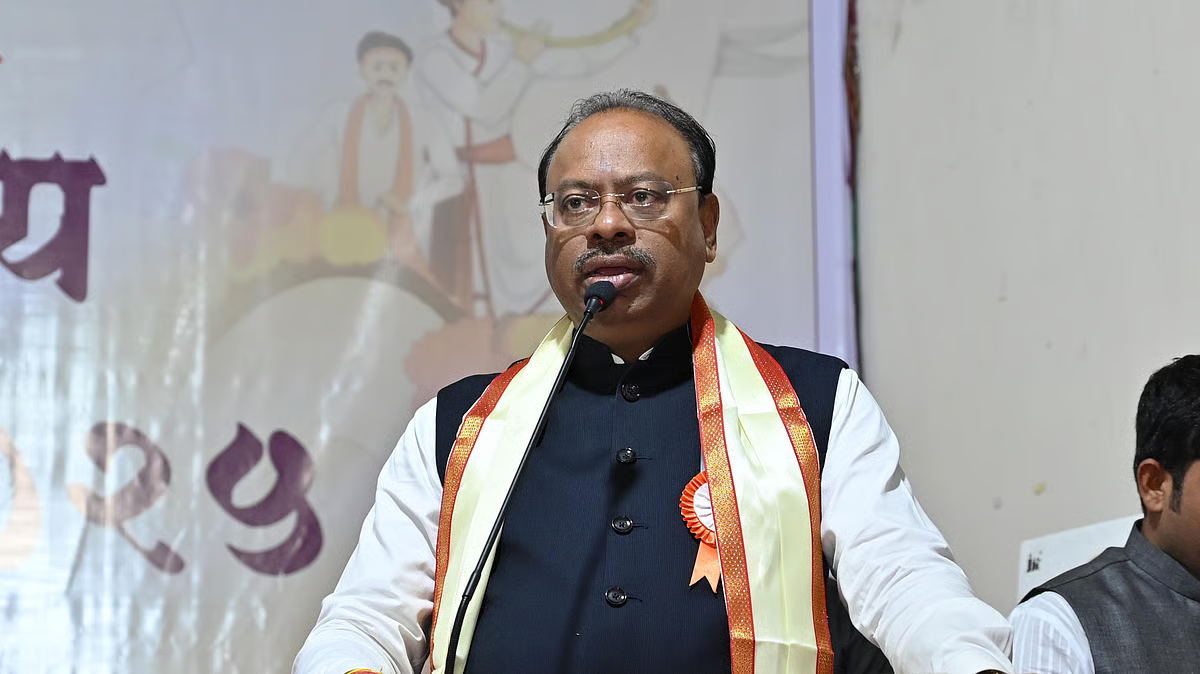
The main Maharashtra Day function in Nagpur will be held at the premises of the Divisional Commissioner Office, Civil Lines. Chandrashekhar Bawankule, State Revenue Minister and Guardian Minister of Nagpur district, will hoist the national flag at 8:00 AM sharp.
Following the flag hoisting, Bawankule will receive the ceremonial salute from the armed police force — a formal tradition that marks the dignity of the occasion and honours the state’s security forces. Senior administrative officers, police personnel, elected representatives, and other dignitaries are expected to attend the morning function.
In the evening, the focus shifts to culture. A special cultural programme celebrating the spirit and heritage of Maharashtra has been organised at Dr Vasantrao Deshpande Hall, Civil Lines, beginning at 5:30 PM. The event will feature performances reflecting Maharashtra’s rich artistic traditions — music, dance, and other cultural forms that the state is known for. Divisional Commissioner Vijayalakshmi Bidari has personally appealed to Nagpur citizens to attend the evening programme in large numbers and be part of the collective celebration.
Security arrangements are being finalised by city authorities to ensure both events proceed smoothly and safely.
Who is Chandrashekhar Bawankule?
For readers unfamiliar with his background, Chandrashekhar Bawankule is a senior BJP leader from Nagpur and currently serves as Maharashtra’s State Revenue Minister — one of the most important portfolios in state government, given that the revenue department oversees land records, disaster relief, and a wide range of administrative functions across Maharashtra’s 36 districts.
As Guardian Minister of Nagpur district, Bawankule is the state government’s senior representative for Nagpur — responsible for overseeing major projects, coordinating between state and local administration, and presiding over key government functions in the district. Hoisting the flag at the main Maharashtra Day function is one of the most visible responsibilities of the Guardian Minister, making this a significant public occasion for him personally as well as administratively.
Bawankule has a long political history in Nagpur, having served multiple terms in the Maharashtra Legislative Assembly from the Kamthi constituency. He is widely known in the city and has been involved in several major infrastructure and development initiatives in the Nagpur region.
Why May 1? The Story Behind Maharashtra Day
Maharashtra Day falls on May 1 every year because it was on this date in 1960 that the state of Maharashtra officially came into existence — born out of one of the most powerful mass movements in post-independence India.
When India became independent in 1947, the country was reorganised into states largely along administrative lines inherited from the British era, not linguistic ones. Marathi-speaking people found themselves scattered across different administrative units — Bombay State, Hyderabad State, and Central Provinces — without a unified home state of their own.
The demand for a separate Marathi-speaking state — Samyukta Maharashtra (United Maharashtra) — grew rapidly through the late 1940s and 1950s. The movement was not merely cultural; it was economic and political. Marathi communities, particularly workers in Mumbai’s booming mills and industries, felt that without their own state, their language, culture, and economic interests would be perpetually sidelined.
The movement reached a tragic peak on January 16, 1956, when police opened fire on protesters in Mumbai, killing 105 people who were demanding the creation of Maharashtra. Their sacrifice is remembered every year and forms a solemn undercurrent to the day’s celebrations.
Finally, on May 1, 1960, the States Reorganisation process resulted in the bifurcation of Bombay State into two new states: Maharashtra and Gujarat. Maharashtra was formed with Mumbai as its capital, and the Marathi-speaking people finally had their own state.
May 1 was also chosen deliberately — it is International Workers’ Day, a global celebration of labour rights, honouring Mumbai’s working class who were at the heart of the Samyukta Maharashtra movement.
Sixty-seven years later, Maharashtra Day is both a celebration of statehood and a remembrance of the sacrifices made for it.
The Significance of the Venue: Divisional Commissioner Office, Nagpur
The Divisional Commissioner Office in Civil Lines is not just an administrative building — it is one of the most historically significant government premises in Nagpur. The Nagpur Division, which the Commissioner oversees, covers six districts: Nagpur, Wardha, Bhandara, Gondia, Chandrapur, and Gadchiroli. This makes it one of the most important divisional offices in Vidarbha.
Holding the Maharashtra Day flag hoisting ceremony here — rather than at the NMC building, the Collector’s Office, or any other venue — reflects the event’s state-level character. The Divisional Commissioner represents the state government’s authority in Nagpur, and the ceremony at this venue underlines that this is not a local municipal function but a formal state occasion.
Vijayalakshmi Bidari, the current Divisional Commissioner of Nagpur, has been actively involved in preparations for the day and has extended a personal appeal to citizens to attend.
Dr Vasantrao Deshpande Hall — Nagpur’s Premier Cultural Venue
The evening programme at Dr Vasantrao Deshpande Hall, Civil Lines, adds a cultural dimension to what would otherwise be a purely ceremonial day. This hall is one of the most respected cultural spaces in Nagpur — named after the legendary Nagpur-born classical vocalist Dr Vasantrao Deshpande, who is considered one of the finest exponents of the Jaipur-Atrauli gharana in Hindustani classical music.
The hall has hosted some of the most important cultural events in Nagpur’s history — from classical music concerts to literary gatherings, theatrical performances, and state-level functions. Hosting the Maharashtra Day cultural programme here is a fitting tribute to both the state’s cultural heritage and the legacy of the man after whom the hall is named.
Citizens who wish to attend the evening programme are encouraged to arrive before 5:30 PM as seating is expected to fill up quickly given the significance of the occasion and the broad public appeal issued by the Divisional Commissioner.
How to Participate in Maharashtra Day 2026 in Nagpur
For Nagpur residents who want to be part of the celebrations, here is a quick practical guide:
The morning flag hoisting at the Divisional Commissioner Office, Civil Lines begins at 8:00 AM. This is a formal government event, and public attendance may be subject to space availability and security arrangements. However, citizens are generally welcome to witness the ceremony from the designated public areas on the premises.
The evening cultural programme at Dr Vasantrao Deshpande Hall, Civil Lines begins at 5:30 PM and is the more accessible event for general public participation. Entry is expected to be free, in line with the tradition of Maharashtra Day cultural events. Citizens should carry a valid ID and arrive early.
Throughout the city, various organisations, schools, housing societies, and cultural groups will hold their own Maharashtra Day celebrations — flag hoistings, cultural programmes, and community gatherings. These local events are an equally meaningful way to mark the day.
A Day for Every Nagpurian
Maharashtra Day is not just a government function. It is a day that belongs to every Marathi speaker, every resident of Maharashtra, and everyone who calls Nagpur home — regardless of language, community, or background. The city of Nagpur, as the winter capital of Maharashtra and the geographical heart of the state, has a special place in the Maharashtra story.
Sixty-seven years after the state was born, the tricolour will go up again at the Divisional Commissioner Office at 8 AM on May 1. And at Dr Vasantrao Deshpande Hall at 5:30 PM, the music and culture of Maharashtra will fill the air.
You are invited.
Published: April 29, 2026. Sources: Divisional Commissioner Office Nagpur, official programme details, Maharashtra state formation historical records.

