The revised prices of petrol and diesel offer a surprise

Everything is becoming expensive over time. Not only household goods or food items, but also oil and fuel costs. Nevertheless, today the prices of petrol and diesel are poor. They remain unchanged across the country’s metro cities. In Bengaluru, the price of petrol is Rs 74.34 per litre, while in Mumbai it is Rs 77.56 per litre. Delhi has the lowest price of petrol at Rs 71.89 per litre, while Chennai costs about Rs 74.68 per litre.

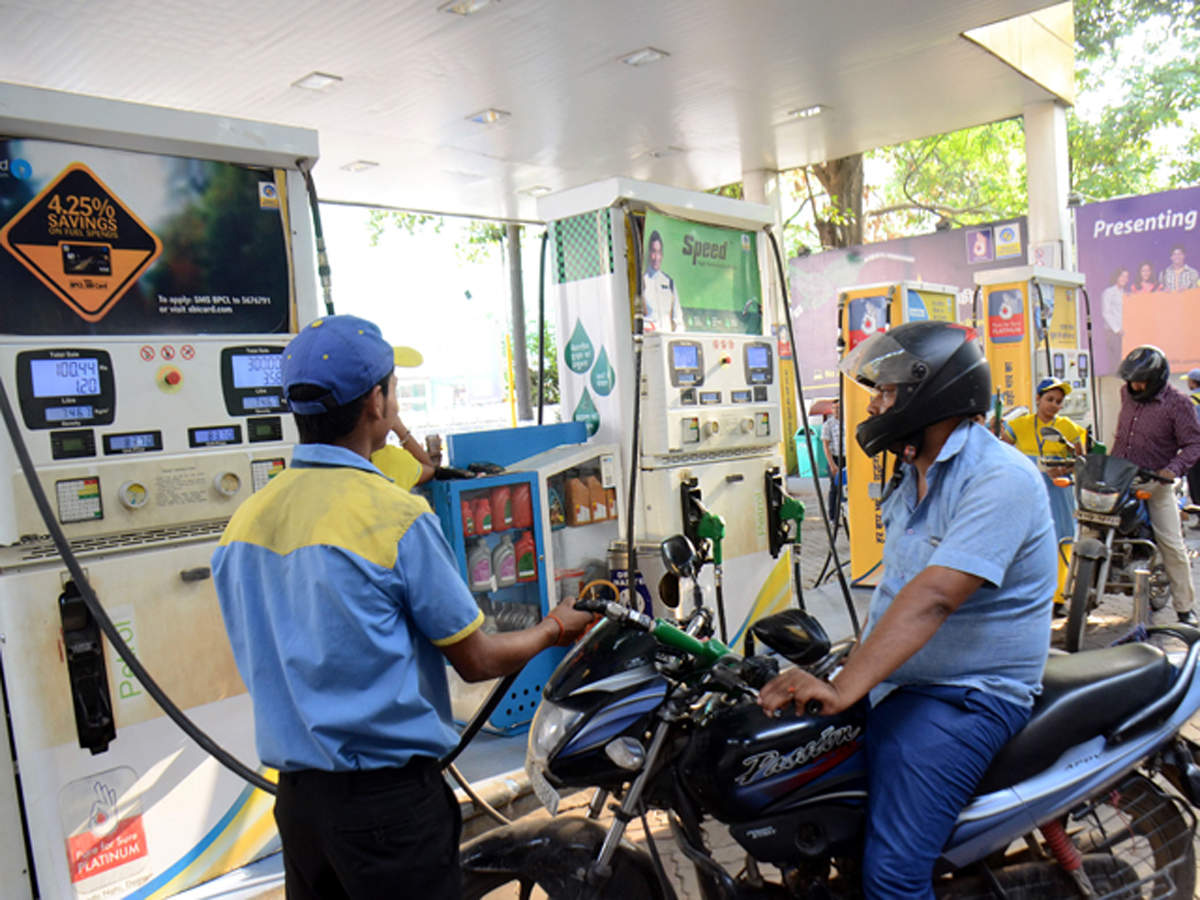
The diesel prices for different cities range from Rs 64 to Rs 69 per litre. Diesel is priced at Rs 67.75 in Mumbai, while in Bengaluru it is priced at Rs 68.27 for every litre produced. Chennai, too, is priced at Rs 68.27 per litre. Delhi is again witnessing the lowest price of diesel at Rs 64.65 per litre. Petroleum and diesel prices are checked on a daily basis by oil companies. The fuel prices are updated every day at 6 a.m.

The increase in fuel prices depends on the price of the foreign crude oil and the U.S. dollar exchange rate. Everyone will see an increase in petrol and diesel rates in April as the latest BS-VI emission standards come into force. The increase in oil prices has led Brent to win a straight day for the seventh time in a row. In the oil market, oil prices are rising globally. As a result, the barrel has also become costly.

Maharashtra Government has set up helpline number and care center to fight with coronavirus

Nagpur: The coronavirus is a huge family of viruses that cause diseases varying from the common cold to acute respiratory disorders but the virus that infected people in China is a new strain that has not been seen before.

According to the World Health Organization, common signs of the new coronavirus infection include respiratory problems, such as cough, shortness of breath and fever.

The government of Maharashtra is reconsidering here to set up a coronavirus test facility at Kasturba Hospital to ease the burden on the Pune-based National Institute of Virology (NIV), which is supposed to handle these samples from across the Nation.

Maharashtra government also urges people not to get panic if you are suffering from coronavirus or if you find any symptoms. The Maharashtra government has opened some helpline for citizens.

In case you find anyone suffering from the virus or you find yourself in trouble just contact

at below coronavirus care centre & government will help you out and provide you with the necessary treatment:-

Kasturba Hospital, Mumbai – Phone No – 022-23027769
Naidu Hospital, Pune – Phone No- 020-25506300
National Call Center No. – 91-11-23978046
State Control Center No.- 020-26927394
Toll-Free Helpline No. – 104
The government of the state has established airport centres to monitor each commuter coming from China.

Good News!Now state govt employees to have 5-day working week

Happy news for state government employees, as the government of Maharashtra, announced five-day working week today. The decision was taken at the Cabinet meeting of the State as per the details.

The decision taken by employees of the state government will take effect from 29 February.

Actually employees working for Maharashtra’s government get off every month on second and fourth Saturdays. This decision was aimed primarily at increasing employee productivity and efficiency, and also at reducing workplace absenteeism.

There are more than 20 lakh officers and workers in the capital, in government, semi-government, and local bodies.

The government starts the 5 centers of Shiv Bhojan in the city | Nagpur updates

Nagpur updates:-The state government has introduced five Shiv Bhojan centers to provide Rs10 lunch per plate for the poor. Three of the five Shiv Bhojan centers in the vicinity of government-run hospitals have been opened to provide nominally delicious lunches for families of patients.

District Food and Civil Supply Officer Bhaskar Tayade told that the Shiv Bhojan centers were opened at Daga Hospital, Matru Sewa Sangh’s Maternity Home in Central Nagpur, RST Cancer Hospital in Tukadoji Putla Square, MSRTC Bus in Ganeshpeth and APMC Market in Kalamna.

“Four were opened on 26 January and the remaining one on 30 January. Lunch will take place between 12:00 and 14:00 at the rate of Rs10 per plate agreed by the Government. The self-help group and the organizations operating the Shiv Bhojan centers will recover Rs10 from the beneficiary. The government will give Rs40 per plate on its hand, as total expenditure on one plate is Rs50, “he said.

The District Food and Civil Supply Department under the Collector’s Office is the nodal agency for the scheme. As per the Government Directive, the SHG / agency in charge of the Shiv Bhojan center will have to provide two chapatis, a vegetable curry, dal, and rice. The menu would change on a daily basis and be dictated by the government.

The center will operate on an app developed by the government. The SHG / agency will receive instructions on the device’s daily menu. For three months, the government has set up five centers on a pilot basis. Considering the experience of the pilot project, the government is likely to increase the timing of the centers as well as the number of Shiv Bhojan centers in the city.

Shiv Sena MP from Ramtek Krupal Tumane opened the center at the Matru Sewa Sangh Hospital. He praised the scheme launched by CM Uddhav Thackeray. He also made some suggestions for further development at the centre.

NCP City President Anil Ahirkar dedicated the Shiv Bhojan center to the public at the Daga Hospital. He, along with a bunch of friends, lauded the government’s noble gesture. Yuva Zep Pratishtan, led by Mayor Sandip Joshi, initiated the Deendayal Lunch Box schemes at the Government Medical College and Hospital (GMCH) and two more locations where families of patients have also had lunch at Rs10 since 2017.

Dry on revenue, govt moots to lift Chandrapur liquor ban

Nagpur: The Maharashtra government has decided to mop up funds by additional mobilization, with diminishing revenues and precarious financial situation. A meeting was held on Tuesday under deputy chief minister Ajit Pawar in which different departments came forward with their respective proposals.

Excise Ministry, too, put forward its request to lift the Chandrapur liquor prohibition. It was also proposed to extend wine shops closing time in the state by one hour until 11.30 pm.

According to senior excise officials, the state received annual Rs242 crore from the Chandrapur district from excise duty until 2014-15, which it had been losing out over the past five years. We believed the ban was failing to serve its purpose as cases of illegal smuggling jumped to a new high. They told TOI, on condition of anonymity, that Pawar and other ministers responded positively to the proposal and that they intend to discuss it during the next meeting of the cabinet.

The previous BJP-led government led by former chief minister Devendra Fadnavis had instituted the liquor prohibition in 2015 after large-scale demands from women in Chandrapur. It was the third district of the state and also of Vidarbha after Wardha and Gadchiroli where the consumption of liquor was prohibited. The large-scale anger due to the ban had resulted in a surprising loss of former union minister and six-time MP Hansraj Ahir from liquor baron Suresh alias Balu Dhanorkar, who has been demanding that the ban be lifted since his victory.

Excise officials told TOI that their proposal had been discussed in detail where they provided the last five years statistics that included losses suffered and quantity of illicit liquor confiscated. “We told them of cops ‘ investigations in cases of liquor smuggling, both in terms of the number of crimes and the amount seized that soared over the past five years.” They also pointed out that revenue figures would have increased over the past five years if the ban was not enforced. “Since the last 5 years, we have been missing out on precious revenue from over Rs250 crore. Such amount could have been used for other purposes such as for farmers. The very object of the prohibition is thwarted by large-scale smuggling of illicit liquor. “Nevertheless, the move by the government received mixed reactions from the district’s public representatives and other netas.

The main leader who started the movement to ban liquor in Chandrapur through her organization Sharamik Elgar Parishad, the social activist Paromita Goswami, said she and her organization would steadfastly resist any such attempt by the government. “I will be holding a press conference in this regard on Thursday. We will be informed about how the liquor ban has significantly helped people here and why it should continue. “Netas like MLA Kishor Jorgewar stressed that a thorough review must be carried out before the prohibition is relaxed. “The government needs to look in the last five years at the pros and cons of the prohibition. It should take into account not only revenue losses but also incidents involving drug dumping and the selling of counterfeit or fake liquor. I have learnt that over 40,000 crimes against illicit consumption have been committed. “Defending the prohibition move by the BJP government in Chandrapur, former excise minister Chandrashekhar Bawankule said the decision was taken after 90 per cent of Gram Panchayats passed a resolution in this regard, which was well supported by the majority of women. “We can not lift the ban just by citing reductions in sales. Alternatively, by merging police and excise force to begin operations, they could reinforce the system to prevent the sale of illicit liquor. I think any such move would be strongly opposed by the women people there, “he said.

MSEDCL suggests theoretical GSC for solar roofing

Nagpur: Even as customers on the solar rooftop welcomed the relief Maharashtra Electricity Regulatory Commission (MERC) offered them, MSEDCL dropped a bombshell. It has introduced charges for promoting astronomical grids which will make solar power more costly than its own.

It seems the discom is hell-bent on scuttling the state’s nascent solar market. MERC will have to withdraw the petition to save users of solar energy once again.

MERC had recently rejected the petition of the discom to make fixed billing mandatory, rather than net metering. However, it had allowed MSEDCL to charge grid support charge (GSC) for consumers loading over 10 KW.

The discom proposed GSC ranging from Rs 4.46 per unit to Rs 8.66 per unit for domestic consumers, between Rs 5.06 and Rs 8.76 per unit for commercial consumers, and for industrial consumers between Rs 3.60 per unit and Rs 4.08 per unit.

A senior official at MSEDCL acknowledged that if MERC approved these charges it would make solar rooftop power more costly than the discom tariff.

In its petition submitted to MERC for mandatory net billing, MSEDCL claimed that a loss of Rs 224 crore has been incurred so far. In addition, solar rooftop load rose from 20.44 MW in 2016-17 to 288.80 MW in 2018-19. The company feels it will have to increase the tariff for the remaining customers if paying consumers to go out of its net.

The discom conveniently forgets that solar power on the rooftop is only 0.3 per cent of its total purchase of electricity. Consumers of the solar rooftop generated 330 million units (MU) in 2018-19 versus 1.2 lakh MU purchased from it.

More specifically, MSEDCL can not meet its Renewable Solar Purchase Obligation (RPO) goal. In 2017-18, it was able to meet just 40 per cent of its solar RPO goals.

MSEDCL itself receives no response to its offer to purchase solar power. It had recently floated a tender to purchase 1,350 MW but only one generator received a 5 MW bid.

On the other hand, MERC has increased MSEDCL’s solar target from 2.5% in 2019-20 to 13.5% in 2024-25. This rise has been opposed by MSEDCL and told MERC that it is unlikely.

Solar expert Ajit Ganguly, commenting on the GSC, said, “MERC had allowed MSEDCL to levy GSC so it would not incur any damage. Nevertheless, the proposed changes are so high that between Rs 14 and Rs 15 per unit would cost solar power. This is ridiculous. No other country state has done this. “An industrialist said on anonymity condition,” MSEDCL wants to put the new government in trouble. Because of high power tariffs, companies find it difficult to thrive in the City. Solar was the only option but MSEDCL wants to make it unviable. ”Grid support charges for domestic consumers Units————————-Charges (Rs/unit) 101-300————-4.46 301-500————–7.06 500 +————————8.66

Allocation of the Maharashtra portfolio: Anil Deshmukh is the new Minister of State Home

Mumbai: On Saturday evening, the Uddhav Thackeray-led Maharashtra government cleared the allocation of portfolios to its ministers. The finance ministry was assigned to Deputy CM and NCP chief Ajit Pawar. Anil Deshmukh, the NCP chief, is the new home minister of the state. Senior Shiv Sena leader Eknath Shinde has been given the responsibility of urban development ministry.

Balasaheb Thorat was assigned to the revenue department at the Congress, while the department of public works will be headed by former CM Ashok Chavan.

CABINET MINISTERS

Ajit Pawar: Finance and planning

Anil Deshmukh: Home

Eknath Shinde: Urban development and MSRDC

Balasaheb Thorat: Revenue

Ashok Chavan: Public works department

Subhash Desai: Industries, mining

Jayant Patil: Water resources (irrigation)

Chhagan Bhujbal: Food and civil supplies

Dilip Walse-Patil: Excise and labour

Jitendra Awhad: Housing

Dhananjay Munde: Social Justice

Nitin Raut: Energy

Rajesh Tope: Public health

Balasaheb Patil: Cooperation and agriculture marketing

Dada Bhuse: Agriculture

Vijay Wadettiwar: OBC welfare

Hasan Mushrif: Rural development

Varsha Gaikwad: School Education

Uday Samant: Higher and technical education

Amit Deshmukh: Medical education

Rajendra Shingne: Food and drugs administration

Nawab Malik: Skill development and minority affairs

Sunil Kedar: Dairy development, animal husbandry

Sanjay Rathod: Forests

Gulabrao Patil: Water supply and sanitation

Sandipan Bhumre: EGS, Horticulture

Yashomati Thakur: Women and child welfare

Anil Parab: Transport and parliamentary affairs

KC Padvi: Tribal development department

Shankarrao Gadakh: Water conservation

Aslam Shaikh: Textiles, ports, fisheries

Aaditya Thackeray: Environment, tourism, protocol

MINISTERS OF STATE

Satej Patil: Home (cities)

Shambhuraj Desai: Home (rural), finance

Abdul Sattar: Revenue

Prajakt Tanpure: Urban development

Bachchu Kadu: Water resources, school education

Vishwajit Kadam: Cooperation, agriculture

Dattatraya Bharne: GAD, forests

Aditi Tatkare: Industries, information and public relations

Sanjay Bansode: Environment, MSRDC

Rajendra Patil Yadravkar: Public health

Nagpur Zilla Parishad polls: Nitin Gadkari says the Shiv Sena-Congress-NCP coalition is winning inappropriately

Union minister and senior BJP leader Nitin Gadkari said Friday that Maharashtra’s alliance between the Shiv Sena, Congress and the NCP was just for the sake of power and cautioned the three parties that state people did not like such “unnatural alliances.” He was addressing a rally on January 7 in Nagpur for the Zilla Parishad elections.

Gadkari said the Uddhav Thackeray-led party had betrayed the Hindutva ideology, hitting out at the Sena for breaking the ten-year-old alliance with the BJP over the sharing of the chief ministerial post.

In the October polls, the BJP and Sena had come up with 161 seat joints in the 288-member assembly, but the latter moved out and formed a government with Congress and NCP ideologically opposed.

“There has never been any similarity between the Sena ideology and the Congress and NCP ideology. These parties have come together only to gain power. Parties that couldn’t stand shoulder to shoulder are now walking, “he said.

“But it is the history of Maharashtra that people here never liked such unnatural alliances. Balasaheb Thackeray spoke of Hindutva, but now the Sena is only doing it for the sake of the tag, “he added.

By handing them a crushing defeat in the ZP elections, he asked the crowd to express their discontent with the “improper coalition.”

Train tickets to be costly as Indian Railways increase their base price

As of 1 January 2020, Indian Railways reported an increase in ticket price across its network on Tuesday. The increased fare will not apply to the national transporter’s suburban train services. The fare hike will be introduced in different categories of Indian Railways services.

The Railway Ministry issued an order stating that while suburban fares remain unchanged, non-ordinary, non-suburban fares are higher than 1 paise per km of journey.

The railways also announced a two paise/km hike in non-AC mail / express train tariffs and four paise/km hike in AC class tariffs.

Railways said in a statement that to improve passenger amenities and facilities at different railway stations and trains, it has become necessary to slightly raise the fare without overburdening any passenger class.

Through this fare revision, Indian Railway will be rapidly modernized. Railways have therefore decided to influence an increase in fare only marginally over the non-suburban sections.

There will be no fare hike for travellers over suburban sections and season ticket holders in accordance with the affordability demands of daily commuters. This class constitutes 66% of the overall segment of passengers over Indian railways.

Likewise, current train tariffs such as Rajdhani, Shatabdi, Duronto, Vande Bharat, Tejas, Humsafar, Mahamana, Gatimaan, Antyodaya, Garib Rath, Jan Shatabdi, Rajya Rani, Yuva Expresses, Suvidha and special charges trains, AC MEMU (non-suburban), AC DEMU (non-suburban) etc. shall be updated to the extent of the proposed tariff increase. In the Rajdhani Delhi-Kolkata, which covers a distance of 1,447 km, the hike at a rate of 4 paise per km will be about 58.

There will be no change in the booking fee and superfast charge, according to the order, and the hike in tariffs will not apply to tickets already booked.

i. Ordinary non-AC classes: 01 paisa/km

ii raise in tariffs. Mail / Exp Non-AC classes: 02 paisa / km

iii rise in tariffs. AC classes- 04 paisa / km

iv raises the tariff. Suburban tickets and season tickets: No increase

The last Indian Railways fare adjustment took place in 2014-15.

Ministers of the Maharashtra Congress meet with Rahul Gandhi, Sonia Gandhi to discuss their role in governing.

Maharashtra’s newly inducted 12 Congress ministers in the Maha Vikas Aghadi met with the leader of Congress Rahul Gandhi at his residence in New Delhi on Tuesday. The leaders also met today with the interim president of the party, Sonia Gandhi, to discuss their role in the current government and to hold a feedback session on the alliance.

The party must also appoint a new legislative head of state after last month’s election of Balasaheb Thorat as a cabinet minister.

Exit mobile version