The Train That Nagpur and Pune Have Been Waiting For Is Almost Here — Railway Board Has the Timetable Ready for the Vande Sleeper

Pune Nagpur Vande Sleeper Train: Anyone who has taken the Vande Bharat Express between Pune and Nagpur knows exactly what the problem is. The train is fast, comfortable for a few hours — and then the 12-hour journey catches up with you. You are sitting in a chair car, shifting position every half hour, watching the Vidarbha landscape roll by in the dark, wishing there was a berth to lie down on.

That wish is now very close to becoming reality.

The Railway Board has prepared the timetable for a proposed Vande Sleeper train service on the Pune-Nagpur route — the most significant upgrade to this corridor since the Vande Bharat Express began running. The official announcement is pending, but the preparatory work is in its final stages. And at the centre of this development is an initiative pushed at the highest political level: Chief Minister Devendra Fadnavis raised the demand directly with Union Railway Minister Ashwini Vaishnaw, and the Railway Ministry responded positively.

Maharashtra — the state where one of India’s two Vande Sleeper production facilities is located — is now positioned to become the first state in India to have two Vande Sleeper corridors running simultaneously.


Why the Pune-Nagpur Route Specifically Needs a Sleeper Service

The case for a sleeper train on the Pune-Nagpur corridor is one of the most straightforward in Indian Railways planning — and it is surprising that it took this long to get here.

The distance between Pune and Nagpur is approximately 680 kilometres by rail. The journey takes around 12 hours on the current Vande Bharat Express — a train designed with chair car seating that is entirely appropriate for shorter journeys of 4 to 6 hours. For a 12-hour overnight journey, however, a seated train is simply the wrong product. Passengers who travel this route for business, education, or family visits are effectively forced to choose between booking a far slower conventional sleeper train or spending 12 hours in a chair car on the faster Vande Bharat.

CM Fadnavis understood this gap clearly and made the case to the Railway Ministry explicitly. His argument was simple and correct: a 12-hour route needs a sleeper train. Chair car seating is not adequate for the travel time involved. Passengers deserve the option of lying down and sleeping through the night, arriving at their destination rested.

Railway Minister Ashwini Vaishnaw gave a positive assurance when the matter was raised. The Railway Board has now followed through on that assurance by preparing the timetable — the operational document that specifies departure and arrival times, intermediate halts, and turnaround schedules for a proposed service. A timetable being ready is one of the final administrative steps before an official announcement. It means the planning is complete. What remains is the formal notification and the availability of rolling stock.


What Is the Vande Sleeper — And How Is It Different From the Vande Bharat?

For passengers who are familiar with the Vande Bharat Express but not with the Vande Sleeper, the distinction is significant and worth understanding clearly.

The Vande Bharat Express — of which four services currently operate out of Pune, including the Pune-Nagpur route — is a chair car train. It features aircraft-style reclining seats, modern interiors, automatic doors, and speeds significantly higher than conventional trains. It is an excellent product for journeys up to about 6-8 hours, where sitting is manageable and passengers arrive before bedtime.

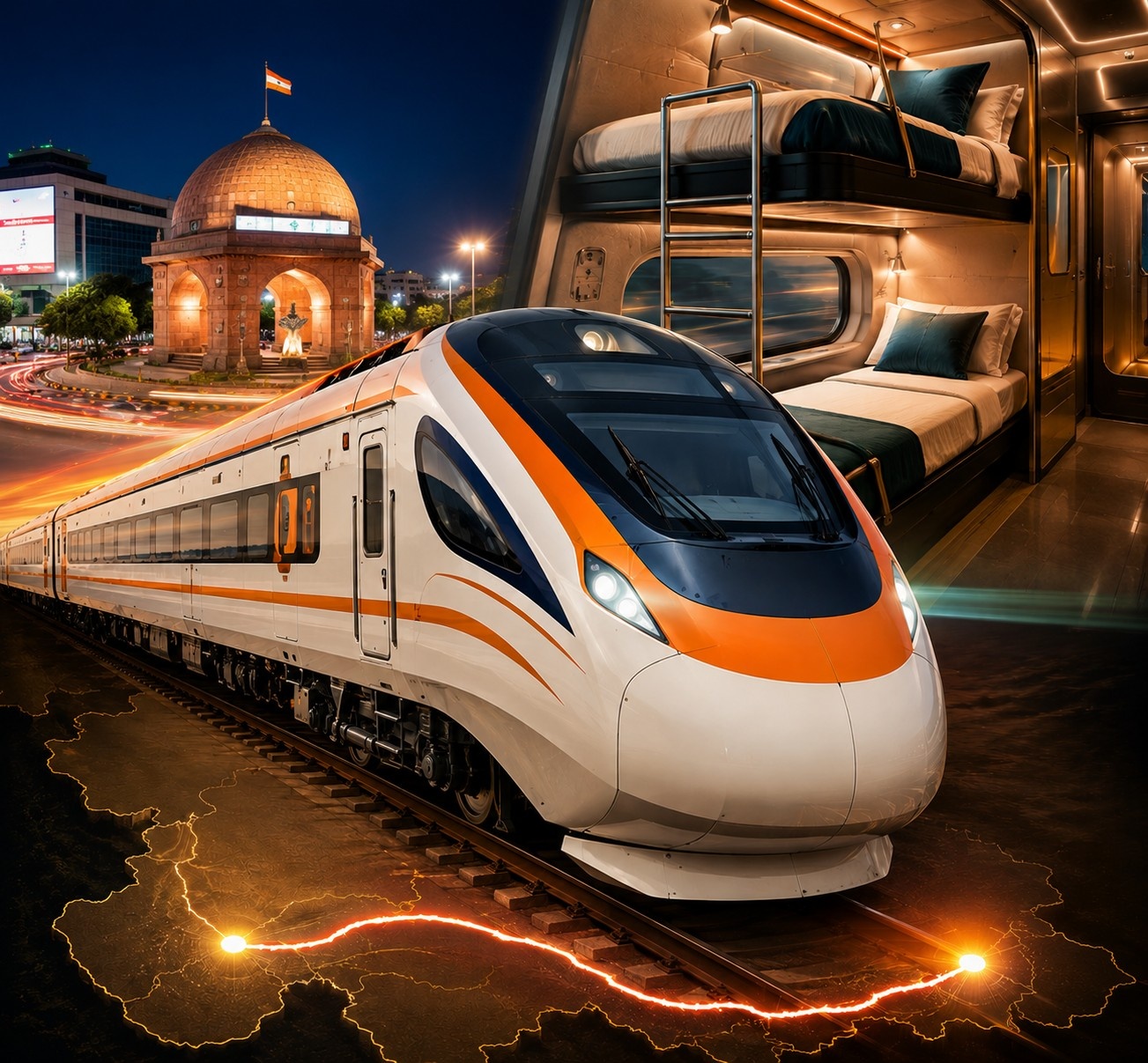
The Vande Sleeper is a fundamentally different product built on the same platform philosophy but configured for overnight travel. Instead of chair car coaches, it features sleeping berths — similar in concept to the AC 3-tier and AC 2-tier berths of conventional trains, but built to significantly higher standards of design, materials, and comfort. The berths are wider, the privacy screens are better designed, the lighting and ventilation systems are more modern, and the overall passenger experience is intended to be several steps above what conventional sleeper trains currently offer.

The Vande Sleeper also operates at higher speeds than conventional overnight trains, which means the journey time between Pune and Nagpur — even on a sleeper service with overnight running — is expected to be meaningfully shorter than on conventional Rajdhani or Express sleeper trains on the same route.

Currently, only one Vande Sleeper train operates in India — on the Kolkata-Guwahati corridor, which became the country’s first Vande Sleeper service. The proposed Pune-Nagpur service would be India’s third Vande Sleeper corridor, after the Mumbai-Pune-Bengaluru route which is also in advanced planning.


Maharashtra’s Unique Advantage — And Why It Matters for the Timeline

One of the most significant factors in favour of Maharashtra getting the Vande Sleeper service relatively quickly is the location of one of India’s two Vande Sleeper production facilities.

Indian Railways has an ambitious national plan to manufacture 260 Vande Sleeper rakes — a massive production programme that is being executed at two facilities. The first is the Integral Coach Factory (ICF) in Chennai, which has decades of experience in coach manufacturing and is the largest production centre for Indian Railways rolling stock. The second is the Marathwada Rail Coach Factory in Latur, Maharashtra — a relatively new facility that is now in active production of Vande Sleeper rakes.

The presence of a production facility within Maharashtra creates a logistical advantage for the state that experts and railway observers have noted consistently. Rakes manufactured in Latur do not need to travel long distances to be inducted into service on Maharashtra routes — there are lower transportation costs, easier initial testing on nearby routes, and faster turnaround for commissioning. Railway sources have indicated that some Vande Sleeper rakes have already reached Bengaluru for the proposed Mumbai-Pune-Bengaluru corridor. Maharashtra’s two planned services — both feeding into the same production pipeline from Latur — are expected to receive rolling stock relatively faster than routes in states without nearby production facilities.


The Expanding Vande Bharat Network at Pune — The Platform This Builds On

The Pune-Nagpur Vande Sleeper proposal does not exist in isolation — it is the next logical step in an expanding rail network that has been developing around Pune over the past two years.

Currently, four Vande Bharat services operate from Pune — the Mumbai-Pune-Solapur service, the Mumbai-Pune-Kolhapur service, the Pune-Hubballi service, and the existing Pune-Nagpur Vande Bharat. All four services have received strong passenger response, confirming that demand for modern, high-speed rail on these corridors is robust and growing.

The Pune-Nagpur Vande Bharat specifically has been particularly popular, with consistently high occupancy rates reflecting the strong travel demand between Maharashtra’s cultural and economic capital in the west and its second-largest city and winter capital in Vidarbha. This popularity is both the justification for the Vande Sleeper proposal and the guarantee that the new service will find passengers immediately upon launch.

Railway sources within the Central Railway headquarters have also indicated that the existing Pune-Nagpur Vande Bharat’s coach count may be increased from the current 8 coaches to 16 or even 20 — a separate but complementary improvement that would significantly expand seat availability on the daytime service while the Vande Sleeper handles overnight demand.

Chief PRO of Central Railway, Dr Swapnil Nila, confirmed that given the growing popularity of the Pune-Nagpur Vande Bharat Express and the consistently increasing passenger numbers, the railway is actively working on adding additional coaches to the existing service.


Who Will Benefit — And Why This Is More Than Just a Train Story

The announcement of a Vande Sleeper service on the Pune-Nagpur corridor is not merely a railway development story. It is a story about connectivity between two of Maharashtra’s most important cities — and by extension, between two of its most economically significant regions.

Vidarbha and western Maharashtra have historically been linked by strong economic, educational, and family ties that generate consistent and significant travel demand. Students from Vidarbha who study in Pune’s universities and colleges travel this route regularly. Business professionals who split their work between Nagpur’s industrial clusters and Pune’s thriving corporate sector make regular journeys. Government officials travel between the two cities — Nagpur as the winter capital and Pune as the home of numerous state government headquarters. Families with members in both cities visit each other for festivals, weddings, medical treatment, and personal occasions.

All of these travellers currently face the same choice: a 12-hour chair car journey on the Vande Bharat, or a slower conventional sleeper train. The Vande Sleeper — faster than a conventional train, comfortable for overnight travel unlike a chair car — resolves this choice in the most passenger-friendly way possible. It gives travellers a product that is genuinely suitable for the journey they are making.

When the Vande Sleeper begins operations on the Pune-Nagpur corridor, it will also have economic ripple effects beyond the passengers themselves. Business travel between the two cities will become less exhausting and more productive. Medical tourism — Nagpur residents visiting Pune’s hospitals and vice versa — will be more accessible. The tourism potential between Vidarbha’s wildlife destinations and Pune’s cultural circuit will improve. The economic integration between two of Maharashtra’s most dynamic regions will deepen.


Maharashtra as India’s First Two-Vande-Sleeper State — What It Signals

If both the Mumbai-Pune-Bengaluru and Pune-Nagpur Vande Sleeper services are launched as planned, Maharashtra will become the first state in India to have two Vande Sleeper corridors operating simultaneously — a distinction that reflects both the state’s economic importance and the successful advocacy of CM Fadnavis and other Maharashtra political leaders for better rail connectivity.

This would also make the Pune-Nagpur Vande Sleeper India’s third Vande Sleeper corridor overall — after Kolkata-Guwahati and Mumbai-Pune-Bengaluru — placing it in the earliest cohort of routes to receive this premium overnight product as Indian Railways scales up its production and deployment.

For Nagpur specifically — a city whose rail connectivity has historically lagged behind Mumbai, Pune, and other western Maharashtra centres — receiving one of India’s first Vande Sleeper services is a significant milestone in the direction of connectivity parity that the city and Vidarbha have long been seeking.


When Can Passengers Expect the Official Announcement?

The honest answer, based on currently available information, is: soon — but the exact date is not yet confirmed.

The Railway Board has the timetable ready. This is a clear and significant milestone. The rolling stock production is underway, with rakes being manufactured at both ICF Chennai and the Latur facility. The political advocacy has been done — Fadnavis has raised it with Vaishnaw, Vaishnaw has responded positively, and the administrative machinery has followed through to the timetable preparation stage.

What remains is the formal notification — the official gazette or press announcement from the Railway Ministry specifying the train number, departure and arrival times, intermediate halts, fare structure, and launch date. Once that notification is issued, bookings will open on the regular Indian Railways ticketing system and the service will launch on the notified date.

Passengers who travel regularly between Pune and Nagpur are advised to watch for the official announcement closely — given the high demand on this corridor, berths on the first few weeks of the Vande Sleeper service are likely to fill up very quickly once booking opens.

Nagpur Updates will report on the official announcement as soon as it is made and will publish the complete timetable, fare structure, coach composition, and booking details immediately upon notification.
Nagpur Railway Station’s Platform 2 Reopens After 60 Days — What Was Upgraded and What’s Back to Normal

Published: June 9, 2026 | Category: Nagpur Local | By: Nagpur Updates Desk


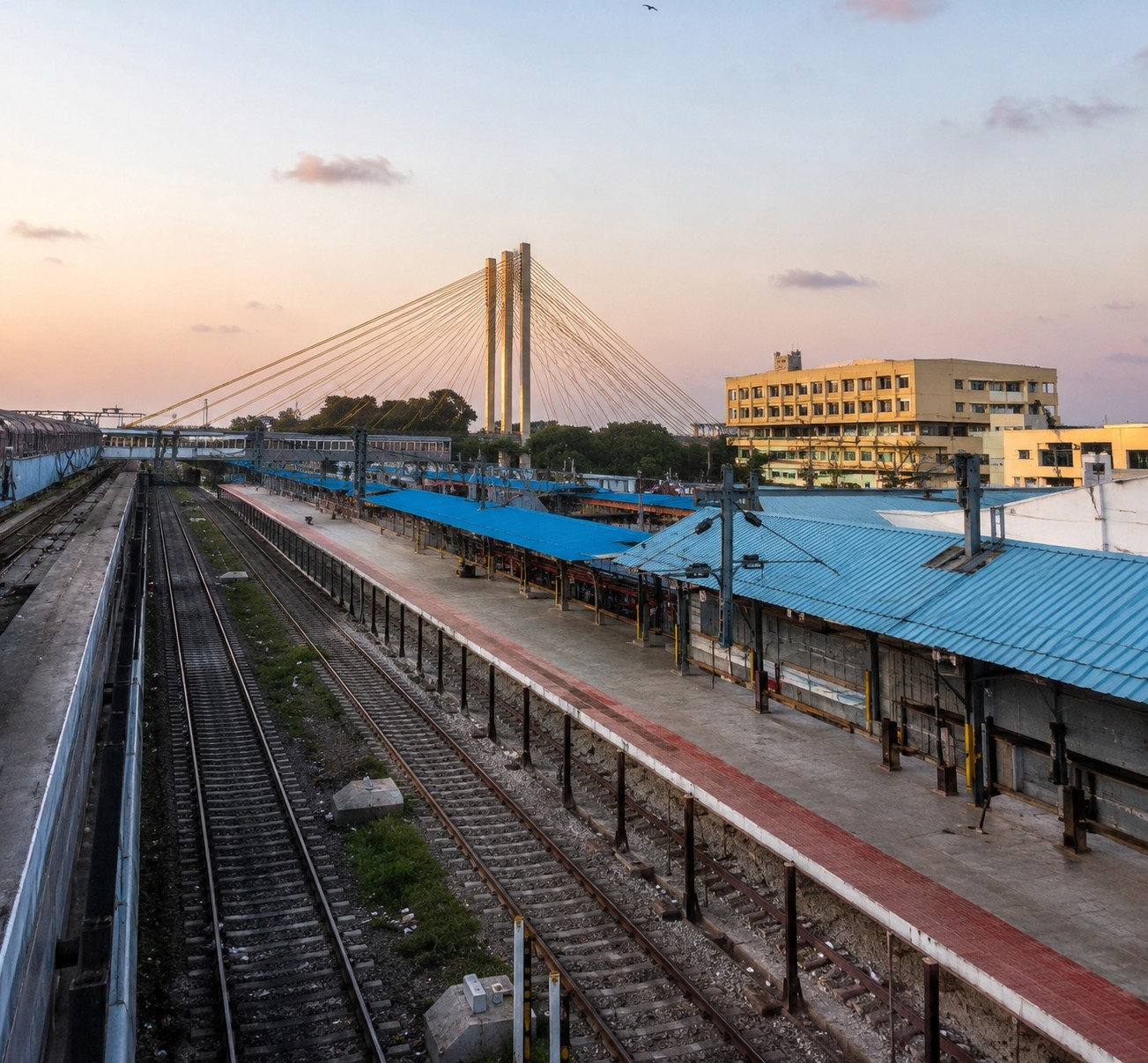
Good news for Nagpur’s rail passengers — Platform No. 2 at Nagpur Junction is back.

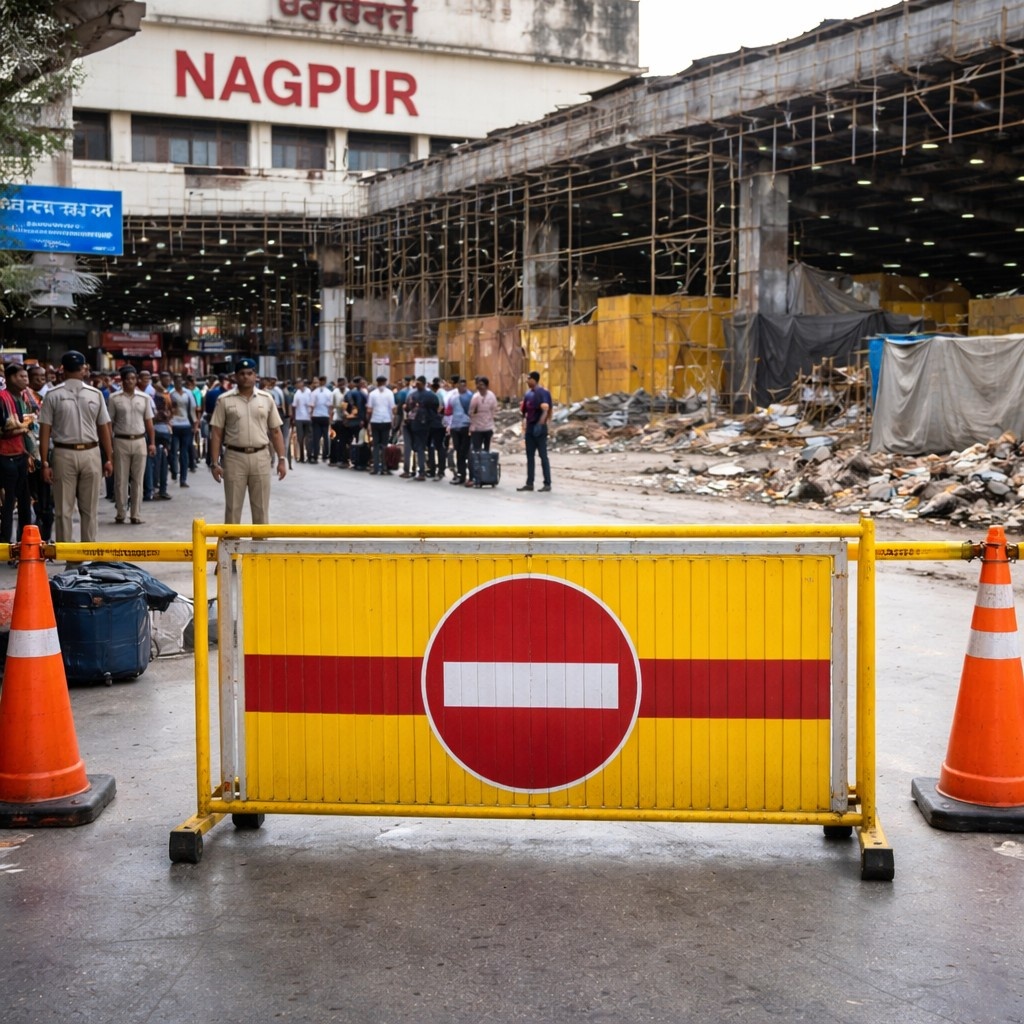
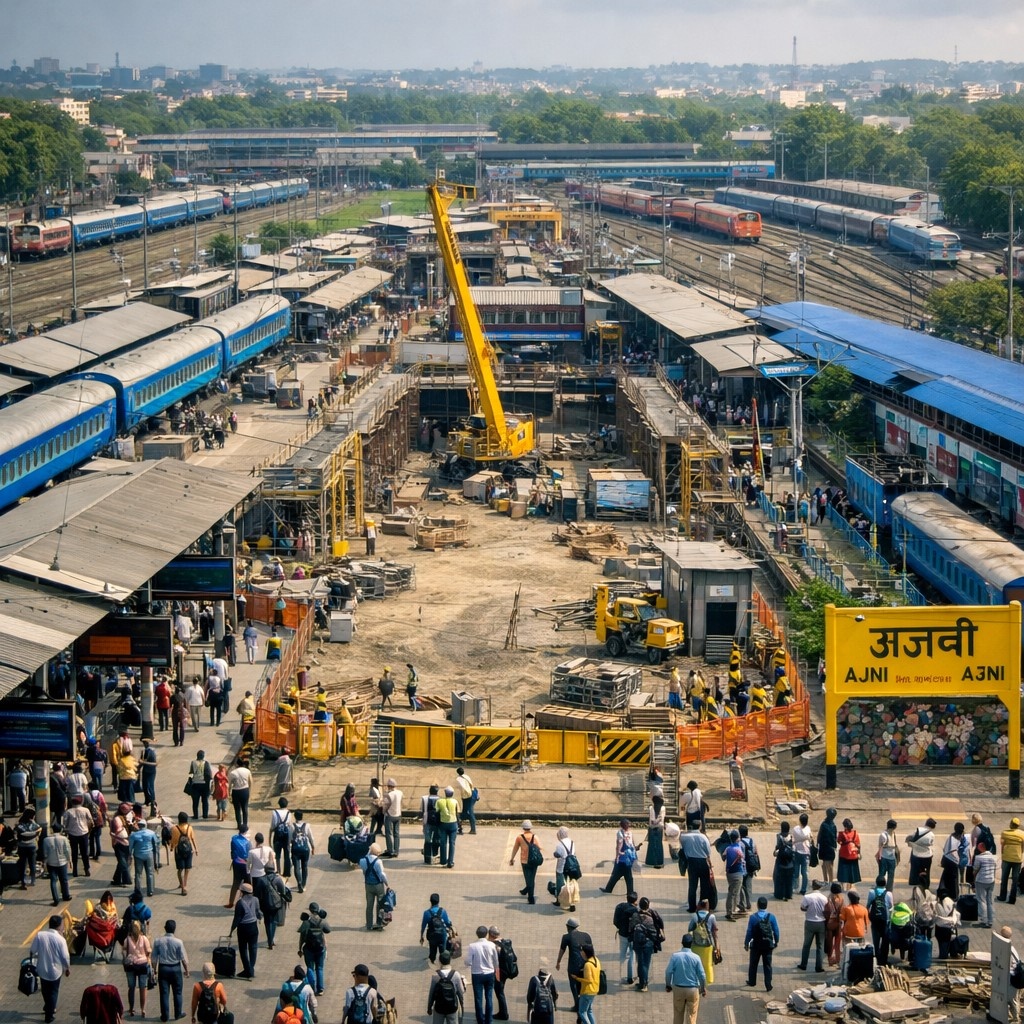
After remaining closed for approximately 60 days — during which thousands of passengers experienced train diversions, short-terminations at Ajni, and extra confusion at the station — Platform No. 2 at Nagpur Railway Station has officially reopened.

The platform was shut on April 8, 2026 for major redevelopment and infrastructure upgrade work, with an initial schedule of 52 days. The actual closure extended to approximately 60 days — but the work is now done, and passengers can once again use the upgraded platform.


The 60-Day Closure: What Happened

Detail Information
Platform closed Platform No. 2, Nagpur Junction
Closure date April 8, 2026
Originally planned duration 52 days (until May 29)
Actual duration ~60 days
Reopened June 2026
Work executed by Rail Land Development Authority (RLDA)
Purpose Station infrastructure and passenger amenity upgrades

The closure was executed by the Rail Land Development Authority (RLDA) — the Railway’s dedicated infrastructure development arm — as part of the broader Nagpur Railway Station Redevelopment Project.

The work schedule was aligned with the Non-Interlocking (NI) work at Gondia Railway Station under South East Central Railway — utilising the shadow block period for safe execution while minimising disruption to train operations.


What Was Upgraded at Platform 2?

While Central Railway has not released a detailed public list of every improvement made, the 60-day closure for RLDA-executed infrastructure work is consistent with the following categories of upgrades being undertaken as part of the Nagpur Station redevelopment:

Structural upgrades — strengthening of platform surface, edge treatment, and structural foundations to modern standards.

Passenger amenity improvements — better seating, improved lighting, upgraded signage, and enhanced accessibility features for differently-abled passengers.

Integration with redevelopment plans — Nagpur Railway Station is undergoing a comprehensive redevelopment under the RLDA model — one of Indian Railways’ most ambitious station transformation projects. Platform work feeds into this larger redesign.

The overall Nagpur station redevelopment envisions a world-class transit hub — with improved passenger circulation, commercial spaces, better connectivity to the city, and modern facilities befitting a station that handles over 125 express trains and 250 goods trains daily.


Trains Affected During the Closure — Now Restored

During the 60-day closure, several trains were diverted, short-terminated, or short-originated to manage operations without Platform 2. These changes are now reversed.

Trains now restored to normal operations:

Nagpur-Madgaon Special (Train No. 01139):

  • During closure: Originated from Ajni instead of Nagpur
  • Now: Departs from Nagpur Railway Station as normal

Madgaon-Nagpur Special (Train No. 01140):

  • During closure: Short-terminated at Ajni instead of Nagpur
  • Now: Terminates at Nagpur Railway Station as normal

Diverted trains now back on normal routes:

  • Train No. 07075/07076 Hyderabad–Gorakhpur/return
  • Train No. 05073/05074 KSR Bengaluru–Lal Kuan Special
  • Train No. 06509/06510 KSR Bengaluru–Danapur Special

All these trains — which were running via the longer Wardha–Badnera–Chandur Bazar–Narkher–Itarsi diversion route — are now back on their normal routes.


What Platform 2’s Reopening Means for Passengers

For regular Nagpur Junction users, the reopening of Platform 2 brings immediate practical relief:

No more Ajni confusion. During the closure, passengers on Nagpur-Madgaon and Madgaon-Nagpur trains had to travel to or from Ajni station — a secondary station less connected to Nagpur’s urban transport network. This is now over.

Better platform capacity. With Platform 2 closed, all operations were concentrated on fewer platforms — creating crowding, confusion, and pressure on station management. Restoring Platform 2 distributes passenger load more evenly.

Shorter travel diversions. The trains that were running on longer diversion routes — adding time and distance to their journeys — are back on their direct routes, reducing travel times for passengers on those services.


The Bigger Picture: Nagpur Station Redevelopment

Platform 2’s reopening is a milestone in the broader, long-term transformation of Nagpur Junction — one of India’s most strategically located railway stations, sitting at the geographic centre of the country.

The Nagpur station redevelopment — one of Indian Railways’ flagship projects under the Station Redevelopment Programme — envisions transforming the 19th-century station into a modern, world-class transit hub. The project includes:

  • Completely redesigned passenger circulation areas
  • Modern commercial facilities including retail, food courts, and hospitality
  • Integrated Metro connectivity — connecting Nagpur Metro’s Aqua Line with mainline railway services
  • Improved multimodal connectivity to buses and auto-rickshaws
  • Modern amenities — waiting halls, clean toilets, accessibility for differently-abled passengers

Platform 2’s upgrade is one piece of this larger vision — executed under a carefully planned block period that minimised disruption to daily train operations.


Next Phase: Platforms 6 and 7

Railway watchers should note that Platform 2’s reopening does not mean all station work is complete. The Nagpur station redevelopment is an ongoing, multi-phase project.

Earlier reports indicated that Platforms 6 and 7 are also scheduled for a 70-day closure for construction work — with pillar erection forming part of the redevelopment. This closure has not yet begun (as of this report), but passengers who regularly use trains from platforms 6 and 7 — including the Ahmedabad-Howrah Express, Mumbai-Howrah Geetanjali Express, and Sewagram Express — should stay alert for announcements.

Q: Is Platform 2 at Nagpur station open now? Yes — Platform No. 2 at Nagpur Junction has reopened after approximately 60 days of closure for redevelopment work.

Q: Does the Nagpur-Madgaon train now leave from Nagpur station again? Yes — the Nagpur-Madgaon Special (Train No. 01139) and Madgaon-Nagpur Special (01140) now operate from/to Nagpur Railway Station — no longer from Ajni.

Q: When will Nagpur Railway Station redevelopment be complete? The full redevelopment is a multi-phase, multi-year project. Platform 2 is one completed phase. Platforms 6 and 7 are expected to close for work in a future phase. The overall completion timeline has not been officially announced.

Q: How do I check which platform my train departs from? Use the NTES app (National Train Enquiry System) or visit enquiry.indianrail.gov.in for real-time platform information before your journey.

Q: Are there any other platforms currently closed at Nagpur? As of this report, no other platform closures are confirmed. Passengers should watch official Central Railway announcements for updates on platforms 6 and 7 work.


Nagpur’s Railway Renaissance

The 60-day Platform 2 upgrade is a small but meaningful step in Nagpur Railway Station’s long journey from a historic British-era station to a modern, world-class transit hub.

Nagpur’s railways — like its roads, airports, and metros — are in the midst of simultaneous transformation. Just as the Indora-Dighori flyover awaits its inauguration, the airport is being modernised with a ₹7,000 crore PPP investment, and Nagpur Metro continues to expand its network, the railway station’s redevelopment is adding another dimension to the city’s emerging status as a world-class multimodal transport hub.

Platform 2 is open. Nagpur is moving forward.

Nagpur Updates will keep you informed about the next phases of Nagpur Railway Station’s redevelopment, including the upcoming Platforms 6 and 7 closure. Stay tuned.


Tags: Nagpur Railway Station, Platform 2, Central Railway, Nagpur Junction, Railway Redevelopment, Train News Nagpur, RLDA Nagpur, Nagpur Local News 2026

Nagpur–Madgaon Special Train Flagged Off by Gadkari — Goa Travel Gets Easier for Thousands of Nagpur Passengers

Published: May 16, 2026 | Category: Nagpur Local | By: Nagpur Updates Desk


Going to Goa just got a whole lot easier.

Union Minister Nitin Gadkari flagged off the Nagpur–Madgaon Special Train from Platform No. 8 at Nagpur Railway Station on Friday, May 16, 2026. The green flag from Nagpur’s own MP marks the formal launch of a direct rail link that thousands of Nagpur and Vidarbha residents have been waiting for — a convenient, affordable, direct route to Goa by train.

No more changing trains. No more detours via Mumbai. Just board in Nagpur and arrive in Madgaon, Goa.


Train Details: Everything You Need to Know

Here is the complete information for passengers planning to travel on this train:

Train No. 01139 — Nagpur to Madgaon (Goa)

  • Origin: Nagpur Railway Station
  • Destination: Madgaon (Margao), Goa
  • Operating Days: Wednesdays and Saturdays (bi-weekly)

Train No. 01140 — Madgaon to Nagpur (Return)

  • Origin: Madgaon (Margao), Goa
  • Destination: Nagpur Railway Station
  • Operating Days: Thursdays and Sundays (bi-weekly)

The train operates bi-weekly in each direction — giving passengers two options per week to travel to Goa and two options to return. This frequency is well-suited for weekend travellers and those planning short Goa holidays.


Route and Halts

The Nagpur–Madgaon Special passes through several major stations — making it accessible to passengers from across the Vidarbha region and central Maharashtra.

Key halts on the route include Wardha, Sewagram, Nagpur on the Vidarbha end, then proceeding through Bhusaval, Jalgaon and onwards through the Konkan coastline before reaching Madgaon in South Goa.

Passengers from smaller towns along the route can board at intermediate stations — making this not just a Nagpur–Goa connection but a Vidarbha–Goa lifeline.


Why This Train Matters

For Nagpur residents, Goa has always been a popular destination. It is the go-to choice for beach holidays, family vacations, and long weekends. However, getting there has historically been a pain.

The options available before this train were all inconvenient in some way. Flying to Goa from Nagpur is expensive — and air fares spike sharply during peak season. Driving is an option, but the route is long and tiring. Taking an existing train often meant travelling to Pune or Mumbai first and then changing — adding hours and cost to the journey.

A direct special train from Nagpur to Madgaon eliminates all of these problems in one stroke. It is affordable. It is direct. It departs from Nagpur itself. And it arrives at Madgaon — which is centrally located in South Goa, close to popular destinations like Colva, Benaulim, and Margao city.


Gadkari’s Track Record on Rail Connectivity

The flagging off of this train carries the personal touch of Nitin Gadkari — Nagpur’s MP and one of India’s most infrastructure-focused ministers.

Gadkari has consistently pushed for improved rail and road connectivity for Nagpur and Vidarbha — a region that has historically been underserved in terms of direct transport links to major tourist and commercial destinations. His presence at the flagging off ceremony is a signal that this train is the result of sustained advocacy at the highest political level.

This is not the first time Gadkari has personally flagged off a major connectivity initiative for Nagpur in recent weeks. His announcement of satellite-based toll collection replacing traditional toll plazas by December 2026 and his role in the Union Cabinet’s approval of Nagpur Airport’s ₹7,000 crore PPP modernisation reflect a consistent pattern of working to make Nagpur better connected to the rest of India and the world.

The Nagpur–Madgaon train adds another dimension to that connectivity story — this time, for leisure travel.


Booking: How to Reserve Your Seat

Tickets for the Nagpur–Madgaon Special Train (01139/01140) are available through all standard Indian Railways booking channels:

  • IRCTC website — irctc.co.in
  • IRCTC Rail Connect app — available on Android and iOS
  • Railway reservation counters at Nagpur Railway Station
  • Authorised travel agents

The train offers multiple classes of accommodation. Passengers are advised to book early — especially for Wednesdays and Saturdays, which are popular travel days for leisure trips.

For real-time running status, seat availability, and platform information, passengers can use the NTES app or call the Railway Helpline at 139.


Important Note for Passengers

Passengers should note that the train has been operating from Ajni station (instead of Nagpur main station) during certain periods due to infrastructure upgrade work on Platform No. 2 at Nagpur Railway Station. The platform upgrade work was scheduled until May 29, 2026.

With Gadkari’s flagging off on May 16 from Platform No. 8 at Nagpur Railway Station, the train appears to have returned to its main station origin. Passengers are advised to verify the departure platform on the day of travel using the NTES app or by calling 139.


Nagpur’s Growing Connectivity Story

The launch of the Nagpur–Madgaon Special Train is the latest chapter in Nagpur’s rapidly expanding connectivity story.

In recent weeks alone, Nagpur has seen Qatar Airways resume direct Doha flights from May 21, the Union Cabinet approve ₹7,000 crore airport modernisation, and now a new direct train to Goa. Air, road, and rail — Nagpur’s connections to the rest of the country and the world are expanding on every front simultaneously.

For a city that sits at the geographical heart of India, this is exactly the kind of momentum it deserves.

Nagpur Updates wishes all passengers a comfortable and enjoyable journey on the new Nagpur–Madgaon Special Train. Goa is calling — and now, getting there is easier than ever!


Tags: Nagpur Madgaon Train, Nitin Gadkari, Nagpur Railway, Goa Travel, Indian Railways, Central Railway, Nagpur Connectivity, Nagpur Local News 2026

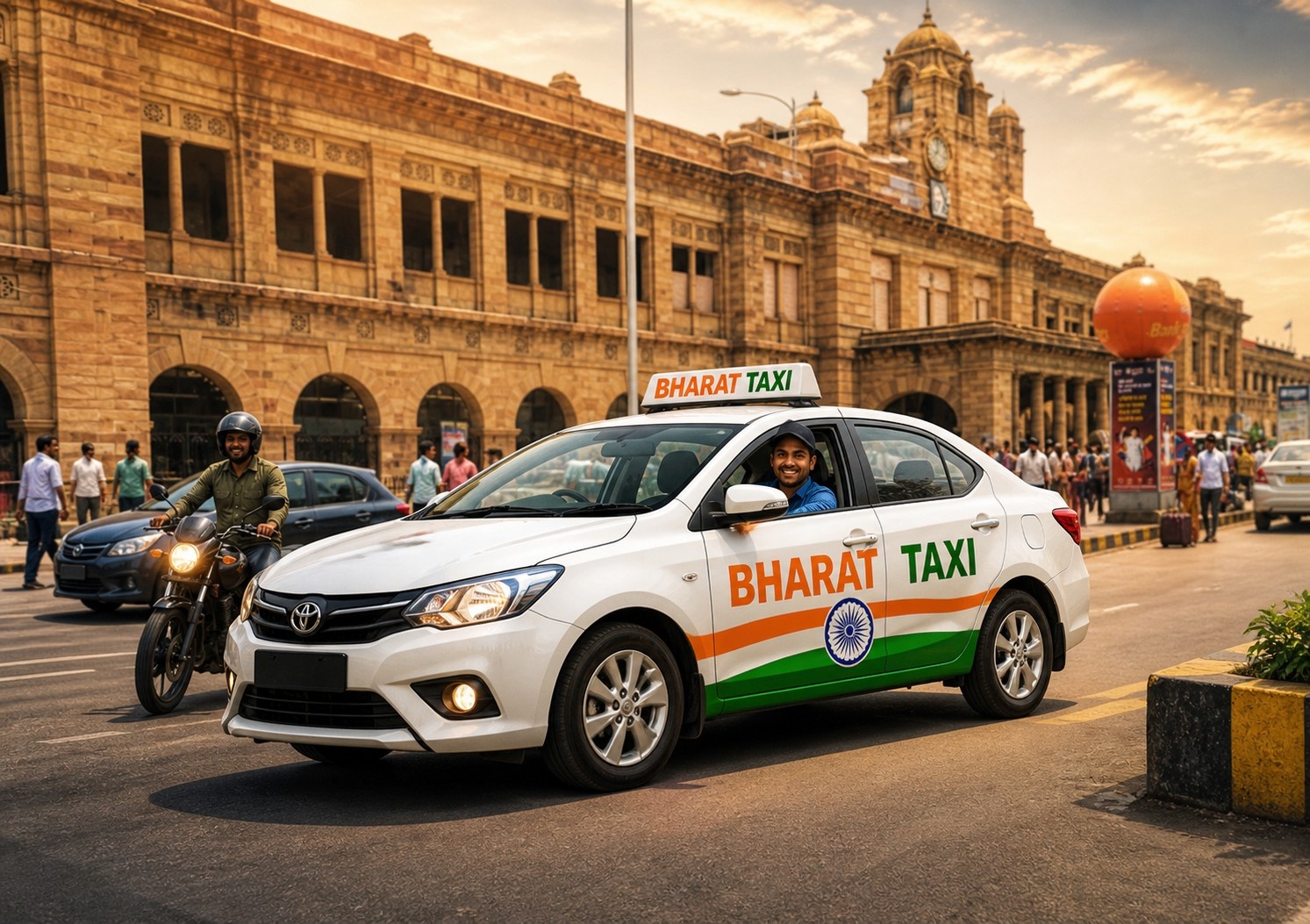
BharatCabs Is Now at Nagpur Railway Station — But One Gate Is Open While the Other Remains a Mess

Nagpur, May 1, 2026. BharatCabs Nagpur Railway Station: If you have ever stepped off a train at Nagpur Railway Station and immediately faced the chaos of finding reliable transport — the auto-rickshaw overcharging, the lack of metered cabs, the long walk to find anything legitimate — today marks a meaningful change.

BharatCabs, the app-based cab aggregator, has officially commenced operations at Nagpur Railway Station from Friday, May 1, 2026. The Central Railway has allocated a designated space on the west gate premises of the station for BharatCabs’ pick-up and drop-off operations. A fleet of around 60 vehicles has been deployed — making it a significant addition to last-mile connectivity options at one of Maharashtra’s busiest railway junctions.

The resumption of organised cab services inside Nagpur Railway Station premises comes after a gap of nearly 18 months. The last time cabs had operated from a designated space within the station was in October 2024.


How It Started — And the Regulatory Situation Behind It

The development was confirmed by Senior Divisional Commercial Manager Aman Mittal, who clarified a question that many commuters and transport observers had been asking: how can BharatCabs operate at the station when there is no formal aggregator policy in place from the Maharashtra state government?

Mittal’s explanation was clear and important. The Regional Transport Office (RTO), he said, is currently not in a position to issue aggregator licences to operators like BharatCabs — because the state government is still in the process of drafting a formal policy that will govern cab aggregators across Maharashtra.

However, the absence of a formal aggregator licence does not make BharatCabs’ operations illegal. This is because there is currently no existing regulatory framework that specifically governs aggregator licences. In the absence of such a framework, the RTO simply has no legal basis to either issue or deny the licence.

Until the state policy is finalised, BharatCabs — like other app-based services currently functioning across Maharashtra — will continue to operate as a registered transport operator under the state government. Its role is facilitating connectivity for passengers arriving at and departing from Nagpur Railway Station. Once the state policy is finalised, all cab operators including BharatCabs will be required to comply with whatever guidelines are prescribed.

This is a pragmatic and legally sound position. The railway station needed organised cab services. BharatCabs can legally provide them under existing transport operator registration. The policy framework that will formally govern aggregators is on its way — and when it arrives, the compliance framework will follow.


What BharatCabs at Nagpur Station Means for Commuters

For passengers arriving at or departing from Nagpur Railway Station, the practical impact of BharatCabs’ presence at the west gate is significant and immediate.

You can now book a BharatCabs vehicle directly through the app before your train arrives, with the pick-up point set to the designated BharatCabs zone at the station’s west gate. The designated space means the vehicle waits in an organised, clearly marked area — rather than circling outside the station or asking you to walk to a distant road.

The fleet of approximately 60 vehicles means availability should be reasonable during most hours, including during the arrival of major express and intercity trains when demand spikes. For passengers who have previously had to negotiate with auto-rickshaw drivers — often facing inflated fares, refusals to use the meter, or demands for extra charges for luggage — the availability of a metered, app-booked cab at a fixed, transparent fare is a genuinely useful alternative.

For outstation visitors arriving in Nagpur for the first time — tourists, business travellers, families — having an organised cab zone at the station’s west gate removes one of the most stressful elements of arriving in an unfamiliar city: figuring out how to get from the station to your destination without being overcharged.


The East Gate Problem — Still Unresolved

However, the picture at Nagpur Railway Station on May 1 is not entirely positive. While BharatCabs has begun operations smoothly at the west gate, the situation at the station’s east side — near the Santra Market gate — remains unresolved and continues to cause significant inconvenience for a large number of passengers.

Ongoing friction between auto-rickshaw operators and cab operators on the eastern side of the station has not been resolved. This conflict — which has persisted for a considerable period — is restricting seamless access for passengers approaching from that side, compelling them to walk several hundred metres to reach their rides.

For passengers who arrive at the station’s east side — particularly those coming from or going toward Itwari, Gandhibagh, Mahal, and the Santra Market areas — this is not a minor inconvenience. Walking several hundred metres to reach transport, while carrying heavy luggage, navigating a busy road, and often in harsh weather conditions — Nagpur’s summer temperatures regularly exceed 45°C — is a genuine hardship, particularly for elderly passengers, families with children, and those with large amounts of baggage.

Authorities have acknowledged the problem. Their current position is that the east side access issue is expected to ease only after the station redevelopment project under the Amrit Bharat Station Scheme is fully completed. The redevelopment, which is currently in progress, will redesign the station’s approaches, passenger circulation areas, and external connectivity in ways that are expected to reduce the current friction between different transport operators.

That is, however, a long-term solution to a current problem. Until the redevelopment is complete — which could take months or longer — passengers on the eastern side of Nagpur Station will continue to face the same access difficulties.


18 Months Without Organised Cabs — What Happened?

The last time cabs had operated from a designated space within Nagpur Railway Station premises was in October 2024. The 18-month gap between October 2024 and May 2026 is significant — and represents the period during which Nagpur station’s passengers were left without the organised cab service option that major railway stations across India typically provide.

The dispute between cab aggregators and auto-rickshaw operators that played out over this period is not unique to Nagpur. Across India, the arrival of app-based cab services at railway stations has created tension with the pre-existing ecosystem of auto-rickshaws, pre-paid taxi services, and local cab operators who had previously dominated station transport. In Nagpur, that tension was severe enough to displace cab services from the station premises entirely for 18 months.

The resumption of BharatCabs at the west gate is therefore not just a new development — it is a restoration of a service that passengers had lost, and whose absence had been repeatedly cited as a gap in the station’s last-mile connectivity.


The Broader Context: Nagpur Station’s Last-Mile Challenge

Nagpur Railway Station — officially Nagpur Junction — is one of the busiest railway stations in central India. It handles a very high volume of daily passengers including long-distance intercity travellers, suburban commuters from nearby towns, and freight-related movement. The station’s connectivity to the rest of the city has always been a challenge given its central location — surrounded by dense commercial and residential areas with limited road width.

The introduction of Nagpur Metro has significantly improved connectivity for some passengers — the Metro’s Sitabuldi corridor brings the network close to the station area. But for the majority of passengers who need point-to-point transport to a specific destination, a cab or auto-rickshaw remains the most practical option.

Cab aggregators with app-based booking, transparent pricing, GPS-tracked vehicles, and cashless payment options represent the most passenger-friendly version of this transport category — and their organised presence at the station’s west gate is a long-overdue improvement.

The real test will come in the weeks ahead, as BharatCabs’ operations settle in and the volume of passengers using the service builds. If the 60-vehicle fleet proves sufficient to meet demand at peak hours, and if the service quality and pricing remain consistent with what passengers expect from an app-based aggregator, the west gate experience will improve meaningfully.

The east gate, meanwhile, remains a problem that neither BharatCabs, NMC, nor the railway administration has solved — and solving it will require either a negotiated resolution to the auto-cab operator conflict or the completion of the Amrit Bharat Station redevelopment, whichever comes first.


What Passengers Arriving at Nagpur Station Need to Know Right Now

If you are arriving at or departing from Nagpur Railway Station and want to use BharatCabs, here is what you need to know:

Download the BharatCabs app before you travel if you do not already have it installed. The designated pick-up and drop-off zone is at the west gate of Nagpur Railway Station — not the Santra Market east gate side. When booking, set your pick-up location to Nagpur Railway Station west gate. The fleet currently consists of approximately 60 vehicles, so booking a few minutes before you need the cab is advisable during busy train arrival periods.

If you are approaching the station from the Itwari or Santra Market side and want to use BharatCabs, you will currently need to walk to the west gate — until the east gate access issue is resolved.

Auto-rickshaws and pre-paid taxi services remain available at the station for passengers who prefer them or who need transport to destinations not well served by app cabs.

Good News for Nagpur Travellers: 6 Weekend Special Trains to Run Between Mumbai, Pune and Nagpur This Week — Full Schedule Inside

Nagpur, April 30, 2026. Pune Nagpur weekend special train May 2026: If you have been struggling to find a confirmed train seat between Nagpur and Mumbai or Nagpur and Pune this weekend, Central Railway has just made your life significantly easier.

In response to the surge in passenger demand during the summer travel season, Central Railway has announced six weekend special train services connecting Nagpur with Mumbai’s Chhatrapati Shivaji Maharaj Terminus (CSMT) and Pune. The trains will run across the May 1–3, 2026 long weekend — which coincides with Maharashtra Day on May 1 — and bookings for most services are already open.

Here is everything you need to know: train numbers, departure times, halt stations, coach composition, and exactly how to book your ticket.


Why These Trains Were Announced

Summer is the single busiest travel season on Indian Railways, and the Mumbai–Nagpur and Pune–Nagpur corridors are among the most heavily used routes in Maharashtra. Every year between April and July, students returning home for summer holidays, families travelling for vacations, and workers visiting their native places push seat availability on regular trains to the breaking point.

The May 1 Maharashtra Day long weekend has added extra pressure this year, with demand spiking across all routes connecting Nagpur to western Maharashtra. Central Railway has responded by adding these six special services on top of the regular summer special trains already running — giving passengers additional options at what is typically the most difficult time of year to find a confirmed seat.


Complete Train Schedule — All 6 Services

Mumbai (CSMT) — Nagpur Weekend Specials: 4 Services

Train No. 01021 — CSMT to Nagpur

This train departs from Chhatrapati Shivaji Maharaj Terminus (CSMT), Mumbai at 12:30 AM (midnight) and arrives at Nagpur at 3:45 PM on the same day.

Running dates: Friday, May 1, 2026 and Sunday, May 3, 2026 (2 services total)

Halt stations: Dadar, Thane, Kalyan, Nashik Road, Manmad, Jalgaon, Bhusaval, Malkapur, Shegaon, Akola, Murtizapur, Badnera, Dhamangaon, Wardha

Coach composition: 1 AC 3-Tier, 16 Sleeper Class, 2 General Second Class, 2 General Second Class cum Guard’s Brake Van


Train No. 01022 — Nagpur to CSMT

This train departs from Nagpur at 9:40 PM and arrives at CSMT the next day at 1:50 PM.

Running dates: Friday, May 1, 2026 and Sunday, May 3, 2026 (2 services total)

Halt stations: Wardha, Dhamangaon, Badnera, Murtizapur, Akola, Shegaon, Malkapur, Bhusaval, Jalgaon, Manmad, Nashik Road, Igatpuri (halt only on Train 01022), Kalyan, Thane, Dadar

Coach composition: 1 AC 3-Tier, 16 Sleeper Class, 2 General Second Class, 2 General Second Class cum Guard’s Brake Van

Booking status: Reservations for Train Nos. 01021 and 01022 opened on April 29, 2026 at all computerised reservation centres and on IRCTC.


Pune — Nagpur Weekend Specials: 2 Services

Train No. 01467 — Pune to Nagpur

This train departs from Pune at 3:50 PM and arrives at Nagpur at 8:05 AM the following morning.

Running date: Friday, May 1, 2026 (1 service)

Halt stations: Uruli, Daund Chord Line, Ahilyanagar, Belapur, Kopergaon, Manmad, Jalgaon, Bhusaval, Malkapur, Shegaon, Akola, Badnera, Dhamangaon, Wardha

Coach composition: 1 AC 2-Tier, 1 AC 3-Tier, 12 Sleeper Class, 4 General Second Class, 2 General Second Class cum Guard’s Brake Van


Train No. 01468 — Nagpur to Pune

This train departs from Nagpur at 7:00 AM and arrives at Pune at 11:30 PM the same evening.

Running date: Sunday, May 3, 2026 (1 service)

Halt stations: Wardha, Dhamangaon, Badnera, Akola, Shegaon, Malkapur, Bhusaval, Jalgaon, Manmad, Kopergaon, Belapur, Ahilyanagar, Daund Chord Line, Uruli

Coach composition: 1 AC 2-Tier, 1 AC 3-Tier, 12 Sleeper Class, 4 General Second Class, 2 General Second Class cum Guard’s Brake Van

Booking status: Reservations for Train Nos. 01467 and 01468 opened on April 29, 2026 at all computerised reservation centres and on IRCTC.


Quick Reference — All 6 Trains at a Glance

Train No. Route Departure Arrival Date(s)
01021 CSMT → Nagpur 12:30 AM 3:45 PM May 1 & May 3
01022 Nagpur → CSMT 9:40 PM 1:50 PM (next day) May 1 & May 3
01467 Pune → Nagpur 3:50 PM 8:05 AM (next day) May 1 only
01468 Nagpur → Pune 7:00 AM 11:30 PM May 3 only

Who These Trains Are Most Useful For

The Mumbai–Nagpur weekend specials (01021/01022) are ideal for passengers who need to travel between Nagpur and Mumbai specifically around the Maharashtra Day holiday — whether for family visits, holiday travel, or returning to work in Mumbai after visiting Nagpur for the long weekend.

The Pune–Nagpur weekend specials (01467/01468) serve a different but equally important travel market — the large number of people who travel between Nagpur and Pune for education, business, and family reasons. The Pune–Nagpur route does not have the same frequency of direct trains as the Mumbai–Nagpur route, making these special services especially valuable for passengers who would otherwise need to travel via Mumbai or take an indirect route.

For passengers travelling from intermediate stations — Wardha, Badnera (Amravati), Akola, Shegaon, Bhusaval, Nashik Road — these trains also provide important weekend connectivity options on both corridors.


How to Book Your Ticket — Step by Step

Booking for reserved coaches (AC and Sleeper) on all four train numbers (01021, 01022, 01467, 01468) is open right now through multiple platforms:

The fastest and most convenient method is through the IRCTC website at irctc.co.in or the IRCTC Rail Connect app on your smartphone. Log in, search for the train number directly, select your date, choose your coach class, and complete payment through UPI, net banking, or card. Your e-ticket is generated immediately.

You can also book at any computerised reservation counter (PRS counter) at Nagpur Railway Station or any other railway station in India. Carry a valid photo ID for the booking.

The RailOne app is another Central Railway-endorsed booking platform where these trains 9Pune Nagpur weekend special train May 2026) are available.

For unreserved General Second Class coaches, tickets can be purchased through the UTS (Unreserved Ticketing System) app or at the unreserved ticketing counter at the station — these are available at normal charges and do not require advance booking.

Given that this is a long weekend with high travel demand, seats in Sleeper and AC coaches are likely to fill quickly. If you need a confirmed seat, booking as early as possible is strongly advised.


What to Do If These Trains Are Also Full

If the special trains announced above are already fully booked by the time you read this, you still have several options.

Central Railway has been running a substantial summer special train programme since mid-April, with multiple Pune–Nagpur and Mumbai–Nagpur services operating on various days of the week. Train No. 01457 (Pune to Nagpur) runs every Wednesday as a weekly summer special and is currently active through July 15, 2026. Train No. 01469 (Pune to Nagpur AC Special) (Pune Nagpur weekend special train May 2026) runs every Tuesday through the summer. Check IRCTC for seat availability on these services for your specific travel dates.

For passengers with flexible dates, the Tatkal quota opens 24 hours before departure and sometimes has seats available even when the regular quota is fully booked. The Ladies quota and Senior Citizen quota on each train also provide additional confirmed seat options for eligible passengers.

If no confirmed seat is available, the Waitlisted ticket strategy is worth considering for popular trains — many waitlisted tickets get confirmed as the departure date approaches and passengers cancel confirmed bookings.


The Bigger Picture: Central Railway’s Summer 2026 Response | Pune Nagpur weekend special train May 2026

These six weekend specials are part of a much larger effort by Central Railway to manage summer travel demand across Maharashtra. Central Railway announced over 120 additional Trains on Demand earlier this summer, with scheduled summer special services running on major corridors through July 2026.

The Nagpur–Mumbai and Nagpur–Pune corridors have been among the most congested, particularly because Nagpur serves as a gateway to Vidarbha for the large Nagpurian diaspora living in Mumbai and Pune — people who work in those cities but have family, property, and roots in Nagpur and the surrounding region.

Maharashtra Day on May 1 consistently triggers one of the highest single-weekend demand spikes on these corridors, as many people use the holiday as an opportunity for a short trip home. Central Railway’s decision to add six additional services specifically for this weekend is a direct response to that demand pattern — and a welcome one for the thousands of passengers who had been finding confirmed seats unavailable on regular services.

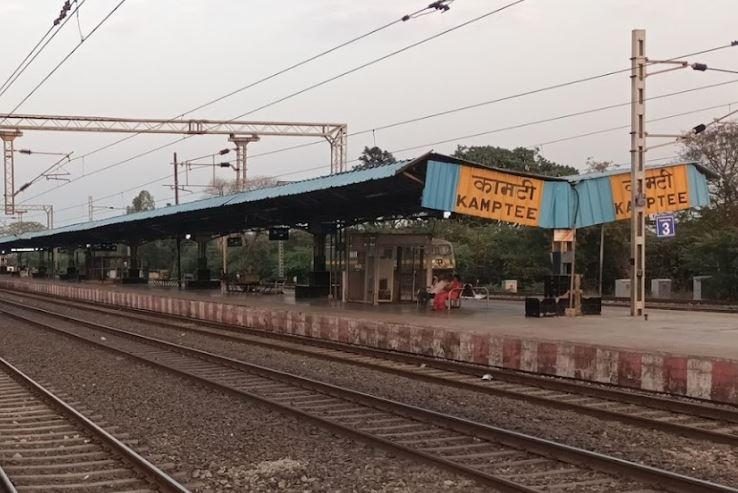
Kamthi Railway Station’s Foot Overbridge Is So Long That Passengers Would Rather Risk Their Lives Than Use It

Nagpur, April 26, 2026.

Every single day, something deeply worrying plays out on the platforms of Kamthi Railway Station in Nagpur. Instead of using the designated foot overbridge to cross from Platform 2 to Platform 1, passengers — including elderly men and women, people carrying heavy luggage, and even families with small children — are simply stepping onto the railway tracks and crossing them on foot.

No fence stops them. No railway staff intervenes. And no solution has come — despite years of complaints, official visits, and formal requests to railway authorities.

This is not recklessness. This is what happens when a railway administration builds infrastructure so impractical that the “safe” option becomes the hardest one.


The Foot Overbridge Nobody Wants to Use

When the Nagpur Division built a new foot overbridge at Kamthi Station a few years ago, it was meant to make things better for passengers. It did the opposite.

The new bridge is disproportionately long — so long that crossing it with luggage in hand feels like a full workout. For a daily commuter carrying a bag to work, it is a significant inconvenience. For an elderly passenger with a suitcase, it is genuinely painful. For a mother managing children and bags at the same time, it is simply impossible.

So passengers do what people everywhere do when official infrastructure fails them: they find a shortcut. And in a railway station, the only available shortcut is the most dangerous one imaginable — walking across live railway tracks.

Passengers have been clear and consistent about why they do this. It is not that they do not understand the risk. They do. But when the “safe” alternative requires climbing a long, steep bridge with heavy bags under Nagpur’s punishing heat, risk begins to feel more acceptable than the official option.


A Problem Known to Everyone, Solved by Nobody

What makes this situation particularly frustrating is that it is not a secret. Railway officials know about it. Passenger associations have raised it. The Railway Advisory Committee has formally written to senior railway officers multiple times, requesting urgent remedial action.

The matter went all the way to the General Manager level. The GM of Bilaspur Division personally visited Kamthi Station and directed that the problem be resolved quickly. Specific instructions were given. Timelines were discussed.

And then — nothing changed.

The tracks are still being crossed. The overbridge is still too long. The risk is still there every single day.

This is the part that residents of Kamthi find most demoralising. It is one thing when a problem goes unheard. It is something else entirely when the problem is heard at the highest levels, acknowledged as real, and still left unaddressed. It gives passengers the clear message that their safety is simply not a priority.


Amrit Bharat Station: The Promise That Moves at a Crawl

There is a silver lining in this story — but it comes wrapped in frustration.

Kamthi Railway Station is included in Prime Minister Narendra Modi’s ambitious Amrit Bharat Station Scheme, under which hundreds of railway stations across India are being upgraded with modern facilities, improved passenger amenities, better accessibility infrastructure, and new-look interiors.

Work is indeed underway at Kamthi under this scheme. Boards have gone up. Construction activity has been visible on the premises.

But the pace of work has been so painfully slow that locals have started comparing it — unfavourably — with a tortoise. The specific infrastructure that would actually solve the overbridge problem — lifts and escalators — remains incomplete. Lift work has been stuck for a long time. Escalator installation appears to have stalled as well.

The Passenger Association and local civic groups have been making a specific, repeated demand: install working lifts and escalators at Kamthi Station as the first priority, so that passengers with luggage, elderly citizens, and differently-abled individuals can use the overbridge without the physical ordeal it currently involves. If the bridge were accessible — if you could take a lift up and a lift down — the temptation to cross the tracks would reduce dramatically.

That request has been on record for years. The lifts are still not working.


What the Law Says — and Why It Is Not Enough

Under the Railways Act, 1989, unauthorised entry onto railway tracks is a punishable offence. Passengers who cross the tracks illegally can technically be fined or prosecuted.

But enforcing this law against passengers who cross tracks at Kamthi would be a deeply unjust application of legal power. The problem was not created by the passengers. It was created by a railway administration that built an overbridge too long to be practically usable and then failed to install the accessibility features that would have made it manageable.

Punishing passengers for adapting to the administration’s failure is not a solution — it is an insult added to an injury. The Railway Protection Force (RPF) and station staff, who are present at Kamthi, have not made track-crossing a major enforcement focus, perhaps because they recognise this reality themselves.

The only real solution is the one being demanded by passengers: make the overbridge usable. Install the lifts. Complete the escalator work. Make the Amrit Bharat Station upgrade deliver on its promise at Kamthi — before a preventable tragedy forces action that should have happened years ago.


What Needs to Happen — and Who Needs to Act

The situation at Kamthi Station is a clear case of a system failing its users and then expecting them to absorb the risk. Here is what railway authorities need to do urgently:

Complete the lift and escalator installation at Kamthi Station immediately, treating it as a safety-critical project rather than a routine construction activity. Station staff and RPF should be deployed specifically to discourage track crossing — not to penalise passengers, but to guide them and address their concerns on the spot. The Nagpur Division should publish a clear, time-bound roadmap for completing the Amrit Bharat Station work at Kamthi and share it publicly. The Railway Advisory Committee’s long-pending recommendations on Kamthi should receive a formal, written response from the Divisional Railway Manager with specific deadlines.

Every day that passes without action is a day in which passengers at Kamthi cross live railway tracks because they had no better option. The railway administration knows this. The question is simply whether it will act before something goes terribly wrong — or after.


Nagpur Updates Will Track This Story

Nagpur Updates has written to the Nagpur Divisional Railway Manager’s office seeking an official response on the status of lift and escalator work at Kamthi Station and the timeline for completion. We will publish their response when received.

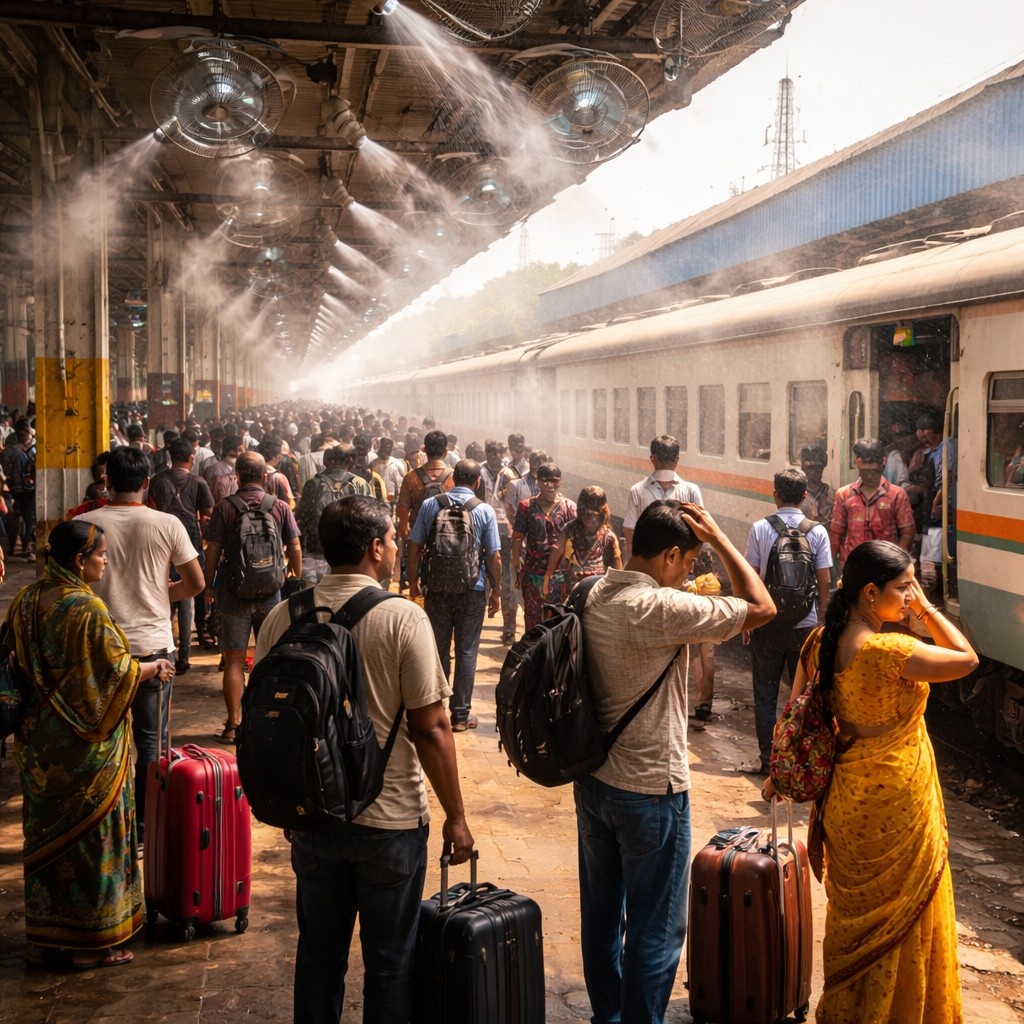
Nagpur Railway Stations Mist Cooling Issue: Why Platform 8 Remains Shut and Passengers Suffer

Nagpur Railway Station News: If you’ve ever waited on a railway platform in peak summer, you already know—it feels like standing inside an oven. Now imagine that even the promised cooling systems don’t work. That’s exactly what’s happening at Nagpur Railway Station, where the much-talked-about mist cooling system remains out of reach for many passengers, especially with Platform 8 still shut.

So what’s going wrong? Why is a modern facility failing to deliver basic comfort? And most importantly—what does it mean for everyday travelers like you?

Let’s break it down in simple terms.

Sr# Headings
1 Understanding the Mist Cooling System
2 Why Was the System Introduced?
3 Current Situation at Nagpur Railway Station
4 Platform 8 Closure Explained
5 Impact on Daily Passengers
6 Summer Heat and Passenger Struggles
7 Indian Railways’ Role and Response
8 Technical Issues Behind the Delay
9 Budget and Maintenance Concerns
10 Comparison with Other Railway Stations
11 Public Reaction and Frustration
12 Possible Solutions and Improvements
13 Future Plans for Nagpur Station
14 Why Infrastructure Delays Matter
15 Final Thoughts

1. Understanding the Mist Cooling System

Ever seen those tiny water sprays in malls or outdoor cafés? That’s exactly what a mist cooling system is.

It works by releasing ultra-fine water droplets into the air, which evaporate quickly and cool down the surrounding temperature. Think of it like a “mini artificial breeze” on a hot day.

At railway stations, especially in cities like Nagpur where temperatures easily cross 45°C, this system isn’t a luxury—it’s a necessity.


2. Why Was the System Introduced?

The idea was simple: make waiting areas more comfortable for passengers.

Indian Railways introduced mist cooling systems at several stations to:

  • Reduce heat stress
  • Improve passenger experience
  • Modernize station infrastructure

For a city like Nagpur—often called the “Heart of India”—this move made perfect sense.


3. Current Situation at Nagpur Railway Station

Here’s the ground reality:

  • The mist cooling system exists—but is not fully operational
  • Several platforms don’t have proper coverage
  • Passengers are still exposed to extreme heat

It’s like installing an air conditioner but never switching it on. Frustrating, right?


4. Platform 8 Closure Explained

Now comes the biggest issue—Platform 8.

Platform 8 at Nagpur station has remained shut for a long time due to:

  • Ongoing infrastructure work
  • Maintenance delays
  • Possible safety concerns

Because of this:

  • Train load is shifted to other platforms
  • Crowding has increased significantly
  • Existing cooling systems are under pressure

In simple words, one closed platform is affecting the entire station’s comfort level.


5. Impact on Daily Passengers

Let’s talk about real people.

Every day, thousands of passengers pass through Nagpur station. With the current situation:

  • Waiting areas are overcrowded
  • Heat becomes unbearable during peak hours
  • Elderly and children suffer the most

Imagine standing in a crowded space, sweating, with no proper ventilation. That’s the daily reality.


6. Summer Heat and Passenger Struggles

Nagpur summers are no joke.

Temperatures often reach:

  • 42°C to 47°C in peak months

Without proper cooling:

  • Risk of dehydration increases
  • Heat exhaustion becomes common
  • Travel becomes physically draining

A railway platform should be a transit point—not a survival challenge.


7. Indian Railways’ Role and Response

So, what is Indian Railways doing about it?

While officials have acknowledged the issue:

  • Implementation delays continue
  • Maintenance seems inconsistent
  • Communication with the public is limited

Passengers often feel left in the dark—literally and figuratively.


8. Technical Issues Behind the Delay

Not everything is about negligence. Some challenges are technical:

  • Water supply issues for mist systems
  • Pipeline installation delays
  • Power supply inconsistencies
  • Equipment maintenance gaps

Still, the question remains—shouldn’t these be planned in advance?


9. Budget and Maintenance Concerns

Infrastructure projects often face budget constraints.

Possible reasons include:

  • Limited funding allocation
  • High maintenance costs
  • Priority given to other projects

But here’s the catch—what’s the point of installing a system if it doesn’t work when needed most?


10. Comparison with Other Railway Stations

Interestingly, some other stations in India have successfully implemented mist cooling.

For example:

  • Stations in metro cities show better maintenance
  • Smaller stations sometimes perform better due to lower load

This comparison raises a valid question:
Why is a major junction like Nagpur lagging behind?


11. Public Reaction and Frustration

Passengers aren’t staying silent.

Common complaints include:

  • “Cooling system is useless”
  • “Platforms are overcrowded”
  • “No proper facilities despite promises”

Social media is filled with such feedback, reflecting growing frustration.


12. Possible Solutions and Improvements

Let’s talk solutions—because problems without solutions are pointless.

Here’s what can be done:

  • Fast-track Platform 8 reopening
  • Ensure regular maintenance of mist systems
  • Increase shaded areas and fans
  • Improve water supply for cooling units

Even small steps can make a big difference.


13. Future Plans for Nagpur Station

There is hope.

Future plans may include:

  • Station redevelopment projects
  • Better passenger amenities
  • Smart infrastructure upgrades

If implemented properly, Nagpur station could become a model for others.


14. Why Infrastructure Delays Matter

You might wonder—why make such a big deal out of this?

Because infrastructure impacts daily life.

A delayed platform or broken cooling system:

  • Wastes time
  • Affects health
  • Reduces trust in public services

It’s not just about comfort—it’s about dignity in travel.


15. Final Thoughts

At the end of the day, railway stations are not just buildings—they are lifelines connecting people, families, and opportunities.

The mist cooling system at Nagpur station was a great idea, but poor execution has turned it into a missed opportunity. Add to that the closure of Platform 8, and you get a perfect storm of inconvenience.

The solution isn’t complicated—it just needs urgency, accountability, and proper planning.

Because let’s be honest—traveling in India is already a journey. It shouldn’t feel like a test of endurance too.

1. Why is Platform 8 at Nagpur Railway Station closed?

Platform 8 is reportedly shut due to ongoing infrastructure work and maintenance delays, affecting overall station operations.

2. What is a mist cooling system in railway stations?

It’s a system that sprays fine water droplets into the air to reduce temperature and make platforms more comfortable.

3. Is the mist cooling system working in Nagpur station?

Currently, it is either partially functional or not effectively working across all platforms.

4. How does the closure of one platform affect passengers?

It increases crowding on other platforms, reduces space, and puts pressure on existing facilities.

5. What can passengers do about this issue?

Passengers can raise complaints through official railway channels and social media to push for faster action.

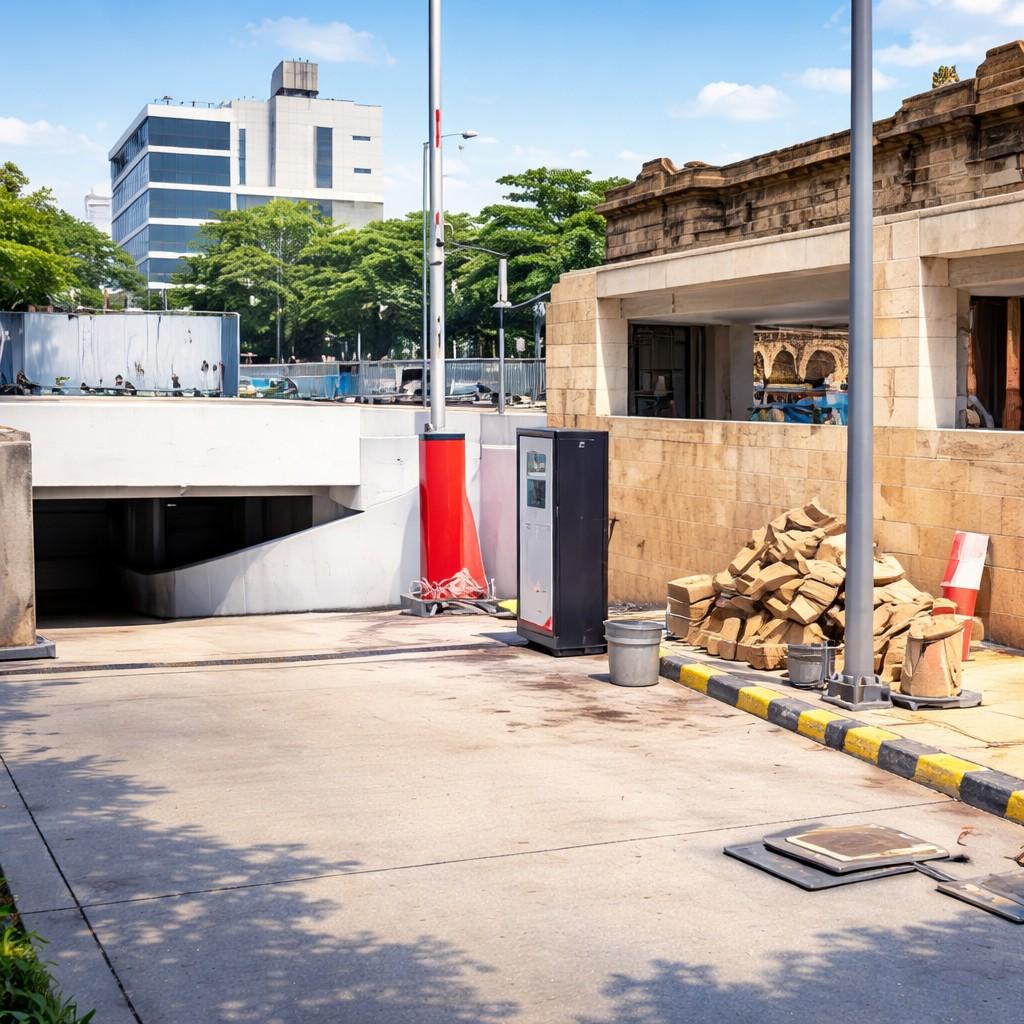
Underground Parking at Nagpur Railway Station Nears Completion: A Game-Changer for Commuters

Nagpur station redevelopment | Railway parking India: If you’ve ever visited Nagpur Railway Station during peak hours, you probably know the struggle—vehicles crammed into limited space, honking chaos, and the constant hunt for a parking spot. But here’s some good news: relief is on the way. The underground parking facility at Nagpur Railway Station is nearing completion, and it promises to transform the way commuters experience one of Central India’s busiest transit hubs.

Think of it like upgrading from a cramped, cluttered room to a spacious, well-organized hall. That’s exactly what this new parking system aims to do—bring order, ease, and efficiency to the daily rush.

Sr# Headings
1 Why Nagpur Needed Underground Parking
2 Overview of the New Parking Facility
3 Capacity and Design Highlights
4 How It Will Reduce Traffic Chaos
5 Impact on Daily Commuters
6 Benefits for Railway Passengers
7 Smart Features and Technology Integration
8 Environmental and Urban Impact
9 Part of Larger Station Redevelopment
10 Timeline and Completion Status
11 Challenges Faced During Construction
12 Expected Opening and Public Access
13 Economic and Business Benefits
14 Future of Urban Mobility in Nagpur
15 Final Thoughts

1. Why Nagpur Needed Underground Parking

Let’s be honest—parking near railway stations in India is often a nightmare. Nagpur is no exception. With thousands of passengers arriving and departing daily, the surface parking just couldn’t keep up.

Key Issues Faced:

  • Limited parking space
  • Traffic congestion outside the station
  • Illegal roadside parking
  • Delays for passengers

The city needed a solution that didn’t just add space but used space intelligently. That’s where underground parking came into play.


2. Overview of the New Parking Facility

The upcoming underground parking facility is part of a modern infrastructure upgrade at Nagpur Railway Station.

What’s Being Built?

  • A multi-level underground parking area
  • Dedicated entry and exit points
  • Organized vehicle movement lanes

This isn’t just a parking lot—it’s a system designed for efficiency.


3. Capacity and Design Highlights

One of the most exciting aspects is its massive capacity.

Key Highlights:

  • Can accommodate hundreds of vehicles
  • Separate zones for cars and two-wheelers
  • Wide lanes for smooth navigation

The design ensures that drivers don’t feel like they’re navigating a maze. Instead, it’s structured, clear, and user-friendly.


4. How It Will Reduce Traffic Chaos

Have you ever been stuck outside the station because of parked cars blocking the road?

That’s about to change.

How It Helps:

  • Removes surface parking congestion
  • Improves traffic flow near the station
  • Reduces unnecessary honking and delays

In simple terms, it shifts the chaos underground—where it’s managed properly.


5. Impact on Daily Commuters

For daily travelers, this development is a blessing.

Benefits:

  • Faster drop-offs and pick-ups
  • Less stress before catching trains
  • Better time management

Imagine reaching the station and finding parking within minutes—that’s the goal.


6. Benefits for Railway Passengers

Passengers often face the brunt of poor parking systems.

With the new facility:

  • Easier access to platforms
  • Reduced walking distance confusion
  • Better overall experience

It’s not just about parking—it’s about improving the entire journey.


7. Smart Features and Technology Integration

Modern problems need modern solutions.

Expected Smart Features:

  • Digital parking indicators
  • CCTV surveillance for safety
  • Automated ticketing or payment systems

These features ensure that the parking facility is not just large, but also intelligent and secure.


8. Environmental and Urban Impact

You might wonder—does building underground affect the environment?

Actually, it can be beneficial.

Positive Impacts:

  • Frees up surface space
  • Reduces air pollution from traffic jams
  • Encourages organized urban planning

It’s a step toward making Nagpur a smarter, greener city.


9. Part of Larger Station Redevelopment

This project isn’t happening in isolation.

It’s part of a broader plan to modernize Nagpur Railway Station.

Other Upgrades May Include:

  • Better passenger amenities
  • Improved station infrastructure
  • Enhanced connectivity

Together, these changes aim to transform the station into a world-class transit hub.


10. Timeline and Completion Status

The project is now in its final stages.

Current Status:

  • Construction nearing completion
  • Final touches and inspections underway

This means commuters won’t have to wait long before they can use it.


11. Challenges Faced During Construction

No big project comes without hurdles.

Major Challenges:

  • Working in a busy railway zone
  • Managing underground construction risks
  • Maintaining daily station operations

Despite these obstacles, the project has progressed steadily—a testament to careful planning.


12. Expected Opening and Public Access

While an exact date may vary, the facility is expected to open soon.

Once operational:

  • Public access will be streamlined
  • Parking rules will be clearly defined
  • Security measures will be active

It’s all about making the transition smooth for everyone.


13. Economic and Business Benefits

Better infrastructure often leads to economic growth.

How This Helps:

  • Boosts nearby businesses
  • Attracts more visitors
  • Creates job opportunities

A well-organized station area can become a commercial hotspot.


14. Future of Urban Mobility in Nagpur

This project is a glimpse into the future.

What It संकेत (indicates):

  • Shift toward smart city planning
  • Focus on sustainable infrastructure
  • Improved public transport experience

Nagpur is slowly but surely stepping into a modern urban era.


15. Final Thoughts

The upcoming underground parking at Nagpur Railway Station is more than just a construction project—it’s a solution to a long-standing urban problem.

It promises:

  • Less congestion
  • Better commuter experience
  • Smarter use of space

So next time you head to the station, you might just find yourself thinking—“Why didn’t this happen sooner?”

1. When will the underground parking at Nagpur Railway Station open?

The facility is nearing completion and is expected to open soon, pending final inspections and approvals.

2. How many vehicles can the parking accommodate?

While exact numbers may vary, the facility is designed to handle a large volume of cars and two-wheelers efficiently.

3. Will the parking be paid or free?

It is likely to be a paid parking system with structured pricing, similar to other major railway stations.

4. How will it reduce traffic near the station?

By moving parking underground, surface congestion will decrease, leading to smoother traffic flow.

5. Is the parking facility safe?

Yes, it will include CCTV surveillance and modern security systems to ensure safety for vehicles and users.

Platform Ticket Sale Suspended at Nagpur Railway Station: What You Need to Know

Nagpur railway station platform ticket: If you’ve recently visited Nagpur Railway Station or were planning to drop someone off, you might have noticed something unusual—platform tickets are temporarily unavailable. Sounds like a small change, right? But in reality, this decision is creating a ripple effect for passengers, families, and even daily commuters.

So, what’s really going on? Why has Indian Railways taken this step, and how does it affect you?

Let’s break it down in a simple, no-confusion way.

Sr# Headings
1 Introduction to the Platform Ticket Suspension
2 Why Are Platform Tickets Suspended?
3 Duration of the Ban
4 Impact on Passengers and Visitors
5 Construction Work at the Station
6 Crowd Control Measures Explained
7 Summer Rush and Railway Strategy
8 Who Is Allowed on Platforms Now?
9 Alternatives for Visitors
10 Safety and Security Benefits
11 Challenges Faced by the Public
12 Tips for Travelers During This Period
13 Indian Railways’ Future Plans
14 Public Reaction and Opinions
15 Final Thoughts

1. Introduction to the Platform Ticket Suspension

Imagine a busy marketplace suddenly restricting entry to only shoppers—not visitors. That’s exactly what’s happening here. Platform tickets at Nagpur Railway Station have been temporarily suspended, meaning only passengers with valid tickets can enter the platforms.

This move might feel inconvenient at first, especially if you’re used to seeing off family members. But there’s more to it than meets the eye.


2. Why Are Platform Tickets Suspended?

The main reasons behind this decision are:

  • Ongoing redevelopment work
  • Managing heavy passenger crowds
  • Ensuring safety during peak summer travel

Think of it like renovating your house—you limit visitors to avoid chaos. Similarly, the station needs space and control while upgrades are underway.


3. Duration of the Ban

The suspension is temporary, effective from:

👉 10 April 2026 to 30 May 2026

This period coincides with both construction activities and increased travel demand due to summer vacations.


4. Impact on Passengers and Visitors

This change directly affects:

  • People coming to see off or receive passengers
  • Vendors and casual visitors
  • Elderly individuals needing assistance

Without platform tickets, entry is restricted, making it slightly harder for families who rely on personal assistance during travel.


5. Construction Work at the Station

One of the key triggers is redevelopment work, especially around:

  • Platform No. 2
  • Entry and exit zones
  • Passenger movement areas

The goal? To transform the station into a modern, more efficient transport hub.


6. Crowd Control Measures Explained

Railway stations in India can get extremely crowded—especially during holidays.

By stopping platform ticket sales:

  • Unnecessary crowding is reduced
  • Movement becomes smoother
  • Emergency situations are easier to handle

It’s like limiting guests at an event to avoid overcrowding—simple but effective.


7. Summer Rush and Railway Strategy

April to May is peak travel season. Students, families, and tourists are all on the move.

To manage this:

  • Railways are prioritizing passengers over visitors
  • Ensuring better boarding and deboarding flow
  • Avoiding platform congestion

This is a strategic move to keep things running smoothly.


8. Who Is Allowed on Platforms Now?

Currently, access is limited to:

✔️ Passengers with valid train tickets
✔️ Railway staff and authorized personnel
✔️ Emergency or special cases (with permission)

So, unless you’re traveling, you won’t be allowed inside.


9. Alternatives for Visitors

Wondering how to manage without platform access?

Here are a few options:

  • Drop passengers at entry gates
  • Use mobile communication for coordination
  • Arrive early to avoid last-minute confusion

Yes, it requires a bit of adjustment—but it’s manageable.


10. Safety and Security Benefits

This decision isn’t just about convenience—it’s about safety.

Benefits include:

  • Reduced risk of stampedes
  • Better surveillance
  • Improved emergency response

Fewer people = better control.


11. Challenges Faced by the Public

Let’s be honest—this move isn’t perfect.

Common concerns:

  • Difficulty in assisting elderly passengers
  • Emotional discomfort while saying goodbye
  • Confusion among first-time travelers

It’s a trade-off between comfort and safety.


12. Tips for Travelers During This Period

If you’re traveling from Nagpur, here are some practical tips:

👉 Arrive early to avoid rush
👉 Carry minimal luggage
👉 Stay connected via phone
👉 Use porter services if needed
👉 Keep tickets ready for quick entry

A little planning goes a long way.


13. Indian Railways’ Future Plans

The redevelopment project aims to:

  • Upgrade infrastructure
  • Improve passenger facilities
  • Enhance overall travel experience

Once completed, expect:

✨ Better platforms
✨ Modern amenities
✨ Smoother travel

So yes, this inconvenience is temporary—but the benefits are long-term.


14. Public Reaction and Opinions

Public opinion is mixed:

👍 Some support the decision for safety
👎 Others find it inconvenient

Many people understand the need—but still wish for better alternatives for elderly assistance.


15. Final Thoughts

Change is never easy—especially when it affects daily routines. The suspension of platform tickets at Nagpur Railway Station might feel like a hassle, but it’s a step toward better infrastructure and safer travel.

Think of it as short-term discomfort for long-term gain.

Once the upgrades are complete, you’ll likely experience a more organized, modern railway station—and maybe even forget this temporary phase ever existed.

1. Why are platform tickets suspended at Nagpur railway station?

Platform tickets are suspended due to station redevelopment work and crowd control during peak summer travel.


2. Till when will the platform ticket ban continue?

The suspension is in effect from 10 April 2026 to 30 May 2026.


3. Can I enter the platform without a ticket?

No, only passengers with valid train tickets and authorized personnel are allowed.


4. How can I assist elderly passengers during this period?

You can seek help from railway staff or porters available at the station entrance.


5. Will platform ticket sales resume after May 2026?

Yes, the suspension is temporary, and normal services are expected to resume after the given period.

Nagpur Railway Station Platform 2 Closed: What It Means for Passengers

Nagpur Railway Update | Train Schedule Nagpur: If you’re a regular train traveler in Nagpur, you might have already felt the ripple effect of recent changes. The closure of Platform 2 at Nagpur Railway Station has stirred confusion, delays, and a lot of last-minute rushing. But what exactly is happening, and how does it affect your journey?

Think of a railway station like a busy highway intersection—if one major lane shuts down, the entire traffic flow shifts. That’s exactly what’s happening here. Several trains are now being rerouted to Ajni Railway Station, and passengers need to adapt quickly.

Let’s break everything down in a simple, clear, and practical way so you’re never caught off guard.

Sr# Headings
1 Why Platform 2 at Nagpur Station is Closed
2 Duration of the Closure
3 Trains Diverted to Ajni Station
4 Impact on Daily Passengers
5 Changes in Train Schedule
6 Facilities at Ajni Station
7 Transportation Between Nagpur & Ajni
8 Challenges Faced by Passengers
9 Benefits of This Upgrade Work
10 Tips for Hassle-Free Travel
11 Role of Indian Railways in Modernization
12 Future of Nagpur Railway Station
13 Safety and Infrastructure Improvements
14 Local Economy and Passenger Flow Impact
15 What Passengers Should Expect Next

1. Why Platform 2 at Nagpur Station is Closed

The closure of Platform 2 isn’t random—it’s part of a larger modernization and infrastructure upgrade plan. Indian Railways is focusing on improving passenger experience, safety, and capacity.

Key Reasons:

  • Track maintenance and repair work
  • Platform redevelopment
  • Better signaling systems

This is similar to renovating a busy shopping mall—you might face temporary inconvenience, but the end result is worth it.


2. Duration of the Closure

While exact timelines may vary, such infrastructure work usually takes several weeks to a few months.

Passengers are advised to:

  • Regularly check updates
  • Confirm platform numbers before travel

3. Trains Diverted to Ajni Station

Many trains that previously halted at Nagpur are now being shifted to Ajni.

Common Changes Include:

  • Select express trains halting at Ajni
  • Passenger trains partially rerouted
  • Some trains skipping Nagpur temporarily

This means you need to double-check your boarding point before leaving home.


4. Impact on Daily Passengers

Daily commuters are the most affected.

Major Issues:

  • Confusion about train boarding points
  • Increased travel time
  • Extra cost for reaching Ajni

Imagine planning to catch a bus from your usual stop, only to find it moved 5 km away—that’s the kind of disruption people are facing.


5. Changes in Train Schedule

Not just platforms—timings are also impacted.

Possible Changes:

  • Delayed arrivals and departures
  • Rescheduled trains
  • Temporary cancellations

Always rely on official railway apps or announcements.


6. Facilities at Ajni Station

Ajni station is smaller compared to Nagpur, but it’s handling increased traffic.

Available Facilities:

  • Basic waiting areas
  • Ticket counters
  • Limited food stalls

However, it may feel crowded due to the sudden increase in passengers.


7. Transportation Between Nagpur & Ajni

One of the biggest concerns is connectivity.

Travel Options:

  • Auto-rickshaws
  • City buses
  • Cabs (Ola/Uber)

Distance is around 5–6 km, so plan at least 20–30 minutes extra travel time.


8. Challenges Faced by Passengers

Let’s be honest—this transition isn’t smooth.

Common Problems:

  • Lack of clear announcements
  • Overcrowding at Ajni
  • Last-minute platform confusion

For elderly passengers or families, this becomes even more stressful.


9. Benefits of This Upgrade Work

While the inconvenience is real, the long-term benefits are significant.

Expected Improvements:

  • Better platforms
  • Increased train capacity
  • Enhanced passenger safety

It’s like enduring road construction today for a smoother highway tomorrow.


10. Tips for Hassle-Free Travel

Here’s how you can avoid chaos:

Smart Travel Tips:

  • Check train status before leaving
  • Reach station early
  • Keep buffer time for travel
  • Use railway apps for updates

Being proactive can save you a lot of stress.


11. Role of Indian Railways in Modernization

Indian Railways is undergoing massive transformation.

Focus Areas:

  • Smart stations
  • Digital ticketing
  • Improved infrastructure

Nagpur is a key junction, so upgrades here are part of a bigger national plan.


12. Future of Nagpur Railway Station

Once the work is complete, expect a modern, efficient station.

Upcoming Features:

  • Better seating areas
  • Improved cleanliness
  • Advanced signaling systems

Nagpur could soon become a model railway station.


13. Safety and Infrastructure Improvements

Safety is a major priority.

Enhancements Include:

  • Stronger tracks
  • Better lighting
  • Crowd management systems

This reduces risks and ensures smoother operations.


14. Local Economy and Passenger Flow Impact

Such changes also affect local businesses.

Impact Areas:

  • Shops near Nagpur station may see reduced footfall
  • Ajni vendors may benefit from increased traffic

It’s a temporary shift in economic activity.


15. What Passengers Should Expect Next

More updates and possible changes are likely.

Stay Prepared For:

  • Additional platform closures
  • Further train diversions
  • Gradual normalization after work completion

Patience is key during this phase.

The closure of Platform 2 at Nagpur Railway Station might feel like a major inconvenience right now, but it’s part of a bigger transformation story. Yes, you may need to travel a bit more, plan a bit better, and stay more alert—but in the long run, these upgrades will make your journey smoother and safer.

So next time you hear your train is departing from Ajni instead of Nagpur, don’t panic—just plan smart and move ahead.

1. Why is Platform 2 at Nagpur Railway Station closed?

It is closed for maintenance, redevelopment, and infrastructure upgrades.

2. Which trains are shifted to Ajni station?

Several express and passenger trains have been temporarily diverted. Check your train status before travel.

3. How far is Ajni station from Nagpur railway station?

It is approximately 5–6 km away.

4. How can I travel from Nagpur to Ajni station?

You can use autos, buses, or cab services like Ola and Uber.

5. When will Platform 2 reopen?

The exact timeline is not fixed, but it may take a few weeks to months depending on the work progress.

Exit mobile version