Nagpur Metro Phase 2: 16 New Trainsets & 48 Coaches Procurement Officially Begins — Full Details Inside

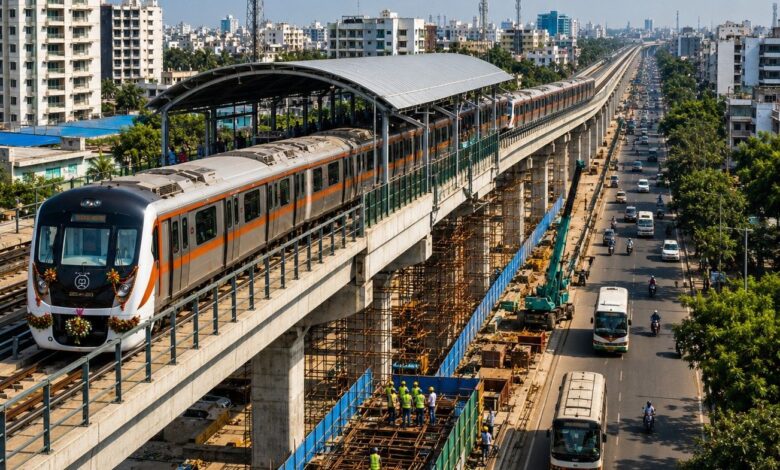

For a long time, Nagpur Metro Phase 2 existed mostly on paper — in government presentations, approval letters, and expansion blueprints. But things have changed dramatically in 2026. The project has now moved firmly into the execution stage, and one of the most significant signals of that shift is the official launch of the procurement process for brand-new rolling stock.
Maha Metro — the organisation responsible for building and operating metro rail in Nagpur and Pune — has initiated the formal process to acquire 16 new trainsets comprising a total of 48 coaches. This isn’t just a paperwork exercise. It signals that the tracks are being laid, the corridors are being finalised, and the city is getting ready to welcome a significantly expanded metro network.
Why This Procurement Matters
Buying trains isn’t something you do at the last minute. In metro projects, rolling stock procurement typically begins two to three years before a line is ready to operate — simply because designing, manufacturing, testing, and commissioning modern rail coaches takes considerable time.
The fact that Maha Metro has started this process now tells you a lot about where Phase 2 stands. It means the project has crossed the point of no return. The corridors are no longer theoretical; they are being treated as infrastructure that will actually need trains running on them.
Each of the 16 new trainsets will follow the same 3-coach configuration used in Phase 1 of the Nagpur Metro. That brings the total addition to 48 coaches — a substantial injection of capacity into a network that currently serves a rapidly growing ridership base.

What Kind of Trains Will These Be?
These will not be basic, off-the-shelf metro coaches. The procurement documents make clear that the new trains will be loaded with modern rail technology designed to make operations safer, more efficient, and more energy-conscious.
Here are the key features being specified:
Regenerative Braking System — When a metro train decelerates, instead of simply burning off that energy as heat, regenerative braking converts it back into electricity that can be fed into the grid or used by other trains on the line. This significantly reduces energy consumption across the network.
VVVF-based AC Drive System — Variable Voltage Variable Frequency drive systems give far more precise control over traction motors compared to older DC systems. The result is smoother acceleration, better energy efficiency, and lower maintenance costs over the long run.
CBTC-based Automatic Train Operation — Communications-Based Train Control is the gold standard in modern metro signalling. It allows trains to run closer together safely by communicating their positions in real time, which means shorter headways, higher frequency, and more passengers moved per hour.
Together, these features place the Phase 2 trains firmly in the category of next-generation metro rolling stock — comparable to what you’d find in any major metro system globally.
Not Just Buying Trains — A 15-Year Partnership
What makes this procurement particularly significant is its scope. The selected vendor will not simply manufacture and deliver the coaches. They will be responsible for the entire lifecycle of the fleet — from design and construction through testing, commissioning, and then 15 years of ongoing maintenance.
That maintenance contract includes spare parts supply, technical support, and training for Maha Metro’s own operational staff. This is a standard but crucial arrangement in modern metro projects: it ensures that the trains continue performing at peak efficiency long after they’re handed over, and it transfers technical knowledge to the operating organisation over time.
This kind of long-term contract typically runs into hundreds of crores of rupees and involves some of the world’s leading rail manufacturing companies. The competitive tender process will likely attract both domestic manufacturers like BEML and international players.
The Phase 2 Routes: Where Will These Trains Go?
With 16 new trainsets coming in, the natural question is: which corridors will they serve? Nagpur Metro Phase 2 is designed to extend the network well beyond the Phase 1 footprint, reaching new parts of the city and its industrial periphery.
Here’s a look at the proposed corridors:
Corridor 1 — Khapri to MIDC ESR (18.5 km, 10 Stations) This corridor heads towards the industrial zones on the city’s outskirts, with stations including Eco Park, Metro City, Ashok Van, Dongargaon, Mohgaon, Meghdoot CIDCO, Butibori Police Station, MHADA Colony, MIDC KEC, and MIDC ESR.
Corridor 2 — Prajapati Nagar to Transport Nagar (5.6 km, 3 Stations) A shorter but strategically important corridor connecting Prajapati Nagar, Kapsi Khurd, and Transport Nagar.
Corridor 3 — Automotive Chowk to Kanha (13 km, 12 Stations) One of the longer new corridors, running through Pili Nadi, Khasra Phata, All India Radio, Kheri Phata, Lok Vihar, Lekha Nagar, Cantonment, Kamthi Police Station, Golf Club, and Kanhan Nadi.
Corridor 4 — Lokmanya Nagar to Hingna (6.7 km) This corridor will serve areas including Hingna Mount View, Rajiv Nagar, Wanadongri, APMC, Raipur, Hingna Bus Stand, and Hingna itself — a densely populated part of Nagpur’s western fringe.
Taken together, these four corridors will dramatically extend the metro’s reach — connecting industrial zones, residential neighbourhoods, and transport hubs that are currently outside the Phase 1 network.
What Phase 2 Means for Daily Commuters
The practical impact on Nagpur residents could be significant. Right now, the metro serves a specific set of corridors, and commuters outside those areas have no option but to rely on autos, buses, or private vehicles.
When Phase 2 comes online, several things change:
More trains in the fleet means higher frequency — trains arriving every few minutes rather than waiting longer gaps between services. For a daily commuter, that difference between waiting 5 minutes and waiting 12 minutes is the difference between a metro being genuinely useful or a last-resort option.
The extension to industrial zones like Butibori MIDC is also meaningful. A large number of Nagpur’s working population commutes to these areas every day, mostly by road. Metro connectivity could shift a portion of that traffic, reducing congestion and giving workers a more reliable, comfortable alternative.
And for the city as a whole, a more extensive and frequent metro network strengthens Nagpur’s case as a genuinely modern, transit-oriented smart city — which feeds into everything from property values to business investment to air quality.
Pune Metro Gets a Mention Too
Interestingly, the same procurement documents also include provisions for Pune Metro Phase 2. Fifteen additional trainsets are being planned for the Pune network as well. But there’s an even more forward-looking element here: Pune’s current 3-coach trains are being designed with an upgrade path to 6-coach configurations in the future.
This suggests Maha Metro is planning not just for current demand, but for the kind of growth that justifies doubling train capacity down the line. It’s a sensible approach for a city the size of Pune, where metro ridership could scale rapidly once the network reaches critical mass.
The Bigger Picture: Nagpur’s Metro Journey
It’s worth stepping back and appreciating how far Nagpur’s metro story has come. When Phase 1 launched, many were sceptical about whether a city of Nagpur’s size truly needed a metro rail network. That debate has largely been settled by the numbers — ridership has grown steadily, and the metro has become a genuine part of how the city moves.
Phase 2 represents a vote of confidence in that trajectory. The government, Maha Metro, and the agencies funding this expansion clearly believe that Nagpur’s growth story is far from over — and that its public transport infrastructure needs to grow with it.
The procurement of 16 new trainsets is, in isolation, a technical and administrative step. But in context, it’s a statement about Nagpur’s ambitions as a city and the serious intent behind Phase 2 of its metro expansion.