India’s First Integrated Waste Plant at Bhandewadi: CM Fadnavis Reviews ₹300 Crore Project — August Launch Target


Published: May 30, 2026 | Category: Nagpur Local | By: Nagpur Updates Desk
Nagpur is set to become India’s first city with a fully integrated municipal solid waste processing facility — and it will be operational by August 2026.
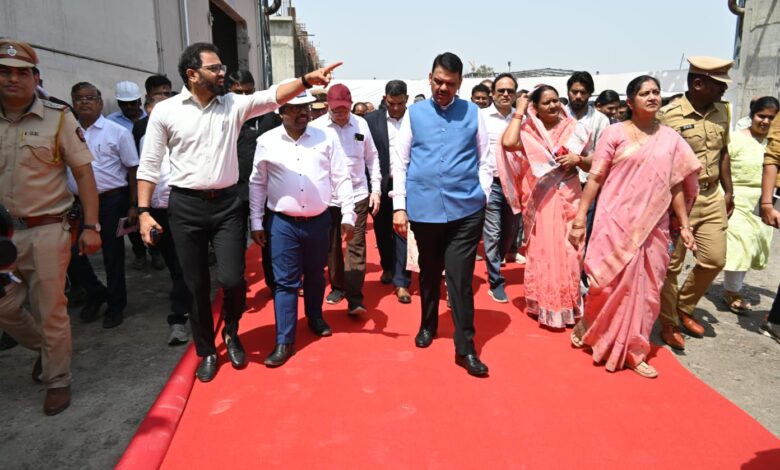
Chief Minister Devendra Fadnavis personally visited the Bhandewadi facility on Friday and reviewed the progress of the ₹300 crore project being developed by the Kewa Sus Bade Group through private investment. He declared it a national first — and expressed confidence it will transform Nagpur into a garbage-free city.
Project at a Glance
| Detail | Information |
|---|---|
| Project name | Integrated Municipal Solid Waste Processing Facility |
| Location | Bhandewadi, Nagpur |
| Cost | ₹300 crore |
| Developer | Kewa Sus Bade Group (private investment) |
| Model | PPP — no financial burden on NMC |
| Land provided by NMC | 30 acres |
| Waste processed daily | 1,200 metric tonnes |
| Biogas generated daily | 28 tonnes |
| CNG for city buses | 198 buses |
| Target launch | August 2026 |
| NMC annual royalty | ₹15 lakh from gas sales |
| Phases | 3 phases |
What Will This Plant Actually Do?
The Bhandewadi facility is not just a landfill replacement. It is a complete waste-to-resource ecosystem — turning Nagpur’s garbage into three valuable products:
1. Biogas → CNG for City Buses Wet waste from across Nagpur will be scientifically processed to generate 28 tonnes of biogas daily. This biogas will be converted into Compressed Natural Gas (CNG) — supplying clean fuel to nearly 198 Nagpur city buses. This replaces diesel — reducing both fuel costs and air pollution.

2. Compost Fertiliser The organic fraction of wet waste will be converted into high-quality compost fertiliser — which can be used in agriculture, urban gardens, and road beautification. This creates a revenue stream while solving the organic waste problem.
3. Fuel Pellets from Dry Waste Dry waste — plastics, packaging, non-recyclable material — will be converted into fuel pellets for industrial use. These pellets replace coal in industrial furnaces — another clean energy substitution.
Together, these three outputs mean that virtually nothing from Nagpur’s 1,200 MT of daily waste will go to landfill once the plant is fully operational.
Why Is This India’s First?
CM Fadnavis described this as the “country’s first Integrated Municipal Solid Waste Processing Facility” — and the word “integrated” is key.
Most Indian cities have individual components — a biogas plant here, a composting facility there. What makes Bhandewadi different is the integration of all three streams (biogas, compost, fuel pellets) under one facility, processing the entire city’s waste scientifically in one location, with a complete waste-to-resource circular economy model.
This holistic approach — transforming Nagpur into a garbage-free city through modern waste management and green energy production — is what earns it the national first tag.
What Does This Mean for Nagpur’s Bhandewadi Problem?
Bhandewadi has been Nagpur’s most stubborn civic challenge for decades. The dumpyard — one of the largest in Maharashtra — has been a source of:
- Toxic fires that have blanketed Nagpur in smoke
- Leachate contamination of surrounding groundwater
- Health hazards for residents of nearby localities
- Environmental violations flagged by the National Green Tribunal
Between 2019 and 2021, around 10 lakh metric tonnes of old waste were scientifically treated — freeing up 54 acres of land. The current remediation phase targets a further 15.3 lakh tonnes by 2026.
The new integrated processing facility adds a crucial dimension — not just cleaning up the old waste mountain, but ensuring that fresh waste never reaches the dumpyard going forward. With 1,200 MT being processed scientifically every day, the conditions that created the Bhandewadi crisis will no longer exist.
PPP Model: Zero Burden on NMC
One of the most important aspects of this project is its funding model.
The entire ₹300 crore investment is coming from the Kewa Sus Bade Group — a private developer. NMC has contributed 30 acres of land and will receive an annual royalty of ₹15 lakh from gas sales. Beyond the land, there is no financial burden on the municipal corporation.
This is particularly significant given NMC’s constrained financial position. A world-class waste management facility — at zero capital cost to the city — is exactly the kind of PPP model that other Indian cities will want to study and replicate.
CM Fadnavis’ confidence that Nagpur will become a national model for solid waste management is grounded in this financial structure as much as the technology.
Maharashtra’s Broader Biogas Push
The Bhandewadi project does not exist in isolation. It is part of Maharashtra’s larger green energy push.
In April 2026, the Maharashtra Cabinet approved the Maharashtra State Compressed Biogas Policy 2026 — allocating ₹500 crore for Viability Gap Funding to convert urban waste and agricultural residue into clean biogas fuel across the state. The Bhandewadi facility is the flagship project of this policy in action.
Q: When will the Bhandewadi waste plant be operational? The project is being executed in three phases and is expected to become fully operational by August 2026 — just three months from now.
Q: Will this stop the fires at Bhandewadi? The fires at Bhandewadi are caused by decomposing waste in the existing dumpyard. As the new integrated facility processes fresh waste daily and the ongoing remediation clears old waste, the conditions that cause fires will be eliminated over time.
Q: Will Nagpur’s city buses really run on Bhandewadi biogas? Yes — the 28 tonnes of daily biogas will be converted to CNG and supplied as fuel for 198 NMC city buses. This is a confirmed part of the project design.
Q: Does this mean Nagpur will stop using the Bhandewadi dumpyard? The goal is to eventually achieve zero fresh waste going to landfill once the plant is fully operational. The existing waste mountain will continue to be scientifically remediated alongside the new facility.
Q: Who is the Kewa Sus Bade Group? The developer is a private group that specialises in waste management and green energy infrastructure. The project involves Netherlands-based expertise in waste-to-biogas conversion — bringing international best practices to Nagpur.
Q: Will Nagpur residents benefit directly? Yes — in multiple ways. Cleaner air (less landfill burning), CNG buses on city roads (less pollution), compost for urban gardens, and ultimately a garbage-free city environment.
A Landmark Moment for Nagpur
The Bhandewadi waste-to-energy facility represents one of the most meaningful environmental milestones in Nagpur’s recent history.
For a city that has lived with the shadow of the Bhandewadi dumpyard — its fires, its smell, its health risks — for decades, the prospect of a genuinely garbage-free Nagpur is not just an environmental win. It is a quality-of-life transformation.
Nagpur is increasingly becoming a city that others look to for models — whether in airport modernisation, smart traffic management, or now waste management. The Bhandewadi facility adds another chapter to that story.
August 2026 cannot come soon enough.
Nagpur Updates will track the Bhandewadi facility’s progress and confirm when each phase goes live. Stay tuned for updates.
Tags: Bhandewadi Nagpur, Waste to Energy, CM Fadnavis, NMC Nagpur, Biogas Nagpur, Garbage Free Nagpur, Green Energy, Kewa Sus Bade, Nagpur Local News 2026