MSEDCL Just Said It Doesn’t Need Your Permission to Replace Your Electricity Meter — And a Nagpur Court Is Now Examining That Claim


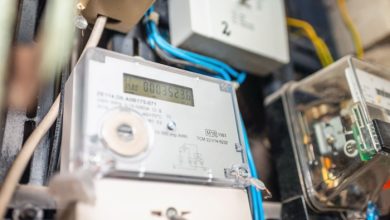
Across Maharashtra, thousands of households have been experiencing a situation they were not prepared for: a contractor arrives at the door, announces that the existing electricity meter is being replaced with a smart meter, and proceeds to do so — without asking for consent, without explaining the change, and without leaving much room for the resident to object.
Many consumers assumed this could not be legal. Surely, they thought, replacing a piece of equipment attached to someone’s home required at least their knowledge, if not their explicit approval?
An RTI reply obtained from the Maharashtra State Electricity Distribution Company Ltd (MSEDCL) has now put that assumption to rest — and not in the way consumers were hoping. The utility has formally stated, in a document submitted before the Nagpur Bench of the Bombay High Court, that consumer consent is not required for replacing existing electricity meters with smart meters.
That reply is now before the court, in the middle of an active Public Interest Litigation on smart meters, and the legal and consumer rights questions it raises are significant for every electricity consumer in Maharashtra — including Nagpur’s nearly 15 lakh domestic consumers.
How This Came to Light — The RTI and the PIL

The MSEDCL reply did not emerge voluntarily. It was obtained under the Right to Information Act by an intervenor in an ongoing Public Interest Litigation on smart meters being heard by the Nagpur Bench of the Bombay High Court.
Advocate Sundeep R. Badana, appearing for the intervenor Rajabal Chandrakant Ilme, submitted the RTI reply before the court through a pursis — a formal written note — stating that the information is directly relevant for deciding both the intervention application and the main PIL.
The PIL itself reflects a broader wave of consumer discomfort across Maharashtra about the smart meter rollout. Citizens and consumer groups have raised a range of concerns: that meters are being replaced without warning or explanation, that smart meters are generating bills that do not match actual consumption, that the technology is not yet working as promised, and that consumers have had no meaningful say in a change that directly affects how their electricity usage is measured and billed.
The RTI reply, now before the court, provides the first formal, official statement from MSEDCL on the core question of consumer consent — and the answer is unambiguous.
What the RTI Reply Actually Says — Point by Point
The MSEDCL RTI reply contains several disclosures that deserve careful reading by every electricity consumer in Maharashtra.
On consumer consent: MSEDCL has clarified that it has no Standard Operating Procedure (SOP) requiring contractors to obtain consumer permission before replacing functional electricity meters. The utility maintained that the replacement of existing meters with smart meters falls within its statutory powers and does not require prior approval from consumers.
This is a significant statement. It means that if a contractor arrives at your home to replace your electricity meter with a smart meter, they are not obligated to seek your consent before doing so. MSEDCL views this as an administrative and technical function that falls within its authority as the licensed electricity distributor — not something that requires the householder’s agreement.
The legal basis MSEDCL is relying on: MSEDCL referred to directions issued by the Union Ministry of Power on February 25, 2021, under which both working and faulty electricity meters are to be replaced with smart meters. This central government direction is the legal foundation on which MSEDCL is proceeding with the nationwide Revamped Distribution Sector Scheme (RDSS), under which smart meter installation across Maharashtra is being implemented.
The uncomfortable admission — the system is not yet fully operational: Perhaps the most significant disclosure in the RTI reply is this: although smart meters have been installed in several areas, meter readings are currently being taken both manually and through the automated system. MSEDCL said the infrastructure required for completely remote meter reading is still under development, indicating that the smart metering system is not yet fully operational.
Read that again. MSEDCL has been installing smart meters across Maharashtra, replacing functioning conventional meters — without consumer consent — under the premise that the new meters will enable accurate, automated, remote billing. But the RTI reply reveals that the infrastructure for completely remote meter reading is still being developed. The system that justifies replacing your old meter is not yet ready to fully deliver what it promises.
This gap between installation and operationalisation has real consequences for consumers — and the RTI documents make those consequences visible.
The Monte Carlo memo: The RTI reply also reveals that an internal memo dated June 16, 2025, directed MSEDCL field officers to assist contractor Monte Carlo Ltd in smart meter installation. MSEDCL clarified that this memo is only an administrative instruction for MSEDCL staff and is not a legally binding order for consumers. However, its existence — and the instruction to field officers to facilitate contractor access — explains why so many consumers across Maharashtra have found official-looking personnel at their door with seeming authority to replace their meters, even without a formal legal order directed at the consumer.
Documents from review meetings: The records attached to the RTI reply include correspondence between MSEDCL and Monte Carlo Ltd, as well as minutes of review meetings held in March and April 2025. The target set for Monte Carlo under the RDSS was to complete smart meter installation across Maharashtra by June 2026. The meeting records also highlight a gap between the number of smart meters installed and the availability of their readings in MSEDCL’s computer system — and show officials instructing the contractor to resolve connectivity issues so that remote meter readings can be used for billing, avoid the issuance of average bills, and ensure that all bills are generated through the smart metering system.
This last point is critical for consumer protection. If remote meter readings are not yet available in MSEDCL’s computer system, how are bills being generated for the smart meters already installed? The answer — confirmed by the review meeting records — is that average bills are being issued in some cases. Average billing is one of the most common sources of consumer complaint in electricity distribution across India, where estimated consumption figures do not match actual usage, leading to either over-billing (where consumers pay more than they used) or accumulated debts (where underestimated bills leave large amounts payable later).
What Is the Revamped Distribution Sector Scheme and Why Is Smart Metering Central to It?
To understand why MSEDCL is proceeding so aggressively with smart meter installation — even without consumer consent and even before the full system is operational — you need to understand the Revamped Distribution Sector Scheme (RDSS).
The RDSS is a central government scheme worth over ₹3 lakh crore nationally, launched in 2021 with the objective of improving the operational and financial health of electricity distribution companies across India. Maharashtra has received substantial funding under RDSS, with smart meter installation as one of the scheme’s core deliverables. Under the RDSS framework, electricity distribution companies like MSEDCL receive funding in tranches tied to achieving specific installation targets.
Smart meters are central to RDSS because they are meant to address one of India’s most persistent electricity sector problems: Aggregate Technical and Commercial (AT&C) losses — the gap between electricity units generated and revenue actually collected. Smart meters, with their automated, tamper-resistant, remotely-readable measurement, are designed to significantly reduce billing errors, meter tampering, and revenue leakage. Maharashtra’s distribution infrastructure has long faced AT&C loss challenges, and RDSS funding is partly contingent on demonstrating progress on smart metering.
This creates a structural pressure on MSEDCL: the scheme’s funding is tied to installation numbers, not to whether the installed meters are actually working as intended. The incentive is to install as many meters as possible as fast as possible — which explains the pace and the absence of formal consumer consent requirements. The system’s operational readiness and the consumer experience follow later, if all goes according to plan.
The Consumer Rights Question the Court Is Now Examining
The PIL pending before the Nagpur Bench of the Bombay High Court is examining a question that the MSEDCL RTI reply has now made considerably more pointed: does a consumer have any rights in this process at all?
MSEDCL’s position — backed by the Ministry of Power direction of February 25, 2021 — is that replacing meters is an administrative function of the licensed distributor, not a contractual change requiring consumer agreement. In law, the electricity connection agreement between MSEDCL and a consumer gives the utility the right to install, inspect, test, and replace meters as part of its function as a licensed distributor under the Electricity Act, 2003.
Consumer advocacy groups and the PIL petitioners, however, argue that this position ignores the practical reality of what smart metering entails. A smart meter is not just a replacement measurement device — it is a system that can potentially enable time-of-day tariffs, prepaid electricity, remote disconnection, and detailed consumption monitoring. The implications for consumers’ billing, their payment obligations, and their privacy are substantially different from those of a conventional meter. Replacing one with the other without the consumer’s knowledge or consent, and before the system is even fully operational, raises questions about fairness and administrative accountability that go beyond the statutory authority of the distribution company.
The Nagpur Bench of the Bombay High Court will now hear these arguments, with MSEDCL’s RTI reply forming part of the evidentiary record. The outcome of this PIL could have implications not just for Nagpur consumers but for every electricity consumer in Maharashtra — and potentially for the smart meter rollout across India.
What Nagpur’s Electricity Consumers Should Know Right Now
Whether or not the High Court eventually rules in favour of greater consumer protections in the smart meter process, here is the practical situation for Nagpur electricity consumers today.
MSEDCL has the legal authority to replace your conventional meter with a smart meter without your consent. If a contractor arrives with authorisation from MSEDCL to install a smart meter at your premises, you do not have a legally established right to refuse the replacement at this stage.
However, you do have rights related to billing accuracy. If your new smart meter is generating average bills rather than bills based on actual meter readings — which the MSEDCL review meeting records confirm is happening in some cases — you have the right to file a formal written complaint with your local MSEDCL office. Any bill based on estimated consumption rather than actual meter reading is disputable.
If your smart meter is not sending readings to MSEDCL’s system — which the RTI reply confirms is a problem in areas where connectivity infrastructure is incomplete — you should request that MSEDCL either arrange a physical meter reading or provide you with a clear timeline for when remote reading will be operational for your meter. Average bills accumulated during this transition period should not be treated as final until confirmed against actual readings.
The Maharashtra Electricity Regulatory Commission (MERC) is the regulatory authority that oversees MSEDCL’s operations. Consumer complaints about smart meter billing can be escalated to the Consumer Grievance Redressal Forum (CGRF) that MSEDCL is required to maintain under MERC’s licensing conditions. Nagpur consumers can approach the CGRF if MSEDCL does not resolve billing complaints within the statutory timeframe.
Nagpur Updates Will Track the High Court PIL
The PIL on smart meters before the Nagpur Bench of the Bombay High Court is an active, ongoing matter. Nagpur Updates will report on significant hearing dates, court observations, and any interim or final orders that affect consumer rights in the smart meter rollout.
If you are a Nagpur electricity consumer who has experienced billing problems or other issues following smart meter installation, share your experience with us at admin@nagpurupdates.in. Your testimony contributes to the public record on this issue.
Sources: The Live Nagpur, MSEDCL RTI reply submitted before Nagpur Bench Bombay High Court, Ministry of Power RDSS documentation, field reporting. Published: July 1, 2026.