₹1,100 Crore Spent, Yet 22 Essential Tests Missing at Nagpur’s GMCH — Patients Sent to Private Labs



Published: June 6, 2026 | Category: Nagpur Local | GMCH Nagpur | Nagpur Medical College | By: Nagpur Updates Desk
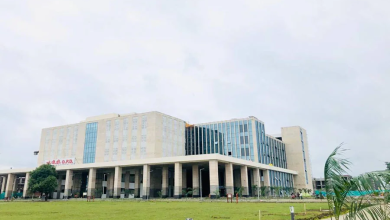
Shining new buildings. Modern-looking corridors. And ₹1,100 crore in government investment. Yet patients at Nagpur’s premier government hospital cannot get 22 essential medical tests done.
That is the damning reality at the Government Medical College and Hospital (GMCH) Nagpur — better known simply as “Medical” or “Nagpur Medical.” Despite a massive public investment of over a thousand crore rupees to modernise the facility, critical diagnostic services remain unavailable. Patients are being routinely directed to private pathology labs — adding financial burden on people who came to a government hospital specifically because they cannot afford private care.
The Core Problem at a Glance
| Issue | Details |
|---|---|
| Total investment in GMCH | ₹1,100 crore |
| Essential tests unavailable | 22 types |
| Where patients are sent | Private pathology labs |
| MRI waiting | Extremely long — weeks in some cases |
| CT Scan waiting | Long delays reported |
| Daily OPD footfall | Thousands of patients |
| Question being raised | Why are tests unavailable despite ₹1,100 crore investment? |
What Tests Are Unavailable?
The Navbharat Live investigation has confirmed that 22 types of essential medical tests are currently not available at GMCH Nagpur. While the complete list of all 22 has not been officially disclosed, the categories include:
Advanced diagnostic tests — investigations that require specialised equipment or reagents that GMCH either does not have or cannot currently operate due to technical failures.

Specialised blood tests — including some biochemical panels that private labs offer but that GMCH’s pathology department cannot perform.
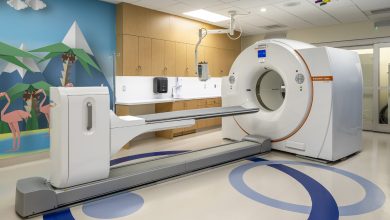
Imaging with long waits — MRI and CT scan machines exist at GMCH but waiting periods are extremely long — stretching to weeks in some cases, forcing patients who need urgent imaging to go private.
When a patient is referred to a private pathology lab from GMCH, the costs can range from ₹500 to ₹5,000 or more per test — depending on the investigation. For families who came to a government hospital specifically because they cannot afford private care, this referral is not a convenience. It is a financial crisis.
| क्रमांक | Test Name | Medical Term | Why It’s Needed | Where Patients Go |
|---|---|---|---|---|
| 1 | Serum Anti-NMO, MOG | Anti-Neuromyelitis Optica / Myelin Oligodendrocyte Glycoprotein Antibody | Diagnoses rare autoimmune brain/spinal cord diseases like NMO Spectrum Disorder | Private neurology labs |
| 2 | Urine Copper | 24-Hour Urinary Copper Test | Diagnoses Wilson’s Disease — a rare genetic liver/brain disorder | Private diagnostic centres |
| 3 | TMS, GCMS | Tandem Mass Spectrometry / Gas Chromatography-Mass Spectrometry | Detects rare metabolic and genetic disorders in newborns and children | Specialised genetics labs |
| 4 | ANA, Anti-LKM, SMA | Antinuclear Antibody Panel | Diagnoses autoimmune liver diseases and lupus | Private immunology labs |
| 5 | Whole Exome Sequencing | WES — Complete Genetic Test | Identifies genetic mutations causing rare diseases | Specialised genetics centres only |
| 6 | P-ANCA, C-ANCA | Anti-Neutrophil Cytoplasmic Antibodies | Diagnoses vasculitis — inflammation of blood vessels | Private labs |
| 7 | Gaucher Test | Glucocerebrosidase Enzyme Activity Test | Diagnoses Gaucher Disease — rare inherited metabolic disorder | Specialised genetics labs |
| 8 | C-3, C-5 Level | Complement System Levels | Diagnoses autoimmune kidney diseases and immune disorders | Private immunology labs |
| 9 | SDP Blood | Soluble Diagnostic Panel — Blood | Required for certain haematology investigations | Private labs |
| 10 | IGT Level, ESR, Gram Test | Impaired Glucose Tolerance / Erythrocyte Sedimentation Rate | Diabetes risk assessment, infection and inflammation detection | Most available — but backlogged |
| 11 | CSF Analysis | Cerebrospinal Fluid Examination | Diagnoses meningitis, encephalitis, multiple sclerosis, brain tumours | Private neuro labs |
| 12 | Protothecosis Workup | Rare Algae Infection Diagnostic Panel | Identifies rare protothecal infections in immunocompromised patients | Specialised labs only |
| 13 | Protein C, Protein S, Factor D | Blood Clotting Factor Tests | Diagnoses clotting disorders causing DVT, stroke, miscarriage | Private coagulation labs |
| 14 | ANA Blot | ANA Blotting Test | More specific autoimmune disease diagnosis than basic ANA | Private immunology labs |
| 15 | TTG / DGP Test | Tissue Transglutaminase / Deamidated Gliadin Peptide | Diagnoses Celiac Disease (gluten intolerance) | Private labs |
| 16 | Anti-Factor H | Anti-Factor H Antibody Test | Diagnoses rare complement disorders and atypical HUS | Specialised labs only |
| 17 | MLPA / ALPA | Multiplex Ligation-dependent Probe Amplification | Detects genetic duplications/deletions — chromosomal disorders | Genetics labs only |
| 18 | Renal Biopsy | Kidney Tissue Biopsy + Processing | Diagnoses type and severity of kidney disease | Private nephrology centres |
| 19 | HBB Gene Test | Haemoglobin Beta Gene Test | Diagnoses thalassemia and sickle cell disease genetically | Genetics labs |
| 20 | EEG | Electroencephalogram | Diagnoses epilepsy, seizure disorders, brain activity abnormalities | Private neurology clinics |
| 21 | eGFR | Estimated Glomerular Filtration Rate | Measures kidney function — essential for CKD monitoring | Usually calculated — but equipment/software missing |
| 22 | CMV PCR | Cytomegalovirus Polymerase Chain Reaction | Detects active CMV viral infection — critical for transplant patients | Private vir |
The ₹1,100 Crore Question
This is the number that makes this story so infuriating.
The Maharashtra government has invested approximately ₹1,100 crore in upgrading and modernising GMCH Nagpur’s infrastructure over recent years. New buildings have been constructed. Existing facilities have been renovated. From the outside, GMCH looks significantly better than it did a decade ago.
But infrastructure investment without diagnostic equipment procurement, staff appointment, and operational readiness is like building a restaurant without a kitchen. The buildings shine. The wards are there. But 22 essential tests cannot be done.
The questions that administrators must answer:
- Of the ₹1,100 crore spent, how much went to diagnostic equipment?
- Why are 22 essential tests still missing after this investment?
- What is the plan and timeline to make all these tests available within GMCH?
- Who is accountable for the gap between investment and service delivery?
The Human Cost: Who Is Being Hurt?
GMCH Nagpur is not a specialty hospital serving a niche patient group. It is the largest and most important public hospital in Vidarbha — a region of over 2 crore people. It serves as the final referral destination for patients from across Nagpur, Wardha, Amravati, Yavatmal, Gadchiroli, and other Vidarbha districts.
The patients who come here are predominantly from low-income and middle-income families — farmers, labourers, daily wage workers, small traders — who rely on government healthcare because they genuinely cannot afford private care. When they are told that a required test is not available and they must go to a private lab, they face impossible choices:
- Pay for the private test — stretching budgets already under stress from the hospital visit, medicines, and travel costs
- Delay the test — potentially worsening their medical condition while waiting for a government facility that may take weeks to become available
- Borrow money — adding debt burden to an already difficult situation
The long MRI and CT scan waiting lists are particularly cruel. A patient with a suspected brain tumour, spinal cord issue, or internal organ problem cannot wait weeks for an MRI. But if they cannot afford ₹5,000-8,000 at a private imaging centre, what choice do they have?
A Pattern of Healthcare Infrastructure Failure
The GMCH diagnostic shortage is not happening in isolation. It is part of a pattern of healthcare infrastructure failures in Nagpur’s public hospitals that has been documented repeatedly.
The Daga Hospital NICU short circuit fire in May 2026 — where 15-20 newborns had to be evacuated after a fire caused by an electrical failure — highlighted how infrastructure maintenance in government hospitals lags dangerously behind need.
The pattern is consistent: money is spent on visible infrastructure. Less glamorous but more critical operational requirements — diagnostic equipment, reagents, maintenance, staffing — fall through the gaps.
What GMCH Nagpur Is Supposed to Offer
To understand the gap between promise and reality, it helps to know what GMCH Nagpur is supposed to provide:
GMCH Nagpur has a bed strength of approximately 1,400 beds — making it one of Maharashtra’s largest government hospitals. It is a teaching hospital attached to the Government Medical College — responsible for training hundreds of medical students and residents every year.
The hospital is supposed to offer:
- Full diagnostic services including pathology, biochemistry, microbiology, and haematology
- Advanced imaging — X-ray, ultrasound, CT scan, and MRI
- Speciality clinics across all major medical disciplines
- Emergency and trauma care
- Super-speciality services
When 22 essential tests are unavailable, the hospital is not meeting its basic mandate — regardless of how much has been spent on its buildings.
What Needs to Happen
The situation demands immediate accountability and action on multiple fronts:
Immediate audit: The state health department must publish a complete list of the 22 unavailable tests and explain specifically why each is unavailable — is it a equipment failure? A reagent shortage? A staffing gap?
Emergency procurement: For tests that are unavailable due to equipment failure or shortage, emergency procurement should be initiated — without waiting for standard procurement cycles.
Accountability report: Given the ₹1,100 crore investment, the hospital administration must account for what was spent, what was supposed to improve, and why 22 essential tests are still missing.
MRI/CT scan capacity: The waiting period for MRI and CT scans must be addressed through either equipment addition, extended operating hours, or an official empanelment arrangement with private facilities at subsidised government rates — so patients are not forced to pay full private rates.
Regular public reporting: GMCH should publish monthly reports on which diagnostic services are available, what the current waiting times are, and what steps are being taken to fill gaps.
FAQ: Your Questions Answered
Q: Which 22 tests are unavailable at GMCH Nagpur? The complete official list has not been published. The Navbharat investigation confirmed the figure of 22 essential tests being unavailable. We have requested the full list from GMCH administration and will update this article when received.
Q: How long is the MRI waiting period at GMCH Nagpur? The waiting period varies but has been reported to stretch to several weeks for non-emergency MRI investigations. Emergency cases are prioritised.
Q: Can I get a free test at GMCH Nagpur? Diagnostic tests at GMCH are offered at heavily subsidised rates — far below private lab rates. However, for the 22 unavailable tests, patients are being referred to private labs where they must pay market rates.
Q: Is there any government scheme to cover private lab costs? Under the Mahatma Jyotiba Phule Jan Arogya Yojana (MJPJAY) and Pradhan Mantri Jan Arogya Yojana (PM-JAY), some diagnostic tests at empanelled private facilities may be covered. Patients should check eligibility at the hospital’s scheme desk.
Q: How do I complain about this?
- GMCH Medical Superintendent: Contact through GMCH’s official channels at gmcnagpur.org
- Maharashtra Health Department: grievance.maharashtra.gov.in
- CM Helpline: 1800-120-8040
The Standard Must Rise
GMCH Nagpur is the backbone of public healthcare for millions of Vidarbha residents. It operates under enormous pressure — thousands of patients daily, a teaching mandate, and the expectation that it will serve as the last resort for those with nowhere else to turn.
But pressure does not excuse a system where ₹1,100 crore of public money has been invested and 22 essential tests are still unavailable. That is not a resource problem. That is a governance problem.
Nagpur’s patients deserve better. Vidarbha’s poorest families deserve a government hospital that can actually diagnose them. And the administrators of GMCH Nagpur — and the Maharashtra health department — owe the public a clear, honest answer to one simple question:
Where did ₹1,100 crore go — and why can’t patients get 22 basic tests?
Nagpur Updates will continue to follow this story and report on the state health department’s response to this investigation.
Tags: GMCH Nagpur, Nagpur Medical College, Government Hospital, Medical Tests, Private Labs, Healthcare Nagpur, MRI CT Scan Wait, Nagpur Health 2026