Nagpur Monsoon Alert: NMC’s Nullah Cleaning Drives Are Failing — Ground Report Reveals Choked Drains City-Wide


Published: June 2, 2026 | Category: Nagpur Local | By: Nagpur Updates Desk
The monsoon is days away. And Nagpur’s nullahs are nowhere near ready.
A ground assessment of the city’s major stormwater channels reveals a stark and alarming gap between the NMC’s claims of monsoon preparedness and the reality on the ground. Despite repeated, heavily publicised cleanliness drives and multi-crore budgets, the city’s vital drainage arteries remain severely choked — with hyacinth, debris, construction waste, and domestic plastic threatening to turn the first heavy rains into an urban flood.
The Hitavada’s reporters visited multiple key nullah locations across Nagpur. What they found should alarm every resident.
Ground Report: What Was Found Where
| Location | Problem Found |
|---|---|
| Reshimbagh | Thick water hyacinth covering water surface — untouched despite repeated drives |
| Ashok Chowk | Water hyacinth blanket throughout — no machinery deployed per residents |
| Imambada | Persistent hyacinth — repeated cleaning drives have had zero visible impact |
| Sitabuldi Gawlipura | Heavy debris + construction waste dumped on banks — risk of cave-in into stream |
| Siraspeth | Construction waste threatening to block natural water flow |
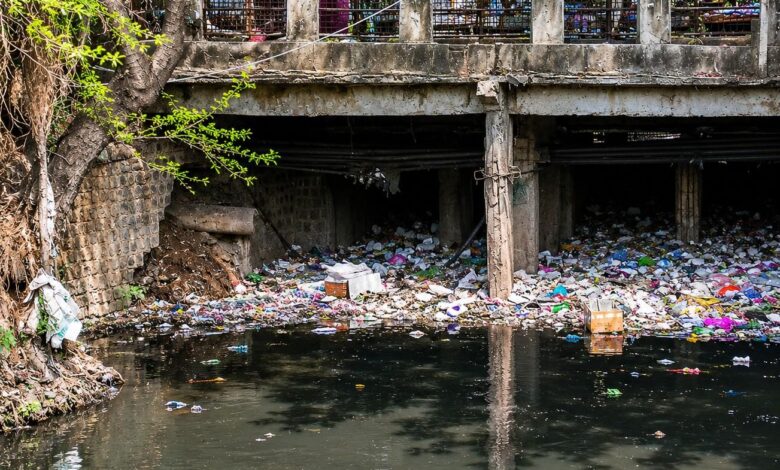
| Morbhavan culvert | Entire underside passage completely choked with domestic plastic trash |
Residents at each of these locations confirmed the same thing: NMC machinery was deployed only at highly visible patches near major intersections. The interior stretches — where the real blockages are — remained untouched.

The Pattern: Cosmetic Cleaning, Not Systemic Cleaning
This is the defining problem with NMC’s approach to nullah cleaning — and it is not new.
Every year, the same cycle plays out:
- NMC announces a major monsoon preparedness drive
- Machinery is visibly deployed at prominent, easily-accessible stretches near key junctions
- Review meetings report “progress”
- The interior stretches of the same nullahs — where the silting and blockages are worst — remain untouched
- The monsoon arrives. Flooding follows.
The Hitavada’s ground report confirms that 2026 is no different. The NMC had claimed the annual drive would be completed by end of May 2026. That deadline has passed. The ground situation tells a completely different story.
The Worst Spot: Morbhavan Culvert
Of all the locations assessed, the situation at Morbhavan is described as perhaps the most shocking.
The entire underside passage of the culvert at Morbhavan sits completely choked with domestic plastic trash. This is not a partial blockage or a stretch with silting — it is a complete obstruction of a key drainage structure.
When this culvert fails to drain during heavy rain — and it will fail to drain if it remains in this condition — the consequences for the surrounding area will be severe. Morbhavan is a densely populated area. Low-lying localities nearby will face direct backflow of sewage and stormwater into homes and businesses.
Ironically, the NMC had earlier made headlines for facilities improvements at the Morbhavan Bus Stand after Mayor Thakre’s intervention. The culvert behind the bus stand tells a different story about civic priorities.
What Environmentalists Say: Flooding Is “Unavoidable”
Environmentalists consulted for the Hitavada’s report were unambiguous in their assessment.
If these clogged drainage systems — including subterranean channels — are hit by the torrential downpours of peak monsoon without adequate cleaning, urban waterlogging is completely unavoidable.
More alarming: the severe backflow from choked drains will force toxic, black sewage water directly into basements and ground-floor rooms of low-lying residential areas. What begins as a drainage management failure becomes a full-blown public health crisis.
Nagpur’s monsoon, when it arrives at full intensity in July and August, brings rainfall that can exceed 100mm in a single day. Nullahs that are 50-60% silted cannot handle that volume. They overflow. Streets flood. And the residents of low-lying areas pay the price.
NMC’s Chief Engineer: Silent
The Hitavada’s reporters made repeated attempts to contact NMC PWD Chief Engineer Manoj Talewar for accountability on the incomplete desilting work. He did not respond to any calls.
This silence — in the face of a documented, photographed public safety failure just days before monsoon — is itself a story. It reflects what the report describes as a prevailing “culture of administrative evasion” within the civic body.
Citizens are paying for a multi-crore monsoon preparedness programme. They deserve answers — not silence.
Which Areas Face the Highest Flooding Risk?
Based on the ground assessment and historical flooding data, these are the areas most at risk in Nagpur’s 2026 monsoon:
High risk from nullah blockage:
- Reshimbagh and surrounding areas
- Sitabuldi Gawlipura and Siraspeth
- Morbhavan and nearby low-lying localities
- Ashok Chowk vicinity
Historically flood-prone:
- Narendra Nagar underpass area — though PWD’s ₹9 crore project is underway
- Low-lying localities in Mahal, Itwari, and Gandhibag
- Areas near choked nullahs along the Nag River corridor
What Needs to Happen — Right Now
The monsoon will not wait for the NMC’s next review meeting. Here is what must happen in the next 7-10 days:
Emergency desilting at blocked locations Prioritise the six critically blocked locations identified in this report. Deploy machinery on emergency basis — working extended hours, seven days a week, until clear.
Clear the Morbhavan culvert immediately The completely choked culvert at Morbhavan is an emergency — not a maintenance item. Clear it now.
Chief Engineer must respond publicly Manoj Talewar must address the documented ground situation — not through a press release, but through a public inspection with media present.
Mayor must intervene Mayor Neeta Thakre has shown willingness to take direct action when civic failures are brought to her attention. This situation demands the same urgency.
Citizens must report blockages Report blocked nullahs and drains in your area on:
- NMC helpline: 1800-266-9999
- NMC app — available on Android and iOS
- Ward office of your respective zone
Q: When does the monsoon typically arrive in Nagpur? Nagpur’s monsoon usually arrives in the third week of June — approximately 2-3 weeks from today. The window for remediation is extremely narrow.
Q: Which areas flood most in Nagpur monsoon? Historically, low-lying areas near the Nag River, Pili River, and their tributary nullahs are most vulnerable. Areas near choked drains — particularly Reshimbagh, Sitabuldi, Morbhavan, and Narendra Nagar underpass — are at highest risk in 2026.
Q: How can I prepare my home for monsoon flooding?
- Keep your ground-floor drainage outlets clear
- Store important documents in waterproof bags
- Keep a battery-powered torch ready
- Know your nearest elevated safe zone
Q: Has NMC done any nullah cleaning this year? NMC has conducted drives — but the ground report shows cleaning was superficial and limited to visible, easily-accessible stretches. Interior stretches and subterranean systems remain critically blocked.
Q: What is the NMC’s official claim on nullah cleaning? NMC officials claimed the annual drive would be complete by end of May 2026. This deadline has passed without completion.
The Same Story, Every Year
Nagpur’s nullah cleaning failure is not a 2026 problem. It is a structural governance problem that repeats every monsoon season.
The pattern is depressingly predictable: publicised drives, selective cleaning of visible stretches, review meetings claiming completion, monsoon arrives, areas flood, residents suffer, NMC promises to do better next year.
Breaking this cycle requires more than machinery. It requires accountability, transparency, and consequences for failure. Right now, Nagpur has none of the three.
Just as the city has struggled to maintain clean lakes and has seen repeated infrastructure project delays, the nullah cleaning failure is another chapter in the same story — the gap between Nagpur’s ambitions and its civic delivery.
The monsoon is coming. Nagpur deserves better than another year of preventable flooding.
Nagpur Updates will monitor the nullah situation daily as the monsoon approaches and report on any emergency action taken by NMC.
Tags: NMC Nagpur, Nullah Cleaning, Monsoon Nagpur 2026, Waterlogging Nagpur, Nagpur Flooding Risk, Civic Issues Nagpur, NMC Failure, Nagpur Local News 2026