Ramtek Gadmandir Excavation Reveals Ancient Stone Urn from Bhonsle Era

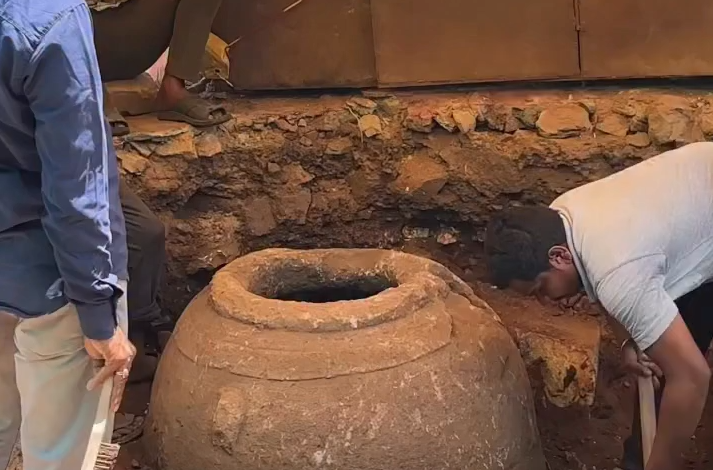

What Was Found During Excavation
Ramtek excavation | Ramtek history: A recent excavation near the sacred Ramtek Gadmandir has uncovered something truly fascinating—an ancient stone urn (हंडा) believed to date back to the Bhonsle era. This discovery has sparked curiosity among historians, archaeologists, and locals alike.
Why This Discovery Matters
Finds like this are not just objects—they are time capsules. They tell stories of how people lived, worshipped, and preserved their culture centuries ago. This particular urn could reshape our understanding of Nagpur’s regional history.
🛕 About Ramtek Gadmandir
Historical Importance
Located near Nagpur, Ramtek has always been a place of historical depth. The temple complex is believed to have connections with ancient dynasties and even mentions in mythological texts.
Religious Significance
The temple is dedicated to Lord Ram and holds immense spiritual value. Thousands of devotees visit every year, especially during festivals, making it both a religious and cultural hub.
⛏️ The Excavation Process
Who Conducted the Excavation
The excavation was carried out under local administrative supervision along with archaeology experts. Though not a large-scale ASI dig yet, it has already gained attention.

Methods Used in Digging
Careful manual excavation ensured that no artifact was damaged during extraction. Layers of soil were removed systematically, revealing the stone urn intact.
View this post on Instagram
🪨 The Ancient Stone Urn Explained
Structure and Design
The urn is carved from stone, indicating durability and significance. Its structure suggests it was not an ordinary household item.
Possible Uses in History
Experts believe it may have been used for:
- Storage of valuables
- Ritualistic purposes
- Burial or ceremonial functions
This opens multiple possibilities about its original use.
👑 Connection to the Bhonsle Era
Who Were the Bhonsles
The Bhonsle dynasty were prominent rulers of Nagpur during the Maratha period.
Their Role in Nagpur History
They contributed heavily to architecture, governance, and temple construction. This discovery might directly link to their reign, offering physical proof of their cultural practices.
🔍 Archaeological Significance
What Experts Say
Archaeologists suggest that such finds are rare in this region. It strengthens the historical timeline of Ramtek and nearby areas.
Impact on Future Research
This could lead to:
- Larger excavations
- ASI involvement
- Academic research papers
🙏 Cultural and Religious Reactions
Local Community Response
Locals are both excited and proud. Many believe this is a sign of Ramtek’s hidden heritage coming to light.
Devotees’ Perspective
Some devotees see it as a sacred sign. Faith and history seem to intersect beautifully here.
🌍 Tourism Potential
Boost for Ramtek Tourism
This discovery can turn Ramtek into a major tourist attraction. Imagine combining spirituality with archaeology!
Government Plans
Authorities may soon:
- Develop the site
- Improve infrastructure
- Promote heritage tourism
🛡️ Preservation Efforts
Need for Conservation
Artifacts like these are extremely fragile despite being stone. Proper care is crucial.
Challenges in Preservation
- Environmental damage
- Human interference
- Lack of funding
🏺 Similar Discoveries in India
Comparisons with Other Sites
India has seen similar finds in places like Varanasi and Hampi, but each carries unique characteristics.
Lessons Learned
Proper documentation and quick action are essential to preserve historical integrity.
🧿 Myths and Speculations
Local Legends
Some locals believe the urn might contain hidden treasures or spiritual elements.
Scientific vs Mythical Views
While myths add excitement, scientific analysis remains the key to truth.
📺 Media Coverage
News Reports Impact
Regional media has widely covered the story, bringing attention to Ramtek.
Social Media Buzz
The discovery is trending locally, with people sharing photos and theories online.
💰 Economic Impact
Local Business Growth
Tourism means:
- More visitors
- More sales
- More opportunities
Employment Opportunities
Guides, vendors, and local services will benefit directly.
🔮 Future Excavation Plans
Areas Yet to Explore
Experts believe this could be just the beginning. There may be more artifacts buried nearby.
Expected Discoveries
Possibilities include:
- Coins
- Sculptures
- Ancient tools
🧳 Why You Should Visit Ramtek
Travel Experience
Ramtek offers:
- Scenic views
- Spiritual peace
- Historical intrigue
Best Time to Visit
October to February is ideal due to pleasant weather.
The discovery at Ramtek Gadmandir is more than just an archaeological find—it’s a bridge between the past and present. It reminds us that history is still alive beneath our feet, waiting to be uncovered. Whether you’re a history buff, a spiritual seeker, or just a curious traveler, Ramtek now has one more reason to be on your list.
1. What was found at Ramtek Gadmandir?
An ancient stone urn believed to belong to the Bhonsle era was discovered.
2. Why is this discovery important?
It provides insight into historical practices and strengthens Nagpur’s historical timeline.
3. Who were the Bhonsles?
They were Maratha rulers who governed Nagpur and contributed to its development.
4. Can tourists visit the excavation site?
Yes, but access may be restricted depending on preservation efforts.
5. Will there be more excavations?
Possibly, as experts believe more artifacts could be buried nearby.