Deekshabhoomi Development Stalled for Two Years: Old Wall Crumbles, New One Barely Crawls — Ambedkarites Outraged

Published: May 13, 2026 | Category: Nagpur Local | Deekshabhoomi development | By: Nagpur Updates Desk


Two years. Nearly ₹214 crore sanctioned. And almost nothing to show for it.

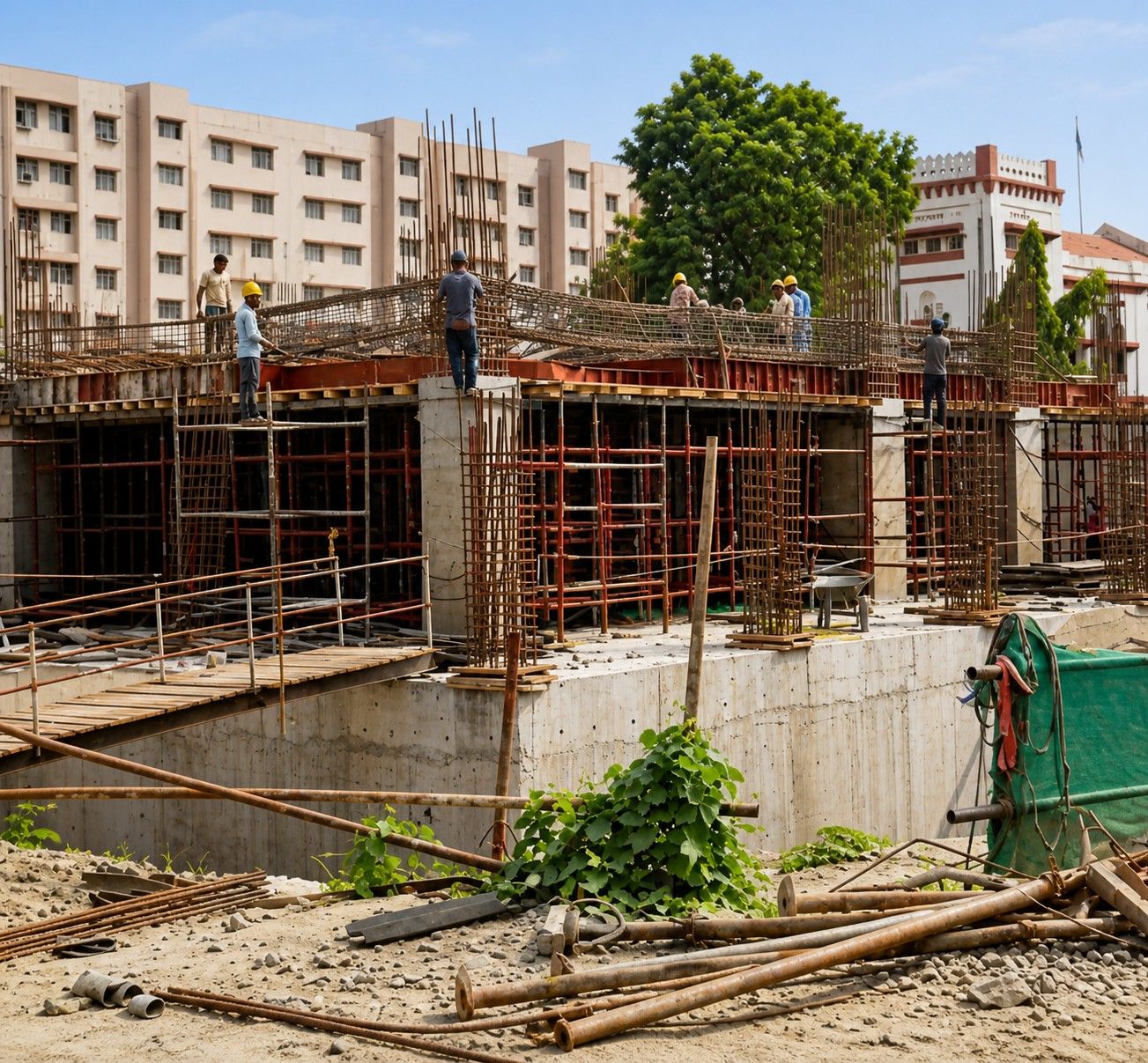
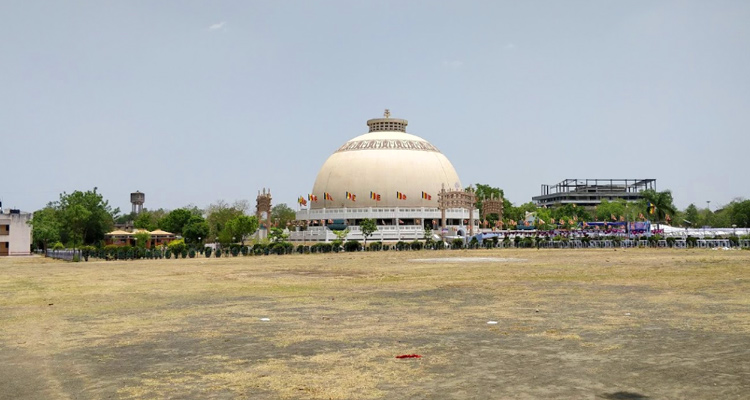
That is the painful reality at Deekshabhoomi — Nagpur’s most sacred site and one of India’s most revered Buddhist monuments. The ambitious development project, meant to transform the site into a world-class destination, has been stalled for nearly two years. The old security wall has crumbled at multiple spots. The new wall? Only 125 feet built in six months. Mounds of construction debris are piling up across the historically significant premises.

The Ambedkarite community is angry. And rightfully so.


What Is Happening at Deekshabhoomi Right Now

The ground reality at Deekshabhoomi in May 2026 is deeply troubling.

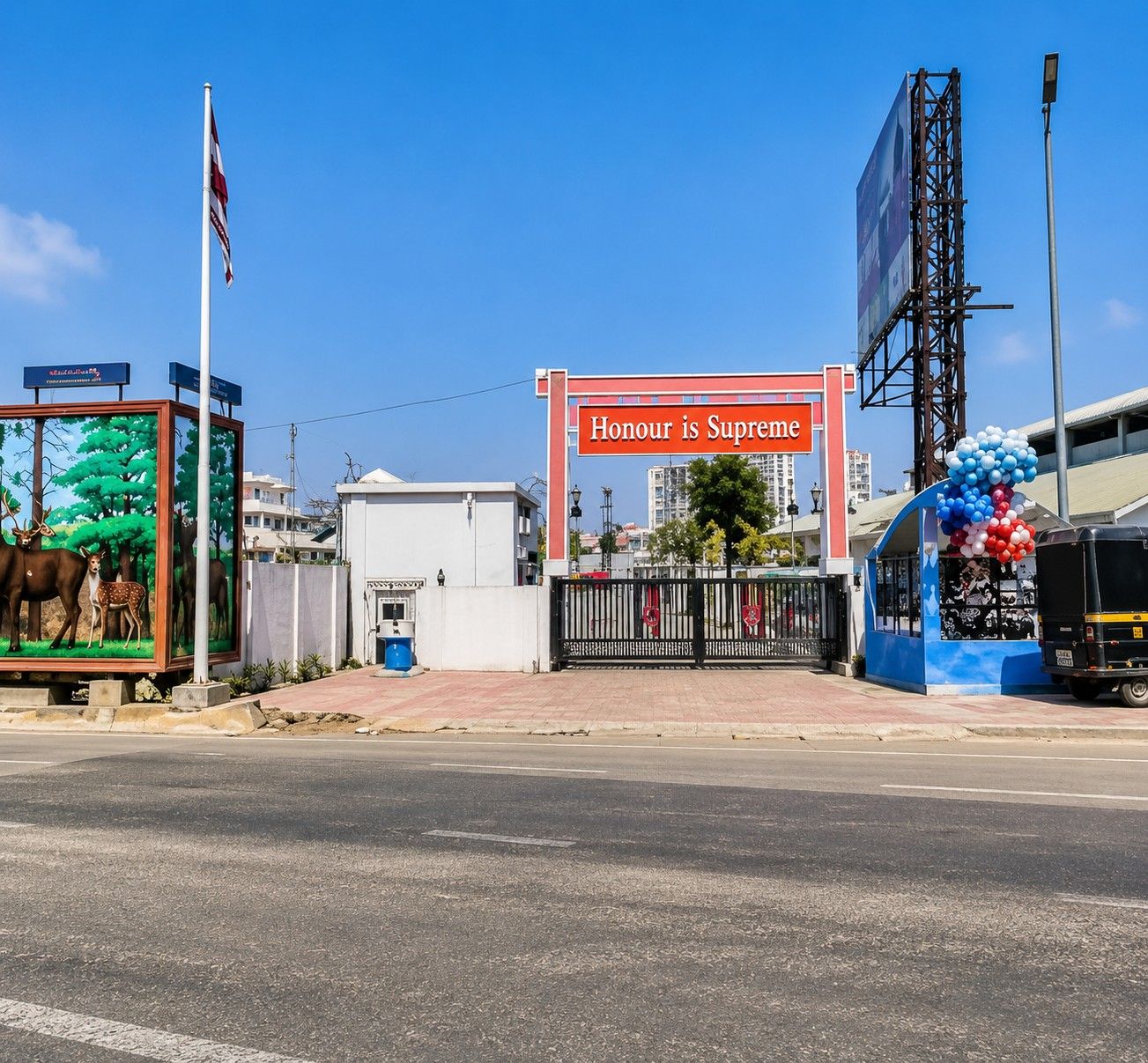
The old security wall has collapsed at several spots, leaving sections of the sacred site exposed and vulnerable. The entrance to one section is in a state of disrepair — crumbling, unmaintained, and unworthy of a site of this national significance.

Meanwhile, construction of the new security wall is progressing at a snail’s pace. In six months, only around 125 feet of new wall has been built. At this rate, completing even the basic perimeter security of the site will take years.

Large mounds of construction debris and soil have accumulated across the premises — causing serious inconvenience to the thousands of devotees, students, and visitors who come to Deekshabhoomi every day.

Footpaths and parking space near the main entrance and Laxminagar Chowk are completely blocked. Pedestrians are being forced onto the main road. Given that the Laxminagar–Deekshabhoomi stretch is heavily trafficked throughout the day — owing to nearby educational institutions and the sacred site itself — this is not just an inconvenience. It is a road safety hazard.


How Did It Come to This? The Full Story

To understand the current situation, it is important to go back to where it all began.

The Project: The Maharashtra Government sanctioned approximately ₹214 crore for the beautification, renovation, and development of Deekshabhoomi. The project was planned in two phases. The first phase involved the construction of an underground parking facility to address the chronic parking shortage during large gatherings at the site — particularly during the massive annual Dhammachakra Pravartan Din celebrations.

The Protest: In July 2024, thousands of Ambedkarite followers gathered at Deekshabhoomi in a massive protest against the underground parking project. Protesters were deeply concerned that digging beneath the premises would damage the Deekshabhoomi Stupa and the sacred Bodhi Tree. They also raised fears about water accumulation endangering the structural integrity of the stupa.

The protests turned intense. Protesters targeted steel reinforcing bars, cement pillars, and temporary boundaries at the construction site. The police had to rush forces to the spot.

The Halt: Responding to the public outrage, then Deputy Chief Minister Devendra Fadnavis — now Chief Minister — announced an immediate suspension of the construction work in the Legislative Assembly. He stated that while the project had been planned and sanctioned with the best intentions, public sentiment would be respected. A stakeholder meeting was promised before any further work.

The Stall: That stakeholder meeting, and the clarity it was supposed to bring, never fully materialised into resumed construction. Two years later, the development project remains in a state of near-complete inaction — with neither the original underground parking plan moving forward, nor a clear alternative plan being implemented.


125 Feet in Six Months: An Unacceptable Pace

The most damning indicator of the project’s stalled state is the pace of the new security wall construction.

A security wall is the most basic, least controversial element of any development plan for a large public site. It does not require community consultation. It does not risk damaging any sacred structure. It is straightforward construction work.

Yet in six months, only 125 feet of new wall has been completed. This pace is not just slow — it is indicative of a project that has lost all momentum, direction, and accountability.

While the new wall crawls forward at this rate, the old security wall — no longer being maintained — is actively crumbling. The result is a site that is less secure today than it was before the development project began. That is a failure of basic civic responsibility.


Deekshabhoomi: Why This Matters So Deeply

Deekshabhoomi is not an ordinary public space. It holds profound, irreplaceable significance for millions of people across India and the world.

This is the place where Dr. B.R. Ambedkar — the architect of India’s Constitution, the champion of Dalit rights, and one of the most transformative figures in modern Indian history — converted to Buddhism on October 14, 1956, along with over four lakh of his followers. That single act of mass conversion was one of the most powerful statements of dignity and resistance in Indian history.

Every year on Dhammachakra Pravartan Din (Ashok Vijaya Dashami), millions of Ambedkarite followers from across India and the world travel to Nagpur to pay homage at Deekshabhoomi. The site is as significant to the Buddhist and Ambedkarite community as any of the holiest pilgrimage sites in the country.

For this site to be left in a state of disrepair — with crumbling walls, piled-up debris, and blocked footpaths — for two years is not just a civic failure. It is a profound disrespect to the community that considers this place sacred.


The Community’s Demand: Action, Not Promises

The Ambedkarite community’s anger in May 2026 is entirely justified — and it is not new. For two years, they have watched as a project meant to honour and develop their most sacred site has instead turned it into a construction zone that has delivered neither the promised development nor the original site’s dignity.

Their demands are clear and reasonable:

  • Immediate cleanup of construction debris from the Deekshabhoomi premises
  • Restoration of footpaths and parking space near the main entrance and Laxminagar Chowk
  • Acceleration of the security wall construction to a timeline that reflects the site’s importance
  • A clear, publicly communicated development plan — one that the community has been properly consulted on and that has a firm, binding completion deadline
  • Regular progress updates from the responsible authorities — NIT, the Dr. Babasaheb Ambedkar Deekshabhoomi Memorial Committee, and the state government

Accountability: Who Is Responsible?

Multiple agencies share responsibility for the current state of Deekshabhoomi’s development. The Nagpur Improvement Trust (NIT) is the primary executing agency. The Dr. Babasaheb Ambedkar Deekshabhoomi Memorial Committee holds custodianship of the site. The Maharashtra State Government sanctioned the funds and holds ultimate accountability.

None of these bodies has provided a transparent, public account of why the project has stalled, what the revised plan is, when work will resume in earnest, and what the completion timeline is.

That silence is no longer acceptable.

Just as Nagpur has seen civic accountability issues at other important sites — from the stalled revival of the Futala Musical Fountain to poor maintenance of key public infrastructure — the Deekshabhoomi situation demands the same public scrutiny and accountability.


A Site That Deserves Better

Deekshabhoomi deserves better than this.

It deserves a development plan that was developed transparently, with genuine community consultation. It deserves a construction timeline that is respected. It deserves a managing committee and executing agency that communicate openly with the public. And above all, it deserves the dignity that befits one of India’s most historically significant monuments.

The crumbling wall at Deekshabhoomi is not just a construction problem. It is a symbol — of broken promises, administrative indifference, and a failure to honour the legacy of Dr. B.R. Ambedkar in the very city where his most defining act took place.

Nagpur Updates will continue to follow the Deekshabhoomi development story closely and hold the responsible authorities accountable. This site matters too much to be forgotten in a pile of construction debris.


Tags: Deekshabhoomi, Nagpur Development, NIT Nagpur, Dr BR Ambedkar, Ambedkarite Community, Nagpur Civic Issues, Deekshabhoomi Wall, Nagpur Local News 2026


New Airport for Gadchiroli: Maharashtra Govt Zeroes in on Chamorshi Taluka — ₹104 Crore Sanctioned for Land Acquisition

Published: May 13, 2026 | Category: Nagpur Region | By: Nagpur Updates Desk


Gadchiroli is transforming. Fast.

Once synonymous with Naxal violence and underdevelopment, this mineral-rich district in eastern Maharashtra is now at the centre of one of the state’s most ambitious development pushes. The latest milestone: Maharashtra Government has finalised Chamorshi taluka on the banks of the Wainganga river as the site for Gadchiroli’s brand-new airport.

The state has also sanctioned ₹104 crore for the acquisition of 311.81 hectares of land. And the Gadchiroli Collector has already transferred 31.38 hectares of government land to MADC — free of cost — to kick-start preliminary construction work immediately.

The decks are cleared. The airport is happening.


Why Chamorshi? AAI Recommended It

The site selection was not arbitrary. The Maharashtra Government had forwarded three possible locations to the Airports Authority of India (AAI) for evaluation. After a detailed technical assessment, aviation experts concluded that Chamorshi taluka — located in the central-western part of Gadchiroli — was the most suitable choice.

The key reasons for Chamorshi’s selection:

  • Central location within the district — maximising accessibility for the entire region
  • Wainganga river banks — relatively flat terrain that is favourable for runway construction
  • Proximity to industrial activity — close to the areas where steel manufacturing projects are being set up

The land required spans three villages: Shirpur Chak, Guruvala, and Hirapur. Together, these villages will provide the site for what will become one of Maharashtra’s most strategically significant new airports.


The Land: Breakdown of 311.81 Hectares

The total land requirement of 311.81 hectares has been divided into three categories:

Land Type Area Compensation
Private Land 245.75 Ha ₹76.99 crore
Forest Land 34.38 Ha ₹10.07 crore
Government Land 31.38 Ha Free (transferred to MADC)

An additional ₹8.70 crore has been set aside to cover administration costs and an anticipated 10% escalation in compensation due to possible delays in the acquisition process. This brings the total sanctioned outlay to ₹104 crore.

The General Administration Department (GAD) has also confirmed that the project advisor has given approval for the diversion of 34.68 hectares of selected forest land — clearing another key regulatory hurdle for the project.

The Gadchiroli Collector has already acted swiftly by transferring the 31.38 hectares of government land to Maharashtra Airport Development Corporation (MADC) at no cost. This transfer allows MADC to begin preliminary and preparatory work on the airport site without waiting for the full private and forest land acquisition to be completed.


The Big Reason: Gadchiroli Is Now Open for Business

To understand why this airport matters so much, you need to understand how dramatically Gadchiroli has changed.

For decades, Gadchiroli was one of Maharashtra’s most troubled districts. The Naxal insurgency made large parts of the district inaccessible, dangerous, and effectively off-limits for investment. Roads could not be built. Industries could not set up. Development was impossible.

That reality has changed fundamentally. The Naxal threat in Gadchiroli has been almost entirely eliminated through sustained security operations. With peace restored, the district’s extraordinary natural wealth — sitting largely untouched for decades — is now attracting serious industrial attention.

Chief Minister Devendra Fadnavis himself serves as the Guardian Minister for Gadchiroli — a signal of the state’s highest-level political commitment to the district’s development. His vision: to transform Gadchiroli into Maharashtra’s next major steel hub.


Iron Ore, Steel Giants and Industrial Momentum

Gadchiroli sits atop one of India’s richest reserves of premium-quality iron ore. With the Naxal barrier removed, this resource is now accessible — and India’s biggest industrial groups have taken notice.

Two major steel groups have already committed to Gadchiroli:

Lloyds Group is in the process of setting up a string of plants for the manufacturing of steel materials in the district. Construction and planning are actively underway.

Jindal Group has committed to setting up one of its mega steel projects in Gadchiroli — a commitment from one of India’s largest industrial conglomerates that signals serious long-term confidence in the district’s future.

The state government has already sanctioned several other industrial projects in the district and is investing heavily in building the necessary infrastructure — roads, power, water, and now an airport — to support this industrial wave.


Why an Airport Is Critical to Gadchiroli’s Steel Ambitions

An airport might seem like an unusual priority for an area whose dominant need is heavy industrial infrastructure. But for the kind of large-scale industrial development planned for Gadchiroli, aviation connectivity is not a luxury — it is a necessity.

Here is why:

Executive Mobility. Steel plants and large manufacturing facilities require constant visits from senior executives, engineers, investors, and government officials. Currently, reaching Gadchiroli from major cities requires long, difficult road journeys. An airport cuts that travel time dramatically — making Gadchiroli accessible in hours rather than days for industry leaders managing large operations.

Supply Chain Efficiency. High-value components, technical equipment, and time-sensitive cargo can move by air once the airport is operational — giving Gadchiroli’s industries a logistics advantage they currently lack.

Investor Confidence. An airport is a powerful signal. It tells potential investors that this is a location where the government is serious about infrastructure — that they will not be isolated here. It accelerates investment decisions.

Tourism and Mining Connectivity. Beyond steel, Gadchiroli’s forests, wildlife, and tribal culture offer significant eco-tourism potential. An airport opens this potential to a much wider audience.


Fast-Tracking: The State Is Moving Quickly

What is notable about the Gadchiroli airport story is the speed of decision-making. Several developments have happened in rapid succession:

  • AAI technical assessment completed and Chamorshi recommended
  • Maharashtra Government accepted the recommendation and finalised the site
  • ₹104 crore sanctioned for land acquisition
  • Forest land diversion approved by GAD advisor
  • Gadchiroli Collector transferred government land to MADC — before the full acquisition is even complete

This last step is particularly significant. By handing over the government land immediately, the administration has ensured that MADC can begin preliminary work — site surveys, soil testing, design finalisation, and preparatory construction — without waiting for the slower process of private land acquisition to conclude.

The message is clear: Gadchiroli’s airport is not going to wait.


Nagpur’s Regional Aviation Network Grows

The Gadchiroli airport announcement comes at a time of extraordinary momentum for aviation across the Nagpur region. The Union Cabinet has just approved the ₹7,000 crore modernisation of Nagpur’s Dr. Babasaheb Ambedkar International Airport under the PPP model. Qatar Airways is resuming direct Nagpur–Doha flights from May 21. And now Gadchiroli — Nagpur’s neighbouring district — is getting its own brand-new airport.

Together, these developments reflect a regional aviation ecosystem that is growing rapidly — connecting Central India to itself, to the rest of the country, and to the world.

For Gadchiroli specifically, an airport is more than a piece of infrastructure. It is a declaration — that this district, which has suffered for decades, is now open, peaceful, and ready to claim its place in Maharashtra’s economic future.

Nagpur Updates will track every stage of the Gadchiroli airport project and bring you the latest updates on land acquisition, construction, and the industrial development that the airport will enable. Stay tuned.


Tags: Gadchiroli Airport, Chamorshi Taluka, MADC Maharashtra, Devendra Fadnavis, Gadchiroli Development, Steel Hub Gadchiroli, Naxal Free Gadchiroli, Nagpur Region News, Maharashtra Infrastructure 2026

Union Cabinet Approves Nagpur Airport Modernisation Under PPP Model — ₹7,000 Crore Upgrade to Transform Central India’s Aviation Hub

Published: May 13, 2026 | Category: Nagpur Local | Nagpur airport GMR upgrade | MIHAN Nagpur airport PPP | By: Nagpur Updates Desk


Big news for Nagpur. Bigger news for Vidarbha.

The Union Cabinet, chaired by Prime Minister Narendra Modi, has approved the modernisation of Dr. Babasaheb Ambedkar International Airport, Nagpur under the Public-Private Partnership (PPP) model. The approval clears the path for a transformational ₹7,000 crore upgrade that will position Nagpur as a world-class aviation hub for Central India.

This is not a routine airport expansion. It is a fundamental reimagining of what Nagpur’s airport can be — and what it can do for the entire Vidarbha region.


What the Cabinet Has Approved

The Cabinet approval greenlights the modernisation and development of Nagpur airport through a PPP concession agreement. GMR Airports Limited (GAL) — one of India’s most experienced airport operators, managing Delhi and Hyderabad international airports — has signed a Concession Agreement with MIHAN India Ltd for the upgrade, development, and operation of the airport.

Under this model, GMR will invest in and develop the airport infrastructure over a defined concession period, while the Maharashtra Airport Development Company (MADC) — through its MIHAN India subsidiary — retains ownership oversight.

The project will be developed in phases, with the total capital investment estimated at ₹7,000 crore.


What the New Nagpur Airport Will Look Like

The upgraded airport will be a massive step up from what exists today. Here is what the new Nagpur airport will include:

New Integrated Terminal Building A brand-new terminal designed to handle 14 million passengers per year. This is a dramatic increase from the current capacity, which has been operating close to its limits. The new terminal will offer modern facilities, seamless passenger flow, and a world-class experience.

Second Runway The airport will get a second runway — a critical addition that will allow simultaneous take-offs and landings, significantly increasing the airport’s operational capacity and reducing delays.

100-Aircraft Parking Capacity The new airport will be able to accommodate approximately 100 aircraft at a time — a scale that reflects Nagpur’s ambitions as a major aviation hub, not just a regional airport.

Total Area: 1,350 Hectares The expanded airport will cover a total area of 1,350.20 hectares — giving it the physical footprint to support all planned infrastructure including runways, terminals, cargo facilities, and support systems.

MRO Facility A dedicated Maintenance, Repair, and Overhaul (MRO) facility will be developed as part of the complex. Nagpur already has an existing AIESL MRO hub that has been expanding its capabilities — the new PPP-developed MRO facility will complement and scale these capabilities significantly.

Special Economic Zone (SEZ) Integration The upgraded airport will be directly connected to a fully operational SEZ — creating a seamless logistics and business ecosystem where manufacturing, warehousing, and international trade can operate in close proximity to aviation infrastructure.

Cargo Terminal A modern cargo terminal will support the growing demand for air freight — particularly important for Nagpur’s position as the geographical centre of India and a natural logistics hub.

New Air Traffic Control (ATC) Tower A new ATC tower will be constructed to support increased traffic volumes safely and efficiently.


Why This Matters for Nagpur and Vidarbha

For decades, Nagpur has been hampered by airport infrastructure that could not keep up with the region’s economic potential. Vidarbha — historically described as Maharashtra’s underdeveloped region — has long needed a world-class aviation gateway to unlock its industrial, commercial, and tourism potential.

The ₹7,000 crore airport upgrade directly addresses this need. Officials believe the airport’s expansion will serve as a catalyst for growth across multiple sectors including manufacturing, aviation, tourism, logistics, and healthcare — benefiting not just Nagpur city but the entire Vidarbha region and beyond.

The Association for Industrial Development (AID) had specifically appealed to PM Modi to fast-track Nagpur airport redevelopment, arguing that modern aviation infrastructure would strengthen connections between Nagpur and domestic and international markets and would catalyse manufacturing and services clusters in the region. The Cabinet approval is, in part, a direct response to that industry demand.


GMR: The Right Partner for the Job

The choice of GMR Airports Limited as the development partner is significant. GMR manages two of India’s busiest and most respected international airports — Indira Gandhi International Airport in Delhi and Rajiv Gandhi International Airport in Hyderabad. It also develops greenfield airports in Andhra Pradesh, Goa, and Bhogapuram.

GMR brings proven expertise in:

  • Large-scale terminal design and construction
  • International aviation operations
  • Cargo hub development
  • Aeronautical infrastructure including taxiways and aprons
  • Technology integration for smart airport operations

For Nagpur, having GMR as the PPP partner means the city will benefit from the same operational and design standards that have made Delhi and Hyderabad among India’s premier aviation hubs.


MIHAN: The Bigger Picture

The airport modernisation does not exist in isolation. It is the centrepiece of MIHAN — Multi Modal International Cargo Hub and Airport at Nagpur — one of India’s most ambitious integrated infrastructure projects.

MIHAN envisions Nagpur as a smart city combining:

  • A world-class international airport
  • A multimodal international cargo hub
  • A connected Special Economic Zone (SEZ)
  • An MRO facility and logistics park
  • Two parallel runways for maximum operational efficiency

The Cabinet approval for the PPP modernisation is a critical step in bringing this vision to full realisation. It provides the clarity, legal framework, and investor confidence needed to accelerate construction timelines.


Nagpur’s Aviation Momentum Builds

The Cabinet approval comes at a time when Nagpur’s aviation story is gathering extraordinary momentum. Just last week, the midpoint RVR safety system was installed at Nagpur airport — completing the airport’s full three-point visibility monitoring network. And Qatar Airways’ direct Nagpur–Doha flights are set to resume from May 21 — restoring vital international connectivity.

Together, these developments paint a compelling picture of an airport — and a city — that is investing seriously in its aviation future. The ₹7,000 crore PPP modernisation is the biggest piece of that puzzle. When complete, Dr. Babasaheb Ambedkar International Airport will be worthy of the name it carries — a world-class gateway that honours Nagpur’s history while powering its future.


What Happens Next

With Cabinet approval now in place, the following milestones will define the project’s progress:

  • Concession Agreement finalisation between GMR and MIHAN India — already signed and now formally backed by Cabinet approval
  • Phase-I construction commencement — new terminal building, apron expansion, and infrastructure groundwork
  • Second runway planning and IAF coordination — a technically complex step given the airport’s shared civil-military status
  • MRO and SEZ development alongside terminal construction
  • Progressive passenger capacity increase as each phase is commissioned

Nagpur Updates will track every major milestone in the Nagpur airport modernisation project and bring you updates as construction progresses. This is one of the most important infrastructure stories in Nagpur’s history — and we will be with you every step of the way.


Tags: Nagpur Airport, GMR Airports, PPP Model, MIHAN Nagpur, MADC, Airport Modernisation, Union Cabinet, Nagpur Aviation, Nagpur Infrastructure, Nagpur Local News 2026

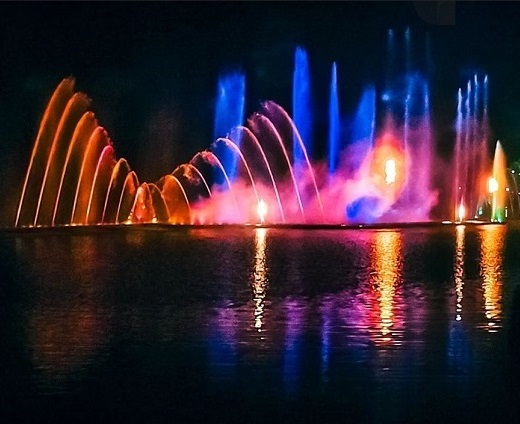
Futala Musical Fountain Set to Return: Final Phase Underway as French Team Expected and Special Cables Arrive

Published: May 12, 2026 | Category: Nagpur Local | Futala lake fountain Nagpur | By: Nagpur Updates Desk


Good news for Nagpur. After years of delays, legal battles, and international disruptions, the city’s much-loved Futala Lake Musical Fountain is finally entering its final revival phase.

The last batch of special underwater cables has arrived in Nagpur. A French technical team — critical to completing the advanced lighting and projection systems — is expected to visit soon. Work at the lakefront is in full swing. And the Maharashtra Metro Rail Corporation (MahaMetro) is pushing hard to complete the project at the earliest.

Nagpur is close to getting back one of its most iconic attractions.


What Is the Futala Musical Fountain?

Futala Lake is one of Nagpur’s most popular destinations. It sits in the heart of the city and draws thousands of visitors every evening.

The musical fountain project was conceived by Union Minister Nitin Gadkari as a major transformation of the lakefront. The vision was spectacular — a world-class musical fountain with laser displays, light shows, and a multimedia projection system — transforming Futala into a premier tourist destination that would rival attractions in India’s biggest cities.

The project was built at a cost of approximately ₹50 crore. However, it never got the chance to shine. The fountain malfunctioned even before its scheduled inauguration in May 2023 — mainly due to cable damage caused by algae accumulation in the polluted lake water. A project that was meant to dazzle Nagpur before it could even open its eyes.


A Troubled Journey: From Supreme Court to War Delays

The years that followed were not kind to the Futala fountain.

Legal challenges stalled the project soon after the malfunction was discovered. In January 2024, the Supreme Court of India issued a status quo order — effectively halting all restoration work and pushing the project into an extended period of uncertainty.

It was not until October 2025 that the Supreme Court allowed activities to resume. By then, several components had deteriorated further during the years of non-operation — forcing authorities to restart multiple elements from scratch.

MahaMetro took over the project from the Nagpur Improvement Trust (NIT) and initiated a comprehensive restoration effort. However, restoration costs had already crossed ₹10 crore, with a fresh order for replacement cables alone worth ₹3 crore. Citizens raised legitimate concerns about the rising public expenditure on a project that had never worked from day one.

Then came another unexpected setback. The French technical team — specialists in the advanced lighting and projection systems at the heart of the fountain — was unable to travel to India. The reason? The US-Israel-Iran conflict had disrupted international travel routes, making it impossible for the team to reach Nagpur.

The fountain waited. Nagpur waited.


May 2026: The Final Push Begins

The wait is finally nearing its end.

As of May 12, 2026, the project has entered what officials are describing as its final phase. Here is where things stand:

Cable replacement — nearly complete. The removal of old, damaged underwater fountain cables has been completed. The last batch of special replacement cables has now arrived in Nagpur. Nearly 80% of the new cable infrastructure required for the upgraded system had already been procured in earlier phases. The final consignment brings the installation to the home stretch.

French technical team en route. The specialists from France — delayed for months by the Gulf conflict — are now expected to arrive in Nagpur soon via an alternative travel route. Their visit is critical. The advanced lighting, laser, and multimedia projection systems cannot be made fully operational without their on-site technical expertise and hands-on calibration.

Lakefront beautification underway. Even as the technical work progresses, the area surrounding the lake is being beautified. The contractor, Khadatkar Construction Studio One, has been carrying out preparatory and aesthetic work around the lakefront to prepare the site for its eventual public reopening.

IIT Bombay inspection done. Experts from the Indian Institute of Technology (IIT) Bombay have already inspected the system and confirmed the restoration plan. Their assessment has guided the current phase of cable replacement and equipment installation.


The Environmental Challenge: Sewage in Futala Lake

The revival of the fountain cannot be discussed without acknowledging the elephant — or rather, the sewage — in the room.

Untreated sewage continues to flow into Futala Lake. This is the very problem that damaged the original fountain cables. Algae growth, accelerated by sewage-polluted water, destroyed the underwater systems before the fountain could even open. The issue is currently before the Western Zone Bench of the National Green Tribunal (NGT).

Discussions between NIT and NMC are underway regarding the establishment of a Sewage Treatment Plant (STP) for the lake. However, the STP will take time to implement.

This raises a legitimate and important question — one that Nagpur’s citizens are asking openly: What happens to the new cables if the sewage issue is not resolved before the fountain becomes operational?

It is a question that MahaMetro and the civic authorities must answer clearly and publicly before the fountain reopens — so that history does not repeat itself and crores of public money are not wasted again.


What Nagpur Can Expect When It Opens

When the Futala Musical Fountain finally becomes operational, it promises to be a genuinely world-class attraction.

The full system includes:

  • Musical fountain jets — water displays choreographed to music
  • Underwater LED lighting — illuminating the fountain from below the lake surface
  • Laser projection system — dramatic laser light displays over the water
  • Multimedia projection show — visual storytelling projected on the fountain’s water curtain
  • Lakefront beautification — improved surroundings for visitors

The combination of music, water, light, and laser is designed to create a stunning evening spectacle — one that would make Futala a must-visit destination not just for Nagpur residents but for tourists from across Vidarbha and beyond.


Public Money, Public Accountability

The Futala fountain has cost Nagpur’s taxpayers significantly. The original project cost ₹50 crore. Restoration has added another ₹10 crore and counting. Citizens are right to expect transparency, accountability, and — most importantly — a fountain that actually works when it finally opens.

The concerns raised by Nagpur’s residents are valid. The project was conceived without adequate public consultation. It failed before inauguration. Legal battles added years of delay. Restoration costs have kept climbing. And the fundamental environmental problem — sewage in the lake — has still not been resolved.

MahaMetro and the civic administration owe Nagpur a clear, honest communication plan — one that explains the final timeline, the total cost, and the steps being taken to ensure the fountain does not suffer the same fate as before.

Just as Nagpur is investing in smart civic infrastructure — from AI-powered traffic management at 32 city junctions to the One Nation One Card system for Nagpur Metro — the Futala fountain deserves to be a success story, not a cautionary tale.


Nagpur Is Watching

The Futala Musical Fountain carries emotional weight for this city. It represents the aspiration to give Nagpur a landmark that it can be proud of — a beautiful, world-class public attraction that enhances the quality of life for every resident.

That aspiration has not dimmed — despite all the delays and disappointments.

With the final cables in place and the French team on its way, the fountain is closer to becoming a reality than it has ever been. Nagpur is watching, hoping, and — cautiously — excited.

Nagpur Updates will keep you informed on the exact opening date of the Futala Musical Fountain the moment it is confirmed. Stay tuned!


Tags: Futala Lake, Musical Fountain Nagpur, MahaMetro Nagpur, Nitin Gadkari, Nagpur Tourism, Nagpur Development, French Technical Team, Nagpur Local News 2026

Koradi Temple’s 188-Foot Hanuman Idol to Get a Futuristic Touch: Laser Projection, Underwater Lighting, Monorail and More — Amit Shah to Inaugurate in June 2026

Published: May 10, 2026 | Category: Nagpur Local | Nagpur 188 ft Hanuman idol | By: Nagpur Updates Desk


One of Nagpur’s most beloved and sacred destinations is on the verge of a truly extraordinary transformation. The Mahalaxmi Jagdamba Koradi Temple — situated approximately 20 kilometres south of Nagpur city on the Chhindwara Road and revered as one of the most powerful Shaktipeeths in the Vidarbha region — is at the heart of an ambitious, ₹1,214.94 crore redevelopment project that promises to turn Koradi into a world-class religious tourism destination of national importance.

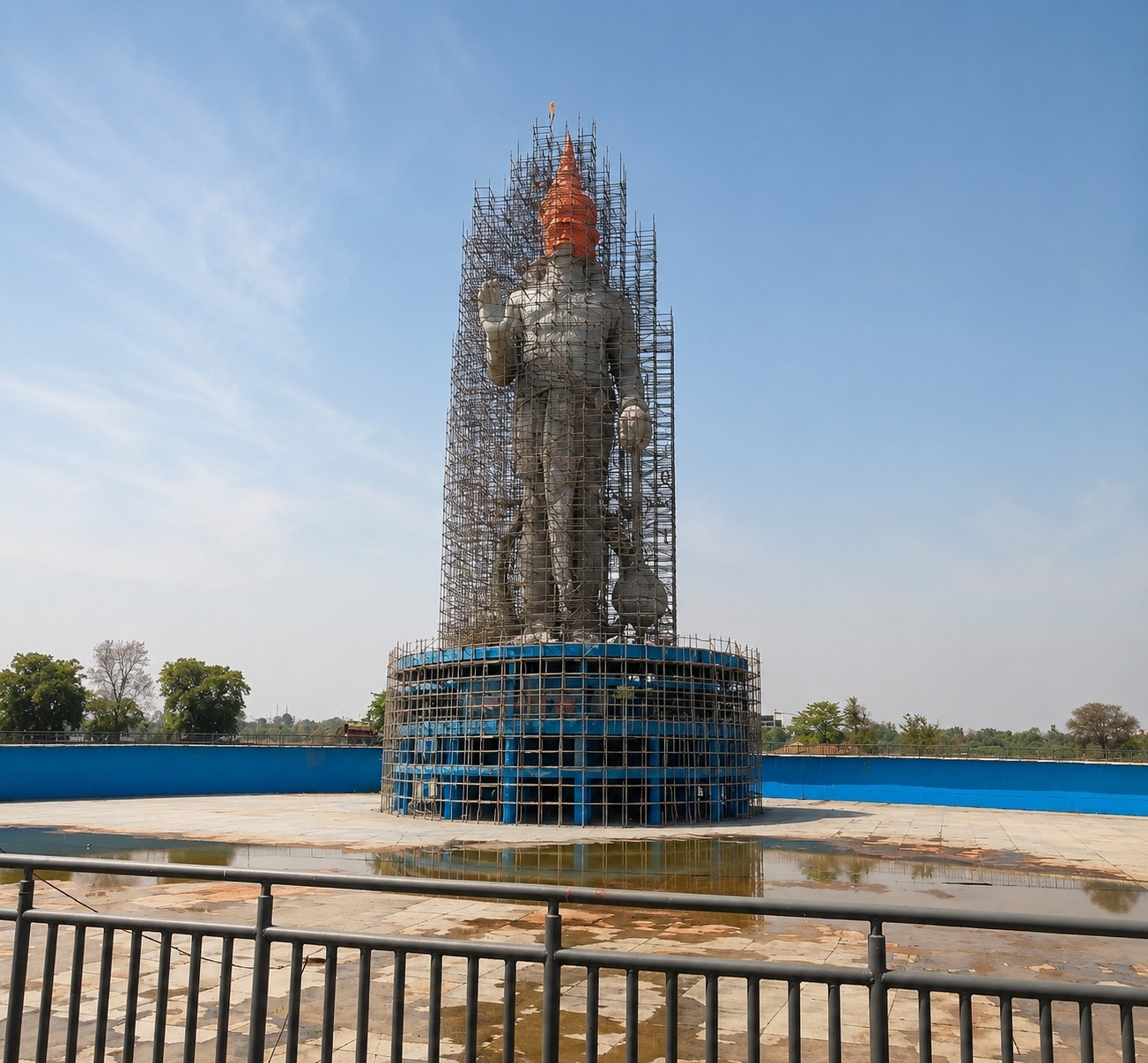
At the centrepiece of this transformation stands a monumental achievement — the construction of a 188-foot Hanuman idol (Nagpur 188 ft Hanuman idol) set to be the tallest Hanuman statue in India, towering magnificently in the middle of a lake within the Koradi temple complex. The idol is now nearing completion and is set to be inaugurated in a grand ceremony in June 2026 — with Union Home Minister Amit Shah confirmed to preside over the historic unveiling.


The Statue: Engineering Marvel Meets Divine Faith | Nagpur 188 ft Hanuman idol | Koradi Hanuman statue

The sheer scale of the Koradi Hanuman idol (Koradi Hanuman statue) is staggering. Standing at 158 feet in height for the statue itself, with the base and spire bringing the total structure to approximately 163–188 feet, this colossus of reinforced concrete and iron is being created to capture every detail of Lord Hanuman’s divine form with reverence and precision.

The numbers behind the construction are equally impressive:

  • 178 cubic metres of concrete used in the structure
  • 140 tonnes of iron reinforcement embedded within
  • Total weight of the statue: 281 tonnes
  • Cost of the idol alone: ₹11.50 crore
  • Sculptor: Jatin Kumar, leading the team from Matu Ram Art Centre — the Gurugram-based firm celebrated for creating the 351-foot Lord Shiva statue in Udaipur and the Lord Buddha statue in Namchi, Sikkim

The idol stands in the middle of pond number three within the Koradi temple complex — creating a breathtaking visual where the towering deity appears to rise directly from the water. The symbolism is powerful: Lord Hanuman, eternal protector and symbol of strength, standing sentinel over the sacred waters of Koradi.

Since the statue is situated in the middle of the lake, boats will be arranged for visitors to reach the idol — adding an element of pilgrimage journey to the darshan experience.


Futuristic Features: Transforming Ancient Faith with Modern Technology

What truly sets the Koradi redevelopment project (Koradi Hanuman statue) apart from conventional temple upgrade programmes is its bold integration of cutting-edge modern technology and attractions with the sanctity of an ancient religious site. The comprehensive development plan — prepared jointly by the Nagpur Improvement Trust (NIT) and the Nagpur Metropolitan Region Development Authority (NMRDA) — envisions Koradi as not just a temple but a complete religious tourism ecosystem.

The futuristic features planned for the Koradi complex include:

Laser Projection Mapping The Hanuman idol and the temple complex will be equipped with laser projection mapping technology — a stunning visual spectacle where high-powered laser projectors display dynamic images, stories, and devotional content on the surfaces of the statue and temple structures after dark. Laser projection mapping has been used to dramatic effect at iconic landmarks worldwide, and at Koradi, it will transform the evening darshan experience into something truly extraordinary.

Underwater Lighting The lake surrounding the Hanuman idol will be fitted with sophisticated underwater lighting systems, illuminating the waters around the statue in a dramatic display that will make the idol appear even more magnificent after sunset. Combined with the laser projection system, the nighttime visual experience at Koradi is set to become one of the most spectacular in Central India.

Butterfly Garden A dedicated butterfly garden is being developed within the temple complex — a peaceful, nature-based attraction that will provide a serene contrast to the grandeur of the main temple and statue complex, and is expected to be a popular destination for families and nature lovers.

2.5 km Monorail Covering Seven Spots One of the most exciting and unique features of the Koradi redevelopment is the planned 2.5-kilometre monorail system connecting seven key spots within the complex, at an estimated cost of ₹17.46 crore. The monorail will allow devotees and visitors to comfortably traverse the expansive temple complex — particularly beneficial for elderly pilgrims, families with young children, and visitors with mobility challenges.

Kids’ Adventure Park — Indoor and Outdoor A dedicated kids’ adventure park featuring both indoor and outdoor games is being planned at an estimated cost of ₹31.18 crore. This will transform Koradi into a family destination where children and adults alike have engaging, age-appropriate attractions beyond the religious experience.

Dinopark and Amusement Park In a fascinatingly eclectic addition to a temple precinct, the redevelopment plan includes a Dinopark and amusement park — attractions that will broaden the appeal of Koradi beyond traditional devotees to include general tourists and families seeking a full-day recreational experience.

Water Body with Fountains and Bridge A beautifully designed water body with musical fountains and a decorative bridge will add to the aesthetic and atmospheric richness of the complex — creating photogenic spaces that will draw visitors beyond the temple itself.


The Grand Gateway: Mahadwar and Rajgad Mahadwar

The entrance experience at the redeveloped Koradi complex will itself be a statement. The project includes the construction of a magnificent ‘Mahadwar’ (main entrance gate) featuring statues of Chhatrapati Shivaji Maharaj and Maa Tulja Bhavani, at a cost of ₹8.5 crore — a gateway that connects Nagpur’s spiritual and historical identity in one powerful symbolic gesture.

A separate VIP entrance — the ‘Rajgad Mahadwar’ — standing 10 metres in height, will be constructed at a cost of ₹3.44 crore, providing a dedicated entry point for dignitaries and special guests while maintaining the flow of general pilgrim traffic.


Hostel for 500 Children: Social Commitment Alongside Spiritual Development

The Koradi project is not just about tourism and spectacle. In a heartening dimension of social commitment, a hostel facility for 500 children is being planned as part of the development — reflecting the Mahalaxmi Jagdamba Sansthan’s commitment to education and welfare alongside its religious mission.

A skill development centre is also being incorporated into the master plan — creating a space where youth from Koradi and surrounding areas can access vocational training and employment-oriented skill building, directly connecting the temple’s development to the economic upliftment of the local community.


June 2026 Inauguration: Amit Shah to Preside | Koradi Hanuman statue

The inauguration of the Koradi Hanuman idol — and the unveiling of the redeveloped temple complex — is scheduled for June 2026. Nagpur Guardian Minister and Revenue Minister Chandrashekar Bawankule personally travelled to New Delhi to meet Union Home Minister Amit Shah and extend a formal invitation to the ceremony.

Amit Shah accepted the invitation warmly and confirmed his availability to attend the historic event in June 2026. Bawankule expressed confidence that the inauguration would be conducted on a grand scale and that Koradi would emerge as a major spiritual destination for devotees from across the country.

The presence of the Union Home Minister at the inauguration underlines the national significance that this project has achieved — transforming what was always a locally cherished temple into a landmark of pan-India religious and cultural importance.


Koradi Temple: A Sacred History

For those unfamiliar with Koradi’s spiritual significance, the Mahalaxmi Jagdamba Temple has been a revered Shaktipeeth for centuries. Dedicated to Goddess Durga, the temple is situated on the banks of Koradi Lake and draws lakhs of devotees annually — particularly during Navratri, when the idol is adorned in three distinct divine avatars and the surrounding area comes alive with devotion and celebration.

The temple’s location — just 20 km from Nagpur city — makes it easily accessible to urban devotees while retaining the sacred, removed atmosphere of a proper pilgrimage site. With the redevelopment, Koradi is set to become what its promoters envision: a destination that rivals India’s foremost religious tourism sites in its scale, experience, and spiritual ambience.

Just as Nagpur’s civic and infrastructure landscape is being transformed through projects like the New Nagpur IBFC township and the Indora–Dighori flyover, the Koradi redevelopment represents the city’s spiritual and cultural renaissance — a commitment to honouring its deepest traditions while embracing the possibilities of a modern, ambitious future.

Nagpur Updates will bring you full coverage of the Koradi Hanuman idol inauguration in June 2026. Stay tuned!


Tags: Koradi Temple, Hanuman Idol Nagpur, NMRDA Nagpur, Amit Shah Nagpur, Chandrashekar Bawankule, Religious Tourism Nagpur, Nagpur Development, Mahalaxmi Jagdamba, Nagpur Local News 2026

NHAI Sits on Bhande Plot–Dighori Flyover as Nagpur Traffic Crawls Below: April Deadline Missed, June Now the Target

Published: May 10, 2026 | Category: Nagpur Local | Bhande Plot Dighori flyover  | By: Nagpur Updates Desk


For the thousands of Nagpur commuters who travel daily between North Nagpur and East Nagpur — battling the chronic, grinding traffic that plagues the Mahal, Gandhibag, and Bhande Plot corridors — relief once again seems just out of reach. The National Highways Authority of India (NHAI) has missed yet another deadline for opening the eagerly awaited Bhande Plot to Dighori stretch of the ambitious Indora–Dighori Elevated Corridor, and Nagpur’s residents are running out of patience.

NHAI had confidently promised that the Bhande Plot–Dighori flyover section would be opened to traffic in April 2026. That deadline has now passed. The flyover remains unopened. Traffic continues to crawl painfully through the congested streets below. And NHAI has quietly revised its timeline — with a new target of June 2026 for the opening of the complete Indora–Dighori Elevated Corridor project.


A Project Nagpur Has Been Waiting For

To understand the frustration of Nagpur’s commuters, it is important to appreciate what the Indora–Dighori Elevated Corridor means for the city and why its delay is causing such significant public anger.

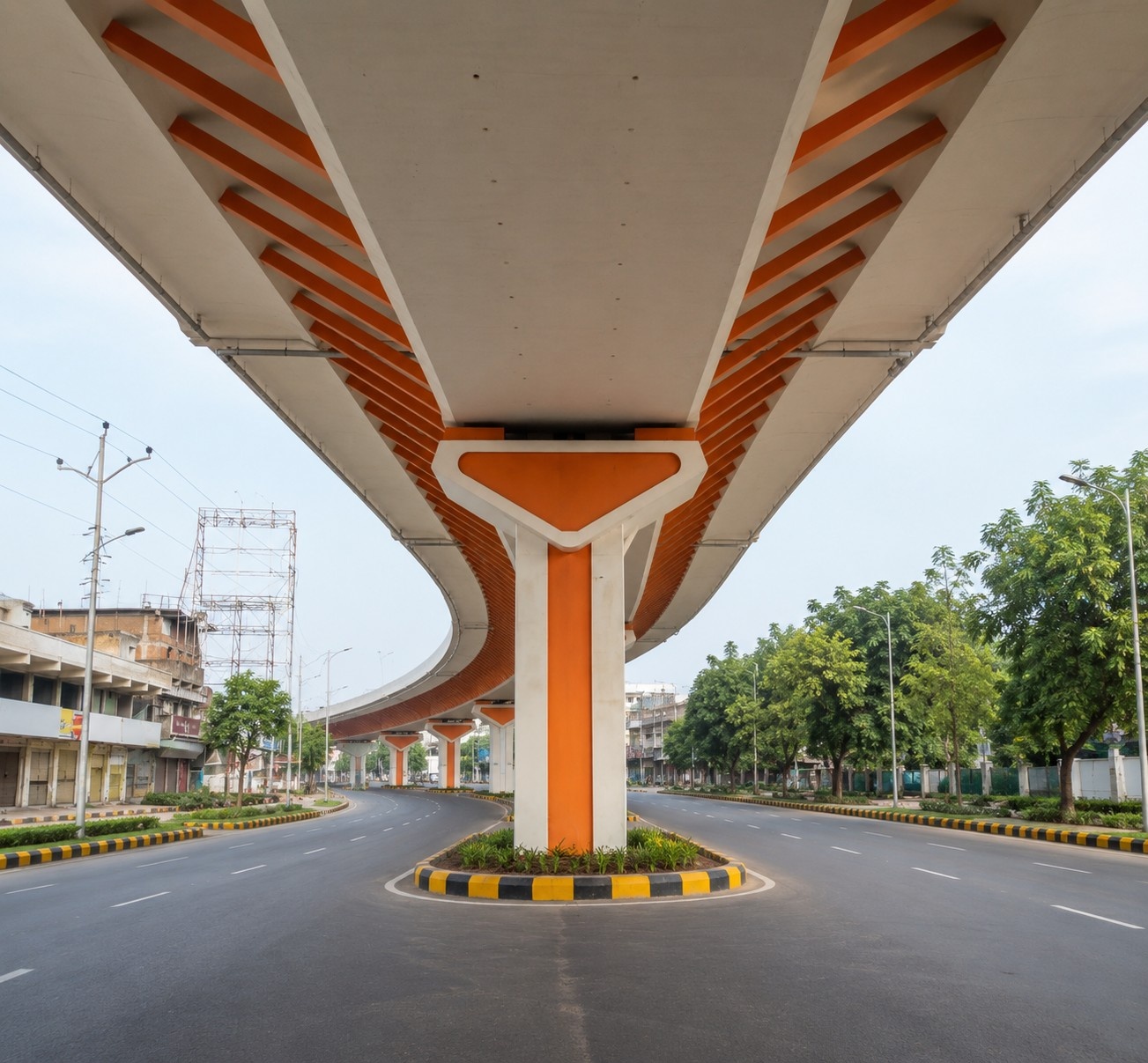
The Indora–Dighori flyover is not a routine road project. It is one of the most transformative infrastructure investments Nagpur has seen in decades — a massive, ₹998 crore multi-lane elevated corridor that, when complete, will fundamentally change how traffic flows through the heart of the city. The project aims to dramatically reduce congestion across some of Nagpur’s most chronically choked routes, connecting North Nagpur to East Nagpur via a high-speed elevated bypass that takes vehicles over — rather than through — the overcrowded city centre.

According to NHAI’s own projections, the completion of this flyover will reduce travel time from Kamal Square to Dighori Square from the current nearly 45 minutes to approximately 15 minutes — a three-fold improvement that would transform daily life for hundreds of thousands of Nagpur residents.


India’s Longest UHPFRC Flyover: A Technological Landmark

Beyond its significance for Nagpur’s traffic, the Indora–Dighori flyover is also a nationally significant engineering achievement. It is being constructed using Ultra High Performance Fibre Reinforced Concrete (UHPFRC) — a cutting-edge construction technology that offers dramatically superior strength, durability, and longevity compared to conventional concrete, while allowing for thinner, lighter structural elements.

The Indora–Dighori flyover is set to be the longest UHPFRC flyover in India — a distinction that reflects the scale and technical ambition of the project. UHPFRC technology is particularly well-suited for long-span elevated structures in urban environments, where minimising construction footprint, reducing maintenance requirements, and ensuring long service life are all critical priorities.

The project was awarded with:

  • Letter of Award (LOA): March 27, 2023
  • Contract Signed: April 26, 2023
  • Work Commenced: July 1, 2023
  • Originally Scheduled Completion: June 30, 2026
  • Total Flyover Length: 6.37 kilometres
  • Service Road and Slip Road Length: 13.82 kilometres (including reconstruction overlay)

Two Phases: What’s Done and What Isn’t

The Indora–Dighori Elevated Corridor is being developed in two main sections:

Phase 1 — Bhande Plot (Sakkardhara) to Dighori Square: This is the shorter of the two flyover sections and was originally promised to be opened in April 2026 — well ahead of the overall project deadline. NHAI Project Director Chandrakant Sinha had confirmed during a media tour in February 2026 that this stretch would be ready for opening in April, giving Nagpur residents reasonable grounds for optimism.

That April opening has not happened. The stretch remains closed to public traffic, while the roads below it continue to carry the full burden of congestion they were designed to relieve.

Phase 2 — Pachpaoli to Reshimbagh Square: This is the longer and more complex of the two flyover sections. Its completion has always been targeted for June 2026, primarily because of delays caused by Indian Railways not granting timely permission and engineering blocks required to launch girders over two railway crossings in Pachpaoli. Railway crossing works are among the most complex elements of any urban flyover project — requiring Railway approval at multiple levels, careful coordination of traffic and train operations, and precise engineering execution during narrow time windows.


Why the April Deadline Was Missed

NHAI has not provided a detailed public explanation for why the Bhande Plot–Dighori opening missed the April deadline. However, based on the overall project context and the kind of challenges that typically affect the final phase of urban flyover projects, several factors are likely contributors:

Finishing Works and Safety Certifications: The final phase of any flyover project involves a range of finishing works — road surfacing, barrier installation, lighting, signage, approach ramp completion — that often take longer than anticipated. Safety inspections and load testing certifications are also mandatory before a public opening can be scheduled.

Ramp Construction Near Daga Hospital: NHAI’s own project updates had noted that construction of ramps near Daga Hospital was among the remaining works on the project. This kind of urban infrastructure work in a congested area with active hospital operations is inherently complex and prone to delays.

Railway Under Bridges (RuBs): The construction of Railway Under Bridges at the Pachpaoli railway crossings has been a known challenge throughout the project. Any slippage in this work affects the overall project timeline and may have influenced the sequencing of the Bhande Plot section opening as well.


Nagpur Commuters: Running Out of Patience

For the residents of areas like Mahal, Gandhibag, Itwari, Bhande Plot, Sakkardhara, and Dighori, the delay is more than a statistic — it is a daily lived experience of wasted time, fuel, and patience. The routes that the flyover is designed to bypass are among Nagpur’s most congested, with bumper-to-bumper traffic during morning and evening peak hours turning what should be a short cross-city commute into an exhausting hour-long ordeal.

Many commuters had planned their daily routines around the anticipated April opening, and the news that it has been pushed yet again has been received with deep frustration. The repeated cycle of promised deadlines followed by quiet revisions has significantly eroded public trust in NHAI’s timelines for this project.

Just as Nagpur has seen other civic challenges — from the anti-encroachment drive tensions in Mominpura to poor facilities at key public infrastructure like the Passport Office — the Dighori flyover delay is another reminder of the gap that often exists between the promise of infrastructure projects and their ground-level delivery.


NHAI’s Assurance: June 2026 Completion

NHAI has assured that the complete Indora–Dighori Elevated Corridor will be finished within its scheduled deadline of June 30, 2026. Officials maintain that the overall project is largely on track and that the April delay on the Bhande Plot section is a minor setback rather than a sign of fundamental project trouble.

The construction of the elevated rotary at Ashok Square — one of the project’s more technically complex elements — has been progressing, with road surfacing work underway and beautification of the rotary with lights and murals scheduled before the public opening.

Whether June 2026 holds as the final deadline — or whether Nagpur commuters will face yet another revision — remains to be seen. Given the history of this project’s timelines, many residents are choosing cautious scepticism over premature optimism.


What to Watch For

As the project approaches its June 2026 target, Nagpur Updates will be watching for:

  • Official opening date announcement from NHAI for the Bhande Plot–Dighori section
  • Railway clearance status for the Pachpaoli girder launching works
  • Completion of Daga Hospital ramp construction
  • Safety inspection and load testing certification for the flyover structure
  • Final beautification works at Ashok Square rotary

Nagpur Updates will bring you the latest developments on the Indora–Dighori flyover and all major infrastructure projects affecting Nagpur’s roads and commuters. Stay tuned for updates.


Tags: NHAI Nagpur, Bhande Plot Flyover, Dighori Flyover, Indora Dighori Flyover, Nagpur Traffic, Nagpur Infrastructure, Nagpur Roads, UHPFRC Flyover, Nagpur Local News

Uncertainty Clouds Over 500 Acres Land Acquisition for ‘New Nagpur’ — CM Fadnavis’ Dream Project Faces Ground-Level Challenges

Published: May 9, 2026 | Category: Nagpur Local | NMRDA New Nagpur project 2026 | By: Nagpur Updates Desk


The ambitious ‘New Nagpur’ township project — considered the flagship urban development initiative of Maharashtra Chief Minister Devendra Fadnavis and one of the most transformative projects ever planned for the Vidarbha region — is facing a critical challenge at its very foundation: the acquisition of land. Despite early momentum and encouraging milestones, uncertainty continues to loom over the acquisition of more than 500 acres of the total land required for the project, raising questions about timelines and the project’s ability to deliver on its extraordinary promise.

The project, being executed by the Nagpur Metropolitan Region Development Authority (NMRDA), envisions transforming approximately 1,710 acres (692 hectares) of land in Godhani and Ladgaon villages of Hingna Taluka into a world-class International Business and Finance Centre (IBFC) — modelled on Mumbai’s iconic Bandra Kurla Complex (BKC) and Gujarat’s GIFT City — with the potential to generate over five lakh jobs and establish Nagpur as Central India’s financial and commercial capital.


The Scale of the Vision: What is ‘New Nagpur’?

Before understanding the challenges, it is essential to grasp the sheer scale and ambition of the New Nagpur project. This is not a routine government township scheme — it is a transformational urban development initiative backed by an estimated investment of ₹6,500 crore, with HUDCO financing secured against a Maharashtra state government guarantee and NBCC (India) Ltd. appointed as the Project Management Consultant.

The New Nagpur IBFC blueprint includes:

  • Plug-and-play corporate infrastructure with underground utility tunnels that keep streets clear of cables and wires
  • Dedicated zones for IT companies, startups, MSMEs, and multinational corporations
  • Smart green-certified buildings with modern amenities
  • A single-window clearance system to reduce approval times from months to days
  • Residential sectors, civic facilities, and public spaces for a self-sustaining township
  • District cooling systems and automated waste management — hallmarks of a truly smart city

The project has received Maharashtra state cabinet approval and has the full political backing of CM Fadnavis, who has publicly described New Nagpur as his vision for establishing Vidarbha as an engine of Maharashtra’s economic growth. If successfully completed, New Nagpur has the potential to fundamentally alter the economic trajectory of the entire region.


Early Progress: The Milestones Achieved So Far

To be fair to NMRDA, the land acquisition process has not been without progress. The journey began in earnest in September 2025, when NMRDA held its first face-to-face meetings with landowners from Godhani and Ladgaon — the two villages earmarked for the project — to explain the acquisition process, compensation packages, and the vision for New Nagpur.

By October 2025, NMRDA had received assurance deeds for approximately 260 hectares (642 acres) from farmers in Hingna taluka — representing more than one-third of the total land required. At that pace, officials had confidently projected that over 90% of the land would be acquired by year-end 2025.

The first actual land registration was completed in March 2026, when NMRDA acquired 1.01 hectares of land in Godhani (Rithi) village through its direct purchase policy. The first farmer to hand over land received a compensation of ₹4.60 crore. NMRDA also introduced a “First Come, First Serve” incentive for early-consenting landowners — offering an additional 1,500 square feet of developed land per acre on top of cash compensation.

By November 2025, joint measurement and survey work had commenced in Godhani and Ladgaon, with farmers holding nearly 1,480 acres having already submitted consent letters. The survey teams — comprising revenue officials, NMRDA engineers, and landowners — were verifying plot boundaries and land records to ensure transparency and prevent future disputes.


The Problem: 500+ Acres Still in Uncertainty

Despite these milestones, the reality on the ground in May 2026 is that a significant portion — over 500 acres of the total 1,710 acres required — remains mired in uncertainty. The gap between assurance deeds and actual completed registrations and acquisitions is substantial, and the year-end 2025 target of 90% land acquisition has clearly not been met.

Several factors are contributing to this uncertainty:

1. Compensation Disputes While NMRDA’s compensation package — offering ₹1.57 crore to ₹1.80 crore per acre depending on land quality and location, along with 1,500 sq ft of developed plot — is significant, a section of landowners feels the rates do not adequately reflect the dramatic rise in land prices around the Hingna area since the New Nagpur project was announced. Land values in key villages near the project have surged dramatically, with prices reaching ₹2 crore per acre in some areas — making some farmers feel they could get better deals through private sales.

2. Pending Social Impact Assessments The Land Acquisition Act, 2013 — under which NMRDA is operating — mandates Social Impact Assessments (SIAs) and public hearings before acquisition can be completed for certain categories of land. These processes, while legally necessary, take time and have contributed to delays in moving from consent letters to actual completed acquisitions.

3. Farmers Awaiting Clarity on Rehabilitation A number of farming families in Godhani and Ladgaon are not merely landowners — they are agriculturalists for whom the land is their primary livelihood. For these families, compensation for the land alone is not sufficient; they need clarity on rehabilitation, alternative employment, and the long-term benefits they will actually receive from the New Nagpur development. Uncertainty on these counts has kept a significant number of landowners on the fence.

4. Administrative Coordination Challenges The acquisition process involves multiple agencies — NMRDA, the District Collectorate, the Revenue Department, the Registration Department, and the Sub-Divisional Magistrate’s office. Coordinating across all these bodies, ensuring documentation is complete, and avoiding bureaucratic bottlenecks has proven to be a complex exercise that has slowed the pace of completed acquisitions.


₹3,000 Crore Loan — and the Pressure it Creates

NMRDA has secured a loan of ₹3,000 crore for the land acquisition process and is pushing for faster execution of agreements with farmers and landowners. This financial commitment creates its own pressure — the loan has to be serviced, and delays in land acquisition directly delay the project’s construction phase, which in turn delays revenue generation and job creation.

The financial dimension of this challenge was presciently identified even before the current phase: officials admitted the state had earmarked ₹3,000 crore just for land acquisition — a figure that underlines the scale of the task — and noted that months after the project was cleared, not a single acre had been acquired, with meetings with landholders only “expected soon”.


What Needs to Happen Next

For the New Nagpur project to stay on track and fulfil its extraordinary potential, several things need to happen urgently:

  • Accelerated completion of pending registrations — converting the 1,480+ acres of consent letters into completed legal acquisitions without further delay
  • Transparent and faster Social Impact Assessment processes — so that statutory requirements are met without becoming bureaucratic bottlenecks
  • Clear rehabilitation plans for farming families losing their primary source of livelihood — including skill development programs, employment priority in New Nagpur facilities, and long-term welfare commitments
  • Regular public communication from NMRDA on the status of acquisitions, timelines, and project progress — to maintain farmer trust and prevent uncertainty from hardening into resistance
  • Political will at the highest level to resolve inter-departmental coordination issues that are slowing down the process

New Nagpur and the Bigger Picture

The uncertainty over land acquisition for New Nagpur does not exist in isolation — it is part of a broader pattern of ambitious infrastructure and development projects in the city facing ground-level implementation challenges. Just as Nagpur residents have recently seen administrative decisions affecting their daily lives — from legal reforms like the replacement of Saat-Baara with Property Cards for urban Gaonthan lands to civic infrastructure gaps at key public facilities — the New Nagpur project represents the city’s highest-stakes development challenge of this decade.

The stakes are enormous. The mega township will house commercial zones, residential sectors, startup hubs, and civic facilities — with a potential to create over five lakh jobs. Failure to resolve the land acquisition uncertainty swiftly would not just delay a construction project — it would delay the economic futures of millions of people across Vidarbha who are counting on New Nagpur to deliver on its promise.

Nagpur Updates will continue to closely track the progress of the New Nagpur land acquisition process and bring you regular updates as this critical story unfolds.


Tags: New Nagpur Project, NMRDA, IBFC Nagpur, Land Acquisition, Devendra Fadnavis, Hingna Nagpur, Nagpur Development, Nagpur Local News, Nagpur Real Estate 2026

Nagpur’s Besa Area Is Getting a Crematorium That Traps Smoke in Water — And It Did Not Cost Families a Single Rupee

Nagpur, May 5, 2026 Besa Pipla Nagar Panchayat crematorium:   For the families of Besa, Pipla, and the surrounding localities in south Nagpur, the moments surrounding a cremation have long carried a burden beyond grief — the discomfort of thick smoke, the indignity of a poorly maintained facility, and sometimes the frustration of waiting because there was only one platform available.

All of that is about to change.

The Besa–Pipla Nagar Panchayat (Besa Pipla Nagar Panchayat crematorium) has completed construction of what is set to become one of the most environmentally advanced crematoriums in the Nagpur district — a ₹2.3 crore smoke-free facility on Besa–Manewada Road that uses an innovative emission control system to trap cremation smoke inside water tanks rather than releasing it into the surrounding air. The facility is ready for use and is expected to be inaugurated shortly by panchayat president Kirti Badole.

Cremation services at the new facility will remain completely free of charge — no additional financial burden on families at one of the most difficult moments of their lives.


The Technology: How Smoke Gets Trapped in Water

The most significant innovation at the new Besa crematorium is its emission control system — and it is worth understanding exactly how it works, because it represents a meaningful departure from how most crematoriums across India currently handle the problem of cremation smoke.

In a conventional wood-based cremation, smoke, particulate matter, and combustion gases rise directly into the open air through a chimney or open dome. Neighbouring residents — sometimes living within a few hundred metres of the facility — experience this as a persistent source of air pollution, particularly on days when multiple cremations take place simultaneously or when wind carries the emissions toward residential areas.

At the new Besa crematorium, this direct-to-air release has been eliminated. Each cremation dome is fitted with exhaust pipelines that route the smoke and emissions horizontally into in-built water tanks attached to the structure. The water in these tanks acts as a filter — particulate matter and soluble pollutants are absorbed into the water as the emissions pass through it, significantly reducing the volume of smoke and harmful particles that reach the open air.

Chief Officer Bharat Nandanwar confirmed that the treated water in these tanks does not become hazardous waste requiring special disposal. It can be safely disposed of through standard drainage systems or, where appropriate, reused for non-potable purposes — such as cleaning the crematorium premises, maintaining the surrounding grounds, or other utility uses that do not involve human consumption.

The result, in practical terms, is a cremation facility that operates with dramatically reduced visible smoke and a significantly lower environmental footprint than a conventional wood-pyre crematorium — while still allowing for traditional Hindu cremation rites to be performed with full dignity.


The LPG Facility: Waiting for State Approval | Besa Pipla Nagar Panchayat crematorium

The water-tank emission control system addresses the pollution problem for wood-based cremation. But the Besa–Pipla Nagar Panchayat, Nagpur is also looking further ahead.

The panchayat has formally proposed the addition of an LPG-based cremation facility at the same site — a technology that eliminates the need for wood entirely and reduces emissions even further than the water-tank filtration system. LPG cremation uses liquefied petroleum gas as the fuel source for a purpose-built furnace, completing the cremation process faster than wood pyres, with significantly lower smoke output and without the deforestation impact of wood consumption.

The LPG facility proposal is currently pending approval from the Maharashtra state government. Once that approval is granted and the facility is constructed and commissioned, the Besa crematorium will offer families a choice between traditional wood-based cremation — now with the water-tank emission control system — and the cleaner, faster LPG alternative.

The combination of both options would make the Besa facility one of the most comprehensive and environmentally responsible cremation facilities in the entire Nagpur district.


From a Single Platform in 2004 to a Multi-Dome Facility in 2026

The history of the Besa crematorium is one of gradual neglect followed by a decisive, long-overdue upgrade.

The facility was originally established in 2004 — more than two decades ago — with a single cremation platform. At the time, Besa was a significantly less populated area than it is today. Over the two decades since, the locality has transformed dramatically. New residential colonies, housing societies, and commercial developments have brought thousands of families to Besa, Pipla, Manewada, and surrounding areas. The population served by the crematorium grew substantially. But the facility itself did not keep pace.

A single cremation platform, serving a rapidly growing population, created inevitable problems. During periods of peak demand — when multiple deaths occurred in the community within a short time, as sometimes happens during heat waves, illness outbreaks, or natural events — families were forced to wait for the single platform to become available. Waiting at a crematorium, with a body present, is among the most distressing experiences a grieving family can be subjected to. It is undignified, emotionally exhausting, and entirely avoidable with adequate infrastructure.

The new facility addresses this directly. Multiple pedestals have been constructed, enabling simultaneous cremations on the same premises. The waiting time problem — which has been a source of genuine distress for Besa area families for years — is now resolved. However many families need to use the facility on the same day, there is capacity to serve them without imposing additional delay on their grief.


From Dumping Ground to Dignified Facility — The Sanitation Story

The emission control technology and expanded capacity are the headline improvements at the new Besa crematorium. But there is a third dimension to this project that deserves equal attention — and it concerns what happened to the facility between its establishment in 2004 and the recent renovation.

Until approximately two years ago, the Besa crematorium premises had deteriorated into something that should never be associated with a place of final rites — an informal dumping ground. Accumulated waste, debris, and garbage had been deposited on the site over years of inadequate maintenance and insufficient oversight. The facility that families were bringing their deceased loved ones to was surrounded by refuse that had been allowed to pile up without intervention.

This is not a minor administrative failure. A crematorium is a sacred space in Hindu tradition — the site of one of the most significant rituals in a person’s life cycle, the moment of final release. The condition into which the Besa facility had fallen was a failure of civic responsibility that affected every family in the area that needed to use it.

Public complaints eventually prompted the Besa–Pipla Nagar Panchayat to act. A systematic clean-up drive was organised. Accumulated debris was cleared. The premises were restored to a clean, usable condition. And as part of the broader renovation project, a dedicated sanitation pathway has been constructed — improving both physical access to the facility and the overall hygiene of the premises on an ongoing basis.

The pathway is a practical addition that serves a specific purpose at a cremation facility. It provides a clearly defined, maintained route for families, funeral workers, and sanitation staff — separating pedestrian movement from the working areas of the crematorium and making the facility more accessible for elderly mourners and those with mobility challenges.


What This Means for Besa, Pipla, and Manewada Residents

For the residents of Besa, Pipla, Manewada, and the growing residential colonies that have come up along Besa–Manewada Road over the past decade, the completion of the new smoke-free crematorium represents a meaningful improvement in a civic service that touches every family eventually.

The air quality benefits are immediate and tangible. Families living within the vicinity of the crematorium — who have long complained about smoke affecting their homes, particularly when multiple cremations took place on the same day — will experience a direct reduction in the pollution they are exposed to. The water-tank emission control system does not eliminate all emissions, but it significantly reduces the particulate matter that reaches the surrounding neighbourhood.

The capacity expansion means that no family in the Besa area should ever again face the distressing prospect of waiting with a body because the only cremation platform is occupied. Multiple pedestals mean multiple simultaneous services — and a facility that can absorb peak demand without imposing additional hardship on grieving families.

The free cremation services mean that economic status has no bearing on the dignity of a person’s final rites. Whether a family is wealthy or struggling financially, the facility is equally available to them at no cost.

And the clean, maintained premises — with a dedicated sanitation pathway and regular upkeep replacing the years of neglect — mean that the experience of visiting the facility is no longer one of confronting civic failure on top of personal grief.


The Inauguration and What Comes Next

Panchayat president Kirti Badole is expected to formally inaugurate the completed facility in the coming days. The inauguration will mark the official opening of the smoke-free crematorium to the public and is expected to be attended by panchayat officials, local area representatives, and residents.

Following inauguration, the panchayat’s next focus will be on securing state government approval for the proposed LPG-based cremation facility. When that approval comes through and the LPG unit is commissioned, the Besa crematorium will offer a fully modern, dual-technology cremation facility — the first of its kind in this part of Nagpur.

Nagpur’s New Collector Office Was Supposed to Be Ready by Now — Here Is the Full Story of a ₹271 Crore Building That Got Delayed, Redesigned, and Is Finally Moving Again

Nagpur, May 4, 2026. Nagpur new administrative building:  If the project had gone to plan, Nagpur would already have its new District Collector Office building. The funds were approved in March 2023. The two-year completion target would have meant the building was ready — or close to it — by early 2025.

Instead, construction stalled almost immediately after it began. Trees had to be felled. Citizens objected. The matter went to court. Work halted. For months, the basement sat excavated while the legal and administrative machinery churned slowly toward a resolution.

Now, finally, there is movement. The court has given its clearance. Construction has picked up pace. Ground-floor work is visible and progressing. And the new completion target — revised significantly from the original timeline — is the end of 2027.

The story of how one of Nagpur’s most important administrative infrastructure projects went from approved funding to a multi-year delay and back again is a case study in everything that can go wrong with government construction in India — and in what it takes to get things back on track.


What Is Being Built — And Why Nagpur Needs It

The new building going up at the Nagpur District Collector Office compound in Civil Lines is not merely a replacement for an aging structure. It is a fundamental reorganisation of how Nagpur district’s revenue administration is housed and accessed.

The planned structure is 11 floors tall — a significant vertical footprint for a government building in Nagpur’s Civil Lines area. The design, prepared by a German architectural firm, features two towers connected to each other through a central link — giving the building both structural efficiency and a distinctive modern profile.

When complete, the new building will house the entire revenue administration of Nagpur district under a single roof. This includes the Divisional Commissioner’s Office, the Deputy Commissioner’s offices, the District Collector’s administrative wings, and all revenue-related departments that currently operate from separate, scattered buildings across the Collector’s compound. The Tehsil Office, which had previously been part of the compound, has already been shifted to a new location as part of the space clearance process.

The consolidation matters enormously for ordinary citizens. Anyone who has had to deal with revenue matters in Nagpur — land records, caste certificates, income certificates, mutation entries, revenue appeals — knows the current experience: multiple queues, multiple counters, multiple buildings, and often confusion about which office to go to for which purpose. A single, modern 11-floor building with all revenue offices together eliminates that fragmentation in one stroke.


The Money: How ₹271 Crore Became the Project Budget

The financial history of this project reflects how government projects evolve — sometimes for the better, sometimes not.

The process began when former Nagpur District Collector R. Vimala sent a proposal for a new Collector Office building valued at ₹200 crore during her tenure. The proposal was approved by the then-Maha Vikas Aghadi (MVA) government — the coalition of Shiv Sena, NCP, and Congress that was in power at the time. The late Ajit Pawar, then serving as Finance Minister in the MVA government, gave the initial clearance for the ₹200 crore proposal. At that stage, the plan was for a 7-floor building.

Then the government changed. The Mahayuti alliance came to power in Maharashtra. The project continued to move through administrative channels, but the incoming team looked at the design and the requirements afresh. Former District Collector Vipin Itankar, reviewing the project, suggested that the design needed substantial modifications to genuinely meet the administrative needs of Nagpur’s revenue department. His inputs led to a comprehensive redesign.

The redesigned proposal expanded the building from 7 floors to 11, incorporated additional functional requirements, and brought in the German architectural firm to design a structure that would serve Nagpur’s administrative needs for decades. The revised proposal also brought in new elements — smart building features, better accessibility infrastructure, and modern workspace design. The revised budget came to ₹271.34 crore — a ₹71 crore increase over the original proposal. The state government cleared this revised, enhanced budget in March 2023.

Under the original 2-year timeline, the building was to be completed by March 2025. That target is now missed by approximately two to three years.


The Delay: Trees, Objections, and Courts

The stalling of the project almost immediately after funds were sanctioned is one of those episodes that reveals how many layers of complication can attach themselves to even a well-funded, well-intentioned public construction project.

The Collector Office compound in Civil Lines is a mature, tree-lined campus. Several of the trees on the compound premises are old and significant — some having been part of the campus landscape for decades. Clearing the construction footprint for the new building required the felling of a number of these trees — a process that triggered formal objections from citizens and environmental groups in Nagpur.

Tree felling in Maharashtra requires permissions under the Maharashtra (Urban Areas) Protection and Preservation of Trees Act, 1975, and objections to felling orders can be challenged before the Tree Authority and, subsequently, in court. In this case, the objections went to court, and the Nagpur bench of the Bombay High Court became involved in reviewing whether the felling of trees in the Collector’s compound for the construction project had followed proper procedure.

While the court process was underway, construction could not proceed — at least not in the contested portions of the site. Basement excavation had already been completed before the legal challenge was filed. But with the court matter pending, the contractor could not advance to the superstructure. For months, the project sat in limbo — funds available, contractor engaged, basement dug, but construction frozen by a legal order.

The heritage character of the existing old Collector Office building also added a layer of sensitivity. The original colonial-era building — a recognised heritage structure in Nagpur’s Civil Lines area — will not be touched by the new construction. The new 11-floor building is being constructed on the land occupied by the demolished tehsil office, the old Setu Kendra building, the old Mining and Excise Department building, and the old Sanjay Gandhi Niradhar Office building. Several of these have already been demolished. The tehsil office was shifted out. The Setu Kendra and Mining Department buildings are already gone.

Once the High Court cleared the construction to proceed — satisfied that the process had been followed or corrected — the contractor resumed work. Ground floor construction is now underway and visible on site, confirming that the project has genuinely restarted.


Who Is Building It — And Why the Choice Matters

The Maharashtra State Infrastructure Development Corporation Limited — MSIDC — is the executing agency for the new Nagpur Collector Office building. This choice of agency has its own backstory that illuminates the administrative challenges the project faced even before construction began.

Originally, the responsibility for constructing the new Collector Office building was given to Nagpur Metro Rail Corporation — the agency overseeing Nagpur’s metro rail project. The logic was straightforward: Metro Rail was an active, technically capable agency already working in Nagpur with an established team.

In practice, however, Metro Rail’s new management team showed no interest in taking on this project. The Collector Office building was a significant departure from Metro Rail’s core competency of mass transit infrastructure, and the agency’s leadership — focused on the metro rail network — did not prioritise what was, from their perspective, a real estate and administrative building project.

With Metro Rail unwilling to engage, the state government looked to its other infrastructure agency. The Public Works Department (PWD) — the default government construction agency — was considered but rejected. The state government has, in recent years, developed serious concerns about PWD’s track record on project timelines. PWD is widely acknowledged within Maharashtra’s administrative system as prone to delays, cost overruns, and quality issues. The state did not want to hand a ₹271 crore project with already-accumulated delays to an agency associated with further delay.

MSIDC was the natural alternative. The Maharashtra State Infrastructure Development Corporation has an established reputation for delivering projects on time — and sometimes ahead of schedule. MSIDC manages roads, bridges, airports, and other critical infrastructure across Maharashtra. Its project management systems and contractor management practices are considerably tighter than PWD’s. The assignment of this project to MSIDC reflects the state’s confidence that the agency can complete what has been started.

The question — as one Navbharat Live report puts it — is whether this “Smart Collectorate” will actually be completed on time, or whether additional delays will push the 2027 deadline further. MSIDC’s track record gives grounds for optimism. The remaining challenges — completion of the superstructure across 11 floors, interior fit-out, electrical and HVAC systems, and the transition of multiple revenue offices into the new building — are substantial but manageable if execution stays on track.


What the Completed Building Will Look Like — and What It Will Offer

The German-designed twin-tower structure will be a landmark in Civil Lines when complete. The two towers, connected through a central bridging element, will rise 11 floors above the Civil Lines campus — visible from considerable distance and marking a clear visual break from the low-rise colonial architecture that currently defines the Collector’s compound.

Inside, the building will feature modern, climate-controlled workspace for the full revenue administration of Nagpur district. Citizens visiting for any revenue matter — whether a land mutation, a caste certificate, an income certificate, or a revenue appeal — will find all relevant offices within the same building, accessed through a single entry and managed through a centralised reception and token system.

Smart building features — as the project’s informal designation “Smart Collectorate” implies — are expected to include digital displays, centralised queuing management, energy-efficient systems, and modern accessibility infrastructure including lifts and ramps for differently-abled visitors.

The old heritage building on the compound will be preserved and maintained separately — possibly repurposed for display, archival, or administrative functions that benefit from the building’s historic character rather than requiring modern office space.


What This Means for Nagpur Citizens Who Deal With Revenue Offices

For the ordinary Nagpur resident, the completion of the new Collector Office building in 2027 will represent a significant improvement in the quality of one of the most frequently used government services in the district.

Revenue offices handle matters that affect virtually every family that owns land, needs a certificate for education or employment, is dealing with a succession matter, or has a dispute involving land or property. The current experience of visiting the Nagpur Collector’s compound involves navigating multiple buildings, finding the right counter among many, and often making multiple visits because different aspects of the same matter are handled in different offices.

A single, modern 11-floor building with all revenue departments under one roof — equipped with digital queuing, clear wayfinding, and accessible facilities — will transform that experience. It will not eliminate all difficulties, but it will remove the most frustrating and time-consuming sources of confusion.

The 2027 target is approximately 18 months away. If MSIDC’s construction pace holds, Nagpur will have its new Collector Office building within that window. After years of delays, redesigns, legal battles, and agency changes, that would be a genuine achievement for the city’s administrative infrastructure.


Nagpur Updates Will Track This Project

Nagpur Updates will monitor the progress of the new Nagpur Collector Office building through to its completion, reporting on construction milestones, any further delays, and the timeline for the revenue department transition.

Nagpur’s Wardha Road Is Back to Its Old Misery — The U-Turn Is Gone, Ajni Square Is Jammed, and Commuters Are Asking Why Nothing Ever Sticks

Nagpur, May 5, 2026. Nagpur Traffic Police : If you drive on Wardha Road during the evening rush hour, you already know what has happened. The brief period of relative relief that commuters experienced over the past year and a half — when traffic between Morris College T-Point and Ajni Square had been significantly improved through lane management and turn restrictions — is over. The U-turn facility at Ajni Square has been removed. The intersection is a bottleneck again. And the daily crawl that once took 30 minutes for a distance that should take five is back.

For the thousands of Nagpur commuters who use Wardha Road daily — one of the city’s most critical arterial corridors, connecting the airport, MIHAN, Wardha district, and the southern residential belt to the city centre — this is not just frustrating. It is the latest episode in a years-long story of a traffic problem that has been partially solved, politically complicated, reversed, and partially solved again — without ever being permanently fixed.


The Wardha Road Problem: Four Years of Crawling

To understand why the removal of the Ajni Square U-turn matters so much, you need to understand the scale of the problem that existed before the traffic experiments of 2024.

Traffic on Wardha Road has faced severe jams since the opening of the new Ajni Road at Kriplani Square. For the past four years, motorists have crawled from Rahate Colony T-Point to Ajni Square, particularly during evening rush hours when two traffic signals — at Rahate Colony Square and Kriplani Square — created bottlenecks. Commuters often found themselves waiting for 2–3 green lights just to move a short distance.

In recent months before the 2024 experiment, vehicles plying on the Shaheed Govari Flyover were taking almost 30 minutes for four-wheelers to cross the distance from Morris College T-Point to Ajni Square during peak hours.

Thirty minutes. For a distance of roughly 2.5 kilometres. That is a speed of approximately 5 kilometres per hour — barely faster than walking. Every evening, Monday to Saturday, thousands of vehicles — office workers heading home, goods vehicles, schoolchildren in auto-rickshaws, airport-bound passengers — were subjected to this crawl with no alternative.

This was not a new problem. It had been building for four years. Nagpur Traffic Police had received complaints consistently. Citizens had raised it in public forums, on social media, and through formal civic channels. And for four years, nothing had decisively changed.


September 2024: The Experiment That Worked

In September 2024, then-DCP Traffic Archit Chandak decided to try something different. From September 23 to 28, commuters were prohibited from making a right turn from Ajni Chowk to Morris College T-Point — a five-day trial of a No Right Turn policy on the corridor.

The results were immediate and dramatic. The route now took just five minutes to cover — down from the previous 30 minutes — thanks to the changes implemented by Nagpur Traffic Police.

The trial revealed that about 80% of traffic on this route moves straight, with only 20% requiring right or U-turns. This single data point explains everything. The bottleneck at Rahate Colony Square and Kriplani Square was being caused by a minority of vehicles — those needing to turn right — blocking the majority of traffic that simply needed to go straight. Removing the right turns allowed the 80% to flow freely, eliminating the queue-within-a-queue that had been creating the 30-minute crawl for years. nagpurupdates

Citizens responded with rare enthusiasm for a traffic enforcement measure. Many citizens requested its continuation to address traffic bottlenecks. The public, it turned out, was entirely willing to accept the inconvenience of not being able to turn right — because the benefit of a 25-minute reduction in daily commute time vastly outweighed that inconvenience. nagpurupdates


September 30, 2024: The Experiment Ends — And the Questions Begin

Then, on September 30, 2024 — just two days after the five-day trial ended — the traffic police decided to restore the old system. The traffic police invited suggestions from citizens regarding the traffic experiment. nagpurupdates

However, there were murmurs in administrative circles about pressure from certain quarters to prevent the City Police from continuing the experiment. nagpurupdates

This is the line that Nagpur’s commuting public has never forgotten — and never forgiven. An experiment that reduced a 30-minute crawl to 5 minutes, that had public support, that was backed by data showing 80% of traffic goes straight — was quietly discontinued. No official explanation was given for why a demonstrably successful traffic management measure could not be made permanent. The “murmurs about pressure from certain quarters” were widely interpreted as referring to pressure from commercial establishments, auto-rickshaw unions, or area-specific interest groups whose business or operations were inconvenienced by the turn restrictions.


October 2024: A Partial Return Under New Rules

Following public backlash, right turns were prohibited at key intersections, including Rahate Colony Square and Kriplani Square, between 6:30 PM and 8:30 PM from Monday to Saturday. Signal timings at Rahate Square and Krupalani Square were set to blinker mode, and right turns were closed at both squares during peak hours.

The “No Right Turn” policy during peak hours from 5:30 PM to 8:30 PM resulted in a reduction in travel time from 20–25 minutes to just 5–6 minutes between Morris College T-Point and Ajni Square.

This was a partial restoration — limited to peak hours only, rather than the full-day restriction of the original trial. But it provided meaningful relief during the hours when the bottleneck was most severe. Commuters adapted. The route became manageable again during evenings. The U-turn at Ajni Square, under the revised October 2024 rules, was accessible via specific diversions — traffic from the Ajni Flyover and Congress Nagar T-Point areas was routed via a U-turn through the Central Jail Cutting to reach Dikshabhoomi or Lokmat Square.


May 2026: The U-Turn Is Gone — And the Bottleneck Is Back

This brings us to the current situation. The Times of India’s May 2026 report — the article that prompted this investigation — confirms that the U-turn facility at Ajni Square has now been removed entirely. The intersection has reverted to bottleneck status. Commuters who had experienced improvement are back to the frustrating reality of extended waits at Rahate Colony Square and Kriplani Square.

The removal of the U-turn is not a traffic management improvement. It is a regression. The specific diversion route that allowed vehicles needing to reach Dikshabhoomi, Lokmat Square, and other destinations on the far side of the Wardha Road corridor has been eliminated — forcing those vehicles back into the main Ajni Square intersection, adding conflicting movements to what was already a challenging junction.

The result is predictable and has already been confirmed by commuters: the evening peak-hour bottleneck on Wardha Road is back at its worst.


Why Does This Keep Happening? The Structural Problem

The Wardha Road–Ajni Square story is not really a traffic management story. It is a governance story. And it illustrates a pattern that repeats itself across Nagpur’s infrastructure and civic management: a problem is identified, a solution is found that works, the solution is reversed under pressure, a partial version of the solution is restored, and eventually that too is undone — leaving the city roughly where it started, having spent significant administrative energy going in circles.

The fundamental issue at Ajni Square has been known since before 2024. The intersection handles a volume of traffic that exceeds its designed capacity — particularly since the opening of the new Ajni Road at Kriplani Square added a new traffic stream to an already congested node. The long-term solution is not traffic signal timing adjustments or turn restrictions — these are management tools that improve flow within the existing infrastructure. The long-term solution is infrastructure: an underpass, a flyover, or a grade-separated interchange at Ajni Square that physically separates conflicting traffic movements.

Such a solution has been discussed in various planning documents and civic forums over the years but has not been executed. Until it is, Wardha Road’s commuters are dependent on traffic management measures that are vulnerable to political pressure, administrative changes, and the shifting priorities of whoever currently holds the DCP Traffic position.


The Data Case for a Permanent Solution

The data from the September 2024 trial makes the case for permanent action irrefutably. A single, simple traffic management change — restricting right turns between two intersections — reduced travel time on a 2.5-kilometre stretch from 30 minutes to 5 minutes. That is an 83% reduction in travel time. Applied across the thousands of vehicles that use this corridor daily, the economic value of that time saving — in fuel, productivity, and quality of life — is enormous.

If a simple turn restriction produces this result, an infrastructure solution — a grade-separated interchange that permanently eliminates conflicting movements at Ajni Square — would produce comparable or better results on a permanent basis, without requiring constant enforcement or being vulnerable to political pressure.

The cost of building such infrastructure needs to be weighed against the daily economic cost that tens of thousands of Nagpur commuters bear because this bottleneck has not been resolved. When you calculate the cumulative loss of productivity, fuel, and time across a city of over 2.5 million people over four years — it almost certainly exceeds the cost of building a proper intersection solution.


What Commuters on Wardha Road Can Do Right Now

For Nagpur residents who use the Wardha Road corridor daily, here is the practical situation as of May 2026:

The U-turn at Ajni Square is not available. Vehicles that previously used this U-turn to reach Dikshabhoomi, Lokmat Square, and Congress Nagar areas from the Wardha Road side will need to find alternative routes. The most commonly used alternatives include going via Sonegaon, using the Manish Nagar Flyover approach from Nari T-Point, or using the Outer Ring Road for longer journeys.

During evening peak hours — roughly 5:30 PM to 8:30 PM — avoid the Wardha Road corridor between Morris College T-Point and Ajni Square if you have a viable alternative route. The Shaheed Govari Flyover, while also congested, may provide marginally better flow than the ground-level signalised route.

Citizens who want to formally demand a permanent infrastructure solution at Ajni Square can write to the Nagpur Traffic Police at the DCP Traffic office, to NMC’s traffic and roads department, and to their elected ward representatives. The September 2024 data — which demonstrated a 30-minute to 5-minute improvement — is the strongest possible case for action, and it is already on the public record.


Nagpur Updates Will Track This Story

The Wardha Road–Ajni Square bottleneck is one of the most consequential daily quality-of-life issues for a significant portion of Nagpur’s population. Nagpur Updates will continue to track developments on this corridor — including any new traffic management measures by Nagpur Traffic Police and any infrastructure proposals from NMC or the state government.

Exit mobile version