Commit 5 Traffic Violations in Nagpur This Year and You Are Now in a Different Category of Trouble — Here Is Everything That Changed in the New Motor Vehicle Rules

Nagpur, April 30, 2026.

New Traffic Rules 2026 Nagpur | e-challan new rules Maharashtra 2026: Most Nagpur drivers know that a traffic challan means paying a fine. What they may not know is that from January 20, 2026, the rules around repeated violations have changed fundamentally — and the consequences of crossing a specific threshold have become significantly more serious.

Under the Central Motor Vehicles (Third Amendment) Rules, 2026, notified by the Central Government and effective across India from January 20, 2026, any motorist who accumulates five or more traffic violations within a single calendar year will now be classified as a repeat or habitual offender — a category that attracts action under serious offence provisions, not just routine compounding fines.

For the millions of vehicle owners in Nagpur — a city where traffic enforcement has intensified significantly with the expansion of e-challan camera networks across major roads and intersections — this is a change that demands attention.


The Single Biggest Change: The Five-Violation Rule

The heart of the new amendment is straightforward. Starting from January 1, 2026, traffic violations are being counted per calendar year for each vehicle and driver. If you receive five or more challans within that calendar year — for any combination of traffic offences — you cross into the serious offence category.

What does “serious offence” mean in practice? It means your case is no longer handled through simple compounding — paying a fixed fine at a counter and walking away. Instead, you may be required to appear before a court, where penalties can include significantly higher fines, licence suspension, or in extreme cases, imprisonment depending on the nature of the violations involved.

There is one important clarification that offers partial relief: violations from one calendar year do not carry forward into the next. If you received four challans in 2025, those four do not count toward your 2026 tally. The count resets on January 1 each year. But within any single year, the clock is running — and five violations is not as high a threshold as it might sound for a driver navigating Nagpur’s busy roads daily.

Think about what five violations can look like in the course of a year: one challan for jumping a signal, one for a lane violation, one for speeding caught on camera, one for a mobile phone use detection, and one for a parking violation near a no-parking zone. That is five. That is the new threshold.


The E-Challan System: Faster, Tighter, Harder to Ignore

The second major change in the 2026 amendment concerns the e-challan delivery system — and it closes a loophole that many vehicle owners had been exploiting, sometimes unknowingly and sometimes deliberately.

Under the revised rules, when a traffic violation is captured by an automated surveillance camera or issued electronically by a police officer, the e-challan must be delivered to the registered vehicle owner within three days of being issued. Physical challans — when issued manually by an officer on the road — must reach the offender within 15 days.

This is a significant tightening of the previous system, where challans sometimes took weeks to arrive — if they arrived at all — giving vehicle owners plausible deniability about whether they had received notice of a violation. The three-day e-challan delivery requirement eliminates that ambiguity for digitally issued challans.

Once you receive a challan — whether physically or electronically — you now have 45 days to either pay the penalty or contest it by presenting valid documents and your case before the relevant authority. Ignoring a challan beyond this window invites escalating consequences, including court summons and potential vehicle seizure.

The amended rules also formally authorise automated challans generated purely through electronic surveillance systems — cameras, speed sensors, and similar devices — without requiring a police officer to physically witness the violation. This is already operating in Nagpur through the integrated traffic management system, and the amendment now gives this system a clearer legal foundation.


What Are the Actual Fine Amounts in Nagpur / Maharashtra in 2026?

For Nagpur drivers who want to know exactly what they are risking for each type of violation, here is the current penalty structure applicable in Maharashtra:

Overspeeding for a light motor vehicle now attracts a compounding fine of ₹4,000 — a significant increase from earlier rates, reflecting the seriousness with which the government views speeding as a cause of road fatalities.

Driving without a valid licence has actually been revised downward in Maharashtra compared to the earlier Motor Vehicles Amendment Act 2019 peak rates — it now stands at ₹1,000 for two-wheelers and ₹2,000 for four-wheelers, compared to ₹5,000 that was briefly the notified rate under the 2019 amendment.

Not wearing a helmet for two-wheeler riders carries a fine of ₹500 for the first offence, with potential licence suspension for repeat violations. Not wearing a seatbelt in a car is ₹1,000.

Using a mobile phone while driving carries a fine of ₹1,000 for the first offence and ₹10,000 for a repeat offence — one of the steepest escalation rates in the fine structure, reflecting the danger posed by distracted driving.

Driving under the influence of alcohol — with blood alcohol content above 0.03% or 30 mg per 100 ml of blood — remains a non-compoundable offence carrying fines of ₹10,000 for the first offence and ₹15,000 for a repeat, along with possible imprisonment. This is a court challan — you cannot simply pay and leave.

A minor driving a vehicle now attracts a fine of ₹5,000 — up dramatically from the earlier ₹500 — with the registered vehicle owner also facing liability. This provision was strengthened specifically in response to incidents where parents or guardians allowed underage family members to drive vehicles.

Blocking emergency vehicles — ambulances, fire engines, police vehicles on emergency duty — carries a fine of ₹1,000, revised down from ₹10,000, though the offence remains a serious one in terms of its humanitarian consequences.

Driving without valid insurance is ₹2,000 for the first offence. Driving without a valid Pollution Under Control (PUC) certificate is ₹1,000.


Why Nagpur Drivers Face Higher Risk of Hitting the Five-Violation Limit

Nagpur’s traffic enforcement landscape has changed substantially over the past two years. The Nagpur Traffic Police has expanded its network of automated cameras at major intersections — including Variety Square, Sitabuldi, Dharampeth, Amravati Road, Wardha Road, and the Ring Road — and e-challans are being generated at significant volumes daily.

Additionally, Nagpur Metro’s elevated corridor passes over several major city roads, and the associated traffic management around metro stations has created new enforcement zones where lane discipline and signal compliance are now camera-monitored.

What this means practically is that a driver who previously might have committed minor violations without being noticed — because no officer was present — is now much more likely to receive an e-challan through the automated system. The combination of higher camera density and the new five-violation rule creates a situation where casual, habitual minor violations that drivers once ignored can now accumulate to serious offence classification within a single year.


How to Check Your Pending Challans in Nagpur Right Now | e-challan new rules Maharashtra 2026

If you have not checked your vehicle’s challan status recently, now is the time. The process is simple and takes under two minutes.

Visit the official Parivahan e-Challan portal at echallan.parivahan.gov.in. Enter your vehicle registration number. The portal will show all pending challans linked to that vehicle — including those issued by automated cameras that you may not have been aware of. You can pay directly through UPI, net banking, or debit/credit card on the same portal.

You can also check through the Maharashtra State e-Challan payment portal and through the mParivahan app on your smartphone. If you prefer to handle it in person, any traffic police station in Nagpur can assist you with checking and paying pending challans.

Given the new three-day delivery requirement and the 45-day payment window, allowing challans to accumulate unpaid is now a significantly riskier strategy than it once was.


The Devendra Fadnavis Push: Why This Is Happening Now

The timing and content of the Central Motor Vehicles (Third Amendment) Rules, 2026 align with a broader national and state-level push for modernised, digitally-driven traffic enforcement.

Maharashtra Chief Minister Devendra Fadnavis has consistently prioritised road safety and digital governance in policing — themes that run through both his previous term as CM and his current one. The emphasis on digital evidence, automated enforcement, and stricter repeat-offender provisions also connects to the framework established by the Bharatiya Nyaya Sanhita (BNS) — the successor legislation to the Indian Penal Code — which places greater weight on digital records and electronic evidence in criminal proceedings.

An e-challan record, under this framework, is not just an administrative notice. It is a digital legal document that can form part of a case file if violations escalate to the level of court proceedings. The blockchain and digital evidence emphasis visible in Maharashtra’s forensic modernisation programme — including the new forensic vans for Nagpur Police — is part of the same continuum of governance thinking.


What Nagpur’s Transport Commissioner Is Saying

The Transport Commissioner’s Office in Mumbai has issued a formal advisory urging citizens across Maharashtra — including Nagpur — to clear all pending e-challans promptly and to strictly adhere to traffic regulations going forward. The advisory specifically highlighted the five-violation rule and the new e-challan timeline requirements as the most immediately impactful changes for ordinary motorists.

No amnesty or grace period has been announced for pending challans from 2025 or before. The expectation from authorities is clear: pay what is owed, and drive within the rules going forward.


A Simple Rule for Nagpur Drivers in 2026 | e-challan new rules Maharashtra 2026

The new rules do not change what good driving looks like. They change the consequences of bad driving — making them faster, more certain, and more cumulative.

If you wear your helmet every ride, wear your seatbelt every drive, stay within speed limits, stop at red lights, keep your phone down while driving, and maintain your vehicle’s insurance and PUC validity — the five-violation rule will never touch you. It is designed specifically for those who treat traffic rules as optional.

For everyone else in Nagpur — check your pending challans today, pay what you owe, and start 2026 on a clean slate. The counter is already running.


Sources: Central Motor Vehicles (Third Amendment) Rules 2026, Maharashtra DGIPR, Transport Commissioner’s Office Mumbai, Parivahan e-Challan portal, field reporting. Published: April 30, 2026 | This article will be updated as Maharashtra issues state-level implementation guidelines.

Nagpur Is Getting One of India’s Two Most Advanced Police Forensic Vans — And It Changes How Crime Investigations Work

Nagpur, April 29, 2026.

Nagpur Police forensic van 2026: Picture this. A drug seizure happens on the streets of Nagpur. Officers find a suspicious white powder. Under the old system, samples would be collected, sent to the Forensic Science Laboratory, and the official confirmation of whether it was actually a narcotic drug could take days — sometimes weeks. During that waiting period, prosecution cases could stall, bail applications would proceed without confirmed forensic evidence, and investigations would inch forward in the dark.

That delay is about to become a thing of the past for Nagpur Police.

The Directorate of Forensic Science Laboratories (DFSL), Maharashtra, has deployed one of just two ultra-advanced forensic vans in the entire state to Nagpur — the other going to Mumbai. The van, which has already arrived in Nagpur with staff training currently underway, brings a combination of technologies that transforms what investigators can do at a crime scene, in real time, without waiting for a lab.


The Technology Explained: What This Van Can Actually Do

There are three core capabilities that make this van different from the 259 standard forensic vans already deployed across Maharashtra. Each one solves a problem that has historically slowed down criminal investigations in India.

FTIR Drug Detection — Identify Narcotics on the Spot | Nagpur Police forensic van 2026

FTIR stands for Fourier Transform Infrared Spectroscopy — a technique that sounds complicated but works on a straightforward principle. Every chemical substance has a unique “infrared fingerprint” — a specific pattern of how it absorbs infrared light. The FTIR device in the forensic van shines infrared light at a sample and reads its absorption pattern, then matches it against a database of known substances.

In practical terms, this means a Nagpur Police officer can place a seized substance into the FTIR device at the scene of a drug bust and receive a confirmed identification within minutes — not days. The device can distinguish between different types of narcotics, identify cutting agents mixed into drugs, and determine the purity of a substance. For narcotics cases, where the prosecution must prove the nature of the seized substance beyond reasonable doubt, this on-the-spot confirmation is enormously valuable.

Previously, Nagpur Police and other forces across India had to rely on colour-based presumptive tests at the scene — which give a rough indication but are not conclusive — and then wait for full lab reports before proceeding with confidence. That gap between arrest and confirmed forensic evidence has been exploited in bail hearings countless times. FTIR closes that gap.

3D Digital Crime Scene Mapping — Preserving Evidence Perfectly

The second major capability is 3D digital crime scene reconstruction. Using high-resolution cameras and laser scanning technology, investigators can create a complete, mathematically accurate three-dimensional model of an entire crime scene — a room, a road accident site, a building — within a short time of arriving at the location.

This matters for a reason that any experienced lawyer or judge in Nagpur will immediately recognise: crime scenes change. Bodies are moved. Evidence gets disturbed. Rain washes away tyre marks. Walls get repainted. Blood is cleaned up. By the time a case goes to trial — which in Indian courts can be months or years after the incident — the physical crime scene may look nothing like it did on the day of the event.

A 3D digital model, created on the day of the crime, preserves every detail exactly as it was. Every object’s position is recorded with precise measurements. Every surface, every mark, every spatial relationship is captured and stored digitally. Defence lawyers cannot claim that evidence was planted or moved — the 3D model shows exactly where everything was from the moment investigators arrived.

In court, prosecutors can present this model as a digital walkthrough — allowing judges and, in applicable cases, juries to virtually “visit” the crime scene as it was on the day of the incident. This is a significant step forward for conviction rates in cases where physical evidence placement is contested.

Blockchain Evidence Storage — Tamper-Proof From Scene to Court

The third capability addresses one of the most persistent vulnerabilities in Indian criminal justice: the integrity of evidence between collection and court presentation.

All evidence documented and collected using the forensic van is stored using blockchain technology. For those unfamiliar with it outside of cryptocurrency, blockchain in this context functions as an unbreakable chain of custody record. Every time the evidence data is accessed, transferred, or viewed, the action is recorded in an encrypted, time-stamped log that cannot be altered or deleted without detection.

This means that from the moment a forensic officer documents something at the crime scene to the moment it is presented in a Nagpur court, there is a complete, verifiable record of every hand that touched the data. Defence counsel cannot allege that photographs were digitally altered. Prosecutors cannot be accused of doctoring scene documentation. The blockchain record proves the authenticity of evidence in a way that physical paper-based chain of custody records simply cannot.

For Nagpur’s courts — which handle thousands of serious criminal cases each year — this is a significant development for the reliability of digital forensic evidence.


Why Nagpur? The Context Behind This Deployment

Nagpur receiving one of only two ultra-advanced units in Maharashtra is not accidental. Nagpur holds a unique position in Maharashtra’s administrative and political geography. As the state’s winter capital — where the Maharashtra Legislature sits during its winter session — and as the headquarters of the Nagpur Police Commissionerate covering one of the fastest-growing cities in central India, Nagpur handles a substantial and growing volume of serious criminal cases.

The city has seen rising challenges in narcotics enforcement — Nagpur’s position as a major road, rail, and air junction makes it a transit point for drug trafficking across central India. Cases involving MD (Mephedrone), heroin, and ganja seizures have increased significantly in Nagpur in recent years. FTIR capability directly addresses the investigation challenges these cases present.

The deployment also aligns with a broader push from CM Devendra Fadnavis, who has long championed forensic modernisation in Maharashtra policing and has specifically emphasised the role of digital and forensic evidence under the new Bharatiya Nyaya Sanhita (BNS) framework that replaced the Indian Penal Code in 2024. The BNS places significantly greater emphasis on forensic and digital evidence in criminal proceedings — making tools like the FTIR van not just useful but increasingly essential for building court-ready cases.


Maharashtra’s Forensic Infrastructure — Where Nagpur Fits

To understand the significance of what Nagpur is receiving, it helps to know where Maharashtra’s forensic infrastructure currently stands.

The DFSL has deployed 259 mobile forensic vans across Maharashtra — one of the largest state-level forensic van fleets in India. These standard vans handle evidence collection, fingerprinting, photography, and basic sample collection at crime scenes across the state’s 36 districts.

Of these 259 vans, eight are classified as highly advanced units with enhanced capabilities. And now, two ultra-advanced vans — with the full combination of FTIR, 3D mapping, and blockchain storage — have been added, one for Mumbai and one for Nagpur.

Approximately 2,200 trained forensic personnel operate these systems across Maharashtra — a workforce that DFSL has been building steadily over several years. The Nagpur unit’s staff are currently undergoing specific training on the new van’s systems and will be operationally deployed for active investigations once training is completed.

Maharashtra is consistently ranked among India’s top states in forensic infrastructure deployment — a position built over years of sustained investment in DFSL capabilities. The addition of these two ultra-advanced units pushes that leadership further.


What This Means for Criminal Cases in Nagpur — and for Accused Persons

It is important to note, from a fairness perspective, that enhanced forensic capability is a double-edged tool in the criminal justice system.

For victims and prosecutors, stronger forensic evidence means better-built cases, fewer acquittals on technical grounds, and a justice system that relies less on confession-based prosecution — a historically problematic feature of Indian criminal investigations that has sometimes led to coerced admissions.

For accused persons, the blockchain evidence chain and 3D scene documentation actually offer a protection that did not exist before: it becomes significantly harder for evidence to be planted, altered, or misrepresented after the fact. An accused person’s defence lawyer can now demand a complete blockchain-audited evidence chain — and any gaps or inconsistencies in that chain become visible and challengeable in court.

Well-implemented forensic technology, in other words, does not just help convict the guilty. It also helps protect the innocent.


When Will It Be Operational?

The forensic van (Nagpur Police forensic van 2026) has arrived in Nagpur. Staff training is currently underway, with DFSL personnel being trained on FTIR operation, 3D scanning protocols, and blockchain evidence management systems. Once training is certified as complete, the van will be deployed for active investigations by the Nagpur Police Commissionerate.

No specific operational date has been announced publicly. Nagpur Updates has reached out to DFSL and the Nagpur Police Commissionerate for a confirmed deployment timeline and will update this article when a response is received.


A Step Toward the Policing Nagpur Deserves

For a city of Nagpur’s size, importance, and ambition — a city with a functioning metro rail, an international airport, a major defence and aerospace hub at MIHAN, and aspirations of becoming a Tier-1 city — having cutting-edge police forensic capability is not a luxury. It is a baseline requirement for a functioning criminal justice system.

The arrival of the advanced forensic van (Nagpur Police forensic van 2026) is one concrete step toward that baseline. The real test will come when the van is deployed on its first active investigation — and Nagpur’s courts begin receiving the richer, more reliable forensic evidence it is designed to produce.


Nagpur Updates will report on the van’s operational deployment and its use in Nagpur Police investigations as information becomes available.

Sources: Directorate of Forensic Science Laboratories (DFSL) Maharashtra, Nagpur Police Commissionerate, field reporting. Published: April 29, 2026.

Nagpur Police Officer Shivaji Nanware Creates History by Conquering Dhaulagiri — World’s 7th Highest Peak

From City Streets to Mountain Peaks — Nagpur’s Cop Who Touched the Sky

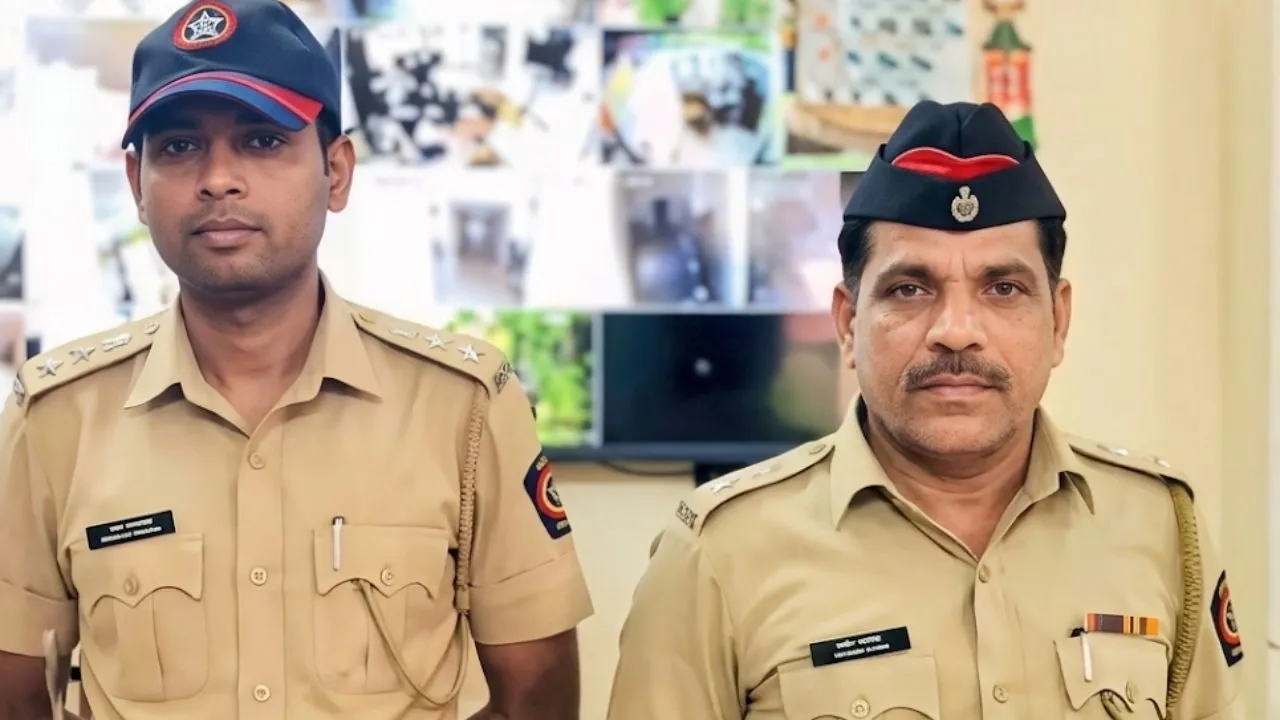
Shivaji Nanware Dhaulagiri: Some stories don’t just inform you — they move you. They remind you that ordinary people, carrying the weight of everyday responsibilities, can still chase extraordinary dreams. The story of Shivaji Nanware, Assistant Police Inspector (API) with the Nagpur City Police, is exactly that kind of story.

While most of us were going about our daily routines, this uniformed officer was battling sub-zero temperatures, razor-thin oxygen levels, and near-vertical ice walls — all the way up to the summit of Mount Dhaulagiri in Nepal. And he made it.


What Makes Dhaulagiri So Special — and So Dangerous?

Before we talk about the man, it helps to understand the mountain. Dhaulagiri stands at 8,167 metres above sea level, making it the seventh highest peak in the world. Located in the Himalayan range of Nepal, it is not just tall — it is treacherous.

Unlike more commercially popular peaks such as Everest, Dhaulagiri is known among the global mountaineering community for its unpredictable weather, steep icefalls, and extreme avalanche risk. The summit success rate for Dhaulagiri is significantly lower compared to other 8,000-metre peaks. Many experienced climbers have turned back or lost their lives attempting this mountain.

To reach the top of Dhaulagiri is not just a physical achievement — it is a test of mental strength, patience, and an iron will that refuses to break even when everything around you screams “turn back.”


The Man Behind the Milestone

Shivaji Nanware serves as an Assistant Police Inspector in the Nagpur City Police force. His daily job involves keeping the city safe — managing law and order, handling complex situations on the ground, and being a pillar of security for the people of Nagpur.

But beyond his badge and uniform, Nanware has always carried a deep passion for mountaineering. It was not a casual hobby — it was a calling. For years, he trained rigorously alongside his professional duties, preparing his body and mind for high-altitude climbing. He understood that reaching a summit like Dhaulagiri demands far more than physical fitness. It requires months of acclimatization, technical training in ice and rock climbing, and an almost meditative level of mental focus.

When the opportunity finally came, Nanware was ready. He took on the challenge of Dhaulagiri with the same discipline and dedication he brings to his police work — and he came back victorious.


A First in Maharashtra Police History

What makes this achievement even more remarkable is the fact that no officer in the history of Maharashtra Police had ever summited Dhaulagiri before Shivaji Nanware. This is not just a personal record — it is an institutional milestone.

Maharashtra is home to over 200,000 police personnel. Among all of them, across decades of service, Nanware is the first to have climbed to this altitude and returned with a summit certificate from one of the world’s most demanding peaks. That puts his achievement in a league of its own.


Minister Chandrashekhar Bawankule Congratulates the Hero

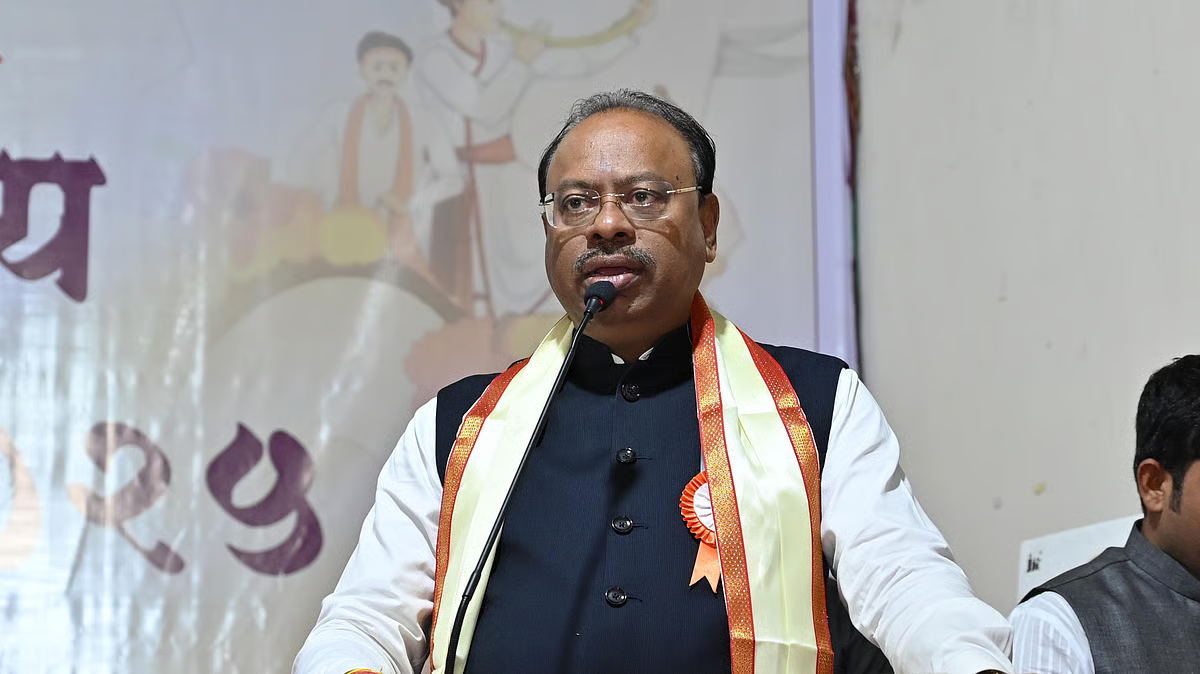
The significance of this feat was quickly recognized at the highest levels. Maharashtra’s Revenue Minister Chandrashekhar Bawankule personally extended his congratulations to Shivaji Nanware on this historic accomplishment.

The minister stated that this achievement brings immense pride not just to the police department, but to the entire state of Maharashtra. He added that Nanware’s success serves as a powerful source of inspiration — for young people who are dreaming big, and for the thousands of police officers who serve tirelessly every day.

It is rare that a government officer’s off-duty achievement draws ministerial praise, and that itself speaks volumes about the scale of what Nanware has accomplished.


Why This Story Matters Beyond Nagpur

In a world that is increasingly driven by instant gratification, Shivaji Nanware’s journey is a reminder of what consistent, long-term effort looks like. He did not summit Dhaulagiri overnight. It took years of preparation, multiple smaller climbs to build experience, physical conditioning done in whatever time was left after shifts, and an unwavering belief that the goal was worth every sacrifice.

He did not do this for fame or for recognition. He did it because the mountain called him, and he had the courage to answer.

For young people in Nagpur, in Maharashtra, and across India — this is proof that your profession does not have to be the ceiling of your identity. A police officer can be a world-class mountaineer. A government employee can chase a dream that has nothing to do with their job description. Passion, when paired with discipline, has no limits.


Nagpur’s Pride, India’s Inspiration

Shivaji Nanware has now etched his name into two histories simultaneously — the history of Maharashtra Police, and the history of Indian mountaineering. The summit of Dhaulagiri, which stood unconquered by any Maharashtra Police officer before him, now carries a piece of Nagpur’s spirit.

As he descends back into the city that he has sworn to protect, he returns not just as a police officer, but as a symbol — of what grit looks like, of what is possible when someone refuses to be defined by limitations, and of the quiet greatness that sometimes wears a uniform.

Maharashtra Day 2026 in Nagpur: Bawankule to Hoist Tricolour at 8 AM, Evening Cultural Event at Vasantrao Deshpande Hall — All You Need to Know

Nagpur, April 29, 2026.

Maharashtra Day 2026 Nagpur | Dr Vasantrao Deshpande Hall: On May 1, 2026, Nagpur will join the rest of Maharashtra in marking the 67th Maharashtra Day — the anniversary of the state’s formation on May 1, 1960. The occasion, which honours one of the most significant political movements in post-independence India, will be celebrated in Nagpur with an official flag hoisting ceremony in the morning and a cultural programme in the evening.

For Nagpur residents who want to be part of the celebrations, here is everything you need to know — the venue, the timings, the programme, and the history behind the day.


The Official Programme — Where, When, and Who

The main Maharashtra Day function in Nagpur will be held at the premises of the Divisional Commissioner Office, Civil Lines. Chandrashekhar Bawankule, State Revenue Minister and Guardian Minister of Nagpur district, will hoist the national flag at 8:00 AM sharp.

Following the flag hoisting, Bawankule will receive the ceremonial salute from the armed police force — a formal tradition that marks the dignity of the occasion and honours the state’s security forces. Senior administrative officers, police personnel, elected representatives, and other dignitaries are expected to attend the morning function.

In the evening, the focus shifts to culture. A special cultural programme celebrating the spirit and heritage of Maharashtra has been organised at Dr Vasantrao Deshpande Hall, Civil Lines, beginning at 5:30 PM. The event will feature performances reflecting Maharashtra’s rich artistic traditions — music, dance, and other cultural forms that the state is known for. Divisional Commissioner Vijayalakshmi Bidari has personally appealed to Nagpur citizens to attend the evening programme in large numbers and be part of the collective celebration.

Security arrangements are being finalised by city authorities to ensure both events proceed smoothly and safely.


Who is Chandrashekhar Bawankule?

For readers unfamiliar with his background, Chandrashekhar Bawankule is a senior BJP leader from Nagpur and currently serves as Maharashtra’s State Revenue Minister — one of the most important portfolios in state government, given that the revenue department oversees land records, disaster relief, and a wide range of administrative functions across Maharashtra’s 36 districts.

As Guardian Minister of Nagpur district, Bawankule is the state government’s senior representative for Nagpur — responsible for overseeing major projects, coordinating between state and local administration, and presiding over key government functions in the district. Hoisting the flag at the main Maharashtra Day function is one of the most visible responsibilities of the Guardian Minister, making this a significant public occasion for him personally as well as administratively.

Bawankule has a long political history in Nagpur, having served multiple terms in the Maharashtra Legislative Assembly from the Kamthi constituency. He is widely known in the city and has been involved in several major infrastructure and development initiatives in the Nagpur region.


Why May 1? The Story Behind Maharashtra Day

Maharashtra Day falls on May 1 every year because it was on this date in 1960 that the state of Maharashtra officially came into existence — born out of one of the most powerful mass movements in post-independence India.

When India became independent in 1947, the country was reorganised into states largely along administrative lines inherited from the British era, not linguistic ones. Marathi-speaking people found themselves scattered across different administrative units — Bombay State, Hyderabad State, and Central Provinces — without a unified home state of their own.

The demand for a separate Marathi-speaking state — Samyukta Maharashtra (United Maharashtra) — grew rapidly through the late 1940s and 1950s. The movement was not merely cultural; it was economic and political. Marathi communities, particularly workers in Mumbai’s booming mills and industries, felt that without their own state, their language, culture, and economic interests would be perpetually sidelined.

The movement reached a tragic peak on January 16, 1956, when police opened fire on protesters in Mumbai, killing 105 people who were demanding the creation of Maharashtra. Their sacrifice is remembered every year and forms a solemn undercurrent to the day’s celebrations.

Finally, on May 1, 1960, the States Reorganisation process resulted in the bifurcation of Bombay State into two new states: Maharashtra and Gujarat. Maharashtra was formed with Mumbai as its capital, and the Marathi-speaking people finally had their own state.

May 1 was also chosen deliberately — it is International Workers’ Day, a global celebration of labour rights, honouring Mumbai’s working class who were at the heart of the Samyukta Maharashtra movement.

Sixty-seven years later, Maharashtra Day is both a celebration of statehood and a remembrance of the sacrifices made for it.


The Significance of the Venue: Divisional Commissioner Office, Nagpur

The Divisional Commissioner Office in Civil Lines is not just an administrative building — it is one of the most historically significant government premises in Nagpur. The Nagpur Division, which the Commissioner oversees, covers six districts: Nagpur, Wardha, Bhandara, Gondia, Chandrapur, and Gadchiroli. This makes it one of the most important divisional offices in Vidarbha.

Holding the Maharashtra Day flag hoisting ceremony here — rather than at the NMC building, the Collector’s Office, or any other venue — reflects the event’s state-level character. The Divisional Commissioner represents the state government’s authority in Nagpur, and the ceremony at this venue underlines that this is not a local municipal function but a formal state occasion.

Vijayalakshmi Bidari, the current Divisional Commissioner of Nagpur, has been actively involved in preparations for the day and has extended a personal appeal to citizens to attend.


Dr Vasantrao Deshpande Hall — Nagpur’s Premier Cultural Venue

The evening programme at Dr Vasantrao Deshpande Hall, Civil Lines, adds a cultural dimension to what would otherwise be a purely ceremonial day. This hall is one of the most respected cultural spaces in Nagpur — named after the legendary Nagpur-born classical vocalist Dr Vasantrao Deshpande, who is considered one of the finest exponents of the Jaipur-Atrauli gharana in Hindustani classical music.

The hall has hosted some of the most important cultural events in Nagpur’s history — from classical music concerts to literary gatherings, theatrical performances, and state-level functions. Hosting the Maharashtra Day cultural programme here is a fitting tribute to both the state’s cultural heritage and the legacy of the man after whom the hall is named.

Citizens who wish to attend the evening programme are encouraged to arrive before 5:30 PM as seating is expected to fill up quickly given the significance of the occasion and the broad public appeal issued by the Divisional Commissioner.


How to Participate in Maharashtra Day 2026 in Nagpur

For Nagpur residents who want to be part of the celebrations, here is a quick practical guide:

The morning flag hoisting at the Divisional Commissioner Office, Civil Lines begins at 8:00 AM. This is a formal government event, and public attendance may be subject to space availability and security arrangements. However, citizens are generally welcome to witness the ceremony from the designated public areas on the premises.

The evening cultural programme at Dr Vasantrao Deshpande Hall, Civil Lines begins at 5:30 PM and is the more accessible event for general public participation. Entry is expected to be free, in line with the tradition of Maharashtra Day cultural events. Citizens should carry a valid ID and arrive early.

Throughout the city, various organisations, schools, housing societies, and cultural groups will hold their own Maharashtra Day celebrations — flag hoistings, cultural programmes, and community gatherings. These local events are an equally meaningful way to mark the day.


A Day for Every Nagpurian

Maharashtra Day is not just a government function. It is a day that belongs to every Marathi speaker, every resident of Maharashtra, and everyone who calls Nagpur home — regardless of language, community, or background. The city of Nagpur, as the winter capital of Maharashtra and the geographical heart of the state, has a special place in the Maharashtra story.

Sixty-seven years after the state was born, the tricolour will go up again at the Divisional Commissioner Office at 8 AM on May 1. And at Dr Vasantrao Deshpande Hall at 5:30 PM, the music and culture of Maharashtra will fill the air.

You are invited.


Published: April 29, 2026. Sources: Divisional Commissioner Office Nagpur, official programme details, Maharashtra state formation historical records.

Nagpur Metro Installs Solar Panels Between Live Tracks at Hingna Depot — India’s First, and Here’s Why It’s a Big Deal

Nagpur, April 2026.

Nagpur Metro solar panels: When most people think of solar energy and metro rail, they picture panels on rooftops — on station canopies, depot buildings, or elevated corridor structures. That is where every metro system in India has gone looking for solar space.

Nagpur Metro looked somewhere different. It looked down — at the ground between the tracks.

The Maharashtra Metro Rail Corporation Limited (MMRCL) has installed solar panels in the inter-track space between two live, operational metro tracks at the Hingna Depot — making Nagpur Metro the first metro rail project in India to deploy solar generation directly within an active track corridor. It is a deceptively simple idea that nobody had attempted before, and it works.


What Exactly Has Been Done at Hingna Depot?

The pilot installation covers a 200-metre stretch within the Hingna Depot — the operational base for Nagpur Metro’s trains on the south corridor. In the space between the two parallel tracks, which had previously served no functional purpose, MMRCL engineers have installed monocrystalline solar panels.

The system has a generation capacity of 50 kWp (kilowatt peak). To put that in terms that matter: the installation is expected to produce approximately 70,000 units of electricity every year, reducing carbon dioxide emissions by an estimated 65 tonnes annually. The electricity generated feeds directly into the depot’s internal power grid — powering lighting, administrative systems, and depot operations — reducing the facility’s dependence on conventional grid electricity.

Monocrystalline panels were chosen for a specific reason. Among the main types of commercially available solar panels, monocrystalline panels offer the highest efficiency per square metre — a critical consideration in this project, where the available surface area is fixed and determined by track geometry. You cannot widen the gap between two metro tracks to fit more panels. You have to get the most out of the space you have.


The Idea Sounds Simple — The Engineering Was Not

Installing solar panels on a rooftop is one thing. Installing them between two live railway tracks that carry electric trains is something else entirely.

The engineering challenges were significant. The panels had to be positioned at a height and angle that generates maximum solar exposure without creating any obstruction risk to train operations. The mounting structure had to be vibration-resistant — metro trains passing overhead at speed create ground vibrations and air displacement that ordinary panel mounting systems are not designed for. The entire installation had to be accessible for maintenance without requiring track shutdowns, which would disrupt metro services.

The wiring and electrical integration required careful planning to ensure no interference with the track signalling and power systems that keep the trains running safely. Every component had to meet railway safety standards — not just standard solar installation norms.

That MMRCL successfully completed this pilot is, by itself, an achievement worth noting. It is one thing to propose the idea. It is another to engineer it safely in a live operational environment.


Why the Inter-Track Space Was Always There — and Always Wasted

Every metro system has this space. Between any two parallel tracks, there is a gap — determined by safety clearance requirements for train operations. This space cannot be eliminated. It cannot be built over. Until now, it has simply existed as dead ground: maintained, kept clear of obstructions, and otherwise unused.

Across India’s metro network — Delhi, Mumbai, Chennai, Bengaluru, Kolkata, Hyderabad, Pune, Kochi, and others — this inter-track space runs for hundreds of kilometres in total. If Nagpur Metro’s pilot proves commercially and operationally viable for wider deployment, it opens up a vast untapped solar resource that exists within infrastructure that is already built, already maintained, and already electrified.

That is the larger significance of what has happened at Hingna Depot. It is not just about 50 kWp or 70,000 units. It is about demonstrating a replicable model.


How Nagpur Metro Got Here — A Track Record of Green Firsts

This is not the first time Nagpur Metro has stood out on sustainability. Since beginning operations in 2019, MMRCL has consistently positioned itself as one of India’s most environmentally conscious metro systems.

Nagpur Metro stations run on a combination of solar and grid power, with rooftop solar installations generating a significant share of station energy needs. The metro was among the first in India to achieve green building certification for its stations. Rainwater harvesting systems are operational across the network. Energy-efficient LED lighting and regenerative braking systems — which recover energy when trains brake and feed it back into the power grid — are standard across the fleet.

The inter-track solar pilot is the latest chapter in this consistent approach, but it is also the most ambitious — because it moves solar generation from passive infrastructure like rooftops into the active operational heart of the metro system itself.


What It Means for Nagpur Metro’s Operating Costs

Metro rail is an energy-intensive business. A single metro train consumes significant electricity with every journey, and the cumulative energy bill across an entire network running from early morning to late night, seven days a week, is enormous. For MMRCL — which, like most Indian metro corporations, operates on thin margins and depends on a mix of fare revenue, advertising, and government support — reducing energy costs has a direct impact on financial sustainability.

Every unit of electricity generated from the inter-track solar installation is a unit that does not need to be purchased from the grid. At current electricity tariff rates in Maharashtra, 70,000 units of annual generation translates to a tangible reduction in depot operating costs. If the model is scaled — to other depots, to longer stretches of the operational corridor — the savings compound significantly.

The carbon benefit, while important, is also increasingly relevant from a regulatory standpoint. India has committed to ambitious renewable energy and net-zero targets. Urban infrastructure projects are increasingly evaluated on their environmental footprint. Nagpur Metro’s green track record strengthens its case for central government support, international climate finance, and public goodwill.


How Does This Compare With What Other Metro Systems Have Done?

India’s other metro systems have been active on solar energy — but nobody has gone where Nagpur has gone.

The National Capital Region Transport Corporation (NCRTC), which operates the Rapid Rail between Delhi and Meerut, has installed solar panels along portions of its elevated corridor — but on the external edges and structural surfaces of the viaduct, not within the inter-track space itself. Delhi Metro has one of the largest rooftop solar installations among Indian metro systems. Mumbai Metro has incorporated solar in station design.

The distinction that makes Nagpur’s approach genuinely new is the location: not on structures adjacent to or above the tracks, but in the ground-level space between operational running lines. This is a fundamentally different engineering proposition — and no other metro in India has attempted it until now.


The Pilot Phase and What Comes Next

MMRCL has been clear that what has been deployed at Hingna Depot is a pilot. The 200-metre, 50 kWp installation is designed to demonstrate technical feasibility, measure actual generation performance against projections, and identify any operational issues that need to be addressed before larger-scale deployment.

If the pilot performs as expected over the coming months, MMRCL has indicated interest in expanding the concept to other depot areas and potentially to sections of the elevated metro corridor itself. As Phase II of the Nagpur Metro moves forward — extending lines toward Hingna, Kanhan, and Butibori — new stretches of inter-track space will become available. Planning for solar integration from the design stage of new sections would be significantly more efficient than retrofitting it later.

The success of this project will also be watched closely by metro corporations in other cities. If Nagpur can demonstrate a reliable, cost-effective model for inter-track solar generation, it provides every other metro system in India with a blueprint for unlocking solar potential from infrastructure they already own.


What This Means for the Ordinary Nagpur Metro Passenger

For someone who rides the Nagpur Metro to work every morning, the immediate impact of this project is indirect but real. Every rupee saved on depot electricity costs is a rupee that does not need to be recovered through higher fares. Every tonne of carbon emissions reduced contributes to the city’s air quality. And every innovation that Nagpur Metro demonstrates successfully adds to the system’s credibility — which supports continued investment, network expansion, and improved services.

Nagpur has always had ambitions that exceed what a city of its size might typically claim. The inter-track solar project is another example of the city doing something larger Indian metros had not yet attempted — and doing it first.


Nagpur Town Hall Redevelopment Gets Green Light: Project to Use Premium Ballarpur Teak Wood

The Nagpur Municipal Corporation (NMC) has officially approved the long-awaited redevelopment of the historic Nagpur Town Hall, located in the heart of the city near Sitabuldi. The project, which aims to restore and modernize one of Nagpur’s most recognizable civic landmarks, will feature premium Ballarpur teak wood — sourced from the Ballarpur forests of Chandrapur district — as its primary construction material for interiors and structural elements.


BACKGROUND — Why the Town Hall Needed Redevelopment

The Nagpur Town Hall, built during the colonial era, has served as a key civic venue for decades. Over time, the structure deteriorated due to aging infrastructure, inadequate maintenance, and increasing public demand for modern amenities. Multiple proposals for its restoration have been discussed in NMC standing committee meetings over the years, but funding and design approvals delayed the process.

The structure holds deep historical and administrative significance — it has hosted legislative sessions, major public functions, and cultural events for generations of Nagpurians.


WHY BALLARPUR TEAK WOOD?

The decision to use Ballarpur teak wood is both practical and symbolic. Ballarpur, in Chandrapur district, is home to some of Maharashtra’s finest teak forests, managed by the Forest Development Corporation of Maharashtra (FDCM).

Teak from this region is prized for:

  • Exceptional hardness and load-bearing capacity
  • Natural oils that resist termites, moisture, and decay
  • A lifespan exceeding 100 years in construction use
  • A rich grain texture that complements heritage architecture

Local architects and heritage conservationists have welcomed the choice, noting that using regionally sourced teak also supports Maharashtra’s forest economy and reduces the carbon footprint of materials transport.


PROJECT SCOPE AND DESIGN VISION

The redevelopment plan, as approved by NMC, includes:

Structural restoration of the original facade while reinforcing the load-bearing framework. The design preserves colonial-era arches, pillars, and roofline features that define the building’s identity.

Interior upgrades include a modern auditorium with tiered seating, a conference hall, public exhibition space, and accessibility ramps and lifts for differently-abled citizens.

Technology integration covers digital display systems, high-speed Wi-Fi, advanced PA systems, and energy-efficient LED lighting throughout the complex.

Green spaces around the Town Hall perimeter will be landscaped to create a pedestrian-friendly public plaza.


ECONOMIC AND COMMUNITY IMPACT

Beyond aesthetics, the project is expected to create significant local economic activity. Construction work will generate employment for skilled carpenters, masons, and heritage restoration specialists. Post-completion, the venue is expected to serve as a revenue-generating civic asset through paid event bookings, exhibitions, and cultural programs.

The central location near Sitabuldi Market also means that increased footfall at the Town Hall will benefit nearby businesses, hawkers, and vendors.


WHAT NAGPUR CITIZENS ARE SAYING

Heritage enthusiasts and civic groups in Nagpur have largely welcomed the project, though some residents have raised questions about the timeline and transparency of the tender process. Citizens on social media have urged NMC to complete the work within the promised schedule and avoid cost overruns — a common concern with large civic infrastructure projects in the city.


WHAT’S NEXT

The NMC has invited tenders for the first phase of construction. Work is expected to begin after the monsoon season. The entire project is targeted for completion within [X] months, after which the Town Hall will be opened to the public as a revamped civic and cultural center.

Nagpur Updates will continue to track this project and bring you ground-level updates as construction progresses.


Sources: NMC Standing Committee records, Nagpur Municipal Corporation official notices, FDCM forest records.

Nagpur’s Crazy Castle at Ambazari Set for Major Redevelopment — Here’s What’s Changing and Why It Matters

For thousands of Nagpur families, Crazy Castle near Ambazari Lake holds a special place in childhood memories. The amusement park — one of the city’s oldest recreational spots — drew generations of visitors to its rides, games, and lakeside setting. But years of ageing infrastructure and dwindling maintenance had left the facility far below the standard that Nagpur’s growing population deserves.

That is now set to change. The Nagpur Municipal Corporation (NMC) has given the green light for a large-scale redevelopment of the Crazy Castle complex, with plans to transform it into a modern, multi-attraction theme park while retaining its unique lakeside identity.


THE HISTORY OF CRAZY CASTLE: WHY THIS MATTERS TO NAGPURIANS

Crazy Castle was one of the few dedicated amusement spaces in central Nagpur, offering affordable family entertainment for residents across the city. Located beside the scenic Ambazari Lake — Nagpur’s largest lake and a landmark in its own right — the park enjoyed strong footfall for many years.

Over time, however, the rides aged, the infrastructure deteriorated, and visitor experience declined. Families began travelling to Pune or Hyderabad for theme park experiences that Nagpur simply couldn’t offer locally. The redevelopment proposal is a direct response to this gap — and to the fact that Nagpur, now a rapidly growing city with a metro rail network, deserves world-class urban leisure infrastructure.


WHAT THE REDEVELOPMENT WILL INCLUDE

According to the approved project plan, the redeveloped Crazy Castle will be developed under a Public-Private Partnership (PPP) model, which means a private operator will co-invest alongside NMC and handle day-to-day park management after completion.

The planned features include:

Modern Amusement Rides: The park will install internationally certified rides covering different thrill levels — from gentle carousel-type rides suitable for toddlers to high-speed attractions for teenagers and adults. All rides will comply with Bureau of Indian Standards (BIS) safety norms.

Water Park Zone: A dedicated water entertainment section will include water slides of varying heights, a wave pool, and a shallow splash area for young children. This is expected to be a major draw during Nagpur’s intense summer months, when the city regularly records temperatures above 45°C.

Food Court and Dining: A multi-cuisine food court will replace the old, limited food stalls. It will include both local Nagpuri food options and popular fast-food outlets to cater to all age groups.

Green Promenade Along the Lake: The lakeside area will be developed into a clean, landscaped walking zone with seating, lighting, and open spaces — a free public area accessible to all citizens even without paying park entry fees.

Digital Infrastructure: The new park will feature app-based ticketing, queue management systems, real-time crowd monitoring, and free Wi-Fi in public zones — aligning with Nagpur’s Smart City project goals.

Eco-Friendly Design: Rainwater harvesting, solar-powered lighting, and waste management systems are built into the project design, making it one of the more environmentally responsible public leisure projects in Vidarbha.


THE METRO CONNECTIVITY ADVANTAGE

One factor that gives this project a significant boost is Nagpur Metro. The Ambazari area is well-connected to the metro network, meaning visitors from across the city — including from railway stations and the airport — can reach the park without private vehicles. Urban planners have noted that metro-linked leisure zones consistently see higher and more consistent visitor numbers than those dependent purely on road access.

This makes the Crazy Castle redevelopment not just a tourism project but an important piece of Nagpur’s urban mobility strategy.


WHAT THIS MEANS FOR THE LOCAL ECONOMY

The economic case for this project is strong. During the construction phase alone, hundreds of workers — civil engineers, electricians, landscapers, ride installation technicians — will find employment. Once operational, the park is expected to directly employ 200–400 staff in ticketing, hospitality, security, maintenance, and ride operations.

The surrounding Ambazari area — already a hub for restaurants, tea stalls, and weekend vendors — is expected to see a significant boost in foot traffic. Hotel occupancy in the Dharampeth and Ambazari neighbourhoods may also rise as the park begins attracting tourists from Wardha, Amravati, Chandrapur, and other nearby districts.


CITIZENS’ RESPONSE: HOPE AND SCEPTICISM

Nagpur residents have responded to the redevelopment announcement with cautious enthusiasm. Many on social media have shared memories of childhood visits to Crazy Castle and expressed hope that the new version will bring that joy back — at affordable ticket prices.

However, a section of residents and civic activists have raised valid questions: Will the redevelopment damage the ecological balance around Ambazari Lake, which already faces pollution concerns? Will ticket prices be kept accessible to working-class families? And will NMC ensure the project is completed on schedule without the cost overruns that have plagued other civic projects in the city?

Nagpur Updates has written to NMC’s project office seeking responses on these questions and will publish their reply when received.


TIMELINE AND WHAT HAPPENS NEXT

The project is expected to proceed in phases. The first phase — demolition of old structures and foundational work — is expected to begin after the current monsoon season. The full park is targeted for inauguration within 24–30 months of groundbreaking, though civic project timelines in Nagpur have historically faced delays.

NMC officials are expected to release full tender documents publicly, which will reveal the private partner chosen for the PPP arrangement and the committed investment figure.

Nagpur Updates will closely follow this project through every stage. Bookmark this page for updates, or follow us on WhatsApp for instant alerts.


AMBAZARI’S TRANSFORMATION: BIGGER PICTURE

The Crazy Castle redevelopment is part of a broader vision for the Ambazari area. NMC has, over the past few years, also invested in cleaning the Ambazari Lake, improving the bund road, and adding lighting along the lakefront. Together, these initiatives are gradually turning Ambazari into what city planners call a “destination zone” — a part of the city where residents and tourists alike choose to spend time, not just pass through.

If executed well, the new Crazy Castle theme park could become the anchor attraction of this zone — the kind of landmark that puts Nagpur on Maharashtra’s tourism map alongside Aurangabad, Mahabaleshwar, and Lonavala.

Sources: NMC standing committee proceedings, Nagpur Smart City project documents, field reporting.

Silk Farming Boom in Nagpur: Farmers Earning ₹1 Lakh Monthly in Extreme Summer

A Silent Agricultural Revolution in Nagpur

Nagpur, widely recognized for its scorching summers and dry climate, is now witnessing a remarkable agricultural transformation. While traditional crops often struggle under extreme temperatures, a growing number of farmers are turning to silk farming (sericulture)—a high-income, sustainable alternative that is rewriting rural economic success stories.

We are observing a powerful shift in farming practices, where innovation meets resilience. Farmers are no longer dependent on uncertain rainfall or fluctuating crop prices. Instead, they are building steady monthly incomes exceeding ₹1 lakh, even during peak summer months.


Why Silk Farming Is Thriving in Nagpur’s Harsh Climate

Adaptability of Mulberry Cultivation

The backbone of silk farming is the mulberry plant, which serves as the primary food source for silkworms. Unlike many traditional crops, mulberry is:

  • Highly drought-resistant
  • Capable of growing in varied soil conditions
  • Able to survive high temperatures up to 40°C+

This makes it perfectly suited for Nagpur’s climate.

Short Production Cycles for Continuous Income

Silk farming offers multiple production cycles per year, typically every 25–30 days. This ensures:

  • Regular cash flow
  • Reduced dependency on seasonal harvesting
  • Faster returns on investment

Step-by-Step Process of Silk Farming

1. Mulberry Cultivation

Farmers begin by cultivating mulberry plants, which require:

  • Minimal water compared to other crops
  • Organic manure for better leaf quality
  • Periodic pruning to boost leaf production

2. Silkworm Rearing

Silkworm eggs are incubated and nurtured in controlled environments. Farmers ensure:

  • Proper temperature and humidity
  • Clean surroundings to prevent disease
  • Continuous feeding with fresh mulberry leaves

3. Cocoon Formation

Within 25–30 days, silkworms form cocoons. These cocoons are:

  • Harvested carefully
  • Sold directly in markets or to silk processing units

4. Silk Extraction and Sale

The cocoons are processed to extract silk threads, which are in high demand across textile industries.


Income Potential: How Farmers Earn ₹1 Lakh Monthly

High Demand for Silk in India

India is one of the largest consumers of silk. The constant demand from textile industries ensures stable pricing.

Profit Breakdown

A well-managed silk farm can generate:

  • ₹60,000 to ₹1,50,000 per month
  • Multiple harvest cycles increase annual income significantly

Low Initial Investment, High Returns

Compared to traditional farming:

  • Setup costs are moderate
  • Government subsidies and training programs reduce financial burden
  • Returns begin within a few months

Government Support Boosting Sericulture

Training and Subsidies

Farmers in Nagpur are benefiting from:

  • Government-sponsored training programs
  • Subsidies for mulberry plantation and silkworm rearing
  • Financial assistance for building rearing houses

Market Linkages

Authorities are ensuring:

  • Direct connections with silk buyers
  • Fair pricing through regulated markets
  • Reduced middlemen exploitation

Challenges and How Farmers Are Overcoming Them

Extreme Heat Management

Farmers use:

  • Cooling techniques like wet gunny bags and ventilation systems
  • Shade nets to maintain optimal temperature

Disease Control

Regular monitoring and hygiene practices help:

  • Prevent infections in silkworms
  • Maintain high-quality cocoon production

Skill Development

Continuous learning and training ensure:

  • Improved productivity
  • Efficient farm management

Success Stories from Nagpur

Across rural Nagpur, farmers are:

  • Transitioning from low-yield crops to silk farming
  • Creating stable and scalable income streams
  • Inspiring neighboring villages to adopt sericulture

We are seeing a community-driven movement, where knowledge sharing and collaboration are accelerating growth.


Why Silk Farming Is the Future of Agriculture in Nagpur

Climate-Resilient Farming

Silk farming is proving to be a climate-smart agricultural practice, capable of thriving where other crops fail.

Employment Generation

It creates opportunities for:

  • Rural youth
  • Women participation in farming activities
  • Small-scale entrepreneurs

Sustainable Income Model

Unlike traditional farming, sericulture offers:

  • Predictable earnings
  • Lower risk
  • Long-term sustainability

How to Start Silk Farming in Nagpur

Basic Requirements

  • Small land area (even 1 acre is sufficient)
  • Mulberry saplings
  • Silkworm eggs
  • Simple rearing infrastructure

Steps to Begin

  1. Attend government training programs
  2. Prepare land for mulberry cultivation
  3. Set up a silkworm rearing space
  4. Start with a small batch and scale gradually

A Golden Opportunity for Farmers

Silk farming in Nagpur is not just an alternative—it is a game-changing agricultural revolution. With consistent income, low risk, and strong market demand, it is empowering farmers to achieve financial independence even in extreme climatic conditions.

We are witnessing a future where agriculture is no longer uncertain but innovative, profitable, and sustainable. For farmers seeking stability and growth, sericulture stands as one of the most promising opportunities today.

NMC Launches Water Bill Grievance Camps Across Nagpur: Schedule, Locations, and How to Get Your Bill Corrected

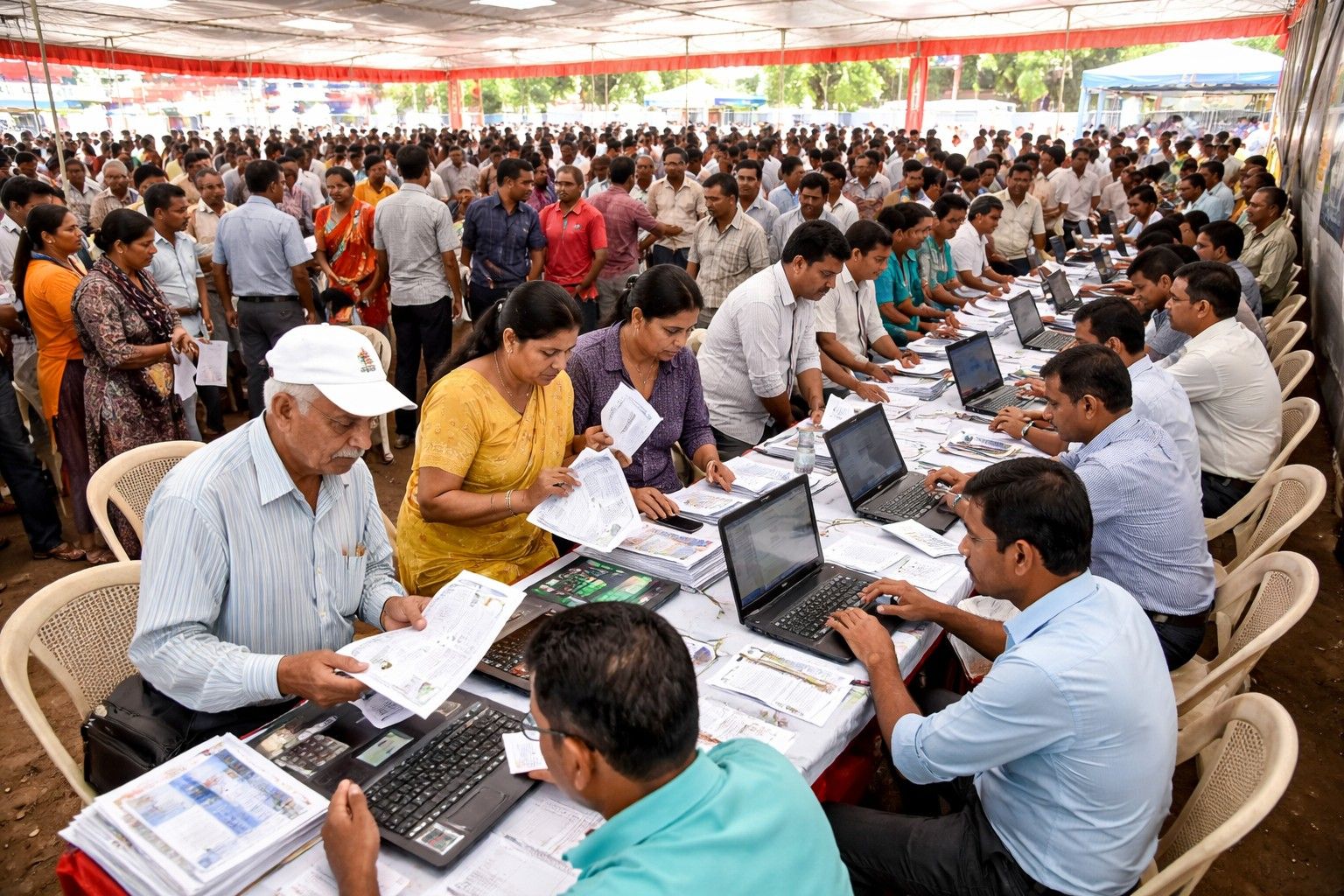
Hundreds of Nagpur residents turned up at Nagpur Municipal Corporation (NMC) water bill grievance camps across the city this week, many of them carrying months-old complaints about inflated bills, meter faults, and duplicate charges that had gone unresolved through regular channels.

The camps, organised by NMC’s water department in coordination with Orange City Water (OCW) — the private operator responsible for Nagpur’s water distribution and billing — are being held across all six zones of the city. NMC has set up dedicated desks where billing officers, meter technicians, and supervisors are present together, allowing citizens to get their issues addressed in a single visit rather than shuttling between offices.


WHY WATER BILLS BECAME SUCH A BIG PROBLEM IN NAGPUR

The root of Nagpur’s water billing grievances lies in the city’s unique water privatisation model. Since 2012, Orange City Water (OCW) — a subsidiary of Veolia, a French multinational — has been managing Nagpur’s water supply and billing under a 25-year concession agreement with NMC. This public-private arrangement is one of the first of its kind in India and has been both praised for improving supply reliability and criticised for billing errors and accountability gaps.

Over the past two to three years, thousands of Nagpur households have reported water bills that do not match their actual consumption. Common problems include meters that have not been read physically for months (with bills estimated instead), sudden spikes in bills after meter changes, old arrears being incorrectly added to current bills, and delays of weeks or months in correcting acknowledged errors.

The volume of unresolved complaints eventually prompted NMC to step in with these dedicated grievance camps — acknowledging that the standard complaint process through OCW’s customer service was not working fast enough for residents.


WHAT ISSUES ARE BEING RESOLVED AT THE CAMPS

Based on the first two days of camp operations, the most common complaints being addressed are:

Inflated or estimated bills: Many residents whose meters were not physically read for extended periods received estimated bills — sometimes two to three times their actual usage. At the camps, billing officers are cross-checking meter data and issuing revised bills with correct amounts.

Faulty meter replacement: Citizens with meters that have been malfunctioning — either running fast or showing no reading at all — are being registered for expedited meter replacement. A technical team is recording these cases and scheduling physical inspections within a defined timeframe.

Duplicate dues and arrears errors: A common complaint involves amounts that were paid previously — sometimes years ago — still appearing as outstanding dues. Camp officials are verifying payment histories and clearing such discrepancies on the spot where records confirm the payments.

Disconnection threats for incorrect dues: Some households received notices of water supply disconnection over dues they disputed. Camp officials are staying such disconnection orders for residents whose complaints are under active review.


WHAT NAGPUR RESIDENTS ARE SAYING

The response on the opening day was strong, with queues forming at multiple camp locations well before 10:00 AM. Many residents expressed relief that NMC officials were directly accessible, but several also noted frustration that it had taken this long to address issues they had been raising for months or years.

Ravi Meshram, a resident of Pratap Nagar who attended the Lakadganj zone camp, said he had been disputing an inflated bill for eight months. He was told at the camp that his case would be reviewed and a corrected bill issued within 15 days — an outcome he described as progress, though he remained cautious about whether the correction would actually come through.

Several senior citizens and residents from lower-income areas mentioned difficulty understanding their bills, which are issued in a format that combines current charges, arrears, interest, and taxes without clear breakdowns. Attendees at the camp were encouraged to ask officials to explain their bills item by item.


HOW TO GET YOUR WATER BILL CORRECTED — STEP BY STEP

For Nagpur residents who plan to attend one of the remaining grievance camps, here is what you need to do:

First, gather your documents before going. Bring your latest water bill, copies of 2–3 previous bills showing the billing history, any payment receipts for the past 6–12 months, and your meter number (printed on your bill). If you have photographs of your meter showing the current reading, bring those on your phone — they can significantly speed up the process.

At the camp, go to the token or registration desk first. Explain your issue in one or two sentences so staff can direct you to the right desk — billing errors go to one counter, meter faults to another, disconnection notices to a third. Request a written acknowledgment slip when you submit your complaint. This slip will have a complaint reference number that you can use to follow up if the correction is not reflected in your next bill.

If your issue cannot be resolved on the spot — which is common for complex meter-related problems — ask for a written timeline of when you can expect resolution and the name of the officer responsible.


OCW’S ROLE AND ACCOUNTABILITY QUESTIONS

The grievance camps are a welcome step, but civic groups and resident welfare associations in Nagpur have raised a larger structural question: why do billing errors occur so frequently in the first place?

Orange City Water manages billing on behalf of NMC, and critics argue that the concession agreement lacks strong enough penalties for systematic billing errors. NMC officials have, in the past, acknowledged receiving large volumes of billing complaints but noted that the responsibility for corrections primarily lies with OCW under the contract.

The grievance camps appear to be an attempt by NMC to step in as a mediator when the standard OCW complaint process fails — a positive sign, but one that also highlights the accountability gap in the city’s water privatisation model. Civic activists have called on NMC to publish monthly data on the number of billing complaints received, resolved, and pending — a transparency measure the corporation has not yet implemented.


WHAT IF YOUR COMPLAINT IS NOT RESOLVED AT THE CAMP?

If your issue is not resolved at the grievance camp or if no camp has been held in your zone yet, here are the channels available to you:

You can file a written complaint at your nearest NMC ward office and request an acknowledgment. You can also contact OCW’s customer care at their Nagpur helpline. For persistent issues, residents have the option of approaching the Consumer Forum under the Consumer Protection Act — water billing disputes fall within the jurisdiction of the District Consumer Disputes Redressal Commission in Nagpur. Legal aid for such complaints is available through the District Legal Services Authority (DLSA) free of charge for eligible citizens.


NAGPUR UPDATES WILL TRACK THIS STORY

Nagpur Updates will continue to cover the grievance camps through their duration and will report on the total number of complaints received, cases resolved, and any zone-wise data released by NMC. If you attended a camp and have a story to share — whether a complaint that was resolved or one that was not — write to us at admin@nagpurupdates.in. Your experience could help other readers know what to expect.

Article last updated: April 2026. Camp schedule information will be updated as NMC releases further details.

Sources: NMC water department, OCW Nagpur, field reporting, resident interviews.

Nagpur Police Rescue Two Persons from Ambazari Lake in Distress Incident

Nagpur news: Nagpur police responded quickly to a distress call near Ambazari Lake on Sunday April 19th,, successfully intervening to help two individuals — a woman and her minor daughter — who were in a state of acute emotional distress at the lakeside location.

Officers reached the spot within minutes of being alerted by passersby and ensured both individuals were brought to safety. The two were subsequently taken to a nearby government hospital, where medical staff confirmed they were not in immediate physical danger.

The incident, which occurred on Sunday April 19th, was resolved without any fatality due to the timely response of both local residents who raised the alarm and the police personnel who acted on it.


HOW THE RESCUE UNFOLDED | Nagpur News

According to police sources, a bystander near the Ambazari Lake bund road noticed the two individuals in a distressed state and immediately contacted the Ambazari police station. The responding team, reached the location promptly.

The officers provided immediate assistance and ensured both individuals were escorted safely off the lakeside area. First aid was administered at the scene before the two were transported to [hospital name] for a full medical assessment.

speaking to reporters, confirmed that the individuals were now under medical supervision and that the appropriate follow-up — including counselling support — was being arranged by the authorities.


CONDITION AND FOLLOW-UP CARE

Medical staff at [hospital name] confirmed that both individuals were physically stable. Police have ensured that professional counselling is being provided, in accordance with standard protocol for such cases in Maharashtra.

The identities of the individuals are not being disclosed in keeping with the privacy norms applicable under Indian law and responsible journalism standards for incidents of this nature.


THE ROLE OF ALERT CITIZENS

The quick thinking of the bystander who first noticed the situation and immediately contacted the police was crucial to the outcome. Police officials acknowledged the importance of public vigilance in preventing such tragedies, particularly at popular public spaces like Ambazari Lake that attract thousands of visitors daily.

This incident is a reminder that if you see someone who appears to be in severe distress in a public place, the most effective action you can take is to immediately call the police on 100 — do not wait to be certain about what is happening.


AMBAZARI LAKE: THE QUESTION OF PUBLIC SAFETY INFRASTRUCTURE | Nagpur news

Ambazari Lake is one of Nagpur’s most visited public spaces, drawing families, joggers, and visitors from across the city, particularly in the early morning and evening hours. The lake’s bund road is popular for walking, and the area around it hosts recreational facilities including the Ambazari Garden.

However, incidents at the lakefront have raised questions about the adequacy of safety infrastructure at the site. At present, Ambazari Lake does not have dedicated emergency response staff posted permanently at the water’s edge. There are no visible mental health awareness boards or crisis helpline information displayed at the lake — a feature that has become standard at public spaces in several cities across India and internationally.

Civic groups have previously urged NMC to install better lighting, surveillance cameras, and emergency assistance call points along the lake bund, particularly in stretches that are less frequently visited. The Ambazari police station, which covers this area, currently relies on mobile patrols rather than a fixed presence at the lakefront.


MENTAL HEALTH CONTEXT: WHAT THE DATA SAYS ABOUT VIDARBHA

This incident does not exist in isolation. Vidarbha — the region of which Nagpur is the largest city — has for many years recorded among the highest rates of mental health distress in Maharashtra, linked historically to agrarian stress in rural areas but increasingly observed in urban settings as well.

The National Mental Health Survey of India has consistently found that mental health disorders are significantly under-reported and under-treated across Maharashtra, with rural and peri-urban populations having extremely limited access to professional mental health support. In Nagpur city itself, the ratio of mental health professionals to population remains far below the WHO-recommended standard.

Public mental health services available in Nagpur (Nagpur news) include the psychiatry department at Government Medical College and Hospital (GMCH) on Hanuman Nagar Road, and the Regional Mental Health Institute at Nehru Nagar. Both institutions offer outpatient services, though waiting times and accessibility remain a concern for many residents.


WHAT FAMILIES AND BYSTANDERS CAN DO

Mental health professionals say that knowing how to respond when someone appears to be in crisis can make a significant difference. If you believe someone near you is in acute emotional distress, the most important steps are to stay calm, stay with them if it is safe to do so, and contact emergency services — either by calling 100 (police) or iCall at 9152987821.

Avoid leaving the person alone, avoid expressing judgment, and avoid asking questions that might add to their distress. Your role is to ensure they receive professional help — not to resolve the situation yourself.


🆘 If You Need Help — Crisis Support in Nagpur

If you or someone you know is going through emotional distress or a mental health crisis, please reach out:

  • iCall (Tata Institute of Social Sciences): 9152987821 — Monday to Saturday, 8 AM to 10 PM
  • Vandrevala Foundation Helpline: 1860-2662-345 — 24 hours, 7 days
  • NIMHANS Helpline: 080-46110007
  • Nagpur Police Emergency: 100
  • GMCH Nagpur Psychiatry OPD: Available on all working days

You are not alone. Help is available, and it is okay to ask for it.

Exit mobile version