Nagpurupdates is your local/Digital news, entertainment, Events, foodies & tech website. We provide you with the happening news, Page3 Contain and all about Nagpur Foodies & Infrastructure from the Nagpur and world.
Another proud moment for Nagpur, one of its popular food brand called Halidram, has now reached Pune. This is not the first time that this brand has been present in different cities and has reached the state’s cultural capital, for many it is good news as a large crowd from Nagpur is based in top IT companies and other industries. So, whenever they miss Nagpur, they have Halidram food to enjoy and to some extent stop missing the city.
As per reports, there is currently no Haldiram outlet open as such in Pune, as the food is delivered through the popular food delivery app called Swiggy. When NagpurOranges.com asked the Pune-based Nagpurites who expressed their views on food, they argued that there was no difference in quality and taste, as they could barely find any difference in the same.
They also said that food has made them feel nostalgic about the taste they used to enjoy back in their hometown with friends and family. Some called it a great move by Haldiram to bring out the brand in Pune, where thousands of Nagpurites are concentrated, and they’ve enjoyed a lot of food. So now the Nagpurites, based in Pune, have every excuse to rejoice. Stay tuned to learn more about it and the rest of us. In the meantime, you can comment below and let us know more about it.
Minister of State Nitin Raut has announced that he has given directives to review the request for a tariff increase submitted to the Maharashtra Electricity Regulatory Commission (MERC).
The outgoing Secretary of State had come up with a proposal to increase the tariff that had originally been agreed upon. Nevertheless, as an afterthought, the raise did not appear to be justified. Orders were given to review the move, the Minister told TOI on the sidelines of a function hosted by the Vidarbha Industries Association (VIA).
“The government must ensure that the common man will not be affected by any attempt to change the electricity tariff in the state. Nonetheless, in order to ensure a lower tariff, steps will also have to be taken to reduce generation costs, “said Raut.
RB Goenka, vice-president of VIA and also a consultant to the power sector organization, said that the proposal includes a revenue requirement of Rs60,000 crore to be recovered over a period of five years. In average, this would lead to an increase in power bills from 7% to 8%, he said.
Since the tariff increase petition has already been forwarded to the MERC, the Government will now either have to file a petition for review or withdraw the current request under section 108 of the Maharashtra State Electricity Act 2003, citing public interest. MERC has already given notices to consider objections to the request for a state tariff increase, Goenka said.
MERC is a quasi-judicial body whose approval is needed to implement any power increase, including by state-owned power utilities.
Earlier addressing VIA leaders, Raut said, “The state power utilities have been on hold due to the size of Rs35,000 crore from the farm sector. There are proposals to come up with a system under which farmers can pay fees on easy terms. At the same time, there are also large payments from government organizations. Strict action would be taken against such defaulters as power cuts in some parts of the day, “said Raut, who is also Nagpur’s guardian minister,” the previous government found promoting solar power as a challenge to thermal power plants. The point was that if solar power is used up, thermal plants would break down due to a reduction in the load factor.” “The rebirth after that leads to a major expense. It can not, however, be that way. State generation units do not supply power in Maharashtra alone. Plants can also operate on load due to demand from other states. Our government is not going to have an anti-solar power program, “he said.
Raut said that he also instructed the Divisional Commissioner (Nagpur) to establish a special purpose vehicle (SPV) to revive the National Industrial and Manufacturing Zone (NIMZ) in Bhiwapur, which was planned during the Congress-NCP rule. “Currently 2,600 hectares of land have been purchased for the project and the power supply can be planned,” he said.
The city-based Maharashtra Animal and Fisheries Sciences University (MAFSU) is likely to push Rs1,100-crore modernization.
“The proposal for the expansion of infrastructure and facilities at MAFSU is ready and the same would be submitted to the Cabinet,” Kedar said, working on the MAFSU plan, that the university would offer short-term courses related to the agriculture sector so that rural youth could take advantage of it.
“We are planning to introduce certification and diploma courses in agriculture, dairy and goat farming, which will support young people, particularly in rural areas. Our aim is to provide opportunities and employment in the villages themselves so that young people do not have to move to cities for their livelihoods, “said Kedar.
On the alleged power struggle between Congress and the NCP over the office of Deputy President of the Zilla Parish, Kedar said the matter would be determined by a panel consisting of former MPCC President Manikrao Thakre and Minister Nitin Raut.
Congressman MLA from Saoner, who expressed concern about the inappropriate use of the Internet by young people, said, “Technology is for humans and not vice versa. There is nothing wrong with the use of technology, but it should not lead to addiction. Today, there is no strategy for youth in the state and they need to be properly directed. I am serious about this and would come up with a good proposal after researching the matter. “Supporting the state decision to allow nightlife in Mumbai by allowing 24X7 malls and shops, the Minister said that it would increase employment opportunities as well as facilities.
In response to recent demands for the lifting of prohibition from the district of Chandrapur and its implementation in Yavatmal, Kedar, who is also Wardha’s guardian minister, said that the ban on liquor in Wardha would continue as the district became a revered place for all because of Mahatma Gandhi, whose principles are being followed all over the world.
Kedar said the departments under him should follow Mahatma Gandhi’s’ Gaon banao, desh Banega’ philosophy. “As we celebrate Mahatma’s 150th birthday, the focus of our government would be to improve the rural economy and the blueprint for it to be ready,” he said.
“Egg cores are being purchased from neighbouring states every year in Maharashtra. This shows that there is a huge untapped potential for poultry-related business in the state. Today, there are only two groups of people in the villages— farmers and workers. This can be improved with appropriate policies to provide the rural population with employment opportunities, “said Kedar.
Slamming the previous (BJP) government for only making big announcements and doing nothing in fact, Kedar said he had fought for an inter-state irrigation project that could solve the drinking water problems of the Nagpur district. “Nonetheless, the legislatures of the BJP have done nothing. Now, I’ve restarted talks with Madhya Pradesh CM Kamal Nath through Uddhav Thackeray, Chief Minister, and Ajit Pawar, Deputy CM. When completed, the dam will provide the district with water throughout the year and benefit paddy growers as well, “he said.
Old run-down gypsies in the Gorewada forest are destroying the safari experience for visitors due to noise and regular breakdowns, according to local guides.
Speaking on the condition of anonymity, the guide said that the five Gypsies are from the mid-1990s and are’ milked for every last drop’ rather than being replaced by newer ones.
“There are four adult leopards and other cubs here, but far fewer are sightings. It’s clear that the loud gypsies are intimidating the animals as you can hear the vehicle coming from a distance, “said the guide.
Clearly, the old Gypsies also had a mid-safari error. “At least once a month, we’ll see a gypsy breakdown due to which another one has to be sent. It’s nice that private vehicles are allowed inside, otherwise it would have been chaos, “the guide said.
Roads have recently been levelled, which have given some relief. “Murum was on the almost 18 km route. Although this makes travel a little easier, there is still no relief for travellers in the Gypsy. Basically, this sends a wrong message to the tourist circuit, where word of mouth spreads quickly. It’s becoming really humiliating for us that foreign tourists come and see the plight of our Gypsies, “he said.
A forest official, who did not wish to be identified, said that the guides were blowing things out of proportion. “All the Gypsies are privately owned, and if there is a misunderstanding, we will suspend it for a week. In turn, the entire system will be revamped within a year, as a private company already has a contract to build the park. This means that brand new vehicles will be folding here soon, “he said.
The official pointed out that since private passenger vehicles were permitted on the safari route, there was no monopoly of the Gypsies.
A total of 186 police officers were honoured with the’ Police Person of the Year-2019 ‘ program organized by the Nagpur Police Commissioner on the occasion of the 71stRepublic Day on 26 January 2019. The Police Commissioner, Dr Bhushan Kumar Upadhayay, the Joint Commissioner for Police, Ravindra Kadam and other senior Nagpur Police officials were present on this occasion.
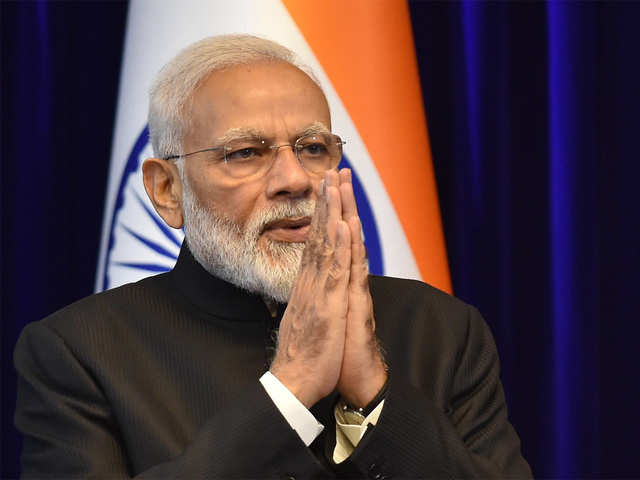
On January 28, Prime Minister Narendra Modi will inaugurate Aqua-Line’s new Metro route via video conference.Aqua-Line phase 1 will cover all stops from Lokmanya Nagar to Sitabuldi. This 11 km long metro line. The Premier laid the foundation stone for the Aqua Metro project in 2014. He had previously inaugurated Orange line, which was running from Khapri to Sitabudli.
The 71st Republic Day of India was celebrated at UMANG Sub Area with excitement and fanfare. The National Flag unfurling commemorative ceremony was held at headquarters of the Sub Area at AFI Building in Civil Lines. Major General Rajesh Kundra, AVSM, SM, Training General Officer, unfurled the tricolor in the presence of all ranks and UMANG family civilian employees.
Major General Kundra, addressing all soldiers, Junior Commissioned Soldiers, and Other Ranks, exhorted one and all to continue to serve with honesty and devotion in upholding the rich values and traditions of our great Army. He said it was everyone’s responsibility to live up to the country’s reposed confidence in the organization. All ranks on the occasion pledged to rededicate themselves in motherland service.
It is also a matter of great pride for the UMANG sub-area that the General Commanding Officer, Major General Rajesh Kundra, has been awarded the’ Ati Vishisht Seva Medal’ (AVSM) for his outstanding contribution and unremitting efforts to move and construct the headquarters from Mumbai and make it operational in record time at Nagpur. During the day thirty-four thousand people visited the Fort.
On Monday the government invited preliminary bids to sell its entire interest in Air India, along with its joint venture Air India SATS Airport Services Private Limited, and the airline subsidiary Air India Express.
The last bid date is March 17, and eligible bidders will be informed March 31, according to the bid document released by the Investment and Public Asset Management Department. The government owns 100 percent stake in Air India and its subsidiary Air India Express. AISATS is a joint venture partnership between Air India and Singapore Airport Terminal Services Limited providing services in the handling of ground and freight.
The Government of India has given in principle approval for AI’s strategic disinvestment through the transfer of management control and selling of AI’s 100 percent share capital owned by GOI which will include AI’s 100 percent shareholding interest in AIXL and 50 percent shareholding interest in AISATS (Air India SATS Airport Services Private Limited),’ the document stated.
This is the second attempt by the Centers to divest their stake in the national carrier that bleed money. In 2018, the government led by Nareandra Modi had expressions of interest in divesting 76% of the airline’s share but found no takers. That time, the government and its profitable arm, Air India Express, had wanted to sell the loss-making company.
LPG used as fuel in vehicles or Auto LPG, which is one of the cleanest alternative fuels with a’ zero’ global warming potential is currently taxed at 18% GST. Leading industry body Indian Auto LPG Coalition sought GST reduction on Auto LPG as well as on conversion kits for gaseous fuels to encourage the adoption of clean automotive fuels.
LPG used in cars or Auto LPG, one of the cleanest alternative fuels with a’ zero’ global warming potential, is currently taxed at 18% GST. In addition, the GST rates on Auto LPG / CNG conversion kits are prohibitive at 2%, IAC said. High GST rates on renewable fuels and conversion kits are in complete variance with the reported green mobility drive by the government, it said in a statement.
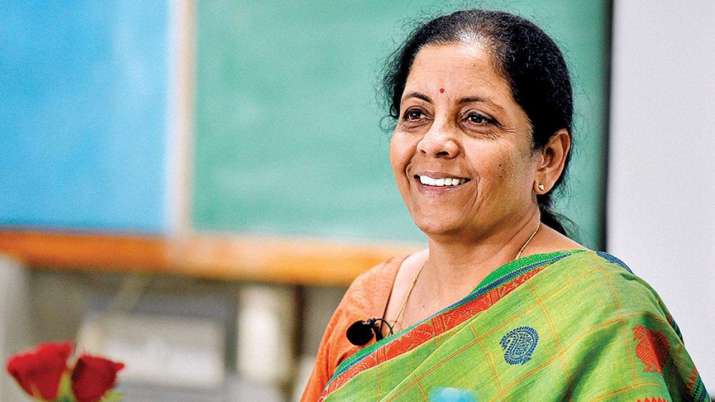
“We are seeking the attention of Finance Minister Nirmala Sitharaman to the imminent need to formulate friendly policies to encourage rapid growth of environmentally friendly transport fuels such as Auto LPG. Auto LPG, which is actively promoted by governments around the world, is facing discriminatory policies in India. It is taxed at a high GST slab of 18%. IAC said LPG is the world’s most widely used alternative fuel with a proven track record of air quality improvement.
Over the past 10 years, Auto LPG’s global consumption has risen by more than 40%, driven by environmental concerns. South Korea, Turkey, Poland, Japan, Australia, Italy, Mexico, and Russia are among the main nations that have successfully embraced this green fuel for their transportation needs.
The association said that while India is planning a long-term transition to electric vehicles, the environmental benefits that can be achieved by adopting low-hanging fruits such as Auto LPG are lacking. Investing in a wider basket of clean alternative transport fuels that are more readily available will lead to an immediate improvement in air quality than EVs that are still a decade away from becoming a co-operator.
“Aside from the need to minimize GST, further important intervention is the reform of the Type Approval requirements regulating the conversion to gaseous fuels. Type Approval standards require companies to renew highly prohibitive Type Approvals for Auto LPG and CNG conversions every three years, which acts as a major obstacle to the industry and has resulted in a rapid decline in the number of players in the market.
Over 26 million vehicles worldwide run on Auto LPG, funded by nearly 71,000 LPG filling stations with over 26 million tons of global Auto LPG consumption. For Auto LPG, claimed IAC, emissions of harmful nitrogen oxides (NOx) and harmful particulate matter PM 2.5 are nearly negligible.
IAC is the nodal body in India which promotes Auto LPG. Gas PSUs, private car LPG distributors, kit suppliers, and equipment manufacturers are members of the Coalition. The coalition works closely with India’s World LPG Association, Indian Automobile Manufacturers Society, and Automotive Research Association
व्लादिमीर पुतिन रूस के राष्ट्रपति रूसी संसद को सम्बोधन में रूस के अल्पसंख्यक के साथ तनाव पर कहा:-
रूस में रूसियों की तरह रहें . कोई भी अल्पसंख्यक समुदाय जो कहीं से हो, यदि उसे रूस में रहना है , यहाँ काम करना है, आहार लेना है तो रूसी भाषा में बोलना होगा, रूस के कानूनों का सम्मान करना होगा .यदि वे शरीयत नियमों को वरीयता देना पसंद करते हैं एवं मुस्लिम जीवन शैली में जीना चाहते हैं तो उन्हें हमारा सुझाव है कि वे उन स्थानों पर जायें जहाँ यह राजकीय कानून है .
रूस को अल्पसंख्यक मुस्लिम समुदाय की आवश्यकता नहीं है . अल्पसंख्यकों को रूस की आवश्यकता है, हम किसी तरह के विशेषाधिकार उन्हें नहीं देते, और न ही हम अपने कानूनों में ऐसे बदलाव लायेंगें जो उनकी अपेक्षावों पर खरे हों , चाहे वो ऊंची से ऊंची आवाज में इसे ‘भेदभाव’ कहें . रूसी संस्कृति की अवमानना हमें किसी भी रूप में स्वीकार नही है . हमें यदि एक राष्ट्र के रूप में जीवित रहना है तो हमें अमेरिका, इंग्लैंड, होलैंड और फ्रांस में हुये आतंकी हमलों से सीख लेने की आवश्यकता है .मुसलमान उन देशों का अधिग्रहण कर रहे हैं लेकिन वे रूस के साथ ऐसा नहीं कर पायेंगे .
रूसी रिवाजें एवं परंपरायें का मुकाबला असंस्कारी और आदिम मुस्लिम शरीयत नियमों के साथ नहीं किया जा सकता.जब भी यह सम्माननीय वैधानिक निकाय नये नियमों के सृजन का विचार करे तो उसे रूस के राष्ट्रीय हितों को प्रथम वरीयता में रखना है, यह ध्यान में रखते हुए कि मुस्लिम अल्पसंख्यक रूसी नही हैं .रूसी संसद के राजनेताओं ने पुतिन का खड़े होकर 5 मिनटों तक अभिवादन किया .