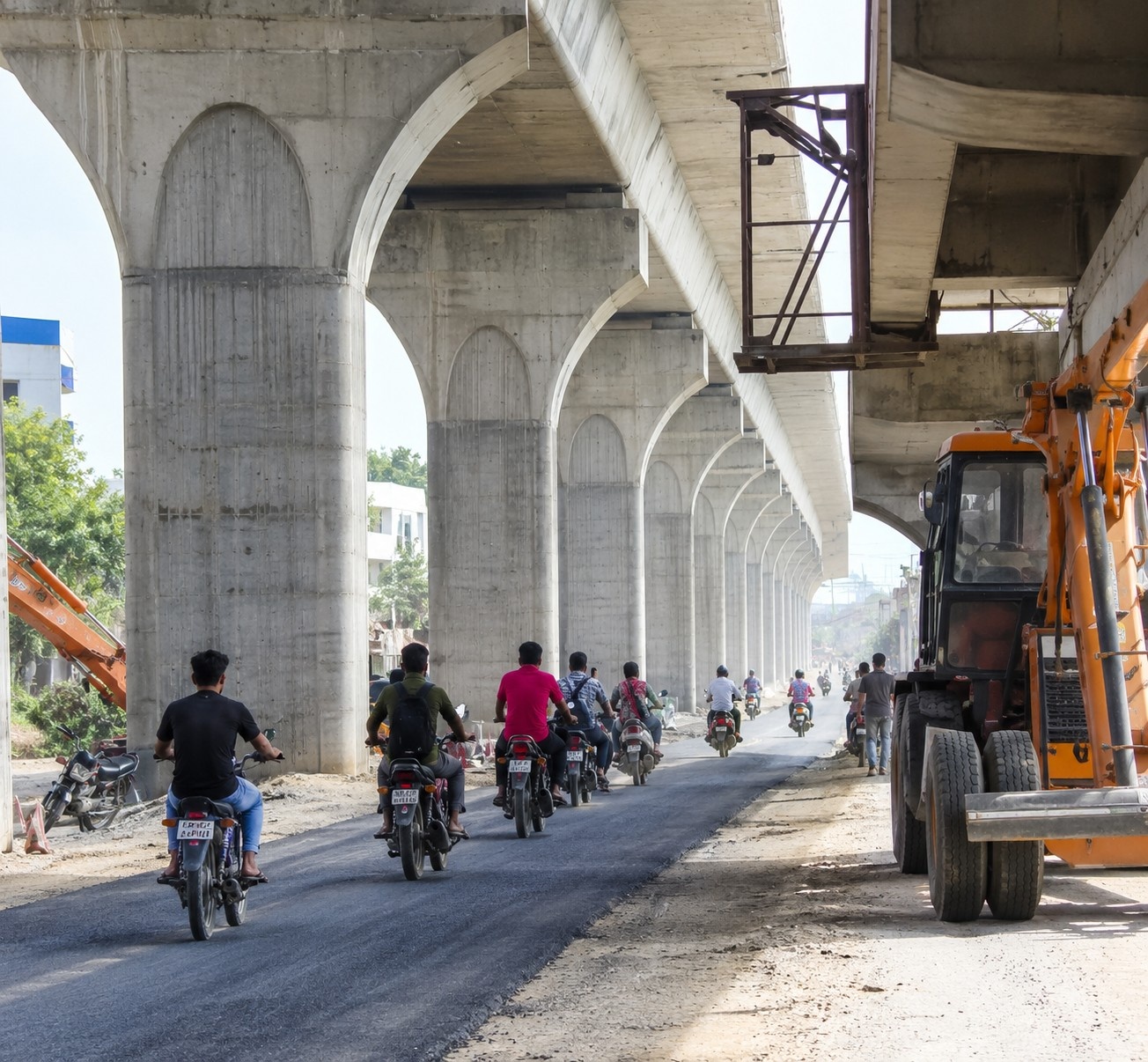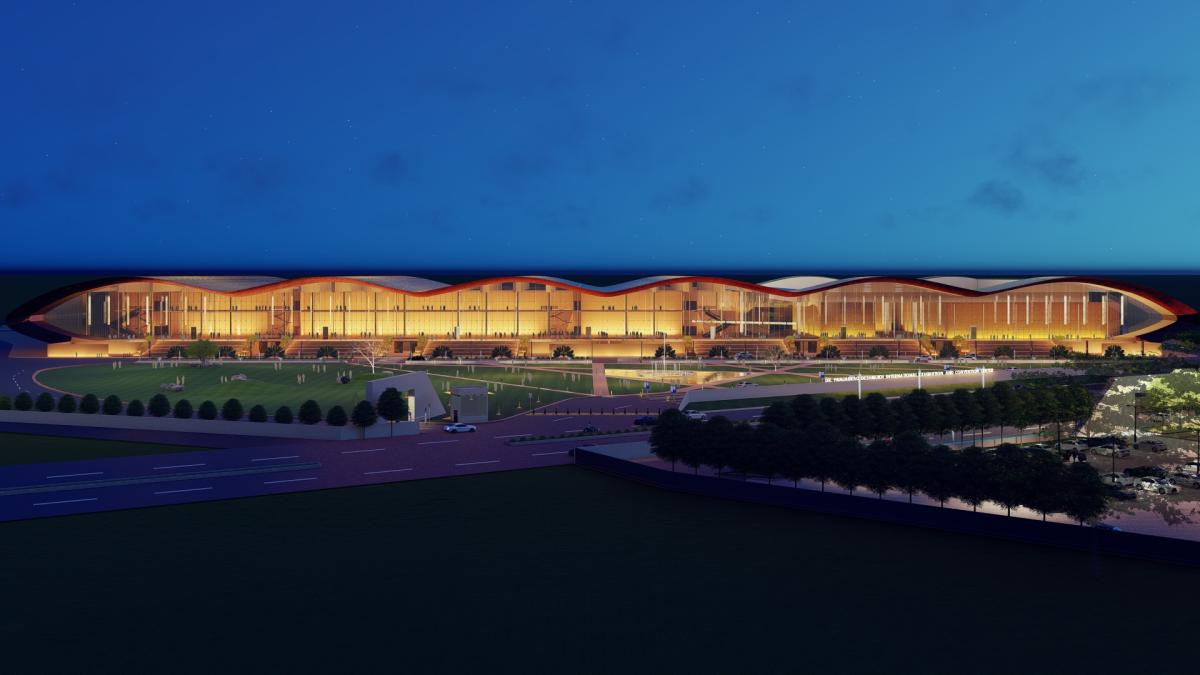
Nagpur Gets AI-Powered Traffic Control: 32 Junctions Live on IITMS, Work Underway at 80 More — ₹198 Crore Upgrade in Full Swing

Published: May 11, 2026 | Category: Nagpur Local | Nagpur IITMS AI traffic management | By: Nagpur Updates Desk


Nagpur’s roads are getting smarter. The city’s Integrated Intelligent Traffic Management System — better known as IITMS — has now been installed at 32 key junctions across Nagpur. Work is actively underway at 80 more intersections. When fully operational, this AI-powered system will transform how traffic flows through every major road in the city.

The state government has allocated ₹198 crore for this upgrade. The installation is being carried out by Keltron, a government agency with expertise in electronics and technology. This is not a minor upgrade — it is a complete overhaul of Nagpur’s outdated traffic infrastructure.


Why Nagpur Needed This Change

The problem was simple but serious. Nagpur was relying on 171 traffic signals to manage its growing traffic. Many of these signals were over 25 years old. They were fixed-timer signals — switching at preset intervals regardless of actual traffic on the ground.

The construction of cement roads, flyovers, and ring roads made things worse. As executive engineer of NMC, Rajendra Rathod, explained: “Due to the construction of cement roads, flyovers and ring roads in the city, the height of old signals had become inadequate, making them less visible. The new system will significantly ease traffic management.”

Old signals at elevated junctions were simply too low to be seen clearly. Drivers were missing signal cues. Congestion was building up. It was time for a complete upgrade.


What is IITMS and How Does It Work?

IITMS stands for Integrated Intelligent Traffic Management System. It is an AI-powered platform that manages traffic automatically — without human intervention at each junction.

Here is how it works in practice:

Real-time signal adjustment. The system monitors traffic density at every junction continuously. It then adjusts signal timings dynamically. If one road has more vehicles, the green light stays longer. Waiting time goes down. Queues get shorter.

Central command centre. All 32 — and eventually all 112 — junctions will be connected to a central command centre. Police officials will monitor key routes across the entire city from one location. They can intervene instantly if needed.

Elevated placement for better visibility. Unlike old roadside signals, the new IITMS signals are installed at an elevated position in the middle of junctions. This makes them clearly visible from all directions — even at complex intersections.


ANPR Cameras: The Crime-Fighting Layer

Beyond traffic management, IITMS adds a powerful crime control dimension to Nagpur’s road network.

Each junction is equipped with Automatic Number Plate Recognition (ANPR) cameras. These cameras scan the High Security Registration Plate (HSRP) of every vehicle passing through a checkpoint. The system instantly checks the plate against a database. If a stolen vehicle passes through, an alert is raised immediately.

This makes IITMS a tool not just for traffic police but for crime investigation as well. Vehicle movement history can be tracked. Suspects can be located faster. The system adds a layer of security that Nagpur’s traffic infrastructure never had before.


Auto E-Challans: No More Escaping Traffic Violations

One of the most impactful features of IITMS is its ability to generate e-challans automatically.

The system will detect and record the following violations without any manual intervention:

  • Triple riding on two-wheelers
  • Riding without a helmet
  • Driving without a seat belt
  • Signal jumping

Once a violation is detected, the e-challan is generated automatically and sent directly to the violator’s mobile phone. There is no need for a traffic constable to be physically present at the spot. The system does the job on its own — 24 hours a day, 7 days a week.

This is a significant shift in traffic enforcement. It removes human error, bias, and the possibility of corruption from the challan process.


Evidence Cameras and UDC Cameras: More Eyes on the Road

Beyond ANPR, IITMS also deploys two additional camera types at each junction.

Evidence cameras record all activities at the junction continuously. This footage serves as legal evidence in case of accidents, disputes, or criminal incidents. It also acts as a deterrent — drivers who know they are being recorded are more likely to follow rules.

UDC (Urban Data Collection) cameras assess traffic volume and congestion levels at each junction. This data feeds into the central AI system, helping it make smarter decisions about signal timing and traffic routing across the city.

Together, these three camera systems — ANPR, evidence, and UDC — create a comprehensive surveillance and data network across Nagpur’s junctions.


Timeline: Delayed But Back on Track

The project has faced some delays. The initial deadline for full installation was February 14, 2026. However, only 10 junctions were operational by that date. The deadline was subsequently extended to June 2026.

Since February, the pace has accelerated significantly. From 10 junctions, the live count has jumped to 32. Work is now underway at 80 more simultaneously. The June 2026 target appears achievable at the current pace.


RTO Integration: Tracking Vehicles Across the City

Police and Regional Transport Office (RTO) officials will have direct access to the IITMS platform. They will be able to track any vehicle using its ANPR data and movement history.

This integration with the RTO is particularly significant given recent developments in Nagpur’s transport enforcement landscape. The suspension of Nagpur City RTO Kiran Bidkar for failing to enforce school bus fitness certificates highlighted the urgent need for better vehicle monitoring systems. IITMS directly addresses this gap — giving authorities real-time visibility over every vehicle on the road.

Additionally, IITMS connects seamlessly with the broader push for road safety in Nagpur. Alongside Operation U-Turn’s drug testing drive, the AI-powered traffic system creates a multi-layered enforcement ecosystem that Nagpur has never had before.


What This Means for Nagpur’s Commuters

For daily commuters, the benefits of a fully operational IITMS are direct and real.

Shorter waiting times. Dynamic signal adjustment means no more sitting at a red light while the crossing road is empty.

Faster emergency response. The central command centre can clear corridors for ambulances and fire trucks instantly — addressing a concern highlighted recently when an ambulance was forced to turn back on the dug-up Seminary Hills road.

Safer roads. Automatic challan generation means traffic violations carry real consequences — every time, at every junction.

Smarter city. IITMS is a key pillar of Nagpur’s Smart City ambitions. It brings the city’s traffic infrastructure in line with other leading Indian cities that have already deployed AI-powered traffic systems.


Nagpur’s Smart Future — One Junction at a Time

Nagpur is moving fast. From the One Nation One Card upgrade at Nagpur Metro to the new RVR safety system at Nagpur Airport, the city’s infrastructure is being upgraded across multiple fronts simultaneously.

IITMS is among the most visible of these upgrades — one that every resident will experience directly every time they drive through a Nagpur junction.

By June 2026, Nagpur’s roads are set to be smarter, safer, and more efficient than they have ever been. That is a promise the city’s commuters have been waiting a long time to see fulfilled.

Nagpur Updates will bring you the latest on the IITMS rollout as more junctions go live across the city. Stay tuned.


Tags: IITMS Nagpur, AI Traffic Management, Nagpur Smart City, NMC Nagpur, E-Challan, ANPR Camera, Keltron, Nagpur Traffic, Nagpur Infrastructure, Nagpur Local News 2026

Dug-Up Seminary Hills–Telangkhedi Road Turns ‘Accident-in-Waiting’ Spot: No Barricades, No Lights, Ambulance Forced to Turn Back

Published: May 11, 2026 | Category: Nagpur Local | Dharampeth zone | Seminary Hills Telangkhedi road | By: Nagpur Updates Desk


A dangerous and deeply irresponsible situation has been allowed to develop on one of Nagpur’s regularly used roads — the stretch connecting Seminary Hills to Telangkhedi — where a deep trench dug for pipeline work has effectively split the road, left motorists navigating through a hazardous obstacle course, and in one alarming incident, forced an ambulance to turn back from a potentially time-critical emergency response.

The dug-up stretch, located near the Mother Dairy plant and the NCC Group headquarters, has been excavated for the laying of a water pipeline. What should have been a routine civic infrastructure works site — one that is properly barricaded, clearly signposted, and well-lit — has instead become a textbook example of how not to manage road excavation in a busy urban area. The result is a stretch of road that residents and commuters are now openly calling an “accident waiting to happen”.


The Ground Reality: A Trench That Has Split the Road

A visit to the site reveals the severity of the situation. The trench, dug across the width of the road, has physically divided the carriageway — leaving barely enough space for even a single two-wheeler to squeeze through on one side. Four-wheelers face an even more desperate situation: they are simply unable to navigate through the narrow gap left by the excavation and are being forced to execute U-turns at the site, creating significant traffic congestion and confusion on an otherwise busy road.

The barricading that has been put in place is woefully inadequate. Authorities have placed partial barricades on only one side of the trench — allowing a narrow passage for two-wheelers approaching from that direction — while the opposite side, approaching from the CP Club, remains completely exposed. There are no proper warning signs, no reflective markers, no safety lights, and no channelising devices to guide motorists safely through or around the excavation.

After sunset, the situation deteriorates from dangerous to potentially deadly. The area already suffers from non-functional streetlights, plunging the road into near-total darkness during evening and night hours. Combined with the absence of reflectors or warning lights at the trench site, the excavated stretch becomes virtually invisible to approaching motorists until they are right upon it — leaving no room for reaction, especially for two-wheeler riders travelling at even moderate speeds.


The Ambulance Incident: A Wake-Up Call That Must Not Be Ignored

Among the multiple alarming incidents reported at this site, one stands out with particular urgency — the case of an ambulance that was forced to turn back because it could not navigate through the dug-up road.

The ambulance driver described the incident with chilling clarity: “Had it been an emergency, we would have lost crucial time changing the route.”

This single statement encapsulates everything that is wrong with how this excavation has been managed. Roads in residential and mixed-use urban areas serve as critical corridors for emergency vehicles. An ambulance delayed by even a few minutes on its way to a medical emergency can mean the difference between life and death for a patient. The fact that a pipeline excavation — a planned, pre-approved infrastructure activity — has been conducted in a manner that forces ambulances to turn back is not just a civic failure. It is a potentially life-threatening administrative negligence that demands immediate and unequivocal correction.


Residents Speak Out: Anger, Fear and Demand for Action

Locals and regular commuters who use the Seminary Hills–Telangkhedi road daily have expressed deep anger over the complete absence of safety planning at the excavation site.

Deepak Korgaonkar, a resident of the area, put it bluntly: “There are no warning boards or lights. At night, the trench is almost invisible. Someone is bound to fall into it.”

Another commuter echoed the frustration: “This road is frequently used, and yet the work has been left incomplete and unsafe. Shockingly, no proper precautions have been taken.”

The anger among residents is entirely justified. Under established NMC guidelines and standard public works safety protocols, any contractor digging up a public road is required to:

  • Erect proper barricading on all sides of the excavation — not just one
  • Install reflective markers and warning signage at adequate distances from the trench in both directions
  • Provide lighting at the excavation site during night hours
  • Ensure that adequate passage width is maintained for emergency vehicles at all times
  • Display the contractor’s contact details and the work completion timeline at the site

None of these basic requirements appear to have been complied with at the Seminary Hills–Telangkhedi site.


The Missing Elements: A Safety Checklist That Was Ignored

A systematic look at what is missing at this excavation site reveals just how comprehensively the basic safety protocols have been disregarded:

No proper barricading: Only one side has partial barricades. The CP Club approach side is completely exposed — leaving motorists coming from that direction with no warning until they are directly in front of the trench.

No warning signage: There are no advance warning boards on either approach to the excavation site informing motorists that road work is in progress ahead and that they should slow down and proceed with caution.

No reflectors: The absence of reflective markers means that vehicle headlights — the only source of illumination on this darkened stretch after sunset — do not provide adequate advance warning of the obstruction ahead.

Non-functional streetlights: The pre-existing failure of streetlights on this stretch — a separate civic infrastructure failure — has compounded the danger created by the excavation. Two civic failures converging at the same spot create a danger greater than the sum of their parts.

No emergency vehicle corridor: As the ambulance incident demonstrates, no arrangement has been made to ensure that emergency vehicles can pass through the area without being forced to divert.


Dharampeth Zone Official Acknowledges, Promises Action

When TOI reached out to the relevant civic authority, Rajkumar Meshram, Assistant Commissioner of the Dharampeth Zone, acknowledged the issue and promised prompt corrective action.

Meshram said: “The road has been dug up for pipeline work. We were not informed about the lack of barricading and signage on one side. I will immediately deploy officials to the spot to ensure necessary safety measures are implemented.”

While the acknowledgement is welcome, residents are rightly sceptical about whether the promised action will be swift and sufficient. The Assistant Commissioner’s statement that he was “not informed” about the inadequate barricading raises its own questions — if the civic administration is not actively monitoring active road excavation sites within its jurisdiction for compliance with safety protocols, what mechanism exists to prevent similar situations from occurring across the city?


A Systemic Problem: Nagpur’s Road Digging Culture

The Seminary Hills–Telangkhedi incident is not an isolated one. Nagpur has a well-documented problem with road excavations being conducted without adequate safety measures — a reality that has been highlighted repeatedly over the years, from waterlogged craters on Kamptee Road to open trenches outside school gates.

Just as the city’s civic administration has been struggling to address poor public infrastructure at the Nagpur Passport Office in Sadiqabad and the ongoing delay in the Bhande Plot–Dighori flyover, the management of road excavation sites reflects a broader pattern of civic works being executed without adequate regard for the safety and convenience of the public they are supposed to serve.

The root of the problem lies in a combination of factors: contractors cutting corners on safety measures to reduce costs, inadequate supervision by civic officials, the absence of real-time monitoring mechanisms for active excavation sites, and insufficient penalties for contractors who fail to comply with safety norms.


What Needs to Happen — Immediately

The situation at Seminary Hills–Telangkhedi demands urgent corrective action on multiple fronts:

Immediate steps:

  • Full barricading on both sides of the trench, including the CP Club approach
  • Installation of reflective markers and warning signboards at least 50 metres from the excavation in both directions
  • Temporary lighting at the excavation site to ensure visibility after dark
  • Repair of the non-functional streetlights on this stretch as an emergency measure
  • Ensuring a minimum passage width for emergency vehicles at all times during the excavation

Longer-term measures:

  • Mandatory safety audits of all active road excavation sites in Nagpur by civic officials
  • Strict penalty enforcement against contractors who fail to comply with barricading and signage requirements
  • A centralised dashboard tracking all active road digs in the city — accessible to the public and updated in real time

The residents of Seminary Hills and the regular commuters on the Telangkhedi road deserve a basic guarantee of safety on a public road. That guarantee has been comprehensively broken by the current state of this excavation site. The Dharampeth Zone administration must act — not tomorrow, not next week, but today.

Nagpur Updates will continue to monitor this situation and report on whether the promised safety measures are actually implemented at the Seminary Hills–Telangkhedi excavation site.


Tags: Seminary Hills Nagpur, Telangkhedi Road, Road Safety Nagpur, NMC Nagpur, Pipeline Work, Nagpur Civic Issues, Dharampeth Zone, Nagpur Local News, Road Accident Nagpur

Koradi Temple’s 188-Foot Hanuman Idol to Get a Futuristic Touch: Laser Projection, Underwater Lighting, Monorail and More — Amit Shah to Inaugurate in June 2026

Published: May 10, 2026 | Category: Nagpur Local | Nagpur 188 ft Hanuman idol | By: Nagpur Updates Desk


One of Nagpur’s most beloved and sacred destinations is on the verge of a truly extraordinary transformation. The Mahalaxmi Jagdamba Koradi Temple — situated approximately 20 kilometres south of Nagpur city on the Chhindwara Road and revered as one of the most powerful Shaktipeeths in the Vidarbha region — is at the heart of an ambitious, ₹1,214.94 crore redevelopment project that promises to turn Koradi into a world-class religious tourism destination of national importance.

At the centrepiece of this transformation stands a monumental achievement — the construction of a 188-foot Hanuman idol (Nagpur 188 ft Hanuman idol) set to be the tallest Hanuman statue in India, towering magnificently in the middle of a lake within the Koradi temple complex. The idol is now nearing completion and is set to be inaugurated in a grand ceremony in June 2026 — with Union Home Minister Amit Shah confirmed to preside over the historic unveiling.


The Statue: Engineering Marvel Meets Divine Faith | Nagpur 188 ft Hanuman idol | Koradi Hanuman statue

The sheer scale of the Koradi Hanuman idol (Koradi Hanuman statue) is staggering. Standing at 158 feet in height for the statue itself, with the base and spire bringing the total structure to approximately 163–188 feet, this colossus of reinforced concrete and iron is being created to capture every detail of Lord Hanuman’s divine form with reverence and precision.

The numbers behind the construction are equally impressive:

  • 178 cubic metres of concrete used in the structure
  • 140 tonnes of iron reinforcement embedded within
  • Total weight of the statue: 281 tonnes
  • Cost of the idol alone: ₹11.50 crore
  • Sculptor: Jatin Kumar, leading the team from Matu Ram Art Centre — the Gurugram-based firm celebrated for creating the 351-foot Lord Shiva statue in Udaipur and the Lord Buddha statue in Namchi, Sikkim

The idol stands in the middle of pond number three within the Koradi temple complex — creating a breathtaking visual where the towering deity appears to rise directly from the water. The symbolism is powerful: Lord Hanuman, eternal protector and symbol of strength, standing sentinel over the sacred waters of Koradi.

Since the statue is situated in the middle of the lake, boats will be arranged for visitors to reach the idol — adding an element of pilgrimage journey to the darshan experience.


Futuristic Features: Transforming Ancient Faith with Modern Technology

What truly sets the Koradi redevelopment project (Koradi Hanuman statue) apart from conventional temple upgrade programmes is its bold integration of cutting-edge modern technology and attractions with the sanctity of an ancient religious site. The comprehensive development plan — prepared jointly by the Nagpur Improvement Trust (NIT) and the Nagpur Metropolitan Region Development Authority (NMRDA) — envisions Koradi as not just a temple but a complete religious tourism ecosystem.

The futuristic features planned for the Koradi complex include:

Laser Projection Mapping The Hanuman idol and the temple complex will be equipped with laser projection mapping technology — a stunning visual spectacle where high-powered laser projectors display dynamic images, stories, and devotional content on the surfaces of the statue and temple structures after dark. Laser projection mapping has been used to dramatic effect at iconic landmarks worldwide, and at Koradi, it will transform the evening darshan experience into something truly extraordinary.

Underwater Lighting The lake surrounding the Hanuman idol will be fitted with sophisticated underwater lighting systems, illuminating the waters around the statue in a dramatic display that will make the idol appear even more magnificent after sunset. Combined with the laser projection system, the nighttime visual experience at Koradi is set to become one of the most spectacular in Central India.

Butterfly Garden A dedicated butterfly garden is being developed within the temple complex — a peaceful, nature-based attraction that will provide a serene contrast to the grandeur of the main temple and statue complex, and is expected to be a popular destination for families and nature lovers.

2.5 km Monorail Covering Seven Spots One of the most exciting and unique features of the Koradi redevelopment is the planned 2.5-kilometre monorail system connecting seven key spots within the complex, at an estimated cost of ₹17.46 crore. The monorail will allow devotees and visitors to comfortably traverse the expansive temple complex — particularly beneficial for elderly pilgrims, families with young children, and visitors with mobility challenges.

Kids’ Adventure Park — Indoor and Outdoor A dedicated kids’ adventure park featuring both indoor and outdoor games is being planned at an estimated cost of ₹31.18 crore. This will transform Koradi into a family destination where children and adults alike have engaging, age-appropriate attractions beyond the religious experience.

Dinopark and Amusement Park In a fascinatingly eclectic addition to a temple precinct, the redevelopment plan includes a Dinopark and amusement park — attractions that will broaden the appeal of Koradi beyond traditional devotees to include general tourists and families seeking a full-day recreational experience.

Water Body with Fountains and Bridge A beautifully designed water body with musical fountains and a decorative bridge will add to the aesthetic and atmospheric richness of the complex — creating photogenic spaces that will draw visitors beyond the temple itself.


The Grand Gateway: Mahadwar and Rajgad Mahadwar

The entrance experience at the redeveloped Koradi complex will itself be a statement. The project includes the construction of a magnificent ‘Mahadwar’ (main entrance gate) featuring statues of Chhatrapati Shivaji Maharaj and Maa Tulja Bhavani, at a cost of ₹8.5 crore — a gateway that connects Nagpur’s spiritual and historical identity in one powerful symbolic gesture.

A separate VIP entrance — the ‘Rajgad Mahadwar’ — standing 10 metres in height, will be constructed at a cost of ₹3.44 crore, providing a dedicated entry point for dignitaries and special guests while maintaining the flow of general pilgrim traffic.


Hostel for 500 Children: Social Commitment Alongside Spiritual Development

The Koradi project is not just about tourism and spectacle. In a heartening dimension of social commitment, a hostel facility for 500 children is being planned as part of the development — reflecting the Mahalaxmi Jagdamba Sansthan’s commitment to education and welfare alongside its religious mission.

A skill development centre is also being incorporated into the master plan — creating a space where youth from Koradi and surrounding areas can access vocational training and employment-oriented skill building, directly connecting the temple’s development to the economic upliftment of the local community.


June 2026 Inauguration: Amit Shah to Preside | Koradi Hanuman statue

The inauguration of the Koradi Hanuman idol — and the unveiling of the redeveloped temple complex — is scheduled for June 2026. Nagpur Guardian Minister and Revenue Minister Chandrashekar Bawankule personally travelled to New Delhi to meet Union Home Minister Amit Shah and extend a formal invitation to the ceremony.

Amit Shah accepted the invitation warmly and confirmed his availability to attend the historic event in June 2026. Bawankule expressed confidence that the inauguration would be conducted on a grand scale and that Koradi would emerge as a major spiritual destination for devotees from across the country.

The presence of the Union Home Minister at the inauguration underlines the national significance that this project has achieved — transforming what was always a locally cherished temple into a landmark of pan-India religious and cultural importance.


Koradi Temple: A Sacred History

For those unfamiliar with Koradi’s spiritual significance, the Mahalaxmi Jagdamba Temple has been a revered Shaktipeeth for centuries. Dedicated to Goddess Durga, the temple is situated on the banks of Koradi Lake and draws lakhs of devotees annually — particularly during Navratri, when the idol is adorned in three distinct divine avatars and the surrounding area comes alive with devotion and celebration.

The temple’s location — just 20 km from Nagpur city — makes it easily accessible to urban devotees while retaining the sacred, removed atmosphere of a proper pilgrimage site. With the redevelopment, Koradi is set to become what its promoters envision: a destination that rivals India’s foremost religious tourism sites in its scale, experience, and spiritual ambience.

Just as Nagpur’s civic and infrastructure landscape is being transformed through projects like the New Nagpur IBFC township and the Indora–Dighori flyover, the Koradi redevelopment represents the city’s spiritual and cultural renaissance — a commitment to honouring its deepest traditions while embracing the possibilities of a modern, ambitious future.

Nagpur Updates will bring you full coverage of the Koradi Hanuman idol inauguration in June 2026. Stay tuned!


Tags: Koradi Temple, Hanuman Idol Nagpur, NMRDA Nagpur, Amit Shah Nagpur, Chandrashekar Bawankule, Religious Tourism Nagpur, Nagpur Development, Mahalaxmi Jagdamba, Nagpur Local News 2026

NHAI Sits on Bhande Plot–Dighori Flyover as Nagpur Traffic Crawls Below: April Deadline Missed, June Now the Target

Published: May 10, 2026 | Category: Nagpur Local | Bhande Plot Dighori flyover  | By: Nagpur Updates Desk


For the thousands of Nagpur commuters who travel daily between North Nagpur and East Nagpur — battling the chronic, grinding traffic that plagues the Mahal, Gandhibag, and Bhande Plot corridors — relief once again seems just out of reach. The National Highways Authority of India (NHAI) has missed yet another deadline for opening the eagerly awaited Bhande Plot to Dighori stretch of the ambitious Indora–Dighori Elevated Corridor, and Nagpur’s residents are running out of patience.

NHAI had confidently promised that the Bhande Plot–Dighori flyover section would be opened to traffic in April 2026. That deadline has now passed. The flyover remains unopened. Traffic continues to crawl painfully through the congested streets below. And NHAI has quietly revised its timeline — with a new target of June 2026 for the opening of the complete Indora–Dighori Elevated Corridor project.


A Project Nagpur Has Been Waiting For

To understand the frustration of Nagpur’s commuters, it is important to appreciate what the Indora–Dighori Elevated Corridor means for the city and why its delay is causing such significant public anger.

The Indora–Dighori flyover is not a routine road project. It is one of the most transformative infrastructure investments Nagpur has seen in decades — a massive, ₹998 crore multi-lane elevated corridor that, when complete, will fundamentally change how traffic flows through the heart of the city. The project aims to dramatically reduce congestion across some of Nagpur’s most chronically choked routes, connecting North Nagpur to East Nagpur via a high-speed elevated bypass that takes vehicles over — rather than through — the overcrowded city centre.

According to NHAI’s own projections, the completion of this flyover will reduce travel time from Kamal Square to Dighori Square from the current nearly 45 minutes to approximately 15 minutes — a three-fold improvement that would transform daily life for hundreds of thousands of Nagpur residents.


India’s Longest UHPFRC Flyover: A Technological Landmark

Beyond its significance for Nagpur’s traffic, the Indora–Dighori flyover is also a nationally significant engineering achievement. It is being constructed using Ultra High Performance Fibre Reinforced Concrete (UHPFRC) — a cutting-edge construction technology that offers dramatically superior strength, durability, and longevity compared to conventional concrete, while allowing for thinner, lighter structural elements.

The Indora–Dighori flyover is set to be the longest UHPFRC flyover in India — a distinction that reflects the scale and technical ambition of the project. UHPFRC technology is particularly well-suited for long-span elevated structures in urban environments, where minimising construction footprint, reducing maintenance requirements, and ensuring long service life are all critical priorities.

The project was awarded with:

  • Letter of Award (LOA): March 27, 2023
  • Contract Signed: April 26, 2023
  • Work Commenced: July 1, 2023
  • Originally Scheduled Completion: June 30, 2026
  • Total Flyover Length: 6.37 kilometres
  • Service Road and Slip Road Length: 13.82 kilometres (including reconstruction overlay)

Two Phases: What’s Done and What Isn’t

The Indora–Dighori Elevated Corridor is being developed in two main sections:

Phase 1 — Bhande Plot (Sakkardhara) to Dighori Square: This is the shorter of the two flyover sections and was originally promised to be opened in April 2026 — well ahead of the overall project deadline. NHAI Project Director Chandrakant Sinha had confirmed during a media tour in February 2026 that this stretch would be ready for opening in April, giving Nagpur residents reasonable grounds for optimism.

That April opening has not happened. The stretch remains closed to public traffic, while the roads below it continue to carry the full burden of congestion they were designed to relieve.

Phase 2 — Pachpaoli to Reshimbagh Square: This is the longer and more complex of the two flyover sections. Its completion has always been targeted for June 2026, primarily because of delays caused by Indian Railways not granting timely permission and engineering blocks required to launch girders over two railway crossings in Pachpaoli. Railway crossing works are among the most complex elements of any urban flyover project — requiring Railway approval at multiple levels, careful coordination of traffic and train operations, and precise engineering execution during narrow time windows.


Why the April Deadline Was Missed

NHAI has not provided a detailed public explanation for why the Bhande Plot–Dighori opening missed the April deadline. However, based on the overall project context and the kind of challenges that typically affect the final phase of urban flyover projects, several factors are likely contributors:

Finishing Works and Safety Certifications: The final phase of any flyover project involves a range of finishing works — road surfacing, barrier installation, lighting, signage, approach ramp completion — that often take longer than anticipated. Safety inspections and load testing certifications are also mandatory before a public opening can be scheduled.

Ramp Construction Near Daga Hospital: NHAI’s own project updates had noted that construction of ramps near Daga Hospital was among the remaining works on the project. This kind of urban infrastructure work in a congested area with active hospital operations is inherently complex and prone to delays.

Railway Under Bridges (RuBs): The construction of Railway Under Bridges at the Pachpaoli railway crossings has been a known challenge throughout the project. Any slippage in this work affects the overall project timeline and may have influenced the sequencing of the Bhande Plot section opening as well.


Nagpur Commuters: Running Out of Patience

For the residents of areas like Mahal, Gandhibag, Itwari, Bhande Plot, Sakkardhara, and Dighori, the delay is more than a statistic — it is a daily lived experience of wasted time, fuel, and patience. The routes that the flyover is designed to bypass are among Nagpur’s most congested, with bumper-to-bumper traffic during morning and evening peak hours turning what should be a short cross-city commute into an exhausting hour-long ordeal.

Many commuters had planned their daily routines around the anticipated April opening, and the news that it has been pushed yet again has been received with deep frustration. The repeated cycle of promised deadlines followed by quiet revisions has significantly eroded public trust in NHAI’s timelines for this project.

Just as Nagpur has seen other civic challenges — from the anti-encroachment drive tensions in Mominpura to poor facilities at key public infrastructure like the Passport Office — the Dighori flyover delay is another reminder of the gap that often exists between the promise of infrastructure projects and their ground-level delivery.


NHAI’s Assurance: June 2026 Completion

NHAI has assured that the complete Indora–Dighori Elevated Corridor will be finished within its scheduled deadline of June 30, 2026. Officials maintain that the overall project is largely on track and that the April delay on the Bhande Plot section is a minor setback rather than a sign of fundamental project trouble.

The construction of the elevated rotary at Ashok Square — one of the project’s more technically complex elements — has been progressing, with road surfacing work underway and beautification of the rotary with lights and murals scheduled before the public opening.

Whether June 2026 holds as the final deadline — or whether Nagpur commuters will face yet another revision — remains to be seen. Given the history of this project’s timelines, many residents are choosing cautious scepticism over premature optimism.


What to Watch For

As the project approaches its June 2026 target, Nagpur Updates will be watching for:

  • Official opening date announcement from NHAI for the Bhande Plot–Dighori section
  • Railway clearance status for the Pachpaoli girder launching works
  • Completion of Daga Hospital ramp construction
  • Safety inspection and load testing certification for the flyover structure
  • Final beautification works at Ashok Square rotary

Nagpur Updates will bring you the latest developments on the Indora–Dighori flyover and all major infrastructure projects affecting Nagpur’s roads and commuters. Stay tuned for updates.


Tags: NHAI Nagpur, Bhande Plot Flyover, Dighori Flyover, Indora Dighori Flyover, Nagpur Traffic, Nagpur Infrastructure, Nagpur Roads, UHPFRC Flyover, Nagpur Local News

Nagpur Airport Completes Full RVR Network: Midpoint Runway Visual Range System Now Installed for Enhanced Flight Safety

Published: May 10, 2026 | Category: Nagpur Local | Dr Babasaheb Ambedkar International Airport Nagpur |  By: Nagpur Updates Desk


In a significant upgrade for aviation safety at Dr. Babasaheb Ambedkar International Airport, Nagpur, the Aerodrome Meteorological Office (AMO), Nagpur has completed the installation of the long-awaited midpoint Runway Visual Range (RVR) system — the third and final piece of a comprehensive visibility monitoring network that now covers the entire length of the airport’s runway. The completion of this installation marks a major milestone in Nagpur airport’s journey towards meeting full international aviation safety standards for low-visibility operations.

With the midpoint RVR now in place alongside the previously installed touchdown and rollout RVR systems, Nagpur Airport has achieved a complete three-point RVR network — enabling far more precise, real-time visibility data across the entire runway environment. This upgrade significantly strengthens the airport’s ability to operate safely during fog, heavy rain, haze, and other adverse weather conditions that periodically affect flight operations in the Vidarbha region.


What is a Runway Visual Range (RVR) System?

For readers who may be unfamiliar with the technical aspects of aviation infrastructure, understanding why the midpoint RVR installation matters requires a brief explanation of what RVR actually is and what it does.

A Runway Visual Range (RVR) system is a high-precision meteorological instrument that continuously and automatically measures how far a pilot can see along the runway at any given moment. Using advanced optical and atmospheric sensors — specifically either transmissometers or forward scatter sensors — the RVR system captures real-time visibility data and transmits it instantly to Air Traffic Controllers (ATC) and pilots, enabling them to make precise, scientifically accurate decisions during landings and take-offs in low-visibility conditions.

In practical terms, when a pilot is approaching Nagpur airport on a foggy winter morning or during a heavy monsoon shower and visibility is severely reduced, the RVR system provides the exact measured distance they can see down the runway — allowing the ATC to determine whether conditions are within safe operational limits for landing and giving the pilot the accurate, up-to-the-minute data they need to execute a safe approach.


The Three-Point System: Touchdown, Midpoint and Rollout

International aviation standards — as defined by the International Civil Aviation Organization (ICAO) — require that a fully instrumented runway be equipped with RVR measurement at three distinct locations:

1. Touchdown Zone RVR (TDZ) Located at the point where aircraft first make contact with the runway — approximately 300 metres from the runway threshold. This is the most critical measurement point, as it tells pilots and ATC what visibility conditions are like at the exact moment of landing. Nagpur Airport’s touchdown zone RVR was among the first systems installed.

2. Midpoint RVR (MID) Located at the centre of the runway. This is the system that has just been installed at Nagpur Airport — and its addition is the key development in this story. The midpoint RVR is critical for providing data about visibility conditions during the middle phase of the landing roll, and is mandatory for Category II and Category III instrument approach operations — the advanced low-visibility landing categories that enable aircraft to land even in near-zero visibility conditions.

3. Rollout Zone RVR (RO) Located approximately 300 metres from the far end of the runway. This system measures visibility at the point where the aircraft is completing its landing roll and needs to safely decelerate and turn off the runway. Nagpur’s rollout RVR was also previously installed.

With all three systems now in place, Nagpur Airport has achieved the complete ICAO-standard RVR network that is mandatory for CAT II and CAT III operations and strongly recommended for all airports handling significant commercial traffic.


Why the Midpoint RVR Was the Missing Piece

The fact that the midpoint RVR was the last to be installed at Nagpur Airport highlights its particular technical and regulatory importance. Without midpoint RVR data, an airport cannot be officially categorised for Category II or Category III instrument approach operations — the advanced precision approach categories that allow aircraft to land in conditions where visibility may be reduced to just a few hundred metres or even less.

For an airport like Nagpur — which experiences significant fog conditions during winter months, particularly from November to February — the absence of full CAT II/III capability has historically been a limiting factor. During peak fog season, flights to and from Nagpur have frequently been delayed or diverted when visibility dropped below the minimums for standard CAT I operations.

With the full three-point RVR system now operational, Nagpur Airport’s ATC and airline operations teams will have the complete visibility data infrastructure needed to safely support more advanced instrument approach operations — potentially reducing weather-related flight disruptions significantly during adverse visibility periods.


Vaisala: The Technology Behind Nagpur’s RVR Network

The RVR systems installed at Nagpur Airport were procured from Vaisala Oyj — a Finnish company widely regarded as the global leader in environmental and industrial measurement technologies. Vaisala’s RVR systems are used at airports around the world, from Athens and Helsinki to Singapore and Mumbai.

The entire RVR procurement and installation process at Nagpur Airport required two years of planning, multiple regulatory approvals, and comprehensive technical assessments — reflecting the rigorous standards that govern aviation safety infrastructure. The systems use Vaisala’s precision optical sensors and the company’s AviMet RVR software solution to deliver real-time, ICAO-compliant visibility data to the airport’s ATC and operational systems.

The fact that Nagpur Airport chose Vaisala — the same supplier trusted by leading airports worldwide — underscores the seriousness with which the AMO Nagpur and airport authorities have approached this safety upgrade.


Real-World Benefits for Nagpur’s Flights and Passengers

The completion of Nagpur Airport’s full RVR network will have tangible, real-world benefits for airlines operating from the airport and for the thousands of passengers who fly through Nagpur every day:

Fewer Weather-Related Cancellations and Diversions: With accurate, real-time visibility data available at all three points along the runway, ATC and airline operations controllers can make more informed, confident decisions during adverse weather — potentially keeping flights operational in conditions where they might previously have been cancelled or diverted.

Safer Low-Visibility Operations: The midpoint RVR data fills a critical gap in the airport’s visibility monitoring capability, giving pilots and ATC a more complete picture of conditions across the entire runway during instrument approaches — making every low-visibility landing safer.

Alignment with International Standards: The completion of the three-point RVR network brings Nagpur Airport fully in line with ICAO standards for visibility monitoring infrastructure, reinforcing its credentials as a reliable, internationally compliant aviation hub for Central India.

Smoother Traffic Flow: With more accurate visibility data, ATC can manage the flow of aircraft approaching and departing Nagpur more efficiently during adverse weather — reducing congestion, holding patterns, and the cascading delays that poor-visibility events can cause.


Nagpur Airport: Building on a Strong Safety Foundation

The midpoint RVR installation is the latest in a series of safety and infrastructure upgrades at Nagpur’s Dr. Babasaheb Ambedkar International Airport. It comes alongside other exciting developments for Nagpur’s aviation sector — including the resumption of Qatar Airways’ direct Nagpur–Doha flights from May 21, 2026 and Nagpur Metro’s move towards the One Nation One Card NCMC system — all of which reflect a city investing seriously in the infrastructure of connectivity and mobility.

For Nagpur — the geographic centre of India and an increasingly important aviation hub for Central India — having a world-class, fully instrumented airport is not a luxury. It is a strategic necessity that directly supports the city’s economic ambitions, including the New Nagpur IBFC township project which aims to establish the city as a major business and financial hub.

Nagpur Updates will continue to track developments at Dr. Babasaheb Ambedkar International Airport and bring you the latest news on Nagpur’s aviation infrastructure and connectivity.


Tags: Nagpur Airport, RVR System, Flight Safety, MIHAN Nagpur, AMO Nagpur, Runway Visual Range, Vaisala, Nagpur Aviation, Nagpur Local News

Gorewada Zoo Beats the Heat: Coolers, Fogger Systems and Water Holes Installed to Protect Big Cats from Nagpur’s Brutal 45°C Summer

Published: May 10, 2026 | Category: Nagpur Local | Gorewada Zoo | By: Nagpur Updates Desk


As Nagpur continues to swelter under one of its most intense summers in recent memory — with temperatures frequently touching and crossing 45°C — the animals at the Balasaheb Thackeray Gorewada International Zoological Park are receiving some much-needed relief. The zoo management has rolled out an extensive and carefully planned set of cooling measures designed to protect its residents — from majestic tigers and elusive leopards to gentle herbivores — from the punishing summer heat that is turning Nagpur’s afternoons into a furnace.

Zoo Director Pandurang Pakhale confirmed that preparations for the summer season begin well before peak heat arrives, ensuring the animals are already accustomed to their cooling environments by the time temperatures reach their most extreme levels.


Artificial Ponds and Water Holes: Tigers’ Favourite Summer Retreat

One of the most impactful and natural cooling solutions deployed at Gorewada this summer is the creation of artificial ponds and water holes inside the animal enclosures. For tigers — who are naturally drawn to water and are known to be strong swimmers — these artificial water bodies have become their favourite refuge during the hottest part of the day.

Zoo officials confirmed that tigers spend long hours inside these water holes during peak afternoon hours, when ambient temperatures are at their most extreme. The sight of a massive Bengal tiger leisurely soaking in a water hole while the mercury rages outside is both visually stunning and a testament to the zoo’s commitment to providing naturalistic, species-appropriate cooling solutions.

The creation of these water features is not just about immediate cooling — it is about recreating the natural behaviours and habitats of the animals in Gorewada’s care. In the wild, tigers routinely seek out water bodies during hot weather, and providing similar opportunities in a zoo setting is considered best practice in modern animal welfare.


Fogger and Misting Systems: Science-Backed Cooling for the Enclosures

Beyond the water holes, Gorewada has deployed an impressive technological solution to combat the summer heat: fogger and misting systems installed across animal enclosures. These systems work by releasing fine water droplets into the air — creating a cooling mist that simultaneously reduces ambient temperature and increases humidity levels in the immediate environment.

Zoo Director Pakhale explained the importance of these systems: “The fogger system lowers the temperature and increases humidity, creating a comfortable environment for tigers, leopards, and herbivores.”

This dual action — cooling and humidification — is particularly significant for Nagpur’s summer conditions. The city’s heat is characterised not just by extreme temperatures but also by very low humidity, which makes the heat feel even more intense. By introducing moisture into the air, the fogger systems replicate the conditions of a cooler, more forested environment — providing real physiological relief to the animals.

The fogger systems are especially beneficial for leopards and herbivores that may not be as instinctively drawn to water immersion as tigers, but still require relief from the heat in their enclosures.


Shade Nets and Ground Cooling: Blocking the Sun’s Direct Assault

Recognising that shade is as important as cooling, Gorewada’s management has erected large shade nets over the open sections of the enclosures. These nets significantly reduce direct sunlight exposure — cutting down on the radiant heat that otherwise beats down on the animals and their enclosure surfaces throughout the afternoon.

Complementing the shade nets is another simple but effective ground-level cooling measure: staff regularly spray water on the ground during peak afternoon hours to reduce surface temperatures. In extreme summer conditions, the ground surface in direct sunlight can reach temperatures far higher than the ambient air — creating a heat sink that makes the animals uncomfortable and can even cause paw or hoof burns in more severe cases. By keeping the ground moist and cool, the zoo staff are addressing this often-overlooked dimension of heat management.


Bamboo Plantations and Machaans: Nature-Inspired Solutions

Assistant Manager Sarika Khote highlighted another dimension of Gorewada’s summer preparedness — the deliberate use of natural elements to recreate habitat conditions inside the enclosures.

Bamboo plantations have been added in select areas of the zoo’s enclosures to provide natural shade and cover for the animals. Unlike artificial shade structures, bamboo creates a living, breathing microhabitat — the dense foliage provides shade while also creating a more naturalistic and visually enriching environment for the animals. It also keeps the surroundings cooler through the natural process of transpiration.

Inside the kraals — the off-display holding enclosures connected to night shelters where animals undergoing treatment or observation are housed — elevated wooden machaans and activity structures have been installed. These elevated platforms serve a dual purpose.

Khote explained: “The machaans provide a natural setting and help keep the animals physically active.”

For big cats, elevated platforms are not just physical enrichment — they are psychologically important too. Tigers and leopards in the wild regularly use elevated positions for resting and surveying their territory. By providing machaans inside the kraals, the zoo is maintaining the animals’ natural behavioural patterns even while they are in controlled holding areas — which is critical for their mental wellbeing during the summer stress period.


Gorewada’s Unique Safari Model: A Natural Advantage

What makes Gorewada’s summer management particularly interesting — and inherently different from conventional zoos — is the park’s unique safari model. Unlike traditional zoos where animals are confined in relatively small cages or enclosures, Gorewada functions as a forest safari spread across vast forested terrain, where tigers, leopards, and herbivores roam expansive, naturalistic enclosures as tourist buses move along designated routes.

This model gives the animals at Gorewada a significant natural advantage in dealing with summer heat. The forested surroundings — part of the larger 1,914-hectare Gorewada Reserve Forest — provide natural shade, cooler microclimates, and a sensory environment that is far more conducive to animal wellbeing than the concrete-heavy environments of traditional zoos.

Animals undergoing treatment or observation are housed in kraals, which allow controlled yet relatively free movement during recovery — ensuring that even animals temporarily removed from the main safari areas are not confined to restrictive, uncomfortable spaces during the hottest months.


Gorewada’s Broader Commitment to Animal Welfare

The summer cooling measures at Gorewada reflect a broader philosophy of animal care that prioritises naturalistic, species-appropriate welfare over mere confinement management. The combination of water holes, fogger systems, shade nets, ground cooling, bamboo plantations, and machaans represents a holistic, multi-pronged approach to summer management — addressing the challenge from multiple angles simultaneously.

This approach is consistent with international best practices in zoo animal management and positions Gorewada as one of India’s most forward-thinking zoological institutions in terms of animal welfare. The fact that preparations begin well before peak summer, as Director Pakhale emphasised, also reflects an institutional culture of proactive care rather than reactive crisis management.

Just as Nagpur’s civic administration has been taking proactive steps to address the challenges of summer for the city’s human residents — from Mayor Neeta Thakre’s intervention on facilities at the Morbhavan Bus Stand to Operation U-Turn ensuring safer roads — Gorewada Zoo is ensuring that Nagpur’s magnificent wildlife residents are also well cared for during the city’s most demanding season.


Planning a Visit to Gorewada This Summer?

For Nagpur residents and visitors who wish to see the big cats at Gorewada this summer, the zoo operates extended summer hours — 7:30 AM to 6:00 PM during the summer season. Early morning visits are highly recommended, as animal activity is highest in the cooler hours before 10 AM, and the afternoon heat can make the safari experience uncomfortable for visitors as well.

Tickets can be booked online at the official website wildgorewada.com to avoid queues at the counter. The zoo is closed every Monday.

Nagpur Updates recommends Gorewada as one of Nagpur’s must-visit destinations — and summer, with its extended hours and the spectacle of big cats cooling off in their water holes, offers a uniquely memorable experience for wildlife lovers.


Tags: Gorewada Zoo, Nagpur Summer 2026, Big Cats Nagpur, Tiger Leopard Care, Zoo Nagpur, Pandurang Pakhale, Fogger System, Nagpur Wildlife, Nagpur Local News

Nagpur Metro to Adopt ‘One Nation One Card’: Maha Metro Floats ₹154 Crore Tender for NCMC Fare System

Published: May 9, 2026 | Category: Nagpur Local | By: Nagpur Updates Desk


In a move that will significantly transform how Nagpur’s commuters pay for their daily travel, the Maharashtra Metro Rail Corporation Limited (Maha Metro) is preparing to overhaul the Nagpur Metro’s entire fare collection system — replacing the existing closed-loop MAHA Card with an open-loop National Common Mobility Card (NCMC)-based Automatic Fare Collection (AFC) system. The initiative is being implemented under the Central Government’s ambitious ‘One Nation, One Card’ mission, which aims to create a single, interoperable payment card for all forms of public transport and beyond across India.

To execute this transformation, Maha Metro has floated a ₹154.30 crore tender for the design, supply, installation, testing, and commissioning of the upgraded AFC network for Nagpur Metro Phase-II, with execution scheduled over 180 weeks (approximately 3.5 years). The announcement marks a major step forward in Nagpur’s journey towards becoming a truly smart, integrated public transport city.


What is ‘One Nation, One Card’ and Why Does It Matter?

The ‘One Nation, One Card’ initiative is a flagship programme of the Government of India, implemented through the National Common Mobility Card (NCMC) — a RuPay-backed, open-loop payment card that works across multiple modes of transport and payment services through a single card interface.

The vision behind ‘One Nation, One Card’ is simple but powerful: instead of carrying different transit cards for different transport networks — one for the Metro, another for city buses, another for trains — a commuter should be able to use a single interoperable card for all of them. And not just transport: the NCMC is designed to work at retail outlets, ATMs, toll plazas, and FastTag as well, wherever compatible infrastructure exists.

For a commuter in Nagpur, this means a future where a single card in your wallet — linked to your bank account — lets you tap in and out of the Metro, board a city bus, pay at a toll plaza on the expressway, and buy groceries at a nearby store. The same card. One tap. No recharging separate transit wallets.


The Problem with the Current MAHA Card

Currently, Nagpur Metro operates on a closed-loop MAHA Card system — a transit card that works exclusively within the Nagpur Metro network. While functional, the MAHA Card has several significant limitations:

  • It can only be used on the Nagpur Metro — it does not work on city buses, railways, or any other transport mode
  • It requires separate recharging and management from other payment instruments
  • It creates friction for commuters who use multiple modes of transport daily and have to juggle different cards and payment systems
  • It is not interoperable with the national NCMC ecosystem, meaning Nagpur Metro commuters cannot use their Metro card in another city’s Metro or vice versa

The proposed upgrade to the NCMC-based open-loop system directly addresses all of these limitations — transforming the MAHA Card from a network-specific transit instrument into a universal mobility and payment interface.


What the ₹154.30 Crore Tender Covers

The tender floated by Maha Metro for the NCMC-based AFC upgrade is comprehensive in scope. It covers:

  • Open Loop EMV NCMC ticketing infrastructure — Europay, Mastercard, and Visa-compliant National Common Mobility Card hardware and software
  • QR-enabled ticketing integration — allowing commuters to also use QR code-based tickets in addition to physical cards, accommodating the growing preference for smartphone-based payments
  • Interoperability software architecture — the backend systems that enable the NCMC card to communicate seamlessly across different transport networks and payment platforms
  • Comprehensive Annual Maintenance Contract (CAMC) services — ensuring the upgraded system is maintained and supported over its operational life

A senior Maha Metro official confirmed to The Hitavada that the project valuation of ₹154.30 crore was derived after studying earlier AFC deployments in other cities, the operational conditions of Nagpur Metro, and the projected expansion requirements of the network — indicating that this is a carefully planned, data-driven investment rather than an ad hoc decision.


Smart Approach: Software Upgrades, Not Full Hardware Replacement

One of the most noteworthy aspects of Maha Metro’s approach to the NCMC upgrade is its cost-consciousness. Officials have confirmed that the AFC gates installed during Nagpur Metro Phase-I will largely remain intact. The interoperability upgrade will be introduced primarily through software-level changes rather than wholesale replacement of existing hardware.

This is a financially prudent approach that:

  • Contains infrastructure costs — avoiding the massive expense of replacing functional Phase-I AFC gates
  • Reduces implementation disruption — Phase-I stations can continue operating smoothly while the upgrade is rolled out
  • Enables seamless compatibility with bank-issued NCMC cards and digital payment platforms without requiring a complete system overhaul

The tender covers Phase-II of the Nagpur Metro network, and the software upgrade approach means Phase-I stations can be brought into the NCMC ecosystem at relatively lower marginal cost once the core infrastructure is in place for Phase-II.


What This Means for Nagpur Metro Commuters

For the daily Metro commuter in Nagpur, the transition to the NCMC system — once implemented — will bring several tangible benefits:

Single Card for All Transport: The most transformative benefit is true interoperability. A Nagpur Metro commuter will be able to use their NCMC card on city buses, suburban rail services, and other compatible transport networks — both within Nagpur and in other cities across India that have adopted the NCMC ecosystem.

Bank-Issued Cards Work Directly: Since NCMC is open-loop and RuPay-backed, commuters will be able to use NCMC-enabled bank debit cards issued by their own banks directly on Metro gates — without needing to separately purchase or maintain a dedicated transit card. Many Indian banks already issue NCMC-enabled RuPay cards to their customers.

QR Code Ticketing: The integration of QR-enabled ticketing means commuters who prefer smartphone-based payments can generate and use QR code tickets — a feature that has proven popular in several other Metro systems and aligns with the growing preference for contactless, app-based travel.

FastTag and Retail: In the longer term, the same card will work at FastTag-enabled toll plazas and retail outlets wherever NCMC-compatible infrastructure is deployed — making it a truly all-purpose mobility and payment instrument.


Nagpur’s Transport Ecosystem: Building Connectivity

The Nagpur Metro’s move towards ‘One Nation, One Card’ is part of a broader effort to build a truly integrated, seamless transport ecosystem in the city. Just as the resumption of Qatar Airways’ Nagpur–Doha direct flights from May 21 signals Nagpur’s growing international connectivity, and major projects like the New Nagpur IBFC township signal its economic ambitions, the NCMC upgrade signals the city’s commitment to world-class urban mobility infrastructure.

A city where a single card gets you from your neighbourhood to the Metro station, across Metro corridors, onto a bus, and eventually to Doha or beyond — that is the Nagpur of the future that these initiatives, taken together, are beginning to build.


Timeline and Next Steps

Maha Metro will finalise the implementation structure after evaluating the technical and financial bids submitted by participating agencies for the ₹154.30 crore tender. Once the vendor is selected and contracts are signed, the 180-week execution timeline will begin — meaning full implementation of the NCMC-based AFC system for Nagpur Metro Phase-II could be expected within approximately three and a half years from project kickoff.

In the meantime, existing MAHA Card holders can continue using their cards on the Nagpur Metro as normal. Maha Metro is expected to issue detailed guidance on the transition process — including how existing MAHA Card balances will be managed — closer to the implementation date.

Nagpur Updates will track the progress of this project and keep you informed about key milestones, vendor selection outcomes, and the timeline for when commuters can expect to start using their NCMC cards on Nagpur Metro. Stay tuned!


Tags: Nagpur Metro, Maha Metro, One Nation One Card, NCMC, MAHA Card, AFC System, RuPay, Nagpur Transport, Nagpur Local News, Nagpur Infrastructure

Uncertainty Clouds Over 500 Acres Land Acquisition for ‘New Nagpur’ — CM Fadnavis’ Dream Project Faces Ground-Level Challenges

Published: May 9, 2026 | Category: Nagpur Local | NMRDA New Nagpur project 2026 | By: Nagpur Updates Desk


The ambitious ‘New Nagpur’ township project — considered the flagship urban development initiative of Maharashtra Chief Minister Devendra Fadnavis and one of the most transformative projects ever planned for the Vidarbha region — is facing a critical challenge at its very foundation: the acquisition of land. Despite early momentum and encouraging milestones, uncertainty continues to loom over the acquisition of more than 500 acres of the total land required for the project, raising questions about timelines and the project’s ability to deliver on its extraordinary promise.

The project, being executed by the Nagpur Metropolitan Region Development Authority (NMRDA), envisions transforming approximately 1,710 acres (692 hectares) of land in Godhani and Ladgaon villages of Hingna Taluka into a world-class International Business and Finance Centre (IBFC) — modelled on Mumbai’s iconic Bandra Kurla Complex (BKC) and Gujarat’s GIFT City — with the potential to generate over five lakh jobs and establish Nagpur as Central India’s financial and commercial capital.


The Scale of the Vision: What is ‘New Nagpur’?

Before understanding the challenges, it is essential to grasp the sheer scale and ambition of the New Nagpur project. This is not a routine government township scheme — it is a transformational urban development initiative backed by an estimated investment of ₹6,500 crore, with HUDCO financing secured against a Maharashtra state government guarantee and NBCC (India) Ltd. appointed as the Project Management Consultant.

The New Nagpur IBFC blueprint includes:

  • Plug-and-play corporate infrastructure with underground utility tunnels that keep streets clear of cables and wires
  • Dedicated zones for IT companies, startups, MSMEs, and multinational corporations
  • Smart green-certified buildings with modern amenities
  • A single-window clearance system to reduce approval times from months to days
  • Residential sectors, civic facilities, and public spaces for a self-sustaining township
  • District cooling systems and automated waste management — hallmarks of a truly smart city

The project has received Maharashtra state cabinet approval and has the full political backing of CM Fadnavis, who has publicly described New Nagpur as his vision for establishing Vidarbha as an engine of Maharashtra’s economic growth. If successfully completed, New Nagpur has the potential to fundamentally alter the economic trajectory of the entire region.


Early Progress: The Milestones Achieved So Far

To be fair to NMRDA, the land acquisition process has not been without progress. The journey began in earnest in September 2025, when NMRDA held its first face-to-face meetings with landowners from Godhani and Ladgaon — the two villages earmarked for the project — to explain the acquisition process, compensation packages, and the vision for New Nagpur.

By October 2025, NMRDA had received assurance deeds for approximately 260 hectares (642 acres) from farmers in Hingna taluka — representing more than one-third of the total land required. At that pace, officials had confidently projected that over 90% of the land would be acquired by year-end 2025.

The first actual land registration was completed in March 2026, when NMRDA acquired 1.01 hectares of land in Godhani (Rithi) village through its direct purchase policy. The first farmer to hand over land received a compensation of ₹4.60 crore. NMRDA also introduced a “First Come, First Serve” incentive for early-consenting landowners — offering an additional 1,500 square feet of developed land per acre on top of cash compensation.

By November 2025, joint measurement and survey work had commenced in Godhani and Ladgaon, with farmers holding nearly 1,480 acres having already submitted consent letters. The survey teams — comprising revenue officials, NMRDA engineers, and landowners — were verifying plot boundaries and land records to ensure transparency and prevent future disputes.


The Problem: 500+ Acres Still in Uncertainty

Despite these milestones, the reality on the ground in May 2026 is that a significant portion — over 500 acres of the total 1,710 acres required — remains mired in uncertainty. The gap between assurance deeds and actual completed registrations and acquisitions is substantial, and the year-end 2025 target of 90% land acquisition has clearly not been met.

Several factors are contributing to this uncertainty:

1. Compensation Disputes While NMRDA’s compensation package — offering ₹1.57 crore to ₹1.80 crore per acre depending on land quality and location, along with 1,500 sq ft of developed plot — is significant, a section of landowners feels the rates do not adequately reflect the dramatic rise in land prices around the Hingna area since the New Nagpur project was announced. Land values in key villages near the project have surged dramatically, with prices reaching ₹2 crore per acre in some areas — making some farmers feel they could get better deals through private sales.

2. Pending Social Impact Assessments The Land Acquisition Act, 2013 — under which NMRDA is operating — mandates Social Impact Assessments (SIAs) and public hearings before acquisition can be completed for certain categories of land. These processes, while legally necessary, take time and have contributed to delays in moving from consent letters to actual completed acquisitions.

3. Farmers Awaiting Clarity on Rehabilitation A number of farming families in Godhani and Ladgaon are not merely landowners — they are agriculturalists for whom the land is their primary livelihood. For these families, compensation for the land alone is not sufficient; they need clarity on rehabilitation, alternative employment, and the long-term benefits they will actually receive from the New Nagpur development. Uncertainty on these counts has kept a significant number of landowners on the fence.

4. Administrative Coordination Challenges The acquisition process involves multiple agencies — NMRDA, the District Collectorate, the Revenue Department, the Registration Department, and the Sub-Divisional Magistrate’s office. Coordinating across all these bodies, ensuring documentation is complete, and avoiding bureaucratic bottlenecks has proven to be a complex exercise that has slowed the pace of completed acquisitions.


₹3,000 Crore Loan — and the Pressure it Creates

NMRDA has secured a loan of ₹3,000 crore for the land acquisition process and is pushing for faster execution of agreements with farmers and landowners. This financial commitment creates its own pressure — the loan has to be serviced, and delays in land acquisition directly delay the project’s construction phase, which in turn delays revenue generation and job creation.

The financial dimension of this challenge was presciently identified even before the current phase: officials admitted the state had earmarked ₹3,000 crore just for land acquisition — a figure that underlines the scale of the task — and noted that months after the project was cleared, not a single acre had been acquired, with meetings with landholders only “expected soon”.


What Needs to Happen Next

For the New Nagpur project to stay on track and fulfil its extraordinary potential, several things need to happen urgently:

  • Accelerated completion of pending registrations — converting the 1,480+ acres of consent letters into completed legal acquisitions without further delay
  • Transparent and faster Social Impact Assessment processes — so that statutory requirements are met without becoming bureaucratic bottlenecks
  • Clear rehabilitation plans for farming families losing their primary source of livelihood — including skill development programs, employment priority in New Nagpur facilities, and long-term welfare commitments
  • Regular public communication from NMRDA on the status of acquisitions, timelines, and project progress — to maintain farmer trust and prevent uncertainty from hardening into resistance
  • Political will at the highest level to resolve inter-departmental coordination issues that are slowing down the process

New Nagpur and the Bigger Picture

The uncertainty over land acquisition for New Nagpur does not exist in isolation — it is part of a broader pattern of ambitious infrastructure and development projects in the city facing ground-level implementation challenges. Just as Nagpur residents have recently seen administrative decisions affecting their daily lives — from legal reforms like the replacement of Saat-Baara with Property Cards for urban Gaonthan lands to civic infrastructure gaps at key public facilities — the New Nagpur project represents the city’s highest-stakes development challenge of this decade.

The stakes are enormous. The mega township will house commercial zones, residential sectors, startup hubs, and civic facilities — with a potential to create over five lakh jobs. Failure to resolve the land acquisition uncertainty swiftly would not just delay a construction project — it would delay the economic futures of millions of people across Vidarbha who are counting on New Nagpur to deliver on its promise.

Nagpur Updates will continue to closely track the progress of the New Nagpur land acquisition process and bring you regular updates as this critical story unfolds.


Tags: New Nagpur Project, NMRDA, IBFC Nagpur, Land Acquisition, Devendra Fadnavis, Hingna Nagpur, Nagpur Development, Nagpur Local News, Nagpur Real Estate 2026

Nagpur Traffic Police Launch ‘Operation U-Turn’: Drug Testing Machines to Identify Impaired Drivers in Major Road Safety Drive

Published: May 9, 2026 | Category: Nagpur Local | Nagpur traffic police | DCP Lohit Matani Nagpur traffic | By: Nagpur Updates Desk


In a landmark step towards making Nagpur’s roads safer, the Nagpur City Traffic Police has launched a city-wide special enforcement drive — titled “Operation U-Turn” — aimed squarely at one of the most dangerous and underreported causes of road accidents: driving under the influence of narcotic substances and alcohol.

For the first time in Nagpur, advanced drug testing machines and breath analysers are being deployed on the city’s roads to conduct on-the-spot tests of vehicle drivers. The initiative marks a significant upgrade in the city’s road safety enforcement capabilities — moving beyond traditional visual checks to technology-driven, scientifically accurate testing that leaves no room for doubt or dispute.


Operation U-Turn: What It Is and How It Works

Launched from May 1, 2026, Operation U-Turn is a special traffic enforcement campaign initiated by the Nagpur City Police under the leadership of Commissioner of Police Dr. Ravinder Kumar Singal. The campaign is specifically designed to identify and take strict legal action against motorists who are driving under the influence of narcotic drugs or alcohol — a growing concern that has been linked to a significant number of serious road accidents and fatalities in the city.

Under this drive, Nagpur Traffic Police personnel are empowered to stop vehicles at designated points across the city and conduct on-the-spot drug tests using the newly acquired testing devices. Drivers found to be under the influence of narcotics or alcohol will face immediate and strict legal action under the relevant provisions of the Motor Vehicles Act and the NDPS Act (Narcotic Drugs and Psychotropic Substances Act, 1985).

The launch event for Operation U-Turn was held at the Police Commissioner’s Office in the presence of Commissioner Dr. Ravinder Kumar Singal, Piyush Tewari — Founder and CEO of the SaveLIFE Foundation — and several senior police officers including Joint Commissioner Navinchandra Reddy and Deputy Commissioner of Police (Traffic & Cyber) Lohit Matani (DCP Lohit Matani Nagpur traffic).


The Technology: Drug Testing Kits and Breath Analysers

At the heart of Operation U-Turn is a set of state-of-the-art enforcement tools that have been formally handed over to the Nagpur City Police by the SaveLIFE Foundation (SLF) under a Corporate Social Responsibility (CSR) initiative, with support from Mercedes-Benz India.

The equipment includes:

  • 2 advanced drug testing kits — designed to detect the presence of narcotic and psychotropic substances in a person’s system through a quick, non-invasive saliva or swab-based test
  • 10 breath analysers — for accurate, on-the-spot detection of blood alcohol content (BAC) in drivers

The handover was formalised through a Memorandum of Understanding (MoU) signed between the Nagpur City Police and the SaveLIFE Foundation, facilitated by DCP Lohit Matani. This MoU ensures that the collaboration is structured and sustained — not just a one-time equipment donation, but a long-term partnership aimed at strengthening road safety enforcement in Nagpur.


Why Drug Testing on Roads? The Growing Threat of Impaired Driving

While drunk driving has long been a recognised road safety concern, driving under the influence of narcotic substances — including marijuana, heroin, methamphetamine, and prescription drugs misused as intoxicants — is an equally serious problem that has received comparatively less attention and enforcement focus.

Impaired driving caused by drugs is particularly dangerous because:

  • Unlike alcohol, which has a widely understood and socially recognised impact on driving ability, drug impairment is often invisible to other road users and even to the driver themselves
  • Many drivers mistakenly believe that drug-impaired driving is harder to detect than drunk driving — and until now, in the absence of portable drug testing equipment, this has unfortunately been true on Nagpur’s roads
  • Drug impairment affects reaction time, judgment, spatial awareness, and motor control — all of which are critical for safe driving

By deploying drug testing kits alongside breath analysers, Nagpur Police are sending a clear and unambiguous message: there is no safe way to drive under the influence of any intoxicant on Nagpur’s roads, and the police now have the tools to prove it.


SaveLIFE Foundation: Nagpur’s Road Safety Partner

The SaveLIFE Foundation is one of India’s most respected non-profit organisations working in the field of road safety and emergency medical care. Founded in 2008 by Piyush Tewari, the organisation has played a key role in India’s road safety legislation, including the implementation of the landmark Good Samaritan Law that protects bystanders who help road accident victims.

SLF pioneered the Zero Fatality Corridor model — a data-driven, engineering and enforcement-based approach to road safety that led to a 58% reduction in road crash deaths on the Mumbai-Pune Expressway. In 2024, the organisation was awarded the prestigious Skoll Award for Social Innovation.

The partnership between SLF and the Nagpur City Police — with support from Mercedes-Benz India’s CSR programme — brings this world-class road safety expertise and technology to Nagpur’s streets. For residents of the city, it is a significant and concrete investment in public safety.


Focus on the Samruddhi Mahamarg: A High-Risk Corridor

While Operation U-Turn covers the entire city, a particular focus of the drug testing and breath analyser deployment is the Hindu Hrudaysamrat Balasaheb Thackeray Maharashtra Samruddhi Mahamarg — the 701-km greenfield expressway connecting Nagpur and Mumbai.

The Samruddhi Mahamarg, despite being one of India’s most modern and well-engineered highways, has been the site of numerous fatal accidents since its opening — many of them occurring late at night and early in the morning when the risk of driver fatigue, drunk driving, and drug-impaired driving is significantly elevated. The deployment of enforcement technology on this corridor is expected to act as a powerful deterrent and reduce the number of accidents on this critical national highway.


Strict Action Assured: Police Send Strong Warning

At the launch of Operation U-Turn, senior police officials made it explicitly clear that there will be zero tolerance for impaired driving in Nagpur. Motorists found to be driving under the influence of drugs or alcohol will face:

  • Immediate arrest and detention
  • Suspension of driving licence
  • Heavy fines under the amended Motor Vehicles Act
  • Criminal prosecution under NDPS Act provisions in cases involving narcotic substances
  • Seizure of vehicle in repeat offence cases

The police have appealed to all citizens of Nagpur to strictly follow traffic rules, drive responsibly, and never get behind the wheel after consuming alcohol or any intoxicant. They have emphasised that road safety is a shared responsibility — and that Operation U-Turn is their commitment to upholding that responsibility.


Nagpur’s Road Safety: A City Taking Action

Operation U-Turn is the latest in a series of meaningful road safety and civic initiatives being undertaken in Nagpur. Just as the city has been addressing civic challenges — from the controversy over facilities at the Mominpura encroachment drive to landmark administrative decisions like the replacement of Saat-Baara with Property Cards — the city’s police force is also stepping up its game on road safety with modern tools and a determined approach.

For Nagpur’s residents, Operation U-Turn is a welcome and necessary development. Every driver who is stopped and tested, every impaired driver who is removed from the road, and every accident that is prevented as a result of this drive is a life saved — and a safer city for everyone.

Nagpur Updates urges all readers to drive responsibly, follow traffic rules, and support the Nagpur Traffic Police’s efforts to make the city’s roads safer for everyone.


Tags: Nagpur Traffic Police, Operation U-Turn, Drug Testing, Road Safety, SaveLIFE Foundation, DCP Lohit Matani, Nagpur Police, Drunk Driving, Nagpur Local News

Qatar Airways Restarts Nagpur–Doha Direct Flights from May 21, 2026 — All You Need to Know

Published: May 9, 2026 | Category: Nagpur Local | Nagpur international flights | By: Nagpur Updates Desk


In a major boost for international air connectivity from Nagpur, Qatar Airways is set to resume its direct flights between Nagpur and Doha from May 21, 2026 — much earlier than many passengers had expected. The announcement has been welcomed with relief and excitement by thousands of travellers from Nagpur and across the Vidarbha region who had been left without a direct international air link since the route was suspended earlier this year.

The Nagpur–Doha service is one of the most strategically important international routes operating out of Nagpur’s Dr. Babasaheb Ambedkar International Airport at MIHAN, serving not just leisure and business travellers but also the large community of Vidarbha residents who work in Gulf countries and rely on Doha as a key transit hub for onward connections to Europe, North America, and other global destinations.


Why Was the Flight Suspended?

The Nagpur–Doha route, operated by Qatar Airways, was suspended from February 28, 2026, as part of a broader, large-scale disruption to Qatar Airways’ global operations. The suspension was triggered by the closure of Qatari airspace due to escalating geopolitical tensions and conflict in West Asia, which severely restricted the flight corridors available to Qatar Airways and forced the airline to temporarily halt operations to dozens of destinations worldwide.

The disruption was one of the most significant in Qatar Airways’ recent history. At its peak, the airline had to ground its entire A380 superjumbo fleet and restrict operations to limited QCAA-authorised flight corridors. For passengers on the Nagpur–Doha route, the suspension initially extended until May 15 — with many fearing it could be pushed further.

For Nagpur specifically, the suspension created significant hardship. Passengers who needed to travel to Gulf countries for work, medical treatment, or family visits were forced to take indirect routes — travelling to Mumbai or Delhi first before boarding international flights, adding hours to their journeys and significantly increasing travel costs.


May 21: The Return of Direct Connectivity

The confirmation that Qatar Airways will resume the Nagpur–Doha route from May 21, 2026 — ahead of the earlier suspension deadline — reflects the gradual stabilisation of the regional airspace situation and the airline’s accelerated efforts to restore its global network.

The service is expected to operate five days a week — Tuesday to Saturday, giving passengers regular and frequent options for travel:

  • Flight QR590: Departs Doha at 10:25 AM, arrives Nagpur at 2:50 AM (next day)
  • Flight QR591: Departs Nagpur at 4:50 AM, arrives Doha

The aircraft deployed on the route is the Airbus A320 — a narrow-body jet well-suited for the Nagpur–Doha sector. Passengers are advised to check the latest schedule directly on the Qatar Airways website or app before booking, as flight timings remain subject to change given the ongoing phased restoration of the airline’s global network.


What About Ticket Prices?

Passengers should be aware that airfares on the Nagpur–Doha route have increased compared to pre-suspension levels. Current fares for the Doha–Nagpur sector are reported to be in the range of ₹70,200 to ₹82,889, compared to the earlier range of ₹48,000 to ₹65,000. The hike is attributed to rising fuel costs since April 2026 and the general increase in aviation costs globally.

While the higher fares may be a concern for some passengers — particularly for workers travelling to Gulf countries for employment — the direct route still offers significant advantages over alternative indirect routing through Mumbai or Delhi in terms of total travel time, convenience, and the elimination of additional domestic airfare costs.

Passengers who had existing bookings that were affected by the suspension are advised to check their booking status on the Qatar Airways app or website. The airline has maintained a flexible booking policy throughout the disruption period, offering complimentary date changes for travel originally booked through September 15, 2026, with changes allowed for travel up to October 31, 2026. Full refunds remain available for passengers who prefer that option.


Why the Nagpur–Doha Route Matters

For those unfamiliar with the strategic significance of this route, it is important to understand what the Nagpur–Doha connection truly means for the region.

Gateway to the Gulf: A large number of residents from Nagpur, Vidarbha, and surrounding regions work in Gulf Cooperation Council (GCC) countries — the UAE, Saudi Arabia, Qatar, Kuwait, Bahrain, and Oman. For these workers and their families, the direct Nagpur–Doha flight eliminates the need for a costly and time-consuming detour through Mumbai or Delhi. It brings their home city closer to their workplace.

Gateway to the World: Doha’s Hamad International Airport — rated among the world’s best airports — is one of the premier aviation hubs globally. Qatar Airways’ extensive network from Doha connects passengers to Europe, North America, Africa, Southeast Asia, and Australia with seamless one-stop connectivity. For a Nagpur-based passenger wanting to fly to London, New York, Sydney, or Frankfurt, the direct Nagpur–Doha flight followed by a Qatar Airways connection is often the fastest and most convenient option.

Business and Education: Nagpur is home to several major educational institutions, corporate headquarters, and growing business activity. The direct Doha connection supports the movement of students, business professionals, and academics between central India and the international community.


Air Arabia Already Back — Nagpur’s International Connectivity Rebuilding

The return of Qatar Airways’ Nagpur–Doha service comes alongside the earlier resumption of Air Arabia’s Sharjah–Nagpur–Sharjah flights from April 3, 2026, operating twice a week on Fridays and Sundays. Together, these developments mark a meaningful recovery of Nagpur’s international air connectivity after months of disruption.

The MIHAN airport at Nagpur has been steadily growing as an international aviation gateway for Central India. Just as the city has been in the news recently for civic developments — from the controversy over facilities at the Passport Office in Sadiqabad to infrastructure discussions around public transport and civic amenities — the return of international flights is a reminder of Nagpur’s growing importance as a major Indian city with global aspirations.


What Passengers Should Do Now

If you are planning to travel on the Nagpur–Doha route after May 21, here is what you should keep in mind:

  • Book early — seats on the resumed service are likely to fill up quickly given the pent-up demand from months of suspension
  • Verify the schedule at qatarairways.com or through a trusted travel agent before finalising plans, as timings may be updated
  • Check visa requirements for your destination, as travel documentation rules may have changed during the suspension period
  • Existing booking holders should log in to the Qatar Airways app to confirm their booking status and explore date change options if needed
  • Budget for higher fares — as noted, ticket prices have increased compared to pre-suspension levels

A Welcome Development for Nagpur

The resumption of the Qatar Airways Nagpur–Doha service from May 21, 2026 is genuinely good news for Nagpur and for Vidarbha. It restores a vital international link, supports the livelihoods of thousands of Gulf-based workers and their families, and reinforces Nagpur’s position as an emerging international aviation hub for Central India.

Nagpur Updates will bring you further details on the flight schedule, booking updates, and any additional international route announcements for Nagpur as they become available. Stay tuned!


Tags: Qatar Airways, Nagpur Doha Flight, MIHAN Nagpur, International Flights Nagpur, Nagpur Aviation, Vidarbha Travel, Nagpur Local News, Gulf Connectivity

Exit mobile version