Solar Grid Support Charge in Maharashtra: Who Pays, Who Doesn’t — Mahavitran Clears the Air

Published: May 13, 2026 | Category: Nagpur Local | By: Nagpur Updates Desk


If you have a rooftop solar panel at home, there is something important you need to know.

A new Grid Support Charge (GSC) on rooftop solar users has been creating confusion across Maharashtra. Social media is full of claims that all solar panel owners will now have to pay this charge. Many Nagpur residents with rooftop solar are worried.

Here is the truth: 99.86% of Maharashtra’s electricity consumers will not pay a single rupee of this charge.

Mahavitran — officially known as MSEDCL (Maharashtra State Electricity Distribution Company Limited) — has issued a detailed clarification. Here is everything you need to know, explained simply.


The Key Fact: Only 0.14% Are Affected

Maharashtra has 3 crore 17 lakh electricity consumers in total. Of these, the Grid Support Charge has been applied to only 44,246 consumers. That is just 0.14% of the total consumer base.

So who are these 44,246 consumers? They are rooftop solar users who have a sanctioned load exceeding 10 kilowatts (kW). In simple terms, this means large installations — commercial establishments, factories, large bungalows with heavy power requirements, and industrial consumers with significant solar capacity.

If your home solar panel system is smaller than 10 kW — which covers the vast majority of residential rooftop solar installations across Nagpur and Maharashtra — you are not affected by this charge at all.


What Is the Grid Support Charge and Why Was It Introduced?

The Grid Support Charge (GSC) is not a new idea. Here is the full timeline:

2019: The Maharashtra Electricity Regulatory Commission (MERC) first decided to introduce the GSC for rooftop solar consumers. However, it set a condition — the charge would only kick in once the total rooftop solar capacity in Maharashtra reached 2,000 MW.

2023: As rooftop solar adoption grew rapidly, MERC revised the threshold upward — raising it from 2,000 MW to 5,000 MW.

Early 2026: Maharashtra’s rooftop solar capacity crossed the 5,000 MW mark. The trigger condition was met.

March 25, 2026: MERC issued its tariff order formally fixing the Grid Support Charge. Mahavitran then implemented the charge for the 44,246 consumers who meet the criteria — those with sanctioned loads above 10 kW.

The charge currently stands at approximately ₹1.96 per unit for low-tension consumers and ₹1.42 per unit for high-tension consumers.


Why Does This Charge Exist?

This is the question most consumers are asking. If someone has invested in solar panels and is generating their own electricity, why should they pay an additional charge?

The answer lies in how the electricity grid works.

Even rooftop solar users remain connected to the grid. They draw power from the grid at night, during cloudy days, and whenever their solar generation is insufficient. They also use the grid to export excess solar power back to Mahavitran — and receive credit for it.

Maintaining this grid — the transmission lines, substations, and infrastructure that allows solar users to both export and import electricity — has a cost. The Grid Support Charge is meant to recover a portion of this infrastructure cost from consumers whose installations are large enough to have a significant impact on grid operations.

For small residential consumers with panels below 10 kW, this cost is considered minimal and is not charged. For larger installations above 10 kW, the charge applies.


The Benefits Are Still Real: ₹129.57 Crore Earned by Solar Consumers

Mahavitran has also highlighted an important fact that is often overlooked in the debate about the GSC.

In the last one year, 4.90 lakh rooftop solar consumers across Maharashtra earned benefits worth ₹129.57 crore by exporting excess solar power to the Mahavitran grid. Of these, 4.72 lakh were domestic consumers who benefited from net metering.

This means that despite the new Grid Support Charge, the net metering system continues to work — consumers still earn credit for the excess power they generate and send to the grid. The financial benefits of rooftop solar remain substantial for the vast majority of users.


The Broader Picture: Maharashtra’s Solar Revolution

Maharashtra has crossed 5,000 MW of rooftop solar capacity — a milestone that reflects how dramatically solar adoption has grown across the state. Nagpur, with its high solar irradiance levels and some of the longest sunshine hours in Maharashtra, has been a significant contributor to this growth.

This achievement is remarkable. Just a few years ago, rooftop solar was a niche technology. Today, nearly 5 lakh households and businesses across the state are generating their own electricity from the sun.

However, this rapid growth has also created new challenges for grid management. When a large number of solar generators simultaneously feed power into the grid during peak sunshine hours and then draw heavily from it at night, it creates complex balancing challenges. The Grid Support Charge is one of MERC’s responses to these challenges.


What Else Is Changing for Solar Consumers?

The GSC is not the only change that Maharashtra’s solar consumers need to be aware of in 2026. Several other regulatory shifts are reshaping the economics of rooftop solar:

Same-Slot Banking: Under MERC’s new rules, solar credits earned during daytime hours (9 AM to 5 PM) can only be used to offset consumption during those same hours. Previously, daytime solar credits could offset evening and night electricity bills. This change affects consumers who rely on net metering to cover their night-time power costs.

Mandatory Battery Storage for New Projects Above 100 kW: From April 1, 2026, any new rooftop solar project above 100 kW must integrate battery storage of at least 50% of the solar capacity with a minimum of 2-hour discharge duration. This adds upfront cost but improves the project’s ability to manage grid interaction.

Electricity Duty Under Consideration: The Maharashtra Government has formed a 7-member committee to examine whether electricity duty should be applied to rooftop solar power. If implemented, this would be an additional cost for solar consumers — though a final decision has not yet been announced.


What Should Nagpur Solar Consumers Do?

If you are a residential rooftop solar consumer in Nagpur with a system below 10 kW, the immediate answer is simple: you are not affected by the Grid Support Charge. Continue enjoying your solar benefits as before.

If you have a system above 10 kW — typically a commercial or large residential installation — you will see the GSC reflected in your Mahavitran bill. Review your bill carefully and verify that the charge is being applied correctly based on your sanctioned load.

If you are planning a new rooftop solar installation, factor in the new regulatory environment:

  • Systems below 10 kW remain the most straightforward, cost-effective choice for residential users
  • Systems above 100 kW will require battery storage integration from April 2026
  • Factor in the possibility of electricity duty in your financial calculations

The Bottom Line

The Grid Support Charge is real — but it affects a very small number of consumers. The narrative that “solar users will all pay extra” is misleading and incorrect.

For most Nagpur residents who have invested in rooftop solar, the financial benefits remain significant. Net metering continues to work. Solar generation continues to reduce electricity bills. And Maharashtra’s rooftop solar sector — despite new charges and regulations — remains one of the most vibrant and fastest-growing in India.

Just as Nagpur’s infrastructure is being upgraded on multiple fronts — from the satellite-based toll collection replacing traditional toll plazas to the AI-powered IITMS traffic management system — Maharashtra’s energy sector too is evolving rapidly. Staying informed is the best way for Nagpur’s consumers to navigate these changes confidently.

Nagpur Updates will continue to track developments in Maharashtra’s electricity and solar sector and explain their impact on Nagpur’s consumers in simple, clear terms.


Tags: Mahavitran, MERC, Solar Grid Support Charge, Rooftop Solar Maharashtra, MSEDCL, Solar Consumers Nagpur, Electricity Tariff Maharashtra, Nagpur Local News 2026

Deekshabhoomi Development Stalled for Two Years: Old Wall Crumbles, New One Barely Crawls — Ambedkarites Outraged

Published: May 13, 2026 | Category: Nagpur Local | Deekshabhoomi development | By: Nagpur Updates Desk


Two years. Nearly ₹214 crore sanctioned. And almost nothing to show for it.

That is the painful reality at Deekshabhoomi — Nagpur’s most sacred site and one of India’s most revered Buddhist monuments. The ambitious development project, meant to transform the site into a world-class destination, has been stalled for nearly two years. The old security wall has crumbled at multiple spots. The new wall? Only 125 feet built in six months. Mounds of construction debris are piling up across the historically significant premises.

The Ambedkarite community is angry. And rightfully so.


What Is Happening at Deekshabhoomi Right Now

The ground reality at Deekshabhoomi in May 2026 is deeply troubling.

The old security wall has collapsed at several spots, leaving sections of the sacred site exposed and vulnerable. The entrance to one section is in a state of disrepair — crumbling, unmaintained, and unworthy of a site of this national significance.

Meanwhile, construction of the new security wall is progressing at a snail’s pace. In six months, only around 125 feet of new wall has been built. At this rate, completing even the basic perimeter security of the site will take years.

Large mounds of construction debris and soil have accumulated across the premises — causing serious inconvenience to the thousands of devotees, students, and visitors who come to Deekshabhoomi every day.

Footpaths and parking space near the main entrance and Laxminagar Chowk are completely blocked. Pedestrians are being forced onto the main road. Given that the Laxminagar–Deekshabhoomi stretch is heavily trafficked throughout the day — owing to nearby educational institutions and the sacred site itself — this is not just an inconvenience. It is a road safety hazard.


How Did It Come to This? The Full Story

To understand the current situation, it is important to go back to where it all began.

The Project: The Maharashtra Government sanctioned approximately ₹214 crore for the beautification, renovation, and development of Deekshabhoomi. The project was planned in two phases. The first phase involved the construction of an underground parking facility to address the chronic parking shortage during large gatherings at the site — particularly during the massive annual Dhammachakra Pravartan Din celebrations.

The Protest: In July 2024, thousands of Ambedkarite followers gathered at Deekshabhoomi in a massive protest against the underground parking project. Protesters were deeply concerned that digging beneath the premises would damage the Deekshabhoomi Stupa and the sacred Bodhi Tree. They also raised fears about water accumulation endangering the structural integrity of the stupa.

The protests turned intense. Protesters targeted steel reinforcing bars, cement pillars, and temporary boundaries at the construction site. The police had to rush forces to the spot.

The Halt: Responding to the public outrage, then Deputy Chief Minister Devendra Fadnavis — now Chief Minister — announced an immediate suspension of the construction work in the Legislative Assembly. He stated that while the project had been planned and sanctioned with the best intentions, public sentiment would be respected. A stakeholder meeting was promised before any further work.

The Stall: That stakeholder meeting, and the clarity it was supposed to bring, never fully materialised into resumed construction. Two years later, the development project remains in a state of near-complete inaction — with neither the original underground parking plan moving forward, nor a clear alternative plan being implemented.


125 Feet in Six Months: An Unacceptable Pace

The most damning indicator of the project’s stalled state is the pace of the new security wall construction.

A security wall is the most basic, least controversial element of any development plan for a large public site. It does not require community consultation. It does not risk damaging any sacred structure. It is straightforward construction work.

Yet in six months, only 125 feet of new wall has been completed. This pace is not just slow — it is indicative of a project that has lost all momentum, direction, and accountability.

While the new wall crawls forward at this rate, the old security wall — no longer being maintained — is actively crumbling. The result is a site that is less secure today than it was before the development project began. That is a failure of basic civic responsibility.


Deekshabhoomi: Why This Matters So Deeply

Deekshabhoomi is not an ordinary public space. It holds profound, irreplaceable significance for millions of people across India and the world.

This is the place where Dr. B.R. Ambedkar — the architect of India’s Constitution, the champion of Dalit rights, and one of the most transformative figures in modern Indian history — converted to Buddhism on October 14, 1956, along with over four lakh of his followers. That single act of mass conversion was one of the most powerful statements of dignity and resistance in Indian history.

Every year on Dhammachakra Pravartan Din (Ashok Vijaya Dashami), millions of Ambedkarite followers from across India and the world travel to Nagpur to pay homage at Deekshabhoomi. The site is as significant to the Buddhist and Ambedkarite community as any of the holiest pilgrimage sites in the country.

For this site to be left in a state of disrepair — with crumbling walls, piled-up debris, and blocked footpaths — for two years is not just a civic failure. It is a profound disrespect to the community that considers this place sacred.


The Community’s Demand: Action, Not Promises

The Ambedkarite community’s anger in May 2026 is entirely justified — and it is not new. For two years, they have watched as a project meant to honour and develop their most sacred site has instead turned it into a construction zone that has delivered neither the promised development nor the original site’s dignity.

Their demands are clear and reasonable:

  • Immediate cleanup of construction debris from the Deekshabhoomi premises
  • Restoration of footpaths and parking space near the main entrance and Laxminagar Chowk
  • Acceleration of the security wall construction to a timeline that reflects the site’s importance
  • A clear, publicly communicated development plan — one that the community has been properly consulted on and that has a firm, binding completion deadline
  • Regular progress updates from the responsible authorities — NIT, the Dr. Babasaheb Ambedkar Deekshabhoomi Memorial Committee, and the state government

Accountability: Who Is Responsible?

Multiple agencies share responsibility for the current state of Deekshabhoomi’s development. The Nagpur Improvement Trust (NIT) is the primary executing agency. The Dr. Babasaheb Ambedkar Deekshabhoomi Memorial Committee holds custodianship of the site. The Maharashtra State Government sanctioned the funds and holds ultimate accountability.

None of these bodies has provided a transparent, public account of why the project has stalled, what the revised plan is, when work will resume in earnest, and what the completion timeline is.

That silence is no longer acceptable.

Just as Nagpur has seen civic accountability issues at other important sites — from the stalled revival of the Futala Musical Fountain to poor maintenance of key public infrastructure — the Deekshabhoomi situation demands the same public scrutiny and accountability.


A Site That Deserves Better

Deekshabhoomi deserves better than this.

It deserves a development plan that was developed transparently, with genuine community consultation. It deserves a construction timeline that is respected. It deserves a managing committee and executing agency that communicate openly with the public. And above all, it deserves the dignity that befits one of India’s most historically significant monuments.

The crumbling wall at Deekshabhoomi is not just a construction problem. It is a symbol — of broken promises, administrative indifference, and a failure to honour the legacy of Dr. B.R. Ambedkar in the very city where his most defining act took place.

Nagpur Updates will continue to follow the Deekshabhoomi development story closely and hold the responsible authorities accountable. This site matters too much to be forgotten in a pile of construction debris.


Tags: Deekshabhoomi, Nagpur Development, NIT Nagpur, Dr BR Ambedkar, Ambedkarite Community, Nagpur Civic Issues, Deekshabhoomi Wall, Nagpur Local News 2026

New Airport for Gadchiroli: Maharashtra Govt Zeroes in on Chamorshi Taluka — ₹104 Crore Sanctioned for Land Acquisition

Published: May 13, 2026 | Category: Nagpur Region | By: Nagpur Updates Desk


Gadchiroli is transforming. Fast.

Once synonymous with Naxal violence and underdevelopment, this mineral-rich district in eastern Maharashtra is now at the centre of one of the state’s most ambitious development pushes. The latest milestone: Maharashtra Government has finalised Chamorshi taluka on the banks of the Wainganga river as the site for Gadchiroli’s brand-new airport.

The state has also sanctioned ₹104 crore for the acquisition of 311.81 hectares of land. And the Gadchiroli Collector has already transferred 31.38 hectares of government land to MADC — free of cost — to kick-start preliminary construction work immediately.

The decks are cleared. The airport is happening.


Why Chamorshi? AAI Recommended It

The site selection was not arbitrary. The Maharashtra Government had forwarded three possible locations to the Airports Authority of India (AAI) for evaluation. After a detailed technical assessment, aviation experts concluded that Chamorshi taluka — located in the central-western part of Gadchiroli — was the most suitable choice.

The key reasons for Chamorshi’s selection:

  • Central location within the district — maximising accessibility for the entire region
  • Wainganga river banks — relatively flat terrain that is favourable for runway construction
  • Proximity to industrial activity — close to the areas where steel manufacturing projects are being set up

The land required spans three villages: Shirpur Chak, Guruvala, and Hirapur. Together, these villages will provide the site for what will become one of Maharashtra’s most strategically significant new airports.


The Land: Breakdown of 311.81 Hectares

The total land requirement of 311.81 hectares has been divided into three categories:

Land Type Area Compensation
Private Land 245.75 Ha ₹76.99 crore
Forest Land 34.38 Ha ₹10.07 crore
Government Land 31.38 Ha Free (transferred to MADC)

An additional ₹8.70 crore has been set aside to cover administration costs and an anticipated 10% escalation in compensation due to possible delays in the acquisition process. This brings the total sanctioned outlay to ₹104 crore.

The General Administration Department (GAD) has also confirmed that the project advisor has given approval for the diversion of 34.68 hectares of selected forest land — clearing another key regulatory hurdle for the project.

The Gadchiroli Collector has already acted swiftly by transferring the 31.38 hectares of government land to Maharashtra Airport Development Corporation (MADC) at no cost. This transfer allows MADC to begin preliminary and preparatory work on the airport site without waiting for the full private and forest land acquisition to be completed.


The Big Reason: Gadchiroli Is Now Open for Business

To understand why this airport matters so much, you need to understand how dramatically Gadchiroli has changed.

For decades, Gadchiroli was one of Maharashtra’s most troubled districts. The Naxal insurgency made large parts of the district inaccessible, dangerous, and effectively off-limits for investment. Roads could not be built. Industries could not set up. Development was impossible.

That reality has changed fundamentally. The Naxal threat in Gadchiroli has been almost entirely eliminated through sustained security operations. With peace restored, the district’s extraordinary natural wealth — sitting largely untouched for decades — is now attracting serious industrial attention.

Chief Minister Devendra Fadnavis himself serves as the Guardian Minister for Gadchiroli — a signal of the state’s highest-level political commitment to the district’s development. His vision: to transform Gadchiroli into Maharashtra’s next major steel hub.


Iron Ore, Steel Giants and Industrial Momentum

Gadchiroli sits atop one of India’s richest reserves of premium-quality iron ore. With the Naxal barrier removed, this resource is now accessible — and India’s biggest industrial groups have taken notice.

Two major steel groups have already committed to Gadchiroli:

Lloyds Group is in the process of setting up a string of plants for the manufacturing of steel materials in the district. Construction and planning are actively underway.

Jindal Group has committed to setting up one of its mega steel projects in Gadchiroli — a commitment from one of India’s largest industrial conglomerates that signals serious long-term confidence in the district’s future.

The state government has already sanctioned several other industrial projects in the district and is investing heavily in building the necessary infrastructure — roads, power, water, and now an airport — to support this industrial wave.


Why an Airport Is Critical to Gadchiroli’s Steel Ambitions

An airport might seem like an unusual priority for an area whose dominant need is heavy industrial infrastructure. But for the kind of large-scale industrial development planned for Gadchiroli, aviation connectivity is not a luxury — it is a necessity.

Here is why:

Executive Mobility. Steel plants and large manufacturing facilities require constant visits from senior executives, engineers, investors, and government officials. Currently, reaching Gadchiroli from major cities requires long, difficult road journeys. An airport cuts that travel time dramatically — making Gadchiroli accessible in hours rather than days for industry leaders managing large operations.

Supply Chain Efficiency. High-value components, technical equipment, and time-sensitive cargo can move by air once the airport is operational — giving Gadchiroli’s industries a logistics advantage they currently lack.

Investor Confidence. An airport is a powerful signal. It tells potential investors that this is a location where the government is serious about infrastructure — that they will not be isolated here. It accelerates investment decisions.

Tourism and Mining Connectivity. Beyond steel, Gadchiroli’s forests, wildlife, and tribal culture offer significant eco-tourism potential. An airport opens this potential to a much wider audience.


Fast-Tracking: The State Is Moving Quickly

What is notable about the Gadchiroli airport story is the speed of decision-making. Several developments have happened in rapid succession:

  • AAI technical assessment completed and Chamorshi recommended
  • Maharashtra Government accepted the recommendation and finalised the site
  • ₹104 crore sanctioned for land acquisition
  • Forest land diversion approved by GAD advisor
  • Gadchiroli Collector transferred government land to MADC — before the full acquisition is even complete

This last step is particularly significant. By handing over the government land immediately, the administration has ensured that MADC can begin preliminary work — site surveys, soil testing, design finalisation, and preparatory construction — without waiting for the slower process of private land acquisition to conclude.

The message is clear: Gadchiroli’s airport is not going to wait.


Nagpur’s Regional Aviation Network Grows

The Gadchiroli airport announcement comes at a time of extraordinary momentum for aviation across the Nagpur region. The Union Cabinet has just approved the ₹7,000 crore modernisation of Nagpur’s Dr. Babasaheb Ambedkar International Airport under the PPP model. Qatar Airways is resuming direct Nagpur–Doha flights from May 21. And now Gadchiroli — Nagpur’s neighbouring district — is getting its own brand-new airport.

Together, these developments reflect a regional aviation ecosystem that is growing rapidly — connecting Central India to itself, to the rest of the country, and to the world.

For Gadchiroli specifically, an airport is more than a piece of infrastructure. It is a declaration — that this district, which has suffered for decades, is now open, peaceful, and ready to claim its place in Maharashtra’s economic future.

Nagpur Updates will track every stage of the Gadchiroli airport project and bring you the latest updates on land acquisition, construction, and the industrial development that the airport will enable. Stay tuned.


Tags: Gadchiroli Airport, Chamorshi Taluka, MADC Maharashtra, Devendra Fadnavis, Gadchiroli Development, Steel Hub Gadchiroli, Naxal Free Gadchiroli, Nagpur Region News, Maharashtra Infrastructure 2026

Union Cabinet Approves Nagpur Airport Modernisation Under PPP Model — ₹7,000 Crore Upgrade to Transform Central India’s Aviation Hub

Published: May 13, 2026 | Category: Nagpur Local | Nagpur airport GMR upgrade | MIHAN Nagpur airport PPP | By: Nagpur Updates Desk


Big news for Nagpur. Bigger news for Vidarbha.

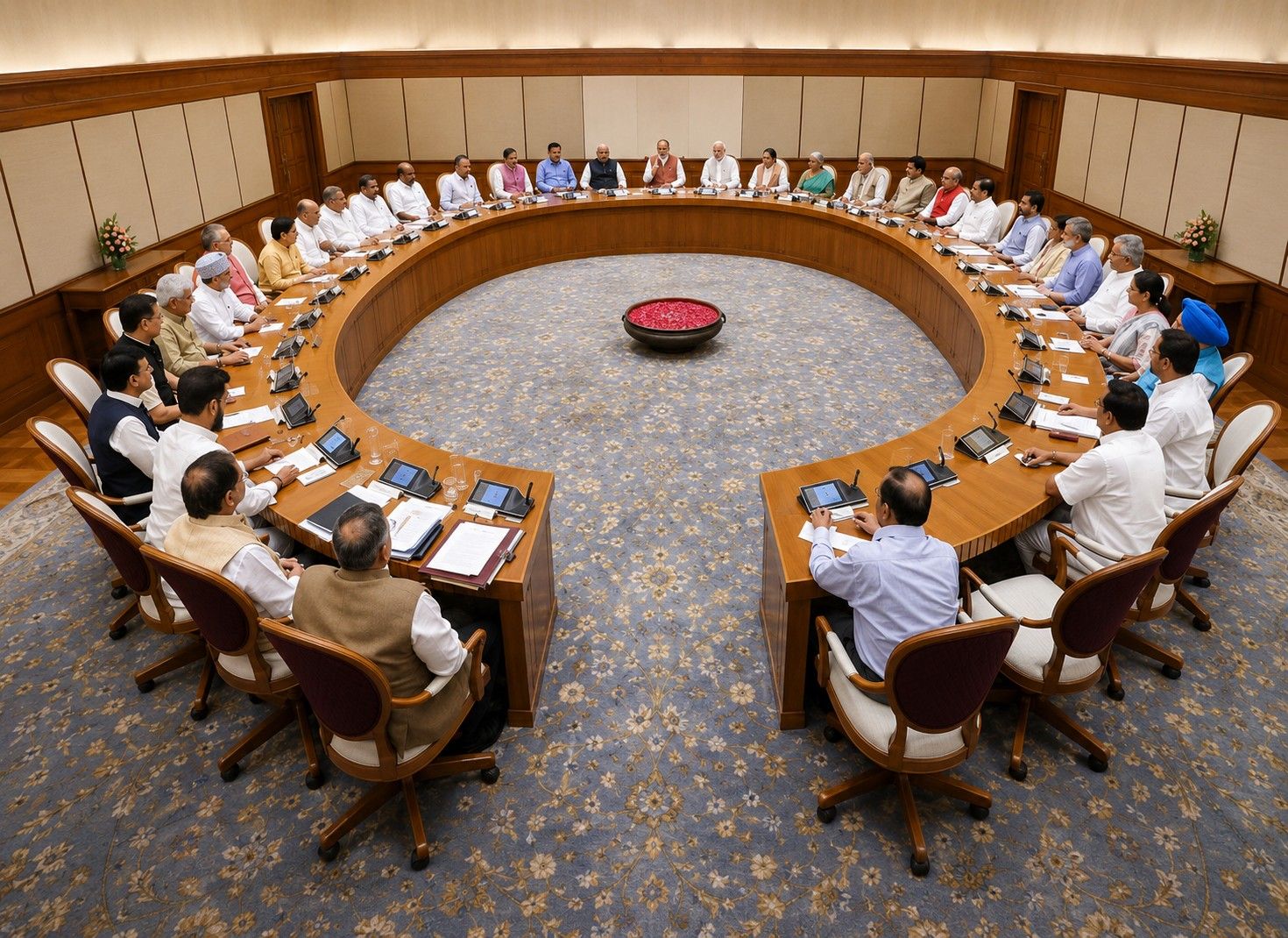
The Union Cabinet, chaired by Prime Minister Narendra Modi, has approved the modernisation of Dr. Babasaheb Ambedkar International Airport, Nagpur under the Public-Private Partnership (PPP) model. The approval clears the path for a transformational ₹7,000 crore upgrade that will position Nagpur as a world-class aviation hub for Central India.

This is not a routine airport expansion. It is a fundamental reimagining of what Nagpur’s airport can be — and what it can do for the entire Vidarbha region.


What the Cabinet Has Approved

The Cabinet approval greenlights the modernisation and development of Nagpur airport through a PPP concession agreement. GMR Airports Limited (GAL) — one of India’s most experienced airport operators, managing Delhi and Hyderabad international airports — has signed a Concession Agreement with MIHAN India Ltd for the upgrade, development, and operation of the airport.

Under this model, GMR will invest in and develop the airport infrastructure over a defined concession period, while the Maharashtra Airport Development Company (MADC) — through its MIHAN India subsidiary — retains ownership oversight.

The project will be developed in phases, with the total capital investment estimated at ₹7,000 crore.


What the New Nagpur Airport Will Look Like

The upgraded airport will be a massive step up from what exists today. Here is what the new Nagpur airport will include:

New Integrated Terminal Building A brand-new terminal designed to handle 14 million passengers per year. This is a dramatic increase from the current capacity, which has been operating close to its limits. The new terminal will offer modern facilities, seamless passenger flow, and a world-class experience.

Second Runway The airport will get a second runway — a critical addition that will allow simultaneous take-offs and landings, significantly increasing the airport’s operational capacity and reducing delays.

100-Aircraft Parking Capacity The new airport will be able to accommodate approximately 100 aircraft at a time — a scale that reflects Nagpur’s ambitions as a major aviation hub, not just a regional airport.

Total Area: 1,350 Hectares The expanded airport will cover a total area of 1,350.20 hectares — giving it the physical footprint to support all planned infrastructure including runways, terminals, cargo facilities, and support systems.

MRO Facility A dedicated Maintenance, Repair, and Overhaul (MRO) facility will be developed as part of the complex. Nagpur already has an existing AIESL MRO hub that has been expanding its capabilities — the new PPP-developed MRO facility will complement and scale these capabilities significantly.

Special Economic Zone (SEZ) Integration The upgraded airport will be directly connected to a fully operational SEZ — creating a seamless logistics and business ecosystem where manufacturing, warehousing, and international trade can operate in close proximity to aviation infrastructure.

Cargo Terminal A modern cargo terminal will support the growing demand for air freight — particularly important for Nagpur’s position as the geographical centre of India and a natural logistics hub.

New Air Traffic Control (ATC) Tower A new ATC tower will be constructed to support increased traffic volumes safely and efficiently.


Why This Matters for Nagpur and Vidarbha

For decades, Nagpur has been hampered by airport infrastructure that could not keep up with the region’s economic potential. Vidarbha — historically described as Maharashtra’s underdeveloped region — has long needed a world-class aviation gateway to unlock its industrial, commercial, and tourism potential.

The ₹7,000 crore airport upgrade directly addresses this need. Officials believe the airport’s expansion will serve as a catalyst for growth across multiple sectors including manufacturing, aviation, tourism, logistics, and healthcare — benefiting not just Nagpur city but the entire Vidarbha region and beyond.

The Association for Industrial Development (AID) had specifically appealed to PM Modi to fast-track Nagpur airport redevelopment, arguing that modern aviation infrastructure would strengthen connections between Nagpur and domestic and international markets and would catalyse manufacturing and services clusters in the region. The Cabinet approval is, in part, a direct response to that industry demand.


GMR: The Right Partner for the Job

The choice of GMR Airports Limited as the development partner is significant. GMR manages two of India’s busiest and most respected international airports — Indira Gandhi International Airport in Delhi and Rajiv Gandhi International Airport in Hyderabad. It also develops greenfield airports in Andhra Pradesh, Goa, and Bhogapuram.

GMR brings proven expertise in:

  • Large-scale terminal design and construction
  • International aviation operations
  • Cargo hub development
  • Aeronautical infrastructure including taxiways and aprons
  • Technology integration for smart airport operations

For Nagpur, having GMR as the PPP partner means the city will benefit from the same operational and design standards that have made Delhi and Hyderabad among India’s premier aviation hubs.


MIHAN: The Bigger Picture

The airport modernisation does not exist in isolation. It is the centrepiece of MIHAN — Multi Modal International Cargo Hub and Airport at Nagpur — one of India’s most ambitious integrated infrastructure projects.

MIHAN envisions Nagpur as a smart city combining:

  • A world-class international airport
  • A multimodal international cargo hub
  • A connected Special Economic Zone (SEZ)
  • An MRO facility and logistics park
  • Two parallel runways for maximum operational efficiency

The Cabinet approval for the PPP modernisation is a critical step in bringing this vision to full realisation. It provides the clarity, legal framework, and investor confidence needed to accelerate construction timelines.


Nagpur’s Aviation Momentum Builds

The Cabinet approval comes at a time when Nagpur’s aviation story is gathering extraordinary momentum. Just last week, the midpoint RVR safety system was installed at Nagpur airport — completing the airport’s full three-point visibility monitoring network. And Qatar Airways’ direct Nagpur–Doha flights are set to resume from May 21 — restoring vital international connectivity.

Together, these developments paint a compelling picture of an airport — and a city — that is investing seriously in its aviation future. The ₹7,000 crore PPP modernisation is the biggest piece of that puzzle. When complete, Dr. Babasaheb Ambedkar International Airport will be worthy of the name it carries — a world-class gateway that honours Nagpur’s history while powering its future.


What Happens Next

With Cabinet approval now in place, the following milestones will define the project’s progress:

  • Concession Agreement finalisation between GMR and MIHAN India — already signed and now formally backed by Cabinet approval
  • Phase-I construction commencement — new terminal building, apron expansion, and infrastructure groundwork
  • Second runway planning and IAF coordination — a technically complex step given the airport’s shared civil-military status
  • MRO and SEZ development alongside terminal construction
  • Progressive passenger capacity increase as each phase is commissioned

Nagpur Updates will track every major milestone in the Nagpur airport modernisation project and bring you updates as construction progresses. This is one of the most important infrastructure stories in Nagpur’s history — and we will be with you every step of the way.


Tags: Nagpur Airport, GMR Airports, PPP Model, MIHAN Nagpur, MADC, Airport Modernisation, Union Cabinet, Nagpur Aviation, Nagpur Infrastructure, Nagpur Local News 2026

Koradi’s 162-Foot Hanuman Statue to Open for Devotees in June 2026 — 7D Chalisa Projection, Boat Darshan and Amit Shah Inauguration Confirmed

Published: May 13, 2026 | Category: Nagpur Local | tallest Hanuman statue India | By: Nagpur Updates Desk


The wait is almost over.

Nagpur’s most ambitious religious project — the 162-foot Hanuman statue at Koradi — is set to open its doors to devotees in June 2026. Revenue Minister Chandrashekar Bawankule has confirmed the timeline. Union Home Minister Amit Shah has confirmed his presence at the inauguration. And the full scale of what awaits devotees at Koradi is now becoming clear.

This is not just a statue. It is a complete spiritual and tourism destination — unlike anything Central India has seen before.


The Statue: Taller Than Ever Imagined

The numbers alone are staggering.

The Hanuman idol itself stands at 162 feet. Add the foundation, and the total structure rises to 206 feet from ground level. A 74-foot mace (gada) has been installed as part of the structure — a detail that adds both scale and divine symbolism to the composition.

The massive statue has been constructed within the premises of the Shri Mahalaxmi Jagdamba Sansthan in Koradi — one of Central India’s most prominent spiritual centres. The idol stands in the middle of pond number three, rising dramatically from the water — as if Lord Hanuman himself is emerging from the sacred lake.

The construction has been executed by Matu Ram Art Centre from Gurugram — the same firm that built the 351-foot Lord Shiva statue in Udaipur and the Lord Buddha statue in Namchi, Sikkim. Every detail of the divine form has been sculpted with precision and reverence.

The cost of the statue alone is ₹11.5 crore — part of the larger ₹1,214.94 crore Koradi temple redevelopment master plan.


7D Hanuman Chalisa: A First in India

This is the feature that sets Koradi apart from every other religious destination in the country.

The complex will offer a “7D Hanuman Chalisa Projection” experience. This is a fully immersive audio-visual presentation — combining 7D projection technology, surround sound, and special effects — to tell the story of Lord Hanuman’s life and the meaning of the Hanuman Chalisa in a way that devotees have never experienced before.

The complex will feature a “7D Hanuman Chalisa Projection” experience, aimed at giving devotees an immersive spiritual and cultural experience based on the life and values of Lord Hanuman.

This technology turns a religious visit into a deeply personal, emotionally resonant journey. It is designed not just for regular devotees but also for first-time visitors, students, and tourists who want to connect with the spiritual significance of Koradi in a modern, engaging format.


Boat Darshan: A Unique Experience

Reaching the Hanuman idol is itself part of the experience.

Since the statue stands in the middle of a lake, devotees will take a boat ride to reach the base of the idol for darshan. This is a uniquely beautiful arrangement — approaching a towering divine figure from the water, with the reflection of the idol shimmering below.

Few religious experiences in India offer this combination of natural serenity, dramatic scale, and divine presence. The boat darshan is expected to become one of Koradi’s most memorable features — one that will draw visitors back again and again.


What Else Awaits Devotees at Koradi

The Koradi complex being developed around the Hanuman statue is far more than a temple precinct. Bawankule said the temple complex is being developed not only as a spiritual destination but also as a major tourism and skill development hub.

Here is a snapshot of what the full complex will offer:

Monorail — 2.5 km covering 7 spots (₹17.46 crore) A dedicated monorail will connect key points within the vast complex. This makes the site accessible for elderly devotees, families with young children, and visitors with mobility challenges.

Kids’ Adventure Park — Indoor and Outdoor (₹31.18 crore) A full-scale children’s park — with both indoor and outdoor attractions — transforms Koradi into a family destination for a full day out.

Mahadwar — Grand Entrance Gate (₹8.5 crore) A magnificent main entrance gate featuring statues of Chhatrapati Shivaji Maharaj and Maa Tulja Bhavani will welcome devotees. It is a statement of Nagpur’s spiritual and historical identity in one powerful gesture.

Rajgad Mahadwar — VIP Entrance (₹3.44 crore) A dedicated 10-metre-high VIP entrance ensures smooth flow for dignitaries without disrupting the general pilgrim experience.

Water body with fountains and bridge A beautifully designed water feature with musical fountains and a decorative bridge adds visual beauty and an additional attraction for visitors.

Amusement Park and Dinopark For families seeking a complete day out, dedicated amusement and Dino-themed park sections broaden Koradi’s appeal beyond traditional devotees.

Hostel for 500 Children + Skill Development Centre In a meaningful dimension of social commitment, a hostel for 500 children and a skill development centre for youth are being built — connecting Koradi’s development to the upliftment of the local community.


Women, Employment and Community: The Bigger Vision

What makes the Koradi project truly special is its social mission alongside its spiritual ambition.

Special focus is being given to women self-help groups, employment generation, youth skill training and cultural tourism through multiple projects being developed in the area with the support of Nagpur Improvement Trust and Nagpur Metropolitan Region Development Authority.

This is a temple complex that creates jobs, empowers women, trains youth, and drives local economic activity — not just a monument but a living, breathing community institution.


Amit Shah’s Inauguration: A National Moment for Nagpur

The scale of the Koradi inauguration reflects the national importance of this project.

Revenue Minister Bawankule personally travelled to New Delhi to meet Amit Shah and extend the formal invitation. Shah accepted warmly and confirmed his presence at the June 2026 ceremony.

The presence of the Union Home Minister at the inauguration signals that Koradi is no longer just a local or regional religious site. It is being positioned as a national spiritual landmark — one that Nagpur can be proud of on the grandest stage.


Koradi’s Journey: From Delay to Destiny

The Koradi Hanuman statue has had its share of delays. The original inauguration date of January 26, 2026 was missed. A subsequent target was also pushed back. But in May 2026, the project is genuinely in its final phase — with landscaping, lighting, visitor infrastructure, and finishing works all nearing completion.

The statue is designed to shift Koradi from a routine pilgrimage stop to a destination with national visibility. Height, setting, and form work together. The purpose is straightforward — to give Nagpur a monument that asserts scale, identity, and permanence.

That purpose is about to be fulfilled.


Nagpur’s Spiritual and Tourism Renaissance

The Koradi Hanuman statue inauguration in June 2026 will mark a defining moment for Nagpur. Just as the city is transforming its civic infrastructure — from AI-powered traffic management at city junctions to the revival of the Futala Musical Fountain — Koradi represents the city’s spiritual and cultural renaissance.

A 162-foot Hanuman idol rising from a sacred lake. A 7D Chalisa experience unlike anything in India. Boat darshan, a monorail, a children’s park, and a community development hub — all in one complex.

Nagpur, this June, will have something truly extraordinary to offer the world.

Nagpur Updates will bring you complete live coverage of the Koradi Hanuman statue inauguration. Stay tuned for date confirmation, event details, and everything you need to know before you visit.


Tags: Koradi Temple, Hanuman Statue Nagpur, Amit Shah Nagpur, Chandrashekar Bawankule, 7D Projection Nagpur, Nagpur Tourism, NMRDA Nagpur, Religious Tourism, Nagpur Local News 2026

Futala Musical Fountain Set to Return: Final Phase Underway as French Team Expected and Special Cables Arrive

Published: May 12, 2026 | Category: Nagpur Local | Futala lake fountain Nagpur | By: Nagpur Updates Desk


Good news for Nagpur. After years of delays, legal battles, and international disruptions, the city’s much-loved Futala Lake Musical Fountain is finally entering its final revival phase.

The last batch of special underwater cables has arrived in Nagpur. A French technical team — critical to completing the advanced lighting and projection systems — is expected to visit soon. Work at the lakefront is in full swing. And the Maharashtra Metro Rail Corporation (MahaMetro) is pushing hard to complete the project at the earliest.

Nagpur is close to getting back one of its most iconic attractions.


What Is the Futala Musical Fountain?

Futala Lake is one of Nagpur’s most popular destinations. It sits in the heart of the city and draws thousands of visitors every evening.

The musical fountain project was conceived by Union Minister Nitin Gadkari as a major transformation of the lakefront. The vision was spectacular — a world-class musical fountain with laser displays, light shows, and a multimedia projection system — transforming Futala into a premier tourist destination that would rival attractions in India’s biggest cities.

The project was built at a cost of approximately ₹50 crore. However, it never got the chance to shine. The fountain malfunctioned even before its scheduled inauguration in May 2023 — mainly due to cable damage caused by algae accumulation in the polluted lake water. A project that was meant to dazzle Nagpur before it could even open its eyes.


A Troubled Journey: From Supreme Court to War Delays

The years that followed were not kind to the Futala fountain.

Legal challenges stalled the project soon after the malfunction was discovered. In January 2024, the Supreme Court of India issued a status quo order — effectively halting all restoration work and pushing the project into an extended period of uncertainty.

It was not until October 2025 that the Supreme Court allowed activities to resume. By then, several components had deteriorated further during the years of non-operation — forcing authorities to restart multiple elements from scratch.

MahaMetro took over the project from the Nagpur Improvement Trust (NIT) and initiated a comprehensive restoration effort. However, restoration costs had already crossed ₹10 crore, with a fresh order for replacement cables alone worth ₹3 crore. Citizens raised legitimate concerns about the rising public expenditure on a project that had never worked from day one.

Then came another unexpected setback. The French technical team — specialists in the advanced lighting and projection systems at the heart of the fountain — was unable to travel to India. The reason? The US-Israel-Iran conflict had disrupted international travel routes, making it impossible for the team to reach Nagpur.

The fountain waited. Nagpur waited.


May 2026: The Final Push Begins

The wait is finally nearing its end.

As of May 12, 2026, the project has entered what officials are describing as its final phase. Here is where things stand:

Cable replacement — nearly complete. The removal of old, damaged underwater fountain cables has been completed. The last batch of special replacement cables has now arrived in Nagpur. Nearly 80% of the new cable infrastructure required for the upgraded system had already been procured in earlier phases. The final consignment brings the installation to the home stretch.

French technical team en route. The specialists from France — delayed for months by the Gulf conflict — are now expected to arrive in Nagpur soon via an alternative travel route. Their visit is critical. The advanced lighting, laser, and multimedia projection systems cannot be made fully operational without their on-site technical expertise and hands-on calibration.

Lakefront beautification underway. Even as the technical work progresses, the area surrounding the lake is being beautified. The contractor, Khadatkar Construction Studio One, has been carrying out preparatory and aesthetic work around the lakefront to prepare the site for its eventual public reopening.

IIT Bombay inspection done. Experts from the Indian Institute of Technology (IIT) Bombay have already inspected the system and confirmed the restoration plan. Their assessment has guided the current phase of cable replacement and equipment installation.


The Environmental Challenge: Sewage in Futala Lake

The revival of the fountain cannot be discussed without acknowledging the elephant — or rather, the sewage — in the room.

Untreated sewage continues to flow into Futala Lake. This is the very problem that damaged the original fountain cables. Algae growth, accelerated by sewage-polluted water, destroyed the underwater systems before the fountain could even open. The issue is currently before the Western Zone Bench of the National Green Tribunal (NGT).

Discussions between NIT and NMC are underway regarding the establishment of a Sewage Treatment Plant (STP) for the lake. However, the STP will take time to implement.

This raises a legitimate and important question — one that Nagpur’s citizens are asking openly: What happens to the new cables if the sewage issue is not resolved before the fountain becomes operational?

It is a question that MahaMetro and the civic authorities must answer clearly and publicly before the fountain reopens — so that history does not repeat itself and crores of public money are not wasted again.


What Nagpur Can Expect When It Opens

When the Futala Musical Fountain finally becomes operational, it promises to be a genuinely world-class attraction.

The full system includes:

  • Musical fountain jets — water displays choreographed to music
  • Underwater LED lighting — illuminating the fountain from below the lake surface
  • Laser projection system — dramatic laser light displays over the water
  • Multimedia projection show — visual storytelling projected on the fountain’s water curtain
  • Lakefront beautification — improved surroundings for visitors

The combination of music, water, light, and laser is designed to create a stunning evening spectacle — one that would make Futala a must-visit destination not just for Nagpur residents but for tourists from across Vidarbha and beyond.


Public Money, Public Accountability

The Futala fountain has cost Nagpur’s taxpayers significantly. The original project cost ₹50 crore. Restoration has added another ₹10 crore and counting. Citizens are right to expect transparency, accountability, and — most importantly — a fountain that actually works when it finally opens.

The concerns raised by Nagpur’s residents are valid. The project was conceived without adequate public consultation. It failed before inauguration. Legal battles added years of delay. Restoration costs have kept climbing. And the fundamental environmental problem — sewage in the lake — has still not been resolved.

MahaMetro and the civic administration owe Nagpur a clear, honest communication plan — one that explains the final timeline, the total cost, and the steps being taken to ensure the fountain does not suffer the same fate as before.

Just as Nagpur is investing in smart civic infrastructure — from AI-powered traffic management at 32 city junctions to the One Nation One Card system for Nagpur Metro — the Futala fountain deserves to be a success story, not a cautionary tale.


Nagpur Is Watching

The Futala Musical Fountain carries emotional weight for this city. It represents the aspiration to give Nagpur a landmark that it can be proud of — a beautiful, world-class public attraction that enhances the quality of life for every resident.

That aspiration has not dimmed — despite all the delays and disappointments.

With the final cables in place and the French team on its way, the fountain is closer to becoming a reality than it has ever been. Nagpur is watching, hoping, and — cautiously — excited.

Nagpur Updates will keep you informed on the exact opening date of the Futala Musical Fountain the moment it is confirmed. Stay tuned!


Tags: Futala Lake, Musical Fountain Nagpur, MahaMetro Nagpur, Nitin Gadkari, Nagpur Tourism, Nagpur Development, French Technical Team, Nagpur Local News 2026

No More Toll Plazas by December 2026: Gadkari Announces Satellite-Based Toll System — Drive at 80 kmph and Pay Automatically

Published: May 12, 2026 | Category: Nagpur Local | Nitin Gadkari | By: Nagpur Updates Desk


Your long wait at toll plazas is about to become history.

Union Road Transport and Highways Minister Nitin Gadkari — Nagpur’s own MP — has made a landmark announcement. Traditional toll plazas across India will be completely removed by December 2026. In their place, a fully automated satellite and AI-based toll collection system will be implemented across all National Highways.

No stopping. No queues. No booths. Just drive — and the toll is deducted automatically.


What Gadkari Announced

Gadkari (Nitin Gadkari )made the announcement in the Rajya Sabha during Question Hour, responding to members’ queries about toll plaza delays.

He was direct and confident: “I assure the House that before the end of 2026, there will be zero waiting time for vehicles travelling at a speed of 80 km/hour at toll plazas.”

He added: “By 2026-end, we will complete this work 100 per cent. Once complete, our savings on fuel will be ₹1,500 crore, and government revenue will rise by another ₹6,000 crore. Toll theft will also end.”

The new system, he said, will be satellite-based, AI-powered, and linked to FASTag and number plate recognition. Vehicles will not need to stop anywhere. The toll amount will be calculated based on the exact distance travelled on the highway — and deducted automatically from the driver’s bank account.

Gadkari also said, clearly and emphatically, in the Lok Sabha earlier: “This toll system will end. There will be no one to stop you in the name of toll.”


How the New System Will Work

The new system is called GNSS-based MLFF tolling — which stands for Global Navigation Satellite System-based Multi-Lane Free Flow.

Here is how it works in simple terms:

Step 1 — Your vehicle is tracked by satellite. As soon as you enter a national highway, the GNSS system begins tracking your vehicle using satellite signals. Your number plate and FASTag details are linked to your bank account.

Step 2 — Overhead gantries scan your vehicle. Instead of toll booths, highways will have overhead gantry structures fitted with cameras, sensors, and FASTag scanners. These gantries are positioned at intervals along the highway. Your vehicle passes under them at full highway speed — no slowing down required.

Step 3 — Distance is calculated automatically. The system records exactly how many kilometres you have travelled on the highway. You pay only for the distance you actually use — not a flat toll for an entire stretch.

Step 4 — Money is deducted from your account. The toll amount is automatically deducted from your linked bank account via FASTag. You receive a notification on your phone. No cash. No stopping. No interaction with anyone.

This is barrier-free tolling — and it is already being piloted at 85 toll locations across India.


The Journey So Far: From Cash to FASTag to Satellite

India’s toll collection has evolved rapidly over the past decade.

Before FASTag: Drivers stopped at booths and paid cash. Average waiting time was 3 to 10 minutes per vehicle. Long queues were common, especially on weekends and holidays.

After FASTag (RFID-based): The electronic FASTag system reduced waiting time to under 60 seconds. Government revenue also increased by at least ₹5,000 crore due to reduced evasion. FASTag was a significant improvement — but vehicles still had to slow down and stop briefly.

MLFF (current phase): Under the Multi-Lane Free Flow system already deployed at some locations, vehicles can now cross toll points at up to 80 km/hour without stopping. This is already operational at pilot locations.

GNSS Satellite System (next phase — December 2026): The final evolution. No gantry stops, no slowing down, complete satellite-based distance tracking with automatic payment. Zero wait time. Completely barrier-free.

Gadkari summarised this evolution perfectly: “Earlier, we had to pay at the toll, and it would take 3 to 10 minutes. Then, due to FASTag, the time came down to 60 seconds or less. After MLFF, cars can now cross the toll at 80 km/hour. Our attempt is to make it zero minutes.”


What This Means for You — The Benefits

The switch to satellite-based toll collection will have direct, real benefits for every person who travels on national highways.

Zero waiting time. This is the biggest benefit. No more sitting in queues at toll plazas. No more missing your flight or appointment because of a traffic jam at a toll booth. You drive. You pay. That is it.

Pay only for what you use. The current system charges a flat toll for a defined stretch — even if you only travel part of it. The new distance-based system charges you only for the kilometres you actually cover. Short-distance highway users will likely pay less.

Fuel savings. Vehicles idling in toll queues consume significant amounts of fuel. IMD data estimates that fuel worth ₹1,500 crore is wasted annually at toll plazas across India. The new system eliminates this waste entirely.

No more toll theft. Toll evasion and malpractice by contractors have been a long-standing problem. A fully automated satellite system removes human intervention entirely — making evasion nearly impossible.

More government revenue. With evasion eliminated and efficiency maximised, Gadkari expects government revenue to rise by ₹6,000 crore once the system is fully operational.


Nagpur’s Connection: Gadkari Driving India’s Road Revolution

This announcement carries special significance for Nagpur. Nitin Gadkari is not just India’s Road Transport Minister — he is Nagpur’s elected Member of Parliament and one of the most prominent leaders this city has produced.

The transformation of India’s highway infrastructure under Gadkari’s leadership — from the construction of expressways to the introduction of FASTag to the upcoming satellite toll system — has been remarkable. For Nagpur, a city that sits at the geographical centre of India and is connected to every major highway corridor, the removal of toll plazas is not just a national story. It is a deeply local one.

The Samruddhi Mahamarg connecting Nagpur to Mumbai, the Nagpur–Hyderabad highway, and the Ring Road around Nagpur — all of which pass through multiple toll plazas — will benefit directly from this transformation. Commuters, truck drivers, and business owners who use these routes daily will experience the change most acutely.

This news also connects powerfully with other smart infrastructure upgrades happening in Nagpur right now. Just as the city is deploying AI-powered IITMS traffic management at 32 junctions and Nagpur Metro is upgrading to the One Nation One Card system, the removal of toll plazas represents the same vision applied to national highways — smarter, faster, and more efficient infrastructure for everyone.


What Happens to FASTag?

FASTag will not disappear immediately. It remains an important part of the transition.

During the rollout of the satellite system, FASTag will continue to function as the payment backbone — linked to your bank account and used for automatic deduction. What changes is the mechanism of detection: from RFID scanners at booths to GNSS satellite tracking combined with overhead gantry cameras.

Vehicles with inactive FASTag accounts or insufficient balances will face automated notices and penalties under the new system. So it remains important to keep your FASTag linked and adequately funded even as the physical toll plaza disappears.


December 2026: Mark the Date

Gadkari’s commitment is clear and on record — stated in Parliament, in front of the nation. Traditional toll plazas will be gone by December 2026. The satellite system will be operational nationwide.

For India’s highway users, that date cannot come soon enough.

Nagpur Updates will track the rollout of the satellite toll system and keep you informed about when it goes live on key routes connecting Nagpur — including the Samruddhi Mahamarg and the Ring Road.


Tags: Nitin Gadkari, Toll Plaza, Satellite Toll System, GNSS, MLFF, FASTag, NHAI, Nagpur MP, Highway India, Nagpur Local News 2026

Nagpur Weather Today — May 12, 2026: Temperature to Touch 46°C, IMD Issues Yellow Heatwave Alert

Published: May 12, 2026 | Category: Nagpur Weather | By: Nagpur Updates Desk


Stay indoors. Drink water. Avoid going out between 12 PM and 4 PM.

That is the simple, urgent message from the India Meteorological Department (IMD) to Nagpur residents today. On May 12, 2026, the city is bracing for one of its most intense heat days of the season. The maximum temperature is expected to touch 46°C. IMD has issued a Yellow Alert for Nagpur and surrounding Vidarbha districts.


Today’s Weather at a Glance

Here is a quick snapshot of Nagpur’s weather for May 12, 2026:

  • Maximum Temperature: Up to 46°C (expected)
  • Minimum Temperature: Around 28–30°C
  • Humidity: Low — around 20–25%
  • Wind: Dry, hot northwesterly winds
  • Sky Condition: Clear skies — no cloud cover
  • Rain Chance: 0%
  • IMD Alert: Yellow Heatwave Alert
  • Sunrise: 5:14 AM | Sunset: 6:29 PM

Why Is Nagpur So Hot Right Now?

Three factors are combining to create this extreme heat.

First, a strong anticyclone has formed over Rajasthan. This high-pressure system is pushing extremely hot, dry air southward and eastward — directly towards Vidarbha. The same system pushed temperatures in Rajasthan above 46°C before moving this way.

Second, the northwest winds carrying this hot air are completely dry. There is no moisture in the air to provide any relief. Low humidity makes the heat feel even more suffocating than the numbers suggest.

Third, clear, cloudless skies mean the sun beats down without any filter from morning to evening. There is no shade from the atmosphere itself.

Together, these three factors have turned Nagpur into one of the hottest cities in India right now. Vidarbha has been facing a heatwave warning for the next 8 days, with temperatures expected to reach 45–46°C across the region.


IMD Yellow Alert: What Does It Mean?

IMD uses a colour-coded alert system to warn citizens about extreme weather.

A Yellow Alert means: “Be aware. Conditions are dangerous. Take precautions.”

It does not mean you cannot step outside. But it does mean that prolonged outdoor exposure — especially during peak afternoon hours — carries real health risks. For vulnerable groups, it is a serious warning.

The Yellow Alert covers Nagpur, Akola, Amravati, Wardha, and several other Vidarbha districts today.


Who Is Most at Risk?

Not everyone faces the same level of danger in a heatwave. The most vulnerable groups are:

  • Elderly people — the body’s ability to regulate temperature declines with age
  • Young children — small bodies heat up faster and dehydrate quickly
  • Outdoor workers — construction workers, vendors, rickshaw drivers, delivery staff
  • People with health conditions — heart disease, diabetes, and kidney problems increase heat risk
  • People without access to water or shade — daily wage workers and homeless individuals

If you know someone in these categories, check on them today.


Heat Safety Tips for Nagpur Residents

Follow these simple steps to stay safe on a day like today:

Stay hydrated. Drink water every 30 minutes — even if you do not feel thirsty. Carry a water bottle when going out. ORS (Oral Rehydration Solution) is helpful if you feel dizzy or weak.

Avoid peak sun hours. Do not step outside between 12 PM and 4 PM if it can be avoided. This is when temperatures are at their highest and the UV index is most dangerous.

Dress right. Wear loose, light-coloured cotton clothes. Avoid dark colours and synthetic fabrics that trap heat.

Eat light. Heavy, oily meals increase body heat. Stick to fruits, salads, curd, buttermilk, and light food today.

Cool your home. Keep curtains and blinds closed during the afternoon to block out direct sunlight. Use fans and coolers. Wet a cloth and place it on your neck or wrists for quick cooling.

Watch for warning signs. If you or someone near you experiences dizziness, rapid heartbeat, confusion, or stops sweating in the heat — these are signs of heatstroke. Move to a cool place immediately and seek medical help.


Heatwave Impact Across Nagpur City

The extreme heat is being felt across every part of Nagpur today.

Streets that are usually busy in the afternoon are visibly quieter. Auto-rickshaw drivers and street vendors are among the worst affected — forced to work outdoors without any protection. Schools have been advised to adjust their timing or conduct online classes during peak heat periods.

The Nagpur Municipal Corporation (NMC) has been urged to ensure water kiosks and cooling centres are operational across the city — particularly in areas like Mahal, Itwari, Kamptee Road, and Mankapur where large numbers of daily wage workers and outdoor vendors are concentrated.

Just as Gorewada Zoo has taken extensive measures to protect its animals from the 45°C summer heat, Nagpur’s citizens too need proactive steps to stay protected during this brutal heatwave.


Vidarbha Heatwave: The Bigger Picture

Nagpur is not alone in facing this heat. The entire Vidarbha region is under severe heatwave stress right now.

Akola, Amravati, Wardha and Nagpur districts are expected to see temperatures reach 44 to 45 degrees Celsius, prompting IMD to issue Yellow Alerts for all these districts. Akola has been recorded as the hottest city in the country on multiple days this season.

The northwest anticyclone currently positioned over central India is expected to persist for several more days. This means the heatwave is unlikely to ease before mid-to-late May 2026. Pre-monsoon relief — in the form of thunderstorm activity — may provide temporary respite on some evenings, but daytime temperatures will remain extreme.


When Will Relief Come?

The honest answer is: not soon.

May 2026 in Nagpur is forecast to have temperatures ranging from lows of around 29°C to highs of 46°C. The IMD’s long-range forecast suggests that the Southwest Monsoon is expected to arrive in Kerala around the first week of June 2026 — and typically reaches Nagpur and Vidarbha by mid-to-late June.

Until then, Nagpur residents must prepare for several more weeks of intense heat. The coming days will require careful planning, adequate hydration, and respect for the real dangers that a Vidarbha heatwave poses.

Stay safe, Nagpur. Take care of yourselves and your neighbours.

Nagpur Updates will bring you daily weather updates throughout the summer season. Bookmark this page and check back every morning for the latest forecast.


Tags: Nagpur Weather, Heatwave Nagpur, IMD Yellow Alert, Vidarbha Temperature, Nagpur Summer 2026, Weather Forecast Nagpur, IMD Nagpur, Nagpur Local News

Modi’s Gold Buying Appeal: 1 Crore Jobs at Risk, Says GJC Chairman Rajesh Rokde from Nagpur

Modi gold buying appeal: Prime Minister Narendra Modi’s gold buying appeal has triggered serious concern across India’s jewellery industry. Modi urged citizens to stop buying gold for one year to protect the country’s foreign exchange reserves amid rising tensions in West Asia. Now, the All India Gem and Jewellery Domestic Council (GJC) has warned that this appeal could put over one crore jobs at risk.

Who Is Rajesh Rokde and Why Does His Statement Matter?

GJC Chairman Rajesh Rokde, a prominent jeweller from Nagpur, is the president of India’s largest jewellery trade body. Speaking to media after Modi’s appeal, Rokde said the gems and jewellery industry provides direct and indirect employment to more than one crore people across the country. Any significant drop in gold jewellery purchases would directly affect their livelihoods.

What Exactly Did PM Modi Say?

PM Modi made the remarks while addressing an event in Hyderabad on Sunday, May 10, 2026. He asked Indians to avoid buying gold for a year, reduce fuel consumption, and cut down on unnecessary foreign travel. These requests came as global crude oil prices climbed sharply to around USD 105 per barrel due to escalating conflict in West Asia and disruptions near the Strait of Hormuz. Modi’s appeal was not a legal ban. Citizens remain free to purchase gold. However, it was a strong public call rooted in national economic interest.

How Did the Market React?

Markets responded immediately after the appeal. Major jewellery stocks on the National Stock Exchange came under heavy pressure on Monday. Shares of Kalyan Jewellers and PNG Jewellers dropped around 8 per cent each. Titan Company stock fell more than 6 per cent. Investors worried that consumer demand for discretionary gold purchases could fall sharply in the weeks ahead.

What Is the GJC’s Stand?

Rokde made it clear that he fully supports the Prime Minister’s intention. He stated that Modi’s call reflects genuine national concern over rising imports and pressure on foreign exchange. However, he drew an important distinction between investment gold and jewellery gold.

Rokde said stopping purchases of gold bullion and coins for investment is absolutely justified. At the same time, he pointed out that gold jewellery carries deep cultural significance in India, especially for weddings and festivals. A blanket drop in jewellery purchases would severely hurt millions of artisans, retailers, and workers employed across the sector.

GJC Proposes Gold Monetisation as a Long-Term Solution

Rather than reducing purchases, Rokde urged the Central Government to push the Gold Monetisation Scheme more aggressively. He noted that Indians currently hold an estimated 40,000 to 50,000 tonnes of gold across the country. If even 10 to 20 per cent of this existing gold is monetised, India could significantly reduce its dependence on gold imports. GJC has already submitted a detailed end-to-end monetisation proposal to the government. According to Rokde, if implemented effectively, India may not need to import gold for the next 10 years.

What This Means for Nagpur’s Jewellery Trade

Nagpur is home to a significant number of jewellery businesses and craftsmen. Rokde himself is based in Nagpur and leads the national industry body from here. Any sustained drop in consumer demand would directly affect jewellers, goldsmiths, and allied workers in the city and across Vidarbha.

👉 Also Read: Latest Business and Economy News from Nagpur – NagpurUpdates.in

From Railway Platform to $6.5 Billion Empire: The Inspiring Story of Satyanarayan Nuwal — Nagpur’s Solar Industries Chairman

Published: May 11, 2026 | Category: Nagpur Local | Satyanarayan Nuwal billionaire Nagpur | By: Nagpur Updates Desk


Some people inherit success. Others build it from scratch.

Satyanarayan Nuwal belongs firmly to the second category.

He once had no money to pay ₹3 as rent for a lodge. So he slept on a railway platform. The canteen worker at a nearby coal field gave him food. Today, he is worth over $6.5 billion and features on the Forbes Billionaires List.

This is the story of the Founder and Chairman of Solar Industries India Limited — headquartered right here in Nagpur — and how one ordinary man built an extraordinary empire.


A Quiet Beginning in Rajasthan

Satyanarayan Nuwal was born in a small village in Bhilwara, Rajasthan. His grandfather owned a kirana shop — the smallest in the area, but also the busiest.

“My grandfather treated every customer with immense respect. That’s what made us popular,” Nuwal recalled during an interview with The Hitavada.

At just 13 years of age, he began helping at the shop. School was never his passion. Business was. He eventually dropped out without passing Class X. Instead, at 13, he took a Guru mantra and spent a year with his Gurudev in Mathura.

“That year taught me patience. And that patience helped me survive the toughest phases of life,” he said.


Failures Before Fortune

His early attempts at business did not succeed. However, failure never broke him. It sharpened him.

In 1977, at just 18 years old, he travelled to Ballarshah — known for its explosives units — looking for work and opportunity. He had no money, no contacts, no security.

“I couldn’t afford ₹3 as rent. The railway platform became my bedroom. The canteen worker at a coal field was kind enough to give me food every day,” he said — openly, without trying to hide the struggles of those early years.

Most people would have returned home. Nuwal stayed.


The Turning Point: An Explosives Licence and a Leap of Faith

Ballarshah changed everything.

The young Nuwal — already married by then — absorbed everything he could about the explosives industry. Then came his turning point. He met Abdul Sattar Allah Bhai, a man who held an explosives magazine licence but no longer wished to run the business.

Nuwal saw the opportunity immediately. He negotiated, he persisted, and he secured the right to operate the business.

“I had no licence, no warehouse, no capital. But I started the explosives business,” he said.

It was a massive risk. But risk, for Nuwal, was never something to avoid. It was something to prepare for.

Slowly but steadily, the business grew. He learnt every aspect of the explosives industry himself — operations, logistics, safety, and compliance. There were no shortcuts. There never would be.


Solar Industries: From Nagpur to 90 Countries

In 1995, Nuwal laid the foundation stone of Solar Industries India Limited in Nagpur.

Today, Solar Industries is the largest manufacturer and supplier of industrial explosives in India — exporting to 90 countries across the world. The company operates from Nagpur as its nerve centre, with a global manufacturing and distribution network.

But Nuwal was not satisfied. A business supplying explosives to mines and infrastructure projects was not enough. He wanted Solar Industries to serve the nation in a deeper way.


The Defence Leap: Pinaka, Nagastra, BrahMos and Drones

India was importing nearly 70% of its defence products. For Nuwal, this was unacceptable.

“This is a precariously vulnerable situation for an independent nation to depend entirely on imports,” he said.

He decided to take Solar Industries into defence manufacturing — despite being warned by many not to enter what was seen as exclusively government territory. The decision aligned perfectly with Prime Minister Narendra Modi’s ‘Make in India’ defence push, and Nuwal has credited PM Modi for his personal support in enabling private sector participation in defence.

Today, Solar Industries manufactures and supplies some of India’s most significant defence products, including:

  • Pinaka rockets
  • Multimodal grenades
  • Nagastra drones
  • BrahMos components
  • Advanced explosive systems for the Indian armed forces

“We faced failures. We faced doubts. We faced resistance. But we never compromised on quality,” Nuwal said of the defence journey.


The Philosophy That Built the Empire

What sets Nuwal apart is not just his business success. It is the values he has carried unchanged from his grandfather’s kirana shop in Rajasthan to the boardroom of a billion-dollar multinational.

He repeated one statement multiple times during his interview: “Moral values and commitment matter. Success without ethics has no meaning.”

His core business philosophy rests on three pillars — which he calls Credibility, Competency and Capability:

  • Credibility: “If people cannot trust you, nothing lasts.”
  • Competency: “Constantly learning and improving.”
  • Capability: “Being prepared to deliver when responsibility comes.”

He also spoke strongly about technology: “You cannot stay relevant without evolving. The world changes rapidly. If you stop modernising, you get left behind.”


Wealth Without Arrogance

Despite a net worth exceeding $6.5 billion, Nuwal remains remarkably grounded.

He is most comfortable speaking Hindi. English was never his priority. Formal education was never the measure of his ambition. When he walks into a room, there is no flamboyance, no corporate polish — just a soft-spoken, deeply thoughtful man who still remembers every difficult night life put him through.

“I always believed that honesty, hard work, and patience can take a person very far,” he said.

He also spoke strongly about corporate responsibility: “Business organisations have a social responsibility. You cannot grow while ignoring society around you. Growth should contribute to communities and the nation.”


Nagpur’s Proudest Son

Solar Industries India Limited is not just a Nagpur-headquartered company. It is one of Nagpur’s greatest success stories — a testament to what this city can produce when talent, perseverance, and the right opportunity come together.

Nagpur has been making headlines recently for its ambitious development projects — from the New Nagpur IBFC township that promises to generate lakhs of jobs, to the AI-powered IITMS traffic management system transforming the city’s roads. But perhaps no story captures Nagpur’s spirit better than that of Satyanarayan Nuwal — a man who started with nothing on a railway platform and built a company that now helps defend the nation.

No dramatic speeches. No corporate polish. Just a quiet determination and unwavering resilience.

That is the Nagpur way.


Tags: Satyanarayan Nuwal, Solar Industries India, Nagpur Business, Nagpur Industrialist, Defence Manufacturing India, Forbes Billionaire Nagpur, Nagpur Success Story, Nagpur Local News

Exit mobile version