Nagpur’s 239-Year-Old Maskarya Hadapkya Ganpati Tradition Continues — Shobhayatra on September 27

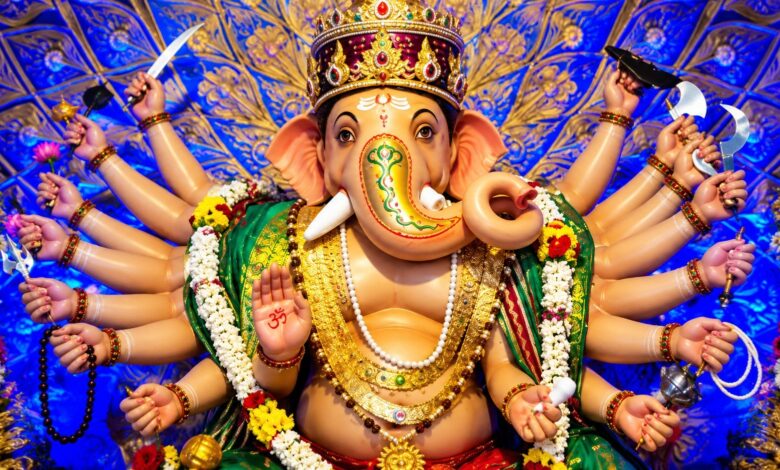

One of Nagpur’s oldest and most historically significant Ganpati traditions is keeping its unbroken 239-year legacy alive this Ganeshotsav. The Maskarya Hadapkya Ganpati Utsav — started in 1787 by Shrimant Raje Khandoji Maharaj Bhonsale — will see its Agaman Shobhayatra on September 27, 2026 at 6:00 PM from CP and Berar College, Tulshibagh. Furthermore, the formal installation of the Ganesh idol will take place on September 29, 2026. As a result, this historic celebration — which predates India’s independence by over 150 years — will once again bring lakhs of devotees together in the heart of historic Nagpur.
The festival is being held under the guidance of Shrimant Raje Mudhoji Maharaj Bhonsale and is managed by the Maharaja of Nagpur Trust. Moreover, this year a special 18-hand, 7-feet-tall Ganesh idol will be installed — in keeping with the festival’s grand traditional character.
The 239-Year History — How This Festival Began
The story of Maskarya Hadapkya Ganpati is not just a religious narrative. Furthermore, it is a piece of living Nagpur history that connects the city directly to its Bhonsale royal past.
The festival was founded in 1787 by Shrimant Raje Khandoji Maharaj Bhonsale — also known as Chimnabapoo. Furthermore, the origin story is remarkable. At that time, Raje Khandoji was fighting against injustice and had gone on a military campaign to Bengal. When he returned victorious from Bengal, the traditional Kulachari Ganpati — the Bhonsale family’s established Ganpati — had already been immersed. Moreover, unable to celebrate the festival with the main idol, he established the Maskarya Ganpati to mark his victory and express his devotion.
He organised entertainment programmes including comedy acts, khadi gammat and theatrical performances alongside the religious celebration — giving the festival a public, community character from its very first year. Furthermore, organisers note that decades later, Lokmanya Bal Gangadhar Tilak — when he launched the idea of the public Ganeshotsav as a tool of India’s independence movement — had specifically studied the visionary approach of Shrimant Raje Khandoji Maharaj Bhonsale.

Therefore, the Maskarya Hadapkya Ganpati Utsav is not merely a temple tradition. It is the ancestor of the very concept of public Ganeshotsav that now defines Maharashtra’s most important annual festival.
The 239-Year Tradition in the Pitrupaksha Period
One of the most distinctive aspects of this festival is that it takes place during Pitrupaksha — the 16-day period in the Hindu calendar dedicated to honouring ancestors. Furthermore, this is considered an unusual time to hold a festival, as Pitrupaksha is traditionally a period of relative austerity and remembrance rather than celebration.
However, the Maskarya Hadapkya Ganpati has been established in this very period since 1787 — and this unique character has never changed in 239 years. Moreover, the continued adherence to the original Pitrupaksha timing is itself a statement of unbroken tradition. As a result, the festival carries a spiritual dimension that connects it to both celebration and the memory of those who came before.
The Shobhayatra Route — September 27 at 6 PM
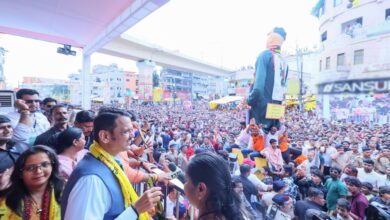
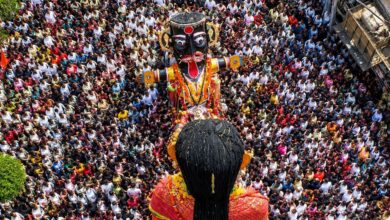
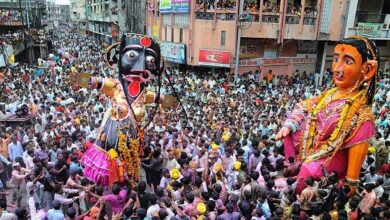
The Agaman Shobhayatra — the procession marking the arrival of the Ganesh idol — will begin on Saturday, September 27, 2026 at 6:00 PM from CP and Berar College in Tulshibagh.
The procession will then travel through some of Nagpur’s most historically significant streets. Furthermore, it will pass through Junior Bhonsale Palace, Raje Pratapsingh Bhonsale Chowk (Sutika Gruha), Kotwali Police Station Chowk and Narsingh Talkies Chowk before arriving at the Senior Bhonsale Palace.
This route through the Bhonsale Palace area of old Nagpur is deeply meaningful. Furthermore, the procession literally retraces the pathways of the royal Bhonsale family — the rulers who established Nagpur as the capital of the Maratha kingdom in central India. As a result, walking the shobhayatra route is like walking through Nagpur’s royal history.
The Kotwali and Narsingh Talkies areas are among the most historically dense parts of old Nagpur. Moreover, these lanes have witnessed festivals, royal processions and significant historical events for centuries. Therefore, the Maskarya Hadapkya Ganpati shobhayatra is not just a religious procession — it is a living heritage walk through Nagpur’s most historic heart.
The Idol — 18 Hands, 7 Feet, Navasa Pavnara Ganpati
The Ganesh idol that will be installed on September 29 carries its own special significance. Furthermore, the festival’s tradition involves installing an idol measured in 18 hands — a royal measurement that reflects the Bhonsale court’s original specifications.
This year, an 18-hand, 7-feet-tall Ganesh idol will be installed. Moreover, in earlier years of this festival’s history, the idol was as tall as 21 feet — measuring 18 hands at that scale. The tradition of using the 18-hand measurement has been maintained across all 239 years.
Devotees across Nagpur and Vidarbha hold this Ganpati in special reverence for a specific reason. Furthermore, the Maskarya Hadapkya Ganpati is known as Navasa Pavnara — meaning the one who fulfils devotees’ wishes and vows. As a result, thousands of devotees come specifically to make their mannat — their heartfelt prayers and vows — before this Ganpati during the festival period.
The Bhonsale Palace Connection — Nagpur’s Royal Heritage
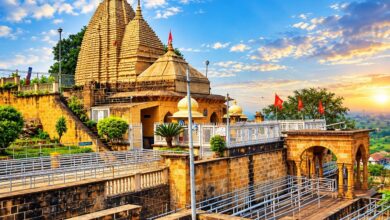
The Senior Bhonsale Palace — where the Maskarya Hadapkya Ganpati will be installed after the shobhayatra — is one of Nagpur’s most important heritage structures. Furthermore, it was the seat of the Bhonsale royal family who ruled Nagpur from the early 18th century until the British annexation in 1853.
Under Shrimant Raghuji Bhonsale I, Nagpur became the capital of an independent Maratha kingdom that controlled vast territories across central India. Moreover, the Bhonsale dynasty’s rule gave Nagpur its identity as the most important city in Vidarbha and the broader central Indian region. As a result, the Senior Bhonsale Palace is not just a building — it is the physical embodiment of the era when Nagpur was a sovereign royal capital.
The Maskarya Hadapkya Ganpati Utsav has been held at this palace every year since 1787. Furthermore, through the Peshwa era, the British colonial period, the independence movement and the post-independence decades, this festival has never once been interrupted. Therefore, it stands as one of the longest continuously held public festivals in Nagpur’s recorded history.
What to Expect on September 27 — Practical Guide for Devotees
If you plan to witness or participate in the Agaman Shobhayatra on September 27, here is what you need to know.
The procession starts at CP and Berar College, Tulshibagh at 6:00 PM. Furthermore, Tulshibagh is located in old Nagpur — accessible from Sitabuldi by road or auto-rickshaw. The shobhayatra will travel through the Bhonsale Palace area. Moreover, the procession is expected to draw large numbers of devotees and onlookers. Therefore, arrive early to find a good viewing position along the route.
The formal installation of the Ganesh idol — with all Vedic rituals — will take place on September 29. Furthermore, once installed, the Ganpati will be open for darshan for the festival’s full duration. As a result, devotees who cannot attend on September 27 can visit during the installation period.
Nagpur Updates will provide a full report from the shobhayatra and installation ceremony.