Nagpur Airport Is About to Change Beyond Recognition — GMR Has a ₹300 Crore Plan for Year One and a Second Runway Before 2034

If you have flown out of Dr Babasaheb Ambedkar International Airport in Nagpur recently, you already know what its limitations feel like. A terminal that was designed for a fraction of the traffic it now handles. Check-in queues that spill beyond their designated zones during busy morning departures. A single runway that concentrates all the airport’s capacity into one strip of tarmac. Infrastructure that is functional but that has not kept pace with what a city of Nagpur’s growing importance deserves.

All of that is now set to change — and the timeline is more aggressive than most people expected.

GMR Airports Ltd, on Thursday July 8, 2026, unveiled a comprehensive multi-phase modernisation and expansion roadmap for Nagpur Airport, following the completion of the airport’s privatisation process that handed operational control to the GMR-led GNIAL consortium. The plan begins with an immediate ₹300 crore investment in Phase 1 upgrades and culminates — over a 30-year concession period — in an airport capable of handling 30 million passengers annually, with the potential to eventually reach 50 million. A second runway. A new Air Traffic Control tower. A cargo hub handling 1.5 lakh metric tonnes per year. And a 100-hectare Aerocity that could fundamentally reshape the economic geography of south Nagpur.

This is not an announcement of intent. It is a detailed, phased, time-bound roadmap with specific deliverables at each stage.


Where Nagpur Airport Stands Today — The Baseline

Before understanding where GMR is taking Nagpur Airport, it is important to understand where it currently stands.

Dr Babasaheb Ambedkar International Airport at Sonegaon currently handles approximately 3 million passengers annually — a figure that represents significant growth from a decade ago but that remains well below the airport’s theoretical potential given Nagpur’s strategic location, its role as the geographical centre of India, and its position as a gateway to the MIHAN SEZ and the broader Vidarbha economic region.

The airport has a single runway — a constraint that limits total aircraft movements per hour and creates a bottleneck that no amount of terminal expansion can fully overcome. The existing terminal, while functional, operates under strain during peak periods. Cargo handling, while present, is not developed to the scale that Nagpur’s potential as a logistics hub would justify.

The privatisation to GMR — one of India’s most experienced airport operators, running Delhi’s Indira Gandhi International Airport and Hyderabad’s Rajiv Gandhi International Airport among others — changes the equation fundamentally. GMR brings not just capital but operational expertise, commercial development experience, and a track record of transforming airports from functional infrastructure into economic anchors for their surrounding regions.


Phase 1 — What ₹300 Crore Buys Nagpur in the Next 12 to 18 Months

The first phase of GMR’s investment is deliberately focused on the passenger experience improvements that will be felt immediately by anyone who uses the airport — not in eight years, but within the next year and a half.

The ₹300 crore Phase 1 investment, to be implemented over 12 to 18 months, covers a specific and practical list of upgrades. The existing terminal will be fully refurbished — new interiors, improved wayfinding, better lighting, and a general upgrade of the physical environment that currently feels dated relative to what passengers experience at GMR’s other airports.

Additional check-in counters will be installed, directly addressing one of the most complained-about aspects of the current airport experience — the queue that builds up during morning peak departures when multiple flights are checking in simultaneously. Self-check-in kiosks will be added alongside the traditional counters, giving passengers who have already completed web check-in a faster path to bag drop and security.

The security screening area will be expanded with additional X-ray machines — reducing the bottleneck that currently slows passenger flow between check-in and the departure gate area. An express security lane specifically for passengers travelling with hand baggage only will be introduced — a feature common at major international airports but not yet available at Nagpur, which will meaningfully speed up the experience for light travellers.

Washrooms across the terminal will be upgraded — a simple change that has a disproportionate impact on how passengers rate an airport. Domestic and international card lounges will be developed, giving premium passengers a proper waiting environment that matches what they experience at other major airports. Passenger access and circulation within the terminal will be improved, and bus boarding gates will be expanded to handle additional aircraft stands.

Each of these Phase 1 improvements addresses a specific known pain point at the current airport. Together, they represent a transformation of the passenger experience within the first 18 months of GMR’s management — before any new construction begins.


Phase 2 — The New Terminal and Cargo Hub (Years 3 to 4)

The most structurally significant change in Phase 2 is the construction of an entirely new integrated passenger terminal — purpose-built for Nagpur’s growth trajectory rather than retrofitted from the existing structure.

The new terminal, to be constructed in years three and four of the concession period, will have an initial annual capacity of 4 million passengers — exceeding the airport’s current total capacity from its opening day of operation. The terminal will be designed as an integrated facility handling both domestic and international passengers, with the flexibility to scale further as demand grows.

Phase 2 also brings the airport’s cargo infrastructure to a genuinely competitive level. A new cargo terminal with an annual handling capacity of 20,000 metric tonnes will be constructed — a significant step up from current capabilities and the foundation for Nagpur’s eventual emergence as the cargo hub its geography has always made it capable of becoming.

Supporting infrastructure in Phase 2 includes an in-flight kitchen — a facility that will enable airlines operating out of Nagpur to source catering locally rather than flying meals in from other cities, reducing costs and opening a commercial opportunity for Nagpur-based food service businesses. A new fuel farm with an underground fuel handling system will be developed — providing more efficient and safer fuel management that supports the increased aircraft movements that the new terminal will generate. Improved road connectivity and parking infrastructure will address the access and egress challenges that passengers currently experience during peak departure and arrival periods.

Additional aircraft parking stands will be constructed alongside the new terminal — expanding the number of aircraft that can be simultaneously on the ground, which is a prerequisite for any significant increase in flight frequencies or new route launches.


Phase 3 — The Second Runway and a New ATC Tower (Years 5 to 8)

Phase 3 is where Nagpur Airport’s transformation becomes truly structural — in both the literal and figurative sense.

The construction of a second runway is the single most consequential infrastructure decision in the entire expansion roadmap. A second runway fundamentally changes an airport’s capacity ceiling. With a single runway, every aircraft departure and arrival shares the same strip of tarmac, limiting total movements per hour regardless of how large the terminal is or how many gates are available. A second runway allows simultaneous operations — one aircraft landing while another takes off — essentially doubling the airport’s throughput capacity.

The addition of a second runway is what unlocks the path from 3 million to 30 million passengers. Without it, terminal expansion alone cannot deliver that growth. With it, Nagpur Airport becomes capable of handling the traffic volumes that would make it a genuine regional hub rather than a secondary gateway.

Phase 3 also includes the construction of a new Air Traffic Control tower and associated technical building — infrastructure required to manage the significantly increased aircraft movements that the second runway will enable. Dedicated power and water infrastructure will be developed to ensure that the expanded airport has the utility systems to match its operational scale without depending on the city’s public utility grid.


The Aerocity: 100 Hectares of Commercial Development Around the Airport

Perhaps the most transformative long-term element of the GMR expansion plan — and the one that has the most significant implications for Nagpur’s economic development — is the Aerocity concept.

Of the nearly 1,000 hectares that have been handed over to the GMR-led GNIAL consortium as part of the concession, approximately 100 hectares have been earmarked for commercial city-side development — the Aerocity. This is not airport land in the traditional sense — it is land adjacent to the airport that will be developed as a commercial district oriented around the airport’s activity.

Aerocities — commercial developments built around major airports — are one of the most powerful urban economic development tools of the past two decades. Delhi’s Aerocity, developed by GMR around Indira Gandhi International Airport, has become one of the National Capital Region’s most significant hotel, business, and commercial districts — attracting major hotel chains, corporate offices, retail developments, and logistics operations that generate employment and economic activity far beyond what the airport itself creates.

GMR brings that experience directly to Nagpur. A 100-hectare Aerocity around Dr Babasaheb Ambedkar International Airport — in an area that is already adjacent to the MIHAN SEZ and the developing corridor toward Wardha Road — has the potential to become a significant commercial anchor for south Nagpur. Hotels serving business travellers and transit passengers. Corporate offices for companies that need proximity to air connectivity. Logistics and warehousing operations serving both air cargo and the MIHAN SEZ. Retail and food and beverage developments that serve airport passengers and local residents alike.

The employment generation from the Aerocity, combined with the direct employment at the expanded airport and the induced employment in businesses that benefit from improved air connectivity, makes this one of the most significant economic development announcements for Nagpur in several years.


The Cargo Vision — Making Nagpur the Logistics Hub It Was Always Meant to Be

Nagpur’s geography has long been recognised as ideal for logistics and cargo operations. Located at the geographical centre of India — equidistant from Delhi, Mumbai, Chennai, and Kolkata — Nagpur has, in theory, always been the natural hub for air cargo distribution across the country. The development of the MIHAN SEZ was built partly on this logic.

In practice, Nagpur’s cargo potential has never been fully realised — limited by inadequate air cargo infrastructure and the absence of the direct international routes that would make it competitive with established cargo hubs like Mumbai, Chennai, and Hyderabad.

GMR’s plan to develop cargo handling capacity to 150,000 metric tonnes annually — the Phase 2 cargo terminal handles 20,000 tonnes as the first step — is the most serious attempt yet to convert Nagpur’s geographical advantage into an operational reality. If the cargo infrastructure is developed in parallel with new route launches by major cargo airlines, and if the MIHAN SEZ’s industrial activity generates the outbound cargo volumes that its promoters have long projected, Nagpur could emerge as a genuine air cargo hub within the concession period.


What the Three GMR Leaders Said — The Vision in Their Own Words

Three senior GMR leaders spoke at the announcement — and their words, taken together, frame the ambition and intent behind the roadmap.

GMR Airports Chairman G.B.S. Raju articulated the overarching philosophy: airports are key enablers of economic growth, regional development and social progress. The transformation of Nagpur Airport, he said, reflects the company’s long-term vision of creating a world-class aviation ecosystem. This framing — airports as economic development tools, not just transport infrastructure — is characteristic of GMR’s approach at its other airports and sets the tone for how the company intends to manage Nagpur.

GMR Group Executive Director and Chief Innovation Officer S.G.K. Kishore focused on the sustainability dimension: the expansion aims to build a future-ready and sustainable aviation hub that enhances connectivity while reducing environmental impact. This reflects a broader trend in airport development globally, where environmental sustainability — solar power, water conservation, emissions reduction — is increasingly integrated into infrastructure design from the planning stage rather than added as an afterthought.

Nagpur Airport CEO Srikanth Bhandarkar brought the message closest to the ground: the project is more than an infrastructure upgrade and is intended to transform the overall passenger experience while contributing to Nagpur’s economic growth and strengthening its position as a strategic aviation gateway in central India. The phrase “strategic aviation gateway in central India” is precise and significant — it positions Nagpur not as a secondary airport in Maharashtra’s aviation hierarchy but as the primary gateway for a vast central Indian geography that has been underserved by direct air connectivity.


What This Means for Nagpur Passengers — The Immediate and Long-Term Impact

For the Nagpur resident who flies regularly for business or personal travel, the GMR expansion roadmap translates into a series of concrete improvements across different time horizons.

In the next 12 to 18 months, the Phase 1 improvements will make the airport experience noticeably better — shorter queues, faster security, better lounges, cleaner facilities. These improvements do not require construction of new structures. They are operational and refurbishment changes that GMR can execute within the existing footprint.

Over the next three to four years, the new integrated terminal will open a chapter of genuinely world-class airport infrastructure for Nagpur — a terminal designed for the city’s current and projected traffic rather than retrofitted from a structure built for a smaller, earlier version of the airport’s role.

Over eight years, the second runway and new ATC tower will unlock Nagpur’s ability to host the flight frequencies and route diversity that a 30-million-passenger airport requires. Direct international routes to destinations that currently require a connection through Mumbai, Delhi, or Hyderabad become commercially viable when Nagpur can handle the aircraft movements to support them.

And over the full 30-year concession period, the Aerocity and the cargo hub will make Nagpur’s airport not just a place you pass through but an economic district that generates employment, attracts investment, and contributes to the city’s GDP in ways that go well beyond what a transport facility alone can deliver.


Nagpur Updates Will Track the GMR Expansion

Nagpur Updates will report on GMR’s Phase 1 implementation progress, the Phase 2 terminal construction timeline, new route announcements, and Aerocity development as the expansion roadmap moves from announcement to execution.

Sadar Flyover Extension Nagpur: 3,117 Sq Mtr Land Needed, 92% Is Government Land

The Sadar flyover extension Nagpur 2026 project has entered a critical new phase. Maha Metro has proposed acquisition of 3,117 square metres of land for the modified landing of the Sadar flyover. The proposal has been sent to the National Highways Authority of India for approval. Of the total land required, 2,863 square metres belongs to the government. This accounts for nearly 92 per cent of the total land requirement. Only 264 square metres of private land — belonging to a petrol pump near RBI Square — will need to be acquired.

What Is the Sadar Flyover Extension Project?

The modified landing for the Sadar flyover was announced by Union Minister for Road Transport and Highways Nitin Gadkari last year. The project proposes building a new arm to the existing Sadar flyover that will carry traffic from the Sadar side beyond Samvidhan Square near Morris College.

The proposed flyover extension measures approximately 850 metres in total length. Once complete, commuters will be able to skip two existing traffic signals from the Sadar side before dispersing towards LIC Square and adjoining roads. This will significantly reduce travel time and ease congestion at one of Nagpur’s most heavily used road intersections.

Why Was the Original Sadar Flyover Redesigned?

The original Sadar flyover was inaugurated in January 2020. It terminated near Kasturchand Park. However, the design drew widespread criticism almost immediately. Vehicles descending from the flyover continued to encounter heavy congestion instead of dispersing efficiently onto the road network below.

Engineers were subsequently asked to examine alternative alignments. The goal was to improve traffic flow while integrating with the elevated Metro viaduct and preserving the heritage character of the Kasturchand Park area. Months of engineering deliberations followed between Maha Metro and its consultants before the revised alignment was finalised.

What Is the New Alignment?

The revised alignment is significantly more complex than the original design. The new arm will begin from the existing flyover and pass in front of the NIT building. From there, it will connect towards LIC Square in front of Shriram Tower. It will then take a right near LIC Square, pass along Kasturchand Park, cross RBI Square, and finally land near Morris College.

Traffic planners believe this additional length will prevent vehicles from accumulating immediately after descending the flyover. The extended route allows smoother distribution of traffic towards LIC Square and the surrounding road network.

Will Any Structures Be Demolished?

This is one of the most important assurances about the revised alignment. Maha Metro has confirmed that no demolition of any existing structure will be required. The redesign has been specifically prepared to avoid any adverse impact on the heritage character of Kasturchand Park.

Only a limited portion of land inside the Kasturchand Park precinct will be used for structural pillars. The flyover will pass overhead with sufficient clearance to preserve public movement and use beneath. The NIT building structure will remain completely untouched.

Why Has the Project Cost Nearly Doubled?

Continuous engineering revisions over the past two years have substantially increased the project cost. When the flyover was originally proposed to land near Kasturchand Park, the estimated cost was around Rs 34 crore.

The redesign, which involves an extended 850-metre alignment, structural modifications, and integration with the Metro viaduct, has pushed the revised estimate to nearly Rs 84 crore. This is more than double the original cost estimate and reflects the additional complexity of the new engineering design.

Why Is 92% Government Land a Big Advantage?

The predominance of government land in the total land requirement is a major advantage for the project timeline. Conventional urban flyover projects often require acquisition of commercial establishments and residential properties. This leads to lengthy legal disputes, rehabilitation challenges, and significant delays.

In this case, only 264 square metres of private land needs to be acquired. This dramatically reduces legal complications and rehabilitation requirements. Project planners expect this to potentially accelerate implementation considerably once statutory approvals from NHAI are secured.

What Will Commuters Gain?

Once operational, the Sadar flyover extension will deliver significant benefits to thousands of daily commuters in central Nagpur. Vehicles travelling from the Sadar side will be able to bypass two traffic signals entirely. Traffic will disperse more efficiently towards LIC Square, Kasturchand Park, RBI Square, and Morris College. The existing bottleneck near the current flyover landing will be eliminated. The project represents an engineering solution that minimises displacement while maximising traffic capacity across one of the city’s most congested corridors.

After More Than a Year of Construction Disruption, the Cotton Market Skywalk Is Finally Open — Here Is What It Means for Nagpur

Anyone who has navigated Cotton Market Square on foot during peak hours knows exactly what the problem has been. One of Nagpur’s busiest intersections — where the Aqua Line of Nagpur Metro crosses over the junction connecting Mahatma Phule Market, Ghat Road, and the old Cotton Market commercial area — has had a single point of entry for metro passengers since the station opened in September 2023. That single entry, on the Mahatma Phule Market side, was never going to be enough for the volume of pedestrians this intersection handles daily.

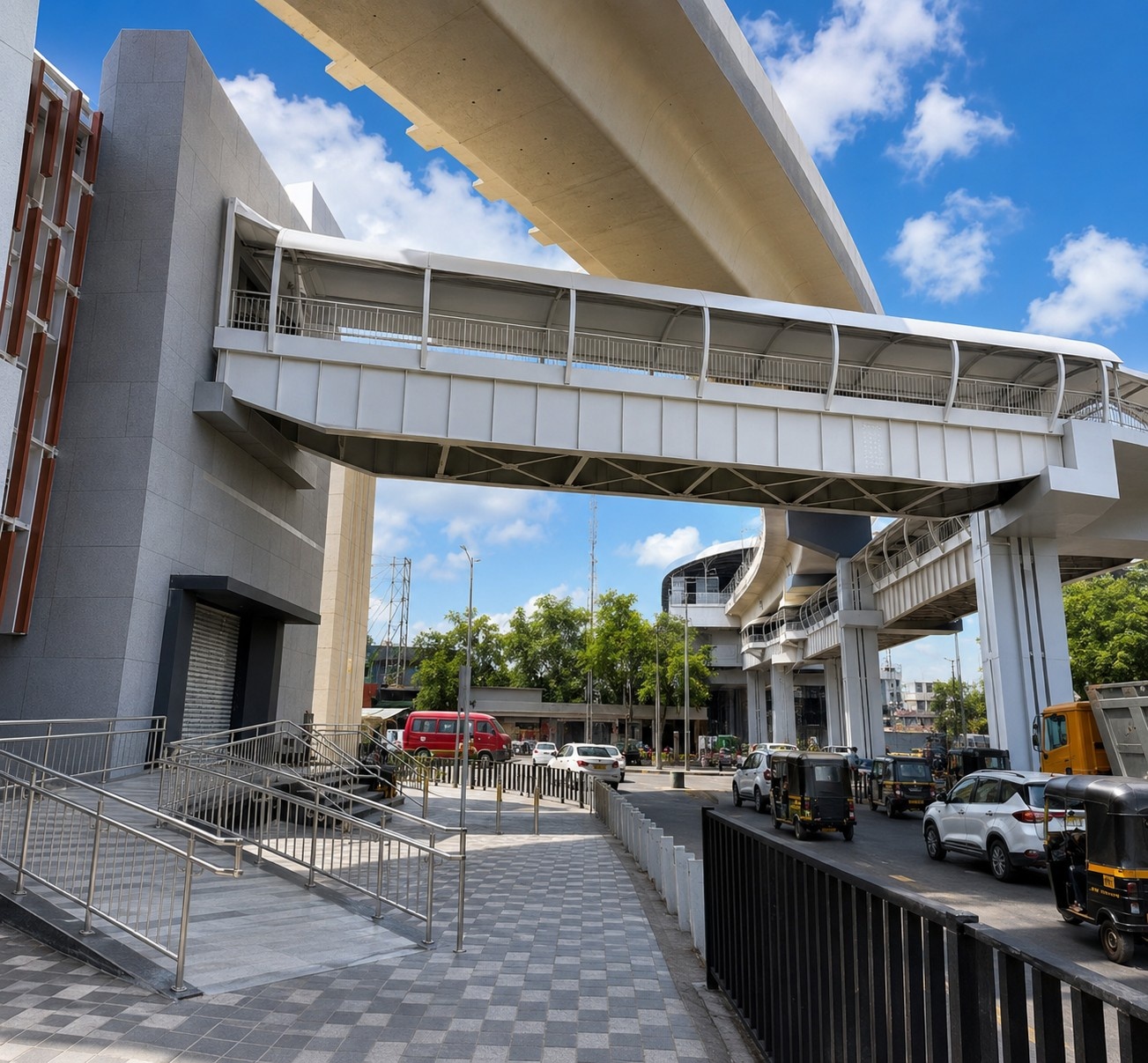
The skywalk that Maha Metro has been building above Cotton Market Square — through months of construction activity that disrupted traffic below, required girder casting operations that temporarily narrowed road space, and generated no shortage of commuter frustration — has finally opened on July 3, 2026.

The wait, however inconvenient, was worth it. What has opened today is not just a footbridge. It is a meaningful transformation of how pedestrians, metro commuters, and shoppers interact with one of the most commercially active squares in central Nagpur.


What Exactly Has Been Built — The Engineering Picture

The Cotton Market skywalk is a raised pedestrian corridor anchored by concrete extensions from the central metro pillars at Cotton Market Square. This structural approach — using the existing metro viaduct pillars as the foundation for the skywalk — is a cost-efficient and space-saving engineering choice that avoids the need for entirely new ground-level column foundations in a square that is already extremely congested.

The construction proceeded in two phases of girder work. The first phase — where steel rods protruding from the main pillar were concreted and plastered — was completed earlier in the construction timeline. The second phase involved similar work on a pillar located toward Ghat Road. The completed skywalk connects these two anchor points, providing a continuous raised pedestrian corridor over the bustling square below.

The landing point of the skywalk on the Ghat Road side represents the second entry point to Cotton Market Metro Station — positioned directly opposite the existing entry on the Mahatma Phule Market side. This creates, for the first time, a through-flow option for metro passengers approaching from different directions. Previously, commuters approaching from the Ghat Road side had to cross the busy square at ground level to reach the single metro entry — an inconvenient and often dangerous crossing during peak traffic hours.


Two Elevators, Retail Outlets, and a Parking Area — The Full Picture

The skywalk at Cotton Market is not a bare pedestrian bridge. It has been designed with a level of commercial and accessibility infrastructure that makes it a genuine urban amenity rather than just a passage.

Two elevators have been installed as part of the skywalk structure — one at each end of the bridge. This is a critically important feature for a location like Cotton Market Square, which attracts not just working-age metro commuters but elderly shoppers visiting Mahatma Phule Market and other commercial establishments in the area, families with children and bags, and differently-abled citizens who would find a stair-only pedestrian bridge effectively inaccessible. The presence of elevators transforms the skywalk from infrastructure that serves the fit and the young into infrastructure that genuinely serves everyone.

The Cotton Market end of the skywalk has also been developed into a small commercial hub. Retail outlets are incorporated into the skywalk structure at the landing point — a feature that follows the model of successful transit-oriented commercial development seen in metro systems across Asia, where footfall generated by transit infrastructure is channelled into commercial space that serves commuters and generates revenue for the metro operator simultaneously.

A parking area has been added to serve metro passengers accessing the station through the new walkway from the Ghat Road side. This addresses one of the persistent criticisms of Nagpur Metro stations — that adequate parking near station entry points is often insufficient, particularly for the large number of commuters who ride two-wheelers to the metro and then continue their journey by train.


Why Cotton Market Square Needed This Skywalk

Cotton Market Square is not a location that most urban planners would have chosen as an ideal metro station site if starting from scratch. It is an intersection where multiple competing traffic streams — vehicles from Ghat Road, from the old Cotton Market commercial lanes, from the direction of Mahatma Phule Market, and from Itwari — converge at a single point that was already congested before the metro station was added to the mix.

When the Cotton Market Metro Station opened on September 21, 2023 — just in time for the Ganesh Chaturthi festival in that year — it brought significant new pedestrian activity to an intersection that was already operating near capacity. The station is on the Aqua Line, Nagpur Metro’s East-West corridor, serving commuters travelling between Prajapati Nagar in the west and the Cotton Market area at the eastern end of the Phase 1 completed section.

The station’s single entry point on the Mahatma Phule Market side meant that all foot traffic to and from the station had to funnel through one access point. During peak hours — morning and evening commute times, and especially during major festivals when the surrounding markets see intense footfall — this single entry created its own form of congestion, adding to the overall pedestrian and vehicular pressure on the square.

The skywalk addresses this at its root. By providing a second entry directly opposite the first, it creates a natural distribution of passenger flow. Commuters approaching from the Ghat Road side no longer need to cross the square to enter the station — they access it directly from the skywalk landing point. This reduces pedestrian-vehicle conflicts at ground level and allows both entry points to operate more freely than the single-entry arrangement ever could.


The Construction Journey — What Commuters Endured

The skywalk’s opening today deserves to be understood against the backdrop of what commuters and residents around Cotton Market Square endured during its construction.

The girder casting operations — where the structural concrete elements of the skywalk were formed and cured — required temporary modifications to the traffic lanes below. Heavy construction equipment, material storage, and the need to work around the active metro viaduct above and live traffic below made the worksite complex to manage. There were periods where vehicular movement through the square was disrupted, particularly during nighttime construction shifts when girder launching and heavy lifting operations took place.

Maha Metro’s Project Director Rajeev Tyagi, who had spoken about the skywalk’s design and purpose when construction began in 2025, had set an initial target of October or November 2025 for completion. The actual opening on July 3, 2026 is approximately seven to eight months behind that original target — not an unusual delay for urban infrastructure construction in a highly congested location with significant coordination challenges.

The delay meant months of additional inconvenience for commuters and traders around Cotton Market Square. But the alternative — rushing the construction and opening a skywalk that was not safely complete — would have been far worse. The structure that has opened today has been built to the safety standards required for a piece of infrastructure that will carry thousands of pedestrians daily.


What Cotton Market Square Looks Like Now — The Before and After

For those who know Cotton Market Square well, the difference that the skywalk makes to the pedestrian experience is immediately tangible from today.

Previously: a metro commuter arriving by auto-rickshaw from the Ghat Road direction needed to either alight before the square and navigate through pedestrian and vehicle traffic to reach the single metro entry, or cross the square on foot — dealing with multiple lanes of traffic, the absence of adequate pedestrian crossing infrastructure, and the general chaos of an extremely busy commercial intersection.

From today: the same commuter can walk directly onto the skywalk from the Ghat Road side, access the metro station through the new second entry, and proceed to the platform without any ground-level road crossing. The journey from street to platform is safer, faster, and — with the elevator option — accessible to commuters of all physical abilities.

For shoppers visiting the Cotton Market commercial area and Mahatma Phule Market who were not metro users, the skywalk provides an additional option for crossing the square safely at elevated level — avoiding the vehicular traffic below entirely.


Cotton Market in Nagpur’s Commercial History — Why This Location Matters

Cotton Market Square takes its name from what was, for more than a century, one of the most commercially significant activities in Nagpur and the Vidarbha region: the cotton trade. Nagpur was historically one of the most important cotton trading centres in central India — the city’s location at the heart of Maharashtra’s cotton-growing region, combined with its rail connectivity, made it a major hub for cotton ginning, pressing, and trading.

The old Cotton Market area — where the Mahatma Phule Market and surrounding commercial lanes have operated for generations — was the physical centre of this trade. While the nature of commerce in the area has diversified significantly over the decades, the square retains its identity as a major commercial hub, drawing shoppers, traders, and daily commuters in large numbers.

The metro station at Cotton Market, and now the skywalk that enhances access to it, represents a 21st-century layer of urban infrastructure being added to one of Nagpur’s oldest and most commercially active locations. It connects the area’s historical commercial importance with the modern mobility network that is redefining how Nagpur’s residents move around their city.


What Comes Next for Nagpur Metro’s Aqua Line

The opening of the Cotton Market skywalk is one of several infrastructure improvements that Maha Metro is advancing on the Aqua Line in 2026. The Phase 2 extensions of Nagpur Metro — which will take the network toward Kanhan in the north, Butibori MIDC in the south, Transport Nagar in the east, and Hingna in the west — are progressing through various stages of construction and commissioning.

For commuters who currently use the Aqua Line, the skywalk at Cotton Market is an immediate, tangible improvement to their daily experience. For those who have not yet made Nagpur Metro a regular part of their commute, the improved accessibility and commercial amenities at Cotton Market station provide one more reason to consider it.

Nagpur Updates will continue to report on Nagpur Metro’s infrastructure developments, ridership data, and Phase 2 progress as information becomes available.

Sources: The Live Nagpur, Nagpur Trends, Maha Metro official statements, Rail Analysis India, Wikipedia — Cotton Market metro station, field reporting. Published: July 3, 2026.

French Expert Finally Arrives in Nagpur to Revive Futala Musical Fountain — Here Is the Full Story

Futala Lake: Nagpur’s most delayed tourist attraction may finally be coming to life.

After remaining dormant for nearly two years, the Futala Musical Fountain project has shown signs of revival. A French technical expert has arrived in Nagpur. His job is to assess the condition of the long-delayed installation and chart a roadmap for its completion.

This is big news for Nagpur. Let’s go right from the beginning so you understand why this matters so much.


What Is the Futala Musical Fountain?

The Futala Fountain project is considered one of Nagpur’s major tourist attractions. It is promoted as the world’s longest floating fountain, stretching around 155 metres across Futala Lake. Apart from the floating fountain, the larger Futala development project also includes a floating stage, an artificial banyan tree, a spectators’ gallery and a multi-level parking facility.

The Futala Musical Fountain was conceived as a landmark attraction. It was aimed at enhancing Nagpur’s tourism profile and transforming the iconic Futala Lake precinct into a major recreational destination.

In short — this was supposed to be Nagpur’s version of Dubai’s famous fountain show. A landmark. A reason to visit. A pride point for the city.


How Did It All Go Wrong?

The project has had one of the most troubled histories of any civic project in Nagpur.

The fountain was built at a cost of around Rs 50 crore. However, it malfunctioned even before its scheduled inauguration in May 2023. The main reason was cable damage caused by algae accumulation in the lake.

Subsequent inspections, including those by the Indian Institute of Technology Bombay, confirmed the need for extensive repairs. Authorities estimate restoration costs to exceed Rs 10 crore.

So the fountain broke before it even opened. IIT Bombay was called in to inspect it. The repair bill crossed Rs 10 crore. And citizens who had been excited about a world-class attraction were left staring at an idle structure in the middle of their favourite lake.

Then the legal trouble started.

The project suffered a major setback in January 2024 when the Supreme Court imposed a status quo order while hearing a Public Interest Litigation filed by Nagpur-based NGO Swaccha Association. Later, in October 2025, a bench headed by Justice Bhushan Gavai lifted the status quo order, allowing authorities to resume restoration work.

The court froze everything for nearly two years. Work could not move forward at all during that period.


Why Did the French Team Take So Long to Come?

Even after the Supreme Court cleared the way in October 2025, getting the French experts to Nagpur was not easy. Three separate factors caused delays.

Delay 1 — The War

The ongoing US-Israel-Iran conflict delayed the much-awaited revival of the Futala fountain project. The French technical team was unable to travel to India. The timeline for the team’s visit remained uncertain due to the conflict.

Delay 2 — Nagpur’s Extreme Heat

The technical team was expected to arrive on May 20 to supervise restoration work. However, the experts informed MahaMetro officials that they were uncomfortable working outdoors in temperatures exceeding 45 degrees Celsius. They were concerned about possible health risks caused by the severe heat. Officials then expected the French experts to visit after pre-monsoon showers bring some relief.

Delay 3 — Travel Disruptions

Progress was being affected by the delayed arrival of the specialised team from France. Travel disruptions linked to the ongoing Gulf conflict had held up their visit. Officials said the team was expected to arrive via an alternative route.

So war, heat and travel chaos — all three conspired to keep the French experts away from Nagpur for months. Now they are finally here.


Who Is the French Expert and What Is He Doing?

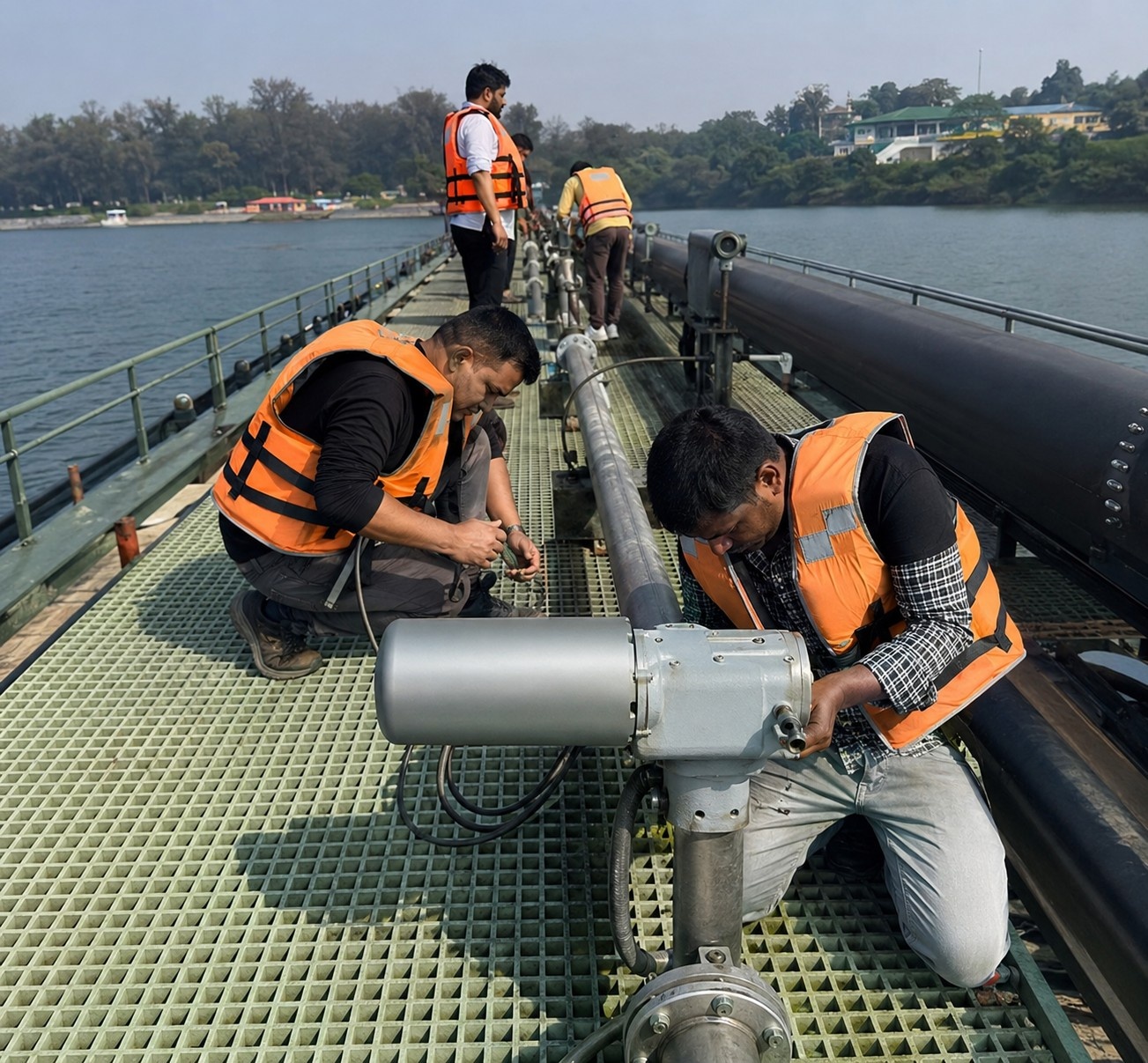
The visit of French fountain specialist Basile, who is leading a team of technicians, is being seen as a crucial development. He was tasked with a detailed assessment of cables, pumps and lighting systems. MahaMetro is pushing to restart the long-delayed Futala Musical Fountain project.

Basile was expected to remain in Nagpur until June 22. During his stay, he conducted an extensive technical evaluation of the project in coordination with MahaMetro officials and the local execution team.

His team belongs to the France-based Crystal Group — the company that originally supplied and installed the fountain system. So Basile is not just any inspector. He knows this fountain intimately.


What Specifically Is Being Assessed?

Three critical systems are under inspection.

The Cable Network

Removal of old and damaged fountain cables has begun. This is a key step in reviving the project. Nearly 80% of the new cable infrastructure has already been procured.

The Pumping System

Another critical aspect of Basile’s visit is the evaluation of the fountain’s pumping system. This is considered the heart of the entire installation. During his previous visit nearly seven months ago, the expert had identified several technical deficiencies and recommended repairs to key components. The condition of two to three newly delivered pumps will also be examined.

The Lighting Network

The lighting network is expected to play a central role in creating the visual effects originally planned as part of the musical fountain attraction overlooking Futala Lake.

Cables, pumps and lights — all three need to work perfectly together before the fountain can perform. A failure in any one system means the show cannot go on.


What Work Has Already Been Done?

While waiting for the French team, local preparatory work has not been completely idle.

New wiring has already been transported to Nagpur. Preparatory work is underway near the lake. Contractor Khadatkar Construction Studio One has begun preliminary activities such as planning cable replacement and beautifying the surrounding area.

Following the legal clearance, officials intensified efforts to repair damaged infrastructure and revive the attraction ahead of the upcoming tourist season.

So the groundwork is being laid. The French team’s job is to complete and verify the technical components that local teams cannot handle alone.


What Does the Complete Futala Project Look Like?

Most people know about the fountain. But the full Futala redevelopment is much larger.

Apart to the floating fountain, the larger Futala development project includes a floating stage, an artificial banyan tree, a spectators’ gallery and a multi-level parking facility. However, most of these structures remained unused after the project stalled due to legal complications. Dwello

When fully complete, Futala Lake will be transformed into an integrated entertainment and recreation destination — not just a fountain show. The parking, the floating stage, the banyan tree installation and the spectators’ gallery are all part of a larger vision that has been frozen for years.


Why This Matters for Nagpur’s Tourism

Nagpur has always had the geographical advantage of being India’s zero mile city. But it has struggled to become a tourist destination in its own right.

The Futala Musical Fountain — if it ever works as designed — would be a genuine draw. A 155-metre floating fountain with light and laser shows on a scenic city lake is the kind of attraction that puts a city on the tourist map.

That is exactly why the repeated delays have been so frustrating for Nagpur residents. The structure is built. The money has been spent. All that is needed is for it to actually work.

Basile’s visit is the most concrete sign yet that MahaMetro and the contractor are serious about getting it done.

Detail Information
Project Futala Musical Fountain, Nagpur
Implementing Agency MahaMetro (Maharashtra Metro Rail Corporation)
Original Cost Rs 50 crore
Repair Cost Estimate Over Rs 10 crore
Fountain Length ~155 metres — world’s longest floating fountain
French Expert Basile, Crystal Group
Assessment Focus Cables, pumps, lighting systems
Why Delayed Earlier War disruptions, extreme heat, legal freeze
Supreme Court Stay January 2024 to October 2025
Cable Work Status 80% of new infrastructure procured
Local Contractor Khadatkar Construction Studio One

What is the Futala Musical Fountain in Nagpur?
It is a 155-metre floating musical fountain built on Futala Lake, Nagpur. It is promoted as the world’s longest floating fountain. The project also includes a floating stage, spectators’ gallery, artificial banyan tree and multi-level parking.

Why did the Futala fountain never open?
The fountain suffered cable damage due to algae in the lake before its planned inauguration in May 2023. Then a Supreme Court order froze all work from January 2024 to October 2025. After the legal freeze, travel disruptions and extreme heat further delayed the French experts who needed to repair the system.

Who is Basile and why is he important for the Futala fountain?
Basile is a French fountain specialist from Crystal Group — the company that originally built and installed the Futala fountain system. Only experts from the original manufacturer can properly assess and repair the advanced technical components.

How much has the Futala fountain project cost so far?
The original project cost was around Rs 50 crore. Additional restoration costs are estimated to exceed Rs 10 crore. That brings the total investment to over Rs 60 crore.

When will the Futala fountain open?
No official opening date has been announced yet. The current visit by the French team is an assessment phase. Work will proceed based on the findings. Nagpur residents hope to see it operational by the 2026-27 tourist season.

What is the Crystal Group?
Crystal Group is a France-based company specialising in large-scale fountain and water feature installations. They supplied the core fountain technology for the Futala project.


Nagpur has waited a long time for its signature tourist attraction. The French expert is here. The cables are being replaced. The legal hurdles are cleared. Whether Futala finally lives up to its Rs 50 crore promise depends entirely on what Basile’s assessment finds — and how fast the repairs can follow.

NMC Budget 2026-27: Nagpur Gets ₹6,202 Crore Plan — No New Taxes, Big Plans for Every Citizen

NMC Budget 2026-27 Nagpur: Good news for Nagpur residents. Your property tax is not going up this year.

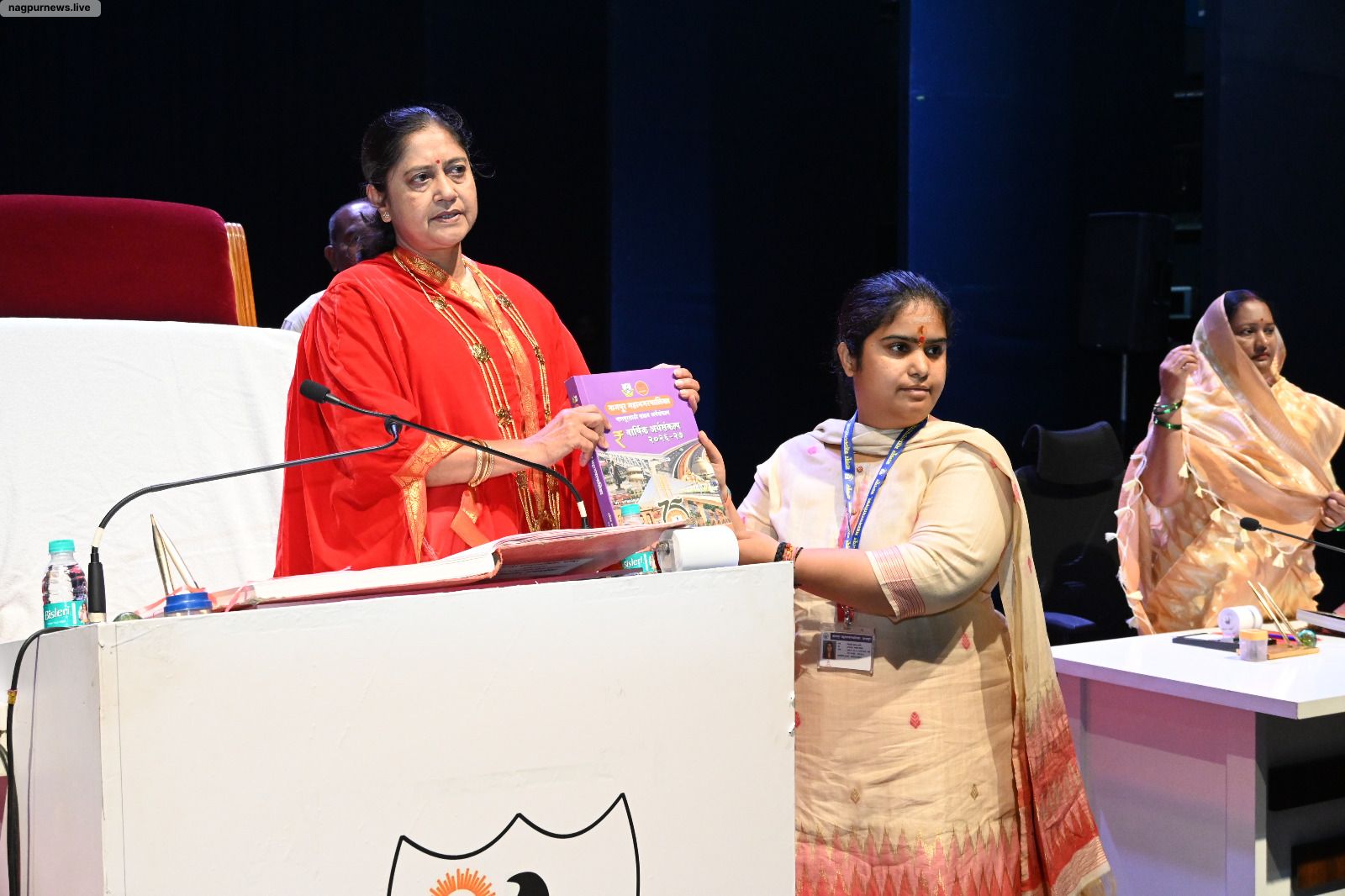
The Nagpur Municipal Corporation presented a ₹6,202.99 crore surplus budget for the financial year 2026-27 on Saturday. The budget focuses on comprehensive urban development. No additional taxes have been imposed on citizens. Standing Committee Chairperson Shivani Dani-Vakhare presented the budget before Mayor Nita Thakre in the civic body’s General House.

This is one of the biggest NMC budgets in recent years. So what is in it for you? Let’s go section by section.


The Numbers: How Big Is This Budget?

First, let us understand the basic financial picture.

NMC expects total revenue of ₹5,690.37 crore during 2026-27. Including an opening balance of ₹512.61 crore, the total receipts are projected at ₹6,202.99 crore. Total expenditure has been estimated at ₹6,202.48 crore. This leaves a closing surplus of approximately ₹50.18 lakh.

So the city earns more than it spends. That is called a surplus budget. It is a positive sign for Nagpur’s financial health.

Mayor Nita Thakre described it as an inclusive and citizen-centric budget that will accelerate all-round development while providing relief to the common man.


Nag River to Be Cleaned With ₹200 Crore Municipal Bonds

This is the most talked-about announcement in the budget.

NMC plans to raise ₹200 crore through municipal bonds to make the Nag River pollution-free.

The Nag River has been polluted for decades. It passes through many dense areas of Nagpur. Cleaning it has been a long-pending demand of residents. Using municipal bonds to raise money is a smart move. It avoids putting the burden on the city’s existing funds.


Sports Gets ₹45 Crore — 200 Playgrounds Planned

Nagpur is getting serious about sports infrastructure.

Following suggestions by Chief Minister Devendra Fadnavis and Union Minister Nitin Gadkari, NMC has set a target of developing 200 playgrounds. Out of these, 75 playgrounds are planned during the Amrit Mahotsav year. The budget earmarks ₹45 crore for sports development and continued operations of the newly built mega sports complex.

This is a major step. Nagpur has long lacked quality playgrounds in residential areas. 200 new grounds will directly benefit children and youth across all wards.


Corporator Development Fund Raised to ₹25 Lakh

Every ward in Nagpur will get more money for local development.

Every corporator will now receive ₹25 lakh as ward development funds for public utility projects. Additionally, ₹41.38 crore has been allocated for pending and legally approved projects from previous financial years.

This means your local corporator has more money to fix roads, drains, footpaths, and other issues in your area. The clearance of pending projects is also a big relief. Many old projects had been stuck due to lack of funds.


Tourism Gets a Big Push — Marbat, Savji Festival and QR Codes

Nagpur’s cultural identity is finally getting official financial backing.

The civic body announced the Nagpur Tourism Development Scheme. Under this scheme, information about the city’s heritage, culture and landmarks will be made available through QR codes at 100 city squares. Special emphasis will be placed on promoting the Marbat Festival to attract tourists. A seven-day Savji Bunakar Festival will showcase the city’s cuisine to national and international visitors. NMC will also publish a comprehensive Visit Nagpur guidebook featuring tourist attractions, food destinations and an annual festival calendar.

This is smart city thinking. QR codes at 100 squares make Nagpur more tourist-friendly. The Marbat Festival is unique to Nagpur. It deserves national attention. The Savji food promotion could put Nagpur on India’s food tourism map.


Heritage Museum and Experience Centre

Nagpur’s 300-year history will now have a home.

As part of Amrit Mahotsav celebrations, NMC will establish a Centenary Museum showcasing the city’s history. An audio-visual Experience Centre depicting Nagpur’s 300-year history will also be developed inside the heritage Municipal Town Hall.

This will serve as both a tourist attraction and an educational destination for Nagpur’s residents and students.


Healthcare: Free Eye Surgeries, Dental Help and 12 New Health Centres

The budget has strong healthcare announcements. Every resident should know about these.

The budget includes citywide health screenings to work toward making Nagpur cancer-free. Under the Mayor Harsh Muskan Scheme, ₹25 lakh has been set aside for dental treatment of girls below 18 years. The Mayor Netra Jyoti Scheme will provide free eye camps, cataract surgeries and spectacles in collaboration with Mahatme Eye Bank. NMC also plans to construct 12 new Urban Primary Health Centres, with a target of 53 UPHCs over the next five years.

Free eye surgery and dental treatment for girls are standout announcements. These will directly benefit thousands of families in Nagpur’s lower-income areas.


Senior Citizens Get Special Attention

Older residents of Nagpur have not been forgotten.

Special provisions have been made for senior citizens. These include health camps, recreational tours, awareness and wellness programmes, and formation of senior citizens’ groups in every ward. Each corporator has been allotted ₹2 lakh for senior citizen welfare activities.

Senior citizen groups in every ward is a practical idea. It gives elderly residents a structured community to be part of.


Education: 12 Schools to Be Rebuilt, Free Bicycles for Girls

Students in NMC schools are getting major support.

The budget proposes reconstruction of 12 municipal schools with an NMC allocation of ₹30 crore. Seventy-five free bicycles will be distributed to meritorious girls under the Pushpatai Ghode Bicycle Bank Scheme. Affordable UPSC and MPSC guidance centres will be established in every Assembly constituency under the Sushma Swaraj Scheme. E-library facilities for learning Japanese, German and French will be offered under the Pramilatai Mendhe Language Centre.

The UPSC-MPSC guidance centres are a game-changer. Many students in Nagpur cannot afford coaching. Free guidance centres in every constituency will open doors for thousands of young aspirants.


Smart Wards — Best Wards Get ₹50 Lakh Reward

NMC is introducing a reward system for well-performing wards.

Under the My Ward Smart Ward initiative, wards excelling in tax collection, cleanliness and innovative governance will receive ₹50 lakh special grants. Labour rest centres called Thiyya will also be set up across all zones for workers who come to Nagpur for employment.

This is a competitive but fair system. It motivates corporators and residents to keep their wards clean and compliant.


Pay-and-Park on Five Roads — Pilot Project

Parking chaos in Nagpur may finally get a solution.

NMC will launch a Pay-and-Park scheme on five major roads on a pilot basis. If successful, the civic body plans to implement a comprehensive citywide parking policy.

Unplanned parking is one of Nagpur’s biggest daily frustrations. A proper pay-and-park system could reduce road congestion significantly.


Digital Transformation — AI Chatbots and Data Centre

NMC is stepping into the digital age in a big way.

NMC will develop AI-powered audio and text chatbots for tax and water services. An advanced municipal Data Centre will be established for secure and integrated management of civic data. A dedicated digital grievance redressal system and dashboard for corporators will also be launched.

AI chatbots for tax and water queries mean residents can get answers without standing in queues. The digital grievance dashboard will make it easier to track complaints.


Aquarium, Startup Centre and Solar Stoves

These are some of the more exciting new announcements.

In collaboration with the Maharashtra Fisheries Department, NMC will facilitate establishment of a state-of-the-art aquarium in Nagpur. NMC also announced plans for the Jamsetji Tata Incubation Centre to encourage entrepreneurship among Gen Z. Additionally, 5,000 solar stoves will be distributed to promote clean and affordable energy. A hotel classification and certification system will also be introduced to improve hospitality standards.

An aquarium is a massive addition to Nagpur’s tourism. It will give families a new weekend destination. The startup incubation centre puts Nagpur alongside Pune and Mumbai in the entrepreneurship ecosystem.


Shivaji Maharaj Statues at Two Locations

NMC has allocated ₹50 lakh for installing equestrian statues of Chhatrapati Shivaji Maharaj at the Municipal Headquarters and Shivaji Maharaj Square in Vardhaman Nagar.


Rainwater Harvesting — 209 Recharge Shafts

Water conservation is a key focus of this budget.

NMC has proposed installation of 209 recharge shafts across the city for rainwater harvesting. Mandatory rainwater harvesting provisions will be included in major road and development projects. Rooftop rainwater harvesting will be required in government buildings. Large water consumers using over one lakh litres daily will be directed to install sewage treatment or effluent treatment plants.

With water scarcity becoming a concern every summer, these steps are both timely and necessary.


The Budget Was Dedicated to Mothers of Martyrs

The presentation had an emotional and patriotic tone.

Standing Committee Chairperson Shivani Dani-Vakhare dedicated the budget to the mothers of brave soldiers, from Rajmata Jijau to the martyrs of Operation Sindoor. She concluded her speech with a poem by legendary Marathi poet Suresh Bhat, declaring: our direction will never change and the lamp of Nagpur’s development will not be extinguished by any wind.


Full Budget at a Glance

Category Allocation / Detail
Total Budget Size ₹6,202.99 crore
Total Revenue Expected ₹5,690.37 crore
Opening Balance ₹512.61 crore
Total Expenditure ₹6,202.48 crore
Closing Surplus ₹50.18 lakh
New Tax Hike None
Nag River Cleaning ₹200 crore via municipal bonds
Sports Development ₹45 crore
Playgrounds Target 200 (75 this year)
Corporator Fund ₹25 lakh per ward
School Reconstruction 12 schools, ₹30 crore
New Health Centres 12 UPHCs this year, 53 in 5 years
Solar Stoves 5,000 units
Rainwater Recharge Shafts 209 across the city
Smart Ward Reward ₹50 lakh per qualifying ward
Shivaji Maharaj Statues ₹50 lakh
Senior Citizen Fund per Ward ₹2 lakh per corporator

Frequently Asked Questions

Is there any tax hike in NMC Budget 2026-27?
No. The NMC budget 2026-27 does not impose any new taxes on Nagpur residents. The civic body plans to increase revenue through government grants and new revenue streams — not by increasing citizen tax burden.

What is the total size of NMC Budget 2026-27?
The total budget is ₹6,202.99 crore. It is a surplus budget, meaning NMC plans to spend slightly less than it earns.

Who presented the NMC Budget 2026-27?
Standing Committee Chairperson Shivani Dani-Vakhare presented the budget before Mayor Nita Thakre at the NMC General House meeting on June 27, 2026.

What is the plan for Nag River cleaning?
NMC plans to raise ₹200 crore through municipal bonds specifically for making the Nag River pollution-free.

What health schemes are announced in NMC Budget 2026-27?
Key health schemes include the Mayor Netra Jyoti Scheme for free eye camps and cataract surgeries, Mayor Harsh Muskan Scheme for dental treatment of girls under 18, cancer screening drives, and construction of 12 new Urban Primary Health Centres.

What is the My Ward Smart Ward initiative?
It is a reward scheme where wards that perform best in tax collection, cleanliness and governance will receive ₹50 lakh special grants from NMC.

Will Nagpur get an aquarium?
Yes. NMC has announced plans to set up a state-of-the-art aquarium in Nagpur in collaboration with the Maharashtra Fisheries Department.


Nagpur’s ₹6,202 crore budget is ambitious. It covers everything — from rivers to roads, from school kids to senior citizens, from AI chatbots to aquariums. The real test, as always, is execution. But on paper, this is one of the most wide-ranging civic budgets Nagpur has ever seen.

Maharashtra Clears Two Big Projects: Nagpur Metro Gets Kanhan Extension, Mumbai Gets Bandra Connector

Maharashtra has just made two of its most awaited infrastructure decisions in a single sitting — and both cities are set to feel the impact for decades to come.

In a Cabinet Committee on Infrastructure meeting chaired by Chief Minister Devendra Fadnavis, two major projects received the green light — a 3.55-kilometre connector linking the Swatantryaveer Savarkar Setu to Bandra Fort in Mumbai, and a 1.40-kilometre elevated Metro extension from Kanhan River to Kanhan City under Nagpur Metro Phase 2.

Here is everything you need to know about both projects, what they cost, who builds them, and what they mean for you.


Project 1: Nagpur Metro Phase 2 — Kanhan Gets Its Own Station

For the people of Kanhan, Kamptee, and Nagpur’s entire northern corridor, this approval has been a long time coming.

What Is Being Built?

Under Nagpur Metro Rail Phase 2, a 1.40-kilometre elevated Metro corridor will be built from Kanhan River to Kanhan City. One elevated station will come up on this stretch. The total project cost is approximately Rs 310.35 crore, and it will be executed by Maharashtra Metro Rail Corporation Limited — MahaMetro. Work will begin after final approval from the Central Government.

This extension takes the Metro beyond the existing Automotive Square terminal and pushes it northward across the Kanhan River into Kanhan City — a stretch that requires a steel viaduct over the river, making it both technically challenging and strategically vital.

Why Does This Matter?

The Kamptee–Kanhan road corridor is one of the most congested stretches on Nagpur’s outskirts. Thousands of daily commuters from Kanhan travel into Nagpur for work, school, hospitals, and business — and every one of them does it by road today, through bumper-to-bumper traffic.

With this Metro extension in place, Kanhan residents will be able to board an elevated Metro train and reach central Nagpur without touching a single congested junction. It also unlocks real estate and economic development in the area by giving it genuine urban connectivity.

The Kamptee corridor under Phase 2 currently has 12 planned stations. With Kanhan City added, that number goes up to 13 — and the total Phase 2 network length will cross 45 kilometres.

What Is the Bigger Phase 2 Picture?

Nagpur Metro Phase 2 is a massive 43.80-kilometre expansion that stretches in four directions from the existing Phase 1 network — toward Kanhan in the north, Butibori MIDC in the south, Transport Nagar (Kapsi) in the east, and Hingna in the west. The total project cost is around Rs 6,700 crore, with funding from the Asian Development Bank, European Investment Bank, and both Central and State Governments.

The Kanhan extension is the final piece of the northern corridor puzzle. Its approval means Phase 2 is now complete in its planning scope — execution is the only thing left.


Project 2: Mumbai’s Rs 1,722 Crore Bandra Connector — Cutting Travel to 10 Minutes

While Nagpur got its Metro news, Mumbai’s infrastructure story is equally significant.

What Is Being Built?

A 3.55-kilometre connector road will be constructed linking the Swatantryaveer Savarkar Setu to Bandra Fort in Mumbai. The estimated cost of this project is Rs 1,722.40 crore, and it will be executed by the Maharashtra State Road Development Corporation — MSRDC. Once completed, the current travel time of 20 to 45 minutes on this route is expected to drop to approximately 10 minutes.

That is a staggering reduction — up to 35 minutes saved on a single commute. For lakhs of Mumbaikars who use this corridor daily, it could meaningfully change their daily routine.

Why Is This Route So Important?

The Bandra–Sea Link corridor is one of Mumbai’s most critical traffic arteries. The Bandra-Worli Sea Link already handles enormous traffic volume, but the connectivity at both ends — particularly the Bandra Fort side — has long been a bottleneck. Vehicles coming off the Sea Link or heading toward it get caught in the maze of Bandra’s narrow roads and junctions.

The new connector will create a clean, direct link between the Sea Link and Bandra Fort, bypassing the worst of the local traffic and dramatically improving throughput on one of the busiest corridors in the country’s financial capital.

Who Builds It?

MSRDC — the Maharashtra State Road Development Corporation — will be the implementing agency. MSRDC has an established track record with major Mumbai infrastructure including the Bandra-Worli Sea Link itself, so this project is in experienced hands.


Who Was at the Meeting?

The Cabinet Committee meeting was held in the Cabinet Hall at Vidhan Bhavan. Deputy Chief Minister Eknath Shinde, Public Works Minister Shivendra Sinharaje Bhonsle, Chief Secretary Rajesh Agarwal, and other senior officials were present.

The presence of both the Deputy CM and the Public Works Minister signals that these are not just approved-on-paper projects — they have active political ownership at the highest level of the Maharashtra government.


Side by Side: Both Projects at a Glance

Detail Nagpur Metro Extension Mumbai Bandra Connector
What Elevated Metro corridor Road connector
From–To Kanhan River to Kanhan City Savarkar Setu to Bandra Fort
Length 1.40 km 3.55 km
Cost Rs 310.35 crore Rs 1,722.40 crore
Executing Agency MahaMetro MSRDC
Key Benefit Metro access for Kanhan residents Travel time cut from 45 min to 10 min
Central Nod Needed? Yes No

What Happens Next?

For the Nagpur Metro extension, the state approval is now done. The proposal moves to the Central Government — specifically the Ministry of Housing and Urban Affairs — for final clearance. Given that Phase 2 already has central approval in principle, this step is expected to move relatively quickly. Once central clearance comes, MahaMetro can begin tendering and construction.

For the Mumbai connector, MSRDC can move directly into detailed design, tendering, and land/permissions groundwork. There is no central clearance required for a road project of this nature.


Frequently Asked Questions

When will Kanhan Metro station open?
The project still needs Central Government approval before construction can begin. Given MahaMetro’s current Phase 2 construction pace, a realistic timeline would be 2028–2029, subject to clearances and tendering.

Will Kanhan Metro be elevated or underground?
It will be fully elevated — an elevated corridor with one elevated station, including a steel viaduct over the Kanhan River.

What is the Mumbai Bandra connector project?
It is a new 3.55-km road linking the Swatantryaveer Savarkar Setu (Sea Link) to Bandra Fort, designed to cut travel time on this route from up to 45 minutes down to just 10 minutes.

Who approved these projects?
The Maharashtra Cabinet Committee on Infrastructure, chaired by Chief Minister Devendra Fadnavis, approved both projects on June 25, 2026.

How is Nagpur Metro Phase 2 funded?
Phase 2 is funded through loans from the Asian Development Bank and European Investment Bank, along with equal contributions from the Central and Maharashtra State Governments.


Two cities, two projects, one meeting — and Maharashtra has just moved its infrastructure story forward in a meaningful way. For Nagpur’s northern residents and Mumbai’s daily commuters alike, these approvals are the beginning of real change on the ground.

Laxman Jhula Bridge Nagpur: Opening Set to Be Delayed as PWD’s Approach Road Work Hits a Wall

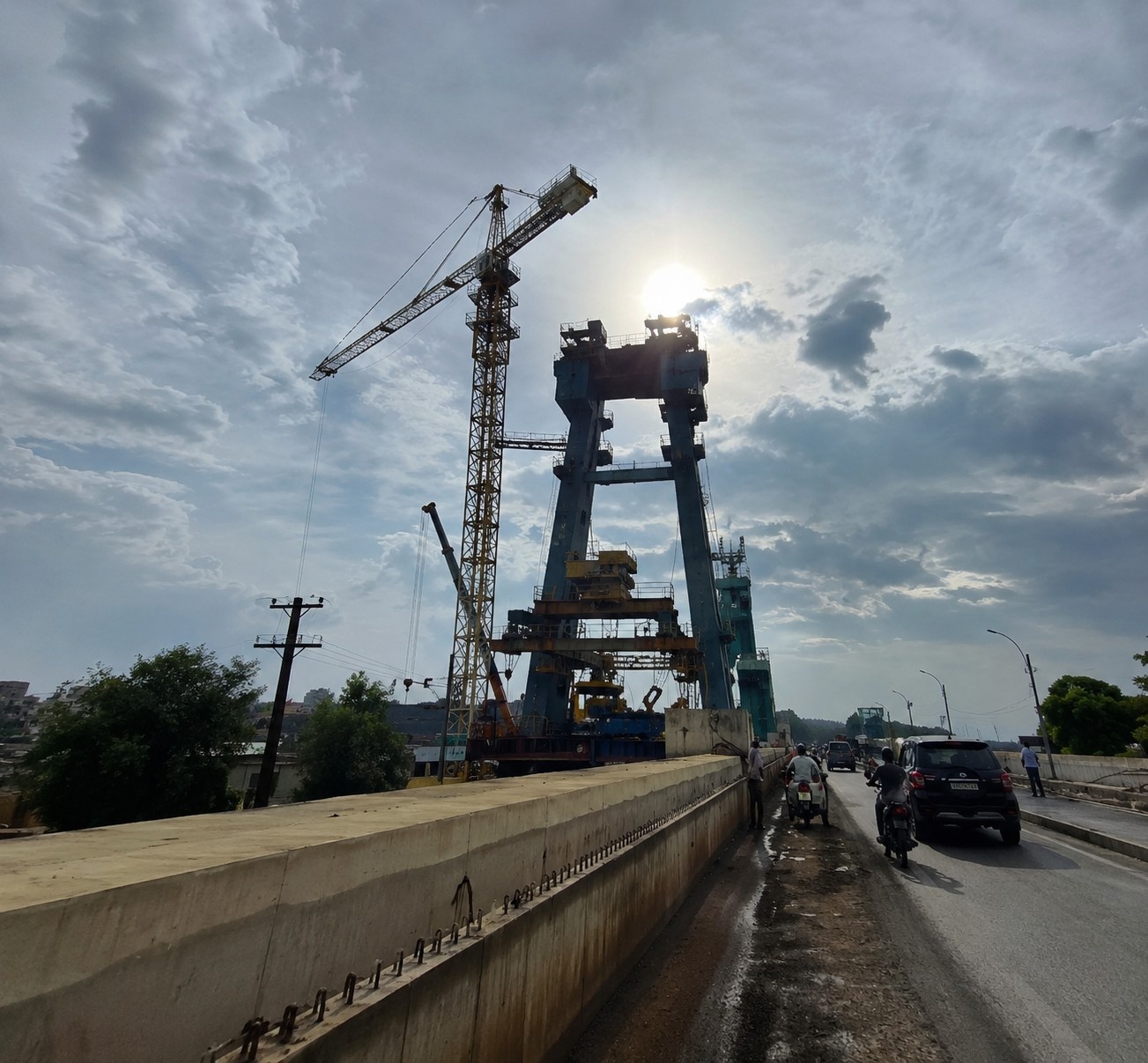
Ajni Bridge Nagpur: Nagpur’s most-awaited infrastructure project — the Rs 332-crore Laxman Jhula cable-stayed bridge at Ajni — is staring at an uncertain opening date. The reason? A bureaucratic standoff over a piece of railway land that nobody seems to be in a hurry to resolve.

If you live in central or south Nagpur and commute daily through the Ajni corridor, this directly affects you. Here’s everything you need to know.


What Is the Laxman Jhula Bridge Project?

The Laxman Jhula bridge is a modern six-lane cable-stayed bridge being built at Ajni, one of Nagpur’s most congested traffic corridors. The project is being executed by Maharashtra Rail Infrastructure Development Corporation Ltd (MRIDC), better known as MahaRail, at a total cost of Rs 332 crore.

The current British-era Ajni bridge — over 125 years old — is being replaced in phases to avoid complete traffic disruption in the area.

How Is the Project Being Executed?

Since Ajni Square handles enormous daily traffic, MahaRail is building the bridge in two phases:

  • Phase 1: A brand new three-lane carriageway is being constructed right alongside the old Ajni bridge.
  • Once Phase 1 is complete, all traffic — both directions — will shift to the new structure.
  • The 125-year-old bridge will then be demolished, and Phase 2 construction of the second carriageway will begin.
  • After both carriageways are ready, each will handle one-way traffic, dramatically improving the connection between central Nagpur and south Nagpur.

It’s a smart phased approach. But right now, Phase 1 itself is stuck — not because of construction problems, but because of missing approach roads.


Why Is the Opening Getting Delayed?

Here’s where the problem lies.

The first phase of the Laxman Jhula bridge does not have its own independent approach roads. It depends entirely on a separate Rs 35-crore PWD project that includes:

  1. An underpass near Ajni Bridge Square — aimed at improving connectivity between Congress Nagar and Chuna Bhati, and easing conflicts for vehicles traveling between Kriplani Square and Ajni Bridge.
  2. Road widening from Ajni Bridge to TB Ward Square — the existing 18-metre road is to be expanded to a 30-metre, six-lane corridor that will serve as the main approach to the bridge.

Without this PWD work, the Laxman Jhula bridge — even when construction-ready — simply cannot be opened to traffic.

The Railway Land Problem

Here’s the catch: a portion of the proposed road widening falls within railway limits. PWD needs this railway land on lease to complete the widening work.

According to sources, this requirement was identified more than 18 months ago. And yet, almost nothing has been done to secure the land.

“PWD officials have not even met the DRM (CR) to discuss the issue,” sources revealed. “The delay could affect both the road-widening project and the opening of Laxman Jhula.”

A senior PWD official, when asked about the status, admitted that the matter has not yet been pursued at the appropriate level. He said: “We require railway land on lease for road widening and construction of approaches to the bridge. A meeting with the DRM (CR) will be scheduled soon, and the matter will also be taken up with higher authorities.”

In other words — the meeting hasn’t happened yet. After 18 months.


What Will the Bridge and Underpass Mean for Nagpur?

When fully complete, this project promises major relief for commuters:

  • Smoother traffic flow between central and south Nagpur
  • Reduced congestion at Ajni Bridge Square
  • Better connectivity between Congress Nagar, Chuna Bhati, Kriplani Square, and TB Ward Square
  • A modern six-lane corridor replacing a cramped 18-metre road

The underpass alone is expected to reduce traffic conflict significantly for the thousands of vehicles that pass through this junction daily.


What Happens Next?

The PWD has said it will schedule a meeting with the Divisional Railway Manager (Central Railway) soon and escalate the matter to higher authorities. But “soon” has meant 18 months of waiting already.

Until the railway land issue is resolved, neither the road widening nor the underpass can be completed — and without those, the Laxman Jhula bridge cannot be opened to the public, no matter how advanced the construction gets.

Nagpur’s commuters will be watching closely.


Quick Summary

Detail Info
Project Laxman Jhula Cable-Stayed Bridge, Ajni
Cost Rs 332 crore (bridge) + Rs 35 crore (PWD approach)
Executing Agency MahaRail (MRIDC)
Current Issue Railway land pending for PWD road widening
Land Need Identified Over 18 months ago
DRM Meeting Held? Not yet
Impact Delay in Phase 1 opening

Anant Ambani Meets RSS Chief Mohan Bhagwat at RSS Headquarters in Nagpur

Anant Ambani meets Mohan Bhagwat: Reliance Industries director Anant Ambani visited the RSS headquarters in Mahal, Nagpur, on June 20, 2026. He held a courtesy meeting with RSS Sarsanghchalak Mohan Bhagwat. The Anant Ambani meets Mohan Bhagwat Nagpur visit was part of his broader Maharashtra tour. During this trip, Ambani also discussed Reliance’s green energy vision and India’s clean energy future.

What Did Anant Ambani Do in Nagpur?

Anant Ambani paid his respects at the Dr Hedgewar Smruti Mandir in Reshimbagh. This memorial complex honours RSS founder Dr Keshav Baliram Hedgewar and MS Golwalkar, also known as Guruji. The visit was described as a courtesy interaction.

Defence Minister Rajnath Singh also visited the RSS headquarters on the same day. He too met Mohan Bhagwat during his Nagpur tour. Two high-profile visits to the RSS headquarters on the same day drew significant national attention.

What Did Anant Ambani Say About Green Energy?

Ambani’s Nagpur visit followed his address at Reliance Industries’ 49th Annual General Meeting. His AGM remarks provide key context for his meetings with national leaders and institutions.

At the AGM, Ambani said Jamnagar is progressing towards becoming the world’s first end-to-end autonomous refinery. He confirmed that Jio-bp petrol and diesel volumes grew 29 per cent year-on-year. The retail network has now expanded to nearly 2,200 outlets across India.

How Many Green Jobs Will Reliance Create?

Ambani announced a major target for India’s employment future. The combined efforts of the Giga Complex and the Kutch Solar Farm are expected to create 2,00,000 green jobs. This is one of the largest green employment commitments made by any Indian company.

He made a powerful statement about India’s global energy role. He said the world built its old energy on Middle Eastern oil. He added that the world will now build its new energy on Indian sunshine.

What Is the Dhirubhai Ambani Green Energy Giga Complex?

The Dhirubhai Ambani Green Energy Giga Complex is located in Jamnagar, Gujarat. It spans 5,000 acres and has become one of the world’s most integrated clean energy manufacturing ecosystems. Nearly 1 GW of HJT solar modules have already been produced at the facility.

Reliance has also achieved ALMM listing for HJT technology. This makes Reliance the first company in India to receive this certification for this advanced solar cell type. The milestone positions India as a serious global leader in solar manufacturing.

How Did Reliance Respond to the West Asian Energy Crisis?

Ambani highlighted Reliance’s critical role during the West Asian conflict in 2026. The conflict disrupted global LNG supplies significantly. Reliance responded by redirecting its domestic gas to priority sectors. These included city gas distribution, fertilisers, and power generation.

Ambani said that when the nation needed it most, Reliance delivered. This example shows the importance of large domestic energy companies during global supply disruptions.

Why Does This Nagpur Meeting Matter?

Nagpur is the headquarters of the RSS. It is one of the most important cities in India’s political and cultural landscape. A visit by Anant Ambani — who leads Reliance’s new energy transition — to the RSS chief carries clear strategic significance.

The meeting reflects the growing national importance of energy security, green jobs, and industrial self-reliance. Nagpur is also emerging as a defence manufacturing hub and key infrastructure node in central India. The city is increasingly becoming a centre of India’s biggest strategic and economic conversations.

Fadnavis Declares Nagpur and Vidarbha India’s Next Defence Manufacturing Hub After YIL Aluminium Press Bhoomi Pujan

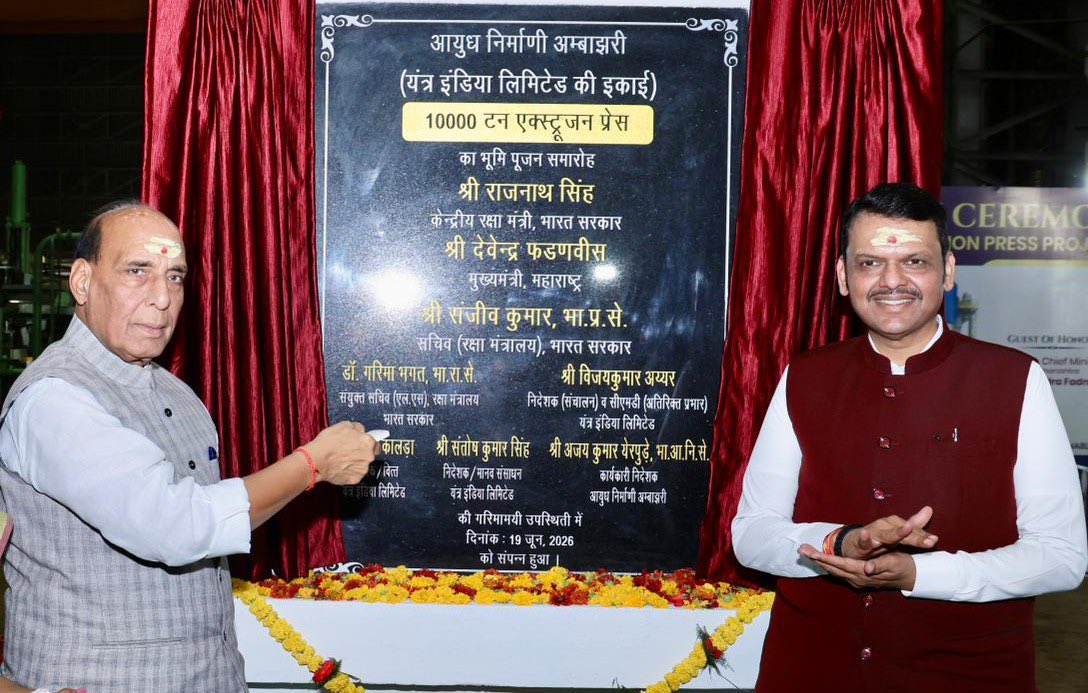
Maharashtra Chief Minister Devendra Fadnavis made a bold declaration on June 19, 2026, at the Yantra India Limited Ordnance Factory in Ambajhari, Nagpur. He stated that Nagpur and Vidarbha will emerge as a key node in India’s Nagpur Vidarbha defence manufacturing hub 2026 vision. His remarks came at the bhoomi pujan ceremony of the 10,000-tonne Aluminium Extrusion Press — one of the most advanced defence manufacturing facilities to be established anywhere in India.

What Fadnavis Said About Nagpur’s Defence Future

Fadnavis expressed confidence that the Extrusion Press will help Nagpur and the entire region become an important player in achieving the goal of self-reliance in defence manufacturing.

He described this project as a direct realisation of the Atmanirbhar Bharat and Viksit Bharat vision. He said the growing collaboration between Defence Public Sector Undertakings and the private sector is taking the nation to greater heights. For Nagpur, which already hosts Solar Industries and the Yantra India Limited headquarters, this project adds another critical layer to the city’s defence manufacturing credentials.

Operation Sindoor Referenced as Proof of New India

Fadnavis pointed towards recent strategic milestones as proof of India’s evolution. He said that when Operation Sindoor was done, the entire world saw India’s progress and its strategic capability. The entire world now believes that India is a country which cannot be played with.

He described Operation Sindoor as a shining example of the technological prowess and unique capabilities of New India. He added that this is not old India but New India — a nation that is moving forward with confidence, capability, and self-reliance at every step.

Rajnath Singh’s Warning About War-Time Supply Chains

Defence Minister Rajnath Singh used the occasion to deliver a clear message about the strategic importance of domestic production. Singh noted that when wars break out, the entire supply system gets impacted, making indigenisation crucial for national security.

He stated that a nation capable of meeting its own requirements moves forward with the greatest confidence towards safeguarding its interests, emphasising that the new facility represents a monumental shift in India’s approach to defence readiness.

Rajnath Singh also cited the success of the corporatisation of the erstwhile Ordnance Factory Board, noting that production has increased from Rs 12,755 crore in FY 2019-20 to Rs 26,282 crore in FY 2025-26. Defence exports from the former OFB entities have grown from Rs 81 crore before corporatisation to Rs 4,561 crore, with Yantra India Limited contributing Rs 397 crore.

What the 10,000-Tonne Press Will Manufacture

The proposed extrusion press will be among the most advanced facilities of its kind in India and will manufacture large and complex aluminium alloy profiles required for defence systems, fighter aircraft, missile programmes, aerospace structures, railways, and other strategic industries.

The project will help reduce dependence on imports of critical aluminium extruded components and support indigenous manufacturing under the Aatmanirbhar Bharat vision.

Until now, India has been importing a significant share of these precision aluminium profiles from abroad, making the supply chain vulnerable during times of conflict or geopolitical tension. The Nagpur facility will eliminate this vulnerability for some of India’s most critical defence programmes.

About Yantra India Limited and Its Nagpur Connection

Yantra India Limited is a major Indian public sector defence company, headquartered at Ordnance Factory Ambajhari, Nagpur. It was founded on October 1, 2021, as part of the government’s restructuring of the Ordnance Factory Board.

The company’s divisions span multiple facilities across the country including Ordnance Factory Ambarnath, Ordnance Factory Bhusawal, Ordnance Factory Dum Dum, Ordnance Factory Katni, Ordnance Factory Muradnagar, Metal and Steel Factory Ishapore, and Grey Iron Foundry Jabalpur.

With its headquarters already based in Nagpur, the addition of the 10,000-tonne Aluminium Extrusion Press makes the city’s Ambajhari campus one of the most strategically important defence production sites in the entire country.

India’s Defence Production Numbers Tell the Story

The scale of India’s defence manufacturing transformation over the past decade makes the Nagpur project all the more significant. Domestic defence production has grown from Rs 46,000 crore in 2014 to over Rs 1,78,000 crore, while exports have surged to Rs 40,000 crore.

These numbers reflect the cumulative impact of policy decisions, investment in public sector facilities like YIL, and the growing role of private sector players. For Nagpur, being at the centre of this story through both Solar Industries and Yantra India Limited is a matter of enormous civic and economic pride.

Why This Matters for Nagpur and Vidarbha

For decades, Vidarbha’s industrial growth has lagged behind western Maharashtra. The establishment of a world-class aluminium extrusion facility for defence at Nagpur changes the equation. It brings high-technology manufacturing employment, attracts allied industries, and strengthens the case for further investment in the region.

CM Fadnavis’s declaration that Nagpur and Vidarbha will become a major centre of India’s defence manufacturing ecosystem is now backed by a concrete project that is officially underway.

Nagpur Gets 10,000-Ton Aluminium Extrusion Press Plant for Defence Under Atmanirbhar Bharat

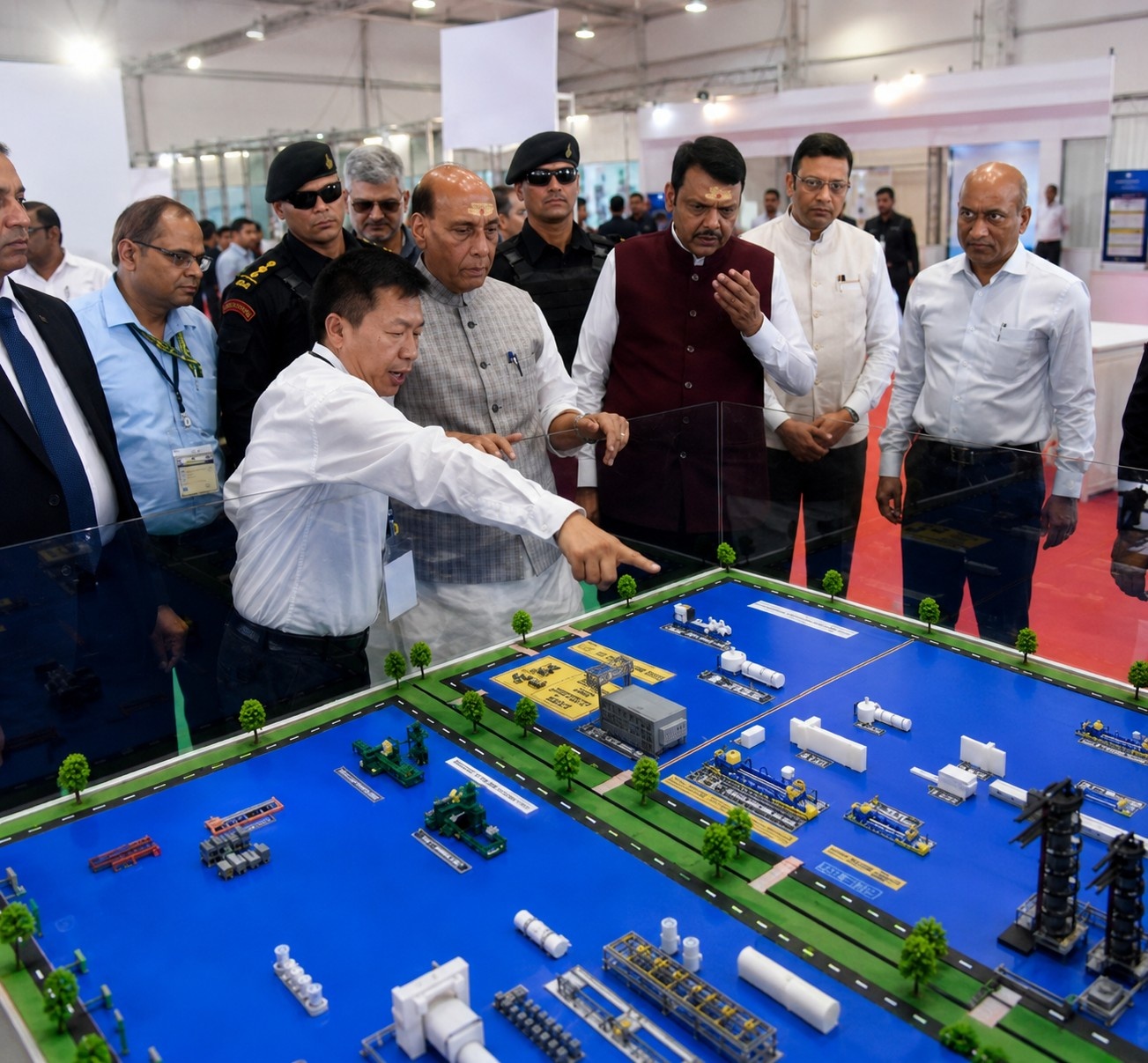
Defence Minister Rajnath Singh laid the foundation stone of a landmark Nagpur aluminium extrusion press defence project at Yantra India Limited’s Ambazari Ordnance Factory on June 19, 2026. The new facility will house a state-of-the-art 10,000-tonne capacity aluminium extrusion press that will produce high-quality aluminium alloys for India’s defence, aerospace, missile, and railway programmes. The project is a major step in reducing India’s dependence on imported aluminium components for strategic use.

What Is the Aluminium Extrusion Press Project?

The new plant at Ambazari Ordnance Factory will be one of the most powerful aluminium extrusion facilities in India. With a pressing capacity of 10,000 tonnes, it will be capable of producing high-grade aluminium alloy profiles used in the most demanding defence and aerospace applications.

Aluminium extrusion is a process that forces aluminium alloy through a shaped die to create complex cross-section profiles. These profiles are critical components in military aircraft, missile bodies, submarine structures, armoured vehicles, and advanced weapons systems. Until now, India has had to import a significant portion of these specialised aluminium components from abroad, making the supply chain vulnerable to geopolitical disruptions and pricing pressures.

The new Nagpur facility will change that by producing these components domestically, right in the heart of India’s growing defence manufacturing corridor.

Rajnath Singh’s Address at the Bhoomi Pujan

Defence Minister Rajnath Singh addressed the gathering at the Ambazari Ordnance Factory campus during the foundation stone ceremony. He stressed that India must have full control over critical defence requirements to be truly defence-ready and secure in the future.

He pointed to India’s remarkable growth in defence production as evidence of the country’s strategic shift. India’s defence production stood at approximately Rs 46,000 crore in 2014. By 2025-26, it had grown to Rs 1.78 lakh crore. Defence exports, which were just Rs 1,000 crore a decade ago, have now reached Rs 38,424 crore. The Nagpur plant is the next step in continuing this extraordinary growth trajectory.

CM Devendra Fadnavis on Nagpur’s New Role

Maharashtra Chief Minister Devendra Fadnavis was also present at the ceremony and addressed the gathering. He described the project as a direct realisation of the vision of Atmanirbhar Bharat and Viksit Bharat. He stated that this new project will make Nagpur and the Vidarbha region a major centre of India’s defence manufacturing ecosystem.

Fadnavis invoked Operation Sindoor as a demonstration of India’s growing strategic capabilities on the world stage. He said the new India is moving forward with confidence, capability, and self-reliance, and that projects like the Nagpur aluminium extrusion plant are concrete proof of this transformation.

Which Defence Programmes Will Benefit?

The 10,000-tonne aluminium extrusion press will serve multiple critical sectors. In defence and aerospace, the facility will supply aluminium profiles for military aircraft structures, missile airframes, and advanced weapon system components. For the missile programme, it will produce high-precision extrusions required for India’s indigenous missile systems. In railway applications, it will support the production of lightweight aluminium components for high-speed trains and metro rail systems. Additionally, for strategic sectors, it will cater to naval and other defence requirements that currently depend on imports.

By producing all these components domestically, India will reduce its import bill significantly and eliminate the supply chain vulnerabilities that come with depending on foreign suppliers for critical military inputs.

Why Nagpur and Ambazari Ordnance Factory?

The choice of Nagpur as the site for this project is deeply significant. The Ambazari Ordnance Factory, operated by Yantra India Limited, is one of India’s established defence manufacturing facilities. Nagpur already hosts Solar Industries, a major private-sector defence manufacturer, and is rapidly emerging as a hub of India’s defence production ecosystem.

The city’s central location, strong rail and road connectivity, and the presence of established defence and engineering industries make it an ideal location for a facility that will supply components to defence plants and assembly lines across the country.

India’s Defence Production Transformation

The Nagpur aluminium extrusion plant is part of a wider, decade-long transformation of India’s defence industrial base. The Central Government has consistently pushed for greater domestic production, reduced import dependence, and increased private-sector participation in defence manufacturing.

The growth in India’s defence exports from Rs 1,000 crore to over Rs 38,000 crore in just ten years is a testament to how far the country has come. The Nagpur project represents the next phase of this journey — moving from assembling imported components to producing the raw materials and precision inputs that go into India’s most advanced defence systems.

Exit mobile version