Eco-Friendly Ganesh Festival Guidelines – NMC Waives Permit Fees

Eco-Friendly Ganesh Festival Guidelines: With the Ganesh Festival beginning on September 7 this year, the Nagpur Municipal Corporation (NMC) has taken a significant step towards promoting an environmentally friendly celebration. In a move that reflects its commitment to sustainability, the NMC has issued a comprehensive set of guidelines designed to ensure that the festival is celebrated with minimal impact on the environment. Additionally, the NMC has decided to waive all permit fees for Ganesh Mandals, making it easier for the community to organize the festivities.

The Importance of an Eco-Friendly Ganesh Festival

The Ganesh Festival is one of the most widely celebrated festivals in India, known for its grand processions, elaborate decorations, and vibrant celebrations. However, in recent years, concerns have been raised about the environmental impact of the festival, particularly regarding the use of non-biodegradable materials, noise pollution, and the immersion of idols in natural water bodies. These practices have led to significant environmental damage, prompting authorities to take action.

Guidelines Issued by the NMC (Eco-Friendly Ganesh Festival Guidelines)

1. Ban on POP Idols

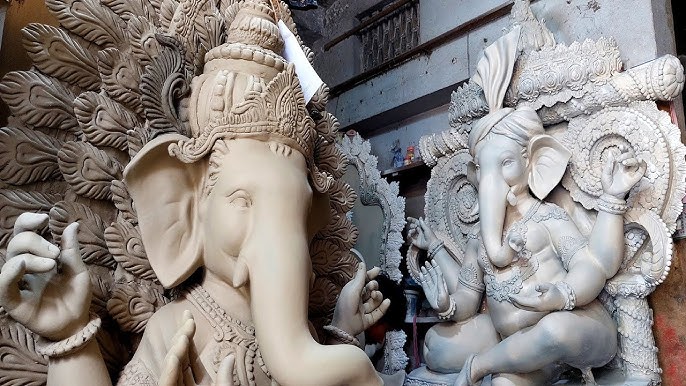
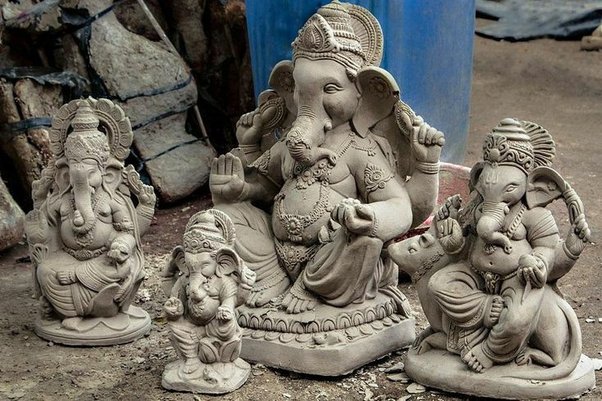
As per the Central Pollution Control Board’s guidelines dated May 12, 2020, there is a strict ban on the production and purchase of Plaster of Paris (POP) idols. POP idols are harmful to the environment as they do not dissolve easily in water, leading to water pollution. The NMC has urged citizens to opt for idols made from eco-friendly materials such as clay, which are biodegradable and do not harm the environment.

2. Implementation of ‘One Complex, One Ganpati’

To reduce the number of idols and processions, the concept of ‘One Complex, One Ganpati’ should be implemented in residential complexes, institutions, and households. This initiative is aimed at reducing the environmental impact of the festival by limiting the number of idols and ensuring that celebrations are more community-focused. Noise levels during processions should also be controlled to prevent noise pollution.

3. Registration of Idol Makers

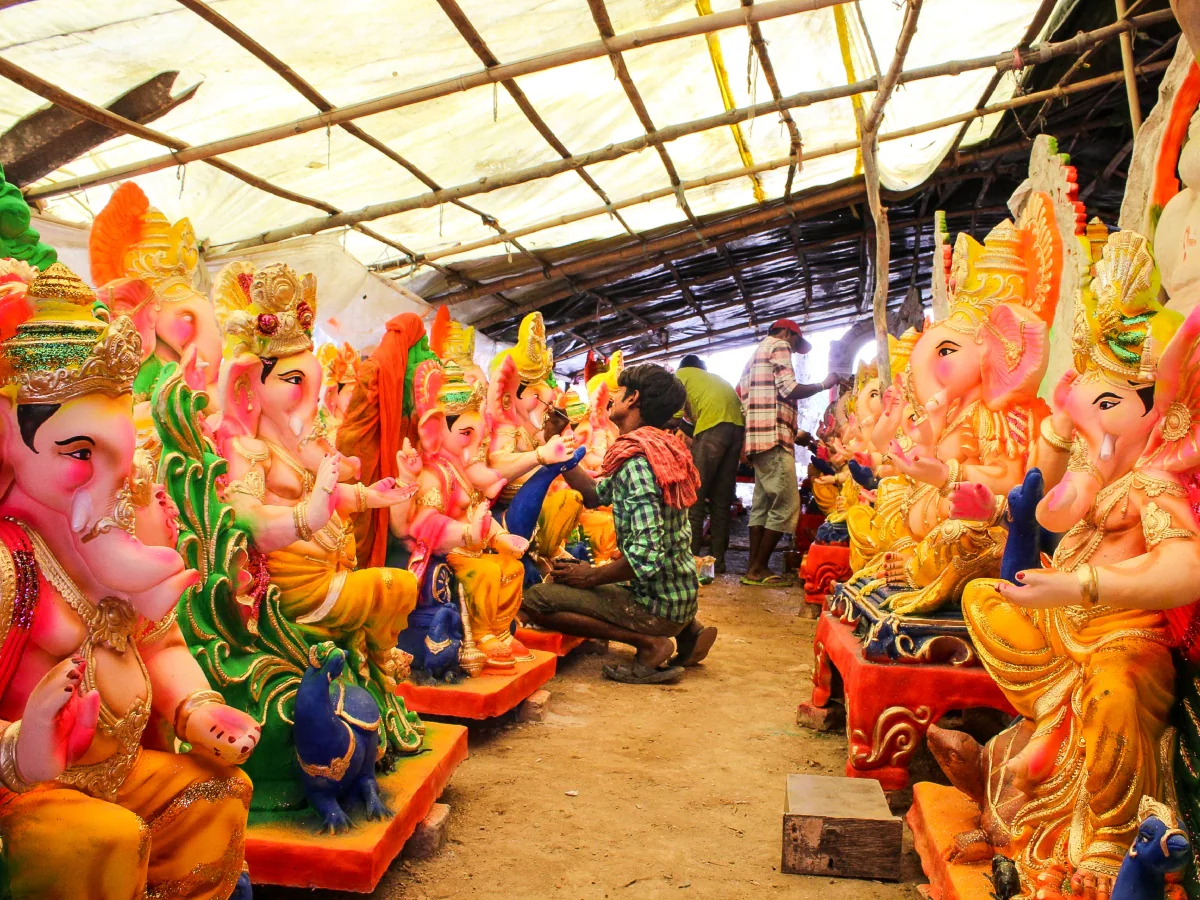
All idol makers and artists are required to register and obtain licenses through the NMC’s zonal offices(Eco-Friendly Ganesh Festival Guidelines). This measure ensures that only authorized and trained individuals are involved in the creation of idols, further promoting the use of eco-friendly materials.

4. Immersion of Idols

The immersion of idols should not be carried out in the city’s natural water bodies. All lakes within the NMC jurisdiction are restricted for immersion, and devotees are advised to use artificial ponds provided by the NMC. This guideline is crucial in preventing water pollution and protecting the city’s natural resources.

5. Height Restrictions for Idols

There will be no height restrictions for Mandal idols during the 2024 Ganesh Festival(Eco-Friendly Ganesh Festival Guidelines). However, immersion must take place only in artificial ponds. For Mandals with idols taller than 4 feet, arrangements should be made outside the NMC jurisdiction, and they should inform the relevant police stations to obtain the necessary permissions for processions.

6. Voluntary Adherence to Height Limits for Household Idols

While there is no official height limit this year, citizens are encouraged to voluntarily adhere to the previously set limit of 2 feet for household idols. This recommendation is in line with efforts to reduce the environmental impact of the festival.

7. Use of Eco-Friendly Materials

The NMC has emphasized the use of eco-friendly materials in the creation of idols. Hazardous and non-biodegradable chemical paints should not be used. Instead, idol makers are encouraged to use eco-friendly colors. Additionally, the use of plastic and thermocol for decoration is strictly prohibited.

8. Penalties for Violations

Vendors found manufacturing, storing, using, or selling POP idols will face strict penalties. The NMC has announced that such idols will be confiscated, and vendors will be fined Rs 10,000. This penalty is intended to deter the use of non-biodegradable materials and promote compliance with the guidelines.

9. Waiver of Fees for Ganesh Mandals

The NMC has waived all application verification and inspection fees of Rs 200, as well as the security deposit ranging from Rs 1,000 to Rs 5,000, for Ganesh Mandals. This waiver is part of the NMC’s effort to support the community in organizing the festival while ensuring that the celebrations are conducted in an environmentally responsible manner.

10. Additional Fee Waivers

In addition to the waiver of application fees, the NMC has also waived the Fire Department’s fees for Mandal permits, along with fees for erecting pandals on gardens, properties, and private plots. This comprehensive waiver is expected to ease the financial burden on Ganesh Mandals and encourage broader participation in the festival.

11. Online Registration and Facilitation Centres

To streamline the registration process, the NMC will provide an online registration link for Ganesh Mandals. Zonal facilitation centres will also be established to assist Mandals in the registration process and ensure that all guidelines are followed.

12. Reduced Security Deposit for Traditional Idol Makers

Based on requests from traditional idol makers, the NMC has reduced the security deposit to Rs 500, down from the usual Rs 5,000. This reduction is aimed at supporting traditional artisans while ensuring that they adhere to the eco-friendly guidelines.

13. Allocation of Public Spaces for Clay Idols

The NMC will allocate public spaces within the city for the sale of eco-friendly clay idols or provide space for the installation of stalls. The estimated charge for a 10×10 feet stall will be Rs 1,000 per stall per day. This initiative is designed to promote the use of eco-friendly materials by making them more accessible to the public.

14. Promotion of Health-Related Activities

Organizing committees and Ganesh Mandals are encouraged to prioritize health-related activities during the festival. This includes raising awareness about diseases such as malaria, dengue, and filariasis, as well as promoting cleanliness and waste segregation.

15. Adequate Lighting and Streetlight Improvements

The NMC has committed to arranging adequate lighting at artificial immersion sites and improving streetlights along immersion routes. These measures are intended to ensure the safety and convenience of devotees during the immersion process.

16. Waiver of Cleanliness Fee

The NMC has fully waived the cleanliness fee of Rs 500 for the 2024 Ganesh Festival. This waiver is part of the NMC’s broader effort to support Ganesh Mandals and promote an eco-friendly celebration.

17. Prohibition of Immersion in City Lakes

Immersion in all city lakes is strictly prohibited, and barricades will be set up to protect these natural water bodies. This measure is critical in preventing water pollution and preserving the city’s natural resources.

18. Medical Support at Immersion Sites

To ensure the safety of devotees, medical officers will arrange for ambulances at the immersion sites. This initiative is part of the NMC’s commitment to providing a safe and secure environment for the festival.

19. Fire Department and Lifeguard Presence

The fire department, along with lifeguards, will be present at immersion sites to ensure the safety of devotees. This measure is intended to prevent accidents and ensure a smooth and safe immersion process.

20. Compliance with Government and NMC Guidelines

While the fees for permits for Ganesh Mandals have been waived for the 2024 Ganesh Festival, it is mandatory to comply with the conditions mentioned in various circulars (government/NMC) as well as the orders of the High Court. This includes compliance with fire department conditions, licensing conditions, and government directives regarding the ban on plastic and thermocol.

The NMC’s guidelines for the 2024 Ganesh Festival reflect a strong commitment to promoting an environmentally friendly celebration. By waiving permit fees and issuing comprehensive guidelines, the NMC has made it easier for the community to organize the festival while ensuring that it is celebrated in a manner that respects the environment. These initiatives, if followed diligently, will help protect Nagpur’s natural resources and set a positive example for future festivals.

1. Why has the NMC banned POP idols?

The NMC has banned POP idols because they are non-biodegradable and contribute to water pollution when immersed in natural water bodies.

2. What are the penalties for vendors selling POP idols?

Vendors found selling POP idols will have their idols confiscated and will be fined Rs 10,000.

3. How can Ganesh Mandals register for the festival?

Ganesh Mandals can register online through a link provided by the NMC or visit zonal facilitation centres for assistance.

4. Are there any height restrictions for Ganesh idols this year?

There are no height restrictions for Mandal idols this year, but immersion must take place in artificial ponds.

5. What health-related activities are encouraged during the festival?

Organizing committees and Ganesh Mandals are encouraged to raise awareness about diseases like malaria, dengue, and filariasis, and promote cleanliness and waste segregation.

ISKCON Nagpur’s Grand Three-Day Janmashtami Celebration

Nagpur is gearing up for a vibrant celebration as the International Society for Krishna Consciousness (ISKCON) prepares to host a grand three-day Janmashtami Mahotsav. From 24th August to 26th August 2024, Reshimbag Ground will be the epicenter of this spiritual festivity, which promises a blend of devotion, culture, and community engagement. As the preparations take shape, excitement builds for the various events planned, including a special address by internationally renowned life coach and youth mentor, Amogh Leela Prabhu.

Day 1: A Transformational Beginning

“Tools for Transformation” – An Empowering Session

On 24th August, the celebration will commence with a program titled “Tools for Transformation” at 5 pm. This session, led by Amogh Leela Prabhu, will focus on enhancing leadership skills and overall well-being among youth. His insights are particularly valuable for students, and the event is expected to draw a large crowd of young minds eager to learn and grow. This program is organized in collaboration with several engineering colleges, with notable contributions from Dr. Chandrahas Handa, Director of Vidarbha Institute of Technology, and Harsh Prabhu of ISKCON.

Free Registration for Attendees

To facilitate participation, free registration counters will be open from the morning of 24th August. Parents of registered students are also encouraged to attend, making it a holistic experience for families looking to imbibe valuable life skills.

Day 2: Exclusive Celebration for ISKCON Lifetime Members

Special Events for Lifetime Members

The second day, 25th August, is dedicated to ISKCON lifetime members. The day’s festivities include darshan of the Lord, an Abhishek ceremony, a cultural program, and Mahaprasad. This day is a testament to the strong community bonds within ISKCON, offering lifetime members a unique opportunity to engage deeply with the spiritual proceedings.

Entry and Invitations

Lifetime members who have not received their invitation cards via WhatsApp can still gain entry by presenting their ISKCON lifetime membership card. This inclusivity extends to lifetime members from other ISKCON temples, who are also welcome to join the celebrations.

Day 3: Janmashtami Day – Open to All

Abhishek Seva for Devotees

The grand finale of the three-day celebration on 26th August is open to the general public. From 11 am to 4 pm, devotees can participate in the Abhishek Seva, a special ritual bathing of the deities, dedicated to Nitya Sevak, Mahaprasad Sevak, Sudama Sevak, and Library members. This event is expected to draw thousands of devotees from across the region, all eager to partake in the spiritual energy of the occasion.

Special Programs for Esteemed Guests

From 5 pm to 10 pm, a special program has been organized for esteemed guests, including politicians, officials, and prominent ISKCON members such as Balram Sevak, Radharani Sevak, Radha Gopinath Sevak, and new life members. This exclusive gathering will include special darshan of the Lord, kirtan of the Hare Krishna Mahamantra, and a series of dance dramas presented by IGF, IYF, and devotees.

Midnight Darshan at Shri Shri Radha Gopinath Mandir

For those who wish to continue their spiritual journey, the ISKCON temple Shri Shri Radha Gopinath Mandir will remain open for darshan from 4:30 am until 12:30 midnight on Janmashtami day. This extended darshan offers devotees ample time to connect with the divine, making it a truly unforgettable experience.

Why This Celebration is Unique

A Blend of Tradition and Modernity

ISKCON Nagpur’s Janmashtami celebration stands out for its seamless blend of tradition and modernity. The event honors ancient rituals while also addressing contemporary issues, particularly through sessions like “Tools for Transformation,” which are designed to resonate with today’s youth.

A Community-Centric Approach

The involvement of various stakeholders, including educational institutions, politicians, and the general public, underscores the community-centric nature of the celebration. It’s a reminder that spirituality is not just an individual journey but a collective experience that brings people together.

The ISKCON Nagpur Janmashtami Mahotsav is more than just a celebration; it’s a spiritual journey that promises to enrich the lives of all who attend. With its diverse range of programs, from youth empowerment sessions to traditional rituals, the event offers something for everyone. Whether you’re a lifetime member of ISKCON or a first-time visitor, this three-day celebration is an opportunity to immerse yourself in devotion, culture, and community. As ISKCON Nagpur President Sachidanand Prabhu and Vice President Vrajendratanay Prabhu have warmly invited, all are welcome to participate in this spiritually enriching experience.

  • What is the significance of Janmashtami?
    • Janmashtami marks the birth of Lord Krishna, a revered deity in Hinduism, celebrated with devotion and joy.
  • Who is Amogh Leela Prabhu?
    • Amogh Leela Prabhu is an internationally renowned life coach and youth mentor known for his motivational talks and spiritual guidance.
  • Can non-members attend the ISKCON Nagpur celebration?
    • Yes, the final day of the celebration on 26th August is open to the general public.
  • What are the highlights of the ISKCON Nagpur Janmashtami celebration?
    • Highlights include the “Tools for Transformation” session, Abhishek Seva, and cultural programs featuring kirtan and dance dramas.
  • Is there an entry fee for the events?
    • No, all events are free to attend, with registration available on-site for certain sessions.

RSS Chief Hoists National Flag at Sangh Headquarters: Celebrating 78 Years of Independence

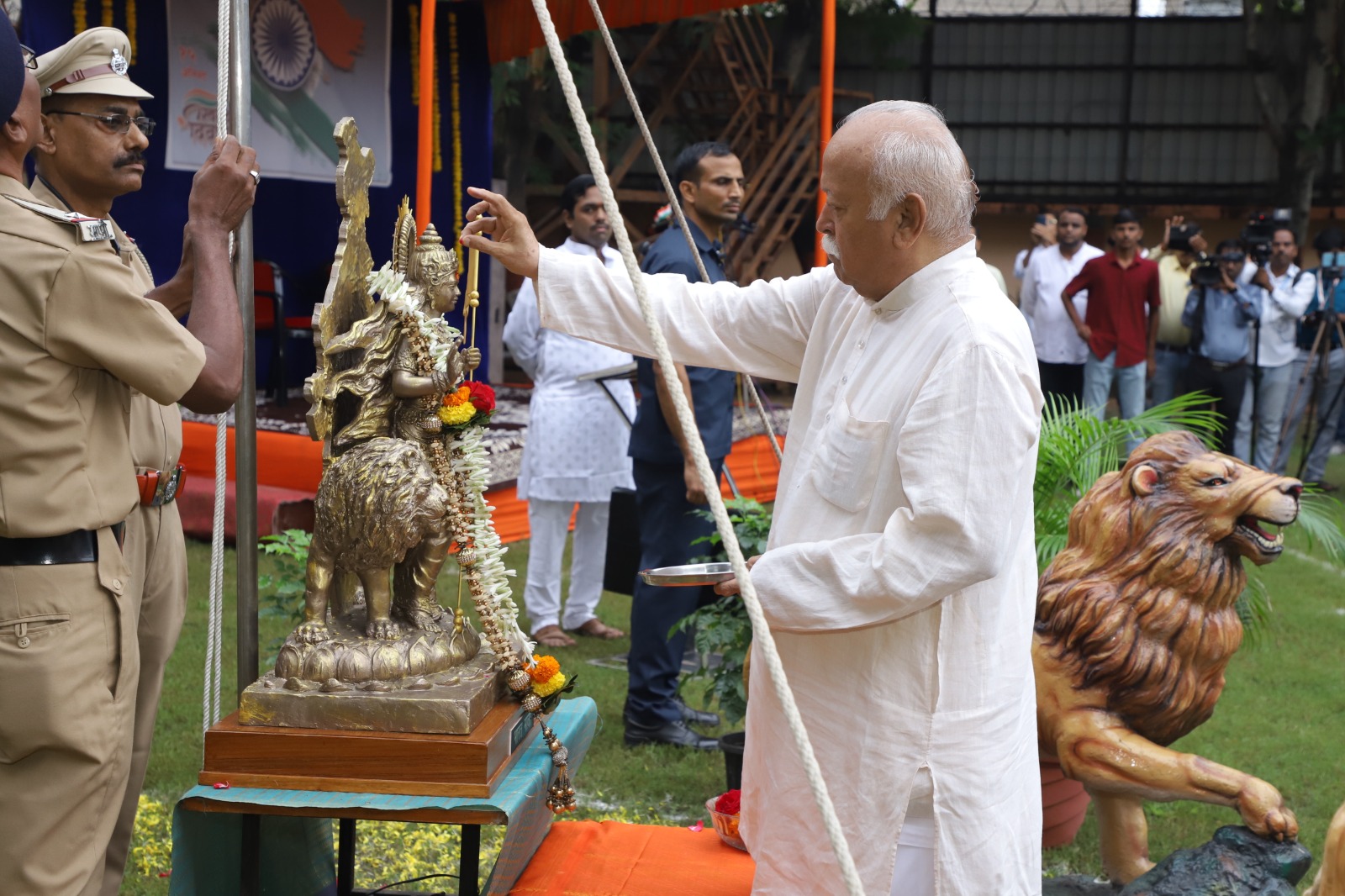
RSS Chief Hoists National Flag: On the auspicious occasion of the 78th Independence Day, RSS Chief Mohan Bhagwat had the honor of hoisting the national flag at the RSS Headquarters. This significant event not only commemorates the country’s long journey to freedom but also serves as a reminder of the sacrifices made by countless individuals who contributed to India’s independence.

A Moment of Reflection

The ceremony was a poignant moment, filled with reflection and pride. Mohan Bhagwat’s (RSS Chief Hoists National Flag) address highlighted the profound impact of independence on the nation and its people. His words served as a tribute to the heroes of the past and a call to uphold the values of freedom and unity.

The Legacy of Independence

In his speech, Bhagwat acknowledged the 78 years of independence that India has enjoyed. He emphasized the sacrifices made by those who fought for freedom and the role of society in shaping the country post-independence. This segment of his address was a tribute to the generations that laid down their lives for the nation, a reminder of the values they stood for, and an appeal for the current generation to continue safeguarding these ideals.

Challenges and Responsibilities

Bhagwat also touched upon the challenges faced by neighboring countries and the impact on the Indian diaspora living there. His comments reflected a deep sense of empathy and responsibility, illustrating India’s role not just as a sovereign nation but as a compassionate global citizen.

Key Points from Bhagwat’s Address

  • Acknowledgment of Sacrifices: The speech honored the sacrifices of freedom fighters.
  • National Responsibility: Emphasis on India’s role in maintaining peace and helping others.
  • Challenges Abroad: Recognition of the struggles faced by Indian communities in neighboring countries.

Reflections on National Security

Bhagwat’s address also included reflections on national security and the ongoing efforts to maintain peace. He reassured the audience that despite global tensions, India remains committed to a stance of non-aggression and aid.

India’s Tradition of Peace

One of the significant aspects of Bhagwat’s speech was the emphasis on India’s tradition of non-aggression. He highlighted how India has consistently refrained from initiating conflict and instead has extended a helping hand to those in need. This historical perspective on India’s foreign policy underscores a commitment to peace and benevolence.

Celebrating Independence Day

The Independence Day ceremony at the RSS Headquarters was more than just a symbolic act; it was a celebration of India’s journey and an affirmation of its values. The event brought together people from various walks of life, united in their pride for their nation and its achievements.

Community and Unity

The ceremony fostered a sense of community and unity among attendees. It was a moment to reflect on the past, celebrate the present, and look forward to the future. Such events play a crucial role in reinforcing national pride and collective responsibility.

The 78th Independence Day celebration at the RSS Headquarters, marked by RSS Chief Mohan Bhagwat’s address and the hoisting of the national flag, was a meaningful tribute to India’s past and a reaffirmation of its future. Bhagwat’s words echoed the values of sacrifice, responsibility, and peace, reminding us all of the importance of preserving the legacy of independence.

  1. What was the main message of Mohan Bhagwat’s speech on Independence Day?
    • The speech focused on honoring the sacrifices of freedom fighters, recognizing India’s role in global peace, and empathizing with challenges faced by neighboring countries.
  2. How does the RSS celebrate Independence Day?
    • The RSS typically celebrates Independence Day with a flag hoisting ceremony and speeches that highlight national pride and reflect on the values of freedom and unity.
  3. What is the significance of the 78th Independence Day?
    • It marks 78 years of India’s independence, celebrating the country’s journey and the values that underpin its freedom and sovereignty.
  4. How does Mohan Bhagwat view India’s role in global affairs?
    • Bhagwat views India as a responsible global citizen committed to peace and aid, refraining from aggression while helping those in need.
  5. What role do events like these play in national unity?
    • Such events foster a sense of community and pride, reinforcing national unity and collective responsibility among citizens.

Nagpur’s Eco-Friendly Ganesha Festival: A Call for Sustainable Celebrations

Eco-Friendly Ganesha Festival | PoP Ban Nagpur: As the auspicious occasion of Lord Ganesha’s arrival on September 7 approaches, the Nagpur Municipal Corporation (NMC) has issued stringent guidelines to ensure an environmentally conscious celebration. These regulations include a complete ban on the production, sale, and purchase of Plaster of Paris (PoP) Ganesh idols within the city. The directive is in alignment with the Central Pollution Control Board guidelines and is aimed at curbing the environmental impact associated with the use of PoP.

Why the Ban on PoP Idols?

The Environmental Impact of PoP

Plaster of Paris, while a popular material for making Ganesh idols, is notorious for its environmental impact. PoP does not dissolve easily in water, leading to the pollution of water bodies during the immersion of idols. This has prompted the NMC to take decisive action against the use of PoP in the making of Ganesh idols.

Compliance with High Court Orders

The NMC’s decision is also in compliance with a high court order, which mandates the prohibition of PoP idols. The court’s ruling was based on the harmful effects of PoP on the environment, particularly the water bodies in and around Nagpur.

Strict Prohibitions and Penalties

Banning the Production and Sale of PoP Idols

The NMC has banned the production, sale, and purchase of PoP idols within the city limits. This ban is being strictly enforced, with violators facing a hefty fine of ₹10,000. This move is part of a broader effort to ensure that the upcoming Ganesh festival is celebrated in an eco-friendly manner.

Immersion Guidelines for Large Idols (Eco-Friendly Ganesha Festival)

In addition to the ban on PoP idols, the NMC has also set guidelines for the immersion of large idols. Idols exceeding 4 feet in height are not permitted to be immersed within city limits. Instead, those installing such idols are required to arrange for their immersion outside the municipal boundaries. This measure is aimed at reducing the strain on the city’s water bodies.

Encouraging the Use of Eco-Friendly Materials

Promoting Clay Idols (PoP Ban Nagpur)

The NMC is encouraging citizens to use clay idols for their Ganesh festivities. Clay is an eco-friendly (Eco-Friendly Ganesha Festival) alternative to PoP and dissolves easily in water, causing minimal environmental harm. Citizens are being urged to choose clay idols for their home installations to contribute to a greener festival.

Limiting the Height of Household Idols

While there are no strict height restrictions for household Ganesh idols, the NMC has recommended a voluntary height limit of 2 feet. This suggestion is in line with the broader goal of reducing the environmental footprint of the festival.

Banning Harmful Materials

Prohibition of Plastic and Thermocol

In addition to the ban on PoP, the NMC has also prohibited the use of plastic and thermocol for idol decoration. These materials are non-biodegradable and contribute to environmental pollution. By banning their use, the NMC is taking a holistic approach to promoting an eco-friendly Ganesh festival.

Guidelines for Idol Makers

Idol makers in Nagpur have been directed to use only eco-friendly materials and colors in their creations. The use of harmful and non-degradable chemicals is strictly prohibited. This ensures that the idols produced are not only beautiful but also environmentally safe.

The Role of Citizens in Ensuring a Green Festival

Adhering to Immersion Guidelines

Citizens are being asked to follow the NMC’s guidelines for idol immersion. The use of city lakes for immersion is strictly prohibited, with citizens being directed to use artificial ponds instead. This measure is designed to protect the city’s natural water bodies from pollution.

Obtaining Necessary Permissions

Mandals (community groups organizing the festival) must notify the concerned police department and obtain the necessary permissions for processions. This ensures that the festival is celebrated in a safe and orderly manner.

Voluntary Compliance for a Better Tomorrow

The NMC has appealed to the citizens of Nagpur to voluntarily comply with these guidelines. (PoP Ban Nagpur) By choosing eco-friendly idols and adhering to the immersion guidelines, citizens can play a crucial role in ensuring that the Ganesh festival is celebrated in a sustainable manner.

Nagpur’s move to ban PoP idols and enforce eco-friendly guidelines for the Ganesh festival is a significant step towards protecting the environment. As citizens, it is our responsibility to support these efforts by choosing sustainable practices and materials. By celebrating in an eco-friendly manner, we not only honor Lord Ganesha but also contribute to the well-being of our planet.

1. Why has the NMC banned PoP Ganesh idols?

The NMC has banned PoP Ganesh idols due to their harmful environmental impact, particularly the pollution of water bodies during immersion.

2. What are the guidelines for the immersion of large idols?

Idols exceeding 4 feet in height are not allowed to be immersed within city limits. These idols must be immersed outside the municipal boundaries.

3. Can I use plastic or thermocol for idol decoration?

No, the use of plastic and thermocol for idol decoration is strictly prohibited by the NMC.

4. What materials should be used for making Ganesh idols?

Idol makers are encouraged to use eco-friendly materials such as clay and natural colors.

5. What is the penalty for violating the NMC’s guidelines?

Violators of the NMC’s guidelines, including the production or sale of PoP idols, face a fine of ₹10,000.

Dhapewada Temple: The Pandharpur of Vidarbha and Its Ashadhi Ekadashi Festivities

Nestled on the banks of the Chandrabhaga river, 50 kilometres west of Nagpur, the Dhapewada temple, also known as the ‘Pandharpur of Vidarbha,’ is abuzz with preparations for the Ashadhi Ekadashi festival on July 17. This temple’s rich history, spiritual significance, and vibrant celebrations make it a cornerstone of cultural heritage in the Vidarbha region.

A Glimpse into the History of Dhapewada Temple

The Legend of Sant Kolba Swami Maharaj

Sant Kolba Swami Maharaj, a revered saint, is central to the temple’s origins. Unable to undertake the pilgrimage to Pandharpur due to old age, he dreamt of Lord Vitthal appearing before him. The deity instructed him to find a self-manifested (Swayambhu) idol in a step-well near the river. This miraculous discovery around 1741 led to the establishment of the Dhapewada temple.

The Kholkute Family’s Contribution

The current temple structure, measuring 42×26 meters, is attributed to the Kholkute family, contemporaries of Kolba Swami Maharaj. Their devotion and efforts have preserved and maintained the sanctum sanctorum, which houses the sacred black stone idol of Lord Vitthal along with Rukmini.

Artistic Splendor of the Temple

The temple is adorned with intricate carvings and paintings depicting various gods and goddesses, adding to its charm. These artistic elements not only enhance the aesthetic appeal but also reflect the rich cultural heritage of the region.

Ashadhi Ekadashi: A Festival of Devotion

Significance of Ashadhi Ekadashi

Ashadhi Ekadashi holds a special place in the hearts of devotees. It is believed that on this day, Lord Vitthal graces the temple, making it an even more auspicious occasion. The festival is marked by grand celebrations, attracting lakhs of devotees from Vidarbha and beyond.

Historical Celebrations

“For the past 300 years, the temple has witnessed a grand celebration on this day,” said Dr. Bhalchandra Hardas, an expert on Vidarbha’s heritage and history. The festivities have become a tradition, with elaborate preparations and a joyous gathering of devotees.

Recent Discoveries and Developments

Dr. Hardas shared that the same ancient step-well in which the self-manifested idols appeared centuries ago was found last year during excavation around the temple for developmental work. “The excavation took place in June 2023. The well is now well maintained,” he said.

The Legacy of Sant Kolba Swami Maharaj

The Ashram and Samadhi Mandir

Sant Kolba Swami, instrumental in establishing the iconic Dhapewada temple, left behind a lasting legacy. His ashram and samadhi mandir are revered by devotees. “Kolba Swami lived for 105 years and attained Samadhi in 1762. Since then, this ashram has been functional with one of his family members as the head,” said Nitin Shete, a youth activist in Dhapewada.

Current Leadership

Presently, Shriharibapu Maharaj Welekar, a direct descendant of Sant Kolaba Swami, heads the ashram. Under his guidance, the ashram continues to uphold the spiritual traditions and serves as a center of devotion and community activities.

Preparations for Ashadhi Ekadashi 2024

Anticipating a Grand Gathering

This year promises to be no different. With preparations in full swing, the Dhapewada temple is all set to welcome devotees for a joyous celebration of Ashadhi Ekadashi. As tradition dictates, a grand gathering of devotees is expected.

Monsoon Preparedness

The temple administration, mindful of the monsoon season, has made all necessary preparations for the week-long festivities. From ensuring adequate shelter to organizing various cultural and religious activities, every detail has been meticulously planned.

Engaging Activities for Devotees

The festivities will include bhajans, kirtans, and spiritual discourses, providing an immersive experience for the devotees. The vibrant atmosphere, filled with devotion and joy, reflects the temple’s spiritual significance and cultural richness.

The Dhapewada temple, with its deep historical roots and vibrant cultural significance, stands as a testament to the enduring devotion and rich heritage of the Vidarbha region. As preparations for the Ashadhi Ekadashi festival continue, the temple is set to welcome a sea of devotees, ensuring an unforgettable spiritual experience.

1. What is the significance of Ashadhi Ekadashi?

Ashadhi Ekadashi is a highly auspicious day believed to be when Lord Vitthal graces the Dhapewada temple, making it a special occasion for devotees.

2. Who established the Dhapewada temple?

The temple was established by Sant Kolba Swami Maharaj, following his dream of Lord Vitthal and the discovery of a self-manifested idol in a step-well near the river.

3. How old is the Dhapewada temple?

The temple dates back to around 1741, making it nearly 300 years old.

4. What recent discoveries were made at the temple?

An ancient step-well, where the self-manifested idols were found, was rediscovered during excavation work in June 2023.

5. Who currently heads the ashram associated with the Dhapewada temple?

Shriharibapu Maharaj Welekar, a direct descendant of Sant Kolba Swami Maharaj, currently heads the ashram.

हनुमान जन्मोत्सव पर जामसांवली में लाखों श्रद्धालुओं ने किए दर्शन

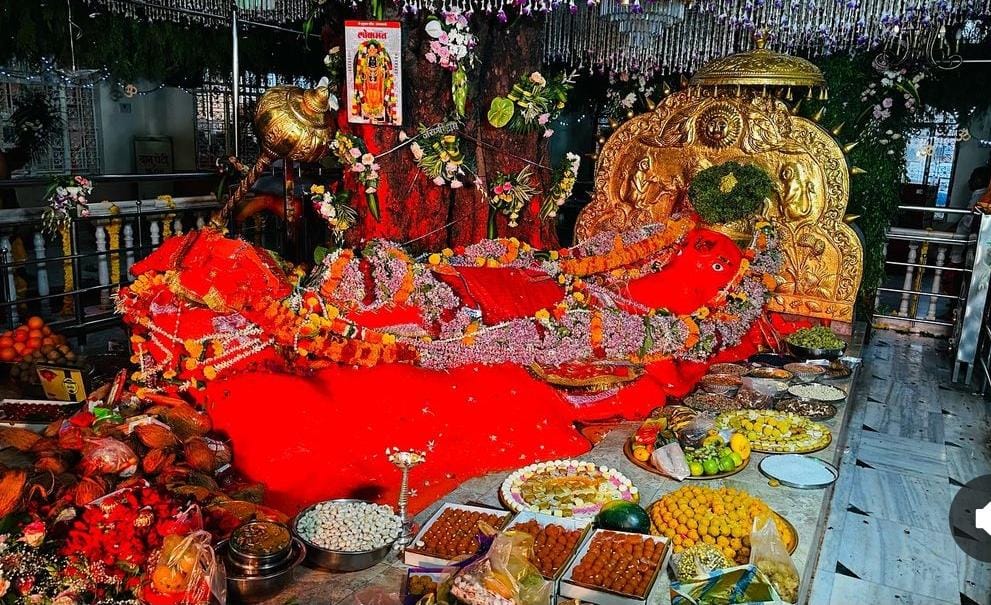
जामसांवली के चमत्कारिक हनुमान मंदिर में मंगलवार को हनुमान जन्मोत्सव पर मध्यप्रदेश, महाराष्ट्र और विभिन्न राज्यों से लाखों की संख्या में श्रद्धालुओं ने हनुमानजी के दर्शन किए। मध्य रात्रि 2 बजे से हनुमान जी की श्रीमूर्ति का रुद्राभिषेक,महापूजा के बाद महाआरती की गई। सुबह 5 बजे से हनुमान जी की श्री मूर्ति के दर्शन के लिए श्रद्धालुओं का तांता लगा रहा। मंदिर के गर्भगृह को फूलों से सजाया गया था। प्रशासन द्वारा कड़ी सुरक्षा व्यवस्था की गई थी। कई भक्त पदयात्रा कर गदा अर्पण करने पहुंचे। मंदिर ट्रस्ट कमेटी ने अयोध्या में विराजे राम लला की हूबहू प्रतिकृति मंदिर परिसर में स्थापित की ,जो श्रद्धालुओं के लिए आकर्षण का केंद्र रही। मंदिर ट्रस्ट कमेटी और विभिन्न सामाजिक संगठनों ने जगह-जगह महाप्रसाद और पेयजल वितरित किया। ग्रामीण आदिवासी समाज विकास संस्थान के कार्यकर्ताओं ने श्रद्धालुओं को मानसिक स्वास्थ्य की जानकारी दी।

विश्राम अवस्था में विराजमान हैं श्रीमूर्ति
भारतीय जीवन में श्रीराम के सुपात्र पवन पुत्र हनुमान जी का अत्यंत विशिष्ट स्थान है। पवन सुत के प्रति इस अगाध श्रद्धा का केंद्र है जामसांवली का हनुमान मंदिर, जहां पीपल के पेड़ के नीचे लेटी हुई अवस्था में हनुमानजी की प्रतिमा विराजमान है। प्रतिमा की नाभि से पवित्र जल आता है। पांढुर्णा जिले के सौंसर तहसील मुख्यालय से 7 किमी और नागपुर-छिंदवाड़ा नेशनल हाईवे पर बजाज चौक से पांढुर्ना मार्ग पर एक किमी दूर जामसांवली का हनुमान मंदिर श्रद्धा व आस्था का केंद्र है। किवदंतियों के अनुसार हनुमान जी की श्रीमूर्ति पीपल के पेड़ के नीचे स्वयंभू प्रकट हुई है। पीपल के पेड़ के नीचे विराजमान हनुमानजी की श्रीमूर्ति ऊर्ध्वमुखी है। संपूर्ण भारत वर्ष में इस तरह की ऊर्ध्वमुखी श्रीमूर्ति कहीं और नहीं है। मान्यता हैं कि यहां श्रीमूर्ति के नाभि से निकले जल से असाध्य बीमारियां ठीक होती है।

Ram Navami Shobhayatra: Celebrating Tradition and Devotion

Ram Navami, a sacred occasion celebrated with fervor and devotion by millions across the globe, is a time when communities come together to honor the birth of Lord Rama. Among the myriad festivities that adorn this auspicious day, one of the most captivating events is the Shobhayatra. This year, on April 17th, the streets of Nagpur will be illuminated with the vibrancy of culture and spirituality as the city hosts a grand procession, showcasing the rich heritage and deep-rooted reverence for Lord Rama.

The Spectacle: A Glimpse into Tradition

At the heart of the Shobhayatra lies a magnificent spectacle – a replica of the revered Shriram Mandir of Ayodhya. Crafted with meticulous detail and devotion, this replica stands tall as the focal point of the procession. Adorned with vibrant embellishments, the temple finds its place atop a majestic chariot, ready to embark on a journey of reverence and celebration.

A Journey of Devotion: Unveiling the Details

The Shobhayatra, a symbol of unwavering devotion and reverence, boasts an array of attractions. With 85 floats gracing its path, the procession promises a visual extravaganza like no other. Alongside the resplendent temple replica, groups of lezim, dhol-tasha, skaters, and folk dancers infuse the air with rhythmic melodies and joyous fervor.

Embracing Tradition: A Community Affair

Central to the essence of Ram Navami is the spirit of community and participation. Over 22,000 volunteers, driven by a shared reverence for Lord Rama, will partake in the procession, adding to the vibrant tapestry of the event. The presence of esteemed dignitaries, including Punjab Governor Banwarilal Purohit, Maharashtra Deputy Chief Minister Devendra Fadnavis, Union Minister Nitin Gadkari, and RSS Sarsanghchalak Dr. Mohan Bhagwat, further underscores the significance of the occasion.

The Path of Devotion: Illuminating the Streets

As the procession winds its way through the streets of Nagpur, adorned with the meticulous decorations by various organizations, it casts a spellbinding aura, drawing both devotees and onlookers alike. From Ram Nagar to Gandhi Nagar, the route pulsates with energy and reverence, offering a glimpse into the rich tapestry of traditions that adorn the city.

A Feast for the Senses: Celebrating with Gusto

In anticipation of Ram Navami, the eve comes alive with a spectacular firecracker show at the Poddareshwar Ram Mandir premises, setting the stage for the grandeur that awaits. Amidst the jubilant atmosphere, the solemnity of the Puja, scheduled for 4 pm, serves as a poignant reminder of the spiritual significance underlying the festivities.

Beyond Boundaries: A Celebration Unfettered

In a testament to its transcendent nature, the Shobhayatra stands unaffected by the constraints of the election code of conduct, embracing the spirit of celebration with unwavering zeal and devotion.

Ram Navami Shobhayatra epitomizes the essence of tradition, spirituality, and community. As the streets of Nagpur come alive with the resplendent procession, it serves as a poignant reminder of the enduring legacy of Lord Rama and the unifying power of devotion.

FAQs

1. What is the significance of Ram Navami Shobhayatra?

Ram Navami Shobhayatra symbolizes the celebration of Lord Rama’s birth and serves as a demonstration of devotion and community unity.

2. Who participates in the procession?

The procession sees participation from thousands of volunteers, along with esteemed dignitaries and cultural groups, adding to its vibrancy and grandeur.

3. How long is the route of the Shobhayatra?

The procession covers a distance of approximately 14 kilometers, winding through the main streets of Nagpur and its suburbs.

4. Are there any special attractions during the procession?

Yes, the procession features 85 floats, along with performances by cultural groups, firecracker shows, and the solemn Puja ceremony.

5. Is the Shobhayatra affected by any regulations?

No, despite being a religious event, the Shobhayatra remains unaffected by the election code of conduct, allowing for uninterrupted celebrations.

Poddareshwar Gears Up For Ram Navami: A Celebration of Faith and Politics in Nagpur

A Vibrant Tradition Renewed

Poddareshwar Temple Nagpur: Ram Navami, an annual celebration of Lord Ram’s birth, holds a special place in the heart of Nagpur. This year, as the city gears up for its festivities, there’s an added fervor in the air. Two significant events converge to make this year’s celebration extraordinary: the long-awaited inauguration of the grand Ram Temple in Ayodhya and the imminent elections.

Two Processions, One Spirit

Nagpur, steeped in tradition, boasts two major Ram Navami processions. The older, originating from the historic Poddareshwar Ram Mandir, weaves through the narrow lanes of the old city. In contrast, the newer procession commences at the Ram Mandir in Ram Nagar, dominating the streets of west Nagpur. Both processions, slated for April 17th evening, coincide with the final day of official campaigning for the LS elections. Thus, the Shobha Yatras are poised to carry a subtle political undertone.

Politics and Piety

While organizers of these processions officially distance themselves from political influences, whispers abound of major political parties planning to partake in the festivities. It’s an opportune moment for politicians to forge connections with voters amidst the auspicious ambiance.

A Visual Extravaganza

The Poddareshwar (Poddareshwar Temple Nagpur) Ram Mandir procession promises to dazzle spectators with over 90 vibrantly decorated floats. Many of these floats will showcase the grandeur of the newly built temple in Ayodhya, adding a majestic touch to the celebration. Meanwhile, the procession in west Nagpur will feature a float depicting the Kalki avatar of Lord Vishnu, adding a spiritual dimension to the spectacle.

As Nagpur embraces the spirit of Ram Navami, it embarks on a journey that intertwines faith with politics. The convergence of the inauguration of the Ram Temple and the elections lends this year’s celebration a unique significance, promising a vibrant and memorable experience for all.

FAQs

1. Will the political undertone affect the sanctity of the celebrations?

While political participation adds a contemporary layer, the core essence of Ram Navami remains intact, celebrating Lord Ram’s birth.

2. How can visitors best experience the festivities?

Exploring both processions offers a comprehensive view of Nagpur’s rich cultural heritage and religious fervor.

3. Are the processions open to everyone?

Absolutely! The inclusivity of Ram Navami ensures that people from all walks of life can partake in the celebrations.

4. What safety measures are in place for attendees?

Organizers prioritize the safety of participants with crowd control measures and assistance from local authorities.

5. How does the inauguration of the Ram Temple impact the celebrations?

The inauguration adds a renewed sense of pride and reverence, elevating the festivities to new heights of spiritual significance.

City Gets A Blue Hue: Thousands Gather At Deekshabhoomi On Ambedkar Jayanti

A Celebratory Tribute to Dr. Babasaheb Ambedkar

Nagpur witnessed a remarkable spectacle on Sunday as thousands of devotees and notable figures congregated at Deekshabhoomi to commemorate the 133rd birth anniversary of Dr. Babasaheb Ambedkar. The pleasant morning welcomed devotees with open arms, marking a refreshing departure from recent rainy days. From the crack of dawn, the influx of devotees painted the city with a vibrant hue, setting the stage for an unforgettable celebration.

A Tapestry of Blue Flags: Honoring the Architect of the Indian Constitution

The entire Deekshabhoomi complex was adorned with blue flags, symbolizing the profound reverence for the visionary architect of the Indian Constitution. The sea of blue served as a poignant reminder of Dr. Ambedkar’s enduring legacy and his invaluable contributions to the fabric of Indian society.

Dignitaries Pay Tribute: A Unifying Moment Amidst Political Differences

Prominent political figures, including Congress president Mallikarjun Kharge, Union minister Nitin Gadkari, deputy CM Devendra Fadnavis, and NCP state president Jayant Patil, graced Deekshabhoomi with their presence. Despite their diverse political affiliations, they set aside partisan rhetoric to collectively honor Dr. Ambedkar’s legacy.

Safeguarding the Constitution: A Pledge for Unity and Democracy

Addressing the gathering, Kharge underscored the paramount importance of safeguarding the Constitution and upholding India’s democracy. His sentiments resonated with attendees, fostering a rare moment of unity amidst the prevailing political landscape.

Embracing Development: Optimism Amidst Construction

While some attendees noted minor inconveniences due to ongoing construction work at Deekshabhoomi, the prevailing mood remained one of celebration and optimism. The forthcoming developments were viewed as a positive stride towards enhancing the memorial site and preserving Dr. Ambedkar’s legacy for generations to come.

Resonating Spirit: Dr. Ambedkar Jayanti Across Nagpur

The spirit of Dr. Ambedkar Jayanti transcended the confines of Deekshabhoomi, permeating every corner of Nagpur. From garlanding Dr. Ambedkar’s statue at Samvidhan Square to adorning statues across the city with garlands, the fervor of the celebration was palpable.

Festivities Galore: Culminating in Grandeur

As the day progressed, festivities unfolded across the city, with cake-cutting ceremonies, DJ music, and firecrackers adding to the jubilant atmosphere. Vibrant rallies traversed through different neighborhoods, converging at Samvidhan Chowk (RBI Square) for a grand culmination, complete with a mesmerizing laser show.

The commemoration of Dr. Babasaheb Ambedkar’s birth anniversary at Deekshabhoomi was not merely a celebration but a reaffirmation of his enduring legacy and the principles he stood for. Amidst the sea of blue flags and political dignitaries, Nagpur bore witness to a moment of unity, reflecting the timeless relevance of Dr. Ambedkar’s ideals in shaping the collective conscience of the nation.

FAQs

1. What is the significance of Deekshabhoomi?

Deekshabhoomi holds immense significance as the place where Dr. Babasaheb Ambedkar embraced Buddhism along with his followers, renouncing the caste system and advocating for social equality.

2. How does Nagpur commemorate Dr. Ambedkar Jayanti?

Nagpur commemorates Dr. Ambedkar Jayanti with fervent enthusiasm, with festivities including garlanding of statues, cultural events, and public gatherings across the city.

3. Why is Dr. Ambedkar’s legacy revered?

Dr. Ambedkar’s legacy is revered for his pivotal role in drafting the Indian Constitution, championing the cause of social justice, and advocating for the rights of marginalized communities.

4. What role do political leaders play in the commemoration?

Political leaders pay homage to Dr. Ambedkar’s legacy by participating in commemorative events and emphasizing the importance of upholding the principles enshrined in the Constitution.

5. How does the commemoration reflect unity?

Despite political differences, the commemoration of Dr. Ambedkar Jayanti serves as a unifying force, bringing together individuals from diverse backgrounds to honor his contributions to nation-building.

Exploring the Heartwarming Gesture of Nagpur Police Commissioner Dr. Ravindra Singal During Holi

In a world where news often revolves around crime and chaos, it’s refreshing to come across stories that restore our faith in humanity. One such heartwarming tale comes from Nagpur, where Police Commissioner Dr. Ravindra Singal made headlines for his compassionate act during the festival of Holi.

A Day of Joy and Celebration

Holi, known as the festival of colors, is celebrated with great enthusiasm across India. It’s a time when people come together to spread joy, happiness, and love. In Nagpur, the streets were alive with vibrant colors as children and adults alike indulged in the festivities.

An Unlikely Participant

Amidst the revelry, Nagpur Police Commissioner Dr. Ravindra Singal decided to join in on the fun. Rather than staying confined to his office, Dr. Singal took to the streets to partake in the Holi celebrations. His presence added an extra layer of joy to the festivities, demonstrating a connection between law enforcement and the community they serve.

Spreading Smiles and Sweetness

Not only did Dr. Singal participate in playing Holi with the children, but he also went a step further by distributing sweets. His gesture of kindness was met with smiles and gratitude from the youngsters, who were thrilled to interact with a figure of authority in such a jovial setting.

Building Trust and Relationships

Dr. Singal’s decision to join the Holi celebrations wasn’t just about having fun; it was about building trust and fostering positive relationships with the community. By actively engaging with the public during a festive occasion, he showed that the police force is approachable and cares about the well-being of the citizens.

Embracing Diversity and Inclusivity

Holi is a festival that transcends barriers of age, gender, and social status. Dr. Ravindra Singal participation exemplified the spirit of inclusivity, sending a powerful message of unity and harmony. In a society often divided by differences, his actions served as a reminder of the importance of coming together as one community.

In conclusion, Nagpur Police Commissioner Dr. Ravindra Singal participation in Holi celebrations exemplifies the true essence of community policing. His willingness to connect with the people on a personal level demonstrates a commitment to serving with compassion and empathy. In a world where trust in law enforcement is crucial, gestures like these go a long way in bridging the gap between the police and the public.

FAQs

1. Was Dr. Singal’s participation in Holi a one-time event?

  • No, Dr. Singal has been known to actively engage with the community on various occasions, including festivals like Holi.

2. Did Dr. Singal’s gesture receive any recognition?

  • Yes, his heartwarming act garnered praise from both local residents and social media users, highlighting the positive impact of his actions.

3. How can other law enforcement agencies learn from Dr. Singal’s example?

  • By prioritizing community engagement and demonstrating a genuine interest in the well-being of the public, other police departments can emulate Dr. Singal’s approach to fostering trust and building relationships.

4. What message does Dr. Singal’s participation in Holi send to the community?

  • It sends a message of inclusivity, unity, and approachability, reinforcing the idea that law enforcement is here to serve and protect all members of society.

5. How can citizens contribute to strengthening the relationship with law enforcement?

  • Citizens can actively participate in community events, engage in constructive dialogue with law enforcement officials, and work together to address issues affecting the community.
Exit mobile version