Koradi Mahalaxmi Jagdamba Temple Nagpur: History, Legend and Navratri Significance

The Shri Mahalaxmi Jagdamba Temple in Koradi, Nagpur, is one of the most revered religious shrines in Vidarbha. The Koradi Mahalaxmi Jagdamba Temple Nagpur history stretches back centuries, with deep roots in Maratha heritage, ancient folklore, and living devotional traditions. Located approximately 15 kilometres from Nagpur city, this temple draws pilgrims throughout the year. During Navratri, it becomes one of the most spiritually charged destinations in central India.

What Is the Legend Behind Koradi Temple?

The origin story of the Koradi temple is rooted in ancient local folklore. According to this tradition, the Koradi region was once known as Jakhapura and was ruled by a king named Jholan. The king had seven sons but no daughter. In deep longing for a daughter, he performed elaborate yagnas, havans, and penance.

It is believed that Queen Gangasagar subsequently gave birth to a daughter named Jakhumai. In the local folk tradition, Jakhumai is venerated as an incarnation of divine feminine power.

How Did Maa Mahalaxmi Jagdamba Manifest at Koradi?

According to the most widely told version of the temple’s origin, Princess Jakhumai played a decisive role in a war against a neighbouring kingdom. While returning to her kingdom after the battle, she decided to stop at a particular place when the sun set. This place is identified with present-day Koradi.

It is believed that Jakhumai manifested here as Maa Mahalaxmi Jagdamba in her divine form. The idol enshrined in the temple is considered Swayambhu — self-manifested — by devotees who have revered it for generations. This account is part of the religious tradition of the temple and reflects the deep faith of its devotees.

What Is the Historical Connection with the Bhonsle Dynasty?

The Koradi temple is associated with the Bhonsle Maratha dynasty that ruled Nagpur. Local historical accounts describe renovation and development of the temple during the 17th century under Bhonsle patronage. While the exact date of the temple’s original establishment remains unclear, its connection with the Nagpur Bhonsle rulers has strengthened its cultural and religious significance across the region.

The Shri Mahalaxmi Jagdamba Sansthan, which currently manages the temple and its affairs, was formally established on July 24, 1987. The Sansthan oversees all aspects of temple administration, facilities, devotee welfare, and festival management.

What Makes the Swayambhu Idol Unique?

The idol of Maa Mahalaxmi Jagdamba at Koradi is considered Swayambhu — meaning it was not made by human hands but manifested on its own. Among devotees, there is a widely held belief that the idol appears in three distinct forms at different times of the day. Each form is considered a reflection of a different divine attribute and power of the goddess.

This belief in the three daily manifestations is one of the most distinctive features of the Koradi temple and is a deeply meaningful aspect of the spiritual experience for pilgrims who make the journey to this shrine.

How Vast Is the Koradi Temple Complex?

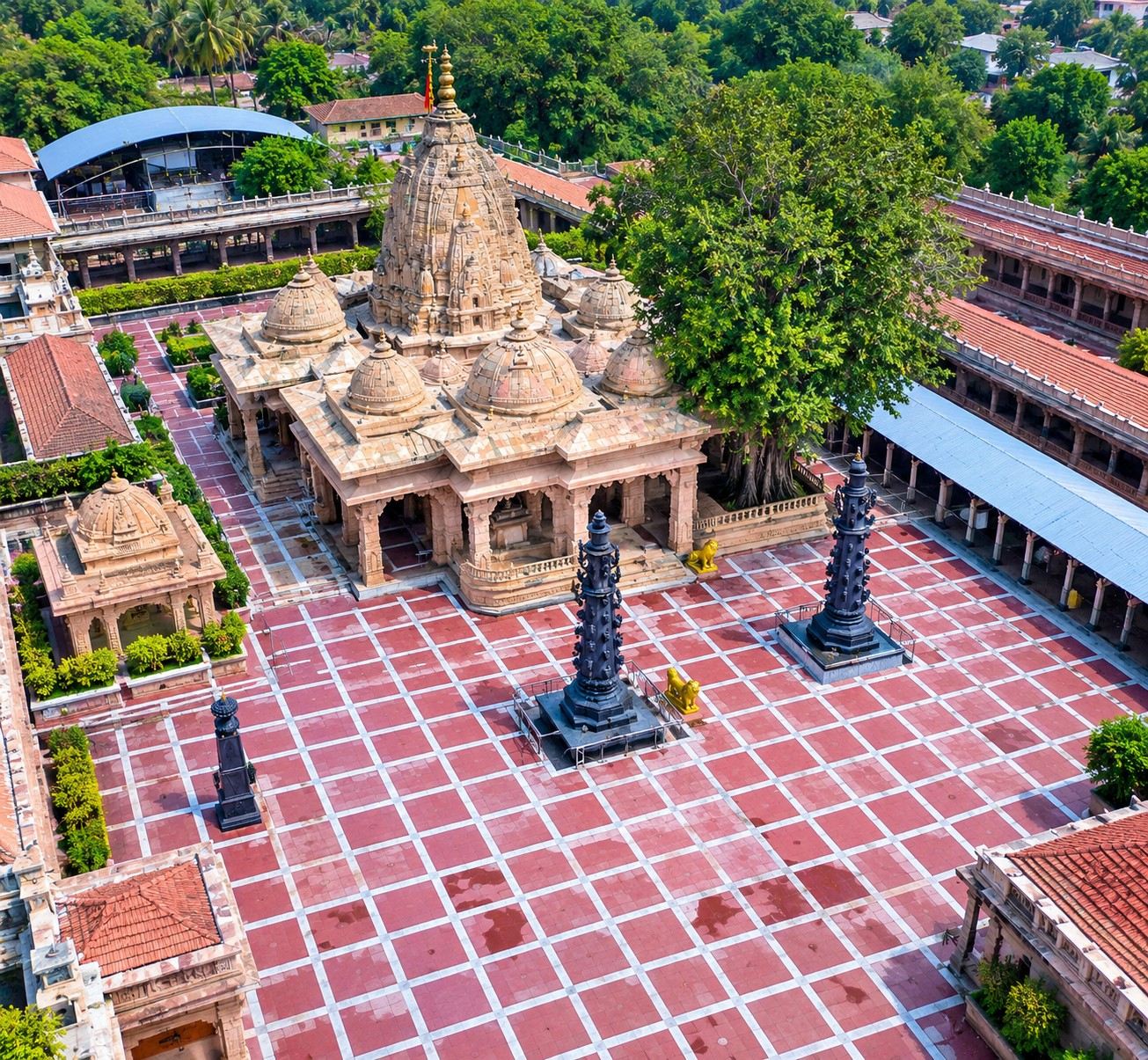
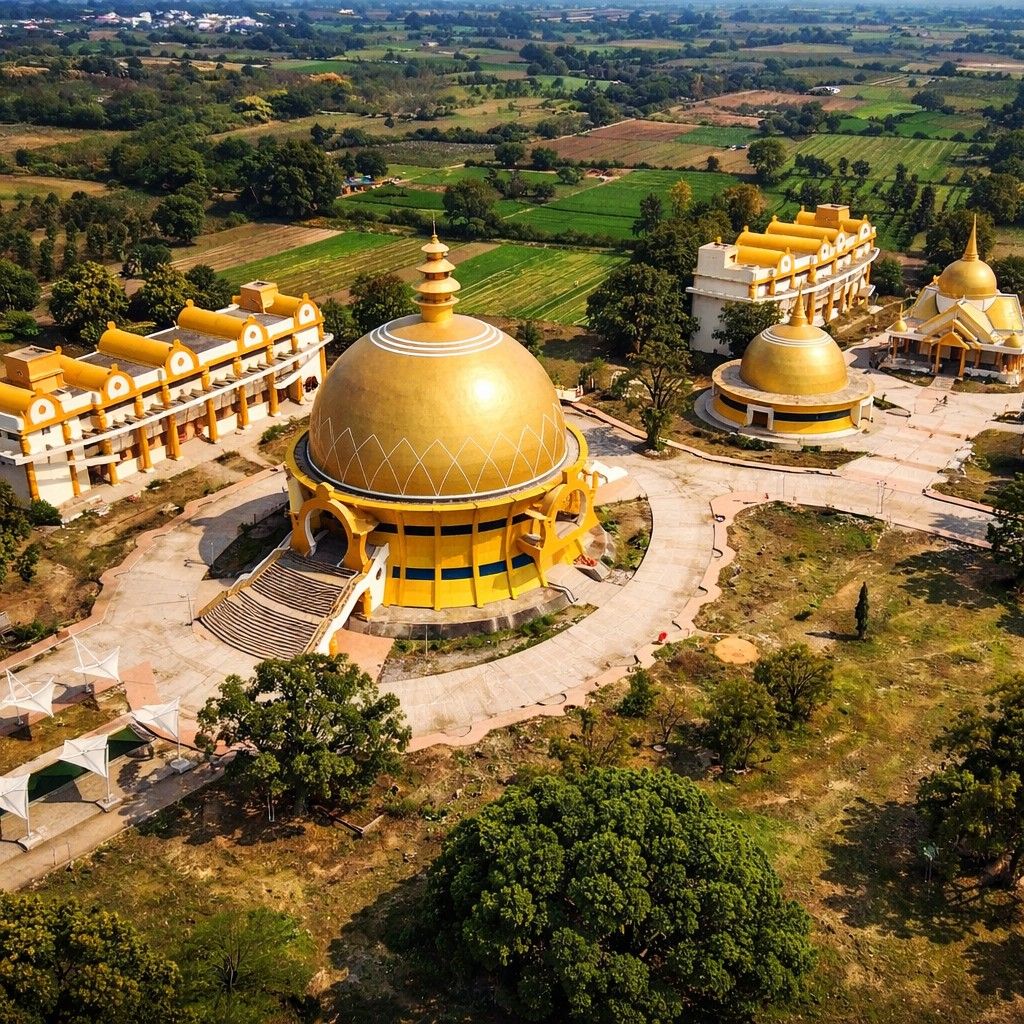
The Koradi temple complex spans approximately 150 acres, making it one of the largest temple precincts in Vidarbha. The complex includes a grand entrance gate, elaborate queuing arrangements for darshan, a deepstambha or lamp pillar, a large sabhamandap or community hall, and various facilities for religious activities and devotee welfare. The Koradi lake situated near the temple adds to the natural beauty of the surroundings. The illuminated temple complex after sunset is a particularly striking sight for visitors.

What Happens During Navratri at Koradi?

Navratri transforms Koradi into one of Maharashtra’s most spiritually electric destinations. Around 20 lakh or more devotees are expected to visit the temple during the Ashwin Navratri period, which runs from October 11 to October 20, 2026. Pilgrims arrive from across Nagpur, Vidarbha, other districts of Maharashtra, and neighbouring states.

The most distinctive Navratri tradition at Koradi is the lighting of approximately 7,500 Akhand Manokamna Jyotiyan. These are eternal flames lit by devotees in a specially designated Jyot Bhavan within the temple complex. Each flame represents the prayer and devotion of the devotee who offers it. All 7,500 lamps burn continuously for all nine days of Navratri without interruption. Special arrangements are made to ensure that no lamp goes out due to lack of oil or ghee throughout the festival.

What Is the Akhand Mahajyoti at Koradi?

In addition to the thousands of Navratri lamps, Maa Jagdamba’s sanctum houses a main Akhand Mahajyoti. This sacred flame is kept burning continuously throughout the year — for all 365 days. The Mahajyoti is considered a symbol of the unbroken faith and eternal devotion of the temple’s community of believers.

Devotees who wish to light a Manokamna Jyoti at the temple in their own or their family’s name can do so through the Sansthan at a cost of Rs 2,100.

How to Reach Koradi Temple from Nagpur?

Koradi is located approximately 15 kilometres from Nagpur city centre on the Nagpur-Amravati Highway. The temple is accessible by auto-rickshaw, taxi, and city buses from various parts of Nagpur. During Navratri, additional bus services are typically operated to manage the surge in pilgrims.

Adasa Ganesh Temple Nagpur Gets B Class Pilgrimage Status — Fadnavis’s Gift to Devotees Before Ganeshotsav

Just days before the beginning of Ganeshotsav 2026, Chief Minister Devendra Fadnavis has given lakhs of Ganesha devotees in Vidarbha a reason to celebrate. The Adasa Ganesh Temple — officially known as Shami Vighnesh Ganapati Devasthan — in Kalameshwar taluka of Nagpur district has been granted ‘B’ Class pilgrimage status. Furthermore, this decision was taken under the Punyashlok Ahilyabai Holkar Rural Pilgrimage Scheme for Class B destinations. As a result, one of Vidarbha’s most revered religious sites will now receive structured government support for its development.

The timing of this announcement — at the very beginning of the Ganeshotsav season — makes it especially meaningful for devotees. Moreover, for the millions of Ganesha worshippers who visit Adasa Temple every year, this decision is both a source of pride and a promise of better facilities in the years ahead.

What Is the Punyashlok Ahilyabai Holkar Rural Pilgrimage Scheme

The Punyashlok Ahilyabai Holkar Rural Pilgrimage Scheme is Maharashtra’s government initiative to develop pilgrimage sites in rural areas. Furthermore, the scheme classifies pilgrimage destinations into categories — A, B and others — based on their religious significance, footfall and development needs.

Under this classification, ‘B’ Class status recognises a temple as a significant regional pilgrimage destination deserving structured government funding and development support. Moreover, this classification unlocks access to government funds for infrastructure development — including facilities for devotees, approach roads, parking, rest areas, sanitation, drinking water and overall beautification of the temple premises.

The scheme is named after Punyashlok Ahilyabai Holkar — the legendary 18th-century Maratha queen who is revered across India for her lifelong dedication to the construction, restoration and maintenance of temples and places of worship. Furthermore, naming this pilgrimage development scheme after her reflects the Maharashtra government’s commitment to the same tradition of protecting and promoting religious heritage that she embodied.

Where Is Adasa and Why This Temple Matters

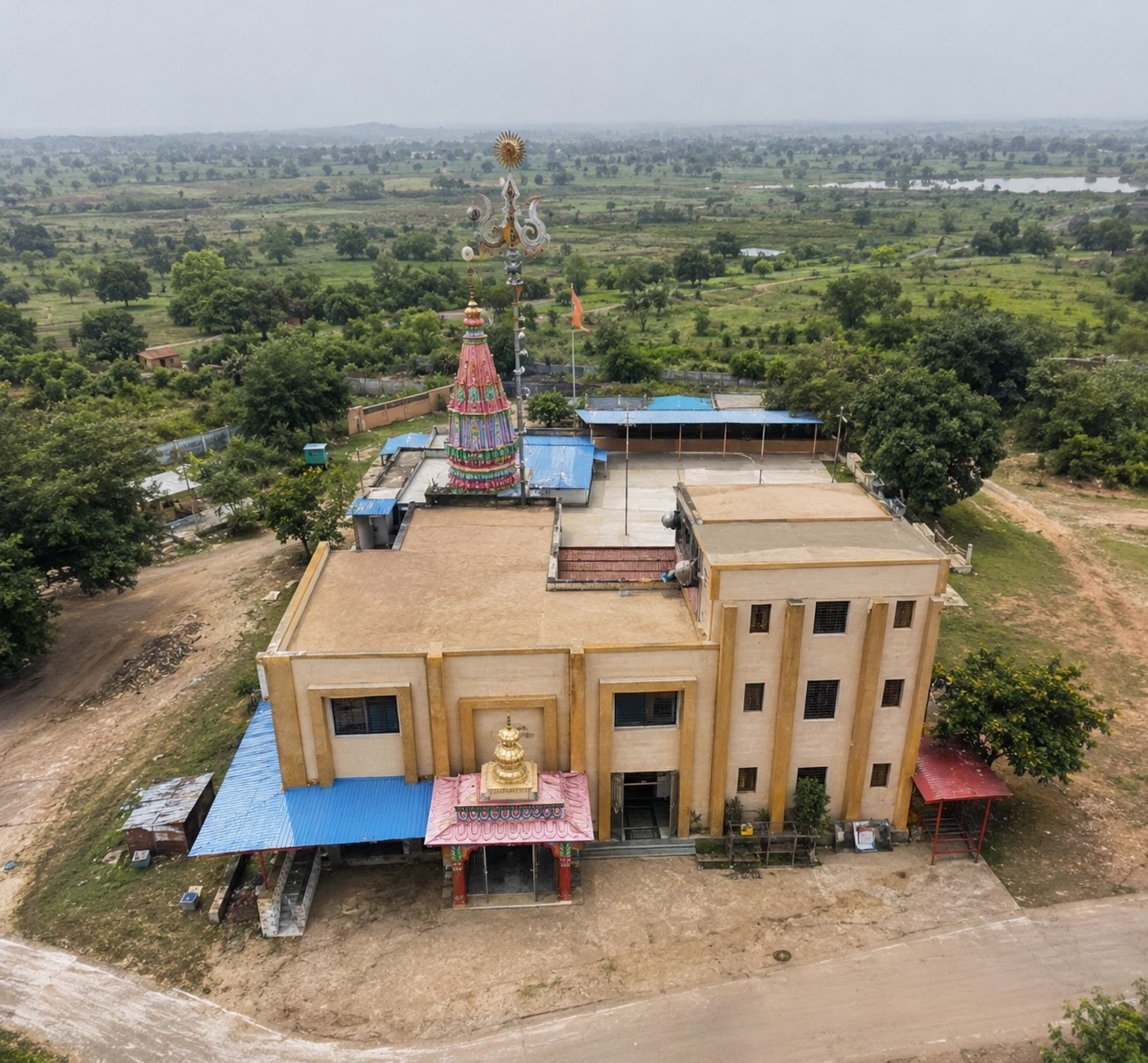
Adasa is a village located in Kalameshwar taluka of Nagpur district — approximately 35 to 40 kilometres from Nagpur city. Furthermore, the Shami Vighnesh Ganapati Devasthan at Adasa is one of the most significant Ganesha temples in the entire Vidarbha region.

The temple is the faith centre and an important pilgrimage site for lakhs of Ganesha devotees from Vidarbha. Furthermore, the deity is known as Shami Vighnesh Ganapati — a name that reflects the ancient association between the Shami tree and the worship of Lord Ganesha in the Vidarbha tradition. The word “Vighnesh” means the destroyer of obstacles — one of Lord Ganesha’s most significant roles in Hindu worship.

The Adasa Ganesha temple draws devotees not just from Nagpur but from across the six districts of Vidarbha — Nagpur, Wardha, Bhandara, Gondia, Chandrapur and Gadchiroli. Moreover, during Ganeshotsav — the 10-day festival celebrating Ganesha’s birthday — the footfall at Adasa increases dramatically. Therefore, the temple has the scale of religious significance that fully justifies its recognition as a Class B pilgrimage destination.

What B Class Status Means in Practice — The Development Angle

The immediate practical impact of B Class pilgrimage status is access to government funding for the development of the temple premises and surrounding area. Furthermore, this development is specifically oriented toward improving the experience of the devotees who visit.

Under the Ahilyabai Holkar scheme, funds can be directed toward improved approach roads to the temple, organised parking facilities for the large number of vehicles that arrive during festivals, clean and adequate toilet and sanitation facilities, rest areas and shelter for pilgrims who travel long distances, better lighting around the temple complex and improved pathways within the premises.

Moreover, B Class status also helps the temple trust — the Shami Vighnesh Ganapati Devasthan — in accessing state funding for restoration and maintenance of the temple structure itself. Therefore, the announcement is not just about visitor facilities. It is about securing the temple’s long-term preservation as a heritage religious site.

The overall development facilitated by this status is expected to promote the temple as a major pilgrimage destination — improving infrastructure, devotee facilities and the broader development of the pilgrimage zone.

The Ganeshotsav Connection — Perfect Timing

The timing of CM Fadnavis’s announcement — just as Ganeshotsav 2026 begins — is deeply symbolic. Furthermore, Ganeshotsav is the most important festival in Maharashtra’s cultural calendar. The 10-day celebration of Lord Ganesha — beginning on Ganesh Chaturthi — brings millions of devotees to temples across Maharashtra and Vidarbha.

For a temple as significant as Adasa Ganesh, the Ganeshotsav season represents the peak of devotee activity. Moreover, thousands of devotees make the specific journey to Adasa during these 10 days. As a result, the announcement of B Class status at the very beginning of Ganeshotsav was a deliberate and meaningful choice — it connects a governance decision directly to the religious moment that makes it most relevant.

For Ganesha devotees who were already planning their visit to Adasa this Ganeshotsav, the B Class announcement adds a dimension of institutional recognition to their pilgrimage. Furthermore, it signals that the Maharashtra government sees their temple as deserving of the same structured support given to other recognised pilgrimage sites across the state.

Kalameshwar Taluka — A Region Getting Multiple Development Boosts

The B Class status for Adasa Ganesh Temple comes at a time when Kalameshwar taluka and its surroundings are receiving increased development attention from the Maharashtra government.

The Koradi Mahalaxmi Jagdamba Temple — also in the Kamptee-Kalameshwar belt north of Nagpur — recently received government land on a 30-year lease at Re 1 annual rent for its development. Furthermore, the Rs 100 crore Kamptee District Sports Complex has been approved for the area. The Koradi theme park and tourist centre approvals of Rs 10 crore also cover this zone.

Together, these decisions reflect a deliberate pattern of investment in the northern fringe of Nagpur district — an area that has historically been underserved in terms of government infrastructure but carries significant religious, cultural and economic potential. Moreover, the Adasa Ganesh Temple’s B Class status adds a rural religious tourism dimension to this investment pattern.

What Devotees and the Temple Trust Should Know

For devotees who visit Adasa Ganesh Temple — whether for Ganeshotsav or at other times of the year — the B Class status is the beginning of a process, not an instant transformation. Furthermore, the actual development of facilities will happen over time as the government releases funds and the temple trust implements specific projects.

However, the recognition itself is immediate and permanent. Moreover, B Class pilgrimage status creates an institutional framework that ensures the temple will receive sustained government attention rather than being dependent on one-off grants or political attention.

The temple trust is now in a position to prepare a detailed development plan — identifying the facilities most needed by devotees and presenting this plan to the district administration and the state tourism and revenue departments for funding. Furthermore, this systematic approach is exactly what the Ahilyabai Holkar scheme is designed to support.

Nagpur Updates will track the development funds sanctioned for Adasa Ganesh Temple following this B Class status announcement and will report on when specific infrastructure projects begin.

Sources: Maharashtra CM Office official communication, Punyashlok Ahilyabai Holkar Rural Pilgrimage Scheme documentation, Nagpur District administration. Published: September 12, 2026.

Koradi Temple Gets Government Land for 30 Years at Just Re 1 Annual Rent — Maharashtra Cabinet Approves

A significant decision for Nagpur’s most important pilgrimage site was taken in Mumbai on Tuesday. The Maharashtra Cabinet has approved the lease of government land to Shri Mahalaxmi Jagdamba Sansthan — the trust that manages the famous Koradi temple — for a period of 30 years. Furthermore, the annual lease rent for this government land will be just Rs 1 per year. As a result, the Koradi temple trust now has a secure, long-term land base on which to develop facilities for the lakhs of devotees who visit the shrine every year.

The decision was taken at a Cabinet meeting chaired by Chief Minister Devendra Fadnavis at Sahyadri Guest House in Mumbai. Moreover, this approval falls under the broader Koradi Tirth Kshetra Development Proposal — the government’s comprehensive plan to transform Koradi into a world-class pilgrimage destination.

What Exactly Has Been Approved — The Full Details

The Maharashtra Cabinet has approved the lease of government land developed under the Koradi Tirth Kshetra Development Proposal to Shri Mahalaxmi Jagdamba Sansthan. Furthermore, the lease period is 30 years. The annual rent is Rs 1 — a nominal amount that makes the land practically free for the trust to use.

The legal basis for this decision comes from Section 40 of the Maharashtra Land Revenue Act, 1966, along with the rules framed in 1971 for the disposal of government land and the Government Resolution dated July 25, 2019. Furthermore, the Revenue Department has confirmed that this decision follows established legal provisions for government land leases to religious and public charitable institutions.

The renewal of the lease after the 30-year period is also addressed in the approval. Moreover, if Shri Mahalaxmi Jagdamba Sansthan applies for renewal after the 30-year term expires, the right to grant renewal has been vested with the Nagpur District Collector. Therefore, the trust will not need to approach the state government for renewal — the decision will be taken at the district level, simplifying the process significantly.

Why the Re 1 Rent Is Significant — Understanding Government Land Policy

A lease at Rs 1 annual rent is not unique in Maharashtra’s government land policy. Furthermore, the state has a well-established practice of leasing government land to religious trusts, charitable institutions and public service organisations at nominal rents. As a result, the government’s land remains in public ownership while the institution using it can invest in development without the burden of high land costs.

For Shri Mahalaxmi Jagdamba Sansthan, the significance of this decision is enormous. Furthermore, land security is the foundation on which all other development decisions rest. An institution that does not have clear, long-term rights over the land it uses cannot make major infrastructure investments — because there is always a risk that the land could be claimed back or its use disputed.

With a 30-year lease at Rs 1 per year, the Sansthan now has a secure foundation for planning and building the facilities that the Koradi development proposal envisions. Moreover, banks and financial institutions will be more willing to support funding for development projects when the land tenure is secured. As a result, the Cabinet’s decision unlocks the broader Koradi development agenda in a way that was not previously possible without clear land rights.

What Is the Koradi Tirth Kshetra Development Proposal

The land lease decision needs to be understood in the context of the much larger Koradi Tirth Kshetra Development Proposal — the government’s comprehensive vision for transforming Koradi from a single-temple pilgrimage stop into a full-scale religious tourism destination.

As Nagpur Updates has reported extensively, Koradi is already the site of significant government investment. The Maharashtra Tourism Department recently approved Rs 4.99 crore for a theme park at Koradi and Rs 4.97 crore for a tourist centre at Jakhapur, Koradi. Furthermore, the installation of India’s tallest Lord Hanuman idol at 162 feet is planned at the temple premises under NMRDA. An amusement park and dinosaur park are also proposed in the vicinity.

The land lease decision now provides the Mahalaxmi Jagdamba Sansthan with the secure land rights needed to implement these development proposals systematically. Moreover, with 30 years of guaranteed access, the trust can plan phased development — starting with the most urgent visitor facilities and progressively adding attractions over the coming decade.

About Koradi Temple — Why This Place Matters

Shri Mahalaxmi Jagdamba Temple at Koradi is one of Nagpur district’s most important religious sites. Furthermore, it is located in Koradi, approximately 15 kilometres north of Nagpur city on Chhindwara Road. As a result, it is easily accessible to devotees from Nagpur city and from towns across Vidarbha.

The temple is dedicated to Goddess Durga and is considered one of Maharashtra’s significant Shakti Peethas. Furthermore, it is especially busy during Navratri and Dussehra celebrations when huge crowds of devotees gather for the annual festival. The temple attracts visitors not just from Nagpur but from across Vidarbha, neighbouring Madhya Pradesh and beyond.

The Mahalaxmi Jagdamba Sansthan is the registered trust body that manages the temple’s daily operations, maintenance, festivals and charitable activities. Moreover, the Sansthan also provides various services to devotees — including prasad distribution, accommodation facilities and management of the large crowds during peak festival periods.

What Devotees Can Expect From This Development

For the lakhs of devotees who visit Koradi every year, the Maharashtra Cabinet’s land lease decision is the first step in a transformation that will significantly improve the pilgrimage experience. Furthermore, secured land rights mean that the Sansthan can now commission detailed development plans for the facilities that devotees have been requesting.

The most pressing needs at Koradi, as identified by devotees and the temple committee over the years, include better parking — the Sansthan had specifically demanded a permanent parking facility in earlier representations. Moreover, a yatri niwas — a rest house where devotees from distant areas can stay overnight — has been a long-pending request. A sabhagruha — an auditorium for large religious events — is also on the list.

With secured land rights for 30 years, the Sansthan can now begin designing and building these facilities in a phased manner. Furthermore, the government’s broader Rs 10 crore investment in the Koradi tourism zone — through the theme park and tourist centre approvals — will complement the Sansthan’s own development activities. As a result, the entire Koradi area is moving toward becoming a genuinely well-equipped pilgrimage and tourism destination.

The Renewal Clause — Protection for the Future

The government’s decision to vest renewal rights with the Nagpur District Collector is a thoughtful administrative provision. Furthermore, it ensures that the renewal process remains straightforward and efficient — without requiring the Sansthan to navigate the full state Cabinet approval process again after 30 years.

However, it also means that the renewal is not automatic. Moreover, the District Collector will review the renewal request based on the rules applicable at that time. Therefore, it is important for the Sansthan to maintain proper land use and development records throughout the 30-year period — demonstrating that the land has been used for the purposes for which it was leased.

The 30-year period itself gives the Sansthan ample time to develop Koradi into a fully functional pilgrimage destination. Furthermore, if the development is executed well over the next 30 years, the renewal case will effectively make itself — a thriving pilgrimage site that is serving lakhs of devotees annually is not something any government would want to disrupt.

What Comes Next — The Development Timeline

The Cabinet approval is the legal foundation. Furthermore, the next steps are for the Revenue Department to issue the formal lease documents and for the Sansthan to begin activating its development plans on the now-secured land.

With the broader Koradi development agenda — theme park, tourist centre, Hanuman idol, amusement park — all at various stages of planning and approval, the coming months should see significant visible activity on the ground at Koradi. Moreover, the Sansthan’s own facility development will complement the government-funded projects to create a comprehensive visitor experience.

Nagpur Updates will track the Koradi development agenda and report on construction milestones, facility launches and major events at the temple complex as they occur.

Kalyaneshwar Temple Nagpur: Rs 100 Crore Development Plan Gets Green Light From CM Fadnavis

Nagpur’s Mahal area is getting a landmark transformation. The comprehensive development plan for the nearly 400-year-old Kalyaneshwar Temple has received approval at a high-level meeting in Mumbai. Furthermore, the meeting was held at Sahyadri Guest House in the presence of Chief Minister Devendra Fadnavis himself. As a result, one of Nagpur’s most historically significant temples is set for a major upgrade.

The proposed development plan is estimated at Rs 78.50 crore. However, MLA Pravin Datke has formally sought Rs 100 crore — including additional funds for the temple’s main spire construction and elevated parking facilities. Therefore, the final sanctioned amount is expected to be higher than the current estimate.

Where Is Kalyaneshwar Temple and Why It Matters

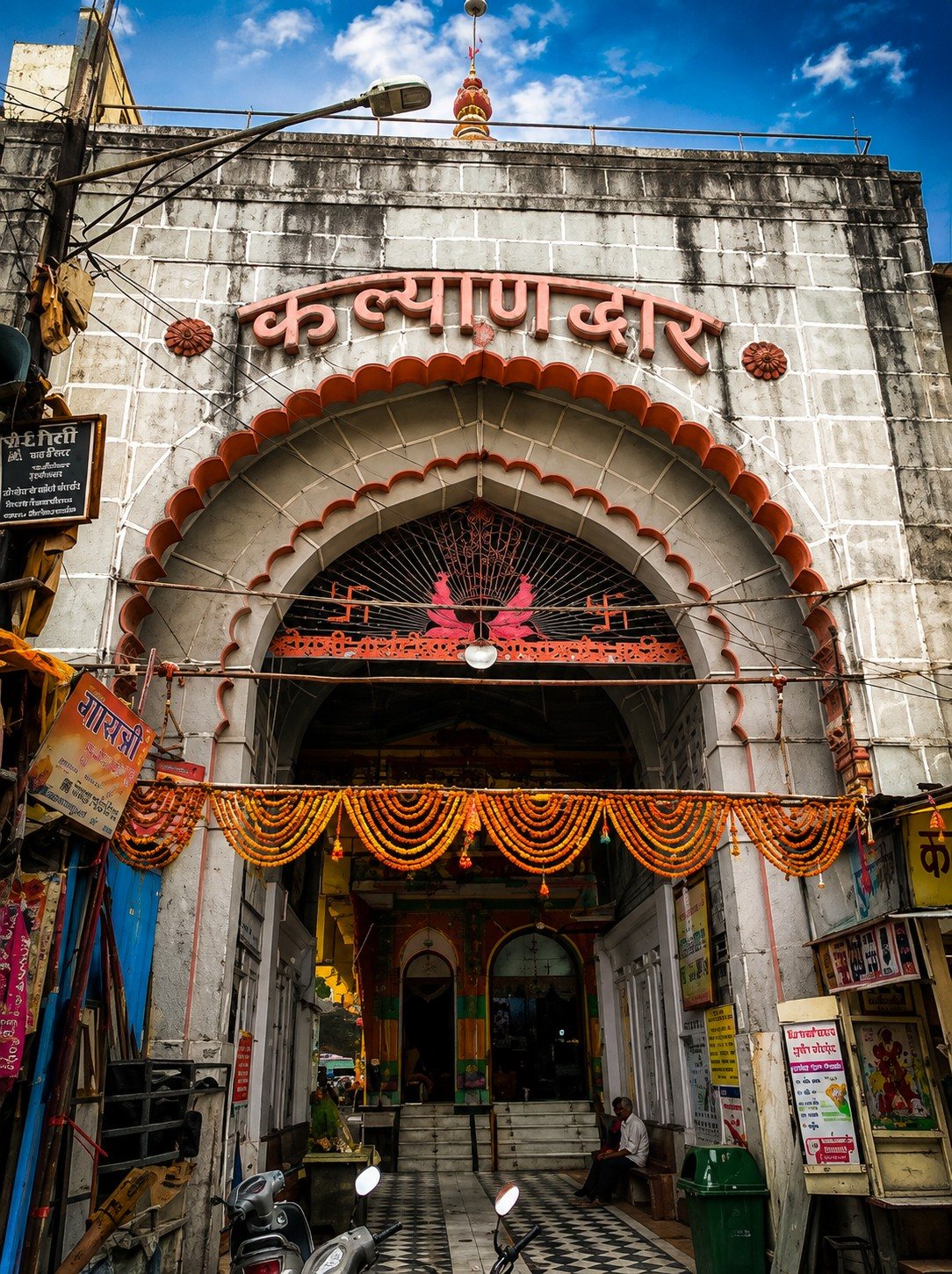
Kalyaneshwar Temple is located in the heart of Nagpur’s historic Mahal area. Furthermore, it is situated near the Senior and Junior Bhosale Palaces from the era of the Bhosale dynasty — the Maratha rulers who made Nagpur their capital. As a result, the temple carries deep historical significance connected to Nagpur’s royal past.

The temple is dedicated to Lord Shiva and is approximately 400 years old. Moreover, it is an important pilgrimage site that attracts devotees from across India and abroad throughout the year. Furthermore, the headquarters of the Rashtriya Swayamsevak Sangh (RSS) is also located close to the temple. As a result, the area sees a steady flow of both religious devotees and visitors from across the country.

Major festivals, fairs and religious processions in Nagpur pass along the route of this temple. Moreover, this results in extremely heavy crowds during peak periods. Therefore, the need for modern crowd management infrastructure — particularly parking — has become urgent.

What the Development Plan Includes — All Components

The approved development project envisions a comprehensive transformation of the Kalyaneshwar Temple, the Nagarkhana and the surrounding Mahal area. Here are all the key components of the plan.

Large Parking Facility: A spacious parking area on the lower floor will accommodate vehicles during crowded periods. Furthermore, MLA Datke has specifically sought elevated parking to increase vehicle capacity significantly. As a result, the parking challenge that has plagued visitors to the area for years will finally be addressed.

Multipurpose Hall: A modern multipurpose hall will be constructed for religious, cultural and other community programmes. Moreover, this facility will give the Mahal area a dedicated indoor venue for large gatherings.

Temple Renovation and Beautification: The main temple spire will be developed and improved. Furthermore, the premises surrounding the Ganesh, Mahadev and Hanuman temples within the complex will also be beautified. As a result, the entire temple complex will be upgraded to a standard that matches its historical importance.

Modern Amenities: An upgraded observatory and a yoga centre for devotees are part of the plan. Moreover, modern electrical infrastructure and clean toilet facilities will be constructed. Therefore, visitors will have all the amenities expected at a premier pilgrimage site.

Rainwater Harvesting: An environment-friendly rainwater harvesting system will be installed. Furthermore, this addresses water management for the temple premises in a sustainable way.

Who Is Driving This Project — Datke, Gadkari and Fadnavis

The political backing for this project comes from the very top. Furthermore, MLA Pravin Datke was the key figure who pushed for the development at the Sahyadri Guest House meeting.

Datke informed the meeting that Union Minister Nitin Gadkari had also called for the development of this historic temple. Furthermore, Datke highlighted the heavy footfall at the temple during major festivals — emphasising that the area urgently needs modern crowd management infrastructure.

CM Devendra Fadnavis chaired the meeting at which the plan received approval. Moreover, his presence at this specific meeting signals that the Kalyaneshwar Temple development is being treated as a priority project for Nagpur. As a result, the approval carries the full political weight of the Chief Minister’s office.

Furthermore, it was at the Somnath Swabhiman Parv event held at Kalyaneshwar Temple earlier in 2026 that the Maharashtra Government had already sanctioned Rs 90 crore for the temple’s development. Datke is now seeking Rs 100 crore — slightly above the earlier figure — to ensure the spire construction and elevated parking are fully funded.

The Mahal Area — Nagpur’s Heritage Heart

The Kalyaneshwar Temple development cannot be seen in isolation. Furthermore, it is part of a broader transformation of the Mahal area — Nagpur’s most historically rich and culturally significant neighbourhood.

Mahal was the commercial and administrative heart of Nagpur during the Bhosale era. Moreover, the Senior and Junior Bhosale Palaces — located near the temple — are two of the most important surviving structures from that period. As a result, the area holds a unique density of historical heritage that makes it one of Nagpur’s most important cultural zones.

However, Mahal has also suffered from years of infrastructure neglect. Narrow lanes, inadequate parking, poor sanitation and congested street conditions have made the area difficult to navigate — particularly during the large festivals and processions that the temple is known for.

The Kalyaneshwar Temple development plan directly addresses these problems. Furthermore, the parking facility, multipurpose hall and beautification work will improve the experience for both residents and visitors. As a result, Mahal can begin to function as the heritage tourism destination it deserves to be.

What the Rs 100 Crore Will Transform

The total investment being sought — Rs 100 crore — is a significant commitment to a single temple complex development. Furthermore, it is comparable to the Rs 100 crore sanctioned for the Kamptee District Sports Complex and the earlier Rs 90 crore for Koradi temple development.

These three investments together — Kalyaneshwar in Mahal, Koradi temple, and Kamptee sports complex — represent a pattern of major heritage and public infrastructure investment across Nagpur’s different zones. Moreover, each of them addresses a specific community need while building the city’s broader tourism and cultural identity.

For devotees who visit Kalyaneshwar Temple for Shiva puja, Mahashivratri, and other religious occasions — the transformation will mean cleaner premises, easier access, better parking and a modernised experience that does not compromise the temple’s ancient character.

What Happens Next

The plan has received approval at the CM-chaired meeting. Furthermore, the next steps are the finalisation of the sanctioned amount — with Datke’s Rs 100 crore demand under consideration — and the release of funds to the implementing agency.

The Maharashtra government has been moving relatively quickly on temple and heritage development approvals in Nagpur this year. Moreover, with the Winter Session scheduled for December 7 in Nagpur, there is political incentive to show visible progress on heritage projects before legislators arrive in the city.

Babulkheda Nature Tourism Nagpur: ₹14.61 Crore Approved for 12 Development Works Near Panchmukhi Hanuman Temple

Nagpur district is getting a major nature tourism boost. The Maharashtra government has approved ₹14.61 crore for 12 development works at the Babulkheda Nature Tourism zone. Furthermore, this area is located near the famous Panchmukhi Hanuman Temple in Patansawangi, Saoner tehsil. The Forest Department will implement all 12 approved works.

This development will benefit both religious tourists and nature lovers. Moreover, Babulkheda is already a popular destination for Nagpur and nearby district residents. As a result, better infrastructure here will attract even more visitors throughout the year.

Where Is Babulkheda and Why It Matters

Babulkheda is located in Patansawangi village in Saoner tehsil of Nagpur district. Furthermore, it sits adjacent to the well-known Panchmukhi Hanuman Temple. This temple draws large numbers of devotees every day from Nagpur and surrounding areas.

However, despite high footfall, the area has lacked basic amenities for years. Permanent parking, rest houses and proper pathways have been missing. Moreover, the temple committee chairperson Dilip Kukde confirmed that demands for these facilities have been pending with the government for a long time. Therefore, the ₹14.61 crore approval is a significant breakthrough for this pilgrimage and tourism destination.

The 12 Development Works — Full Details

The Maharashtra government has approved 12 specific works under this project. Here is what will be built at the Babulkheda Nature Tourism zone.

First, metal fencing for the vehicle parking area will receive ₹1.04 crore. This will create a structured and secure parking zone for the large number of vehicles that arrive daily. Second, metal fencing and public toilet construction at other locations will also receive ₹1.04 crore. Furthermore, clean public toilets are a basic need that devotees have long complained is missing.

Third, a boundary wall for the parking area will receive approximately ₹4.91 crore. This is the single largest individual allocation in the project. Moreover, a proper boundary wall will prevent encroachment and create a defined, organised entry zone for tourists and devotees.

Fourth, and most exciting for adventure tourists, land stabilisation work for 8 trekking trails, an All Terrain Vehicle (ATV) track and a bamboo walking trail will receive approximately ₹27.50 lakh. Furthermore, these adventure facilities will give younger visitors and nature enthusiasts a completely different experience from the temple visit. As a result, Babulkheda will attract both spiritual and adventure tourism simultaneously.

What ATV Track and Trekking Trails Mean for Visitors

The inclusion of an ATV track and trekking trails is significant. Moreover, it signals that the government is positioning Babulkheda as more than just a religious site.

An ATV track allows visitors to ride all-terrain vehicles through the natural landscape. Furthermore, 8 separate trekking trails of varying difficulty levels mean both casual walkers and serious trekkers will find suitable paths. In addition, the bamboo walking trail is an eco-friendly addition that allows visitors to experience the forest environment closely.

However, before these facilities open, land stabilisation work is essential. Uneven terrain must be levelled and reinforced. As a result, the trails will be safe and accessible for visitors of all fitness levels.

Why Forest Department Is Implementing This Project

The Maharashtra Forest Department is the executing agency for all 12 works. This is appropriate for a nature tourism zone. Furthermore, the Forest Department has experience developing eco-tourism infrastructure across Maharashtra’s forest areas.

Moreover, Forest Department implementation ensures that development work follows ecological guidelines. As a result, the natural character of the Babulkheda zone is protected even as tourism infrastructure improves. This balance between development and nature conservation is central to any successful eco-tourism project.

What the Temple Committee Is Still Demanding

Despite the ₹14.61 crore approval, the Panchmukhi Hanuman Temple committee says more is still needed. Committee chairperson Dilip Kukde told reporters that devotees continue to face significant challenges. Specifically, the committee is demanding three facilities that are not yet included in the current approval.

First, a permanent, well-designed parking facility separate from the nature tourism parking. Second, a yatri niwas — a rest house — where devotees travelling from distant areas can stay overnight. Third, a sabhagruha — an auditorium — for large religious events and gatherings that the temple regularly hosts.

Therefore, while today’s ₹14.61 crore approval is a major step forward, the temple committee considers it the beginning rather than the end of the development process.

What This Means for Saoner and Nagpur Tourism

Babulkheda’s development fits into a broader pattern of tourism infrastructure investment around Nagpur. The city’s tourism potential extends well beyond the city limits. Furthermore, areas like Babulkheda, Pench, Tadoba and Umred-Karhandla form a ring of natural and religious tourism destinations around Nagpur.

Moreover, better infrastructure at Babulkheda makes it an easier day-trip destination for Nagpur residents. The Saoner tehsil location means it is within an hour’s drive from central Nagpur. As a result, families, youth groups and religious organisations from the city will find Babulkheda a convenient and enriching outing option.

In addition, the combination of religious tourism at the Panchmukhi Hanuman Temple and adventure tourism at the ATV track and trekking trails makes Babulkheda a unique multi-purpose destination. Furthermore, this dual character will help attract a wider age range of visitors.

What Happens Next

The Forest Department will now begin the tendering process for all 12 approved works. Furthermore, construction timelines will be finalised once contractors are appointed. Nagpur Updates will track the progress of these works and report on when each facility is ready for public use.

Deekshabhoomi Development Stalled for Two Years: Old Wall Crumbles, New One Barely Crawls — Ambedkarites Outraged

Published: May 13, 2026 | Category: Nagpur Local | Deekshabhoomi development | By: Nagpur Updates Desk


Two years. Nearly ₹214 crore sanctioned. And almost nothing to show for it.

That is the painful reality at Deekshabhoomi — Nagpur’s most sacred site and one of India’s most revered Buddhist monuments. The ambitious development project, meant to transform the site into a world-class destination, has been stalled for nearly two years. The old security wall has crumbled at multiple spots. The new wall? Only 125 feet built in six months. Mounds of construction debris are piling up across the historically significant premises.

The Ambedkarite community is angry. And rightfully so.


What Is Happening at Deekshabhoomi Right Now

The ground reality at Deekshabhoomi in May 2026 is deeply troubling.

The old security wall has collapsed at several spots, leaving sections of the sacred site exposed and vulnerable. The entrance to one section is in a state of disrepair — crumbling, unmaintained, and unworthy of a site of this national significance.

Meanwhile, construction of the new security wall is progressing at a snail’s pace. In six months, only around 125 feet of new wall has been built. At this rate, completing even the basic perimeter security of the site will take years.

Large mounds of construction debris and soil have accumulated across the premises — causing serious inconvenience to the thousands of devotees, students, and visitors who come to Deekshabhoomi every day.

Footpaths and parking space near the main entrance and Laxminagar Chowk are completely blocked. Pedestrians are being forced onto the main road. Given that the Laxminagar–Deekshabhoomi stretch is heavily trafficked throughout the day — owing to nearby educational institutions and the sacred site itself — this is not just an inconvenience. It is a road safety hazard.


How Did It Come to This? The Full Story

To understand the current situation, it is important to go back to where it all began.

The Project: The Maharashtra Government sanctioned approximately ₹214 crore for the beautification, renovation, and development of Deekshabhoomi. The project was planned in two phases. The first phase involved the construction of an underground parking facility to address the chronic parking shortage during large gatherings at the site — particularly during the massive annual Dhammachakra Pravartan Din celebrations.

The Protest: In July 2024, thousands of Ambedkarite followers gathered at Deekshabhoomi in a massive protest against the underground parking project. Protesters were deeply concerned that digging beneath the premises would damage the Deekshabhoomi Stupa and the sacred Bodhi Tree. They also raised fears about water accumulation endangering the structural integrity of the stupa.

The protests turned intense. Protesters targeted steel reinforcing bars, cement pillars, and temporary boundaries at the construction site. The police had to rush forces to the spot.

The Halt: Responding to the public outrage, then Deputy Chief Minister Devendra Fadnavis — now Chief Minister — announced an immediate suspension of the construction work in the Legislative Assembly. He stated that while the project had been planned and sanctioned with the best intentions, public sentiment would be respected. A stakeholder meeting was promised before any further work.

The Stall: That stakeholder meeting, and the clarity it was supposed to bring, never fully materialised into resumed construction. Two years later, the development project remains in a state of near-complete inaction — with neither the original underground parking plan moving forward, nor a clear alternative plan being implemented.


125 Feet in Six Months: An Unacceptable Pace

The most damning indicator of the project’s stalled state is the pace of the new security wall construction.

A security wall is the most basic, least controversial element of any development plan for a large public site. It does not require community consultation. It does not risk damaging any sacred structure. It is straightforward construction work.

Yet in six months, only 125 feet of new wall has been completed. This pace is not just slow — it is indicative of a project that has lost all momentum, direction, and accountability.

While the new wall crawls forward at this rate, the old security wall — no longer being maintained — is actively crumbling. The result is a site that is less secure today than it was before the development project began. That is a failure of basic civic responsibility.


Deekshabhoomi: Why This Matters So Deeply

Deekshabhoomi is not an ordinary public space. It holds profound, irreplaceable significance for millions of people across India and the world.

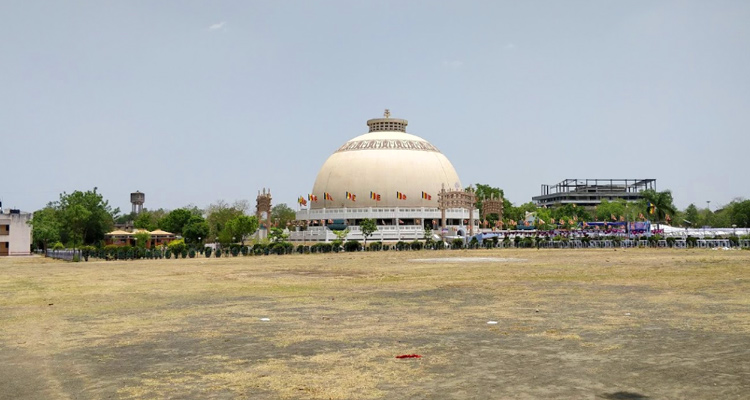
This is the place where Dr. B.R. Ambedkar — the architect of India’s Constitution, the champion of Dalit rights, and one of the most transformative figures in modern Indian history — converted to Buddhism on October 14, 1956, along with over four lakh of his followers. That single act of mass conversion was one of the most powerful statements of dignity and resistance in Indian history.

Every year on Dhammachakra Pravartan Din (Ashok Vijaya Dashami), millions of Ambedkarite followers from across India and the world travel to Nagpur to pay homage at Deekshabhoomi. The site is as significant to the Buddhist and Ambedkarite community as any of the holiest pilgrimage sites in the country.

For this site to be left in a state of disrepair — with crumbling walls, piled-up debris, and blocked footpaths — for two years is not just a civic failure. It is a profound disrespect to the community that considers this place sacred.


The Community’s Demand: Action, Not Promises

The Ambedkarite community’s anger in May 2026 is entirely justified — and it is not new. For two years, they have watched as a project meant to honour and develop their most sacred site has instead turned it into a construction zone that has delivered neither the promised development nor the original site’s dignity.

Their demands are clear and reasonable:

  • Immediate cleanup of construction debris from the Deekshabhoomi premises
  • Restoration of footpaths and parking space near the main entrance and Laxminagar Chowk
  • Acceleration of the security wall construction to a timeline that reflects the site’s importance
  • A clear, publicly communicated development plan — one that the community has been properly consulted on and that has a firm, binding completion deadline
  • Regular progress updates from the responsible authorities — NIT, the Dr. Babasaheb Ambedkar Deekshabhoomi Memorial Committee, and the state government

Accountability: Who Is Responsible?

Multiple agencies share responsibility for the current state of Deekshabhoomi’s development. The Nagpur Improvement Trust (NIT) is the primary executing agency. The Dr. Babasaheb Ambedkar Deekshabhoomi Memorial Committee holds custodianship of the site. The Maharashtra State Government sanctioned the funds and holds ultimate accountability.

None of these bodies has provided a transparent, public account of why the project has stalled, what the revised plan is, when work will resume in earnest, and what the completion timeline is.

That silence is no longer acceptable.

Just as Nagpur has seen civic accountability issues at other important sites — from the stalled revival of the Futala Musical Fountain to poor maintenance of key public infrastructure — the Deekshabhoomi situation demands the same public scrutiny and accountability.


A Site That Deserves Better

Deekshabhoomi deserves better than this.

It deserves a development plan that was developed transparently, with genuine community consultation. It deserves a construction timeline that is respected. It deserves a managing committee and executing agency that communicate openly with the public. And above all, it deserves the dignity that befits one of India’s most historically significant monuments.

The crumbling wall at Deekshabhoomi is not just a construction problem. It is a symbol — of broken promises, administrative indifference, and a failure to honour the legacy of Dr. B.R. Ambedkar in the very city where his most defining act took place.

Nagpur Updates will continue to follow the Deekshabhoomi development story closely and hold the responsible authorities accountable. This site matters too much to be forgotten in a pile of construction debris.


Tags: Deekshabhoomi, Nagpur Development, NIT Nagpur, Dr BR Ambedkar, Ambedkarite Community, Nagpur Civic Issues, Deekshabhoomi Wall, Nagpur Local News 2026

Koradi’s 162-Foot Hanuman Statue to Open for Devotees in June 2026 — 7D Chalisa Projection, Boat Darshan and Amit Shah Inauguration Confirmed

Published: May 13, 2026 | Category: Nagpur Local | tallest Hanuman statue India | By: Nagpur Updates Desk


The wait is almost over.

Nagpur’s most ambitious religious project — the 162-foot Hanuman statue at Koradi — is set to open its doors to devotees in June 2026. Revenue Minister Chandrashekar Bawankule has confirmed the timeline. Union Home Minister Amit Shah has confirmed his presence at the inauguration. And the full scale of what awaits devotees at Koradi is now becoming clear.

This is not just a statue. It is a complete spiritual and tourism destination — unlike anything Central India has seen before.


The Statue: Taller Than Ever Imagined

The numbers alone are staggering.

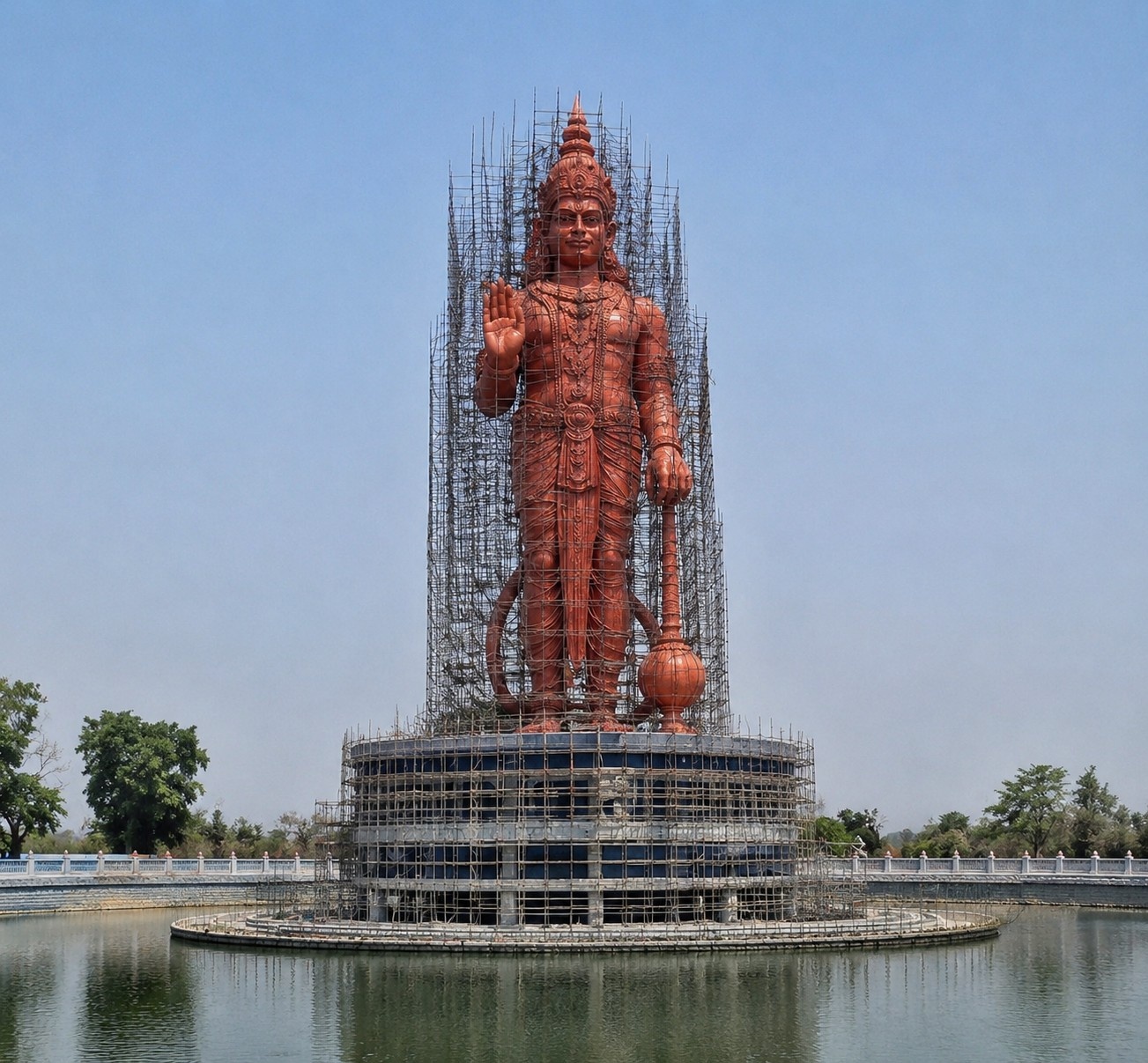
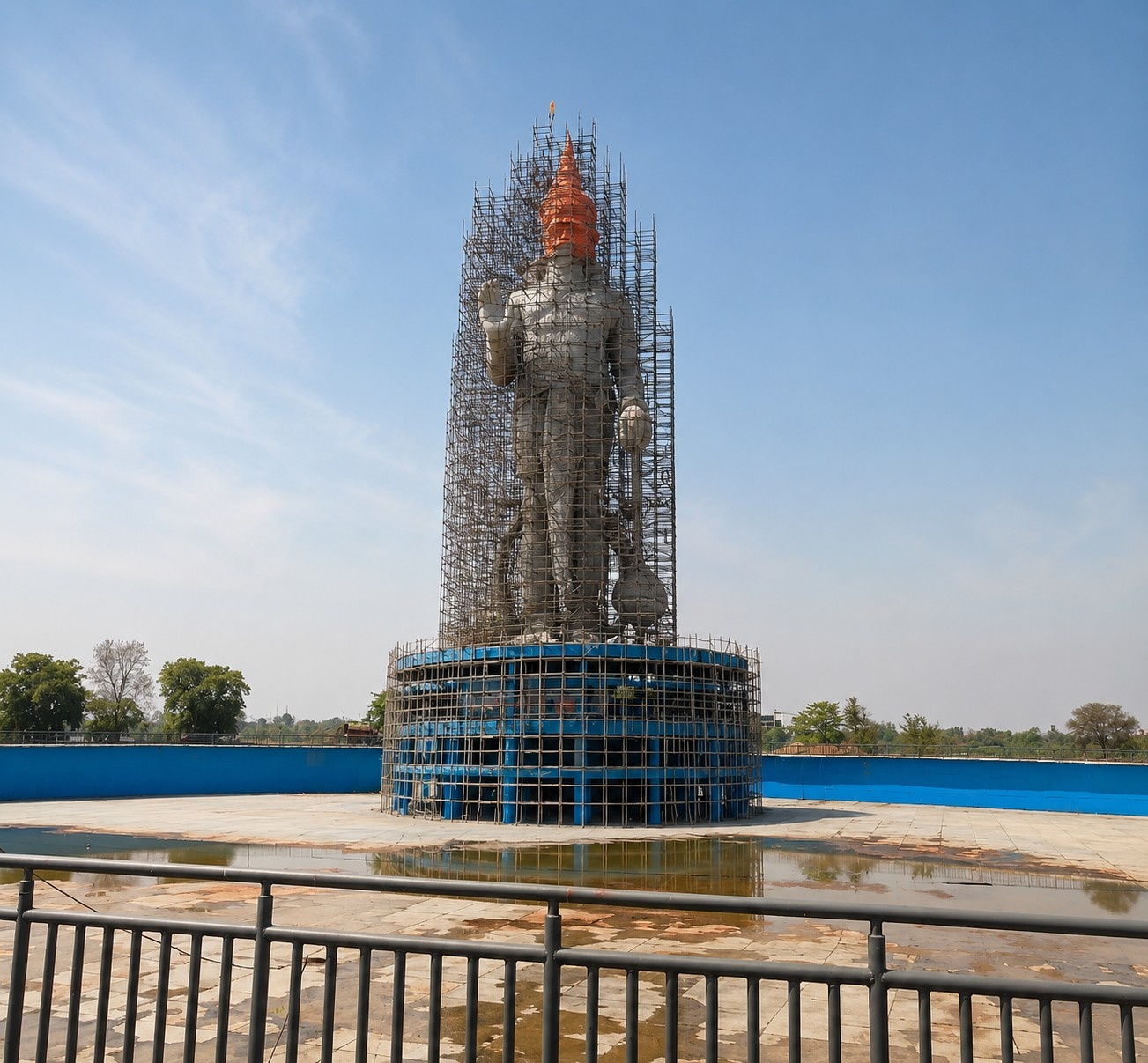
The Hanuman idol itself stands at 162 feet. Add the foundation, and the total structure rises to 206 feet from ground level. A 74-foot mace (gada) has been installed as part of the structure — a detail that adds both scale and divine symbolism to the composition.

The massive statue has been constructed within the premises of the Shri Mahalaxmi Jagdamba Sansthan in Koradi — one of Central India’s most prominent spiritual centres. The idol stands in the middle of pond number three, rising dramatically from the water — as if Lord Hanuman himself is emerging from the sacred lake.

The construction has been executed by Matu Ram Art Centre from Gurugram — the same firm that built the 351-foot Lord Shiva statue in Udaipur and the Lord Buddha statue in Namchi, Sikkim. Every detail of the divine form has been sculpted with precision and reverence.

The cost of the statue alone is ₹11.5 crore — part of the larger ₹1,214.94 crore Koradi temple redevelopment master plan.


7D Hanuman Chalisa: A First in India

This is the feature that sets Koradi apart from every other religious destination in the country.

The complex will offer a “7D Hanuman Chalisa Projection” experience. This is a fully immersive audio-visual presentation — combining 7D projection technology, surround sound, and special effects — to tell the story of Lord Hanuman’s life and the meaning of the Hanuman Chalisa in a way that devotees have never experienced before.

The complex will feature a “7D Hanuman Chalisa Projection” experience, aimed at giving devotees an immersive spiritual and cultural experience based on the life and values of Lord Hanuman.

This technology turns a religious visit into a deeply personal, emotionally resonant journey. It is designed not just for regular devotees but also for first-time visitors, students, and tourists who want to connect with the spiritual significance of Koradi in a modern, engaging format.


Boat Darshan: A Unique Experience

Reaching the Hanuman idol is itself part of the experience.

Since the statue stands in the middle of a lake, devotees will take a boat ride to reach the base of the idol for darshan. This is a uniquely beautiful arrangement — approaching a towering divine figure from the water, with the reflection of the idol shimmering below.

Few religious experiences in India offer this combination of natural serenity, dramatic scale, and divine presence. The boat darshan is expected to become one of Koradi’s most memorable features — one that will draw visitors back again and again.


What Else Awaits Devotees at Koradi

The Koradi complex being developed around the Hanuman statue is far more than a temple precinct. Bawankule said the temple complex is being developed not only as a spiritual destination but also as a major tourism and skill development hub.

Here is a snapshot of what the full complex will offer:

Monorail — 2.5 km covering 7 spots (₹17.46 crore) A dedicated monorail will connect key points within the vast complex. This makes the site accessible for elderly devotees, families with young children, and visitors with mobility challenges.

Kids’ Adventure Park — Indoor and Outdoor (₹31.18 crore) A full-scale children’s park — with both indoor and outdoor attractions — transforms Koradi into a family destination for a full day out.

Mahadwar — Grand Entrance Gate (₹8.5 crore) A magnificent main entrance gate featuring statues of Chhatrapati Shivaji Maharaj and Maa Tulja Bhavani will welcome devotees. It is a statement of Nagpur’s spiritual and historical identity in one powerful gesture.

Rajgad Mahadwar — VIP Entrance (₹3.44 crore) A dedicated 10-metre-high VIP entrance ensures smooth flow for dignitaries without disrupting the general pilgrim experience.

Water body with fountains and bridge A beautifully designed water feature with musical fountains and a decorative bridge adds visual beauty and an additional attraction for visitors.

Amusement Park and Dinopark For families seeking a complete day out, dedicated amusement and Dino-themed park sections broaden Koradi’s appeal beyond traditional devotees.

Hostel for 500 Children + Skill Development Centre In a meaningful dimension of social commitment, a hostel for 500 children and a skill development centre for youth are being built — connecting Koradi’s development to the upliftment of the local community.


Women, Employment and Community: The Bigger Vision

What makes the Koradi project truly special is its social mission alongside its spiritual ambition.

Special focus is being given to women self-help groups, employment generation, youth skill training and cultural tourism through multiple projects being developed in the area with the support of Nagpur Improvement Trust and Nagpur Metropolitan Region Development Authority.

This is a temple complex that creates jobs, empowers women, trains youth, and drives local economic activity — not just a monument but a living, breathing community institution.


Amit Shah’s Inauguration: A National Moment for Nagpur

The scale of the Koradi inauguration reflects the national importance of this project.

Revenue Minister Bawankule personally travelled to New Delhi to meet Amit Shah and extend the formal invitation. Shah accepted warmly and confirmed his presence at the June 2026 ceremony.

The presence of the Union Home Minister at the inauguration signals that Koradi is no longer just a local or regional religious site. It is being positioned as a national spiritual landmark — one that Nagpur can be proud of on the grandest stage.


Koradi’s Journey: From Delay to Destiny

The Koradi Hanuman statue has had its share of delays. The original inauguration date of January 26, 2026 was missed. A subsequent target was also pushed back. But in May 2026, the project is genuinely in its final phase — with landscaping, lighting, visitor infrastructure, and finishing works all nearing completion.

The statue is designed to shift Koradi from a routine pilgrimage stop to a destination with national visibility. Height, setting, and form work together. The purpose is straightforward — to give Nagpur a monument that asserts scale, identity, and permanence.

That purpose is about to be fulfilled.


Nagpur’s Spiritual and Tourism Renaissance

The Koradi Hanuman statue inauguration in June 2026 will mark a defining moment for Nagpur. Just as the city is transforming its civic infrastructure — from AI-powered traffic management at city junctions to the revival of the Futala Musical Fountain — Koradi represents the city’s spiritual and cultural renaissance.

A 162-foot Hanuman idol rising from a sacred lake. A 7D Chalisa experience unlike anything in India. Boat darshan, a monorail, a children’s park, and a community development hub — all in one complex.

Nagpur, this June, will have something truly extraordinary to offer the world.

Nagpur Updates will bring you complete live coverage of the Koradi Hanuman statue inauguration. Stay tuned for date confirmation, event details, and everything you need to know before you visit.


Tags: Koradi Temple, Hanuman Statue Nagpur, Amit Shah Nagpur, Chandrashekar Bawankule, 7D Projection Nagpur, Nagpur Tourism, NMRDA Nagpur, Religious Tourism, Nagpur Local News 2026

Koradi Temple’s 188-Foot Hanuman Idol to Get a Futuristic Touch: Laser Projection, Underwater Lighting, Monorail and More — Amit Shah to Inaugurate in June 2026

Published: May 10, 2026 | Category: Nagpur Local | Nagpur 188 ft Hanuman idol | By: Nagpur Updates Desk


One of Nagpur’s most beloved and sacred destinations is on the verge of a truly extraordinary transformation. The Mahalaxmi Jagdamba Koradi Temple — situated approximately 20 kilometres south of Nagpur city on the Chhindwara Road and revered as one of the most powerful Shaktipeeths in the Vidarbha region — is at the heart of an ambitious, ₹1,214.94 crore redevelopment project that promises to turn Koradi into a world-class religious tourism destination of national importance.

At the centrepiece of this transformation stands a monumental achievement — the construction of a 188-foot Hanuman idol (Nagpur 188 ft Hanuman idol) set to be the tallest Hanuman statue in India, towering magnificently in the middle of a lake within the Koradi temple complex. The idol is now nearing completion and is set to be inaugurated in a grand ceremony in June 2026 — with Union Home Minister Amit Shah confirmed to preside over the historic unveiling.


The Statue: Engineering Marvel Meets Divine Faith | Nagpur 188 ft Hanuman idol | Koradi Hanuman statue

The sheer scale of the Koradi Hanuman idol (Koradi Hanuman statue) is staggering. Standing at 158 feet in height for the statue itself, with the base and spire bringing the total structure to approximately 163–188 feet, this colossus of reinforced concrete and iron is being created to capture every detail of Lord Hanuman’s divine form with reverence and precision.

The numbers behind the construction are equally impressive:

  • 178 cubic metres of concrete used in the structure
  • 140 tonnes of iron reinforcement embedded within
  • Total weight of the statue: 281 tonnes
  • Cost of the idol alone: ₹11.50 crore
  • Sculptor: Jatin Kumar, leading the team from Matu Ram Art Centre — the Gurugram-based firm celebrated for creating the 351-foot Lord Shiva statue in Udaipur and the Lord Buddha statue in Namchi, Sikkim

The idol stands in the middle of pond number three within the Koradi temple complex — creating a breathtaking visual where the towering deity appears to rise directly from the water. The symbolism is powerful: Lord Hanuman, eternal protector and symbol of strength, standing sentinel over the sacred waters of Koradi.

Since the statue is situated in the middle of the lake, boats will be arranged for visitors to reach the idol — adding an element of pilgrimage journey to the darshan experience.


Futuristic Features: Transforming Ancient Faith with Modern Technology

What truly sets the Koradi redevelopment project (Koradi Hanuman statue) apart from conventional temple upgrade programmes is its bold integration of cutting-edge modern technology and attractions with the sanctity of an ancient religious site. The comprehensive development plan — prepared jointly by the Nagpur Improvement Trust (NIT) and the Nagpur Metropolitan Region Development Authority (NMRDA) — envisions Koradi as not just a temple but a complete religious tourism ecosystem.

The futuristic features planned for the Koradi complex include:

Laser Projection Mapping The Hanuman idol and the temple complex will be equipped with laser projection mapping technology — a stunning visual spectacle where high-powered laser projectors display dynamic images, stories, and devotional content on the surfaces of the statue and temple structures after dark. Laser projection mapping has been used to dramatic effect at iconic landmarks worldwide, and at Koradi, it will transform the evening darshan experience into something truly extraordinary.

Underwater Lighting The lake surrounding the Hanuman idol will be fitted with sophisticated underwater lighting systems, illuminating the waters around the statue in a dramatic display that will make the idol appear even more magnificent after sunset. Combined with the laser projection system, the nighttime visual experience at Koradi is set to become one of the most spectacular in Central India.

Butterfly Garden A dedicated butterfly garden is being developed within the temple complex — a peaceful, nature-based attraction that will provide a serene contrast to the grandeur of the main temple and statue complex, and is expected to be a popular destination for families and nature lovers.

2.5 km Monorail Covering Seven Spots One of the most exciting and unique features of the Koradi redevelopment is the planned 2.5-kilometre monorail system connecting seven key spots within the complex, at an estimated cost of ₹17.46 crore. The monorail will allow devotees and visitors to comfortably traverse the expansive temple complex — particularly beneficial for elderly pilgrims, families with young children, and visitors with mobility challenges.

Kids’ Adventure Park — Indoor and Outdoor A dedicated kids’ adventure park featuring both indoor and outdoor games is being planned at an estimated cost of ₹31.18 crore. This will transform Koradi into a family destination where children and adults alike have engaging, age-appropriate attractions beyond the religious experience.

Dinopark and Amusement Park In a fascinatingly eclectic addition to a temple precinct, the redevelopment plan includes a Dinopark and amusement park — attractions that will broaden the appeal of Koradi beyond traditional devotees to include general tourists and families seeking a full-day recreational experience.

Water Body with Fountains and Bridge A beautifully designed water body with musical fountains and a decorative bridge will add to the aesthetic and atmospheric richness of the complex — creating photogenic spaces that will draw visitors beyond the temple itself.


The Grand Gateway: Mahadwar and Rajgad Mahadwar

The entrance experience at the redeveloped Koradi complex will itself be a statement. The project includes the construction of a magnificent ‘Mahadwar’ (main entrance gate) featuring statues of Chhatrapati Shivaji Maharaj and Maa Tulja Bhavani, at a cost of ₹8.5 crore — a gateway that connects Nagpur’s spiritual and historical identity in one powerful symbolic gesture.

A separate VIP entrance — the ‘Rajgad Mahadwar’ — standing 10 metres in height, will be constructed at a cost of ₹3.44 crore, providing a dedicated entry point for dignitaries and special guests while maintaining the flow of general pilgrim traffic.


Hostel for 500 Children: Social Commitment Alongside Spiritual Development

The Koradi project is not just about tourism and spectacle. In a heartening dimension of social commitment, a hostel facility for 500 children is being planned as part of the development — reflecting the Mahalaxmi Jagdamba Sansthan’s commitment to education and welfare alongside its religious mission.

A skill development centre is also being incorporated into the master plan — creating a space where youth from Koradi and surrounding areas can access vocational training and employment-oriented skill building, directly connecting the temple’s development to the economic upliftment of the local community.


June 2026 Inauguration: Amit Shah to Preside | Koradi Hanuman statue

The inauguration of the Koradi Hanuman idol — and the unveiling of the redeveloped temple complex — is scheduled for June 2026. Nagpur Guardian Minister and Revenue Minister Chandrashekar Bawankule personally travelled to New Delhi to meet Union Home Minister Amit Shah and extend a formal invitation to the ceremony.

Amit Shah accepted the invitation warmly and confirmed his availability to attend the historic event in June 2026. Bawankule expressed confidence that the inauguration would be conducted on a grand scale and that Koradi would emerge as a major spiritual destination for devotees from across the country.

The presence of the Union Home Minister at the inauguration underlines the national significance that this project has achieved — transforming what was always a locally cherished temple into a landmark of pan-India religious and cultural importance.


Koradi Temple: A Sacred History

For those unfamiliar with Koradi’s spiritual significance, the Mahalaxmi Jagdamba Temple has been a revered Shaktipeeth for centuries. Dedicated to Goddess Durga, the temple is situated on the banks of Koradi Lake and draws lakhs of devotees annually — particularly during Navratri, when the idol is adorned in three distinct divine avatars and the surrounding area comes alive with devotion and celebration.

The temple’s location — just 20 km from Nagpur city — makes it easily accessible to urban devotees while retaining the sacred, removed atmosphere of a proper pilgrimage site. With the redevelopment, Koradi is set to become what its promoters envision: a destination that rivals India’s foremost religious tourism sites in its scale, experience, and spiritual ambience.

Just as Nagpur’s civic and infrastructure landscape is being transformed through projects like the New Nagpur IBFC township and the Indora–Dighori flyover, the Koradi redevelopment represents the city’s spiritual and cultural renaissance — a commitment to honouring its deepest traditions while embracing the possibilities of a modern, ambitious future.

Nagpur Updates will bring you full coverage of the Koradi Hanuman idol inauguration in June 2026. Stay tuned!


Tags: Koradi Temple, Hanuman Idol Nagpur, NMRDA Nagpur, Amit Shah Nagpur, Chandrashekar Bawankule, Religious Tourism Nagpur, Nagpur Development, Mahalaxmi Jagdamba, Nagpur Local News 2026

Shantivan Chincholi Nagpur: A Sacred Memorial of Dr Babasaheb Ambedkar’s Legacy

Ambedkar smarak Nagpur: Shantivan Chincholi in Nagpur stands as one of the most spiritually significant and historically powerful sites associated with Dr Babasaheb Ambedkar, the architect of the Indian Constitution. This serene and deeply revered memorial is not just a place—it is a symbol of social transformation, equality, and Buddhist revival in India.

Located on the outskirts of Nagpur, Shantivan Chincholi attracts thousands of followers, historians, and tourists every year who seek to connect with the legacy of Ambedkar’s philosophy and life mission.


Historical Significance of Shantivan Chincholi

The importance of Shantivan Chincholi lies in its direct connection to the final rites of Dr Babasaheb Ambedkar. After his demise in 1956, a portion of his ashes was brought to Nagpur, a city that holds immense importance in Ambedkarite history due to the historic mass conversion to Buddhism at Deekshabhoomi.

Shantivan Chincholi became the resting place of these sacred ashes, making it a pilgrimage destination for millions of followers of Buddhism and Ambedkar ideology. The site symbolizes peace (Shanti) and enlightenment, aligning perfectly with the teachings of Buddha that Ambedkar embraced.


Why Nagpur Was Chosen

Nagpur holds a unique position in Ambedkar’s life journey. It was here that he initiated the Dalit Buddhist Movement, marking a turning point in Indian social history. The city became the epicenter of social justice, equality, and religious transformation.

Shantivan Chincholi was chosen as a peaceful and natural location, away from the city’s chaos, ensuring a serene environment that reflects the values of calmness, reflection, and spiritual awakening.


Architectural and Environmental Beauty

One of the most striking aspects of Shantivan Chincholi is its lush greenery and tranquil environment. The memorial is surrounded by:

  • Dense trees and natural landscapes
  • Well-maintained pathways
  • Peaceful meditation zones
  • Clean and organized surroundings

Unlike crowded urban memorials, Shantivan offers a deeply calming experience, allowing visitors to connect emotionally and spiritually.

The architecture is simple yet powerful, focusing more on symbolism rather than grandeur. This aligns with Ambedkar’s philosophy of simplicity, purpose, and intellectual depth.


Spiritual Importance for Followers

For followers of Dr Babasaheb Ambedkar, Shantivan Chincholi is not just a memorial—it is a sacred spiritual destination.

Visitors come here to:

  • Pay tribute to Ambedkar
  • Meditate in a peaceful environment
  • Reflect on social equality and justice
  • Reconnect with Buddhist teachings

The site plays a crucial role during important dates like:

  • Ambedkar Jayanti
  • Dhammachakra Pravartan Din
  • Mahaparinirvan Diwas

During these occasions, thousands gather to honor Ambedkar’s contributions and spread his message of liberty, equality, and fraternity.


Connection with Buddhist Movement

Shantivan Chincholi is deeply linked with the Buddhist revival movement in India. After converting to Buddhism, Ambedkar emphasized rational thinking, compassion, and social harmony.

The memorial represents:

  • Transformation from oppression to empowerment
  • Adoption of peaceful and logical living
  • Commitment to social reform

Visitors often engage in Buddhist chants, meditation, and community discussions, making it an active center of spiritual and intellectual engagement.


Visitor Experience at Shantivan

A visit to Shantivan Chincholi offers a unique blend of history, spirituality, and peace.

What Visitors Can Expect:

  • Silent and serene atmosphere
  • Clean and green surroundings
  • Well-organized memorial structure
  • Spaces for meditation and reflection

Unlike commercial tourist spots, Shantivan maintains a disciplined and respectful environment, encouraging visitors to experience inner peace and awareness.


Best Time to Visit

The ideal time to visit Shantivan Chincholi is:

  • October to February for pleasant weather
  • During Ambedkar Jayanti (April 14) for cultural significance
  • On Dhammachakra Pravartan Din for spiritual experience

Early morning and evening visits are highly recommended for a calm and immersive experience.


How to Reach Shantivan Chincholi

Shantivan is well-connected from central Nagpur:

  • By Road: Easily accessible via local transport and private vehicles
  • By Rail: Nearest station is Nagpur Railway Station
  • By Air: Dr Babasaheb Ambedkar International Airport is nearby

The location ensures that visitors can reach conveniently while still enjoying a peaceful environment away from city noise.


Importance in Modern Times

In today’s fast-paced and often divided world, Shantivan Chincholi serves as a reminder of unity, equality, and rational thinking.

It continues to inspire:

  • Youth seeking direction
  • Scholars studying social reform
  • Followers practicing Buddhism
  • Citizens committed to equality

The memorial reinforces the idea that true change begins with awareness, education, and compassion.


Why Shantivan Chincholi Must Be Preserved

Preserving Shantivan Chincholi is essential because it represents:

  • A key chapter in Indian social history
  • The legacy of one of the greatest reformers
  • A symbol of peaceful revolution
  • A spiritual center for millions

Efforts must continue to maintain its cleanliness, structure, and cultural relevance, ensuring that future generations can learn and draw inspiration from this sacred place.

Shantivan Chincholi in Nagpur is far more than a memorial—it is a living symbol of Dr Babasaheb Ambedkar’s vision for an equal and enlightened society. Its peaceful environment, deep historical roots, and spiritual significance make it one of the most important places to visit for anyone seeking knowledge, reflection, and inspiration.

We recognize Shantivan not just as a destination, but as a powerful reminder of the journey from inequality to empowerment, guided by the timeless principles of justice, wisdom, and humanity.

₹45.56 Crore Tourism Project Near Babulkheda: A Transformational Leap for Nagpur’s Future

A New Era of Urban Tourism Development

Babulkheda development: We are witnessing a major transformation in the tourism and infrastructure landscape of Nagpur as a ₹45.56 crore tourism project near Panchmukhi Hanuman Mandir Babulkheda moves forward. This ambitious initiative reflects a strategic push toward urban modernization, cultural promotion, and economic growth, positioning Nagpur as a rising tourism hub in central India.

The project is not merely an infrastructure upgrade—it is a visionary blueprint designed to redefine how tourism integrates with urban life, offering enhanced public spaces, better connectivity, and immersive experiences for both residents and visitors.


Project Overview: Strategic Investment for Long-Term Growth

The ₹45.56 crore allocation marks a significant milestone in regional development. This project focuses on the Babulkheda area (Near Panchmukhi Hanuman Mandir)  which is rapidly emerging as a key zone for urban expansion and tourism-centric infrastructure.

We see this development as part of a broader strategy to:

  • Boost local tourism potential
  • Improve civic amenities
  • Enhance the aesthetic appeal of the city
  • Generate employment opportunities

The funding will be utilized to create modern facilities, green spaces, recreational zones, and improved accessibility, ensuring that the area becomes a high-value destination for tourists and residents alike.


Babulkheda: Emerging as a Tourism Hotspot

Babulkheda is strategically located within Nagpur’s expanding urban framework, making it ideal for tourism-driven development. Its accessibility and proximity to key city areas allow it to serve as a gateway for new-age tourism experiences.

We anticipate that the project will transform Babulkheda into a:

  • Recreational hub
  • Cultural activity center
  • Urban leisure destination

This shift will significantly elevate the tourism profile of Nagpur, aligning it with other rapidly developing cities in Maharashtra.


Key Features of the Tourism Project

1. Modern Infrastructure Development

We are seeing a strong focus on state-of-the-art infrastructure, including:

  • Wide internal roads
  • Improved drainage systems
  • Smart lighting solutions
  • Pedestrian-friendly pathways

These enhancements will ensure seamless mobility and a comfortable visitor experience.


2. Green Spaces and Eco-Friendly Design

A major highlight is the integration of eco-conscious planning, which includes:

  • Landscaped gardens
  • Open recreational parks
  • Sustainable water management systems

This approach ensures that the project aligns with environmental sustainability goals, making it attractive for eco-tourism enthusiasts.


3. Recreational and Cultural Zones

The development will feature dedicated zones for cultural and recreational activities, such as:

  • Amphitheaters
  • Event spaces
  • Community gathering areas

We expect these spaces to become vibrant centers for festivals, performances, and public events, enriching the cultural fabric of Nagpur.


4. Enhanced Connectivity

Connectivity improvements will play a crucial role in the project’s success. Planned upgrades include:

  • Better road access
  • Integration with city transport systems
  • Improved last-mile connectivity

This ensures that the location is easily accessible from all parts of the city, increasing footfall and tourism activity.


Economic Impact: Driving Growth and Employment

One of the most significant outcomes of this project is its economic potential. We foresee:

  • Direct employment opportunities during construction and maintenance
  • Indirect job creation in tourism, retail, and hospitality sectors
  • Increased local business activity

The development will stimulate micro-economies around Babulkheda, benefiting small vendors, entrepreneurs, and service providers.


Boosting Nagpur’s Tourism Ecosystem

Nagpur has been steadily gaining recognition for its strategic location and infrastructure growth. With projects like this, we are seeing a shift toward tourism diversification.

This initiative complements existing attractions and enhances the city’s appeal by:

  • Offering new destinations for visitors
  • Encouraging longer tourist stays
  • Promoting local culture and heritage

We believe this will position Nagpur as a well-rounded tourism destination, not just a transit city.


Urban Planning Vision: Smart and Sustainable Growth

The tourism project reflects a broader vision of smart urban planning, integrating:

  • Technology-driven solutions
  • Sustainable infrastructure
  • Citizen-centric design

This aligns with the larger goals of urban development initiatives being implemented across Maharashtra, ensuring that Nagpur remains future-ready and globally competitive.


Social Impact: Improving Quality of Life

Beyond tourism and economics, the project will significantly enhance the quality of life for residents. We expect:

  • Better public spaces
  • Increased recreational opportunities
  • Safer and cleaner surroundings

Such developments contribute to a more livable and inclusive urban environment, making Nagpur a preferred city for both living and visiting.


Challenges and Execution Strategy

While the project holds immense promise, its success depends on:

  • Timely execution
  • Efficient resource management
  • Community engagement

We anticipate that authorities will adopt a structured implementation strategy, ensuring transparency and adherence to timelines.


Future Outlook: A Landmark Development for Nagpur

The ₹45.56 crore tourism project near Babulkheda is more than just an infrastructure upgrade—it is a symbol of Nagpur’s evolving identity.

We are confident that once completed, it will:

  • Become a landmark destination
  • Attract regional and national tourists
  • Strengthen Nagpur’s position as a key urban center in central India

Redefining Nagpur’s Tourism Landscape

We stand at the cusp of a transformative phase where strategic investments are reshaping the city’s future. The Babulkheda tourism project exemplifies how visionary planning and targeted funding can unlock immense potential.

As this project progresses, we expect it to set new benchmarks in urban tourism development, making Nagpur a model city for integrated growth and innovation.

Exit mobile version