Koradi Temple Gets Government Land for 30 Years at Just Re 1 Annual Rent — Maharashtra Cabinet Approves

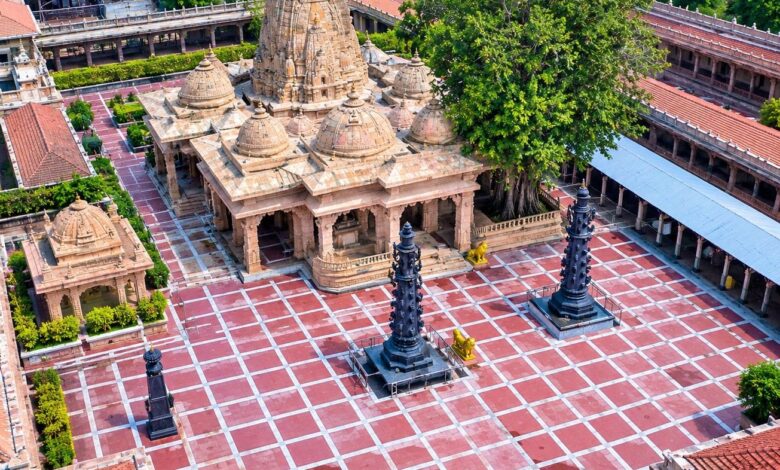

A significant decision for Nagpur’s most important pilgrimage site was taken in Mumbai on Tuesday. The Maharashtra Cabinet has approved the lease of government land to Shri Mahalaxmi Jagdamba Sansthan — the trust that manages the famous Koradi temple — for a period of 30 years. Furthermore, the annual lease rent for this government land will be just Rs 1 per year. As a result, the Koradi temple trust now has a secure, long-term land base on which to develop facilities for the lakhs of devotees who visit the shrine every year.
The decision was taken at a Cabinet meeting chaired by Chief Minister Devendra Fadnavis at Sahyadri Guest House in Mumbai. Moreover, this approval falls under the broader Koradi Tirth Kshetra Development Proposal — the government’s comprehensive plan to transform Koradi into a world-class pilgrimage destination.
What Exactly Has Been Approved — The Full Details
The Maharashtra Cabinet has approved the lease of government land developed under the Koradi Tirth Kshetra Development Proposal to Shri Mahalaxmi Jagdamba Sansthan. Furthermore, the lease period is 30 years. The annual rent is Rs 1 — a nominal amount that makes the land practically free for the trust to use.
The legal basis for this decision comes from Section 40 of the Maharashtra Land Revenue Act, 1966, along with the rules framed in 1971 for the disposal of government land and the Government Resolution dated July 25, 2019. Furthermore, the Revenue Department has confirmed that this decision follows established legal provisions for government land leases to religious and public charitable institutions.
The renewal of the lease after the 30-year period is also addressed in the approval. Moreover, if Shri Mahalaxmi Jagdamba Sansthan applies for renewal after the 30-year term expires, the right to grant renewal has been vested with the Nagpur District Collector. Therefore, the trust will not need to approach the state government for renewal — the decision will be taken at the district level, simplifying the process significantly.

Why the Re 1 Rent Is Significant — Understanding Government Land Policy
A lease at Rs 1 annual rent is not unique in Maharashtra’s government land policy. Furthermore, the state has a well-established practice of leasing government land to religious trusts, charitable institutions and public service organisations at nominal rents. As a result, the government’s land remains in public ownership while the institution using it can invest in development without the burden of high land costs.
For Shri Mahalaxmi Jagdamba Sansthan, the significance of this decision is enormous. Furthermore, land security is the foundation on which all other development decisions rest. An institution that does not have clear, long-term rights over the land it uses cannot make major infrastructure investments — because there is always a risk that the land could be claimed back or its use disputed.
With a 30-year lease at Rs 1 per year, the Sansthan now has a secure foundation for planning and building the facilities that the Koradi development proposal envisions. Moreover, banks and financial institutions will be more willing to support funding for development projects when the land tenure is secured. As a result, the Cabinet’s decision unlocks the broader Koradi development agenda in a way that was not previously possible without clear land rights.
What Is the Koradi Tirth Kshetra Development Proposal
The land lease decision needs to be understood in the context of the much larger Koradi Tirth Kshetra Development Proposal — the government’s comprehensive vision for transforming Koradi from a single-temple pilgrimage stop into a full-scale religious tourism destination.
As Nagpur Updates has reported extensively, Koradi is already the site of significant government investment. The Maharashtra Tourism Department recently approved Rs 4.99 crore for a theme park at Koradi and Rs 4.97 crore for a tourist centre at Jakhapur, Koradi. Furthermore, the installation of India’s tallest Lord Hanuman idol at 162 feet is planned at the temple premises under NMRDA. An amusement park and dinosaur park are also proposed in the vicinity.
The land lease decision now provides the Mahalaxmi Jagdamba Sansthan with the secure land rights needed to implement these development proposals systematically. Moreover, with 30 years of guaranteed access, the trust can plan phased development — starting with the most urgent visitor facilities and progressively adding attractions over the coming decade.
About Koradi Temple — Why This Place Matters
Shri Mahalaxmi Jagdamba Temple at Koradi is one of Nagpur district’s most important religious sites. Furthermore, it is located in Koradi, approximately 15 kilometres north of Nagpur city on Chhindwara Road. As a result, it is easily accessible to devotees from Nagpur city and from towns across Vidarbha.
The temple is dedicated to Goddess Durga and is considered one of Maharashtra’s significant Shakti Peethas. Furthermore, it is especially busy during Navratri and Dussehra celebrations when huge crowds of devotees gather for the annual festival. The temple attracts visitors not just from Nagpur but from across Vidarbha, neighbouring Madhya Pradesh and beyond.
The Mahalaxmi Jagdamba Sansthan is the registered trust body that manages the temple’s daily operations, maintenance, festivals and charitable activities. Moreover, the Sansthan also provides various services to devotees — including prasad distribution, accommodation facilities and management of the large crowds during peak festival periods.
What Devotees Can Expect From This Development
For the lakhs of devotees who visit Koradi every year, the Maharashtra Cabinet’s land lease decision is the first step in a transformation that will significantly improve the pilgrimage experience. Furthermore, secured land rights mean that the Sansthan can now commission detailed development plans for the facilities that devotees have been requesting.
The most pressing needs at Koradi, as identified by devotees and the temple committee over the years, include better parking — the Sansthan had specifically demanded a permanent parking facility in earlier representations. Moreover, a yatri niwas — a rest house where devotees from distant areas can stay overnight — has been a long-pending request. A sabhagruha — an auditorium for large religious events — is also on the list.
With secured land rights for 30 years, the Sansthan can now begin designing and building these facilities in a phased manner. Furthermore, the government’s broader Rs 10 crore investment in the Koradi tourism zone — through the theme park and tourist centre approvals — will complement the Sansthan’s own development activities. As a result, the entire Koradi area is moving toward becoming a genuinely well-equipped pilgrimage and tourism destination.
The Renewal Clause — Protection for the Future
The government’s decision to vest renewal rights with the Nagpur District Collector is a thoughtful administrative provision. Furthermore, it ensures that the renewal process remains straightforward and efficient — without requiring the Sansthan to navigate the full state Cabinet approval process again after 30 years.
However, it also means that the renewal is not automatic. Moreover, the District Collector will review the renewal request based on the rules applicable at that time. Therefore, it is important for the Sansthan to maintain proper land use and development records throughout the 30-year period — demonstrating that the land has been used for the purposes for which it was leased.
The 30-year period itself gives the Sansthan ample time to develop Koradi into a fully functional pilgrimage destination. Furthermore, if the development is executed well over the next 30 years, the renewal case will effectively make itself — a thriving pilgrimage site that is serving lakhs of devotees annually is not something any government would want to disrupt.
What Comes Next — The Development Timeline
The Cabinet approval is the legal foundation. Furthermore, the next steps are for the Revenue Department to issue the formal lease documents and for the Sansthan to begin activating its development plans on the now-secured land.
With the broader Koradi development agenda — theme park, tourist centre, Hanuman idol, amusement park — all at various stages of planning and approval, the coming months should see significant visible activity on the ground at Koradi. Moreover, the Sansthan’s own facility development will complement the government-funded projects to create a comprehensive visitor experience.
Nagpur Updates will track the Koradi development agenda and report on construction milestones, facility launches and major events at the temple complex as they occur.