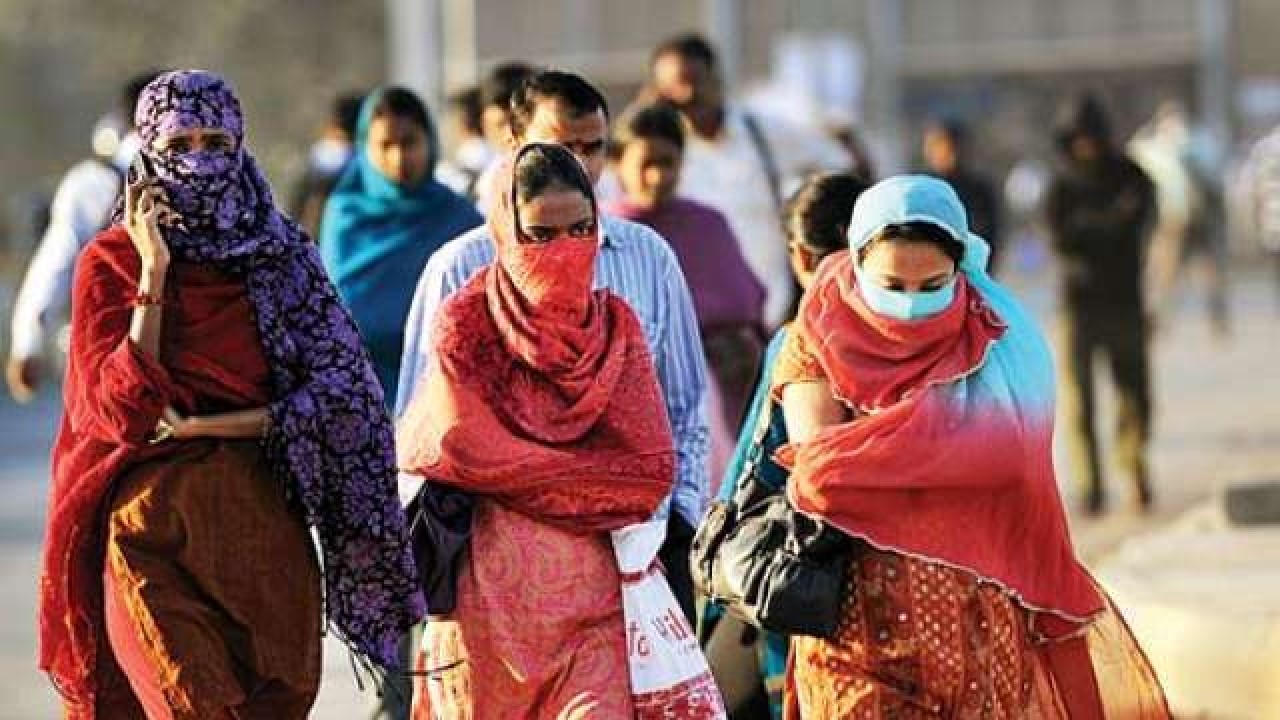
Nagpur is the second hottest in the country, 44.2 degrees Celsius

Nagpur:- The city reported the season’s highest temperature till Sunday, with the maximum levels of mercury rising to 44.2 degrees Celsius, almost two degrees above normal temperature. The city was the region’s second hottest.

The earlier peak temperature was reported on April 17, when the maximum temperature for the city was 43.4 degrees Celsius.

Many areas of Vidarbha, too, have seen maximum and minimum temperatures rise. On Sunday, Akola at 44.9 degrees Celsius was the hottest in the area. With a maximum temperature of 44.1 degrees, Celsius Brahmapuri was the third hottest in the country.

Amravati and Chandrapur were both at 43.8 degrees Celsius, while Gondia and Gadchiroli recorded 42.6 and 42 degrees Celsius maximum temperatures, respectively. In Nagpur, the maximum temperature began to rise from mid-April.

On April 11, it first reached 40 degrees and since then the levels of mercury have been mostly above 40 degrees. The nights were also beginning to get warmer after April 17 with an increase in minimum temperatures. The month’s maximum-minimum temperature was recorded at 25.2 degrees centigrade on April 27.

Citizens also received some relief with sporadic rainfall amid the scorching sun. The town recorded a total of 15.8 mm of rain in the month of April.

Nagpur’s pre-monsoon rain is expected to hit the city this month too, according to officials from the Regional Meteorological Center (RMC). Officials said the discontinuity of the wind continues at lower levels, causing Vidarbha to rain.

According to the met department’s forecast, some spells of rain are predicted in some parts of the area on May 7 and 8. Some parts of the area will also experience heatwave related conditions on May 4 and 5.

The city’s maximum temperature could witness a drop following pre-monsoon rain but is expected to rise again in the week to come. It could hit 45 degrees Celsius by May 9 according to RMC’s forecast.

After Cool April in Nagpur, the town is Witnessing Tough May

With frequent showers in the month of April, the passing month remained the town’s talk of being the second coolest month of the decade. It was earlier in 2010 when frequent rains and showers were observed to keep the whole month cool for people who often have a hard time in the summers. As far as the weather department is concerned, the disturbances received from the western parts of the state kept the city and even the entire region cool during the summers.

As per Skymet, the majority of days in the region were cool, while other parts of the country were faced with severe weather with high temperatures and heatwaves. The reports also suggest that the city and the central region receive a good amount of rain, which amounted to around 46% of the rain in Nagpur and the surrounding areas, making not only April cool, but also March. This has allowed the two months to remain the coolest in the region for the second time in the decade.

On the other hand, the city witnessed a tough day yesterday as it witnessed 43.2 degrees in Nagpur taking the temperature to the maximum level. Even the entire region seemed to be suffering from mercury rising to the next level. Akola was the deadliest with temperatures reaching 44.8 degrees, while Amravati recorded 44.2 degrees in the city, while Chandrapur and Brahamapuri were the most affected areas.

NASA ने जारी की तस्वीरें,लॉकडाउन ने साफ कर दी भारत की 20 साल की गंदी हवा.

नासा की अर्थ ऑब्जरवेटरी ने पिछले चार सालों की तस्वीरें जारी की हैं, जिसमें ये बताया है कि कैसे प्रदूषण का स्तर पूरे देश में कम हो गया है. लॉकडाउन के चलते वाहनों की आवाजाही ना के बराबर है. ज्यादातर फैक्ट्रियां बंद हैं. लोग घरों से बाहर जरूरी काम के लिए ही निकल रहे हैं.

इस लॉकडाउन के चलते जहां कोरोना वायरस के संक्रमण को रोकने में मदद मिल रही है. साथ ही साथ पर्यावरण पर भी इसका चौंका देने वाला असर देखने को मिल रहा है. देश में एयरोसोल की मात्रा बेहद कम हो गई है. नासा की अर्थ ऑब्जरवेटरी की टीम ने इसपर अध्ययन किया है.

कोरोना वायरस की वजह से पूरे देश में लगाए गए लॉकडाउन से भले ही देश की अर्थव्यवस्था पर असर पड़ रहा हो. लेकिन पूरा देश प्रदूषण मुक्त हो रहा है. नदियां साफ हो रही हैं. हिमालय जालंधर से दिख रहा है. हरिद्वार में गंगा का पानी पीने लायक हो गया है. मतलब ये कि लॉकडाउन से पूरा देश साफ हवा में सांस ले रहा है. इसकी पुष्टि अमेरिकी अंतरिक्ष एजेंसी नासा ने भी की है.

गंगा के किनारे बसा हुआ देश का हिस्सा पूरी तरह से साफ हो गया है. गंगा के किनारे बसे शहरों के ऊपर 20 साल से जो धुंधला आसमान दिखता था, जो एयरोसोल के घने बादल दिखते थे, आज वो लॉकडाउन की वजह से साफ हो गए हैं.

अंतरिक्ष एजेंसी नासा ने ये तस्वीरें मॉडरेट रिजोल्यूशन इमेजिंग स्पेक्ट्रोरेडियोमीटर (MODIS) टेरा सैटेलाइट से ली हैं. लॉकडाउन के चलते प्रदूषण का लेवल तेजी से नीचे आया है. भारत में प्रदूषण की समस्या जैसे खत्म सी हो गई है, इस पर नासा ने भी सैटेलाइट इमेज जारी कर अपनी मुहर लगा दी है.

नासा ने कहा है कि भारत में प्रदूषण का स्तर कम हुआ है. भारत में 25 मार्च से लॉकडाउन जारी है. यहां रहने वाले लगभग 130 करोड़ लोग अपने घरों में हैं.नासा में मोडिस एयरोसोल प्रोडक्टस के प्रोग्राम लीडर रॉबर्ट लेवी ने कहा कि भारत में साफ हवा के लिए इससे बेहतरीन तरीका नहीं हो सकता है. सिर्फ हवा ही नहीं, जमीन, पानी सब साफ हो गया है. भारत को ऐसे प्रयास करने चाहिए जिससे इतना साफ मौसम रहे.

देश में लॉकडाउन के चलते फैक्ट्री, कार, बस, ट्रक, ट्रेन, विमानों की उड़ानें बंद है. इन गतिविधियों के रुकने के बाद नासा के सैटेलाइट सेंसर भारत की जो तस्वीर कैप्चर की है वो चौंका देने वाली है. अगर आप 2016 से लेकर अब तक की तस्वीरें देखेंगे तो आपको साफ-साफ अंतर दिखाई देगा.

नासा के मुताबिक उत्तर भारत में हवा में प्रदूषण का स्तर सबसे निचले स्तर पर है. नासा ने कहा है कि सैटेलाइट डेटा से पता चलता है कि कोरोना वायरस के लिए जारी लॉकडाउन के शुरू होने के बाद से उत्तर भारत में हवा में मौजूद प्रदूषण के कणों का स्तर काफी नीचे गिर गया है.

Summer is here, 41.1 degree Celsius records in city

Nagpur: Mercury levels have crossed the 40 degree Celsius Level at many places in Vidarbha to signal the beginning of harsh summers. The meteorology department’s countrywide weather forecasts that on April 14 and 15, heatwaves are likely to build across Northwest Vidarbha.

The highest temperature of this year until today was 41.1 degrees Celsius on Sunday in Nagpur. The mercury levels were 0.6 degrees higher than average. As it was 40,3 degrees Celsius in the city, the maximum temperature was 40 degrees Celcius one day earlier.

Besides Nagpur, the highest temperature spikes also occur in other parts of the country. Akola was the warmest on Saturday in the area with a maximum temperature of 42 degrees Celsius, beating 40 degrees a week earlier. For Sunday it was also cooler with a high temperature of 42.8 degrees Celsius.

Amravati and Wardha were next in line, both of which had on Sunday high temperature of 41.6 degrees Celsius. Only 40 degrees a day earlier had reached them.

However, the temperatures of Sunday were 40.5, 40.2 and 40 degrees Celsius respectively by Chandrapur, Bramhapuri and Gadchiroli.

The 40-degree threshold remained in Gondia and Washim at 39.8 and 39.6 degrees Celsius.

The public could, however, get some relief from the increasing sun. Nagpur is expected to have light to moderate rains in some areas as well as thunderstorms due to wind discontinuity, according to the Regional Meteorological Center (RMC). Nagpur.

According to the prevision, on 12, 14, 15 and 16 April, Nagpur is likely to receive some thundersnow spells. The city is forecast to experience a high maximum temperature of 42-43 degrees Celsius during the next week.

Even last month, with increasing temperatures, rain fell in the area. According to TOI, Nagpur has been the most precipitous in the last five years for the month of March. The ‘summer rains’ according to the officials were ‘light to moderate’ and may be caused by climate change or climate variability

Minimum temperature to fall over next 3 days

Nagpur: Inconsistency is expected to continue in the weather conditions in the city. Though the weather in the city warmed up on Wednesday, with a small rise in mercury levels, it is forecast that the next three days will get colder.
According to the prediction of the Regional Meteorological Center (RMC), Nagpur, a drop of two to three degrees Celsius across Vidarbha in the next 72 hours is expected to occur at the minimum temperature. It also notes that dry weather prevails over the city and its surrounding areas.
On Wednesday Nagpur was the region’s coldest, with a minimum temperature of 12.6 degrees Celsius. The city recorded a maximum temperature of 30.5 degrees centigrade on the same day. At a maximum temperature of 32.9 degrees, Celsius Akola was the hottest in the world.
There is no rain warning this week for the area. Unlike January, surprise showers were being received in February too. RMC data shows that, due to the cyclonic circulation over Marathwada and surrounding areas, the city has received 8 mm of rain until now.
Officials said the discontinuity of wind movement in the area is carrying moisture and rain. “This is why they experienced heat, humidity as well as cold in December, January and February,” they said.

63% of the sectors in the district are heavily polluting:

Nagpur: Nearly 63% of the Nagpur district industry emits toxic pollutants that are significantly higher than the safe limit, according to the latest data. Also, most coal-fired power plants have earned a five-star rating for being the “least polluting” sector.
The statistics are based on the Star Rating Programme, a first-of-its-kind initiative jointly conducted by the MPCB, the Energy Policy Institute at the University of Chicago (EPIC-India) and other organizations. In order to provide information on the environmental efficiency of the industries to the public, the program gives star ratings to the industries based on the median concentration of the current particulate matter (PM) stack samples.
According to the standards developed by the Central Pollution Control Board (CPCB), the permissible limit for PM stack emissions is 150 milligrams per normal metric cube (mg / NM3). Out of the 24 industries being tracked in the district system, 15 failed to meet this level.
The most polluting industries are primarily oil, textile and metalworking industries. Seven sectors have a one-star rating, while two have a two-star rating. One-star means that the particulate matter emitted by these units is 250 mg / NM3 or more, which is almost twice the acceptable norm. A two-star rating indicates that PM emissions are between 150-250 mg / NM3.
People living in the area are at risk of respiratory and cardiovascular morbidity and can also contribute to mortality, according to the programme. “Emissions contain inhalable contaminants that can enter both the windpipe and the lungs,” he says.
Overall, 414 state-wide enterprises are being tracked under the Star Rating Programme. This tracks industrial air pollution in 10 state clusters — Pune, Mumbai, Navi Mumbai, Thane, Nagpur, Chandrapur, Nashik, Aurangabad, Kolhapur, and Gadchiroli pockets.
Thermal power plants, including Koradi Thermal Power Station (KTPS), Khaperkheda Super Thermal Power Plant, Mouda Super Thermal Power Project, Vidarbha Industries Power Limited and Purti Sakhar Karkhana Limited have received a five-star rating.
Also in September last year, KTPS, Khaperkeda Super Thermal Power Plant and Mouda Super Thermal Power were ranked five-star, while Chandrapur Super Thermal Power Station was rated four-star.
Questioning the Board’s results, environmental activists said that no coal-fired power plant can get a 5-star rating. “People living near Koradi and Chandrapur have been complaining for years about massive air pollution. The effects of chemical pollution on public health as well as on crops are clearly visible. The data are not accurate, “they said.
TOI has been reporting frequently on the pollution crisis caused by KTPS. In June last year, the Ministry of the Environment of the Union declined to initiate the process of granting environmental clearance to the proposed two new plant units.

The temperature dropped again; Nagpur @ 0.5 degrees

Nagpur: The minimum temperature in the sub-capital was once again at 5.5 degrees Celsius. It was not two days since the monsoon rains that the city had a cold wave since Saturday. The temperature dropped to a low of 5.5 degrees Celsius. However, with the weather forecast warning again, the temperature may rise once again. These fluctuations have the potential to affect health.

The minimum temperature has been changing steadily since December. After Diwali, citizens have to wait for December to cool off. Later, it dropped to 1.5 degrees Celsius. Then the temperature started to fluctuate.

But since December 2, rains have been present in many districts of Vidarbha including Nagpur. It was raining for two days. There was a loss of farmers. Now the cold fever has started again. Starting Saturday, the minimum temperature started to drop.

It was a nice fall on Sunday, but with thunderstorm warning has been given since Tuesday. This will reduce the temperature again. But in this game of cold and rain, the farmers are suffering huge losses. At the same time, it is affecting the health of the citizens. This is experiencing winter with the monsoon this year, as it is raining before it gets cold.

Nagpur city recorded the lowest temperature in Vidarbha with a low of 5.5 degrees Celsius on Sunday. It was followed by Gondia with a minimum temperature of 9.5, Akola 9.1 and Brahmapuri at 9.5 degrees Celsius.

Thunderous rain numbs Nagpur, kills crops in many areas of Vidarbha.

Heavy rain and thunderous lightning bolts woke up in Nagpur on Thursday morning. The showers left the citizens shaking during the winter as the temperatures dropped considerably. Since the last 4-5 days, unseasonal rains have not only ruined New Year’s Eve, but have also destroyed crops on a massive scale. The woes of the farmers seem endless. Following heavy rainfall in the monsoon, rainfall caused severe damage to crops in the Nagpur and Vidarbha districts.The last day of the year 2019 saw no sign of the Sun God as the day remained shrouded in a cloud blanket. Chilly winds dominated the day as people dared out on the streets wearing woolen clothes and shielding themselves from rain. Nagpur, Amravati, Washim, Wardha, Pusad, Bhandara, Yavatmal and other parts of Vidarbha were hit by heavy rainfall. Rabi farmers crops have been destroyed in various locations in the area. The weatherman warned about the rainy end of the year. Rains began early in the morning and continued at regular intervals until late in the evening. The Nagpur Regional Meteorological Center also issued a rain forecast in Vidarbha for the coming days. Blitz thunderstorm is forecast in most parts of the region.

With minimum temperature of 5.1°C today, Nagpur records 2nd lowest temperature in 100 years

Nagpur reported its second-lowest temperature in 100 years with a minimum temperature of 5.1 ° C today, with the first recorded at 3.4 ° C on December 29, 2018.

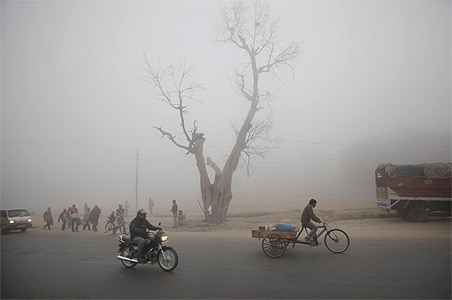
The region will be shrouded with haze throughout the day, with the minimum and maximum temperature hovering around 5 ° C and 26 ° C, according to the Indian Meteorological Department (IMD). The weather will normally be gloomy in the next few days.

Surya Grahan पर NASA की वॉर्निंग- खूबसूरत पर खतरनाक

साल 2019 का अंतिम सूर्य ग्रहण आज सुबह 8 बजे से लग चुका है. भारत समेत कई देशों में दिखने वाला यह सूर्य ग्रहण दोपहर 1 बजकर 36 मिनट तक रहेगा. इस सूर्य ग्रहण काल की अवधि 5 घंटे 36 मिनट की होगी.नासा ने चेतावनी में कहा है कि सूर्य ग्रहण के दौरान सूर्य को भूलकर भी सीधे नग्न आंखों से ना देखें.नासा ने चेतावनी में कहा है कि सूर्य ग्रहण के दौरान सूर्य को भूलकर भी सीधे नग्न आंखों से ना देखें.स्काई ऐट नाइट मैगजीन ने भी नासा की चेतावनी को गंभीरता से लेते हुए लोगों को सतर्क रहने की राय दी है. यह ग्रहण खूबसूरत होने के साथ-साथ खतरनाक भी होगा.स्काई ऐट नाइट मैगजीन ने भी नासा की चेतावनी को गंभीरता से लेते हुए लोगों को सतर्क रहने की राय दी है.

यह ग्रहण खूबसूरत होने के साथ-साथ खतरनाक भी होगा.सूर्य ग्रहण देखने के लिए उत्साहित लोगों को विकिरण से बचाने वाले ग्लासेस पहनने की सलाह दी गई है. इसके साथ ही सूर्य ग्रहण की तस्वीरें लेते वक्त भी सोलर फिल्टर्स का इस्तेमाल करने का सुझाव दिया गया है.यह सूर्य ग्रहण पूर्वी यूरोप, एशिया, भारत, उत्तरी पश्चिमी ऑस्ट्रेलिया, पूर्वी अफ्रीका और अरब देशों में दिखने की संभावना है. कई ऑनलाइन प्लैटफॉर्म पर भी सूर्य ग्रहण की लाइव स्ट्रीमिंग की जाएगी.सूर्य ग्रहण हो या चंद्र ग्रहण दोनों के धार्मिक और वैज्ञानिक महत्व को समझना जरूरी है. साल के अंत में लगने वाले इस सूर्य ग्रहण को ‘रिंग ऑफ फायर’ का नाम दिया गया है.

कैस लगता है सूर्य ग्रहण?
जब सूर्य और पृथ्वी के बीच में चंद्रमा आ जाता है तो सूर्य की चमकती सतह चंद्रमा के कारण दिखाई नहीं पड़ती है. चंद्रमा की वजह से जब सूर्य ढकने लगता है तो इस स्थिति को सूर्यग्रहण कहते हैं.

सूर्यग्रहण की विशेषताएं क्या हैं?
यह ग्रहण पूर्ण सूर्यग्रहण नहीं है. यह वलयाकार सूर्यग्रहण है, जिसमें सूर्य आग की अंगूठी की तरह देखा जाएगा. यह ग्रहण भारत, अफगानिस्तान, पाकिस्तान, और चीन में देखा जा सकेगा.सूर्य के विशेष रूप से प्रभावित होने के कारण इसका असर राशियों पर पड़ रहा है जो लगभग 15 दिनों तक बना रहेगा.

ग्रहण के प्रभाव से कैसे बचें?
– ग्रहणकाल में सूर्य मंत्र का अधिक से अधिक जप करें
– चाहें तो ग्रहण काल में हनुमान जी की पूजा करें
– ग्रहण समाप्ति के बाद ताम्बे के बर्तन, लाल वस्त्र, गुड़ और गेंहू का दान करें.

Exit mobile version