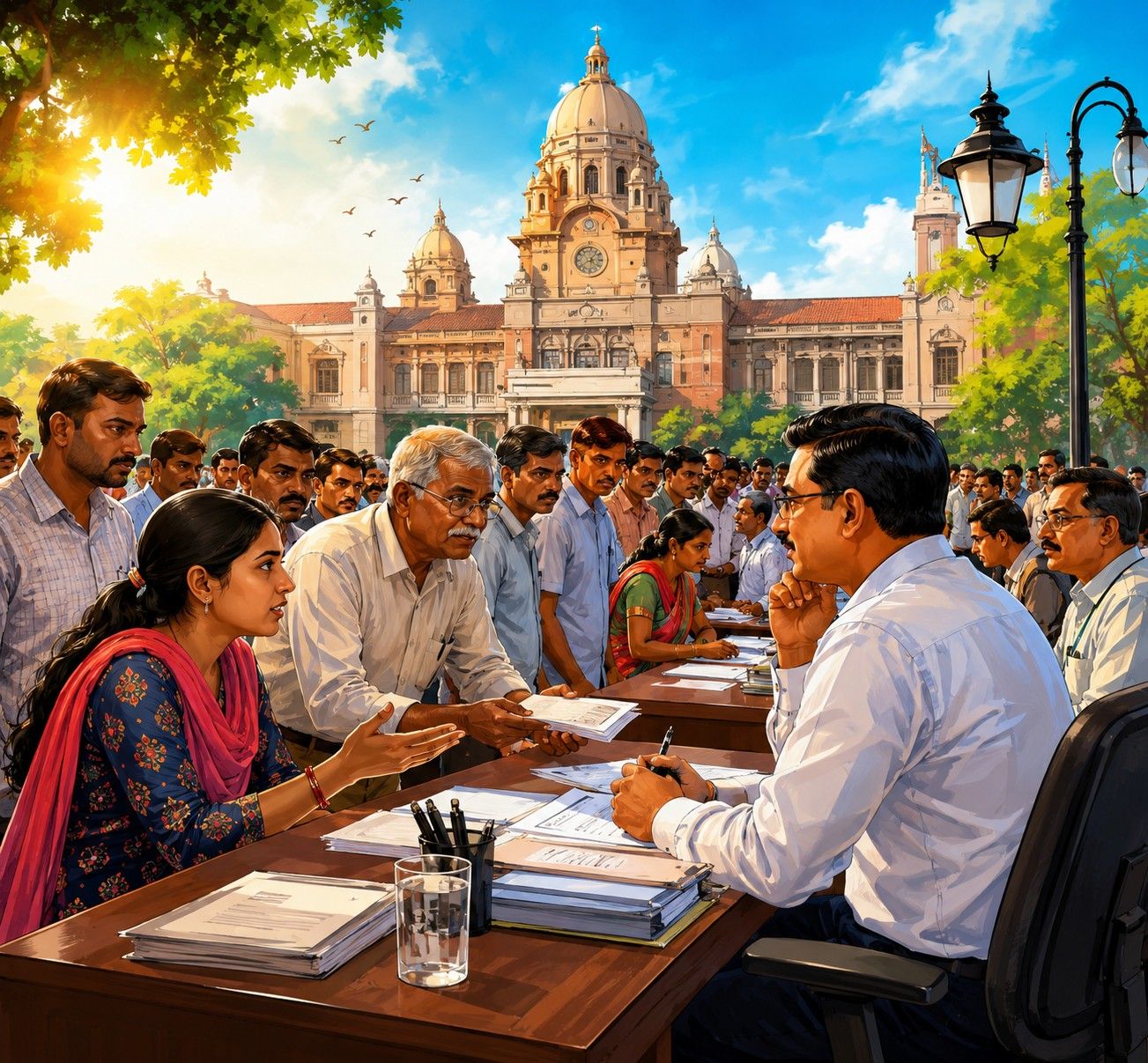
Tired of Your NMC Complaint Going Nowhere? Nagpur Municipal Corporation Now Has a Fixed Day Every Fortnight for You to Get Answers Face to Face

NMC Nagpur Janta Darbar: Every Nagpur resident has a story. A potholed lane that has been reported three times and never fixed. A water connection problem that has been pending for months. A property tax discrepancy that bounces between departments without resolution. A street light that has been broken since before the last monsoon. These are not dramatic complaints — they are the everyday civic frustrations that quietly erode a citizen’s trust in the institution meant to serve them.

The Nagpur Municipal Corporation is now making a structured attempt to address this trust deficit. On the initiative of Mayor Nita Thakre and under the operational leadership of Municipal Commissioner Dr Vipin Itankar, NMC has formally launched a Citizen Grievance Redressal Day — called Janta Darbar — to be held on every second and fourth Friday of every month across all zone offices of the city.

The intent is direct and unambiguous: citizens come with their complaints, officers are present in person, and resolution happens on the spot — not in a file that disappears into an internal queue.


What Is the Janta Darbar and How Does It Work?

The Janta Darbar — literally meaning “public court” — is not a new concept in Indian civic administration. It has been used effectively by several municipalities and district administrations across India as a mechanism for breaking through the bureaucratic layers that typically separate a citizen’s complaint from the official who has the power to act on it.

NMC’s version, as formalised through a circular issued by Commissioner Dr Vipin Itankar, works as follows.

On every second and fourth Friday of the month, the Assistant Commissioner of each of Nagpur’s six zones will be personally present at their respective zone office from 10:00 AM to 1:00 PM. Citizens can walk in during this three-hour window and present their complaints, grievances, or service requests directly to the Assistant Commissioner — without appointments, without intermediaries, and without the need to file a written application in advance through the regular administrative process.

The key department heads relevant to the most common types of complaints — roads, water supply, sanitation, property tax, building permissions — will also be mandatorily present at these sessions. This is a crucial detail. In the past, even when senior officers held public hearings, the relevant departmental staff who could actually authorise or action a resolution were often absent, meaning the hearing became a listening exercise rather than a resolution exercise. By making departmental head attendance mandatory, NMC has attempted to ensure that complaints can be acted upon in the room, not just recorded and forwarded.


A Separate Record for Every Complaint — The Accountability Framework

The Janta Darbar is not designed as a feel-good exercise where citizens are heard and then politely redirected into the existing slow-moving complaint system. NMC has built an accountability structure into the programme specifically to prevent this.

All complaints received during each Janta Darbar session — whether submitted in person at the zone office or through the online facility — will be maintained in a separate, dedicated register. This register is distinct from NMC’s standard complaint management records. The separation is important: it creates a specific, auditable trail of what was received during each Janta Darbar, what action was taken, and what remains pending.

The Assistant Commissioners of each zone have been given explicit instructions: a detailed report covering all complaints received — both online and offline — during the Janta Darbar must be submitted regularly to NMC’s General Administration Department. This report must include the nature of each complaint, the action taken on it, the current status of pending cases, and the specific reasons why any complaint remains unresolved.

This reporting requirement creates a layer of accountability that does not typically exist in the standard civic complaint process. When an officer knows that the status of every complaint received at the Janta Darbar will be reported upward to the General Administration Department, there is a clear institutional incentive to resolve rather than delay. Delays will be visible in the report. Patterns of inaction will be identifiable. The system is, in principle, designed to be self-correcting.


The Online Option — For Those Who Cannot Come in Person

One of the most thoughtful aspects of the Janta Darbar initiative is the provision for citizens who are physically unable to attend the zone office in person.

The elderly, the differently-abled, those who are bedridden due to illness, and anyone else with a genuine inability to travel to a zone office can participate in the Janta Darbar through an online facility. NMC has made provision for virtual attendance — enabling citizens to present their complaints through a digital interface rather than requiring their physical presence.

To support this, QR codes will be made available at zone offices and through other accessible channels. Citizens who scan the QR code can access the online complaint submission system directly from their phone. This ensures that the Janta Darbar is not exclusively a service for citizens who are mobile and available during weekday morning hours — it extends, at least in principle, to the most vulnerable members of the community who often have the most pressing civic needs.

This digital access provision also makes the Janta Darbar relevant for Nagpur’s growing working-age population that uses smartphones as their primary interface with government services — a demographic that is increasingly comfortable submitting complaints digitally but wants the assurance that those digital complaints will receive the same attention as in-person submissions.


Why This Initiative Was Needed — The Problem It Is Trying to Solve

To understand why the Janta Darbar matters, it helps to understand the complaint landscape that makes it necessary.

NMC, like most Indian municipal corporations, has multiple existing channels for receiving civic complaints. These include the NMC’s online complaint portal, WhatsApp helpline numbers, ward-level complaint submission, and the standard administrative process of submitting a written application to the relevant department.

The problem with these existing channels is not that they don’t exist — it is that they frequently don’t work well enough. Complaints submitted online get logged but not followed up. Helpline numbers go unanswered or direct citizens to fill forms that then sit in queues. Written applications submitted to departments are acknowledged but not resolved within any defined timeframe. Citizens who follow up discover that their complaint has been “forwarded to the concerned department” — and then silence.

The cumulative effect of this experience is a widespread perception among Nagpur residents that filing a complaint with NMC is essentially futile for all but the most persistent citizens who are willing to follow up repeatedly over months. This perception — which, anecdotally at least, has a strong basis in lived experience across the city — undermines the civic contract between NMC and the residents it is supposed to serve.

The Janta Darbar is designed to break this cycle by inserting a direct, human, accountable interaction point into what is otherwise an opaque administrative process. When a citizen stands in front of the Assistant Commissioner and presents a complaint about a road that has been broken for six months, the encounter has a different quality than a complaint entered into an online form. The officer is present. The department head is present. The complaint is recorded in a separate register that will be reported to the General Administration Department. There is no comfortable middle layer of bureaucracy to absorb and diffuse the complaint.


NMC’s Zone Structure — Where to Go for Your Zone’s Janta Darbar

Nagpur Municipal Corporation is divided into six administrative zones, each covering specific wards and localities of the city. The Janta Darbar will be held at the zone office of each of these zones on every second and fourth Friday.

The six zones are the Laxmi Nagar Zone, Dhantoli Zone, Nehru Nagar Zone, Gandhi Nagar Zone, Sataranjipura Zone, and Mangalwari Zone. Each zone covers multiple wards and is responsible for civic services — roads, drainage, water, sanitation, and other amenities — across those wards.

Citizens who are unsure which zone covers their area can check their property tax receipt, which typically mentions the ward number, or can contact their nearest NMC ward office to confirm their zone. Once you know your zone, attending the Janta Darbar is simply a matter of visiting your zone office on any second or fourth Friday between 10:00 AM and 1:00 PM.

Bring relevant documentation when you come. If your complaint is about a road, bring the address and photographs if you have them. If it is about a water bill, bring your recent bills and payment receipts. If it is about a building permission or tax assessment, bring the relevant documents and your property details. The more specific and documented your complaint, the faster the resolution process can proceed.


The Bigger Picture — What This Signals About NMC’s Direction

The Janta Darbar initiative needs to be understood in the context of Commissioner Dr Vipin Itankar’s broader administrative agenda for Nagpur Municipal Corporation.

Itankar — who has been among the more active and publicly visible municipal commissioners in recent Nagpur memory — has previously been associated with several initiatives aimed at making NMC more responsive and transparent. His fingerprints are on the new Collector Office building project, the underground dustbin initiative, and various infrastructure upgrades across the city. The Janta Darbar is consistent with this pattern: a structured, institutional attempt to make NMC’s administration more directly accountable to citizens rather than more insular.

Mayor Nita Thakre’s conceptual ownership of the initiative also gives it political weight that purely administrative initiatives sometimes lack. When the elected head of the corporation is publicly associated with a citizen responsiveness programme, there is a political incentive to ensure it actually delivers results — because failure to deliver will be visible not just administratively but politically, particularly with NMC elections expected in the not-too-distant future.

The real test of the Janta Darbar will come not in the first session but in the months that follow. If complaints raised at the fortnightly sessions are genuinely resolved within reasonable timeframes, and if the monthly reports to the General Administration Department reveal accountability rather than just paperwork, this initiative has the potential to meaningfully shift the experience of civic engagement in Nagpur. If the sessions become pro-forma events where officers listen politely but complaints continue to languish — as has happened with similar initiatives in other cities — the Janta Darbar will become another item on the list of NMC promises that did not deliver.

Nagpur Updates will track the Janta Darbar sessions across zones and report on what is actually being resolved — and what is not.


What Nagpur Residents Should Do Right Now

If you have a pending civic complaint that has not been resolved through the standard NMC channels, mark the next second or fourth Friday on your calendar and plan to attend your zone’s Janta Darbar session.

Go between 10:00 AM and 1:00 PM. Bring documentation relevant to your complaint. Speak to the Assistant Commissioner or the relevant department head directly. Request a written acknowledgment of your complaint with the complaint number entered into the Janta Darbar register. Note the name of the officer who heard your complaint. And if resolution is promised within a specific timeframe, follow up at the next Janta Darbar session if that timeframe is not met.

If you are unable to attend in person, use the QR code facility to submit your complaint online — and ask someone at the zone office to confirm that your online complaint has been entered into the Janta Darbar register for that session.

The Janta Darbar gives every Nagpur resident a fixed, predictable moment of direct access to the civic administration that serves them. Use it.

The Train That Nagpur and Pune Have Been Waiting For Is Almost Here — Railway Board Has the Timetable Ready for the Vande Sleeper

Pune Nagpur Vande Sleeper Train: Anyone who has taken the Vande Bharat Express between Pune and Nagpur knows exactly what the problem is. The train is fast, comfortable for a few hours — and then the 12-hour journey catches up with you. You are sitting in a chair car, shifting position every half hour, watching the Vidarbha landscape roll by in the dark, wishing there was a berth to lie down on.

That wish is now very close to becoming reality.

The Railway Board has prepared the timetable for a proposed Vande Sleeper train service on the Pune-Nagpur route — the most significant upgrade to this corridor since the Vande Bharat Express began running. The official announcement is pending, but the preparatory work is in its final stages. And at the centre of this development is an initiative pushed at the highest political level: Chief Minister Devendra Fadnavis raised the demand directly with Union Railway Minister Ashwini Vaishnaw, and the Railway Ministry responded positively.

Maharashtra — the state where one of India’s two Vande Sleeper production facilities is located — is now positioned to become the first state in India to have two Vande Sleeper corridors running simultaneously.


Why the Pune-Nagpur Route Specifically Needs a Sleeper Service

The case for a sleeper train on the Pune-Nagpur corridor is one of the most straightforward in Indian Railways planning — and it is surprising that it took this long to get here.

The distance between Pune and Nagpur is approximately 680 kilometres by rail. The journey takes around 12 hours on the current Vande Bharat Express — a train designed with chair car seating that is entirely appropriate for shorter journeys of 4 to 6 hours. For a 12-hour overnight journey, however, a seated train is simply the wrong product. Passengers who travel this route for business, education, or family visits are effectively forced to choose between booking a far slower conventional sleeper train or spending 12 hours in a chair car on the faster Vande Bharat.

CM Fadnavis understood this gap clearly and made the case to the Railway Ministry explicitly. His argument was simple and correct: a 12-hour route needs a sleeper train. Chair car seating is not adequate for the travel time involved. Passengers deserve the option of lying down and sleeping through the night, arriving at their destination rested.

Railway Minister Ashwini Vaishnaw gave a positive assurance when the matter was raised. The Railway Board has now followed through on that assurance by preparing the timetable — the operational document that specifies departure and arrival times, intermediate halts, and turnaround schedules for a proposed service. A timetable being ready is one of the final administrative steps before an official announcement. It means the planning is complete. What remains is the formal notification and the availability of rolling stock.


What Is the Vande Sleeper — And How Is It Different From the Vande Bharat?

For passengers who are familiar with the Vande Bharat Express but not with the Vande Sleeper, the distinction is significant and worth understanding clearly.

The Vande Bharat Express — of which four services currently operate out of Pune, including the Pune-Nagpur route — is a chair car train. It features aircraft-style reclining seats, modern interiors, automatic doors, and speeds significantly higher than conventional trains. It is an excellent product for journeys up to about 6-8 hours, where sitting is manageable and passengers arrive before bedtime.

The Vande Sleeper is a fundamentally different product built on the same platform philosophy but configured for overnight travel. Instead of chair car coaches, it features sleeping berths — similar in concept to the AC 3-tier and AC 2-tier berths of conventional trains, but built to significantly higher standards of design, materials, and comfort. The berths are wider, the privacy screens are better designed, the lighting and ventilation systems are more modern, and the overall passenger experience is intended to be several steps above what conventional sleeper trains currently offer.

The Vande Sleeper also operates at higher speeds than conventional overnight trains, which means the journey time between Pune and Nagpur — even on a sleeper service with overnight running — is expected to be meaningfully shorter than on conventional Rajdhani or Express sleeper trains on the same route.

Currently, only one Vande Sleeper train operates in India — on the Kolkata-Guwahati corridor, which became the country’s first Vande Sleeper service. The proposed Pune-Nagpur service would be India’s third Vande Sleeper corridor, after the Mumbai-Pune-Bengaluru route which is also in advanced planning.


Maharashtra’s Unique Advantage — And Why It Matters for the Timeline

One of the most significant factors in favour of Maharashtra getting the Vande Sleeper service relatively quickly is the location of one of India’s two Vande Sleeper production facilities.

Indian Railways has an ambitious national plan to manufacture 260 Vande Sleeper rakes — a massive production programme that is being executed at two facilities. The first is the Integral Coach Factory (ICF) in Chennai, which has decades of experience in coach manufacturing and is the largest production centre for Indian Railways rolling stock. The second is the Marathwada Rail Coach Factory in Latur, Maharashtra — a relatively new facility that is now in active production of Vande Sleeper rakes.

The presence of a production facility within Maharashtra creates a logistical advantage for the state that experts and railway observers have noted consistently. Rakes manufactured in Latur do not need to travel long distances to be inducted into service on Maharashtra routes — there are lower transportation costs, easier initial testing on nearby routes, and faster turnaround for commissioning. Railway sources have indicated that some Vande Sleeper rakes have already reached Bengaluru for the proposed Mumbai-Pune-Bengaluru corridor. Maharashtra’s two planned services — both feeding into the same production pipeline from Latur — are expected to receive rolling stock relatively faster than routes in states without nearby production facilities.


The Expanding Vande Bharat Network at Pune — The Platform This Builds On

The Pune-Nagpur Vande Sleeper proposal does not exist in isolation — it is the next logical step in an expanding rail network that has been developing around Pune over the past two years.

Currently, four Vande Bharat services operate from Pune — the Mumbai-Pune-Solapur service, the Mumbai-Pune-Kolhapur service, the Pune-Hubballi service, and the existing Pune-Nagpur Vande Bharat. All four services have received strong passenger response, confirming that demand for modern, high-speed rail on these corridors is robust and growing.

The Pune-Nagpur Vande Bharat specifically has been particularly popular, with consistently high occupancy rates reflecting the strong travel demand between Maharashtra’s cultural and economic capital in the west and its second-largest city and winter capital in Vidarbha. This popularity is both the justification for the Vande Sleeper proposal and the guarantee that the new service will find passengers immediately upon launch.

Railway sources within the Central Railway headquarters have also indicated that the existing Pune-Nagpur Vande Bharat’s coach count may be increased from the current 8 coaches to 16 or even 20 — a separate but complementary improvement that would significantly expand seat availability on the daytime service while the Vande Sleeper handles overnight demand.

Chief PRO of Central Railway, Dr Swapnil Nila, confirmed that given the growing popularity of the Pune-Nagpur Vande Bharat Express and the consistently increasing passenger numbers, the railway is actively working on adding additional coaches to the existing service.


Who Will Benefit — And Why This Is More Than Just a Train Story

The announcement of a Vande Sleeper service on the Pune-Nagpur corridor is not merely a railway development story. It is a story about connectivity between two of Maharashtra’s most important cities — and by extension, between two of its most economically significant regions.

Vidarbha and western Maharashtra have historically been linked by strong economic, educational, and family ties that generate consistent and significant travel demand. Students from Vidarbha who study in Pune’s universities and colleges travel this route regularly. Business professionals who split their work between Nagpur’s industrial clusters and Pune’s thriving corporate sector make regular journeys. Government officials travel between the two cities — Nagpur as the winter capital and Pune as the home of numerous state government headquarters. Families with members in both cities visit each other for festivals, weddings, medical treatment, and personal occasions.

All of these travellers currently face the same choice: a 12-hour chair car journey on the Vande Bharat, or a slower conventional sleeper train. The Vande Sleeper — faster than a conventional train, comfortable for overnight travel unlike a chair car — resolves this choice in the most passenger-friendly way possible. It gives travellers a product that is genuinely suitable for the journey they are making.

When the Vande Sleeper begins operations on the Pune-Nagpur corridor, it will also have economic ripple effects beyond the passengers themselves. Business travel between the two cities will become less exhausting and more productive. Medical tourism — Nagpur residents visiting Pune’s hospitals and vice versa — will be more accessible. The tourism potential between Vidarbha’s wildlife destinations and Pune’s cultural circuit will improve. The economic integration between two of Maharashtra’s most dynamic regions will deepen.


Maharashtra as India’s First Two-Vande-Sleeper State — What It Signals

If both the Mumbai-Pune-Bengaluru and Pune-Nagpur Vande Sleeper services are launched as planned, Maharashtra will become the first state in India to have two Vande Sleeper corridors operating simultaneously — a distinction that reflects both the state’s economic importance and the successful advocacy of CM Fadnavis and other Maharashtra political leaders for better rail connectivity.

This would also make the Pune-Nagpur Vande Sleeper India’s third Vande Sleeper corridor overall — after Kolkata-Guwahati and Mumbai-Pune-Bengaluru — placing it in the earliest cohort of routes to receive this premium overnight product as Indian Railways scales up its production and deployment.

For Nagpur specifically — a city whose rail connectivity has historically lagged behind Mumbai, Pune, and other western Maharashtra centres — receiving one of India’s first Vande Sleeper services is a significant milestone in the direction of connectivity parity that the city and Vidarbha have long been seeking.


When Can Passengers Expect the Official Announcement?

The honest answer, based on currently available information, is: soon — but the exact date is not yet confirmed.

The Railway Board has the timetable ready. This is a clear and significant milestone. The rolling stock production is underway, with rakes being manufactured at both ICF Chennai and the Latur facility. The political advocacy has been done — Fadnavis has raised it with Vaishnaw, Vaishnaw has responded positively, and the administrative machinery has followed through to the timetable preparation stage.

What remains is the formal notification — the official gazette or press announcement from the Railway Ministry specifying the train number, departure and arrival times, intermediate halts, fare structure, and launch date. Once that notification is issued, bookings will open on the regular Indian Railways ticketing system and the service will launch on the notified date.

Passengers who travel regularly between Pune and Nagpur are advised to watch for the official announcement closely — given the high demand on this corridor, berths on the first few weeks of the Vande Sleeper service are likely to fill up very quickly once booking opens.

Nagpur Updates will report on the official announcement as soon as it is made and will publish the complete timetable, fare structure, coach composition, and booking details immediately upon notification.

Narendra Nagar RUB Nagpur Stays Flood-Free This Monsoon After New Drainage System Installed

The Narendra Nagar Railway Under Bridge in Nagpur has finally passed its toughest test. Despite heavy rainfall on Wednesday night, the Narendra Nagar RUB Nagpur flood-free 2026 result was confirmed as vehicular movement continued without any interruption. For the first time in years, the notoriously waterlogged underpass remained completely clear of water accumulation. The turnaround follows the installation of an advanced stormwater drainage and pumping system by the Public Works Department under a World Bank-funded project.

Why Was the Narendra Nagar RUB So Problematic?

For years, the Narendra Nagar Railway Under Bridge was one of Nagpur’s worst monsoon bottlenecks. Even moderate rainfall was enough to trigger severe waterlogging at this location. The underpass would regularly shut down during the monsoon season, forcing thousands of commuters to take lengthy diversions.

Every year, PWD teams would deploy temporary dewatering pumps as a stopgap measure. These temporary solutions provided only limited relief. Water would accumulate again with the next spell of rain. The situation had become so chronic that flooding at Narendra Nagar RUB was widely accepted as an annual inevitability by Nagpur residents.

What Has Changed This Year?

The PWD has now installed a permanent, engineered stormwater management solution at the Narendra Nagar RUB. The system was developed and piloted near Padole Chowk by a PWD team led by Executive Engineer Krusha Gharde and Deputy Engineer Ashish Kurve. After delivering strong results at the pilot site, the same model was replicated at Narendra Nagar.

The underpass had remained closed for more than three months during construction. It has now been reopened to traffic, and its first monsoon test has already been passed with flying colours.

What Is the Core of the New System?

At the heart of the project is a five-metre-deep reinforced concrete sump constructed right next to the underpass. This sump acts as a large collection chamber. Rainwater from the underpass and surrounding localities is channelled into this chamber before being pumped out rapidly.

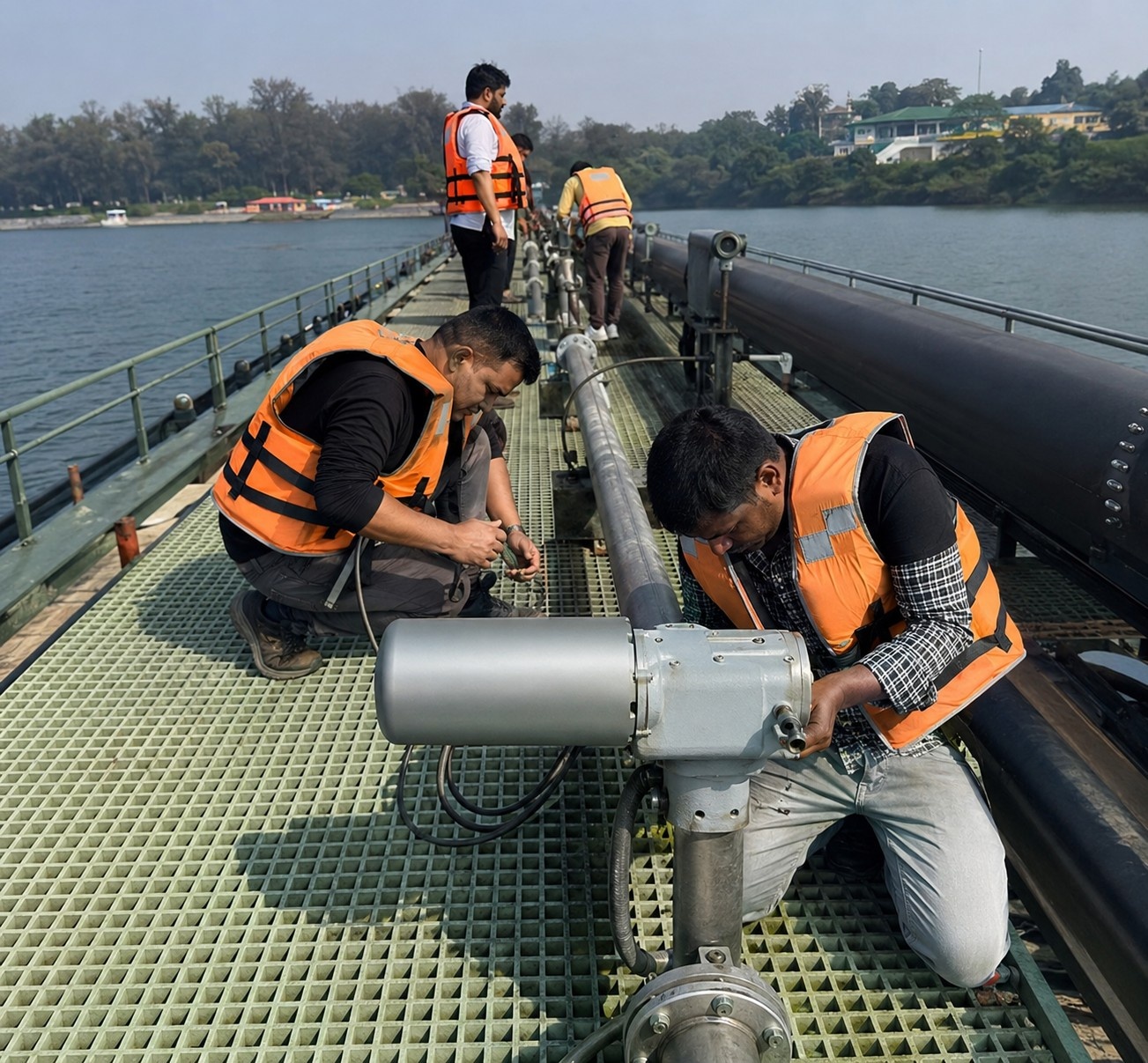
Three high-capacity sludge pumps, each rated at 40 horsepower, are installed inside the sump. These pumps are equipped with automatic sensors. The sensors activate the pumps the moment water levels inside the sump rise beyond a defined limit. Together, the three pumps can discharge nearly 1,500 litres of water per second through three 600-millimetre diameter pipelines. This level of pumping capacity ensures rapid evacuation of stormwater even during the most intense monsoon downpours.

What Makes These Pumps Different from Ordinary Pumps?

The sludge pumps installed at Narendra Nagar are not conventional water pumps. They are specifically designed to handle not only rainwater but also silt, mud, and solid particles that are typically washed into drains during heavy showers.

This capability is crucial for monsoon conditions in Nagpur. During heavy rains, drains carry large volumes of silt and debris that would choke ordinary pumps quickly. The sludge pumps eliminate this risk. They continue to operate at full capacity regardless of the quality of incoming water, ensuring uninterrupted drainage performance throughout the monsoon season.

How Does the Drainage Network Work Around the Underpass?

The pumping system is only one component of a larger integrated stormwater management network. A comprehensive drainage network has been developed around the underpass to capture water before it can accumulate on the carriageway.

Stormwater from nearby residential layouts and adjoining roads is now diverted through newly laid drains into four collection chambers. These chambers are constructed on both sides of the underpass. From the collection chambers, water flows in a controlled manner into the main sump through a properly channelised underground system. This prevents water from ever reaching the road surface in significant quantities during normal monsoon rainfall.

How Has the Nullah Overflow Problem Been Addressed?

One of the biggest causes of flooding at the Narendra Nagar RUB in previous years was nullah overflow. During heavy rain, the nullah adjacent to the underpass would fill up and overflow onto the road. This floodwater would then backflow directly into the underpass, dramatically worsening the waterlogging situation.

PWD has addressed this by constructing a robust retaining wall along the nullah. The wall prevents nullah water from overflowing onto the road during heavy rainfall. Simultaneously, the automated pumping system discharges collected stormwater back into the nullah in a controlled and safe manner. The two systems work together to completely eliminate the backflow problem.

Could This Become a Model for Other Nagpur Underpasses?

The successful performance of the Narendra Nagar system during Wednesday’s heavy rains has already generated significant interest. Officials and engineers are now viewing the project as a potential model for addressing similar chronic flooding problems at other vulnerable railway underpasses and low-lying areas across Nagpur.

Several other railway underpasses in Nagpur suffer from identical monsoon flooding problems every year. If the Narendra Nagar model is replicated across these locations, it could eliminate a significant portion of Nagpur’s annual monsoon disruption in one coordinated effort.

Sadar Flyover Extension Nagpur: 3,117 Sq Mtr Land Needed, 92% Is Government Land

The Sadar flyover extension Nagpur 2026 project has entered a critical new phase. Maha Metro has proposed acquisition of 3,117 square metres of land for the modified landing of the Sadar flyover. The proposal has been sent to the National Highways Authority of India for approval. Of the total land required, 2,863 square metres belongs to the government. This accounts for nearly 92 per cent of the total land requirement. Only 264 square metres of private land — belonging to a petrol pump near RBI Square — will need to be acquired.

What Is the Sadar Flyover Extension Project?

The modified landing for the Sadar flyover was announced by Union Minister for Road Transport and Highways Nitin Gadkari last year. The project proposes building a new arm to the existing Sadar flyover that will carry traffic from the Sadar side beyond Samvidhan Square near Morris College.

The proposed flyover extension measures approximately 850 metres in total length. Once complete, commuters will be able to skip two existing traffic signals from the Sadar side before dispersing towards LIC Square and adjoining roads. This will significantly reduce travel time and ease congestion at one of Nagpur’s most heavily used road intersections.

Why Was the Original Sadar Flyover Redesigned?

The original Sadar flyover was inaugurated in January 2020. It terminated near Kasturchand Park. However, the design drew widespread criticism almost immediately. Vehicles descending from the flyover continued to encounter heavy congestion instead of dispersing efficiently onto the road network below.

Engineers were subsequently asked to examine alternative alignments. The goal was to improve traffic flow while integrating with the elevated Metro viaduct and preserving the heritage character of the Kasturchand Park area. Months of engineering deliberations followed between Maha Metro and its consultants before the revised alignment was finalised.

What Is the New Alignment?

The revised alignment is significantly more complex than the original design. The new arm will begin from the existing flyover and pass in front of the NIT building. From there, it will connect towards LIC Square in front of Shriram Tower. It will then take a right near LIC Square, pass along Kasturchand Park, cross RBI Square, and finally land near Morris College.

Traffic planners believe this additional length will prevent vehicles from accumulating immediately after descending the flyover. The extended route allows smoother distribution of traffic towards LIC Square and the surrounding road network.

Will Any Structures Be Demolished?

This is one of the most important assurances about the revised alignment. Maha Metro has confirmed that no demolition of any existing structure will be required. The redesign has been specifically prepared to avoid any adverse impact on the heritage character of Kasturchand Park.

Only a limited portion of land inside the Kasturchand Park precinct will be used for structural pillars. The flyover will pass overhead with sufficient clearance to preserve public movement and use beneath. The NIT building structure will remain completely untouched.

Why Has the Project Cost Nearly Doubled?

Continuous engineering revisions over the past two years have substantially increased the project cost. When the flyover was originally proposed to land near Kasturchand Park, the estimated cost was around Rs 34 crore.

The redesign, which involves an extended 850-metre alignment, structural modifications, and integration with the Metro viaduct, has pushed the revised estimate to nearly Rs 84 crore. This is more than double the original cost estimate and reflects the additional complexity of the new engineering design.

Why Is 92% Government Land a Big Advantage?

The predominance of government land in the total land requirement is a major advantage for the project timeline. Conventional urban flyover projects often require acquisition of commercial establishments and residential properties. This leads to lengthy legal disputes, rehabilitation challenges, and significant delays.

In this case, only 264 square metres of private land needs to be acquired. This dramatically reduces legal complications and rehabilitation requirements. Project planners expect this to potentially accelerate implementation considerably once statutory approvals from NHAI are secured.

What Will Commuters Gain?

Once operational, the Sadar flyover extension will deliver significant benefits to thousands of daily commuters in central Nagpur. Vehicles travelling from the Sadar side will be able to bypass two traffic signals entirely. Traffic will disperse more efficiently towards LIC Square, Kasturchand Park, RBI Square, and Morris College. The existing bottleneck near the current flyover landing will be eliminated. The project represents an engineering solution that minimises displacement while maximising traffic capacity across one of the city’s most congested corridors.

They Blocked His Car, Dragged Him Onto the Road, and Kicked Him in the Face — All of It Caught on CCTV in Nagpur

Nagpur road rage policeman beaten: It started with a minor scrape between vehicles on a Nagpur road on the night of June 28. It ended with an on-duty policeman sitting on the road in the middle of traffic, being kicked in the face by one of seven to eight attackers, while a CCTV camera recorded every moment.

The video of what happened near Mankapur Chowk that night has now spread widely, shocking Nagpur residents and prompting a swift police response. Fourteen accused have been arrested. Five two-wheelers and goods worth approximately ₹5.6 lakh have been recovered. And the incident — brutal, brazen, and carried out in full public view — has reignited a serious conversation about road rage, police safety, and the culture of lawlessness that allows a group of young men to think they can assault a uniformed officer on a public road and walk away.

All allegations in this article are as per the FIR registered at the relevant police station. All accused are presumed innocent until proven guilty by a court of law.


What Happened — Minute by Minute

The incident occurred on the night of June 28, 2026. A 35-year-old policeman was travelling toward Mankapur Chowk in his private car. He was accompanied by a female friend.

At some point during the journey, there was a minor scrape — a small collision or brush between his vehicle and one or more motorcycles being ridden by a group of youths in the area. In the normal course of events, such a minor incident would be resolved in minutes — an exchange of words, perhaps an assessment of damage, and everyone going their separate ways.

What happened instead was far from normal.

Seven to eight youths on motorcycles, allegedly connected to the scrape, followed the policeman’s car. According to police officials, the group deliberately blocked his vehicle — parking their bikes directly in front of his car so he could not move forward. With the car immobilised and the policeman effectively trapped, the group allegedly began abusing him verbally. The abuse quickly escalated into physical violence.

The accused reportedly began vandalising the policeman’s private car — striking it, damaging its body, and making no attempt to conceal what they were doing despite being on a public road in a populated area. They then allegedly dragged the policeman physically out of his vehicle and onto the road.

What followed, as captured in graphic detail by a nearby CCTV camera, was a sustained group assault. Multiple attackers rained blows on the policeman. The group dragged him across to the other side of the road — pulling him physically while continuing to assault him. In the footage that has since circulated widely, the policeman is seen sitting on the road, injured and unable to defend himself, as one attacker delivers a kick directly to his face.

The group then vandalised the car further before fleeing the scene on their motorcycles.

The seriously injured policeman was helped by local residents who witnessed the incident and took him to a nearby private hospital. He is currently undergoing treatment for his injuries.


The CCTV Evidence — How 14 Accused Were Identified

The attackers may have fled on their bikes believing the matter would fade. The CCTV camera near the site of the assault had other ideas.

As soon as the incident was reported to the police department, an investigation was launched immediately. The CCTV footage from the camera that captured the assault was recovered and analysed. Combined with other technical evidence — including mobile phone location data, vehicle registration details of the motorcycles used, and identification of the accused from their faces in the footage — the investigating team was able to identify all fourteen accused within days of the incident.

The speed of the arrests — all fourteen accused detained before the incident became national news — reflects both the quality of the CCTV evidence available and the seriousness with which the Nagpur Police treated an assault on one of their own. When the victim is a police officer and the assault is captured in full detail on camera, the investigative pathway is considerably more direct than in cases where evidence is circumstantial.

The fourteen accused who have been identified and arrested are: Harsh Pawar, Gaurav Dhirde, Sanyam Ganeshpuri, Yas Prateki, Satyam Shirke, Premraj Dhakate, Akash Bokade, Nitin Gokhale, Vicky Telghare, Bhumi Dev alias Sagar Bokde, Ganesh Uike, Pritam Modekar, and Tikaram Barapatre. Police have confirmed that some of the accused have prior criminal records — making their involvement in a brazen public assault consistent with a pattern of criminal behaviour rather than a first-time lapse in judgment.

Five two-wheelers — presumably including the motorcycles used by the group during the incident — and goods worth approximately ₹5.6 lakh have been recovered from the accused. The recovery of significant goods alongside the vehicles raises questions about the background and activities of at least some members of the group that police are now investigating as part of the wider case.


The Charges — What the Accused Face Under the Law

The FIR registered in connection with this incident encompasses multiple serious charges. Assaulting a public servant on duty is a cognisable and non-bailable offence under the Bharatiya Nyaya Sanhita (BNS) — the successor legislation to the Indian Penal Code that came into force in 2024. The specific sections applicable include those relating to voluntarily causing grievous hurt, assault on a public servant to deter discharge of duty, criminal intimidation, and mischief causing damage to property.

The charge of assault on a public servant to deter discharge of duty is particularly significant in this case. The accused did not merely get into a road rage altercation with a random civilian — they assaulted a serving police officer. Under both the old IPC and the new BNS, this category of offence carries enhanced penalties specifically because it is treated as an assault not just on an individual but on the state’s authority and its agents.

With multiple accused, prior criminal records for some of them, the organised nature of the blocking and attack, and the severity of injuries inflicted on the victim, the prosecution’s case is likely to be a strong one — particularly given the quality of the CCTV evidence that captured the entire incident.


Why This Case Has Struck a Nerve in Nagpur

The June 28 assault at Mankapur Chowk is not Nagpur’s first road rage incident involving an attack on a police officer — and the city knows it.

In March 2026, Police Havaldar Harshad Indal Wasnik was dragged approximately 250 metres on the bonnet of a speeding white Honda City car during a late-night naka checking operation at Bhande Plot Chowk under Sakkardara Police Station jurisdiction. Wasnik sustained a fracture in his leg. The driver was arrested and charged with attempt to murder.

In December 2025, a Blinkit delivery worker was brutally assaulted in a Nagpur road rage incident, pulled off his bike and beaten by a car driver and passenger over a minor crash.

And going back further, Nagpur has seen multiple incidents of road rage captured on camera — from youths being pulled out of vehicles and thrashed in broad daylight to groups of bikers intimidating and assaulting other road users over minor disputes.

The pattern that emerges from these incidents is consistent and alarming. Road rage in Nagpur — as in many Indian cities — is not random or spontaneous. It is frequently organised, involves groups rather than individuals, targets victims who are outnumbered and isolated, and is carried out with a brazenness that suggests the perpetrators calculate their risk of consequences as low.

The fact that the victim in the June 28 incident was a policeman — someone the attackers could presumably identify as a representative of the very law enforcement system that should deter such behaviour — makes this case particularly egregious. Attacking a civilian in a road rage incident is serious. Attacking a police officer in uniform, in public, on camera, with a group of collaborators suggests a complete contempt for law enforcement authority that demands the most serious legal response available.


What the Pattern of Attacks on Nagpur Police Officers Tells Us

The back-to-back attacks on police officers in Nagpur — Wasnik on the car bonnet in March, the unnamed officer at Mankapur Chowk in June — have triggered serious internal discussion within the Nagpur Police Commissionerate about officer safety and the adequacy of the legal deterrent against such attacks.

Several practical questions arise from these incidents. Were the accused in the Mankapur Chowk incident aware that their target was a police officer? If so, the attack represents an extraordinarily reckless calculation that group numbers would protect them from consequences. If they were not aware — if they believed he was a civilian — the incident speaks to a broader culture of road rage aggression that does not discriminate between civilian and law enforcement targets.

The presence of individuals with prior criminal records among the accused suggests this was not a group of otherwise law-abiding young men who had an uncharacteristic moment of rage. The recovery of goods worth ₹5.6 lakh raises further questions about the accused’s background and activities that the Nagpur Police investigation will now examine.

New Police Commissioner Vishwas Nangre Patil — who assumed charge of Nagpur Police Commissionerate just days before this incident became public on July 3 — faces an immediate test of the firm, no-compromise policing philosophy for which he is known. The prosecution of the fourteen accused in the Mankapur Chowk case will be watched closely by Nagpur residents, police personnel, and the wider public as a signal of how seriously the new CP intends to treat attacks on law enforcement.


Road Rage in India — The Legal Framework and What Victims Should Know

Road rage — defined as aggressive or violent behaviour stemming from a traffic dispute — is not a specific offence under Indian law. However, the actions that constitute road rage fall squarely within a range of serious criminal provisions under the BNS.

Voluntarily causing hurt — punishable with imprisonment up to one year. Voluntarily causing grievous hurt — punishable with imprisonment up to seven years. Criminal intimidation — punishable with imprisonment up to two years. Mischief causing property damage — punishable based on the extent of damage. And in cases where a vehicle is deliberately used as a weapon or where the victim is placed in danger of death, attempt to murder charges — carrying imprisonment up to ten years or life — can and have been applied in similar cases in Nagpur.

For any Nagpur resident who is the victim of a road rage incident — whether a minor altercation that turns physical or a more serious assault — the immediate steps are the same. Call 100 immediately. Do not attempt to physically confront a group of aggressors. Move toward a populated area or a business with CCTV cameras if you can do so safely. Note the vehicle registration numbers of those involved. Your testimony and any CCTV footage from nearby cameras are the primary evidence in such cases.

If the aggressor is in a vehicle and you are being blocked or followed, drive directly to the nearest police station rather than stopping at an isolated location. The Mankapur Chowk incident is a reminder that what appears to be a brief post-collision altercation can escalate to a group assault in seconds.


Nagpur Updates Will Track This Case

Nagpur Updates will follow the prosecution of all fourteen accused in the Mankapur Chowk road rage case through the charge sheet filing, court proceedings, and eventual verdict. We will also report on any new developments regarding the recovery of goods and the investigation into the accused’s prior criminal activities.

If you witnessed the June 28 incident near Mankapur Chowk or have information relevant to this case, contact Nagpur Police at 100 or approach the relevant police station directly.

All allegations against the named accused are as per the FIR registered with Nagpur Police. All accused are presumed innocent until convicted by a court of law.

After More Than a Year of Construction Disruption, the Cotton Market Skywalk Is Finally Open — Here Is What It Means for Nagpur

Anyone who has navigated Cotton Market Square on foot during peak hours knows exactly what the problem has been. One of Nagpur’s busiest intersections — where the Aqua Line of Nagpur Metro crosses over the junction connecting Mahatma Phule Market, Ghat Road, and the old Cotton Market commercial area — has had a single point of entry for metro passengers since the station opened in September 2023. That single entry, on the Mahatma Phule Market side, was never going to be enough for the volume of pedestrians this intersection handles daily.

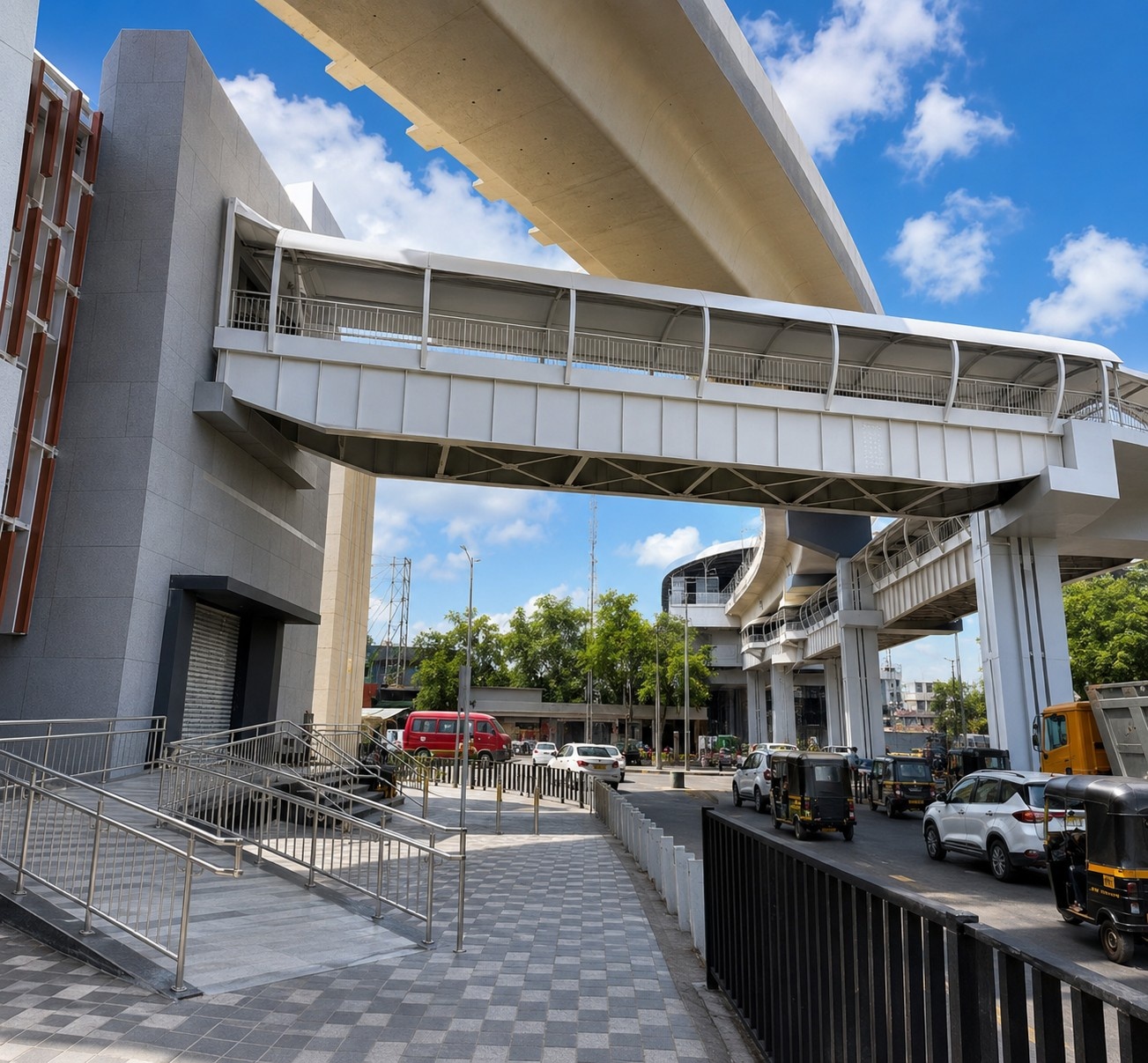
The skywalk that Maha Metro has been building above Cotton Market Square — through months of construction activity that disrupted traffic below, required girder casting operations that temporarily narrowed road space, and generated no shortage of commuter frustration — has finally opened on July 3, 2026.

The wait, however inconvenient, was worth it. What has opened today is not just a footbridge. It is a meaningful transformation of how pedestrians, metro commuters, and shoppers interact with one of the most commercially active squares in central Nagpur.


What Exactly Has Been Built — The Engineering Picture

The Cotton Market skywalk is a raised pedestrian corridor anchored by concrete extensions from the central metro pillars at Cotton Market Square. This structural approach — using the existing metro viaduct pillars as the foundation for the skywalk — is a cost-efficient and space-saving engineering choice that avoids the need for entirely new ground-level column foundations in a square that is already extremely congested.

The construction proceeded in two phases of girder work. The first phase — where steel rods protruding from the main pillar were concreted and plastered — was completed earlier in the construction timeline. The second phase involved similar work on a pillar located toward Ghat Road. The completed skywalk connects these two anchor points, providing a continuous raised pedestrian corridor over the bustling square below.

The landing point of the skywalk on the Ghat Road side represents the second entry point to Cotton Market Metro Station — positioned directly opposite the existing entry on the Mahatma Phule Market side. This creates, for the first time, a through-flow option for metro passengers approaching from different directions. Previously, commuters approaching from the Ghat Road side had to cross the busy square at ground level to reach the single metro entry — an inconvenient and often dangerous crossing during peak traffic hours.


Two Elevators, Retail Outlets, and a Parking Area — The Full Picture

The skywalk at Cotton Market is not a bare pedestrian bridge. It has been designed with a level of commercial and accessibility infrastructure that makes it a genuine urban amenity rather than just a passage.

Two elevators have been installed as part of the skywalk structure — one at each end of the bridge. This is a critically important feature for a location like Cotton Market Square, which attracts not just working-age metro commuters but elderly shoppers visiting Mahatma Phule Market and other commercial establishments in the area, families with children and bags, and differently-abled citizens who would find a stair-only pedestrian bridge effectively inaccessible. The presence of elevators transforms the skywalk from infrastructure that serves the fit and the young into infrastructure that genuinely serves everyone.

The Cotton Market end of the skywalk has also been developed into a small commercial hub. Retail outlets are incorporated into the skywalk structure at the landing point — a feature that follows the model of successful transit-oriented commercial development seen in metro systems across Asia, where footfall generated by transit infrastructure is channelled into commercial space that serves commuters and generates revenue for the metro operator simultaneously.

A parking area has been added to serve metro passengers accessing the station through the new walkway from the Ghat Road side. This addresses one of the persistent criticisms of Nagpur Metro stations — that adequate parking near station entry points is often insufficient, particularly for the large number of commuters who ride two-wheelers to the metro and then continue their journey by train.


Why Cotton Market Square Needed This Skywalk

Cotton Market Square is not a location that most urban planners would have chosen as an ideal metro station site if starting from scratch. It is an intersection where multiple competing traffic streams — vehicles from Ghat Road, from the old Cotton Market commercial lanes, from the direction of Mahatma Phule Market, and from Itwari — converge at a single point that was already congested before the metro station was added to the mix.

When the Cotton Market Metro Station opened on September 21, 2023 — just in time for the Ganesh Chaturthi festival in that year — it brought significant new pedestrian activity to an intersection that was already operating near capacity. The station is on the Aqua Line, Nagpur Metro’s East-West corridor, serving commuters travelling between Prajapati Nagar in the west and the Cotton Market area at the eastern end of the Phase 1 completed section.

The station’s single entry point on the Mahatma Phule Market side meant that all foot traffic to and from the station had to funnel through one access point. During peak hours — morning and evening commute times, and especially during major festivals when the surrounding markets see intense footfall — this single entry created its own form of congestion, adding to the overall pedestrian and vehicular pressure on the square.

The skywalk addresses this at its root. By providing a second entry directly opposite the first, it creates a natural distribution of passenger flow. Commuters approaching from the Ghat Road side no longer need to cross the square to enter the station — they access it directly from the skywalk landing point. This reduces pedestrian-vehicle conflicts at ground level and allows both entry points to operate more freely than the single-entry arrangement ever could.


The Construction Journey — What Commuters Endured

The skywalk’s opening today deserves to be understood against the backdrop of what commuters and residents around Cotton Market Square endured during its construction.

The girder casting operations — where the structural concrete elements of the skywalk were formed and cured — required temporary modifications to the traffic lanes below. Heavy construction equipment, material storage, and the need to work around the active metro viaduct above and live traffic below made the worksite complex to manage. There were periods where vehicular movement through the square was disrupted, particularly during nighttime construction shifts when girder launching and heavy lifting operations took place.

Maha Metro’s Project Director Rajeev Tyagi, who had spoken about the skywalk’s design and purpose when construction began in 2025, had set an initial target of October or November 2025 for completion. The actual opening on July 3, 2026 is approximately seven to eight months behind that original target — not an unusual delay for urban infrastructure construction in a highly congested location with significant coordination challenges.

The delay meant months of additional inconvenience for commuters and traders around Cotton Market Square. But the alternative — rushing the construction and opening a skywalk that was not safely complete — would have been far worse. The structure that has opened today has been built to the safety standards required for a piece of infrastructure that will carry thousands of pedestrians daily.


What Cotton Market Square Looks Like Now — The Before and After

For those who know Cotton Market Square well, the difference that the skywalk makes to the pedestrian experience is immediately tangible from today.

Previously: a metro commuter arriving by auto-rickshaw from the Ghat Road direction needed to either alight before the square and navigate through pedestrian and vehicle traffic to reach the single metro entry, or cross the square on foot — dealing with multiple lanes of traffic, the absence of adequate pedestrian crossing infrastructure, and the general chaos of an extremely busy commercial intersection.

From today: the same commuter can walk directly onto the skywalk from the Ghat Road side, access the metro station through the new second entry, and proceed to the platform without any ground-level road crossing. The journey from street to platform is safer, faster, and — with the elevator option — accessible to commuters of all physical abilities.

For shoppers visiting the Cotton Market commercial area and Mahatma Phule Market who were not metro users, the skywalk provides an additional option for crossing the square safely at elevated level — avoiding the vehicular traffic below entirely.


Cotton Market in Nagpur’s Commercial History — Why This Location Matters

Cotton Market Square takes its name from what was, for more than a century, one of the most commercially significant activities in Nagpur and the Vidarbha region: the cotton trade. Nagpur was historically one of the most important cotton trading centres in central India — the city’s location at the heart of Maharashtra’s cotton-growing region, combined with its rail connectivity, made it a major hub for cotton ginning, pressing, and trading.

The old Cotton Market area — where the Mahatma Phule Market and surrounding commercial lanes have operated for generations — was the physical centre of this trade. While the nature of commerce in the area has diversified significantly over the decades, the square retains its identity as a major commercial hub, drawing shoppers, traders, and daily commuters in large numbers.

The metro station at Cotton Market, and now the skywalk that enhances access to it, represents a 21st-century layer of urban infrastructure being added to one of Nagpur’s oldest and most commercially active locations. It connects the area’s historical commercial importance with the modern mobility network that is redefining how Nagpur’s residents move around their city.


What Comes Next for Nagpur Metro’s Aqua Line

The opening of the Cotton Market skywalk is one of several infrastructure improvements that Maha Metro is advancing on the Aqua Line in 2026. The Phase 2 extensions of Nagpur Metro — which will take the network toward Kanhan in the north, Butibori MIDC in the south, Transport Nagar in the east, and Hingna in the west — are progressing through various stages of construction and commissioning.

For commuters who currently use the Aqua Line, the skywalk at Cotton Market is an immediate, tangible improvement to their daily experience. For those who have not yet made Nagpur Metro a regular part of their commute, the improved accessibility and commercial amenities at Cotton Market station provide one more reason to consider it.

Nagpur Updates will continue to report on Nagpur Metro’s infrastructure developments, ridership data, and Phase 2 progress as information becomes available.

Sources: The Live Nagpur, Nagpur Trends, Maha Metro official statements, Rail Analysis India, Wikipedia — Cotton Market metro station, field reporting. Published: July 3, 2026.

A 108-Foot Tricolour Now Watches Over Nagpur From Sitabuldi Fort — And the View Will Take Your Breath Away

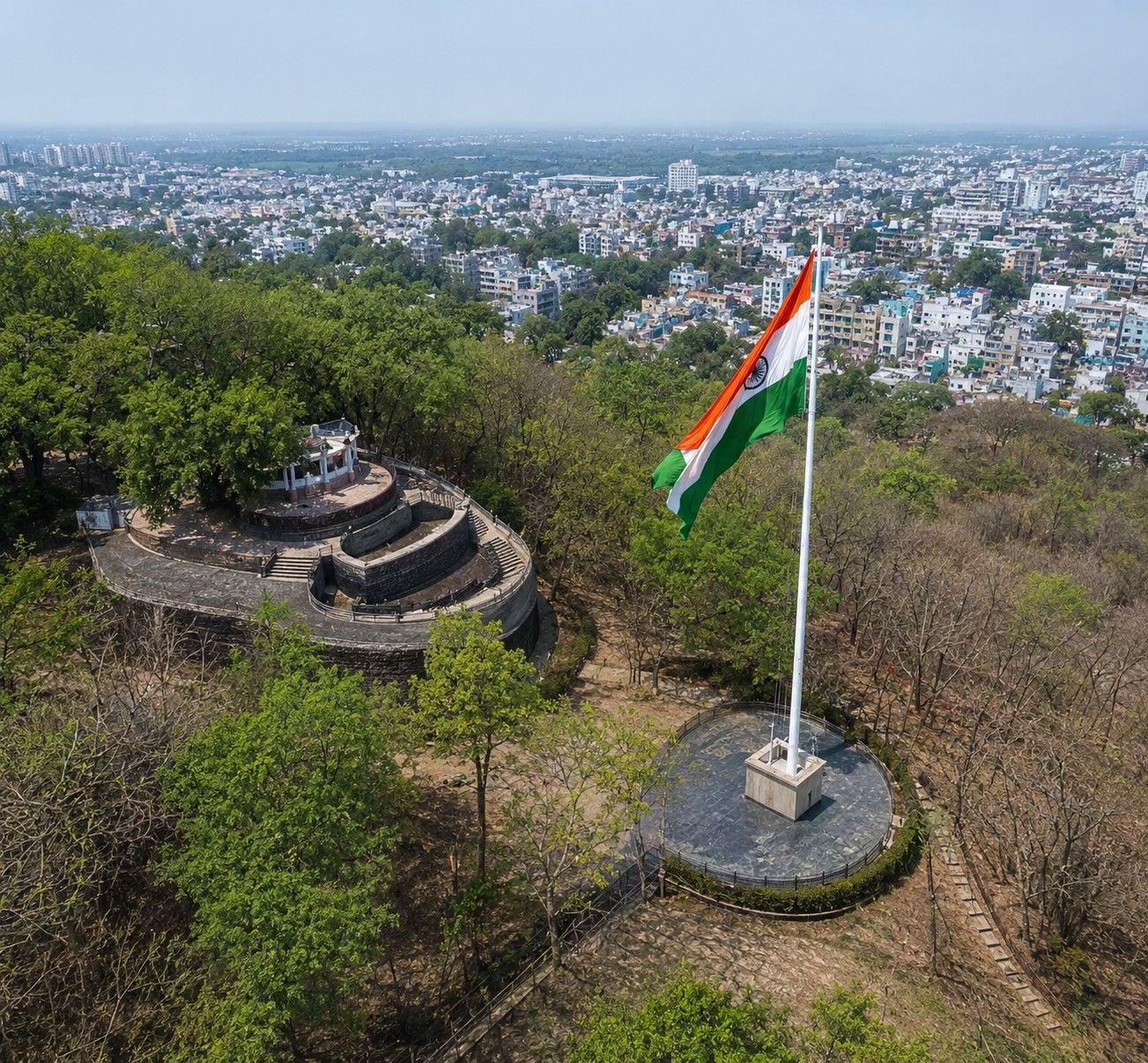
Sitabuldi Fort tallest flag Nagpur: For more than two centuries, Sitabuldi Fort has stood watch over Nagpur from its twin hilltops — silent witness to the Battle of Sitabuldi in 1817, to the British era that followed, to the independence movement, and to the modern city that has grown up around its ancient stone walls. Now, the fort has a new feature that can be seen from miles away across the city: a magnificent 108-foot-high national flag, fluttering proudly above one of Nagpur’s most treasured historical landmarks.

The towering tricolour was inaugurated during a special ceremony on Monday, installed as a joint initiative of Headquarters Uttar Maharashtra & Gujarat Sub Area (UMANG) and the Flag Foundation of India. The ceremony brought together senior defence officials, civic leaders, NCC cadets, and a large gathering of citizens to witness the moment the flag was raised over Nagpur’s most historic hilltop.


Why Sitabuldi Fort Was Chosen for This Honour

Sitabuldi Fort is not just any location in Nagpur — it is the city’s most historically significant military landmark. Built by the British in 1822 atop the two hillocks known as Mothi Tekdi and Choti Tekdi, the fort marks the exact site of the Battle of Sitabuldi, fought in November 1817 between the forces of Appa Saheb Bhonsle of Nagpur and the British East India Company. The battle was one of the pivotal military engagements of the Anglo-Maratha Wars and remains a defining chapter in Nagpur’s history.

For more than two centuries since then, the fort has continued to carry military significance. It was home to the Indian Army’s 118th Infantry Battalion (Territorial Army) Grenadiers until 2019, and is currently associated with the UMANG Sub Area Headquarters — the Army’s administrative command covering Uttar Maharashtra and Gujarat, which relocated to Nagpur from Mumbai in 2018.

Given this deep military heritage, the decision to install a monumental national flag atop Sitabuldi Fort carries symbolic weight that goes far beyond its physical scale. It connects the fort’s 19th-century military history directly to a modern expression of national pride — a tricolour visible across the city, rising from the very ground where soldiers once fought and where the Indian Army continues to maintain a presence today.


The Flag Foundation of India — The Organisation Behind the Mission

The flag installation was made possible through the involvement of the Flag Foundation of India, a national organisation whose mission centres on a simple but powerful idea — every Indian citizen’s right to hoist the national flag with pride.

Speaking at the inauguration ceremony, Major General (Retd) Ashim Kohli, Chief Executive Officer of the Flag Foundation of India, explained the organisation’s founding purpose. “The foundation was established to ensure every Indian has the right to hoist the national flag with pride,” he said. Reflecting on the significance of the Sitabuldi Fort installation specifically, he added, “The 108-foot flag at Sitabuldi Fort will continue to inspire a deep sense of national pride among citizens.”

The Flag Foundation of India has, over the years, been associated with installing monumental national flags at significant locations across the country — landmarks chosen specifically for their historical, cultural, or strategic importance, where a towering tricolour can serve as both a visual landmark and a lasting symbol of national unity. Nagpur’s Sitabuldi Fort now joins this select group of locations.


The Indian Army’s Role — A Tribute to Sacrifice

The installation was equally significant from a military perspective, given the active involvement of Headquarters Uttar Maharashtra & Gujarat Sub Area in making it happen.

Major General NS Sohal, General Officer Commanding of HQ UMANG Sub Area, spoke at the ceremony about the deeper meaning the flag carries. “The national flag symbolises the country’s unity and the sacrifices of soldiers who have given their all for the nation,” he said. He went on to describe the emotional impact the installation is expected to have on the city. “Watching the tricolour flutter high atop the fort will further strengthen the spirit of patriotism among citizens,” he added.

For an institution like the Army — whose daily work is built on service, sacrifice, and duty to the nation — placing a monumental flag at a location with as much military history as Sitabuldi Fort is a deeply meaningful act. It transforms the fort from a historical site that is occasionally visited into a living, visible reminder of patriotism that thousands of Nagpur residents will see simply by going about their daily lives in the city.


Who Attended the Inauguration Ceremony

The inauguration drew a notable gathering of senior officials from across Nagpur’s defence, police, and civic administration — reflecting the city-wide significance attached to the occasion.

Special Inspector General of Police (Anti-Naxal Operations) Sandip Patil represented Maharashtra’s police leadership at the ceremony. Nagpur Municipal Commissioner Vipin Itankar — representing the civic administration that has overseen much of Nagpur’s recent infrastructure transformation — was also present, underlining the city corporation’s support for the initiative.

Major General (Retd) Anil Bam and Flight Lieutenant (Retd) Shiwalee Deshpande, both senior retired defence personnel with distinguished service records, attended alongside a wider gathering of serving and retired defence personnel and soldiers. The presence of both active-duty and retired officers at the ceremony reflected a sense of continuity — generations of those who have served the nation coming together to witness this new landmark.

Perhaps most significantly, a large number of National Cadet Corps (NCC) cadets were present at the ceremony. The NCC, which trains young students in discipline, leadership, and national service, represents the next generation who will carry forward the spirit that the flag installation is meant to inspire. Their presence at the inauguration was a fitting reminder that monuments like this are built not just to commemorate the past, but to shape the values of the future.


What the Flag Means for Nagpur Going Forward

At 108 feet, the flag at Sitabuldi Fort becomes one of the most visually commanding landmarks in central Nagpur. Given the fort’s elevated position atop the city’s twin hillocks, the flag is expected to be visible from a considerable distance across multiple directions of the city — a constant, dignified presence over Nagpur’s skyline.

The installation is expected to become a major attraction for both Nagpur residents and visiting tourists. Sitabuldi Fort, which is already a well-known heritage site featuring thick stone walls, sloping bastions, and a history connecting the Maratha and British colonial eras, now has an additional reason for citizens and tourists alike to visit — particularly around occasions like Independence Day, Republic Day, and Maharashtra Day, when the fort traditionally opens to the public.

For residents of Sitabuldi and the surrounding commercial heart of Nagpur — an area that sees enormous daily footfall as one of the city’s busiest market and business districts — the flag offers a moment of pause amid the bustle. Looking up from the streets of Sitabuldi, residents and shoppers will now see the tricolour rising high above the historic fort, a visual reminder of the city’s military heritage and the nation it represents.

For the National Cadet Corps cadets who attended the ceremony, and for generations of Nagpur students who will grow up seeing this flag, the installation offers something more lasting than a single ceremonial moment — a daily, visible symbol of the values the Flag Foundation of India and the Indian Army sought to honour: unity, sacrifice, and pride in the nation.


A Landmark Befitting a Landmark City

Nagpur holds a unique place in Maharashtra and in India more broadly — as the state’s winter capital, as the geographical centre of the country, and as a city whose history stretches from the Maratha Bhonsle dynasty through the British colonial era to its modern role as a growing metropolitan and logistics hub.

The addition of a 108-foot national flag atop one of the city’s most historic military sites adds a new chapter to that story — one that connects Nagpur’s past directly to a renewed, visible expression of national pride for the present and future.

As the tricolour flutters above Sitabuldi Fort’s centuries-old stone ramparts, it stands as both tribute and invitation — tribute to the soldiers who fought and served on that hill, and invitation to every Nagpur resident and visitor to look up, take pride, and remember.


Nagpur Updates will continue to cover developments at Sitabuldi Fort and other heritage landmarks across the city.

Sources: HQ Uttar Maharashtra & Gujarat Sub Area (UMANG), Flag Foundation of India, field reporting. Published: June 2026.

The Man Who Walked Into the Taj During 26/11 Is Now Nagpur’s Top Cop — Vishwas Nangre Patil Takes Charge as Commissioner of Police

Vishwas Nangre Patil Nagpur Police Commissioner | 26/11 IPS officer: On the night of November 26, 2008 — when Mumbai was under terrorist siege and most people were being told to stay indoors — a young Deputy Commissioner of Police named Vishwas Nangre Patil did the opposite. He walked into the Taj Mahal Palace Hotel.

Inside, armed terrorists were holding civilians hostage. Outside, the country watched in horror as one of the most coordinated terror attacks in Indian history unfolded in real time. Nangre Patil, then heading Zone-I of South Mumbai, led his police teams into the building and played a critical role in evacuating civilians trapped inside — putting himself directly in the line of fire to protect ordinary people he had never met.

That act of courage earned him the President’s Police Medal for Gallantry in 2015. It also defined his public identity in a way that has followed him through every subsequent posting — the IPS officer who ran toward danger when everyone else ran away.

That officer is now Nagpur’s Commissioner of Police.

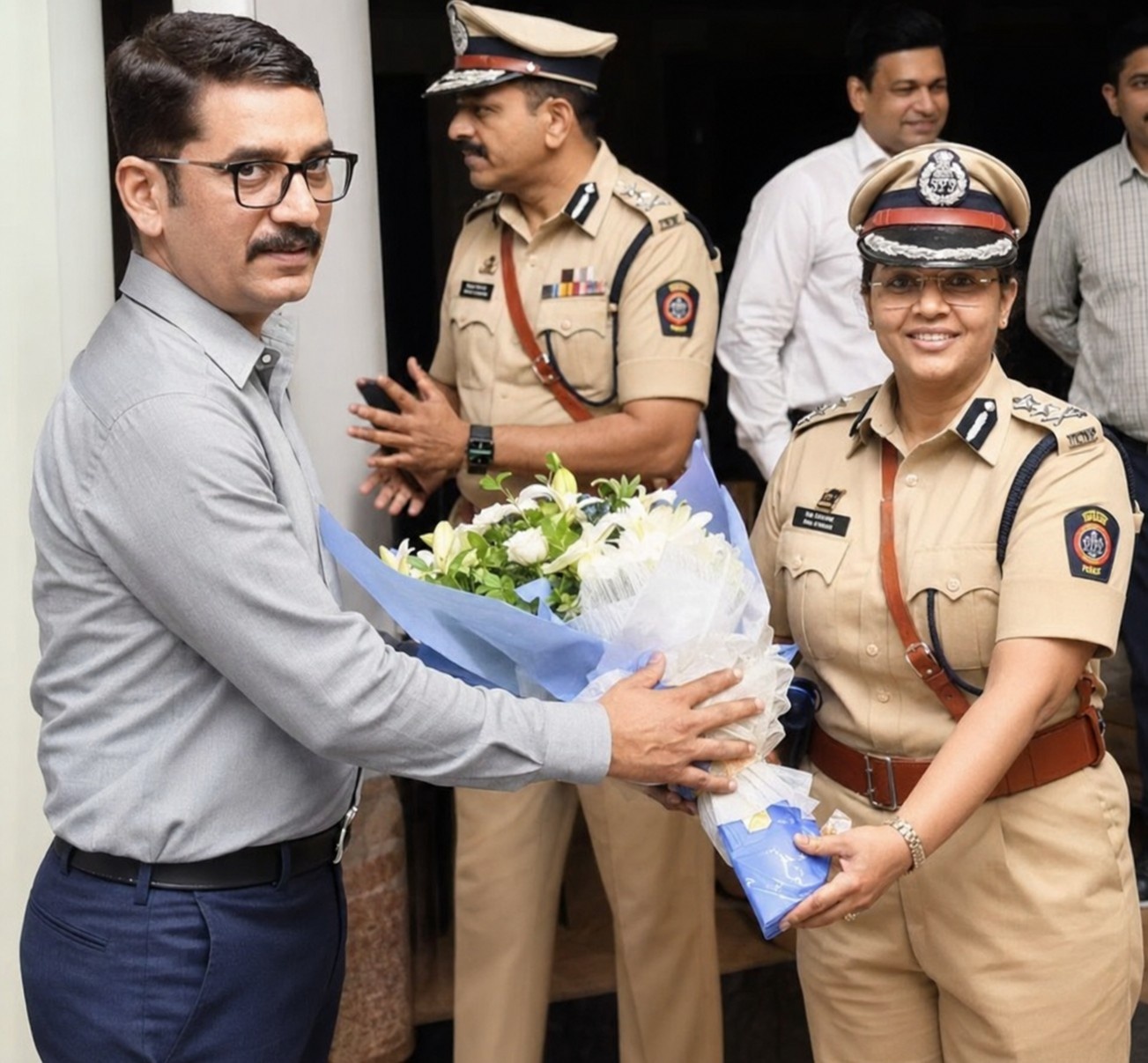
Vishwas Nangre Patil, decorated IPS officer, noted orator and author of the motivational books “Man Mein Hai Vishwas” and “Kar Har Maidan Fateh”, has been appointed as the new Commissioner of Police of Nagpur City. He arrived in Nagpur on Sunday, June 28, received a warm welcome from senior police officials and personnel at the Police Gymkhana, and officially assumed charge on Monday, June 29, 2026.


The Transfer Order — What Changed and Why

The Maharashtra Government on June 23, 2026 carried out a significant reshuffle in the state’s police establishment, issuing transfer orders affecting ten senior IPS officers across multiple ranks.

As per the order, incumbent Nagpur Police Commissioner Dr Ravinder Kumar Singal has been transferred and posted as Additional Director General of Police, Anti-Corruption Bureau (ACB), while Vishwas Nangre Patil takes over as the new Commissioner of Police, Nagpur City. nagpurupdates

Prior to this posting, Nangre Patil was serving as Additional Director General of Police in the Maharashtra Anti-Corruption Bureau. The move from ADG-ACB to Commissioner of Police, Nagpur is a lateral transfer at the same rank level — but it is a posting of significantly greater public visibility and operational responsibility. The Commissioner of Police in Nagpur heads the entire city police force — thousands of officers across multiple zones, divisions, and specialised units — and is directly accountable for law and order in one of Maharashtra’s most important cities.

The broader reshuffle also brought changes to Nagpur Police’s DCP-level leadership. Shashikant Satav, DCP Nagpur City, has been transferred to DCP, Chhatrapati Sambhajinagar, while Ramesh Dhumal, DCP Amravati City, has been appointed as DCP, Nagpur City.


Who Is Vishwas Nangre Patil — The Full Profile

For Nagpur residents who are encountering the name for the first time, here is the complete picture of the man who is now their city’s top police officer.

The IPS Career

Vishwas Nangre Patil is a 1997-batch IPS officer of the Maharashtra cadre. A career spanning nearly three decades in Maharashtra Police has taken him through some of the most demanding postings the state has to offer.

He built a reputation for discipline and efficient administration while serving as Superintendent of Police and later as Commissioner of Police, Nashik. He also handled several sensitive assignments as Joint Commissioner of Police (Law and Order), Mumbai.

His Mumbai posting — particularly his years handling law and order in one of the world’s most complex urban environments — gave him experience that few police officers in India can match. Mumbai’s law and order landscape involves everything from high-profile organised crime and financial fraud to communal sensitivity management, VIP security, large-scale event management, and the daily policing of a metropolitan area with a population larger than most countries.

The 26/11 Moment That Defined Him

Nangre Patil came into the national spotlight during the 26/11 Mumbai terror attacks. As Deputy Commissioner of Police, Zone-I, South Mumbai, he led police teams into the Taj Mahal Palace Hotel and played a crucial role in evacuating civilians trapped inside. His courage during the operation earned him the President’s Police Medal for Gallantry in 2015.

The President’s Police Medal for Gallantry is the highest gallantry award in India’s police system — equivalent, in the policing world, to what the Vir Chakra represents in the military. It is awarded for acts of conspicuous courage in the line of duty. Nangre Patil’s medal was not honorary or administrative — it was earned in one of the most dangerous situations any police officer in independent India has faced.

The Author and Motivational Speaker

What makes Vishwas Nangre Patil unusual among senior IPS officers is not just his operational track record — it is the parallel life he has built as a writer and public speaker.

His autobiography, “Man Mein Hai Vishwas”, and its English version, “Head Held High”, have inspired thousands of UPSC aspirants and young readers. Another book, “Kar Har Maidan Fateh”, was later translated into English as “Win All Your Battles”. His speeches on discipline, leadership and ethics continue to draw audiences from across Maharashtra and beyond.

This combination — a decorated police officer who is also a best-selling author and motivational speaker — has given Nangre Patil a public profile that extends well beyond the policing world. He is known and respected among students, professionals, and young people who have never dealt with law enforcement in any capacity. His books are sold in railway stations and airports. His speeches are watched on YouTube by millions.

For a Commissioner of Police — whose effectiveness depends partly on public trust and community cooperation — this kind of cultural reach is genuinely valuable. People who know and respect Nangre Patil as a writer or speaker are more likely to engage constructively with the police institution he now leads in Nagpur.

Despite his popularity, Nangre Patil has remained closely connected to his roots. He is known for his simple lifestyle and enjoys a strong following among students and young people. His wife, Rupali Nangre Patil, and their children, Janhavi and Ranveer, have been a constant source of support throughout his demanding career.

The “Singham” Reputation

Nangre Patil is widely recognised as Mumbai’s “Singham” for his tough stance on crime. This is not a nickname assigned by admirers alone — it reflects a consistent track record of firm, no-compromise policing across multiple postings. Officers who have served under him describe a leader who sets high standards and holds his team to them, who is visible and accessible in the field rather than confined to an office, and who does not soften his approach based on who is on the receiving end of enforcement.

For Nagpur — a city that has dealt with organised crime networks, cybercrime, narcotics trafficking, and the aftermath of communal disturbances in 2025 — a Commissioner with this reputation arriving at the helm sends a clear signal about the tone of policing that the next phase of Nagpur’s law enforcement will carry.


Dr Ravinder Kumar Singal — The Legacy He Leaves Behind

Any fair account of Vishwas Nangre Patil’s arrival must also acknowledge what Dr Ravinder Kumar Singal built during his tenure as Nagpur’s Commissioner of Police.

Dr Ravinder Kumar Singal, who assumed charge as CP Nagpur on February 1, 2024, leaves office after a tenure marked by technology-driven policing and a strong focus on public participation.

Under Singal’s leadership, Nagpur Police launched Garud Drishti — the social media surveillance initiative that monitors platforms in real time for incitement and criminal content. Operation U-Turn — the traffic enforcement drive that reduced road accident deaths by 25% in 2025, saving nearly 80 lives — was launched and executed under his overall command. The advanced forensic van with FTIR drug detection and 3D crime scene mapping was deployed to Nagpur under his watch. Three of his officers — DCP Niketan Kadam, DCP Lohit Matani, and PI Shubhangi Deshmukh — received the Maharashtra Police DG Insignia for 2025, reflecting the quality of leadership the Commissionerate developed during his tenure.

Singal moves to the Anti-Corruption Bureau as ADG — a posting that puts his administrative skills to work in a different but equally important dimension of Maharashtra’s law enforcement system.


What Nagpur Expects From Its New Commissioner

Nangre Patil arrives in Nagpur at a specific and demanding moment. The city is still processing the aftermath of the March 2025 communal disturbances — both in terms of ongoing court proceedings against those arrested and in terms of the community confidence building that is necessary in the areas affected. Cybercrime is rising. Drug trafficking through Nagpur’s road and rail corridors remains a persistent enforcement challenge. The NMC elections — long pending — are expected to bring their own law and order requirements when they eventually take place.

Citizens and police observers in Nagpur have identified several priorities they hope the new Commissioner will address. The March 2025 riot cases need to move through the courts with continued police support for the prosecution. Cybercrime victim response times — already improved by the Cyber Cell under DCP Deepak Aggrawal — need to become faster and more predictable. The gains of Operation U-Turn on road safety need to be institutionalised so they do not depend on any single officer’s tenure. And the Garud Drishti social media monitoring system needs to remain at full operational intensity.

Above all, Nagpur’s citizens expect what every city deserves from its top cop: consistent, fair, firm, and accountable policing that protects the law-abiding and holds the lawless to account — regardless of their political connections, community affiliation, or economic status.

With the city’s policing now under his leadership, attention will be on the strategies and reforms he introduces to strengthen crime prevention and improve public safety.


Nangre Patil’s Arrival — The Public Response

He received a warm welcome from senior police officials and personnel at the Police Gymkhana, where officers greeted him with bouquets upon his arrival. A video of his arrival has since gone viral on social media, drawing widespread attention across the city.

The viral video is itself telling. A new Commissioner arriving in a city does not typically generate social media attention of this scale. Nangre Patil’s public profile — built through his books, his speeches, his 26/11 role, and his reputation for straight policing — means that his arrival in Nagpur carries a weight of public expectation that most administrative transfers do not.

That expectation is both an asset and a challenge. It gives him an immediate platform of public goodwill that many incoming commissioners spend months building. It also means that any perceived compromise of his standards — any moment that contradicts the “Singham” image or the “Man Mein Hai Vishwas” message — will be noticed and discussed with the same intensity.

For Nagpur, the arrival of Vishwas Nangre Patil as Commissioner of Police is one of the most significant policing developments in the city in recent years. The man who walked into the Taj has walked into Nagpur’s biggest policing chair.

The city is watching.


Nagpur Updates will track CP Vishwas Nangre Patil’s tenure and report on his key decisions, initiatives, and their impact on policing in Nagpur.

Sources: The Hitavada, The Live Nagpur, Nagpur Today, Indian Bureaucracy News, Social News XYZ, field reporting. Published: June 29, 2026.

French Expert Finally Arrives in Nagpur to Revive Futala Musical Fountain — Here Is the Full Story

Futala Lake: Nagpur’s most delayed tourist attraction may finally be coming to life.

After remaining dormant for nearly two years, the Futala Musical Fountain project has shown signs of revival. A French technical expert has arrived in Nagpur. His job is to assess the condition of the long-delayed installation and chart a roadmap for its completion.

This is big news for Nagpur. Let’s go right from the beginning so you understand why this matters so much.


What Is the Futala Musical Fountain?

The Futala Fountain project is considered one of Nagpur’s major tourist attractions. It is promoted as the world’s longest floating fountain, stretching around 155 metres across Futala Lake. Apart from the floating fountain, the larger Futala development project also includes a floating stage, an artificial banyan tree, a spectators’ gallery and a multi-level parking facility.

The Futala Musical Fountain was conceived as a landmark attraction. It was aimed at enhancing Nagpur’s tourism profile and transforming the iconic Futala Lake precinct into a major recreational destination.

In short — this was supposed to be Nagpur’s version of Dubai’s famous fountain show. A landmark. A reason to visit. A pride point for the city.


How Did It All Go Wrong?

The project has had one of the most troubled histories of any civic project in Nagpur.

The fountain was built at a cost of around Rs 50 crore. However, it malfunctioned even before its scheduled inauguration in May 2023. The main reason was cable damage caused by algae accumulation in the lake.

Subsequent inspections, including those by the Indian Institute of Technology Bombay, confirmed the need for extensive repairs. Authorities estimate restoration costs to exceed Rs 10 crore.

So the fountain broke before it even opened. IIT Bombay was called in to inspect it. The repair bill crossed Rs 10 crore. And citizens who had been excited about a world-class attraction were left staring at an idle structure in the middle of their favourite lake.

Then the legal trouble started.

The project suffered a major setback in January 2024 when the Supreme Court imposed a status quo order while hearing a Public Interest Litigation filed by Nagpur-based NGO Swaccha Association. Later, in October 2025, a bench headed by Justice Bhushan Gavai lifted the status quo order, allowing authorities to resume restoration work.

The court froze everything for nearly two years. Work could not move forward at all during that period.


Why Did the French Team Take So Long to Come?

Even after the Supreme Court cleared the way in October 2025, getting the French experts to Nagpur was not easy. Three separate factors caused delays.

Delay 1 — The War

The ongoing US-Israel-Iran conflict delayed the much-awaited revival of the Futala fountain project. The French technical team was unable to travel to India. The timeline for the team’s visit remained uncertain due to the conflict.

Delay 2 — Nagpur’s Extreme Heat

The technical team was expected to arrive on May 20 to supervise restoration work. However, the experts informed MahaMetro officials that they were uncomfortable working outdoors in temperatures exceeding 45 degrees Celsius. They were concerned about possible health risks caused by the severe heat. Officials then expected the French experts to visit after pre-monsoon showers bring some relief.

Delay 3 — Travel Disruptions

Progress was being affected by the delayed arrival of the specialised team from France. Travel disruptions linked to the ongoing Gulf conflict had held up their visit. Officials said the team was expected to arrive via an alternative route.

So war, heat and travel chaos — all three conspired to keep the French experts away from Nagpur for months. Now they are finally here.


Who Is the French Expert and What Is He Doing?

The visit of French fountain specialist Basile, who is leading a team of technicians, is being seen as a crucial development. He was tasked with a detailed assessment of cables, pumps and lighting systems. MahaMetro is pushing to restart the long-delayed Futala Musical Fountain project.

Basile was expected to remain in Nagpur until June 22. During his stay, he conducted an extensive technical evaluation of the project in coordination with MahaMetro officials and the local execution team.

His team belongs to the France-based Crystal Group — the company that originally supplied and installed the fountain system. So Basile is not just any inspector. He knows this fountain intimately.


What Specifically Is Being Assessed?

Three critical systems are under inspection.

The Cable Network

Removal of old and damaged fountain cables has begun. This is a key step in reviving the project. Nearly 80% of the new cable infrastructure has already been procured.

The Pumping System

Another critical aspect of Basile’s visit is the evaluation of the fountain’s pumping system. This is considered the heart of the entire installation. During his previous visit nearly seven months ago, the expert had identified several technical deficiencies and recommended repairs to key components. The condition of two to three newly delivered pumps will also be examined.

The Lighting Network

The lighting network is expected to play a central role in creating the visual effects originally planned as part of the musical fountain attraction overlooking Futala Lake.

Cables, pumps and lights — all three need to work perfectly together before the fountain can perform. A failure in any one system means the show cannot go on.


What Work Has Already Been Done?

While waiting for the French team, local preparatory work has not been completely idle.

New wiring has already been transported to Nagpur. Preparatory work is underway near the lake. Contractor Khadatkar Construction Studio One has begun preliminary activities such as planning cable replacement and beautifying the surrounding area.

Following the legal clearance, officials intensified efforts to repair damaged infrastructure and revive the attraction ahead of the upcoming tourist season.

So the groundwork is being laid. The French team’s job is to complete and verify the technical components that local teams cannot handle alone.


What Does the Complete Futala Project Look Like?

Most people know about the fountain. But the full Futala redevelopment is much larger.

Apart to the floating fountain, the larger Futala development project includes a floating stage, an artificial banyan tree, a spectators’ gallery and a multi-level parking facility. However, most of these structures remained unused after the project stalled due to legal complications. Dwello

When fully complete, Futala Lake will be transformed into an integrated entertainment and recreation destination — not just a fountain show. The parking, the floating stage, the banyan tree installation and the spectators’ gallery are all part of a larger vision that has been frozen for years.


Why This Matters for Nagpur’s Tourism

Nagpur has always had the geographical advantage of being India’s zero mile city. But it has struggled to become a tourist destination in its own right.

The Futala Musical Fountain — if it ever works as designed — would be a genuine draw. A 155-metre floating fountain with light and laser shows on a scenic city lake is the kind of attraction that puts a city on the tourist map.

That is exactly why the repeated delays have been so frustrating for Nagpur residents. The structure is built. The money has been spent. All that is needed is for it to actually work.

Basile’s visit is the most concrete sign yet that MahaMetro and the contractor are serious about getting it done.

Detail Information
Project Futala Musical Fountain, Nagpur
Implementing Agency MahaMetro (Maharashtra Metro Rail Corporation)
Original Cost Rs 50 crore
Repair Cost Estimate Over Rs 10 crore
Fountain Length ~155 metres — world’s longest floating fountain
French Expert Basile, Crystal Group
Assessment Focus Cables, pumps, lighting systems
Why Delayed Earlier War disruptions, extreme heat, legal freeze
Supreme Court Stay January 2024 to October 2025
Cable Work Status 80% of new infrastructure procured
Local Contractor Khadatkar Construction Studio One

What is the Futala Musical Fountain in Nagpur?
It is a 155-metre floating musical fountain built on Futala Lake, Nagpur. It is promoted as the world’s longest floating fountain. The project also includes a floating stage, spectators’ gallery, artificial banyan tree and multi-level parking.

Why did the Futala fountain never open?
The fountain suffered cable damage due to algae in the lake before its planned inauguration in May 2023. Then a Supreme Court order froze all work from January 2024 to October 2025. After the legal freeze, travel disruptions and extreme heat further delayed the French experts who needed to repair the system.

Who is Basile and why is he important for the Futala fountain?
Basile is a French fountain specialist from Crystal Group — the company that originally built and installed the Futala fountain system. Only experts from the original manufacturer can properly assess and repair the advanced technical components.

How much has the Futala fountain project cost so far?
The original project cost was around Rs 50 crore. Additional restoration costs are estimated to exceed Rs 10 crore. That brings the total investment to over Rs 60 crore.

When will the Futala fountain open?
No official opening date has been announced yet. The current visit by the French team is an assessment phase. Work will proceed based on the findings. Nagpur residents hope to see it operational by the 2026-27 tourist season.

What is the Crystal Group?
Crystal Group is a France-based company specialising in large-scale fountain and water feature installations. They supplied the core fountain technology for the Futala project.


Nagpur has waited a long time for its signature tourist attraction. The French expert is here. The cables are being replaced. The legal hurdles are cleared. Whether Futala finally lives up to its Rs 50 crore promise depends entirely on what Basile’s assessment finds — and how fast the repairs can follow.

Vishwas Nangare Patil to Take Charge as Nagpur Police Commissioner on Monday — But Controversy Is Already Waiting

Nagpur is getting a new Police Commissioner. But the transition is not going smoothly.

Five days have passed since the government issued the order appointing Vishwas Nangare Patil as Nagpur’s Police Commissioner. However, he had not yet taken charge. This delay triggered widespread speculation and debate. It is now confirmed that he will assume charge on Monday, June 30.

So why the delay? And why is there already political opposition even before he enters the office?


Why Was There a 5-Day Delay?

Senior IPS appointments usually result in the officer taking charge within a day or two. A five-day gap is unusual. It raised questions across Nagpur’s political and police circles.

Senior officials in the police department were avoiding commenting on the delay. When Lokmat made direct contact with Nangare Patil, he clarified the matter himself. He said he is ready to come to Nagpur and will take charge on Monday. He also confirmed that he will arrive in Nagpur on Sunday night itself.

So the delay was not due to any transfer dispute or political interference. He is arriving Sunday night and will be in the office on Monday morning.


Who Is Vishwas Nangare Patil?

Vishwas Nangare Patil is a well-known senior IPS officer in Maharashtra. He is popular among common citizens. He is known for his accessible style and direct communication with the public.

As per the Home Department order, Dr Ravindrakumar Singal has been transferred to the post of Additional Director General of the Anti-Corruption Bureau. Vishwas Nangare Patil, who was serving as Additional Director General of Police, has been given charge of Nagpur. Dr Singal’s farewell press conference has already been held.

The transition is formal and complete on paper. The only thing remaining is the physical handover — which happens Monday.


The RSS Speech That Triggered a Storm

Here is where the story gets politically charged.

Nangare Patil attended a Hindu convention in Navi Mumbai. At the event, he praised the Rashtriya Swayamsevak Sangh and its founder Dr Keshav Baliram Hedgewar. A video of this speech went viral on social media. Since the RSS headquarters is located in Nagpur itself, the statement gained special political weight. Opposition leaders then launched strong criticism against him.

A senior police officer publicly praising a political organisation — especially one headquartered in the very city he is about to police — is bound to draw attention. The timing made it more sensitive.


Congress Leader Vijay Wadettiwar Raises Objection

The opposition was quick to respond.

Congress leader Vijay Wadettiwar raised a strong objection. He said it is not appropriate for a government officer to publicly praise a particular ideology from a public platform. He added that government officers are expected to remain neutral as per the Constitution. Such conduct, he said, could raise questions about the impartiality of the administration in the future.

This is a legitimate constitutional point. IPS officers fall under All India Service rules. They are bound by a code of conduct that restricts them from associating publicly with political or ideological organisations.


Raj Thackeray Gives a Word of Caution

Even MNS chief Raj Thackeray weighed in — but from a different angle.

Raj Thackeray responded to the controversy with a mixed message. He acknowledged that Nangare Patil is a highly efficient and capable officer. But he also warned him not to mortgage his conscience to any political party or organisation.

This is a softer but pointed message. Raj Thackeray is effectively saying — you are a good officer, so don’t let political affiliations define your actions in Nagpur.


Nagpur Congress President Makes a Shocking Claim

The most explosive statement came from a local Congress leader.

Nagpur Congress city president Praful Gudghe Patil made a sensational claim. He said BJP has labelled him an “Urban Naxal.” He added that he fears the new Police Commissioner Vishwas Nangare Patil may brand him an “Urban Naxal” and carry out an encounter against him. He said he feels unsafe because Nangare Patil is coming to Nagpur.

This is a politically explosive statement. Calling a senior IPS officer a potential encounter threat — before he even takes charge — is serious. It has further heated up Nagpur’s political atmosphere.

It is worth noting that Nangare Patil has not made any statement targeting any politician. The fear appears to be based entirely on his RSS speech and his known image as a strict and action-oriented officer.


What Kind of Commissioner Can Nagpur Expect?

Vishwas Nangare Patil has a reputation as an officer who takes swift action. He is known for being accessible to common people. He regularly holds open public meetings and takes direct complaints from citizens.

His appointment to Nagpur — a city that houses the RSS headquarters, has a complex political environment, and faces ongoing challenges including crime, land disputes, and communal sensitivities — is therefore highly significant.

How he handles the political opposition waiting for him from day one will set the tone for his tenure.


Quick Facts

Detail Information
New Nagpur CP Vishwas Nangare Patil
Date of Charge Monday, June 30, 2026
Previous CP Dr Ravindrakumar Singal
Dr Singal’s New Post ADG, Anti-Corruption Bureau
Delay in Charge 5 days after appointment order
Controversy RSS praise speech at Hindu convention in Navi Mumbai
Critics Vijay Wadettiwar (Congress), Raj Thackeray (MNS)
Explosive Claim Praful Gudghe Patil fears “encounter”

Who is the new Nagpur Police Commissioner?
Vishwas Nangare Patil is the new Nagpur Police Commissioner. He is a senior IPS officer who was serving as Additional Director General of Police before this appointment.

When will Vishwas Nangare Patil take charge in Nagpur?
He will take charge on Monday, June 30, 2026. He confirmed he will arrive in Nagpur on Sunday night itself.

Why was there a delay in Nangare Patil taking charge?
The appointment order was issued five days before he took charge. No official reason was given for the delay. Nangare Patil himself confirmed he was ready and would report on Monday.

What is the RSS speech controversy?
Nangare Patil attended a Hindu convention in Navi Mumbai and praised the RSS and its founder Dr Keshav Baliram Hedgewar. The video went viral. Since the RSS headquarters is in Nagpur — the city he is now policing — the speech gained political significance.

What did Vijay Wadettiwar say about Nangare Patil?
Congress leader Vijay Wadettiwar said it is not appropriate for a government officer to publicly praise a specific ideology. He said officers should remain neutral as per the Constitution.

What did Raj Thackeray say?
Raj Thackeray called Nangare Patil a highly efficient officer but warned him not to let his conscience be mortgaged to any political party or organisation.

What did Nagpur Congress president Praful Gudghe Patil say?
He made a sensational claim that he fears Nangare Patil may label him an “Urban Naxal” and threaten his safety. He said he feels unsafe with Nangare Patil’s arrival in Nagpur.


Vishwas Nangare Patil arrives in Nagpur with a strong reputation — and an even stronger political controversy already in place. Monday’s charge-taking will be watched closely. What matters now is not the speech he gave at a convention, but the actions he takes on the streets of Nagpur.

Exit mobile version