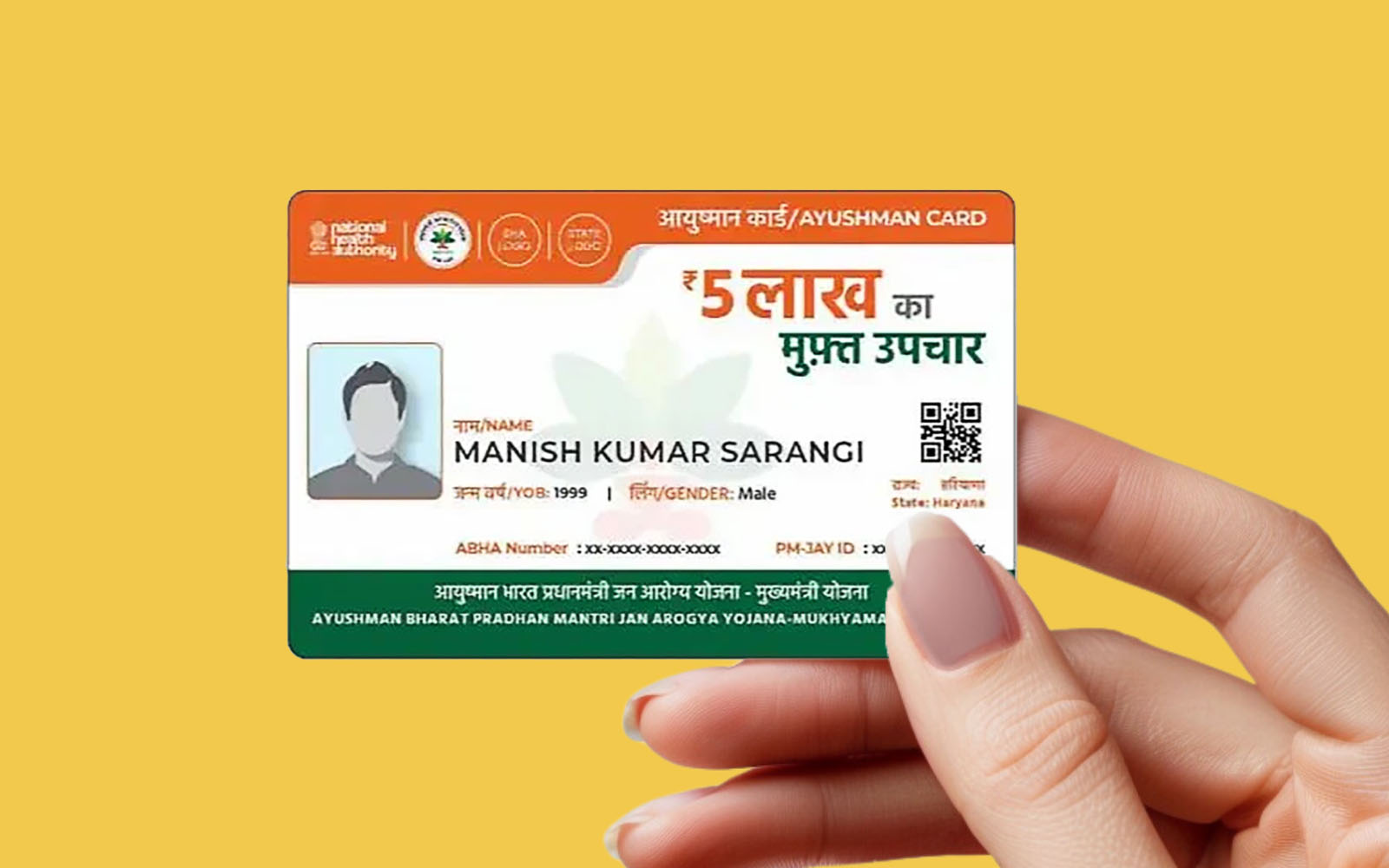
Ayushman Vay Vandana Card Brings ₹5 Lakh Health Cover for Seniors Above 70

The Indian government has taken a giant leap in senior citizen healthcare by launching the Ayushman Vay Vandana Card. If you or your loved ones are aged 70 or above, this brand-new health insurance initiative could be a real game-changer. Launched in October 2024 under the Ayushman Bharat Pradhan Mantri Jan Arogya Yojana (AB PM-JAY), this scheme ensures ₹5 lakh of free annual health coverage, regardless of income, pre-existing conditions, or previous eligibility under other schemes.

Let’s explore what makes this healthcare initiative truly revolutionary for India’s senior citizens.


🌟 What is the Ayushman Vay Vandana Card?

The Ayushman Vay Vandana Card is a government-issued digital health card that offers comprehensive health insurance of ₹5 lakh per year to every Indian citizen aged 70 or above. Introduced by Prime Minister Narendra Modi, this initiative builds on the success of the Ayushman Bharat scheme, but focuses specifically on the needs of our elderly population.


🎯 Key Features at a Glance

  • ₹5 lakh annual health cover

  • 🏥 1,961 medical procedures across 27 specialties

  • 📅 Zero waiting period — coverage starts immediately

  • 💉 Includes pre-existing illnesses

  • 🏨 Cashless treatment at 30,072 hospitals, including 13,352 private facilities

  • 🆓 Free of cost — No premium required


👴 Who is Eligible for the Scheme?

Wondering if you qualify?

If you’re an Indian citizen aged 70 years or older, congratulations — you’re eligible!

Here’s how it works:

  • If you’re already covered under Ayushman Bharat PM-JAY, this card acts as a top-up, giving you an additional ₹5 lakh coverage.

  • If you’re covered under any private or other government schemes, you can switch to this one, but only one can remain active.

  • No income restrictions or prior medical checks are required.


🛡️ What Medical Treatments Are Covered?

This isn’t your typical health card with limited coverage. The Ayushman Vay Vandana Card gives access to nearly 2,000 procedures!

Top Covered Treatments Include:

  • 💓 Cardiac surgeries – like PTCA, pacemakers

  • 🦵 Orthopedic surgeries – hip/knee replacements

  • 🧠 Neurological treatments – stroke rehabilitation

  • 💉 Cancer treatment – chemotherapy, radiotherapy

  • 🩸 Dialysis – both Hemodialysis and Peritoneal Dialysis

Whether it’s a sudden emergency or a scheduled surgery, this card has you covered.


🏥 Where Can You Use the Card?

You’re not limited to just government hospitals.

Cardholders can avail cashless treatment at:

  • 30,072 empanelled hospitals nationwide

    • 13,352 private hospitals

    • 16,720 government-run facilities

That means wherever you are — from Mumbai to Manipur — quality healthcare is always accessible.


📲 How to Apply and Download the Card

The application process is simple and entirely digital via the Ayushman App.

Step-by-Step Guide:

  1. 📱 Download the ‘Ayushman App’ from Google Play Store

  2. 🔐 Choose ‘Login as Beneficiary’ or ‘Operator’

  3. 🔢 Enter captcha + mobile number

  4. ✅ Authenticate via OTP

  5. 📍 Allow location access

  6. 🆔 Enter Aadhaar number, state, and other details

  7. 🔍 If not found, complete eKYC with OTP

  8. 📝 Fill in the declaration form and submit

  9. 👨‍👩‍👧‍👦 Add family members if applicable

  10. 📥 Once approved, download the card

No printer? No problem. The digital version is enough for hospital verification.


🧓 Can Existing Ayushman Bharat Beneficiaries Benefit?

Absolutely! If you’re already enrolled in the Ayushman Bharat PM-JAY, this scheme simply doubles your protection.

So instead of ₹5 lakh, your total coverage now becomes ₹10 lakh per year. That’s a significant safety net for any senior citizen!


⚖️ Can You Keep Other Insurance Plans?

Yes — but there’s a catch.

You must choose between the Ayushman Vay Vandana Card and your existing insurance. If you decide to go with this scheme, the benefits from the other plan will be discontinued.

This helps the government avoid duplication and ensures smooth claim processing.


📈 Why Was This Scheme Introduced?

India is seeing a growing elderly population, with rising health issues and out-of-pocket expenses. The government wanted to:

  • 💰 Ease the financial burden

  • 👴 Promote dignity in old age

  • 🏥 Ensure accessible, quality healthcare

  • 🔁 Reduce hospital debt traps for families


📊 Real-Life Scenario: How It Helps

Imagine this: Mr. Verma, 74, needs a knee replacement. At a private hospital, the cost is around ₹3.5 lakh. Without insurance, that’s a heavy bill. But with the Ayushman Vay Vandana Card, the entire procedure is coveredcashless.

Not only does he save money, but he also avoids delays due to financial constraints.


📋 Documents Required for Enrollment

  • Aadhaar Card (mandatory)

  • Mobile number linked to Aadhaar

  • Proof of age (Aadhaar usually suffices)

  • Residence details (State, PIN code)

  • Consent for eKYC via OTP


🤔 What If I Don’t Have a Smartphone?

You can visit the nearest CSC (Common Service Center) or hospital helpdesk to get assistance with the application. Trained operators will guide you through the process.


🌐 Card Availability in Rural Areas

Yes, the program ensures nationwide access, even in tier-2 cities and villages. CSCs, ASHA workers, and Gram Panchayats are empowered to assist with registrations.


💬 What Beneficiaries Are Saying

“I had no insurance all my life. Now at 72, I feel safe knowing I have ₹5 lakh to rely on.” – Smt. Kamla Devi, Lucknow

“It’s easy to use and covers everything I needed for my heart surgery.” – Shri Rajesh Sharma, Pune


🔁 Is Renewal Required Every Year?

Nope! Once registered, the card remains valid until the end of life, as long as no fraudulent claims are made.

A Bold Step for Senior Care

The Ayushman Vay Vandana Card is more than just a health card — it’s a lifeline for millions of seniors. It provides financial independence, healthcare dignity, and most importantly, peace of mind.

If you’re 70 or above, or have elderly family members, don’t wait. This is the healthcare security net that every senior citizen in India truly deserves.

1. Can I apply offline for the Ayushman Vay Vandana Card?

Yes, you can apply offline via CSCs, hospitals, or Gram Panchayat offices if you don’t have a smartphone.

2. Is there an annual premium or fee?

No. The scheme is completely free for eligible beneficiaries.

3. Can I get treatment outside my state?

Absolutely! The card works in any empanelled hospital across India.

4. Does the card cover diagnostic tests and medicines?

Yes, both diagnostic services and essential medicines are included as part of the treatment package.

5. What if my Aadhaar is not linked to a mobile number?

You’ll need to get it linked or visit a CSC to apply with operator assistance.

Maharashtra Government, Microsoft to Set Up AI Excellence Centers in Mumbai, Pune, and Nagpur

Microsoft company in Nagpur: The Maharashtra government, in collaboration with Microsoft, has announced the establishment of three Artificial Intelligence (AI) Centers of Excellence in Mumbai, Pune, and Nagpur. This strategic move is expected to revolutionize governance by integrating AI-driven solutions across various sectors.

A Memorandum of Understanding (MoU) was signed in Mumbai on April 1, in the presence of key dignitaries, including Chief Minister Devendra Fadnavis, Deputy Chief Ministers Eknath Shinde and Ajit Pawar. This partnership aims to enhance governance efficiency, improve public services, and foster technological advancements.

Overview of AI Centers in Maharashtra

The three AI Centers of Excellence will focus on different domains to maximize their impact:

1. Mumbai – Geospatial Analytics Centre

  • Specializes in geographic data analysis.
  • Supports urban planning, disaster management, and infrastructure development.
  • Uses Geographic Information System (GIS) and satellite imagery for data-driven governance.

2. Pune – AI for Forensics

  • Aims to enhance crime investigation capabilities.
  • Uses AI-driven forensic analysis to assist law enforcement agencies.
  • Integrates advanced data analytics to identify patterns and solve cases efficiently.

3. Nagpur – MARVEL Centre

  • Focuses on AI-powered law enforcement and governance.
  • Provides AI training for government employees.
  • Offers Microsoft certification through the MS Learn platform.

How AI Will Transform Governance in Maharashtra

The Maharashtra government, with Microsoft’s AI solutions, is set to implement cutting-edge technologies to improve governance.

AI-Powered Governance Solutions

  1. Automated Document Management
    • AI-driven summarization and analysis of official documents.
    • Efficient record-keeping and retrieval systems.
  2. Faster Grievance Redressal
    • AI-powered chatbots for immediate response to public complaints.
    • Intelligent categorization and prioritization of grievances.
  3. Enhanced Public Services
    • AI integration in healthcare for patient management and diagnosis.
    • AI-powered land record digitization.
    • Smart traffic management with AI-based analytics.
  4. Digital Traffic Fine Processing
    • AI-driven traffic monitoring and violation detection.
    • Direct Aadhaar integration for seamless payment processing.

Impact on Maharashtra’s Digital Transformation

The establishment of AI Centers of Excellence aligns with the state’s vision for a tech-driven future.

  • Efficiency: AI reduces human errors and enhances workflow.
  • Transparency: Data-driven governance ensures accountability.
  • Economic Growth: Boosts IT sector jobs and innovation in Maharashtra.

Microsoft’s Role in the AI Initiative

Microsoft, as a global leader in AI solutions, will provide:

  • Advanced AI tools and frameworks.
  • Training programs for government officials.
  • Technical support for AI integration in public services.

Challenges and Future Prospects

While AI adoption is promising, challenges such as data privacy, infrastructure limitations, and resistance to change need to be addressed. Maharashtra’s commitment to AI-powered governance will require:

  • Robust cybersecurity measures.
  • Continuous training programs.
  • Public awareness initiatives.

The Maharashtra government’s collaboration with Microsoft marks a significant step towards AI-driven governance. With dedicated AI Centers in Mumbai, Pune, and Nagpur, the state is poised to become a leader in AI innovation. As AI continues to evolve, this initiative will pave the way for a smarter, more efficient Maharashtra.

1. What is the purpose of Maharashtra’s AI Centers of Excellence?

The AI Centers aim to improve governance efficiency through AI-driven solutions in urban planning, crime investigation, and public services.

2. How will Microsoft contribute to the AI initiative?

Microsoft will provide AI tools, training programs, and technical support for AI adoption in Maharashtra’s governance.

3. What sectors will benefit from AI integration?

AI will enhance urban planning, law enforcement, healthcare, transport, and public grievance redressal systems.

4. How will AI improve public services in Maharashtra?

AI-powered chatbots, automated document management, and smart traffic solutions will streamline government operations.

5. What are the challenges of implementing AI in governance?

Data privacy, infrastructure limitations, and public awareness are key challenges that need to be addressed for successful AI integration.

Prime Minister Modi’s Visit to Nagpur: Security Changes and Key Highlights

PM Modi Nagpur Visit: Prime Minister Narendra Modi is set to visit Nagpur to perform the bhoomipujan of the Premium Centre of Madhav Netralaya. The Bharatiya Janata Party’s (BJP) Nagpur unit is preparing an elaborate welcome, but security protocols have led to significant route adjustments. This visit holds historical importance as it is Modi’s first trip to the city after securing a third term as Prime Minister.

Security Measures and Route Adjustments

Marked No-Man’s Lands

The Prime Minister’s security team has identified several areas en route that are now marked as “no-man’s land.” This decision affects how and where party workers can greet him. Originally, BJP planned receptions at 47 key squares, but now only 28 squares will see these welcome ceremonies due to security constraints.

Change in Route

Earlier, Modi’s route was expected to include a different pathway to Reshimbag Smruti Mandir and Deekshabhoomi. However, the revised plan ensures the same route is taken for both the onward and return journey, optimizing security arrangements.

Significance of Modi’s Visit to Nagpur

Connection to Rashtriya Swayamsevak Sangh (RSS)

This year marks the centenary of the Rashtriya Swayamsevak Sangh (RSS). Modi’s visit to the Smruti Mandir holds symbolic importance, strengthening his ties with the organization’s historical roots. This is his first official visit to the site as Prime Minister.

Honoring Dr. Babasaheb Ambedkar at Deekshabhoomi

Modi will also pay homage to Dr. Babasaheb Ambedkar at Deekshabhoomi, a site of deep historical and cultural significance, marking his commitment to inclusive governance and respect for all communities.

Preparations for the Visit

BJP’s Grand Welcome Plans

BJP’s Nagpur unit is ensuring the city is decked up with posters of Modi. The streets are being cleaned, and flowers are being maintained with assistance from the Fire Department. The party workers have been advised to follow security protocols and greet Modi peacefully at designated locations.

Police Deployment and Security Protocols

Due to heightened security measures, fewer police personnel will be stationed at squares. This led to many key locations being designated as restricted areas. BJP’s reception plan has been modified accordingly.

Itinerary of Prime Minister Modi’s Visit

Here’s a breakdown of Modi’s schedule during his visit to Nagpur:

  1. Arrival at Nagpur Airport: 8:30 AM
  2. Visit to Smruti Mandir (RSS Headquarters)
  3. Tribute at Deekshabhoomi
  4. Bhoomipujan at Madhav Netralaya: 10:00 AM
  5. Departure from Madhav Netralaya to Solar Industries: 11:30 AM
  6. Return to Nagpur Airport: 1:30 PM
  7. Departure for Delhi

Political and Social Implications of the Visit

Strengthening BJP’s Influence in Maharashtra

Maharashtra plays a crucial role in national politics, and Modi’s visit will likely boost BJP’s presence in the region. His interactions with party workers and public engagements can shape future electoral strategies.

Strategic Importance of Security Enhancements

The changes in Modi’s route highlight the government’s commitment to ensuring the highest level of security for the leader. Such measures also reflect the meticulous planning involved in high-profile political visits.

Prime Minister Narendra Modi’s visit to Nagpur is not just a ceremonial event but a politically significant occasion. His engagements with key sites like RSS’s Smruti Mandir and Deekshabhoomi reinforce his connection with historical and cultural institutions. The security adjustments reflect the necessity of maintaining order while accommodating large public gatherings. This visit will likely leave a lasting impact on both the city and national political discourse.

1. Why is PM Modi visiting Nagpur?

PM Modi is visiting Nagpur to perform the bhoomipujan of Madhav Netralaya’s Premium Centre and visit key historical sites like RSS’s Smruti Mandir and Deekshabhoomi.

2. Why were security changes made to Modi’s route?

Security concerns prompted the marking of certain areas as “no-man’s land,” restricting movement and limiting greeting locations for party workers.

3. What is the significance of Modi’s visit to RSS Smruti Mandir?

This marks Modi’s first visit to the RSS Smruti Mandir as Prime Minister, coinciding with the organization’s centenary year, making it a momentous occasion.

4. How is BJP preparing for Modi’s arrival?

BJP’s Nagpur unit is decorating the city with posters, ensuring clean streets, and organizing designated greeting locations for party workers.

5. What are the key stops on Modi’s itinerary in Nagpur?

Modi will visit Smruti Mandir, Deekshabhoomi, and Madhav Netralaya before heading to Solar Industries and returning to the airport.

Gadkari, Fadnavis Inaugurate Patanjali’s ‘Mega Food & Herbal Park’ at MIHAN Nagpur

The city of Nagpur recently witnessed a historic milestone with the inauguration of Asia’s largest orange processing plant, the Patanjali Mega Food & Herbal Park, by Union Minister Nitin Gadkari and Maharashtra Chief Minister Devendra Fadnavis. This initiative, spearheaded by Swami Ramdev and Acharya Balkrishna, is set to revolutionize the region’s agricultural and economic landscape.

The Vision Behind the Mega Food Park

This ambitious project aligns with Patanjali’s mission to promote self-reliance in agriculture and boost farmers’ prosperity. Chief Minister Fadnavis emphasized that the collaboration between Nitin Gadkari, Swami Ramdev, and Acharya Balkrishna has brought this vision to reality despite numerous challenges.

A Boon for Farmers in Vidarbha

  • Centralized Orange Processing Hub: The facility will serve as a sorting and grading center for oranges.
  • Cold Storage Facility: Farmers can store their produce for extended periods and sell them when market prices are favorable.
  • Better Pricing for Farmers: Small oranges that earlier fetched ₹12/kg will now be bought at ₹18/kg by Patanjali.
  • Increased Orange Production: Efforts are being made to enhance the yield from 4-5 tons per acre to 25-30 tons.

Maharashtra Government’s Support

The Maharashtra government has assured complete support to Patanjali to ensure the success of this project. The commitments made by the state and Patanjali are being fulfilled step by step, benefiting local farmers and ensuring sustainable agricultural growth.

Nitin Gadkari’s Vision for Agro Development

Nitin Gadkari expressed gratitude to Swami Ramdev and Acharya Balkrishna for choosing MIHAN, Nagpur, as the base for this massive food processing unit. He highlighted the importance of technological advancements and the role of the food park in reducing farmer suicides in Vidarbha.

Swami Ramdev’s Commitment to Health and Agriculture

Swami Ramdev described Nagpur as an ideal city for industrial and spiritual development. He underscored the health benefits of orange juice, stating that it is a powerful anti-aging drink, unlike other market products that contain excess sugar and preservatives.

Asia’s Largest Orange Processing Plant

  • Investment: Patanjali has invested ₹1,000 crore in this facility, with an additional ₹500 crore planned.
  • State-of-the-Art Machinery: The plant is equipped with advanced processing units sourced globally.
  • Daily Processing Capacity: 800 tons of oranges per day.
  • Pesticide-Free Production: 100% pure orange juice with no preservatives or added sugar.

Acharya Balkrishna’s Perspective

Acharya Balkrishna credited three key leaders for this project—Swami Ramdev, CM Devendra Fadnavis, and Nitin Gadkari. He stated that this food park would eradicate poverty and transform Vidarbha’s economy by ensuring direct farmer benefits.

Eradicating Middlemen and Ensuring Farmer Welfare

Regional MLA Ashish Deshmukh emphasized the need to eliminate middlemen so that farmers receive direct benefits. He hailed the food park as a beacon of hope for the struggling farmers of Maharashtra.

Economic and Employment Boost

  • Job Creation: Thousands of employment opportunities for youth in Nagpur and nearby regions.
  • Infrastructure Development: Strengthening Nagpur’s position as a food processing hub.
  • Market Expansion: Patanjali’s international reach will boost export potential for Indian agricultural products.

Inauguration Event Highlights

The event saw the presence of several prominent personalities, including:

  • Ashish Jaiswal (MLA)
  • BJP National Co-Organization Secretary Shiv Prakash
  • Patanjali Foods Ltd MD Rambharat
  • Prof. Sadhvi Devpriya, Swami Parmarth Dev, and other spiritual and business leaders

The inauguration of the Patanjali Mega Food & Herbal Park at MIHAN, Nagpur, is a monumental step towards agricultural and economic self-sufficiency. With its cutting-edge technology, direct farmer benefits, and government support, this initiative is set to revolutionize the food processing industry in India. As Vidarbha’s farmers embrace this transformation, the region moves closer to economic prosperity and agricultural excellence.

1. What is the purpose of the Patanjali Mega Food & Herbal Park?

The primary objective is to process and grade oranges, provide cold storage facilities, and ensure fair pricing for farmers, ultimately boosting their income.

2. How does this initiative benefit farmers?

Farmers will have access to storage solutions, better pricing, and direct sales opportunities, reducing dependency on middlemen and market fluctuations.

3. What is the processing capacity of the plant?

The plant has a daily processing capacity of 800 tons of oranges, making it the largest facility in Asia.

4. How does this project contribute to employment?

Thousands of direct and indirect job opportunities will be created in the fields of agriculture, processing, packaging, and logistics.

5. What are the future plans for this project?

Patanjali plans to invest an additional ₹500 crore to expand the plant and enhance production capabilities, benefiting more farmers in the region.

Nagpur Sees Increase in Female Birth Rate in 2024

Nagpur Female Birth Rate 2024: Nagpur has witnessed a notable shift in birth trends in 2024, with the sex ratio at birth (SRB) showing significant improvement. Despite an overall drop in the number of newborns, the rise in female births is seen as a positive outcome of government policies and societal changes.

Understanding the Birth Rate Decline

Falling Fertility Rates

The city’s birth rate has been on a downward trend, aligning with the national fertility rate of 2.03 children per woman. Several factors contribute to this decline:

  • Increased awareness about family planning
  • Rising infertility rates
  • Lifestyle-induced health issues
  • Higher stress levels among urban women
  • Preference for smaller families

Historical Birth Rate Trends | Nagpur Female Birth Rate 2024

Over the past decade, Nagpur has recorded an average of 54,000 births annually. However, 2024 saw a drop to 43,906 births, indicating a significant decrease in birth rates, excluding the pandemic years.

Sex Ratio at Birth (SRB) Improvements

A Shift Towards Gender Balance

The SRB in 2024 reached 950 females per 1,000 males, up from 947 in 2023 and 923 in 2022. This marks a steady progress towards gender parity, closer to the natural sex ratio of 952/1,000.

Statistical Breakdown

  • 2024 Births: 43,906 total births
    • Male: 22,511 births
    • Female: 21,391 births
    • Transgender: 4 births

Factors Contributing to the Increasing Female Birth Rate

Implementation of the PCPNDT Act

The Pre-Conception and Pre-Natal Diagnostic Techniques (PCPNDT) Act has been strictly enforced to prevent sex-selective abortions. This has contributed significantly to the rising female birth rate.

Government Awareness Campaigns

Programs promoting gender equality and discouraging gender-based abortions have been effective in changing mindsets. Initiatives like Beti Bachao, Beti Padhao have played a crucial role.

Changing Societal Perceptions

More families are now embracing the birth of daughters, thanks to better education, employment opportunities, and women’s empowerment initiatives.

Challenges in Maintaining Balanced Birth Rates

Infertility and Stress Among Urban Women

  • Modern lifestyles contribute to increased infertility rates.
  • Urban stress levels impact conception and pregnancy.
  • Delayed marriages and late pregnancies affect fertility trends.

Migration and Birth Rate Records

A segment of births is recorded outside municipal limits due to migration, impacting local birth rate statistics.

Expert Opinions

Dr. Sarla Lad’s Insights

Dr. Sarla Lad, Reproductive Child Health (RCH) and PCPNDT Act in charge at NMC, confirms that the increasing SRB is in line with expectations. She emphasizes:

  • The effectiveness of the PCPNDT Act in reducing illegal sex determination.
  • Close monitoring of sonography centers and maternity homes.
  • Growing acceptance of smaller families and childfree lifestyles.

Future Projections

  • Continued gender balance improvement is expected with persistent government efforts.
  • Declining total birth rates will likely continue due to changing family structures.
  • Better healthcare and fertility treatments may influence birth trends.

Nagpur’s increasing female birth rate in 2024 is a positive step towards gender equality. While the overall birth rate continues to decline, the shift in SRB reflects successful policy implementation and evolving societal attitudes. Continuous efforts in healthcare, education, and law enforcement will be key to sustaining this progress.

1. Why is the birth rate declining in Nagpur?

The decline is due to increased family planning awareness, higher infertility rates, urban stress, and a preference for smaller families.

2. What does an improved sex ratio mean for Nagpur?

A better SRB indicates reduced gender-based abortions, shifting societal attitudes, and effective legal enforcement.

3. How has the PCPNDT Act influenced the birth ratio?

Strict implementation of the PCPNDT Act has significantly reduced illegal sex determination practices, leading to more balanced birth ratios.

4. Will the birth rate continue to drop in the future?

Given current trends in family planning and lifestyle changes, the birth rate is expected to decline further.

5. How can Nagpur maintain a balanced sex ratio?

Ongoing awareness campaigns, strict legal measures, and changing mindsets will help sustain the balanced female-to-male birth ratio.

Nagpur to Get Maharashtra’s Tallest Shiv Statue at 108 Feet

Nagpur Shiva Statue 108 Feet: Nagpur is set to make history with the construction of Maharashtra’s tallest Shiva statue, standing at an impressive 108 feet. This monumental structure will be built on the banks of the Wainganga River in Ambora, Bhandara district, further strengthening the region’s reputation as a spiritual and religious tourism hub.

A New Iconic Landmark in Maharashtra

The upcoming Shiva statue is part of a broader initiative to enhance Nagpur’s religious significance. It will accompany the ongoing construction of the 151-foot NMRDA Hanuman Statue, positioning the city as a key center for religious landmarks in India.

Project Overview: Bringing the Statue to Life

1. Engineering and Oversight

The Maharashtra government has entrusted the Executive Engineer of the Gosikhurd Dam Division with the responsibility of overseeing the project. This ensures that the statue’s construction adheres to the highest safety and engineering standards.

2. Geotechnical Investigations

Soil testing for the project was conducted between January 28 and February 5, 2025, revealing a composition of black soil, sand boulders, and soft rock. The water table was recorded at a depth of 4 meters, confirming site suitability for the massive structure.

3. Estimated Cost and Budgeting

While the final cost has not been disclosed, similar large-scale statues in India have required budgets ranging between ₹75 crore to ₹200 crore. Given its scale and design, this project is expected to fall within a similar range.

A Closer Look at Shiva Statues Across India

Maharashtra’s 108-foot Shiva statue will surpass Nashik’s 85-foot structure, making it the tallest in the state. However, it will still be smaller than some of India’s largest Shiva statues, such as:

  • Murudeshwar’s 123-foot Shiva Statue (Karnataka)
  • Har Ki Pauri’s 100-foot Shiva Statue (Haridwar)
  • Namchi’s 118-foot Shiva Statue (Sikkim)

Spiritual and Cultural Significance

1. Strengthening Spiritual Tourism

Nagpur is rapidly emerging as a major hub for spiritual tourism, attracting thousands of devotees annually. The Shiva statue will further cement the city’s status as a key pilgrimage destination in Maharashtra.

2. Religious Importance of Lord Shiva

Lord Shiva, known as the destroyer and transformer, holds immense significance in Hindu mythology. His towering statue will symbolize strength, peace, and devotion for visitors.

Economic and Tourism Impact

1. Boosting Local Economy

The construction and eventual tourism around the Shiva statue are expected to generate employment opportunities for local businesses, vendors, and artisans.

2. Enhancing Infrastructure Development

With increasing tourism potential, the surrounding area will likely witness infrastructure improvements, including better roads, hospitality services, and public transport.

Construction Timeline and Expected Completion

The foundation work is expected to commence soon, with full-fledged construction projected to be completed within the next few years. Once finished, it will become a must-visit attraction for devotees and tourists alike.

How to Reach the Shiva Statue in Ambora

  • By Road: Well-connected highways make the site easily accessible by car or bus from Nagpur.
  • By Rail: Nagpur Railway Station is the nearest major railway hub, with local transport options available to reach the site.
  • By Air: Dr. Babasaheb Ambedkar International Airport in Nagpur is the closest airport, approximately 70 km from the site.

The 108-foot Shiva statue in Nagpur is set to become a landmark of religious and cultural significance. Not only will it surpass Maharashtra’s existing Shiva statues in height, but it will also elevate Nagpur’s status as a prime spiritual destination. With construction about to begin, the anticipation surrounding this monumental project continues to grow.

1. What makes this Shiva statue unique?

This will be Maharashtra’s tallest Shiva statue at 108 feet, surpassing Nashik’s 85-foot statue and enhancing Nagpur’s spiritual tourism.

2. Where will the statue be located?

The statue will be constructed on the Wainganga River banks in Ambora, Bhandara district, near Nagpur.

3. How much will the project cost?

The government has not disclosed the exact cost, but similar projects in India range from ₹75 crore to ₹200 crore.

4. When will the construction be completed?

The exact timeline is yet to be announced, but construction is expected to commence soon and may take a few years to complete.

5. How will the statue impact Nagpur’s tourism?

The statue will attract religious tourists, boosting local businesses, creating jobs, and improving infrastructure in the region.

Patanjali Mega Food and Herbal Park’s Inauguration on March 9

A Grand Beginning for Patanjali’s Mega Project

Nagpur MIHAN: The much-awaited Patanjali Mega Food and Herbal Park is set to commence operations on March 9. This massive project, spearheaded by Yoga Guru Ramdev, is situated in the MIHAN area of Butibori, Nagpur. The inauguration ceremony will be graced by Union Minister for Road Transport and Highways Nitin Gadkari, Maharashtra Chief Minister Devendra Fadnavis, Yoga Guru Ramdev, and Acharya Balkrishna.

Spanning a vast 230-acre area, this unit will become the world’s largest orange juice extraction facility and the second-largest plant of Patanjali after its Haridwar facility.

Significance of the Inauguration

The Patanjali Mega Food and Herbal Park is expected to bring massive economic and employment benefits to the region. Here’s why this inauguration is a milestone:

  • Boost to Local Economy – The facility will provide jobs and business opportunities.
  • Employment Generation – The plant is set to create thousands of jobs.
  • Agricultural Benefits – Farmers will have a direct platform to sell their produce.
  • Largest Orange Juice Facility – This will be a game-changer for citrus fruit processing.

Patanjali’s Vision for the Mega Park

In a video message, Yoga Guru Ramdev announced that he would arrive in Nagpur on March 8. Before the inauguration, he will conduct a live-televised yoga session at 5 AM and host a meeting with like-minded individuals.

The Patanjali group aims to make India self-reliant in food processing, herbal production, and Ayurveda, with this mega park playing a significant role.

What Makes This Facility Unique?

1. World’s Largest Orange Juice Extraction Facility

This plant will process oranges on an unprecedented scale, reducing wastage and enhancing production efficiency.

2. Second-Largest Patanjali Unit After Haridwar

Following the success of Haridwar, this facility further cements Patanjali’s position as a leader in the Ayurveda and herbal industry.

3. Major Employment Generator

With a large-scale workforce requirement, this facility is expected to provide thousands of direct and indirect jobs.

4. Strategic Location in MIHAN, Butibori

Being situated in a Special Economic Zone (SEZ), this unit will leverage its connectivity and industrial ecosystem.

Impact on the Local Economy

The Patanjali Mega Food and Herbal Park will directly benefit local farmers, entrepreneurs, and job seekers:

  • Farmers – Will get better prices and a stable market for their produce.
  • Entrepreneurs – New businesses can emerge in the supply chain.
  • Local Workforce – Employment opportunities will surge in Nagpur and surrounding regions.

How This Park Strengthens Patanjali’s Market Presence

Expanding Herbal and Ayurvedic Products

With this plant, Patanjali is expanding its herbal, Ayurveda, and organic food production capabilities.

Competing with Global Brands

Patanjali is positioning itself as a global leader in Ayurveda and herbal products, competing with multinational food and wellness companies.

Boosting India’s Self-Reliance

This initiative supports Aatmanirbhar Bharat, strengthening India’s domestic production and exports.

Yoga Guru Ramdev’s Plans on March 8

Ahead of the inauguration, Ramdev will conduct a yoga session in Nagpur, emphasizing holistic health and wellness. This session will be broadcast live on television, inspiring people to adopt a healthy lifestyle.

Future Prospects for the Patanjali Mega Food and Herbal Park

With operations commencing, we can expect:

  • Higher demand for organic and herbal products.
  • Increase in exports of herbal and Ayurvedic items.
  • Technological advancements in food processing.
  • More employment and business collaborations.

The Patanjali Mega Food and Herbal Park marks a new chapter in India’s food processing and Ayurveda industry. With its state-of-the-art technology, employment opportunities, and global market ambitions, this facility is set to redefine the industry standards. The inauguration on March 9 will be a landmark event, strengthening Patanjali’s mission for a healthier and self-reliant India.

1. What is the significance of the Patanjali Mega Food and Herbal Park?

It is a major food and herbal processing unit that will generate employment, economic growth, and agricultural benefits.

2. When and where is the inauguration taking place?

The inauguration is on March 9 in MIHAN, Butibori, Nagpur.

3. What makes this plant unique?

It features the world’s largest orange juice extraction facility and is Patanjali’s second-largest unit after Haridwar.

4. How will the facility impact farmers?

Farmers will have a direct market for their produce, ensuring fair prices and reduced wastage.

5. What are Yoga Guru Ramdev’s plans before the event?

He will conduct a live yoga session in Nagpur on March 8 before attending the inauguration.

IndiGo’s Inaugural Direct Flight from Pune to Prayagraj Commences February 16

The anticipation is palpable as IndiGo Airlines prepares to launch its first-ever direct flight between Pune and Prayagraj on February 16, 2025. This development is particularly timely, as it will cater to the surge of travelers heading to the Maha Kumbh Mela.

Flight Schedule and Frequency

Operating six days a week, excluding Saturdays, the flight schedule is as follows:

  • Prayagraj to Pune (Flight 6E 2062): Departs at 11:10 AM, arriving in Pune at 1:10 PM.
  • Pune to Prayagraj (Flight 6E 2065): Departs at 2:00 PM, landing in Prayagraj at 4:10 PM.

This schedule offers flexibility and convenience for passengers traveling between these two significant cities.

Addressing the Demand of Maha Kumbh Mela Pilgrims

The Maha Kumbh Mela, renowned as one of the world’s largest religious gatherings, attracts millions of devotees. Recognizing the increased travel demand during this period, IndiGo’s introduction of a direct flight provides a seamless travel option for pilgrims from Pune and surrounding regions.

Competitive Edge in the Aviation Market

Before this launch, travelers between Pune and Prayagraj had to rely on flights with layovers, often leading to extended travel times. With IndiGo’s direct service, passengers can now enjoy a non-stop journey, reducing travel time and enhancing comfort. Competing airlines like Akasa Air, SpiceJet, and Air India currently offer flights on this route with layovers, making IndiGo’s offering particularly appealing.

Ticket Pricing and Booking Details

While IndiGo has yet to officially announce the fare structure, online booking platforms indicate that prices start at approximately ₹20,000. Passengers are encouraged to book early to secure seats, given the anticipated high demand during the Maha Kumbh Mela.

Potential Extension Beyond the Maha Kumbh Mela

Initially introduced to cater to the Maha Kumbh Mela crowd, there is speculation that IndiGo might continue this direct service beyond the event’s conclusion, depending on passenger demand and route performance.

Enhancing Connectivity Between Pune and Prayagraj

This new route not only facilitates religious tourism but also strengthens the cultural and economic ties between Pune and Prayagraj. Improved connectivity is expected to boost tourism, trade, and mutual understanding between the residents of these cities.

IndiGo’s Commitment to Passenger Convenience

IndiGo has consistently focused on expanding its network to meet passenger needs. The introduction of this direct flight underscores the airline’s dedication to providing efficient and convenient travel solutions, especially during significant cultural events.

Alternative Travel Options

For travelers who may not opt for air travel, traditional modes like trains and buses remain available. However, during events like the Maha Kumbh Mela, these modes often experience overcrowding and extended travel times, making the direct flight a more attractive option for many.

Cultural Significance of the Maha Kumbh Mela

The Maha Kumbh Mela holds profound spiritual importance, drawing participants from across the globe. The availability of direct flights enhances accessibility, allowing more individuals to partake in this sacred event without the challenges of prolonged travel.

Future Prospects for Air Travel in India

IndiGo’s proactive approach in launching new routes in response to passenger demand sets a precedent in the Indian aviation industry. As the country’s middle class grows and more individuals seek efficient travel options, such initiatives are likely to become more common.

Passenger Experience and Expectations

Travelers can anticipate IndiGo’s standard of service on this new route, including punctual departures, comfortable seating, and attentive in-flight service. The reduced travel time compared to connecting flights is a significant advantage for passengers.

Environmental Considerations

While air travel offers unparalleled convenience, it also raises environmental concerns. IndiGo has been exploring measures to reduce its carbon footprint, and passengers are encouraged to be mindful of their environmental impact when choosing their travel options.

Feedback and Continuous Improvement

IndiGo values passenger feedback and will likely monitor the performance of this new route closely. Traveler experiences and suggestions will play a crucial role in determining the future of this service and potential adjustments to better meet passenger needs.

IndiGo’s launch of the direct Pune-Prayagraj flight is a commendable step towards enhancing connectivity during a time of significant cultural importance. This initiative not only serves the immediate needs of Maha Kumbh Mela pilgrims but also sets the stage for future advancements in India’s domestic aviation sector.

  1. When does the direct Pune-Prayagraj flight commence?

    • The service begins on February 16, 2025.
  2. How often will the flights operate?

    • The flights will operate six days a week, excluding Saturdays.
  3. What are the flight timings?

    • Prayagraj to Pune: Departs at 11:10 AM, arrives at 1:10 PM.
    • Pune to Prayagraj: Departs at 2:00 PM, arrives at 4:10 PM.
  4. What is the starting fare for these flights?

    • Online bookings indicate prices starting at over ₹20,000.
  5. Will this direct flight service continue after the Maha Kumbh Mela?

    • While initially planned for the Maha Kumbh Mela, the continuation of the service will depend on passenger demand and other factors.

City Girl Selected for ‘Pariksha Pe Charcha’ with PM Modi

A Proud Moment for Nagpur

Nagpur’s Akshara Itankar | Sancheti Public School: Nagpur’s very own Akshara Itankar, a bright and talented Std X student from MKH Sancheti Public School & Junior College, has achieved an incredible feat by being selected to participate in the much-anticipated “Pariksha Pe Charcha” event in Delhi. Organized by the Ministry of Education, this event is a platform where students from across India engage in an insightful discussion with Prime Minister Narendra Modi about examinations, education, and life skills. Akshara’s selection places her among the 100 students chosen nationwide, marking a significant milestone for her city and school.


What is ‘Pariksha Pe Charcha’?

Understanding the Initiative

“Pariksha Pe Charcha” is an annual event spearheaded by Prime Minister Narendra Modi. The initiative aims to address the stress and anxiety that students often face during examinations, offering practical advice and inspiration to tackle academic challenges. The event fosters a two-way interaction, allowing students to ask questions directly to the PM, making it a truly unique and empowering experience.


Akshara’s Road to Selection

A Rigorous Process

Akshara’s journey to this prestigious platform was anything but easy. Students from all corners of the country were invited to submit videos asking thoughtful questions to the Prime Minister. With tens of thousands of entries pouring in, the competition was fierce. Akshara’s dedication, creativity, and eloquence in her video submission helped her stand out among a sea of talented participants.

A Surreal Moment

When Akshara’s principal, Bindu Joseph, received a call from the state education department, the news of Akshara’s selection felt like a dream come true. “On Thursday evening, I was informed that Akshara is among the selected students. It’s a moment of immense pride for our school and the city,” shared Joseph. The excitement was palpable when Akshara’s mother was informed.

“I couldn’t believe it at all,” said Akshara. “This is a dream come true, and I am overjoyed beyond words.”


Representing Nagpur on a National Stage

Akshara’s achievement is monumental, not just for her but for the entire Nagpur division. District education officer Rohini Kumbhar felicitated her, stating, “She has brought immense shine and pride to our region.” Akshara now carries the responsibility of representing not only her school but also her city on a national stage, an honor she embraces wholeheartedly.


Behind the Scenes: Akshara’s Talents | Sancheti Public School

A Budding Public Speaker

Akshara is no stranger to public speaking. Having hosted podcasts on social media as part of a book review event, she has already showcased her ability to articulate ideas and connect with an audience.

Social Media Content Creator

In addition to her speaking skills, Akshara is an adept content creator, sharing engaging posts on social media. Her knack for communication and creativity undoubtedly contributed to her selection for this prestigious event.


What Makes Akshara’s Achievement Special?

Breaking Through Tough Competition

The fact that Akshara was selected from tens of thousands of students across India is a testament to her exceptional abilities. She is one of only four students from Maharashtra chosen for the event, making her achievement even more remarkable.

An Unforgettable Opportunity

Being invited to interact with the Prime Minister is a once-in-a-lifetime opportunity. Akshara’s excitement is evident as she looks forward to asking her questions directly to PM Modi. “I am thrilled to represent my school and city. This opportunity comes with great responsibility,” she shared.


The Event Schedule

Akshara will be in Delhi from January 25 to 29 as a guest of the Ministry of Education. During this time, she will participate in the “Pariksha Pe Charcha” event and engage in other educational activities.


Inspiring the Youth

A Role Model for Students

Akshara’s journey is a source of inspiration for students across the country. Her achievement underscores the importance of hard work, determination, and self-belief.

Encouraging Participation

Events like “Pariksha Pe Charcha” encourage students to voice their concerns and ideas, fostering a sense of empowerment and active participation in nation-building.


Akshara Itankar’s selection for “Pariksha Pe Charcha” is not just a personal triumph but a moment of pride for Nagpur and Maharashtra. Her achievement highlights the power of determination, creativity, and effective communication. As she prepares to represent her city on a national platform, she inspires countless students to dream big and strive for excellence. We wish Akshara the very best for her interaction with the Prime Minister and look forward to seeing her shine.


1. What is “Pariksha Pe Charcha”?

“Pariksha Pe Charcha” is an annual event where Prime Minister Narendra Modi interacts with students, addressing their questions about exams, education, and life skills.

2. How was Akshara Itankar selected?

Akshara submitted a video asking a question to the Prime Minister as part of a nationwide selection process. Her creativity and eloquence helped her stand out among thousands of participants.

3. Why is Akshara Itankar achievement significant?

Akshara is one of only 100 students selected nationwide and one of four from Maharashtra, making her achievement a matter of pride for her city and state.

4. What are Akshara’s talents?

Akshara excels in public speaking and content creation. She has hosted podcasts and actively engages in social media content creation.

5. When will the event take place?

Akshara will be in Delhi from January 25 to 29, with the “Pariksha Pe Charcha” event being a highlight of her visit.

Mobile Phone Ban in Jungle Safari: A Step Towards Wildlife Preservation

Mobile phone ban jungle safari: The Forest Department’s recent decision to enforce a complete ban on mobile phone usage during jungle safaris in Maharashtra has stirred up a whirlwind of opinions. While conservationists and wildlife enthusiasts laud the initiative, many tourists and operators voice their concerns over its practicality. Let’s dive into the details of this controversial decision and explore its implications.


Why Was the Ban Introduced? | Mobile phone ban jungle safari

A Dangerous Incident in Umred Paoni Karhandla Wildlife Sanctuary

The catalyst for the ban was an alarming event at Umred Paoni Karhandla Wildlife Sanctuary (UPKWS). Here, a tigress and her five cubs were cornered by a fleet of safari vehicles as tourists clamored to capture the moment on their phones. This not only endangered the safety of the big cats but also raised questions about the ethics of such behavior.


The Rationale Behind the Ban

Preventing Animal Disturbance

Wild animals, particularly tigers, are highly sensitive to human activity. The constant sound of camera shutters and phone notifications disrupts their natural behavior, potentially leading to stress and aggression.

Ensuring Tourist Safety

Tourists, in their excitement to click the perfect shot, often push guides and drivers to get dangerously close to wildlife. This puts both the animals and humans at significant risk.


Mixed Reactions from Experts and Enthusiasts | Mobile phone ban jungle safari

Support from Wildlife Experts

Avinash Londhe, Honorary Wildlife Warden from Nagpur, appreciates the ban, emphasizing that it will safeguard the big cats, especially in today’s era of “photo frenzy” tourism.

Concerns from Wildlife Photographers

While some photographers, like Subodh Singh Hada, welcome the ban, others feel it’s an extreme measure. Vinit Arora suggests a middle ground, where phones could be stored in locked boxes within safari vehicles to balance conservation with practicality.


The Economic Impact on Safari Operators

Tour operators in Vidarbha are experiencing a decline in bookings due to the ban. They argue that not every tourist can afford a professional camera, and mobile phones are their go-to devices for capturing memories. The restriction, they say, unfairly penalizes responsible tourists.


Exploring Alternatives to a Complete Ban

Phone Lockers in Vehicles

The Tadoba-Andhari Tiger Reserve (TATR) has implemented a system where phones are stored in lockers during safaris. Guides retain the keys, ensuring phones are only used in emergencies. Such a solution could be a viable alternative across all reserves.

Enhanced Guidelines and Training

Instead of banning phones outright, stricter regulations and better training for guides could minimize disruptive behavior without alienating tourists.


The Emotional Side of Wildlife Safaris

For many tourists, a jungle safari is a once-in-a-lifetime experience. Capturing the beauty of nature is integral to their journey. Restricting phones entirely may dampen the excitement and accessibility for first-time visitors.


Striking the Right Balance

The Forest Department’s decision underscores the need for balancing conservation efforts with tourist satisfaction. While the intentions are noble, the execution must consider diverse perspectives to create a harmonious wildlife experience.


The mobile phone ban during jungle safaris in Maharashtra is a bold move aimed at protecting wildlife. While it’s heartening to see conservation take center stage, the concerns of tourists and operators must also be addressed. By exploring innovative solutions, the Forest Department can ensure that both wildlife and human experiences thrive in harmony.


1. Why was the mobile phone ban implemented?

The ban was introduced after an incident where a tigress and her cubs were cornered by tourists, raising concerns about animal and human safety.

2. Are there any alternatives to the ban?

Yes, some reserves like TATR use phone lockers during safaris, allowing limited access in emergencies.

3. How does the ban impact tourism?

Tour operators report a decline in bookings, as many tourists rely on mobile phones for photography.

4. What are the benefits of the ban?

The ban reduces disturbances to wildlife and ensures the safety of both animals and tourists.

5. Could stricter guidelines work instead of a ban?

Yes, enhanced regulations and better guide training could strike a balance between conservation and tourist satisfaction.

Exit mobile version