On Day 2 Scenic Aqua Line enjoys an 81% increase in ridership

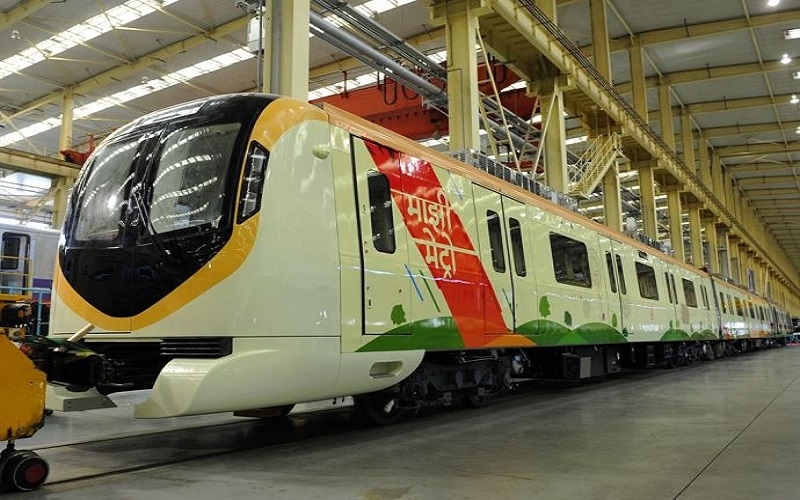
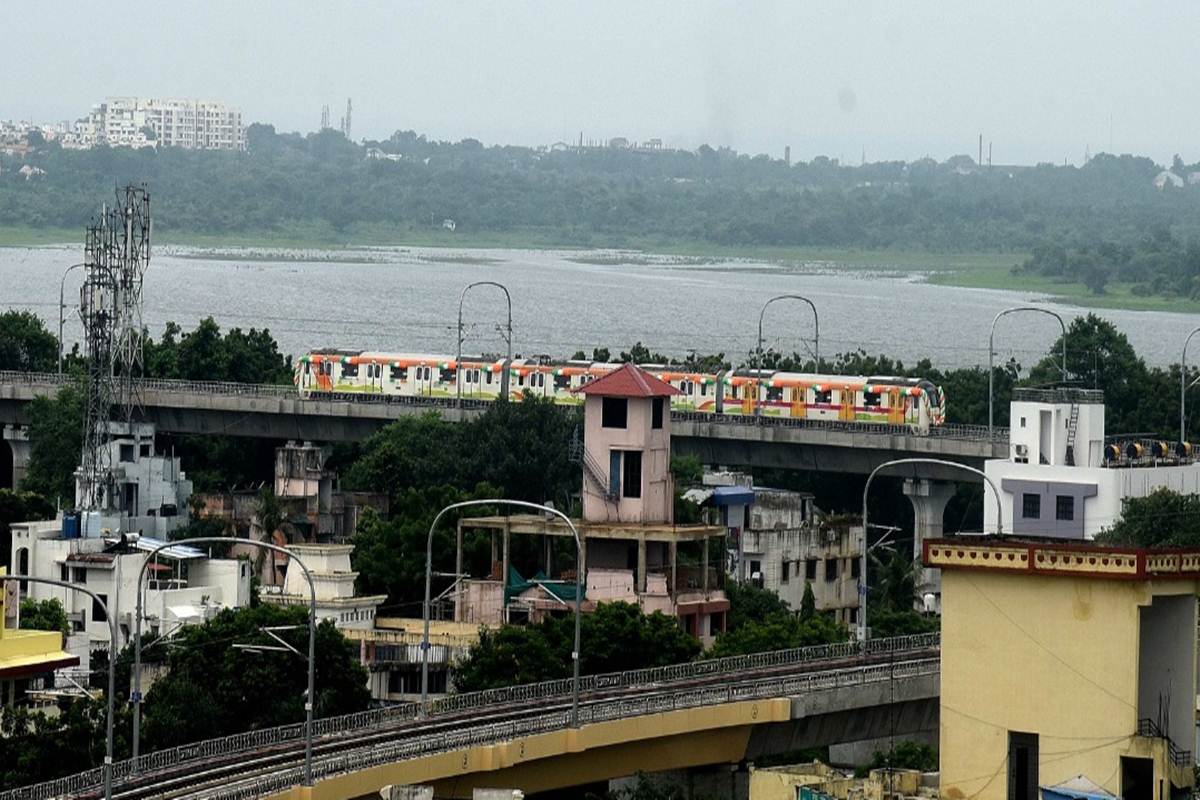
On the second day, the Aqua Line of Mahametro’s Reach III, inaugurated a day ago by state chief minister Uddhav Thackeray, witnessed an overwhelming response from the Nagpurians with an 81 percent increase in the ridership between Lokmanyanagar and Sitabuldi.

The Maha metro authorities had made Nagpurians wait 144 days before opening the facility for them because senior politicians were unavailable before it was flagged off by the Thackeray scion. Despite having only a half-day run between 2 pm and 8 pm, on the first day itself Mahametro had collected Rs27,492 with 1,659 people using the city’s most ambitious urban mass transit system, which is expected to be fully operational by the end of this year linking the east-west corridors and also the north-south.

On the second day, Mahametro continued to receive encouraging response from Nagpurians with about 3,000 ridership earning some Rs50,000 revenue.

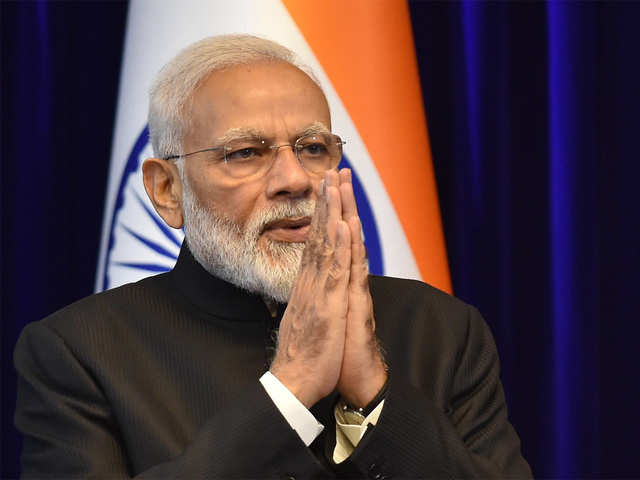
Mahametro’s first commercial run on the Orange route on March 7, last year, after it was inaugurated by Prime Minister Narendra Modi via video-link, was also a major draw as Nagpurians were attracted by the facility that was thrown open to them after much media hype and debate about its beginning.

In an official statement, Mahametro reported that on the first day (March 7), when a Rs1.55 lakh revenue was generated on the train’s maiden run from Sitabuldi interchange to Khapri, it had got 11,000 ridership.

Mahametro’s managing director Brijesh Dixit shared the Nagpurians motivating response to Mahametro on January 26 this year, when there were over 21,000 riders on a singe day on the Orange route. “Globally, metro rider ship has a pattern of slowly increasing. Even the Delhi metro witnessed a rise from two lakhs riding in the initial years to 60 lakhs now after it’s the 18-year journey. So, also we expect and see a similar trend here too, “Dixit said. He added that more numbers are attracting people to the metro nowadays, which will certainly increase.

Dixit said all necessary facilities are in place for a smooth trip in the subway, and more will come as the ridership rises. “We have adequate parking spaces at all the metro stations along which there are also e-rickshaw facilities as well as sharing bike to help connect to the last mile,” Dixit said. “At various stations, we’ve made outstanding pickup and drop-off points,” he said. “We also have a Memorandum of Understanding with a company in place for an electric bike and would be launched shortly,” he said.

Nagpur gears for ‘ Lourd Mata Mahostav ‘

To mark the 128th anniversary of Lourd Mata Mandir, the annual festival will be held in Lourd Mata Grotto, Seminary Hills, Nagpur, on Sunday 9 February 2020. The feast, commonly known as Lourd Mata Mahostav, will begin at 5:30 p.m. on 30 January 2020.

In the run-up to the annual feast, there will be nine days of Novena prayers and Holy Mass at 6:30 a.m. and 5:30 p.m. every day between 31 January and 8 February. Group of people would also pray for the various needs of the people from 10 a.m. to 1 p.m. The key day of the feast, i.e. Feb 9, Holy Mass will be celebrated in different languages from early morning. At 6.30 a.m. there will be Mass in English, at 7.30 a.m. Mass in Konkani, 8.45 a.m. Mass in Marathi, 10.00 a.m. Mass in Telugu, 11.15 a.m. Mass in Tamil, 12.30 p.m. Mass in Malyalam, 2.00 p.m. Rosary followed by Eucharistic Adoration and Prayer in the afternoon at 2.45 p.m.

The Solemn Eucharist is going to be at 4 p.m. After the Mass, the candle-light procession bearing the statue of Mother Mary will be observed. The Archbishop of Nagpur, Most Reverend Dr. Elias Gonsalves, and many priests will celebrate at Holy Mass. ‘ Preeti Bhoj’ will be given to all the devotees who have come from far and far to seek the blessing of Lourd Mata. Citizens from Maharashtra, Madhya Pradesh, Chhattisgarh, Odisha, Assam, Delhi and the rest of the world flock to the Grotto with full faith and devotion. Thousands of people are expected to join the feast this year.

Nagpur Maha Metro will open the first segment of the Aqua Line from Lokmannya Nagar to Sitabuldi.

Maharashtra Metro Rail Corporation (Maha-Metro) started trading on the first segment of Nagpur Metro Aqua Line between Lokmannya Nagar Metro Station and Sitabuldi Interchange today, Tuesday, January 29.

Maharashtra Chief Minister Uddhav Thackeray and Minister of State for Housing & Urban Affairs, Civil Aviation, Commerce & Industry Hardeep Singh Puri have departed the first 11-km section train with 6 metro stations between Lokmannya Nagar Metro Station and Sitabuldi Interchange today via a video link.

Union Minister for Road Transport, Highways and Minister for Micro, Small and Medium Enterprises (MSME) Nitin Gadkari; Minister for Urban Development and Public Works (Public Corporation) Maharashtra Eknath Shinde; Secretary, Ministry of Housing and Urban Affairs of the Union, Durga Shankar Mishra, Anil Deshmukh, Dr. Nitin Raut, Sunil Kedar, Mayor Sandip Joshi, Dr. Vikas Mahatme and Krupal Tumane, all Members

Two-thirds of Nagpur Metro will become operational With the completion of this 11 km long section of the Aqua Line, a total of 24.5 km of the Nagpur Metro Rail network has now become available, accounting for about two-thirds of the total Phase I network of the Nagpur Metro Rail project. On 7 March 2019, Prime Minister Narendra Modi inaugurated the 13.5 km segment of the Orange Line.

The 11 km section of the Reach III Aqua Line, which opened today, has six operational stations, namely Lokmanya Nagar, Bansi Nagar, Vasudev Nagar, Rachana Ring Road, Subhash Nagar, Ambazari Lake View, LAD Square, Shankar Nagar, Institute of Engineers, Jhansi Rani Square and finally Sitabuldi Interchange. The other five stations are expected to open in April 2020, according to the press release.

Line a Big Boost to the City The opening of the Aqua Line would give a major boost to academic institutions, industrial areas, residential colonies, among others. It will also provide significant links for residents of these areas to the north-south areas of the city, including but not limited to railway stations, the airport, interstate and intercity bus stations.

20 minutes of Metro journeys in just over 

Given the importance of places like Sitabuldi, Jhansi Rani Square, Ramdaspeth, Dharampeth, Hingna Road, Subhash Nagar, Vasudev Nagar, Lokmanya Nagar to name a few, and traffic congestion, the journey between Lokmanya Nagar and Sitabuldi currently takes more than 45 minutes.

Nagpur Metro is going to reduce this time significantly by more than half. You can move between these two places in just 20 minutes, and you just have to pay 20 for the same. It will also significantly reduce pollution and road fatalities in the city.

Commercial Services from 8 a.m. to 8 p.m.

Commercial services on Aqua Line between Lokmanya Nagar Metro Station and Sitabuldi Interchange will begin at 2 p.m. today and continue until 8 p.m. Subsequently, commuters can use regular Metro Train services every day from 8 a.m. to 8 p.m. Train services are available every 30 minutes.

PM Narendra Modi will open the Aqua line of Nagpur Metro on 28 January

On January 28, Prime Minister Narendra Modi will inaugurate Aqua-Line’s new Metro route via video conference.Aqua-Line phase 1 will cover all stops from Lokmanya Nagar to Sitabuldi. This 11 km long metro line. The Premier laid the foundation stone for the Aqua Metro project in 2014. He had previously inaugurated Orange line, which was running from Khapri to Sitabudli.

Nagpur Metro will open the Lokmanya Nagar-Sitabuldi segment on January 28th.

Nagpur, India : The Maharashtra Metro Rail Corporation (Maha Metro) today announced that the Metro train service between the Lokmanya Nagar-Sitabuldi Interchange portion of the Aqua Line will be scheduled for 10.15 a.m. on 28 January 2020.

Maharashtra Chief Minister Uddhav Thackeray, Chief Minister of Maharashtra (via video link) and Union Minister of State (Independent Charge) for Housing & Urban Affairs, Civil Aviation, Commerce & Industry Hardeep Singh Puri will be launching the first metro train via video link. Union Minister for Road Transport, Highways and Minister for Micro, Small and Medium Enterprises (MSME), Nitin Gadkari; Secretary for Housing and Urban Affairs (MoHUA), Durga Shankar Mishra; Minister for Urban Development and Public Works (Public Enterprise), Eknath Shinde; Home Secretary, Anil Deshmukh; Minister for Power & District Guardian, Dr Nitin Raut; Animal Husbandry, Dairy D.

The Aqua Line runs from Prajapati Nagar to Lokmanya Nagar on the east-west corridor of the Nagpur Metro Rail network. The Lokmanya Nagar-Sitabuldi Interchange section of Reach III will cover a distance of 11 km with 6 metro stations. The stations to be opened to the public are Lokmanya Nagar, Bansi Nagar, Vasudev Nagar, Rachana Ring Road, Subhash Nagar, Ambazari Lake View, LAD Square, Shankar Nagar, Institute of Engineers, Jhansi Rani Square and Sitabuldi Interchange. The Commissioner for Railway Safety (CMRS) has already given a safety certificate for commercial operations for this period of time.

This section will connect academic institutions, industrial areas and other high-density residential colonies. Dr Brijesh Dixit, Managing Director of Maha Metro, urged people to attend the event in large numbers.

13.5 km out of 22.29 km of the North-South Corridor (Orange Line) opened to the public in March last year. Metro trains operate on 11 metro stations between Sitabulldi Interchange and Kahpari.

139 Trees which are likely to be cut for Smart City roads | Nagpur updates

Smart City Project Special purpose vehicle Nagpur Smart and Sustainable City Development Corporation Limited (NSSCDCL) has sought permission to cut down 139 trees in the Smart City Project area for the construction of five roads.

The tree officer of Nagpur Municipal Corporation (NMC) released a public notice on Friday inviting suggestions and objections to the application of NSSCDCL even though trees can not be cut and must be transplanted for road works in compliance with the Maharashtra (Urban Areas) Trees Conservation Act, 1975.

According to the note, 68 trees for road proposed from Saduru Mill, Navin Nagar to Bhavani Hospital in Pardi, 33 trees for road from Shree Bhavani Mata Mandir entrance gate, Punapur to Bharatwada road, 29 trees for Bhandara national highway to Punapur road, 6 trees for Bharatwada road to Navkanya Nagar and 3 trees for road towards Navkanya Nagar will be cut down.

The NMC is constructing 52 km of long roads in the Smart City Project area of East Nagpur covering Pardi, Punapur, Bharatwada and Bhandewadi. The roads are being developed under the principle of tenderSURE in which NSSCDCL will build roads along with all types of facilities such as street light, stormwater drain, drainage network, footpath, road divider, cable laying conduit, cycling track, etc. at the cost of around Rs650 Crore.

CM Uddhav Thackeray, Ministers of the Union Nitin Gadkari & Hardeep Singh Puri to Kick Off Maha Aqua Line on 28 January

Maha Metro Aqua Line services between Lokmanya Nagar Metro Station and Sitabuldi Interchange will be announced by Shri Uddhav Thackeray, Chief Minister of Maharashtra and Shri Hardeep Singh Puri, Union Minister of State (Independent Charge) for Housing & Urban Affairs, Civil Aviation, Commerce & Industry on 28 January 2020 at 10.15 a.m.

At the event to be held at Subhash Nagar Metro Station, Hingna Hill, Shri Nitin Gadkari, Union Minister for Road Transport, Highways and Minister for Micro, Small and Medium Enterprises (MSME), will attend.

On that day, Shri Eknath Shinde, Minister of Urban Development and Public Works (Public Undertaking), Shri Anil Deshmukh, Minister of Home Affairs, Dr Nitin Raut, Minister of Power & District Guardian, Shri Sunil Kedar, Minister of Animal Husbandry, Minister of Dairy Production, Minister of Sports & Youth Welfare, all from the Maharashtra Government will be prominently present.

On this occasion, Shri Sandip Joshi, Mayor of the City, Dr Vikas Mahatme, Member of Parliament (Rajya Sabha), Shri Krupal Tumane, Member of Parliament (Ramtek), and Shri Devendra Fadnavis, former Chief Minister and Leader of the Opposition (Maharashtra Legislative Assembly). Shri Nago Ganar, Shri Prakash Gajbhiye, Prof. Jogendra Kawade, Prof. Anil Sole, Shri Girish Vyas all of MLC, Shri Krishna Khopde (Nagpur East), Shri Vikas Kumbhare (Nagpur Central), Shri Mohan Mate (Nagpur South), Shri Samir Meghe (Hingna), and Shri Vikas Thakre (Nagpur West) all of MLA will be prominently present.

The event will also be graced by Shri Durga Shankar Mishra, Ministry of Housing and Urban Affairs of the Union (MoHUA) Maha Metro MD Dr. Brijesh Dixit urged many people to attend the event. The Aqua Line runs from Prajapati Nagar to Lokmanya Nagar Metro Stations on the East-West Corridor. Of this, 11 km long line to be flagged off in Reach-III includes 11 stations, of which 6 are ready for operation including Sitabuldi Interchange. Lokmanya Nagar, Bansi Nagar, Vasudev Nagar, Rachana Ring Road, Subhash Nagar, Ambazari Lake View, LAD Square, Shankar Nagar, Institute of Engineers, Jhansi Rani Square and finally Sitabuldi Interchange are the stations located in the Reach-III.

Of these, six Metro Stations–Lokmanya Nagar, Vasudev Nagar, Subhash Nagar, Engineering Institute, Jhansi Rani Square, and Sitabuldi Interchange are ready for passenger services to open. Due to the proximity of water bodies-Ambazari Lake, Gandhi Sagar and Nag River to the Metro alignment, the Aqua Line is so-called. Aqua Line’s opening would give a major boost to academic institutions, industrial areas, residential colonies, and others on this line.

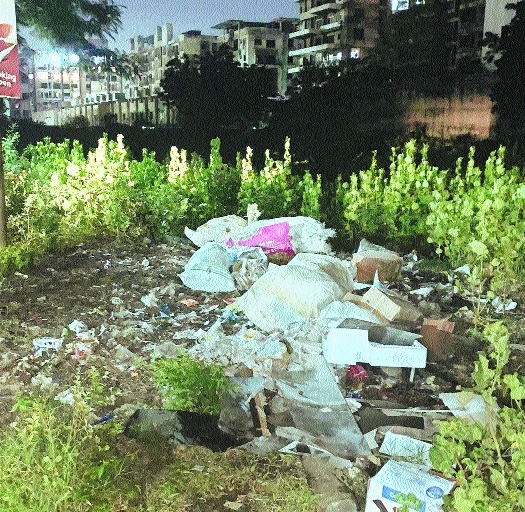
Garbage on open plots: NMC to fine owners, auction properties

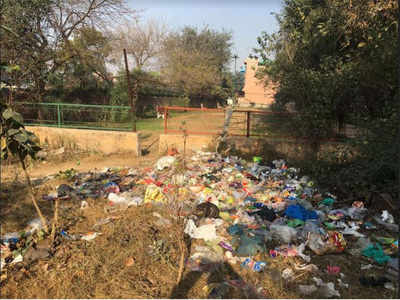
Nagpur: owners of vacant plots in Nagpur Municipal Corporation (NMC) will be fined if they do not stop people from littering their property. The health department of NMC has proposed to charge such owners for the removal of garbage of Rs50 per sq more.


In the proposal submitted to the Standing Committee, the Department also requested that the auctioning of such properties should the owners fail to keep the premises clean.

The Health Department prepared the proposal after Mayor Sandip Joshi had received complaints from several residents about the serious health risks posed by open plots due to the accumulation of garbage and water stagnation for many years.

The proposal states that if the garbage is found on any open plot, the department would issue a notice to clear it within two days. If the owner has not complied with the notification, the costs involved in clearing the litter will be recovered from the defaulting owners, the proposal stated. If the owner fails to pay the costs incurred and to stop the dumping of the garbage on his property, the NMC will auction those properties under the relevant sections of the Maharashtra Municipal Corporation Act.

In the past, the corporation had asked the owners of open plots to remove bushes, garbage, trash and fences. Corporators like Abha Pande had raised the issue at a meeting of the General Body on several occasions.

In 2014, the NMC passed strict rules for the dumping, collection and destruction of waste under the open plot control rule. It had a provision to levy a fine of up to Rs5,000 or to file a police complaint against the owners of the plot. By-laws for the Dumping, Collection and Destruction of Waste on the Open Plot Control Rule 2014 were forwarded to the State Government for approval on 15 March 2016. However, they have not yet been cleared, “said a senior NMC health (health) officer.

“As a result, we could not take punitive measures against the polluters,” the official said.

Joshi recently directed the Assistant Municipal Commissioners of all 10 zones and the Property Tax Department to identify private and government plots to be used as garbage and warned their owners. Before removing it, the officials will take a photograph of the garbage and use it as evidence.

OTHER PROPOSALS* The medical department of NMC (medicine) has sought the appointment of 29 doctors, including one physician, two gynecologists, 11 male physicians, two homeopaths, eight ayurvedic physicians on contract basis for their clinics. The Department will require Rs93.60 lakh* Sports and Cultural Department has requested Rs46.35 lakh to organize three-day Vaishakh Din Mahotsav to mark the birth of Gautam Buddha* Garden Department seeks Rs31.32 lakh and Rs24.82 lakh for garden development in Yogeshwar Gruh Nirman Housing Society and Vaishno Devi Nagar, respectively* General Administration Department has sought nod to NMC spends more than Rs7.30 crore per year on 300 security guards in its various establishments and offices.

3 Months on, Mantralaya Metro Phase II program pending

In January 2019, Nagpur Metro’s Phase II was cleared by the state cabinet and it was expected to be approved by the Union cabinet in March 2019. Yet the plan has yet to hit the cabinet of the Union.

An official at MahaMetro said the reason for the delay was a change in the Union Ministry for Housing and Urban Affairs (MoHUA) standards. “After a detailed study some months ago, MoHUA determined that Metro light coaches should be used for cities of tier II and tier III. This is because Metros do not have a lot of ridership in middle-sized areas. MoHUA asked us to update the Nagpur Metro Phase II plan in compliance with new norms, “he added.

Light Metro coaches are less than a standard Metro foot long. Instead of 1000, they will carry 750 passengers. These coaches are capable of carrying 24,000 passengers per hour, while the capacity of regular Metro is 30,000 passengers per hour. Their weight is 12 tonnes, instead of the usual 16 tonnes. Accordingly, they cost less.

“We told MoHUA officials that we intended to use the current Metro’s coaches for four corridors— Automotive Square to Kamptee, Prajapati Nagar to Nagar Transport, Khapri to Butibori and Lokmanya Nagar to Hingna Tehsil office. They asked us to spur on to Dattawadi using Metro light coaches for Wasudeo Nagar. We revised our project accordingly and submitted it to the Department of State Urban Development. It’s been there for three months. MoHUA officials have ensured the proposal will be clear as soon as it is received from the department, “the official said.

The cost of Phase II as per the comprehensive project report (DPR) was Rs11,612 Crore. Now, Rs650 Crore has high it to Rs10,962 Crore.

Some analysts believe Phase I Metro ridership won’t rise dramatically until Phase II is operational. This is because people travel regularly via public transport to places linked by Phase II, such as Kamptee and Butibori. Instead of buses, they’ll use Metro. Phase I was conceived thinking Mihan is going to employ thousands of people. Mihan has yet to take off though.

Devendra Fadnavis, the BJP leader was chief minister until September. One might have expected speedy Mantralaya clearance of Phase II when he was in the helm. Now, Eknath Shinde of Shiv Sena is the minister of urban development and local ministers will have to press him to clear the project immediately.

Maha Metro is now seeking help from the State to access feeder services

Officials at the MahaMetro are concerned about the number of passengers in the regular subway who continue to run on the specific routes. We believe that the lack of feeder services continually hinders the number of riders who keep them away from taking up the metro trips. We say we want to introduce the feeder facilities, but face too many obstacles in their way to keep them from doing the same.

The official speaking of the same claimed they had prepared a detailed report on the same and submitted the same to the state to seek their intervention to get the same thing. They said the parking space had to be taken from others and the Maha Metro was unable to allocate it on its own. All they can do is provide parking at their place for 3 to 4 rickshaws but when they get down to the station they would need more to bring the commuters.

They said we need at least 15 to 20 rickshaws to take the people to their preferred locations so only one could see the increase in the number of daily commuters. Citizens may enter the maha metro station by themselves with their vehicles but they would need an auto-rickshaw or a bus that comes under the feeder services to reach their destination. With the absence of the same, getting a greater number of commuters for the same would be rather difficult. Now, they have asked to allocate these services to the state.

Exit mobile version