Khindsi Dam Releases 25 Cusecs into Sur River, Nagpur and Bhandara on Alert

The administration released 25 cusecs of water from Khindsi Dam into the Sur River on May 15, 2026, responding to a sudden surge in water demand from local bodies in Nagpur and Bhandara districts. The Khindsi Dam water release Nagpur decision was taken after several gram panchayats and nagar panchayats along the Sur River submitted urgent water requests to the authorities.

Why Was Water Released from Khindsi Dam?

Rising temperatures across Vidarbha have significantly increased water consumption in villages and small towns along the Sur River. Several local bodies in Nagpur and Bhandara districts submitted urgent requests to the Pench Irrigation Sub-Division office, citing a sharp increase in daily water demand.

Acting swiftly on these requests, the Sub-Divisional Engineer of the Pench Irrigation Sub-Division office ordered the controlled release of 25 cusecs of water from Khindsi Dam into the Sur River channel at 4:00 PM on May 15, 2026.

What Is the Current Water Level at Khindsi Dam?

As of the time of release, the water level at Khindsi Dam stands at 314.95 metres. The live water storage in the reservoir is recorded at 68.956 million cubic metres, which accounts for 66.88 per cent of the dam’s total storage capacity. Authorities confirmed that the dam’s water level is stable and within normal limits. The situation is being continuously monitored by the irrigation department.

Public Safety Alert Issued Along the Sur River

With the sudden increase in water flow, the administration has issued a public safety advisory for all villages and settlements located along the banks of the Sur River. Residents have been asked to stay away from the river banks and maintain a safe distance from the waterway until the released water flows through completely.

Safety instructions have also been passed down to village-level officials and gram sevaks to ensure that the advisory reaches every household situated near the river.

Authorities have warned that any negligence near a river with increased water flow can be dangerous, especially for children and cattle. Citizens are urged to take the advisory seriously.

Summer Water Demand Driving Releases

The water release reflects the growing pressure on reservoir-based water supply systems across the Nagpur division during the summer months. With groundwater levels falling and bore wells running dry in several villages, gram panchayats are increasingly turning to canal and river-based supply lines to meet daily drinking water needs.

The irrigation department has indicated that water levels and demand patterns will continue to be closely watched in the coming weeks. Further releases from Khindsi Dam may be made if demand from downstream local bodies continues to rise before the onset of the monsoon season.

Nagpur Gets Three New DCPs: Annapurna Singh, Kumar Chinta, and Aditya Dharmakhelkar Transferred to the City

The Maharashtra government has carried out a major IPS reshuffle across the state, bringing significant changes to the Nagpur Police Commissionerate. As part of this Nagpur new DCP transfer 2026, three senior officers have been posted to Nagpur City as Deputy Commissioners of Police. The reshuffle also includes a key transfer out of Nagpur and a tenure extension for one existing officer.

Three New DCPs Posted to Nagpur City

Aditya Dharmakhelkar, who was serving as Additional SP in Nashik Rural, has been appointed as DCP in Nagpur City. Kumar Chinta, who was SP Yavatmal, has been transferred to Nagpur as DCP. Annapurna Singh, Additional SP at Chhatrapati Sambhajinagar Rural, has also been appointed as DCP in Nagpur City.

The three new officers bring diverse field experience from across Maharashtra. Their posting to Nagpur is expected to strengthen the city’s law enforcement setup ahead of the monsoon season.

DCP Traffic Lohit Matani Transferred Out

One of the major outgoing changes is the transfer of DCP Traffic Lohit Matani, who has been posted to the Highway Police, Nagpur. Matani was known for his work in managing urban traffic in the city and had served in the Traffic Department for a notable period.

Rahul Madne Gets One-Year Tenure Extension

The Maharashtra government has extended the tenure of DCP Zone-3 Rahul Madne by one year. The decision is seen as a move to ensure continuity in policing and law-and-order management in his zone. Such extensions are granted when the government wants to maintain consistency in sensitive or high-priority areas.

Nityanand Jha Moves to Yavatmal as SP

DCP Zone-2 Nityanand Jha has been transferred from Nagpur and appointed as Superintendent of Police in Yavatmal. Jha’s departure creates one of the vacancies that is being filled as part of this round of transfers.

Anti-Narcotics Wing Gets a New Officer Too

Officer Yashwant Solanke, who was serving in Highway Security Nagpur, has been posted as Additional SP in the Anti-Narcotics Squad, Nagpur. This posting signals the government’s continued focus on strengthening anti-drug operations in the Nagpur region.

The fresh postings bring experienced officers from different parts of Maharashtra into Nagpur at a time when the city is managing increased security requirements. With three new DCPs joining simultaneously, the Nagpur Police Commissionerate will see a significant change in its senior leadership structure across multiple zones.

The transfers are part of a broader Maharashtra-wide IPS reshuffle that has seen several senior officers moved across districts and departments.

👉 Also Read: Latest Nagpur Police and Crime News – NagpurUpdates.in

Transfer Summary

Officer Previous Posting New Posting
Aditya Dharmakhelkar Additional SP, Nashik Rural DCP, Nagpur City
Kumar Chinta SP, Yavatmal DCP, Nagpur City
Annapurna Singh Additional SP, C. Sambhajinagar Rural DCP, Nagpur City
Lohit Matani DCP Traffic, Nagpur Highway Police, Nagpur
Nityanand Jha DCP Zone-2, Nagpur SP, Yavatmal
Rahul Madne DCP Zone-3, Nagpur One-year extension granted
Yashwant Solanke Highway Security, Nagpur Additional SP, Anti-Narcotics Squad, Nagpur

Stay updated with the latest Nagpur news at NagpurUpdates.in

All 24 Nagpur Metro EV Charging Stations Are Finally Operational — But the Real Challenge Is Getting People to Use Them

Published: May 15, 2026 | Category: Nagpur Local | Nagpur Metro EV charging stations | By: Nagpur Updates Desk


They are working. All of them. Finally.

After years of rodent damage, vandalism, faulty SIM connectivity, and repeatedly tripped emergency switches, all 24 fast EV chargers installed by Energy Efficiency Services Limited (EESL) at Nagpur Metro stations are now fully commissioned and operational. Officials confirmed this on Wednesday.

But here is the uncomfortable truth that officials also acknowledged: the chargers are working. However, very few people are actually using them.


Six Years, Multiple Problems

The EV charging network at Nagpur Metro was installed in 2020 under a 10-year agreement between EESL and NMRCL, valid until 2030. Under this deal, EESL bears all procurement, operation, and maintenance costs. NMRCL simply provides space at Metro stations.

On paper, it looked like a clean, efficient arrangement. In practice, keeping 24 chargers functional across open public spaces across an entire city proved far harder than anyone anticipated.

The problems came from multiple directions — and kept coming.

Rodents damaged cables at stations located near open drainage areas. Despite rodent protection measures being put in place at the time of commissioning in 2020, they proved insufficient over time. “Continuous monitoring of open public spaces remains a practical challenge,” officials acknowledged.

Vandalism damaged display units at multiple stations across the network.

Emergency stop buttons were accidentally triggered repeatedly — each incident requiring manual intervention to restore the charger to service.

SIM connectivity failures may have been the most systemic problem. The chargers were originally configured with 2G SIM-based connectivity — even as 4G became the national standard for modern connected infrastructure. This mismatch caused recurring communication errors and made live availability data on EESL’s portal completely unreliable. Users checking the portal to find a working charger were often getting incorrect information.

A software fix is currently under testing. It is expected to stabilise the portal by June 1, 2026.


What “Fully Operational” Actually Means

As of May 15, 2026, all 24 chargers are commissioned and functional. That is genuinely good news.

However, “fully operational” comes with an important asterisk. The 2G to 4G connectivity upgrade is still in progress. Until the software fix is live on June 1, the real-time availability portal may still show unreliable data. So while the physical chargers are working, users checking availability online should verify at the station itself — at least until the portal fix is confirmed complete.


The Bigger Problem: Nobody Is Charging Here

Fixing the chargers turned out to be the easier half of the challenge.

Officials candidly admitted that charging demand at Metro stations has remained significantly lower than initial projections. The 24 chargers are now working — but the question is whether Nagpur’s EV users will actually come to use them.

The reason for low usage is straightforward. Most private EV owners prefer home charging. If you own an electric scooter or car and have a charger at home, there is little reason to go to a Metro station to charge. You plug in at night, wake up to a full battery, and never think about public charging at all.

The actual public charging demand in Nagpur — and across India — largely comes from a very specific segment: commercial fleet operators. App-based cab drivers running high daily mileage on electric vehicles genuinely need mid-day top-ups. They cannot always wait for a home charge at the end of the day.


The B2B Solution: Ola, Uber and Fleet Operators

EESL has identified this gap and is moving to address it.

The organisation is now exploring business-to-business (B2B) partnerships with fleet operators — specifically Ola, Uber, and other EV taxi services — to drive utilisation at Metro stations (Nagpur Metro EV charging stations). This model has already been tested in Delhi, where dedicated fleet charging agreements have improved charger utilisation rates significantly.

The logic is simple. A fleet of 50 Ola electric cabs that all need a mid-day charge creates predictable, sustained demand. If EESL can sign agreements with fleet operators to designate specific Metro stations as their preferred charging points, utilisation goes up — and the business case for maintaining the infrastructure improves.

A market survey is also underway to better understand Nagpur’s specific local charging requirements. The agency conducting the study has not been publicly disclosed, but its findings are expected to guide future upgrades to the Metro charging network.


Maharashtra’s EV Ambitions and Nagpur’s Role

The stakes for getting this right are significant.

Under Maharashtra’s Electric Vehicle Policy, Nagpur has been identified as one of six priority cities in the state’s push to electrify 40% of Maharashtra’s public transport fleet. That is an ambitious, high-stakes target — and the Metro charging network is meant to be a key part of the infrastructure that supports it.

If the network remains underutilised — chargers working but empty — it will be difficult to argue for further investment in Metro-based EV infrastructure. However, if the B2B fleet model succeeds and utilisation improves, the 24-station network could become a genuine backbone of Nagpur’s EV ecosystem.

As officials put it, the fate of the Metro EV charging network may depend less on operational uptime and more on how effectively fleet demand aligns with its availability.


Infrastructure Ready (Nagpur Metro EV charging stations) — Demand Must Follow

The story of Nagpur Metro’s 24 EV charging stations is, in many ways, a microcosm of India’s broader EV infrastructure challenge.

Building the infrastructure is hard. Keeping it working is harder. But getting enough people to use it — consistently, reliably, in sufficient numbers — is the hardest challenge of all.

EESL and NMRCL have cleared the first two hurdles. The chargers are now working after years of setbacks. The June 1 software fix will address the connectivity problem. The B2B fleet outreach may address the utilisation problem.

This development fits into a broader picture of Nagpur building out its smart and green infrastructure. Just as the city is rolling out AI-powered IITMS traffic management at 32 junctions and upgrading Nagpur Metro to the One Nation One Card system, the EV charging network — when it reaches its potential — will be another pillar of a genuinely smarter Nagpur.

Whether that potential is realised will depend on the decisions made in the coming months — by EESL, by fleet operators, and ultimately by the EV users of Nagpur themselves.


Tags: Nagpur Metro, EV Charging, EESL, NMRCL, Electric Vehicles Nagpur, MahaMetro, Green Energy Nagpur, Nagpur Smart City, Nagpur Local News 2026

NMC Cleans Up Naik Talao and Plugs 38 Sewage Entry Points in Nagpur

The Nagpur Municipal Corporation (NMC) has taken a major step in the NMC Naik Talao cleanup Nagpur drive by identifying and plugging 38 sewage entry points that were directly draining into the lake. The civic body has also carried out a thorough cleaning of the water body as part of its ongoing effort to restore one of Nagpur’s oldest and most important urban lakes.

What NMC Did at Naik Talao

NMC workers conducted a detailed survey of the lake’s perimeter and identified 38 points where sewage lines were illegally or accidentally discharging untreated wastewater into Naik Talao. All 38 of these sewage outlets have now been plugged. In addition to blocking the sewage inflow, the civic body removed layers of silt, aquatic weeds including water hyacinth, and accumulated solid waste from the lake bed and surrounding areas.

The cleanup work was carried out under the supervision of NMC’s Engineering and Water Supply departments. Senior officials monitored the progress on-site to ensure that the work was completed to the required standard.

Why Naik Talao Matters for Nagpur

Naik Talao is one of the oldest natural lakes in Nagpur city. Beyond its historical and aesthetic value, the lake plays a critical role in maintaining the groundwater levels of the surrounding areas. Over the years, unchecked sewage discharge, encroachments, and dumping of solid waste had severely degraded the quality of water in the lake.

The unchecked growth of water hyacinth had become a major problem. Untreated sewage entering the lake fueled explosive growth of hyacinth, which choked fish populations and cut into the income of local fishermen who depend on the lake for their livelihood. Government of Maharashtra

Part of a Long-Running Rejuvenation Project

The current cleanup is part of a larger, multi-phase rejuvenation project for Naik Talao being carried out under the Central Government’s AMRUT 2.0 scheme. The first phase of the project, which is now complete, included desilting of Naik Talao, deepening of the lake, and construction of a retaining wall. The Live Nagpur

The proposed beautification work under Phase 2 was reviewed by NMC Municipal Commissioner Dr. Abhijit Chaudhari, along with MLA Pravin Datke, Superintending Engineer Dr. Shweta Banerjee, and VNIT experts Dr. Avinash Vasudevan and Dr. Amit Padade. The Live Nagpur

During the inspection, Dr. Vasudevan informed the Commissioner that a detailed survey of probable seepage sources into Naik Talao would be conducted and necessary solutions implemented. The Live Nagpur

The Sewage Problem That Kept Coming Back

Sewage discharge has been the single biggest threat to Naik Talao for many years. A key concern flagged during earlier inspections was the small-capacity storm water and sewer line feeding into the lake. Each monsoon, the line would burst, pushing sewage into the lake and raising nitrogen levels — conditions that allow water hyacinth to thrive. Government of Maharashtra

Plugging all 38 sewage points is therefore a critical milestone. Without stopping the sewage inflow, any cleaning effort would be undone within a single monsoon season.

Fishermen Welcome the Move

Local fishermen who depend on Naik Talao for their daily income have welcomed the NMC’s latest action. Fishermen had earlier offered to remove the weeds themselves, noting their daily familiarity with the water. The NMC Commissioner had welcomed the idea, saying it would form part of a larger ecological revival strategy. Government of Maharashtra

With the sewage points now plugged and the lake surface cleared, conditions are expected to improve significantly before the monsoon arrives.

What Comes Next

NMC has directed engineers to ensure that the plugged sewage points are reinforced before the onset of the monsoon season. A time-bound plan to expand and restore the sewer line network around the lake is also being prepared. VNIT experts continue to monitor the lake’s water quality and ecological health as Phase 2 of the project progresses.

👉 Also Read: NMC Lake Rejuvenation Projects in Nagpur – NagpurUpdates.in

नागपुर के आसमान पर चमका 1,200 किलो का अशोक स्तंभ — अशोक चौक रोटरी को मिला राष्ट्रीय गौरव का मुकुट

नागपुर के आसमान पर एक नया राष्ट्रीय प्रतीक उभर आया है। NHAI ने 1,200 किलो का विशाल अशोक स्तंभ — भारत का राष्ट्रीय प्रतीक — अशोक चौक की ऊंची रोटरी पर स्थापित किया है। यह भव्य प्रतिकृति 22 मीटर ऊंचे केंद्रीय पाइलन के शीर्ष पर विराजमान है। यह दूर से दिखता है। इसे पहचानना आसान है। और अब यह नागपुर का सबसे नया — और सबसे देशभक्तिपूर्ण — शहरी पहचान चिह्न बन गया है।

इस अशोक स्तंभ को नागपुर के ही कारीगरों ने तैयार किया है। इसे भारी क्रेनों की मदद से ऊपर उठाकर स्थापित किया गया। और जब फ्लाईओवर कॉरिडोर का उद्घाटन होगा, तो इसे आधिकारिक रूप से अनावरण किया जाएगा।


संरचना: इंजीनियरिंग और राष्ट्रीय गर्व का संगम

इस स्थापना के पीछे के आंकड़े प्रभावशाली हैं।

अशोक स्तंभ — भारत के राष्ट्रीय प्रतीक की प्रतिकृति जिसमें चार सिंह हैं — लगभग 3.8 मीटर ऊंचा है। इसका आधार लगभग 1.5 मीटर व्यास का है। इसे फाइबर रिइनफोर्स्ड पॉलिमर (FRP) से बनाया गया है। यह सामग्री हल्की लेकिन बेहद मजबूत होती है। यह ऊंचे सड़क ढांचे की मौसम और कंपन स्थितियों को आसानी से झेल सकती है।

रोटरी के केंद्र में 22 मीटर ऊंचा पाइलन खड़ा है। इसका व्यास लगभग एक मीटर है। इसी पाइलन के शीर्ष पर अशोक स्तंभ विराजमान है। इससे पूरी संरचना की दृश्य ऊंचाई आसपास के सड़क ढांचे से काफी ऊपर हो जाती है।

पूरी स्थापना भारी क्रेनों की मदद से की गई। ऊंचाई, वजन और प्रतीक की नाजुक मूर्तिकला को देखते हुए यह एक सटीक इंजीनियरिंग ऑपरेशन था।


अशोक चक्र डिजाइन: ऊपर से दिखने पर अद्भुत नजारा

अशोक स्तंभ इस रोटरी का एकमात्र उल्लेखनीय दृश्य तत्व नहीं है। रोटरी को ही भारत के राष्ट्रीय प्रतीकों को श्रद्धांजलि के रूप में डिजाइन किया गया है।

ऊपर से — हवाई दृष्टिकोण से — रोटरी अशोक चक्र जैसी दिखती है। यह केंद्रीय पाइलन से बाहर की ओर फैले 24 तीली जैसे स्टील केबलों के जरिए हासिल किया गया है। जैसे भारत के राष्ट्रीय ध्वज पर अशोक चक्र में 24 तीलियां हैं, वैसे ही रोटरी की केबल संरचना इस प्रतीकवाद को एक विशाल नागरिक पैमाने पर दर्शाती है।

परिणाम यह है कि यह रोटरी सिर्फ एक यातायात इंजीनियरिंग संरचना नहीं — यह नागरिक कला का एक नमूना है जो हर कोण से भारत की विरासत को श्रद्धांजलि देती है। जमीन से आप अशोक स्तंभ को गर्व से ऊंचा खड़ा देखते हैं। ऊपर से आप अशोक चक्र को बाहर की ओर फैलते देखते हैं।

अधिकारियों ने पुष्टि की है कि अशोक स्तंभ फिलहाल ढका हुआ है — फ्लाईओवर कॉरिडोर के उद्घाटन के करीब इसका औपचारिक अनावरण किया जाएगा। जब वह आवरण हटेगा, नागपुर को एक ऐसा मील का पत्थर मिलेगा जैसा पहले कभी नहीं देखा।


कहां है यह: इंदोरा–दीघोरी कॉरिडोर का दिल

अशोक चौक रोटरी कोई साधारण चौराहा नहीं है। यह ₹998 करोड़ के इंदोरा–दीघोरी फ्लाईओवर प्रोजेक्ट का केंद्रबिंदु है — नागपुर का दशकों में सबसे महत्वाकांक्षी सड़क बुनियादी ढांचा उपक्रम।

यह रोटरी 4 किलोमीटर लंबे कमाल स्क्वेयर–रेशमबाग एलिवेटेड कॉरिडोर का एक महत्वपूर्ण हिस्सा है। इस कॉरिडोर में दो प्रमुख फ्लाईओवर शामिल हैं:

  • कमाल स्क्वेयर से रेशमबाग स्क्वेयर — उत्तर नागपुर को चिकित्सा और सरकारी केंद्र से जोड़ने वाली लंबी भुजा
  • भांडे प्लॉट स्क्वेयर से दीघोरी — शहर के व्यस्त केंद्रीय क्षेत्रों को पूर्वी नागपुर से जोड़ना

चालू होने के बाद अशोक चौक रोटरी कई प्रवेश और निकास रैंप प्रदान करेगी — जो वाहनों को इन जगहों तक निर्बाध पहुंच देगी:

  • नंदनवन
  • गणेशपेठ बस स्टैंड
  • शासकीय मेडिकल कॉलेज एवं अस्पताल (GMCH/डागा अस्पताल)
  • रेशमबाग स्क्वेयर — कमाल स्क्वेयर से बिना रुकावट एलिवेटेड मूवमेंट के जरिए

नागपुर के कारीगरों का काम: स्थानीय गर्व, राष्ट्रीय प्रतीक

इस कहानी में एक विवरण पर विशेष ध्यान देने की जरूरत है।

1,200 किलो का अशोक स्तंभ — भारत के सबसे पवित्र राष्ट्रीय प्रतीक की प्रतिकृति — नागपुर के ही कारीगरों ने तैयार की है। यह किसी दूसरे शहर की आयातित संरचना या कारखाने में बनी प्रतिकृति नहीं है। यह नागपुर के ही कुशल शिल्पकारों का काम है।

यह तथ्य गहरा अर्थ रखता है। नागपुर के सबसे प्रमुख चौराहों में से एक पर ऊंचा खड़ा भारत का राष्ट्रीय प्रतीक, नागपुर के अपने लोगों के हाथों से आकार और जीवन पाया है। यह अत्यंत स्थानीय गर्व की बात है — जो शहर के शिल्पकारों को राष्ट्रीय महत्व की परियोजना से जोड़ती है।


नागपुर की दूसरी एलिवेटेड रोटरी — लेकिन पहली सच्ची पहचान

यह नागपुर की पहली एलिवेटेड रोटरी नहीं है। शहर में पारडी फ्लाईओवर प्रोजेक्ट के दौरान बनाई गई पांच भुजाओं वाली एलिवेटेड रोटरी पहले से मौजूद है।

हालांकि अशोक चौक रोटरी एक अलग श्रेणी में होगी। इसके संयोजन में शामिल हैं:

  • अशोक चक्र से प्रेरित 24-तीली केबल डिजाइन
  • 22 मीटर ऊंचा पाइलन
  • 1,200 किलो का अशोक स्तंभ इसके शीर्ष पर
  • नागपुर के सबसे व्यस्त चौराहों में से एक पर इसकी स्थिति
  • ₹998 करोड़ के इंदोरा–दीघोरी कॉरिडोर में इसका एकीकरण

यह सब मिलकर इस रोटरी को सिर्फ एक यातायात संरचना नहीं — बल्कि एक सच्चा शहरी मील का पत्थर बनाता है। यह आने वाले दशकों तक नागपुर की दृश्य पहचान को परिभाषित करेगा।


उभरते शहर के लिए उचित प्रतीक

अशोक चौक पर अशोक स्तंभ की स्थापना एक प्रतीकवाद रखती है जो इंजीनियरिंग से परे जाती है।

अशोक चौक का नाम सम्राट अशोक के नाम पर है — भारत के महानतम शासकों में से एक, जिन्होंने युद्ध त्यागकर धर्म, शांति और न्यायपूर्ण शासन का मार्ग अपनाया। अशोक स्तंभ — उनका सिंह स्तंभ — वही प्रतीक है जिसे आधुनिक भारत ने 1950 में गणतंत्र बनने पर अपना राष्ट्रीय प्रतीक चुना।

अपनी सबसे जटिल और महत्वाकांक्षी सड़क बुनियादी ढांचा परियोजना के दिल में — उसी सम्राट के नाम पर बने चौराहे पर — उस प्रतीक को स्थापित करना एक अर्थपूर्ण निर्णय है। यह प्राचीन विरासत को आधुनिक इंजीनियरिंग से जोड़ता है। यह राष्ट्रीय पहचान को स्थानीय गर्व से जोड़ता है।

नागपुर एक असाधारण परिवर्तन के बीच में है। ₹7,000 करोड़ के अंतरराष्ट्रीय हवाई अड्डे के आधुनिकीकरण से लेकर कोराडी में 162 फुट हनुमान प्रतिमा तक, शहर ऐसे मील के पत्थर बना रहा है जो पीढ़ियों तक इसकी पहचान को परिभाषित करेंगे।

अशोक चौक का अशोक स्तंभ उस सूची में सबसे नया — और शायद सबसे शक्तिशाली — जोड़ है।

नागपुर अपडेट्स इंदोरा–दीघोरी फ्लाईओवर उद्घाटन का पूर्ण कवरेज लाएगा — जिसमें अशोक स्तंभ का औपचारिक अनावरण भी शामिल होगा। जैसे ही तारीख की पुष्टि हो, हम आपको सबसे पहले बताएंगे!


Tags: अशोक चौक नागपुर, अशोक स्तंभ, NHAI नागपुर, राष्ट्रीय प्रतीक, इंदोरा दीघोरी फ्लाईओवर, नागपुर इन्फ्रास्ट्रक्चर, नागपुर लैंडमार्क, FRP संरचना, नागपुर स्थानीय खबर 2026

1,200 kg Ashoka Stambh Rises Over Nagpur Skyline — National Emblem Crowns the Ashok Square Rotary in a Historic First

Published: May 15, 2026 | Category: Nagpur Local | Ashoka Stambh Nagpur flyover | By: Nagpur Updates Desk


Nagpur has a new symbol on its skyline.

NHAI has installed a massive 1,200 kg Ashoka Stambh — India’s National Emblem — atop the elevated rotary at Ashok Square. The towering installation crowns a 22-metre-high vertical pylon at the heart of Nagpur’s most ambitious road infrastructure project. It is visible from a distance. It is unmistakable. And it is now Nagpur’s newest — and most patriotic — urban landmark.

The emblem was crafted by Nagpur’s own artisans. It was lifted into place using heavy cranes. And when the flyover corridor is inaugurated, it will be formally unveiled for the city to see in its full glory.


The Structure: Engineering Meets National Pride

The numbers behind this installation are impressive.

The Ashoka Stambh — a replica of India’s National Emblem featuring the iconic four lions — stands nearly 3.8 metres tall. Its base measures approximately 1.5 metres in diameter. It has been crafted using Fiber Reinforced Polymer (FRP) — a lightweight yet highly durable material that can withstand the weather and vibration conditions of an elevated road infrastructure environment.

At the heart of the rotary stands a 22-metre-high vertical pylon with a diameter of approximately one metre. It is from the top of this pylon that the Ashoka Stambh rises — making the total visible height of the centrepiece structure well above the surrounding road infrastructure.

The entire installation was lifted into position using heavy cranes — a precision engineering operation given the height, weight, and delicate sculptural nature of the emblem being placed.


The Ashok Chakra Design: A Bird’s Eye Marvel

The Ashoka Stambh is not the only remarkable visual element of this rotary. The rotary itself has been designed as a tribute to India’s national symbols.

When viewed from above — from a bird’s eye perspective or from aerial footage — the rotary is designed to resemble the Ashok Chakra. This is achieved through 24 spoke-like steel cables that radiate outward from the central pylon. Just as the Ashok Chakra on India’s national flag has 24 spokes, the rotary’s cable structure mirrors this symbolism at a monumental civic scale.

The result is a rotary that is not just a traffic engineering structure — it is a piece of civic art that pays homage to India’s heritage from every angle. From the ground, you see the Ashoka Stambh rising proudly. From above, you see the Ashok Chakra radiating outward. It is a 360-degree design statement.

Officials have confirmed that the Ashoka Stambh is currently kept covered — with a formal unveiling planned closer to the inauguration of the flyover corridor. When that covering comes off, Nagpur will have a landmark unlike anything it has seen before.


Where It Stands: The Heart of the Indora–Dighori Corridor

The Ashok Square rotary is not just any intersection. It is the centrepiece of the ₹998 crore Indora–Dighori Flyover Project — Nagpur’s most ambitious road infrastructure undertaking in decades.

The rotary forms a crucial component of the 4-km-long Kamal Square–Reshimbagh elevated corridor. This corridor includes two major flyovers:

  • Kamal Square to Reshimbagh Square — the longer arm connecting North Nagpur to the medical and government hub
  • Bhande Plot Square to Dighori — connecting the city’s busy central areas to East Nagpur

Once operational, the Ashok Square rotary will provide multiple entry and exit ramps — giving vehicles seamless access towards:

  • Nandanvan
  • Ganeshpeth Bus Stand
  • Government Medical College and Hospital (GMCH/Daga Hospital)
  • Reshimbagh Square — via uninterrupted elevated movement from Kamal Square

As we reported earlier, the Bhande Plot–Dighori section missed its April deadline and is now targeted for June 2026 completion. The Ashoka Stambh installation — a finishing touch on the rotary — signals that the project is genuinely in its final phase.


Made by Nagpur’s Own Artisans: Local Pride in a National Symbol

One detail in this story deserves special attention.

The 1,200 kg Ashoka Stambh — a replica of India’s most sacred national symbol — was sculpted by Nagpur’s own artisans. This is not an imported structure or a factory-produced replica from another city. It is the work of skilled craftspeople from Nagpur itself.

That fact carries deep meaning. India’s National Emblem, standing tall over one of Nagpur’s most prominent junctions, was given form and life by the hands of Nagpur’s own people. It is a point of immense local pride — one that connects the city’s craftspeople to a project of national significance.


Nagpur’s Second Elevated Rotary — But Its First True Landmark

This is not Nagpur’s first elevated rotary. The city already has a five-armed elevated rotary developed during the Pardi flyover project.

However, the Ashok Square rotary is set to be in a different class entirely. The combination of:

  • The Ashok Chakra-inspired 24-spoke cable design
  • The 22-metre pylon
  • The 1,200 kg Ashoka Stambh at its crown
  • Its location at one of Nagpur’s busiest junctions
  • Its integration into the ₹998 crore Indora–Dighori corridor

…makes this rotary not just a traffic structure but a true urban landmark — one that will define Nagpur’s visual identity for decades to come.


A Fitting Symbol for a City on the Rise

The installation of the Ashoka Stambh at Ashok Square carries a symbolism that goes beyond engineering.

Ashok Square is named after Emperor Ashoka — one of India’s greatest rulers, a man who renounced war and embraced the path of dharma, peace, and righteous governance. The Ashoka Stambh — his Lion Capital — is the very emblem that modern India chose as its own national symbol when it became a republic in 1950.

To place that emblem at the heart of Nagpur’s most complex and ambitious road infrastructure project — at a junction named after Ashoka himself — is a decision rich in meaning. It connects ancient heritage with modern engineering. It connects national identity with local pride.

Nagpur is a city in the midst of an extraordinary transformation. From the ₹7,000 crore modernisation of its international airport to the revival of the Futala Musical Fountain and the 162-foot Hanuman statue rising at Koradi, the city is building landmarks that will define its identity for generations.

The Ashoka Stambh at Ashok Square is the latest — and perhaps the most powerful — addition to that list.

Nagpur Updates will bring you full coverage of the Indora–Dighori flyover inauguration — including the formal unveiling of the Ashoka Stambh — as the date is confirmed. Stay tuned!


Tags: Ashok Square Nagpur, Ashoka Stambh, NHAI Nagpur, National Emblem, Indora Dighori Flyover, Nagpur Infrastructure, Nagpur Landmark, FRP Structure, Nagpur Local News 2026

Short Circuit at Nagpur Daga Hospital NICU: 15 Newborns Shifted to Safety

A short circuit broke out inside the Neonatal Intensive Care Unit (NICU) of Daga Hospital in Nagpur on May 14, 2026, triggering a swift emergency response from hospital staff. The Nagpur Daga Hospital NICU short circuit caused smoke to spread inside the ward, prompting the immediate evacuation of 15 newborn babies to a safe location. All infants have been reported safe.

What Happened at Daga Hospital’s NICU?

The incident took place in the NICU ward of Daga Hospital, Nagpur’s primary government maternity facility. A short circuit in the electrical system caused smoke to fill the unit. As soon as the situation was detected, doctors and nursing staff swung into action. All 15 newborns admitted in the NICU were transferred promptly to a safer ward within the hospital.

No casualties or injuries have been reported. The hospital administration confirmed that the situation was brought under control in time before it could cause any harm to the vulnerable infants.

Why Daga Hospital’s NICU Is Critical

Daga Hospital serves as Nagpur’s most important government maternity hospital. The NICU at this facility receives high-risk newborns from across the district, including premature babies and infants with serious medical conditions. These babies depend entirely on life-support equipment and uninterrupted power supply for their survival. Any electrical failure in such a unit is therefore treated as a medical emergency requiring immediate action.

What Steps Were Taken After the Incident?

The hospital administration has ordered a thorough inspection of the electrical wiring and equipment in the affected ward. An investigation into the exact cause of the short circuit is currently underway. Authorities are also reviewing the overall electrical infrastructure of the NICU to prevent any similar incident in the future.

The quick response by the medical and nursing staff has been widely appreciated. The timely evacuation of all 15 newborns ensured that no child was put in danger despite the electrical failure.

Hospital Safety Under the Spotlight

This incident raises important questions about electrical maintenance and infrastructure safety in government hospitals across Nagpur and Maharashtra. NICU wards house the most fragile patients in any hospital, and any delay in responding to an emergency in such a setting can have fatal consequences.

Citizens and patient safety advocates are now calling for a comprehensive audit of electrical systems in all government hospital ICU and NICU units in Nagpur.

👉 Also Read: Latest Nagpur Hospital and Health News – NagpurUpdates.in

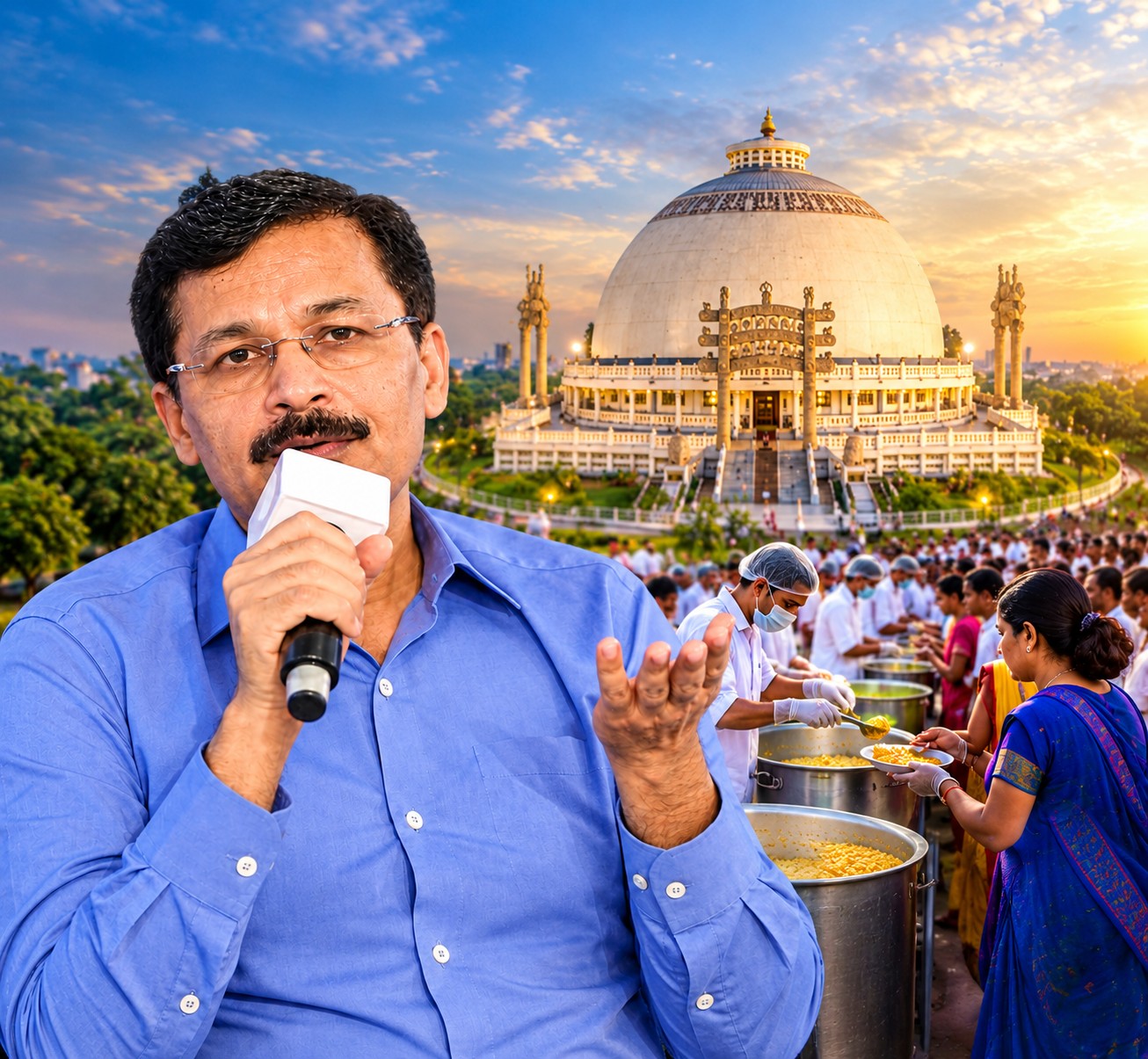
Deekshabhoomi Development Stalled for Two Years: Old Wall Crumbles, New One Barely Crawls — Ambedkarites Outraged

Published: May 13, 2026 | Category: Nagpur Local | Deekshabhoomi development | By: Nagpur Updates Desk


Two years. Nearly ₹214 crore sanctioned. And almost nothing to show for it.

That is the painful reality at Deekshabhoomi — Nagpur’s most sacred site and one of India’s most revered Buddhist monuments. The ambitious development project, meant to transform the site into a world-class destination, has been stalled for nearly two years. The old security wall has crumbled at multiple spots. The new wall? Only 125 feet built in six months. Mounds of construction debris are piling up across the historically significant premises.

The Ambedkarite community is angry. And rightfully so.


What Is Happening at Deekshabhoomi Right Now

The ground reality at Deekshabhoomi in May 2026 is deeply troubling.

The old security wall has collapsed at several spots, leaving sections of the sacred site exposed and vulnerable. The entrance to one section is in a state of disrepair — crumbling, unmaintained, and unworthy of a site of this national significance.

Meanwhile, construction of the new security wall is progressing at a snail’s pace. In six months, only around 125 feet of new wall has been built. At this rate, completing even the basic perimeter security of the site will take years.

Large mounds of construction debris and soil have accumulated across the premises — causing serious inconvenience to the thousands of devotees, students, and visitors who come to Deekshabhoomi every day.

Footpaths and parking space near the main entrance and Laxminagar Chowk are completely blocked. Pedestrians are being forced onto the main road. Given that the Laxminagar–Deekshabhoomi stretch is heavily trafficked throughout the day — owing to nearby educational institutions and the sacred site itself — this is not just an inconvenience. It is a road safety hazard.


How Did It Come to This? The Full Story

To understand the current situation, it is important to go back to where it all began.

The Project: The Maharashtra Government sanctioned approximately ₹214 crore for the beautification, renovation, and development of Deekshabhoomi. The project was planned in two phases. The first phase involved the construction of an underground parking facility to address the chronic parking shortage during large gatherings at the site — particularly during the massive annual Dhammachakra Pravartan Din celebrations.

The Protest: In July 2024, thousands of Ambedkarite followers gathered at Deekshabhoomi in a massive protest against the underground parking project. Protesters were deeply concerned that digging beneath the premises would damage the Deekshabhoomi Stupa and the sacred Bodhi Tree. They also raised fears about water accumulation endangering the structural integrity of the stupa.

The protests turned intense. Protesters targeted steel reinforcing bars, cement pillars, and temporary boundaries at the construction site. The police had to rush forces to the spot.

The Halt: Responding to the public outrage, then Deputy Chief Minister Devendra Fadnavis — now Chief Minister — announced an immediate suspension of the construction work in the Legislative Assembly. He stated that while the project had been planned and sanctioned with the best intentions, public sentiment would be respected. A stakeholder meeting was promised before any further work.

The Stall: That stakeholder meeting, and the clarity it was supposed to bring, never fully materialised into resumed construction. Two years later, the development project remains in a state of near-complete inaction — with neither the original underground parking plan moving forward, nor a clear alternative plan being implemented.


125 Feet in Six Months: An Unacceptable Pace

The most damning indicator of the project’s stalled state is the pace of the new security wall construction.

A security wall is the most basic, least controversial element of any development plan for a large public site. It does not require community consultation. It does not risk damaging any sacred structure. It is straightforward construction work.

Yet in six months, only 125 feet of new wall has been completed. This pace is not just slow — it is indicative of a project that has lost all momentum, direction, and accountability.

While the new wall crawls forward at this rate, the old security wall — no longer being maintained — is actively crumbling. The result is a site that is less secure today than it was before the development project began. That is a failure of basic civic responsibility.


Deekshabhoomi: Why This Matters So Deeply

Deekshabhoomi is not an ordinary public space. It holds profound, irreplaceable significance for millions of people across India and the world.

This is the place where Dr. B.R. Ambedkar — the architect of India’s Constitution, the champion of Dalit rights, and one of the most transformative figures in modern Indian history — converted to Buddhism on October 14, 1956, along with over four lakh of his followers. That single act of mass conversion was one of the most powerful statements of dignity and resistance in Indian history.

Every year on Dhammachakra Pravartan Din (Ashok Vijaya Dashami), millions of Ambedkarite followers from across India and the world travel to Nagpur to pay homage at Deekshabhoomi. The site is as significant to the Buddhist and Ambedkarite community as any of the holiest pilgrimage sites in the country.

For this site to be left in a state of disrepair — with crumbling walls, piled-up debris, and blocked footpaths — for two years is not just a civic failure. It is a profound disrespect to the community that considers this place sacred.


The Community’s Demand: Action, Not Promises

The Ambedkarite community’s anger in May 2026 is entirely justified — and it is not new. For two years, they have watched as a project meant to honour and develop their most sacred site has instead turned it into a construction zone that has delivered neither the promised development nor the original site’s dignity.

Their demands are clear and reasonable:

  • Immediate cleanup of construction debris from the Deekshabhoomi premises
  • Restoration of footpaths and parking space near the main entrance and Laxminagar Chowk
  • Acceleration of the security wall construction to a timeline that reflects the site’s importance
  • A clear, publicly communicated development plan — one that the community has been properly consulted on and that has a firm, binding completion deadline
  • Regular progress updates from the responsible authorities — NIT, the Dr. Babasaheb Ambedkar Deekshabhoomi Memorial Committee, and the state government

Accountability: Who Is Responsible?

Multiple agencies share responsibility for the current state of Deekshabhoomi’s development. The Nagpur Improvement Trust (NIT) is the primary executing agency. The Dr. Babasaheb Ambedkar Deekshabhoomi Memorial Committee holds custodianship of the site. The Maharashtra State Government sanctioned the funds and holds ultimate accountability.

None of these bodies has provided a transparent, public account of why the project has stalled, what the revised plan is, when work will resume in earnest, and what the completion timeline is.

That silence is no longer acceptable.

Just as Nagpur has seen civic accountability issues at other important sites — from the stalled revival of the Futala Musical Fountain to poor maintenance of key public infrastructure — the Deekshabhoomi situation demands the same public scrutiny and accountability.


A Site That Deserves Better

Deekshabhoomi deserves better than this.

It deserves a development plan that was developed transparently, with genuine community consultation. It deserves a construction timeline that is respected. It deserves a managing committee and executing agency that communicate openly with the public. And above all, it deserves the dignity that befits one of India’s most historically significant monuments.

The crumbling wall at Deekshabhoomi is not just a construction problem. It is a symbol — of broken promises, administrative indifference, and a failure to honour the legacy of Dr. B.R. Ambedkar in the very city where his most defining act took place.

Nagpur Updates will continue to follow the Deekshabhoomi development story closely and hold the responsible authorities accountable. This site matters too much to be forgotten in a pile of construction debris.


Tags: Deekshabhoomi, Nagpur Development, NIT Nagpur, Dr BR Ambedkar, Ambedkarite Community, Nagpur Civic Issues, Deekshabhoomi Wall, Nagpur Local News 2026

Union Cabinet Approves Nagpur Airport Modernisation Under PPP Model — ₹7,000 Crore Upgrade to Transform Central India’s Aviation Hub

Published: May 13, 2026 | Category: Nagpur Local | Nagpur airport GMR upgrade | MIHAN Nagpur airport PPP | By: Nagpur Updates Desk


Big news for Nagpur. Bigger news for Vidarbha.

The Union Cabinet, chaired by Prime Minister Narendra Modi, has approved the modernisation of Dr. Babasaheb Ambedkar International Airport, Nagpur under the Public-Private Partnership (PPP) model. The approval clears the path for a transformational ₹7,000 crore upgrade that will position Nagpur as a world-class aviation hub for Central India.

This is not a routine airport expansion. It is a fundamental reimagining of what Nagpur’s airport can be — and what it can do for the entire Vidarbha region.


What the Cabinet Has Approved

The Cabinet approval greenlights the modernisation and development of Nagpur airport through a PPP concession agreement. GMR Airports Limited (GAL) — one of India’s most experienced airport operators, managing Delhi and Hyderabad international airports — has signed a Concession Agreement with MIHAN India Ltd for the upgrade, development, and operation of the airport.

Under this model, GMR will invest in and develop the airport infrastructure over a defined concession period, while the Maharashtra Airport Development Company (MADC) — through its MIHAN India subsidiary — retains ownership oversight.

The project will be developed in phases, with the total capital investment estimated at ₹7,000 crore.


What the New Nagpur Airport Will Look Like

The upgraded airport will be a massive step up from what exists today. Here is what the new Nagpur airport will include:

New Integrated Terminal Building A brand-new terminal designed to handle 14 million passengers per year. This is a dramatic increase from the current capacity, which has been operating close to its limits. The new terminal will offer modern facilities, seamless passenger flow, and a world-class experience.

Second Runway The airport will get a second runway — a critical addition that will allow simultaneous take-offs and landings, significantly increasing the airport’s operational capacity and reducing delays.

100-Aircraft Parking Capacity The new airport will be able to accommodate approximately 100 aircraft at a time — a scale that reflects Nagpur’s ambitions as a major aviation hub, not just a regional airport.

Total Area: 1,350 Hectares The expanded airport will cover a total area of 1,350.20 hectares — giving it the physical footprint to support all planned infrastructure including runways, terminals, cargo facilities, and support systems.

MRO Facility A dedicated Maintenance, Repair, and Overhaul (MRO) facility will be developed as part of the complex. Nagpur already has an existing AIESL MRO hub that has been expanding its capabilities — the new PPP-developed MRO facility will complement and scale these capabilities significantly.

Special Economic Zone (SEZ) Integration The upgraded airport will be directly connected to a fully operational SEZ — creating a seamless logistics and business ecosystem where manufacturing, warehousing, and international trade can operate in close proximity to aviation infrastructure.

Cargo Terminal A modern cargo terminal will support the growing demand for air freight — particularly important for Nagpur’s position as the geographical centre of India and a natural logistics hub.

New Air Traffic Control (ATC) Tower A new ATC tower will be constructed to support increased traffic volumes safely and efficiently.


Why This Matters for Nagpur and Vidarbha

For decades, Nagpur has been hampered by airport infrastructure that could not keep up with the region’s economic potential. Vidarbha — historically described as Maharashtra’s underdeveloped region — has long needed a world-class aviation gateway to unlock its industrial, commercial, and tourism potential.

The ₹7,000 crore airport upgrade directly addresses this need. Officials believe the airport’s expansion will serve as a catalyst for growth across multiple sectors including manufacturing, aviation, tourism, logistics, and healthcare — benefiting not just Nagpur city but the entire Vidarbha region and beyond.

The Association for Industrial Development (AID) had specifically appealed to PM Modi to fast-track Nagpur airport redevelopment, arguing that modern aviation infrastructure would strengthen connections between Nagpur and domestic and international markets and would catalyse manufacturing and services clusters in the region. The Cabinet approval is, in part, a direct response to that industry demand.


GMR: The Right Partner for the Job

The choice of GMR Airports Limited as the development partner is significant. GMR manages two of India’s busiest and most respected international airports — Indira Gandhi International Airport in Delhi and Rajiv Gandhi International Airport in Hyderabad. It also develops greenfield airports in Andhra Pradesh, Goa, and Bhogapuram.

GMR brings proven expertise in:

  • Large-scale terminal design and construction
  • International aviation operations
  • Cargo hub development
  • Aeronautical infrastructure including taxiways and aprons
  • Technology integration for smart airport operations

For Nagpur, having GMR as the PPP partner means the city will benefit from the same operational and design standards that have made Delhi and Hyderabad among India’s premier aviation hubs.


MIHAN: The Bigger Picture

The airport modernisation does not exist in isolation. It is the centrepiece of MIHAN — Multi Modal International Cargo Hub and Airport at Nagpur — one of India’s most ambitious integrated infrastructure projects.

MIHAN envisions Nagpur as a smart city combining:

  • A world-class international airport
  • A multimodal international cargo hub
  • A connected Special Economic Zone (SEZ)
  • An MRO facility and logistics park
  • Two parallel runways for maximum operational efficiency

The Cabinet approval for the PPP modernisation is a critical step in bringing this vision to full realisation. It provides the clarity, legal framework, and investor confidence needed to accelerate construction timelines.


Nagpur’s Aviation Momentum Builds

The Cabinet approval comes at a time when Nagpur’s aviation story is gathering extraordinary momentum. Just last week, the midpoint RVR safety system was installed at Nagpur airport — completing the airport’s full three-point visibility monitoring network. And Qatar Airways’ direct Nagpur–Doha flights are set to resume from May 21 — restoring vital international connectivity.

Together, these developments paint a compelling picture of an airport — and a city — that is investing seriously in its aviation future. The ₹7,000 crore PPP modernisation is the biggest piece of that puzzle. When complete, Dr. Babasaheb Ambedkar International Airport will be worthy of the name it carries — a world-class gateway that honours Nagpur’s history while powering its future.


What Happens Next

With Cabinet approval now in place, the following milestones will define the project’s progress:

  • Concession Agreement finalisation between GMR and MIHAN India — already signed and now formally backed by Cabinet approval
  • Phase-I construction commencement — new terminal building, apron expansion, and infrastructure groundwork
  • Second runway planning and IAF coordination — a technically complex step given the airport’s shared civil-military status
  • MRO and SEZ development alongside terminal construction
  • Progressive passenger capacity increase as each phase is commissioned

Nagpur Updates will track every major milestone in the Nagpur airport modernisation project and bring you updates as construction progresses. This is one of the most important infrastructure stories in Nagpur’s history — and we will be with you every step of the way.


Tags: Nagpur Airport, GMR Airports, PPP Model, MIHAN Nagpur, MADC, Airport Modernisation, Union Cabinet, Nagpur Aviation, Nagpur Infrastructure, Nagpur Local News 2026

Koradi’s 162-Foot Hanuman Statue to Open for Devotees in June 2026 — 7D Chalisa Projection, Boat Darshan and Amit Shah Inauguration Confirmed

Published: May 13, 2026 | Category: Nagpur Local | tallest Hanuman statue India | By: Nagpur Updates Desk


The wait is almost over.

Nagpur’s most ambitious religious project — the 162-foot Hanuman statue at Koradi — is set to open its doors to devotees in June 2026. Revenue Minister Chandrashekar Bawankule has confirmed the timeline. Union Home Minister Amit Shah has confirmed his presence at the inauguration. And the full scale of what awaits devotees at Koradi is now becoming clear.

This is not just a statue. It is a complete spiritual and tourism destination — unlike anything Central India has seen before.


The Statue: Taller Than Ever Imagined

The numbers alone are staggering.

The Hanuman idol itself stands at 162 feet. Add the foundation, and the total structure rises to 206 feet from ground level. A 74-foot mace (gada) has been installed as part of the structure — a detail that adds both scale and divine symbolism to the composition.

The massive statue has been constructed within the premises of the Shri Mahalaxmi Jagdamba Sansthan in Koradi — one of Central India’s most prominent spiritual centres. The idol stands in the middle of pond number three, rising dramatically from the water — as if Lord Hanuman himself is emerging from the sacred lake.

The construction has been executed by Matu Ram Art Centre from Gurugram — the same firm that built the 351-foot Lord Shiva statue in Udaipur and the Lord Buddha statue in Namchi, Sikkim. Every detail of the divine form has been sculpted with precision and reverence.

The cost of the statue alone is ₹11.5 crore — part of the larger ₹1,214.94 crore Koradi temple redevelopment master plan.


7D Hanuman Chalisa: A First in India

This is the feature that sets Koradi apart from every other religious destination in the country.

The complex will offer a “7D Hanuman Chalisa Projection” experience. This is a fully immersive audio-visual presentation — combining 7D projection technology, surround sound, and special effects — to tell the story of Lord Hanuman’s life and the meaning of the Hanuman Chalisa in a way that devotees have never experienced before.

The complex will feature a “7D Hanuman Chalisa Projection” experience, aimed at giving devotees an immersive spiritual and cultural experience based on the life and values of Lord Hanuman.

This technology turns a religious visit into a deeply personal, emotionally resonant journey. It is designed not just for regular devotees but also for first-time visitors, students, and tourists who want to connect with the spiritual significance of Koradi in a modern, engaging format.


Boat Darshan: A Unique Experience

Reaching the Hanuman idol is itself part of the experience.

Since the statue stands in the middle of a lake, devotees will take a boat ride to reach the base of the idol for darshan. This is a uniquely beautiful arrangement — approaching a towering divine figure from the water, with the reflection of the idol shimmering below.

Few religious experiences in India offer this combination of natural serenity, dramatic scale, and divine presence. The boat darshan is expected to become one of Koradi’s most memorable features — one that will draw visitors back again and again.


What Else Awaits Devotees at Koradi

The Koradi complex being developed around the Hanuman statue is far more than a temple precinct. Bawankule said the temple complex is being developed not only as a spiritual destination but also as a major tourism and skill development hub.

Here is a snapshot of what the full complex will offer:

Monorail — 2.5 km covering 7 spots (₹17.46 crore) A dedicated monorail will connect key points within the vast complex. This makes the site accessible for elderly devotees, families with young children, and visitors with mobility challenges.

Kids’ Adventure Park — Indoor and Outdoor (₹31.18 crore) A full-scale children’s park — with both indoor and outdoor attractions — transforms Koradi into a family destination for a full day out.

Mahadwar — Grand Entrance Gate (₹8.5 crore) A magnificent main entrance gate featuring statues of Chhatrapati Shivaji Maharaj and Maa Tulja Bhavani will welcome devotees. It is a statement of Nagpur’s spiritual and historical identity in one powerful gesture.

Rajgad Mahadwar — VIP Entrance (₹3.44 crore) A dedicated 10-metre-high VIP entrance ensures smooth flow for dignitaries without disrupting the general pilgrim experience.

Water body with fountains and bridge A beautifully designed water feature with musical fountains and a decorative bridge adds visual beauty and an additional attraction for visitors.

Amusement Park and Dinopark For families seeking a complete day out, dedicated amusement and Dino-themed park sections broaden Koradi’s appeal beyond traditional devotees.

Hostel for 500 Children + Skill Development Centre In a meaningful dimension of social commitment, a hostel for 500 children and a skill development centre for youth are being built — connecting Koradi’s development to the upliftment of the local community.


Women, Employment and Community: The Bigger Vision

What makes the Koradi project truly special is its social mission alongside its spiritual ambition.

Special focus is being given to women self-help groups, employment generation, youth skill training and cultural tourism through multiple projects being developed in the area with the support of Nagpur Improvement Trust and Nagpur Metropolitan Region Development Authority.

This is a temple complex that creates jobs, empowers women, trains youth, and drives local economic activity — not just a monument but a living, breathing community institution.


Amit Shah’s Inauguration: A National Moment for Nagpur

The scale of the Koradi inauguration reflects the national importance of this project.

Revenue Minister Bawankule personally travelled to New Delhi to meet Amit Shah and extend the formal invitation. Shah accepted warmly and confirmed his presence at the June 2026 ceremony.

The presence of the Union Home Minister at the inauguration signals that Koradi is no longer just a local or regional religious site. It is being positioned as a national spiritual landmark — one that Nagpur can be proud of on the grandest stage.


Koradi’s Journey: From Delay to Destiny

The Koradi Hanuman statue has had its share of delays. The original inauguration date of January 26, 2026 was missed. A subsequent target was also pushed back. But in May 2026, the project is genuinely in its final phase — with landscaping, lighting, visitor infrastructure, and finishing works all nearing completion.

The statue is designed to shift Koradi from a routine pilgrimage stop to a destination with national visibility. Height, setting, and form work together. The purpose is straightforward — to give Nagpur a monument that asserts scale, identity, and permanence.

That purpose is about to be fulfilled.


Nagpur’s Spiritual and Tourism Renaissance

The Koradi Hanuman statue inauguration in June 2026 will mark a defining moment for Nagpur. Just as the city is transforming its civic infrastructure — from AI-powered traffic management at city junctions to the revival of the Futala Musical Fountain — Koradi represents the city’s spiritual and cultural renaissance.

A 162-foot Hanuman idol rising from a sacred lake. A 7D Chalisa experience unlike anything in India. Boat darshan, a monorail, a children’s park, and a community development hub — all in one complex.

Nagpur, this June, will have something truly extraordinary to offer the world.

Nagpur Updates will bring you complete live coverage of the Koradi Hanuman statue inauguration. Stay tuned for date confirmation, event details, and everything you need to know before you visit.


Tags: Koradi Temple, Hanuman Statue Nagpur, Amit Shah Nagpur, Chandrashekar Bawankule, 7D Projection Nagpur, Nagpur Tourism, NMRDA Nagpur, Religious Tourism, Nagpur Local News 2026

Exit mobile version