Nagpur Monsoon Alert: NMC’s Nullah Cleaning Drives Are Failing — Ground Report Reveals Choked Drains City-Wide

Published: June 2, 2026 | Category: Nagpur Local | By: Nagpur Updates Desk


The monsoon is days away. And Nagpur’s nullahs are nowhere near ready.

A ground assessment of the city’s major stormwater channels reveals a stark and alarming gap between the NMC’s claims of monsoon preparedness and the reality on the ground. Despite repeated, heavily publicised cleanliness drives and multi-crore budgets, the city’s vital drainage arteries remain severely choked — with hyacinth, debris, construction waste, and domestic plastic threatening to turn the first heavy rains into an urban flood.

The Hitavada’s reporters visited multiple key nullah locations across Nagpur. What they found should alarm every resident.


Ground Report: What Was Found Where

Location Problem Found
Reshimbagh Thick water hyacinth covering water surface — untouched despite repeated drives
Ashok Chowk Water hyacinth blanket throughout — no machinery deployed per residents
Imambada Persistent hyacinth — repeated cleaning drives have had zero visible impact
Sitabuldi Gawlipura Heavy debris + construction waste dumped on banks — risk of cave-in into stream
Siraspeth Construction waste threatening to block natural water flow
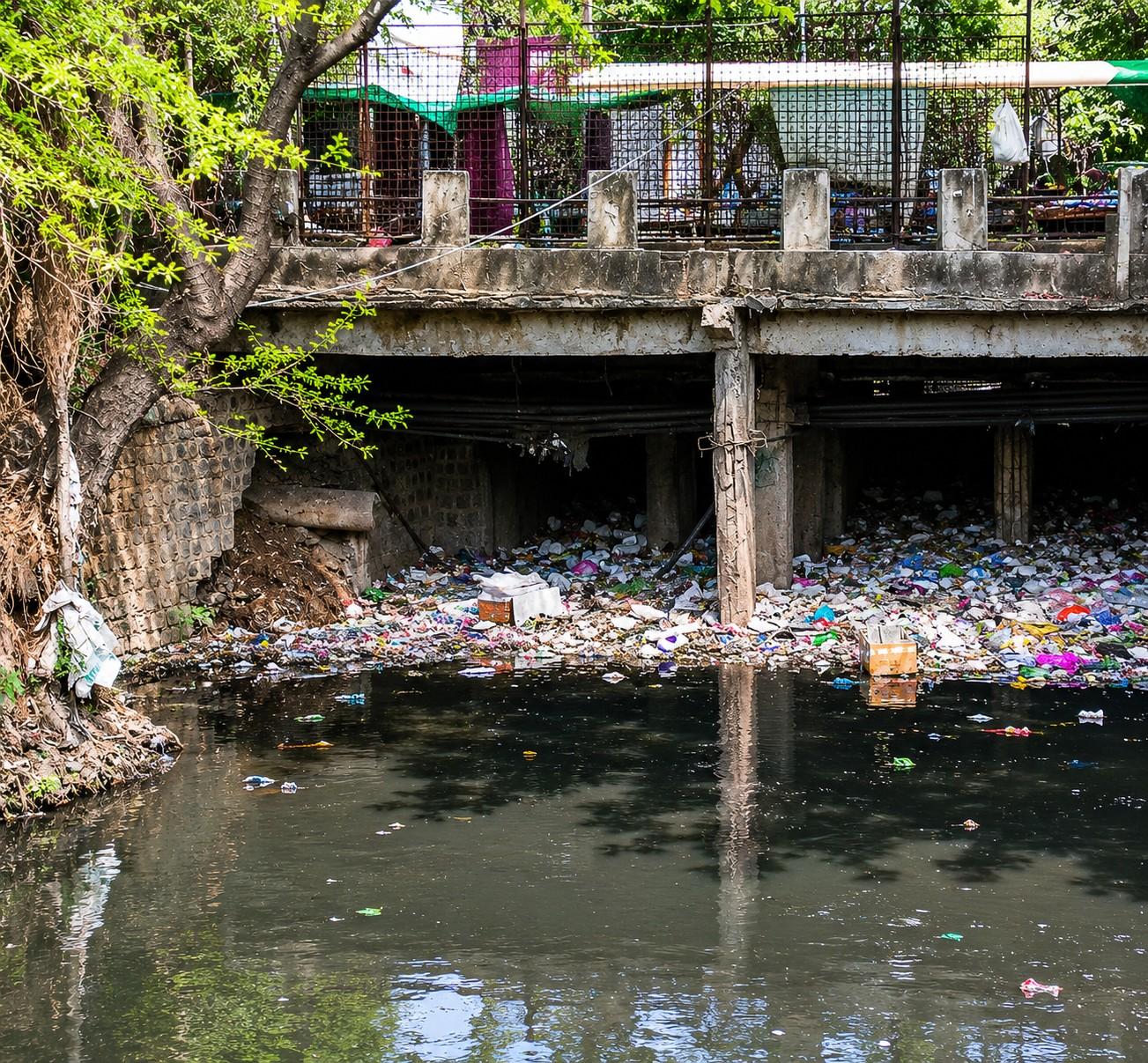
Morbhavan culvert Entire underside passage completely choked with domestic plastic trash

Residents at each of these locations confirmed the same thing: NMC machinery was deployed only at highly visible patches near major intersections. The interior stretches — where the real blockages are — remained untouched.


The Pattern: Cosmetic Cleaning, Not Systemic Cleaning

This is the defining problem with NMC’s approach to nullah cleaning — and it is not new.

Every year, the same cycle plays out:

  1. NMC announces a major monsoon preparedness drive
  2. Machinery is visibly deployed at prominent, easily-accessible stretches near key junctions
  3. Review meetings report “progress”
  4. The interior stretches of the same nullahs — where the silting and blockages are worst — remain untouched
  5. The monsoon arrives. Flooding follows.

The Hitavada’s ground report confirms that 2026 is no different. The NMC had claimed the annual drive would be completed by end of May 2026. That deadline has passed. The ground situation tells a completely different story.


The Worst Spot: Morbhavan Culvert

Of all the locations assessed, the situation at Morbhavan is described as perhaps the most shocking.

The entire underside passage of the culvert at Morbhavan sits completely choked with domestic plastic trash. This is not a partial blockage or a stretch with silting — it is a complete obstruction of a key drainage structure.

When this culvert fails to drain during heavy rain — and it will fail to drain if it remains in this condition — the consequences for the surrounding area will be severe. Morbhavan is a densely populated area. Low-lying localities nearby will face direct backflow of sewage and stormwater into homes and businesses.

Ironically, the NMC had earlier made headlines for facilities improvements at the Morbhavan Bus Stand after Mayor Thakre’s intervention. The culvert behind the bus stand tells a different story about civic priorities.


What Environmentalists Say: Flooding Is “Unavoidable”

Environmentalists consulted for the Hitavada’s report were unambiguous in their assessment.

If these clogged drainage systems — including subterranean channels — are hit by the torrential downpours of peak monsoon without adequate cleaning, urban waterlogging is completely unavoidable.

More alarming: the severe backflow from choked drains will force toxic, black sewage water directly into basements and ground-floor rooms of low-lying residential areas. What begins as a drainage management failure becomes a full-blown public health crisis.

Nagpur’s monsoon, when it arrives at full intensity in July and August, brings rainfall that can exceed 100mm in a single day. Nullahs that are 50-60% silted cannot handle that volume. They overflow. Streets flood. And the residents of low-lying areas pay the price.


NMC’s Chief Engineer: Silent

The Hitavada’s reporters made repeated attempts to contact NMC PWD Chief Engineer Manoj Talewar for accountability on the incomplete desilting work. He did not respond to any calls.

This silence — in the face of a documented, photographed public safety failure just days before monsoon — is itself a story. It reflects what the report describes as a prevailing “culture of administrative evasion” within the civic body.

Citizens are paying for a multi-crore monsoon preparedness programme. They deserve answers — not silence.


Which Areas Face the Highest Flooding Risk?

Based on the ground assessment and historical flooding data, these are the areas most at risk in Nagpur’s 2026 monsoon:

High risk from nullah blockage:

  • Reshimbagh and surrounding areas
  • Sitabuldi Gawlipura and Siraspeth
  • Morbhavan and nearby low-lying localities
  • Ashok Chowk vicinity

Historically flood-prone:


What Needs to Happen — Right Now

The monsoon will not wait for the NMC’s next review meeting. Here is what must happen in the next 7-10 days:

Emergency desilting at blocked locations Prioritise the six critically blocked locations identified in this report. Deploy machinery on emergency basis — working extended hours, seven days a week, until clear.

Clear the Morbhavan culvert immediately The completely choked culvert at Morbhavan is an emergency — not a maintenance item. Clear it now.

Chief Engineer must respond publicly Manoj Talewar must address the documented ground situation — not through a press release, but through a public inspection with media present.

Mayor must intervene Mayor Neeta Thakre has shown willingness to take direct action when civic failures are brought to her attention. This situation demands the same urgency.

Citizens must report blockages Report blocked nullahs and drains in your area on:

  • NMC helpline: 1800-266-9999
  • NMC app — available on Android and iOS
  • Ward office of your respective zone

Q: When does the monsoon typically arrive in Nagpur? Nagpur’s monsoon usually arrives in the third week of June — approximately 2-3 weeks from today. The window for remediation is extremely narrow.

Q: Which areas flood most in Nagpur monsoon? Historically, low-lying areas near the Nag River, Pili River, and their tributary nullahs are most vulnerable. Areas near choked drains — particularly Reshimbagh, Sitabuldi, Morbhavan, and Narendra Nagar underpass — are at highest risk in 2026.

Q: How can I prepare my home for monsoon flooding?

  • Keep your ground-floor drainage outlets clear
  • Store important documents in waterproof bags
  • Keep a battery-powered torch ready
  • Know your nearest elevated safe zone

Q: Has NMC done any nullah cleaning this year? NMC has conducted drives — but the ground report shows cleaning was superficial and limited to visible, easily-accessible stretches. Interior stretches and subterranean systems remain critically blocked.

Q: What is the NMC’s official claim on nullah cleaning? NMC officials claimed the annual drive would be complete by end of May 2026. This deadline has passed without completion.


The Same Story, Every Year

Nagpur’s nullah cleaning failure is not a 2026 problem. It is a structural governance problem that repeats every monsoon season.

The pattern is depressingly predictable: publicised drives, selective cleaning of visible stretches, review meetings claiming completion, monsoon arrives, areas flood, residents suffer, NMC promises to do better next year.

Breaking this cycle requires more than machinery. It requires accountability, transparency, and consequences for failure. Right now, Nagpur has none of the three.

Just as the city has struggled to maintain clean lakes and has seen repeated infrastructure project delays, the nullah cleaning failure is another chapter in the same story — the gap between Nagpur’s ambitions and its civic delivery.

The monsoon is coming. Nagpur deserves better than another year of preventable flooding.

Nagpur Updates will monitor the nullah situation daily as the monsoon approaches and report on any emergency action taken by NMC.


Tags: NMC Nagpur, Nullah Cleaning, Monsoon Nagpur 2026, Waterlogging Nagpur, Nagpur Flooding Risk, Civic Issues Nagpur, NMC Failure, Nagpur Local News 2026


Nagpur’s Beloved Nanga Putla Square Is Being Stripped of Its History — And Nobody Seems to Care

Published: May 31, 2026 | Category: Nagpur Local | By: Nagpur Updates Desk


Every Nagpurian knows Nanga Putla Square. Very few know its real story. And the city’s civic administration seems to be doing its best to ensure that the story — and the statue — fade into neglect.

Located at the heart of old Nagpur’s commercial corridor — in the Gandhibag-Itwari area — Nanga Putla Square is one of the most instantly recognisable spots in the city. The small junction, anchored by the iconic statue of a naked child, is a reference point for millions of Nagpurians across generations. It is also, according to heritage experts and citizens, a site that is being allowed to deteriorate through sheer administrative apathy.

Here is the full story — the history, the folklore, and the neglect.


What Is Nanga Putla Square?

Nanga Putla literally means “naked doll” or “naked child figure” in Hindi and Marathi. The name refers to a small statue of a naked child that stands at this junction in the Gandhibag area of Nagpur — near Itwari.

The square sits at one of central Nagpur’s busiest commercial intersections — surrounded by the wholesale markets, shops, and lanes of old Nagpur that have been trading for over a century. For residents of Mahal, Itwari, Gandhibag, and surrounding areas, Nanga Putla Square is simply part of life — a daily reference point, a meeting spot, a navigational landmark.

Over time, the informal name “Nanga Putla Chowk” completely eclipsed whatever official name the junction may have been given. Even today, the official name is all but forgotten — this square is known only as Nanga Putla to every Nagpurian who has ever lived in or visited the old city.


The Origin Story: Folklore, Fact, and a Tragic Accident

Ask any old-time Nagpurian about Nanga Putla Square and you will hear some version of the same story. A child — often referred to as “Munna” — was tragically killed in a road accident at this very junction. The grieving family or community erected the statue of the naked child to immortalise his memory. The junction was named after the statue, and the name stuck.

For years, this narrative was accepted as the definitive origin of the square’s name.

However, local historians and researchers have found that the story is more nuanced. According to reports in Marathi dailies, the tale of the accident-inspired memorial, while based on a real incident, does not fully account for the statue’s origin. The sequence of events, they suggest, intertwines genuine local folklore with facts that are more complicated than the popular version suggests.

What is clear is this: whether the statue was specifically commissioned as a memorial or arrived at the junction through other circumstances, it became adopted by the community as a memorial — and over time, the identity of the place became inseparable from the statue and the stories around it.

This is how heritage works in India’s old cities. Places accumulate meaning through layers of memory, story, and emotional attachment. Nanga Putla Square is a perfect example.


Moments That Defined the Statue’s Place in Nagpur’s Heart

The Nanga Putla statue has been more than a static object at a junction. It has been a living part of Nagpur’s civic life — a canvas onto which the city has projected its stories, its emotions, and its messages.

The COVID-19 Moment (2020) In mid-2020, as the COVID-19 pandemic swept through India, someone affixed a face mask to the Nanga Putla child statue. It was a simple, spontaneous gesture — but the image of the iconic naked baby wearing a protective mask was widely shared on social media. The statue, which had been a childhood memory for generations of Nagpurians, became a public health messenger. It demonstrated, more powerfully than any campaign poster, how deeply ingrained this little monument is in the city’s consciousness.

The Naming Tradition The fact that the square’s entire identity — to the exclusion of any official name — is defined by this single statue speaks to something rare in Indian urban life. Most junctions are named after politicians, buildings, or landmarks. Nanga Putla Square is named after a small, unofficial statue of a child. That says something profound about how ordinary Nagpurians create their own cultural geography — one that has nothing to do with official plaques or government decisions.


The Heritage Crisis: What Is Being Lost

This is where the story turns from charming to alarming.

The Nanga Putla statue and the character of its surrounding square are being eroded — not through any dramatic act of demolition, but through the slow, grinding neglect that claims so many of India’s informal heritage sites.

Reports indicate that the physical state of the statue and the square has deteriorated significantly. The area around the junction — once a vibrant, if chaotic, commercial hub — has seen changes that have diminished the square’s character. The statue itself has reportedly suffered from inadequate maintenance and protection.

More importantly, the historical and cultural significance of the square is not formally recognised — there is no heritage plaque, no conservation order, no institutional acknowledgment that this is a site worth protecting. Without formal recognition, it has no protection against the kind of gradual erasure that commercial development, road widening, and infrastructure projects routinely inflict on informal heritage sites in Indian cities.

Nagpur does have a heritage list — a catalogue of 47 heritage structures designated for conservation by the Government of Maharashtra and managed through the NMC’s Heritage Conservation Committee. Nanga Putla Square, despite being arguably one of the most emotionally significant public spaces in old Nagpur, is not on it.


Nagpur’s Wider Heritage Problem

Nanga Putla’s story is not unique. It reflects a broader pattern of heritage neglect in Nagpur — a city with an extraordinarily rich history that is, in many places, being allowed to disappear.

The city’s British-era buildings, the historic lanes of old Nagpur, the informal monuments and public sculptures that have accumulated meaning over generations — all of these face the same challenge. Without formal protection, they are vulnerable to the pressures of urban development, commercial expansion, and the simple passage of neglected time.

This is all the more painful given the extraordinary investment Nagpur is making in new landmarks — the 162-foot Hanuman statue at Koradi, the Ashoka Stambh at Ashok Square, the revival of the Futala Musical Fountain. These are wonderful additions. But a city’s identity is not built only on new monuments. It is equally preserved — or lost — through how it treats the informal, organic, community-made landmarks that generations of ordinary people have adopted as their own.

Nanga Putla Square is one of those places. It deserves better.


What Needs to Happen

The ask is not complicated or expensive. It requires will, not resources:

1. Formal heritage recognition Add Nanga Putla Square to Nagpur’s official heritage conservation list — giving it the legal protection it needs against encroachment, road widening, and development.

2. Restoration and maintenance of the statue Commission a professional restoration of the Nanga Putla statue — and establish a regular maintenance schedule to ensure it is not allowed to deteriorate further.

3. A heritage plaque Install a properly researched and written heritage plaque at the junction — telling the story of the square, the statue, and its place in Nagpur’s history and memory.

4. Community involvement Engage the residents of Gandhibag, Itwari, and Mahal — who have lived with and loved this square for generations — in its conservation. Community ownership is the most sustainable protection any heritage site can have.

Q: Where exactly is Nanga Putla Square? It is located in the Gandhibag area near Itwari in central Nagpur — one of the city’s oldest and most densely commercial neighbourhoods.

Q: Is Nanga Putla on Nagpur’s official heritage list? No — despite its cultural and historical significance, Nanga Putla Square is not formally recognised on Nagpur’s heritage conservation list.

Q: Why is the square called Nanga Putla? The name comes from the statue of a naked child (nanga putla in Hindi/Marathi) that stands at the junction. The popular story connects the statue to a child killed in a road accident at the spot — though historians have found the origin to be more complex.

Q: What happened during COVID with the statue? In 2020, someone placed a face mask on the Nanga Putla statue as a public health gesture. The image went viral — demonstrating how deeply the statue is embedded in Nagpur’s collective identity.


A City That Builds New and Forgets the Old

Nagpur is building new landmarks faster than at any point in its recent history. That ambition is admirable. But the measure of a city’s relationship with its own identity is not only in what it builds — it is also in what it chooses to protect.

Nanga Putla Square has been protecting itself for decades — held in the memory of millions of Nagpurians who have passed through it, grown up near it, and made it part of their personal geography of the city.

It is time for the city to return the favour.

Nagpur Updates will continue to highlight the city’s heritage sites that need attention, protection, and the recognition they deserve.


Tags: Nanga Putla, Nagpur Heritage, Nagpur History, Itwari Nagpur, Nagpur Landmarks, NMC Nagpur Heritage, Nagpur Local News 2026

Nagpur’s 3 New DCPs on Traffic and Road Discipline — Here’s What They’re Focusing On

Published: May 31, 2026 | Category: Nagpur Local | By: Nagpur Updates Desk


Nagpur City Police has three new Deputy Commissioners of Police — and they are wasting no time.

Annapurna Singh, Kumar Chitta, and Aditya Mirkhedkar — all recently transferred to Nagpur — have hit the ground running. Their immediate agenda: easing traffic at the city’s most chronic bottlenecks and enforcing stricter road discipline across Nagpur’s busiest junctions and corridors.

For a city battling simultaneous infrastructure construction, rising vehicle numbers, and inadequate traffic management at key junctions, fresh police leadership focused on traffic is exactly what Nagpur needs right now.


The Three New DCPs: Who’s Who

DCP Zone Early Action
Annapurna Singh Zone 5 87 criminals targeted in first crackdown
Kumar Chitta (Zone assignment pending) Reviewing traffic bottlenecks
Aditya Mirkhedkar (Zone assignment pending) Road discipline enforcement priority

All three were transferred to Nagpur as part of the broader Maharashtra police reshuffle that also saw Sandeep Patil appointed as IG Nagpur Range. Their arrival brings fresh energy and accountability to a police force that has been dealing with multiple simultaneous challenges — from rising crime to traffic chaos caused by the city’s ambitious but disruptive infrastructure projects.


DCP Annapurna Singh: Action From Day One

Of the three new DCPs, Annapurna Singh — posted to Zone 5 — has already made headlines for swift action.

Within days of taking charge, Singh launched a major preventive action covering the areas under her zone — including Yashodharanagar, Kalamna, Pardi, Wathoda, and Bhandewadi. Action was taken against 87 criminals in this single operation — a signal that she intends to be a hands-on, zero-tolerance officer.

Zone 5 covers areas that include the Bhandewadi dumpyard zone, the Kalamna market area, and residential localities that have historically seen higher crime rates. Singh’s early crackdown sets a strong tone for her tenure.

She has also been personally leading route marches and security intensification in sensitive areas ahead of festivals — including Bakrid preparations — demonstrating both operational readiness and community policing sensibility.


Nagpur’s Chronic Traffic Bottlenecks: The Problem

For the new DCPs, traffic is not a minor operational issue. It is one of Nagpur’s most pressing civic challenges right now.

Nagpur is currently experiencing an unusual convergence of traffic pressures. Multiple major infrastructure projects are simultaneously under construction — creating diversions, narrowed carriageways, and temporary closures that cascade into gridlock across the city.

The worst bottlenecks currently reported:

Medical Square — GMCH Junction One of Nagpur’s most consistently congested junctions — with traffic converging from Wardha Road, Ambazari Road, and multiple hospital-bound routes simultaneously.

Ajni Square A major convergence point near the railway station area — compounded by the ongoing Ajni Laxman Jhula bridge construction that has affected approach roads.

Kamptee Road Long stretches of ongoing road construction have created severe lane restrictions and daily bottlenecks.

Narendra Nagar Underpass The PWD’s ₹9 crore waterlogging fix is underway — but construction itself is causing traffic disruption.

Jagnade Square The two-deadline-missed flyover has left ground-level traffic painfully congested around the central merger construction.

Mominpura — Santra Market corridor Dense commercial activity combined with ongoing flyover construction has made peak-hour movement extremely slow.


What Road Discipline Means in Nagpur’s Context

Beyond the structural bottlenecks created by construction, Nagpur’s traffic police also face a persistent road discipline problem — behaviour by drivers, auto-rickshaws, vendors, and pedestrians that compounds the congestion.

The most common violations contributing to bottlenecks:

  • Wrong-side driving — especially on one-way stretches near markets and hospitals
  • Auto-rickshaws stopping mid-road to pick up and drop passengers
  • Encroachment of intersections by vendors and parking vehicles
  • Signal-jumping — particularly at junctions that don’t have physical enforcement
  • Heavy vehicle movement during peak hours in zones where it should be restricted
  • Parking on major arterial roads — especially near schools and markets during opening and closing hours

The new DCPs are expected to deploy both increased enforcement and traffic redesign interventions — working with the city’s existing IITMS AI traffic management system at the 32 junctions where it is already operational.


The IITMS Advantage: Data-Driven Traffic Management

One significant advantage the new DCPs have that their predecessors did not: real-time AI-powered traffic data from Nagpur’s expanding IITMS network.

With 32 junctions now live on the IITMS system and work underway at 80 more, the new DCPs have access to:

  • Real-time traffic density at key junctions
  • Automatic e-challan generation for signal jumping, helmet violations, and seat belt violations
  • ANPR camera footage for post-incident analysis
  • Historical congestion pattern data to identify when and where bottlenecks peak

This data-driven approach means traffic interventions can be targeted, evidence-based, and measured — a significant upgrade from the intuition-and-experience approach of the past.


What Nagpur Commuters Want to See

Nagpur’s long-suffering commuters have a clear wishlist for the new DCPs on traffic:

Strict auto-rickshaw discipline. Random stopping in moving lanes — especially near Medical Square, Cotton Market, and Sitabuldi — is perhaps the single biggest driver of avoidable congestion.

Peak-hour enforcement at school zones. The 15 minutes before and after school opening and closing times create chaos near Dhantoli, Civil Lines, and Dharampeth schools that well-positioned constables could significantly ease.

No-parking enforcement near markets. Vehicles parked on arterial roads near Itwari, Mahal, and Sitabuldi during peak hours halve the usable carriageway width.

Right-turn restriction at peak hours. As previously demonstrated at Nagpur junctions, implementing “No Right Turn” during peak hours — as was done effectively at one junction with travel time reduced from 20-25 minutes to 5-6 minutes — should be expanded citywide.


FAQ: Your Questions

Q: Which zones have the new DCPs been assigned to? DCP Annapurna Singh has been confirmed in Zone 5 (Yashodharanagar, Kalamna, Pardi, Wathoda, Bhandewadi area). Zone assignments for Kumar Chitta and Aditya Mirkhedkar are expected to be confirmed shortly.

Q: How can I report a traffic problem to the new DCPs? Report traffic complaints to Nagpur City Police via the Nagpur Police app, the Dial 100 helpline, or the online complaint portal at nagpurpolice.gov.in.

Q: Are the new DCPs focused only on traffic? No — DCPs handle the full range of policing responsibilities in their zones, including law and order, crime prevention, and investigation. Traffic is a stated priority area for the current period given Nagpur’s ongoing infrastructure disruption.


Fresh Leadership, High Expectations

The arrival of three new DCPs in Nagpur — each with early actions already underway — offers a genuine opportunity to reset traffic management and public order in the city.

The challenge is enormous. Nagpur is simultaneously building multiple flyovers, an airport expansion, a new township, and multiple other infrastructure projects — all while trying to keep daily traffic moving. It is asking a lot of three new DCPs.

But fresh energy, clear priorities, and early decisive action are exactly the right starting point. Nagpur is watching.

Nagpur Updates will track the new DCPs’ progress on traffic and road discipline and report on specific interventions as they are implemented across the city.


Tags: Nagpur Police, DCP Annapurna Singh, Kumar Chitta, Aditya Mirkhedkar, Nagpur Traffic, Road Discipline, Nagpur Local News 2026

Khasdar Krida Mahotsav 2026 Begins: Gadkari and Suniel Shetty Launch 8th Edition With Marathon — All You Need to Know

Published: May 31, 2026 | Category: Nagpur Sports | By: Nagpur Updates Desk


The 8th Khasdar Krida Mahotsav (KKM) kicked off in Nagpur on Sunday, May 31, 2026 — with Union Minister Nitin Gadkari and Bollywood actor Suniel Shetty inaugurating the city’s beloved multi-sport festival with a grand opening marathon.

This year’s edition is smaller but no less spirited. Due to Nagpur’s intense summer heat, the event has been curtailed to 18 sports disciplines — compared to 65 last year. But the energy, the athletes, and the spirit of sport remain as strong as ever.


KKM 2026 at a Glance

Detail Information
Edition 8th Khasdar (Sansad) Krida Mahotsav
Start date May 31, 2026
Sports 18 disciplines (curtailed from 65)
Reason for curtailment Intense summer heat in Vidarbha
Inauguration Marathon on May 31
Chief guest Nitin Gadkari (Union Minister)
Special guest Suniel Shetty (Bollywood actor)
Convener Sandip Joshi
Next full edition January 2027

Why Is This Edition Curtailed?

This year’s KKM is significantly smaller than usual — and the reason is simple: Nagpur’s brutal May-June heat.

KKM Convener Sandip Joshi explained the decision at a press conference earlier this month: “Due to peak summer and scorching heat, the organising committee decided to curtail this year’s events. Next year in January 2027, we will conduct all the events.”

Nagpur has been experiencing temperatures above 44–46°C through May. Conducting 65 sports across 73 venues — with thousands of athletes aged 4 to 85 — in such conditions posed serious health risks. The decision to scale down was responsible and necessary.

The 18 sports selected for the summer edition are those that can be conducted in indoor or shaded venues, or in early morning and evening slots when the heat is manageable.

The full KKM — with all events, maximum venues, and maximum participation — returns in January 2027.


Suniel Shetty at KKM: Nagpur’s Sporting Spirit Goes Bollywood

The presence of Suniel Shetty — the Bollywood action hero known for his genuine passion for fitness and sports — at the KKM inauguration adds a glamorous touch to Nagpur’s grassroots sporting festival.

Shetty is not just a celebrity appearance — he is a known advocate for sports and fitness in India. His presence at the marathon inauguration sends a powerful message to Nagpur’s young athletes: that their commitment to sport is valued and celebrated.

Previous editions of KKM have seen equally high-profile guests — the 7th edition in January 2026 was inaugurated by Gadkari and Kangana Ranaut, while earlier editions have been graced by cricket legend Sachin Tendulkar and national sports ministers.


What Is the Khasdar Krida Mahotsav?

For those new to the event, here is the background:

The Khasdar Krida Mahotsav — literally “MP’s Sports Festival” — is the brainchild of Nitin Gadkari, Nagpur’s Member of Parliament and Union Minister for Road Transport and Highways.

Gadkari expressed his delight, stating that this event has become a remarkable example not only in Nagpur, Vidarbha, and Maharashtra but also across the nation. He credited the festival’s success to the enthusiastic participation of local athletes.

Why KKM matters:

  • It is one of the largest grassroots multi-sport festivals in India run by a sitting MP
  • It gives athletes aged 4 to 85 a competitive platform they would otherwise not have
  • It has produced athletes who have gone on to national and international recognition
  • It runs entirely on community participation and local sponsorship
  • It has been held every year since its launch — through COVID gaps, through summer heat — because Gadkari refuses to let it die

At its peak (7th edition, January 2026), KKM featured:

  • 58 sports at 73 venues
  • 2,900 teams and 80,000+ athletes
  • 13,100 competitions
  • 12,317 medals and 762 trophies
  • ₹1.5 crore in prize money

That scale makes it one of the most impressive civic sports initiatives in the country.


The Marathon: How KKM Always Begins

Every edition of KKM begins the same way — with a marathon that brings together thousands of Nagpur residents, from serious runners to enthusiastic first-timers.

The KKM Marathon is one of Nagpur’s most inclusive sporting events. There are no qualification requirements. Young children run alongside senior citizens. Professional athletes run alongside office-goers. And the spirit of community — everyone on the same roads, cheering each other on — is what makes it special every single year.

This year’s marathon on May 31 kicked off the 8th edition — with Gadkari and Suniel Shetty flagging off the runners to enormous enthusiasm from the crowd.

Q: How many sports are in KKM 2026? 18 disciplines — significantly fewer than the 65 in the 7th edition (January 2026), due to the summer heat decision.

Q: When will the full KKM return? January 2027 — the 9th edition will be the full-scale event with all disciplines.

Q: Can anyone participate in KKM? Yes — KKM is open to all residents of Nagpur and the region. Age groups range from 4 years to 85 years. Most sports have open registration through local sports associations.

Q: Where are KKM events held? Across multiple venues in Nagpur city. The marathon starts from a central location. Individual sports are held at their respective grounds, stadiums, and indoor arenas.

Q: Is there prize money at KKM 2026? Yes — KKM has always offered prize money and trophies. Specific prize amounts for the 2026 curtailed edition have not been publicly announced yet.

Q: Who is the KKM Convener? Sandip Joshi — former Mayor of Nagpur — is the long-standing convener of KKM. He has been the driving organisational force behind the event since its inception.


Nagpur’s Sports Spirit — Alive and Running

Even in a curtailed year, the Khasdar Krida Mahotsav sends a powerful message: Nagpur takes sport seriously.

In a city that is simultaneously building a world-class airport, deploying AI-powered traffic management, and preparing for the Koradi Hanuman statue inauguration, the KKM is a reminder that Nagpur’s identity is not just about infrastructure. It is also about its people, its athletes, its families, and the joy of community sport.

The summer heat may have curtailed the event this year. But the spirit? That cannot be curtailed.

Nagpur Updates will bring you coverage of KKM 2026 events and results throughout the festival. Stay tuned for updates on your favourite sports!


Tags: Khasdar Krida Mahotsav, KKM 2026, Nitin Gadkari, Suniel Shetty, Nagpur Sports, Sandip Joshi, Nagpur Marathon, Nagpur Local News 2026

India’s First Integrated Waste Plant at Bhandewadi: CM Fadnavis Reviews ₹300 Crore Project — August Launch Target

Published: May 30, 2026 | Category: Nagpur Local | By: Nagpur Updates Desk


Nagpur is set to become India’s first city with a fully integrated municipal solid waste processing facility — and it will be operational by August 2026.

Chief Minister Devendra Fadnavis personally visited the Bhandewadi facility on Friday and reviewed the progress of the ₹300 crore project being developed by the Kewa Sus Bade Group through private investment. He declared it a national first — and expressed confidence it will transform Nagpur into a garbage-free city.


Project at a Glance

Detail Information
Project name Integrated Municipal Solid Waste Processing Facility
Location Bhandewadi, Nagpur
Cost ₹300 crore
Developer Kewa Sus Bade Group (private investment)
Model PPP — no financial burden on NMC
Land provided by NMC 30 acres
Waste processed daily 1,200 metric tonnes
Biogas generated daily 28 tonnes
CNG for city buses 198 buses
Target launch August 2026
NMC annual royalty ₹15 lakh from gas sales
Phases 3 phases

What Will This Plant Actually Do?

The Bhandewadi facility is not just a landfill replacement. It is a complete waste-to-resource ecosystem — turning Nagpur’s garbage into three valuable products:

1. Biogas → CNG for City Buses Wet waste from across Nagpur will be scientifically processed to generate 28 tonnes of biogas daily. This biogas will be converted into Compressed Natural Gas (CNG) — supplying clean fuel to nearly 198 Nagpur city buses. This replaces diesel — reducing both fuel costs and air pollution.

2. Compost Fertiliser The organic fraction of wet waste will be converted into high-quality compost fertiliser — which can be used in agriculture, urban gardens, and road beautification. This creates a revenue stream while solving the organic waste problem.

3. Fuel Pellets from Dry Waste Dry waste — plastics, packaging, non-recyclable material — will be converted into fuel pellets for industrial use. These pellets replace coal in industrial furnaces — another clean energy substitution.

Together, these three outputs mean that virtually nothing from Nagpur’s 1,200 MT of daily waste will go to landfill once the plant is fully operational.


Why Is This India’s First?

CM Fadnavis described this as the “country’s first Integrated Municipal Solid Waste Processing Facility” — and the word “integrated” is key.

Most Indian cities have individual components — a biogas plant here, a composting facility there. What makes Bhandewadi different is the integration of all three streams (biogas, compost, fuel pellets) under one facility, processing the entire city’s waste scientifically in one location, with a complete waste-to-resource circular economy model.

This holistic approach — transforming Nagpur into a garbage-free city through modern waste management and green energy production — is what earns it the national first tag.


What Does This Mean for Nagpur’s Bhandewadi Problem?

Bhandewadi has been Nagpur’s most stubborn civic challenge for decades. The dumpyard — one of the largest in Maharashtra — has been a source of:

  • Toxic fires that have blanketed Nagpur in smoke
  • Leachate contamination of surrounding groundwater
  • Health hazards for residents of nearby localities
  • Environmental violations flagged by the National Green Tribunal

Between 2019 and 2021, around 10 lakh metric tonnes of old waste were scientifically treated — freeing up 54 acres of land. The current remediation phase targets a further 15.3 lakh tonnes by 2026.

The new integrated processing facility adds a crucial dimension — not just cleaning up the old waste mountain, but ensuring that fresh waste never reaches the dumpyard going forward. With 1,200 MT being processed scientifically every day, the conditions that created the Bhandewadi crisis will no longer exist.


PPP Model: Zero Burden on NMC

One of the most important aspects of this project is its funding model.

The entire ₹300 crore investment is coming from the Kewa Sus Bade Group — a private developer. NMC has contributed 30 acres of land and will receive an annual royalty of ₹15 lakh from gas sales. Beyond the land, there is no financial burden on the municipal corporation.

This is particularly significant given NMC’s constrained financial position. A world-class waste management facility — at zero capital cost to the city — is exactly the kind of PPP model that other Indian cities will want to study and replicate.

CM Fadnavis’ confidence that Nagpur will become a national model for solid waste management is grounded in this financial structure as much as the technology.


Maharashtra’s Broader Biogas Push

The Bhandewadi project does not exist in isolation. It is part of Maharashtra’s larger green energy push.

In April 2026, the Maharashtra Cabinet approved the Maharashtra State Compressed Biogas Policy 2026 — allocating ₹500 crore for Viability Gap Funding to convert urban waste and agricultural residue into clean biogas fuel across the state. The Bhandewadi facility is the flagship project of this policy in action.

Q: When will the Bhandewadi waste plant be operational? The project is being executed in three phases and is expected to become fully operational by August 2026 — just three months from now.

Q: Will this stop the fires at Bhandewadi? The fires at Bhandewadi are caused by decomposing waste in the existing dumpyard. As the new integrated facility processes fresh waste daily and the ongoing remediation clears old waste, the conditions that cause fires will be eliminated over time.

Q: Will Nagpur’s city buses really run on Bhandewadi biogas? Yes — the 28 tonnes of daily biogas will be converted to CNG and supplied as fuel for 198 NMC city buses. This is a confirmed part of the project design.

Q: Does this mean Nagpur will stop using the Bhandewadi dumpyard? The goal is to eventually achieve zero fresh waste going to landfill once the plant is fully operational. The existing waste mountain will continue to be scientifically remediated alongside the new facility.

Q: Who is the Kewa Sus Bade Group? The developer is a private group that specialises in waste management and green energy infrastructure. The project involves Netherlands-based expertise in waste-to-biogas conversion — bringing international best practices to Nagpur.

Q: Will Nagpur residents benefit directly? Yes — in multiple ways. Cleaner air (less landfill burning), CNG buses on city roads (less pollution), compost for urban gardens, and ultimately a garbage-free city environment.


A Landmark Moment for Nagpur

The Bhandewadi waste-to-energy facility represents one of the most meaningful environmental milestones in Nagpur’s recent history.

For a city that has lived with the shadow of the Bhandewadi dumpyard — its fires, its smell, its health risks — for decades, the prospect of a genuinely garbage-free Nagpur is not just an environmental win. It is a quality-of-life transformation.

Nagpur is increasingly becoming a city that others look to for models — whether in airport modernisation, smart traffic management, or now waste management. The Bhandewadi facility adds another chapter to that story.

August 2026 cannot come soon enough.

Nagpur Updates will track the Bhandewadi facility’s progress and confirm when each phase goes live. Stay tuned for updates.


Tags: Bhandewadi Nagpur, Waste to Energy, CM Fadnavis, NMC Nagpur, Biogas Nagpur, Garbage Free Nagpur, Green Energy, Kewa Sus Bade, Nagpur Local News 2026

FDA Seizes ₹7.26 Lakh Patanjali Divya Pharmacy Stock in Nagpur — Katol Road Outlet Raided Over Misleading Ads

Published: May 29, 2026 | Category: Nagpur Local | By: Nagpur Updates Desk


Maharashtra’s Food and Drug Administration (FDA) has seized medicines worth ₹7,26,655 from a Patanjali-affiliated Divya Pharmacy outlet on Katol Road, Nagpur — acting on directions from FDA Commissioner Tukaram Mundhe.

The raid is part of a statewide crackdown that seized medicines worth ₹73.24 lakh across seven Maharashtra divisions in a single day.


What Was Seized — and Where?

Detail Information
Location raided Divya Pharmacies franchise, Katol Road, near Kamptee Chowk, Nagpur
Date of raid Friday, May 29, 2026
Value seized ₹7,26,655
Action ordered by FDA Commissioner Tukaram Mundhe
Legal basis Drugs and Magic Remedies (Objectionable Advertisements) Act
Executing team FDA Nagpur Division

The team seized stocks of multiple Divya Pharma products — including Nutrigold, Nempfit, Mupivit, Melastipt, and Sirctipt — totalling ₹7,26,655.


Why Were These Products Seized?

The action was triggered by packaging and promotional material that made unsubstantiated claims about ailments and treatments in violation of the Drugs and Magic Remedies (Objectionable Advertisements) Act.

In simple terms — the products were claiming to cure or treat specific diseases without proper scientific evidence or regulatory approval for those claims. This is a long-standing issue with Patanjali and Divya Pharmacy products — and one that has been litigated even at the Supreme Court of India level.


The Bigger Picture: ₹73.24 Lakh Seized Across Maharashtra

The Nagpur raid was not a standalone action. Simultaneous raids were carried out across Mumbai, Konkan, Pune, Nashik, Amravati, Nagpur and Chhatrapati Sambhajinagar divisions under the provisions of the Drugs and Magic Remedies (Objectionable Advertisements) Act.

Division-wise seizures:

  • Nagpur: ₹7,26,655
  • Nashik: ₹7,10,945
  • Pune: ₹14.68 lakh
  • Konkan: ₹18.58 lakh
  • Total across Maharashtra: ₹73.24 lakh

This coordinated, simultaneous multi-city operation signals that FDA Commissioner Tukaram Mundhe is running a systematic, intelligence-led campaign — not ad hoc raids.


Who Is Tukaram Mundhe — and Why Is This Significant?

FDA Commissioner Tukaram Mundhe is one of Maharashtra’s most action-oriented IAS officers. Since assuming office, he has ordered multiple raids across Maharashtra targeting food adulteration, illegal sale of banned products, suspected substandard goods, and violations of FDA regulations. Within days of his appointment, FDA teams conducted dozens of raids across Mumbai, Pune, Nashik, Nagpur, Amravati and other regions, resulting in seizures, arrests and the sealing of several establishments.

Under his direction, the FDA has been operating with unusual speed and scale — a sharp departure from the traditionally slow pace of regulatory action.


What Is Divya Pharmacy?

Divya Pharmacy is the retail arm of Baba Ramdev’s Patanjali group. It manufactures and sells Ayurvedic and herbal products — primarily through its own pharmacy outlets and franchise stores across India.

Patanjali and Divya Pharmacy have a history of regulatory action over misleading advertisements. The Supreme Court has repeatedly pulled up the company for making unverified claims — including that its products can cure diabetes, blood pressure, arthritis, and other serious conditions.


What Is the Drugs and Magic Remedies Act?

The Drugs and Magic Remedies (Objectionable Advertisements) Act, 1954 prohibits advertisements of drugs or remedies that claim to:

  • Cure specific diseases without proven efficacy
  • Guarantee results that are not scientifically verified
  • Misrepresent the nature or quality of a product

Violation of this Act can result in:

  • Seizure of the products
  • Cancellation of the manufacturing/selling licence
  • Criminal prosecution of the company and its officers
  • Heavy fines

Q: Can I still buy Patanjali products from other Nagpur outlets? The raid targeted this specific Katol Road franchise for specific products. Other Patanjali outlets in Nagpur are not necessarily affected. However, consumers should check product labels and avoid products that make disease-cure claims.

Q: Are the seized products harmful? The seizure was for misleading advertising — not for product safety violations. The products are not necessarily dangerous — the issue is that their promotional claims are unverified.

Q: What should I do if I have already bought these products? If you have purchased Nutrigold, Nempfit, Mupivit, Melastipt, or Sirctipt based on specific disease-cure claims, you may want to consult a doctor rather than relying on those claims for treatment.

Q: Can I file a consumer complaint against misleading medicine ads? Yes — file a complaint with the National Consumer Disputes Redressal Commission (NCDRC) online at edaakhil.nic.in, or approach your local Consumer Forum.

Q: Will Patanjali face criminal action? The current action involves seizure under the Drugs and Magic Remedies Act. Criminal prosecution depends on the outcome of the investigation. If violations are confirmed, the FDA can file a case.


What This Means for Nagpur Consumers

This raid is a reminder that regulatory packaging claims must be taken with caution — particularly for products that promise to cure or treat medical conditions.

As a consumer in Nagpur, here are simple protective steps:

  • Check FSSAI/CDSCO approvals on medicine packaging
  • Avoid products that claim to cure specific diseases without a doctor’s prescription
  • Report misleading ads to the FDA on its helpline or website: fda.maharashtra.gov.in
  • Consult a doctor before taking any Ayurvedic medicine for a serious health condition

Nagpur Updates will follow the investigation and report further action taken by the FDA in this case.


Tags: FDA Nagpur, Patanjali Raid, Divya Pharmacy, Tukaram Mundhe, Misleading Ads, Drugs Magic Remedies Act, Nagpur Health News, Maharashtra FDA, Nagpur Local News 2026

Wrong Traffic Challan? Here’s How You Can Fight Back and What the Police Must Do in 2026

Getting a wrong traffic challan is more common than most people think. A misread number plate, a faulty ANPR camera, or an administrative error can land a fine on a completely innocent vehicle owner. The good news is that under India’s updated Motor Vehicle Rules, you now have a clear, legally defined path to challenge a wrong traffic challan dispute 2026. Better still, the police have a strict deadline to respond — and if they miss it, the challan gets quashed automatically.

The 45-Day Rule Every Driver Must Know

Under the new 2026 rules, you have exactly 45 days to pay a traffic challan after it is issued. If you believe a challan was wrongly issued, you must contest it within the same 45-day window. The RTO is then legally bound to resolve the dispute within 30 days. If they fail to do so, the challan is automatically quashed. Government of Maharashtra

This is a significant change for drivers. For the first time, the burden of timely action is not only on the citizen — the authorities are also held to a firm deadline.

What Happens If You Miss the 45-Day Window?

Ignoring a challan is the worst thing you can do. If no action is taken within 45 days, your vehicle is blacklisted on the VAHAN portal, blocking all services like insurance renewal, RC transfer, and fitness certificates. Citizen Complaint Hub

After 45 days, electronic notices will be sent daily until the fine is paid. If a challan remains unpaid, the vehicle will be flagged as “not to be transacted” on the official portal. This status imposes restrictions on all Vahan portal-related services, including payment of taxes, registration requests, and driving licence facilities. The Live Nagpur

How to Dispute a Wrong Challan Step by Step

The process to challenge a wrong challan is now fully digital and straightforward. Vehicle owners can either settle or challenge the challan within 45 days using the Parivahan portal. If their challenge is rejected, they must pay the fine within 30 days or escalate the matter to court. However, taking the dispute to court now requires an upfront payment of 50 per cent of the fine before proceedings can begin. The Live Nagpur

Here is a simple step-by-step approach:

Step 1 — Verify the challan. Check the vehicle number, date, time, GPS location, and the section under which the violation was recorded. Cross-check it on the official Parivahan portal against any SMS you received.

Step 2 — Gather evidence. Most e-challans issued by ANPR cameras come with a photo. Download this image and compare it carefully with your vehicle.

Step 3 — File your dispute online. Log in to the Parivahan portal and raise a formal dispute against the challan. This can be done at zero cost. Once filed, authorities have 30 days to resolve it.

Step 4 — Use RTI if needed. The Right to Information Act is an underutilised but powerful tool for traffic challan disputes. Filing an RTI can reveal whether a camera was uncalibrated, whether other challans from the same camera were cancelled, or whether an administrative error occurred — all of which strengthen your case significantly. India Customer Care

Step 5 — Approach Lok Adalat or Virtual Court. Most disputes resolve in 30 to 90 days at zero cost through Virtual Court or Lok Adalat. Lok Adalat settlements can result in a 30 to 70 per cent reduction in the fine amount. India Customer Care

The 5-Strike Rule for Repeat Offenders

The 2026 rules also introduced a stricter penalty for habitual violators. Rule 21 now includes a new ground tied to repeat offending: five or more traffic offences in one year, counted from 1 January 2026, can trigger disqualification action under the licensing framework. This is separate from the 45-day payment rule and applies specifically to repeat violators. NMC

Your Legal Rights as a Driver

Contesting a wrong challan is not just a practical option — it is your constitutional right. Article 21 of the Indian Constitution guarantees protection against arbitrary state action, which courts have consistently applied to situations where citizens face unjust fines or penalties without due process.

You have the right to the challan PDF and photo evidence under the RTI Act and Motor Vehicle rules, the right to dispute via Virtual Court for free, the right to a Lok Adalat settlement, and the right to a natural justice hearing as established in the landmark Maneka Gandhi versus Union of India judgement of 1978. India Customer Care

What This Means for Nagpur Drivers

Nagpur’s traffic enforcement has seen a significant increase in e-challan issuances over the past year, with ANPR cameras installed at multiple key intersections across the city. While the system has improved road safety, cases of incorrect challans issued due to camera misreads or system errors have also been reported by residents.

Knowing your rights under the 2026 rules is therefore essential for every Nagpur vehicle owner. If you receive a challan that you believe is wrong, act within 45 days — do not ignore it and do not pay it blindly.

Nagpur’s ₹1,000 Crore Vidhan Bhavan Expansion Stuck — Map Not Approved Yet, 2028 Target Now at Risk

Published: May 29, 2026 | Category: Nagpur Local | Nagpur Vidhan Bhavan expansion |  By: Nagpur Updates Desk


Nagpur’s ambitious ₹1,000 crore Vidhan Bhavan expansion — the ‘Maha Vista’ project — is stuck at a bureaucratic hurdle. The Town Planning Department has not yet approved the building map, citing technical deficiencies. Without this approval, construction cannot begin. And the 2028 completion target is now looking increasingly uncertain.

Here is the full story — what the project is, why it is stuck, and what happens next.


What Is the Maha Vista Project?

Detail Information
Project name Maha Vista — Nagpur Vidhan Bhavan Expansion
Estimated cost Over ₹1,000 crore
Executing agency MSIDC (Maharashtra State Infrastructure Development Corporation)
Architect Hafeez Contractor + Darshini Shah
Design concept Inspired by Delhi’s Central Vista — “Building on Legacy, Designing for the Future”
Target completion 2028
Current status Map approval pending with Town Planning Department

The Maha Vista project envisions a complete transformation of the Nagpur Vidhan Bhavan complex — Maharashtra’s winter legislative capital. The plan includes:

  • Four multi-storeyed buildings on the existing premises
  • A separate 14-storeyed structure adjacent to the current building
  • A modern Mantralaya building
  • Spacious cabins for ministers
  • Dedicated spaces for all political parties
  • A new Central Hall
  • Green building features and public-friendly amenities

The project is designed to serve Maharashtra’s legislative needs for the next 50 years — anticipating a potential increase in Assembly constituencies.


Why Is It Stuck? The Map Approval Problem

The project has hit a wall — literally at the planning stage.

The Town Planning Department has flagged technical deficiencies in the building map submitted by MSIDC. Until these deficiencies are resolved and the revised map is submitted and approved, the project cannot move forward to tendering or construction.

This is not the first time the project has been promised imminent clearance. As recently as March 2026, a senior MSIDC official told The Hitavada that Town Planning approval was expected “in the week starting from March 30” — saying there was “no hurdle” and the project simply needed certain approvals.

That was two months ago. The approval is still pending.

The Navbharat Live article published today — May 29, 2026 — confirms that as of now, the Town Planning Department has still not granted map approval. The technical issues remain unresolved. Construction has not started.


The Land: Finally Assembled, Now Waiting on Approvals

To be fair to the project’s progress, the land assembly work has been completed — which was itself a complex, multi-step process.

Key land acquisitions completed include:

  • 9,000 sq.m. plot behind the current Vidhan Bhavan — previously a Government Printing Press, transferred to the Vidhan Bhavan Secretariat
  • 786 sq.m. of NMC land + a 15-metre-wide road (1,269 sq.m.) — formally transferred by NMC
  • 9,700 sq.m. of Government Printing Press land — acquired by the Legislature Secretariat
  • 4-acre Industries Department land — Government Printing Press land transferred to Industries Department, with Food and Civil Supplies Department land transferred in exchange

NMC’s land transfer involved a shortfall of 1,094 sq.m. — for which NMC has sought approximately ₹7 crore in monetary compensation from the state government, with an additional land parcel also requested.

The land is in place. The architect — Hafeez Contractor — has prepared the plan. The blueprint has been presented to CM Fadnavis and other senior leaders. The political will is there. What is missing is the Town Planning Department’s stamp of approval on the building map.


Who Is Driving This Project?

The political ownership of the Maha Vista project is at the highest level:

Assembly Speaker Rahul Narwekar is personally spearheading the initiative. He has called for the complex to be “grand and iconic.”

Chief Minister Devendra Fadnavis has given his nod to the project — emphasising green building features and public-friendly amenities.

Deputy CMs Eknath Shinde and Ajit Pawar were present at the blueprint presentation.

Despite this top-level political backing, a Town Planning Department technical objection has been enough to stall progress for months. This is a reminder that in infrastructure development, even projects with the highest political support can be delayed by procedural and technical hurdles in the approval chain.


What Happens If Map Approval Is Further Delayed?

The 2028 completion target was always ambitious. Here is why it is now at risk:

Timeline math:

  • Map approval pending: May 2026
  • Once approved, MSIDC needs to float and finalise tenders: 3-6 months
  • Construction of a ₹1,000 crore multi-building complex: minimum 24-30 months
  • Total from today to completion: minimum 30-36 months = mid-2029 at the earliest

If map approval is secured in the next few weeks — say by June or July 2026 — a 2028 completion is technically possible but extremely tight. Every additional month of delay in map approval pushes the realistic completion date closer to 2029 or beyond.

Q: What is the Maha Vista project? Maha Vista is the ₹1,000 crore expansion and redevelopment of the Nagpur Vidhan Bhavan complex — Maharashtra’s winter capital for legislative sessions. It includes four multi-storeyed buildings plus a 14-storeyed tower, designed by architect Hafeez Contractor.

Q: Why has the map not been approved? The Town Planning Department cited technical deficiencies in the submitted building map. MSIDC must address these deficiencies and resubmit for approval before construction can begin.

Q: Will the 2028 target be met? Unlikely at this pace. Even if map approval comes in June 2026, tendering plus construction will take at least 30 months — pushing completion to late 2028 or 2029.

Q: Who is the architect for the new Vidhan Bhavan? Mumbai-based architect Hafeez Contractor — one of India’s most celebrated architects — is the lead designer, alongside consulting architect Darshini Shah. The design is inspired by Delhi’s Central Vista.

Q: When does Maharashtra’s Winter Session take place in Nagpur? The Maharashtra Legislature’s Winter Session is typically held in Nagpur in December. The existing Vidhan Bhavan complex continues to host sessions until the new complex is ready.

Q: What will the new Vidhan Bhavan have that the current one doesn’t? Modern ministerial cabins, dedicated political party spaces, a new Central Hall, green building features, public amenities, and significantly expanded space — designed to accommodate future growth in Maharashtra’s legislative requirements.


Nagpur’s Infrastructure Pattern: Approvals Causing Delays

The Vidhan Bhavan expansion delay fits a pattern that Nagpur’s citizens are increasingly familiar with.

Across the city, ambitious projects are being held up not by lack of funds or political will — but by regulatory approvals, inter-departmental clearances, and technical objections.

The Ajni Laxman Jhula bridge is missing its pre-monsoon deadline partly due to statutory permission delays. The Jagnade Square flyover has missed two deadlines. The Gandhisagar Lake project has been pushed to June 2027.

In each case, the projects are real, the funding is in place, and the intent is genuine. What is failing is the speed and efficiency of the approval machinery that stands between intent and execution.

Maharashtra’s government would do well to create a fast-track single-window system for flagship infrastructure projects of this scale — one that resolves technical objections in days, not months.

Nagpur Updates will track the Vidhan Bhavan map approval status and report the moment construction clearance is granted.


Tags: Vidhan Bhavan Nagpur, Maha Vista, MSIDC, Hafeez Contractor, Nagpur Infrastructure, Maharashtra Legislature, Town Planning Nagpur, Nagpur Local News 2026

Jagnade Square Flyover: Two Deadlines Missed, Central Merger Still Incomplete — Citizens Ask When It Will Open

Published: May 28, 2026 | Category: Nagpur Local | By: Nagpur Updates Desk


The Jagnade Square flyover in Nagpur has missed two consecutive deadlines — December 2025 and March 2026 — and the most critical section of the project, the central merger point, remains unfinished.

A visit to the site by reporters confirmed that while large sections of both flyovers have been constructed from all four directions up to Jagnade Square, the elevated interchange structure at the central merger point is still incomplete. The two flyovers remain disconnected at the junction.

Citizens are frustrated. And accountability is long overdue.


Current Status at a Glance

Detail Status
Executing agency MRIDC (MahaRail)
Work started February 2024
Original deadline December 2025
Revised deadline March 2026
Current status Both deadlines missed
Central merger Still incomplete
Four-direction approach arms Largely constructed
New deadline Not yet announced

What Has Been Built — and What Hasn’t

A ground-level visit to the Jagnade Square site reveals a project that is simultaneously impressive and frustrating.

What is done: Large sections of both flyovers — approaching Jagnade Square from all four directions — have been constructed. The pillars stand tall. The deck slabs are in place on the approach arms. From a distance, the structure looks close to complete.

What is not done: The central merger point — where the two flyovers are designed to intersect and merge into a unified elevated interchange — remains the critical missing piece. MRIDC has erected several pillars at this central junction. But the elevated interchange structure itself is still unfinished. Without it, the approach arms from all four directions are essentially disconnected — unable to carry traffic through the junction.

This is the most complex part of any intersection flyover project. And it is the part that determines whether the flyover is usable or not.


Why Is the Central Merger So Difficult?

The central merger point of a dual-flyover interchange is not a standard construction task. Here is why it is taking so long:

Complex geometry. Two elevated roads must intersect, merge, and separate again at height — requiring precise structural engineering that leaves no room for error.

Foundation depth. The central piers at a busy junction must carry the load of two converging elevated structures. Foundation work at such intersections is far more complex than approach-arm construction.

Live traffic constraint. Jagnade Square carries heavy daily traffic — vehicles cannot be fully stopped during construction. Working around live traffic at a complex central interchange is slow, dangerous, and highly constrained.

Sequential construction dependency. Central interchange construction can only begin once the approach arms reach a certain stage. Any delays in approach arm work cascades into the central merger timeline.


Two Deadlines Missed: The Timeline of Delays

February 2024 — Construction begins. Completion target: December 2025.

December 2025 — Deadline missed. Significant work still pending. Target revised to March 2026.

March 2026 — Second deadline missed. Central merger still incomplete. No new official deadline announced.

May 2026 — Site visit confirms central merger remains unfinished. Citizens and commuters continue to face traffic disruption in the Jagnade Square area.

This pattern — missed deadline, revised deadline, missed again — is unfortunately familiar in Nagpur’s infrastructure landscape. The Ajni Laxman Jhula bridge is also likely to miss its pre-monsoon deadline. The Mominpura Y-shaped flyover took years longer than planned. And the Indora–Dighori corridor also missed its April deadline.


The Impact on Commuters

Jagnade Square is not a minor junction. It is a key traffic artery in Nagpur — handling significant daily movement between multiple important localities.

The ongoing flyover construction has meant:

  • Narrow, congested carriageways at street level around the junction
  • Slow-moving traffic during peak hours as vehicles navigate around construction
  • Dust, noise, and visual disruption for residents and businesses in the area
  • Extended travel times for commuters who use this route daily

For every month the flyover remains incomplete, thousands of commuters pay a daily tax in wasted time and frayed nerves. Two missed deadlines mean this tax has been collected for far longer than promised.


MRIDC: Accountability Questions

The Maharashtra Rail Infrastructure Development Corporation (MRIDC) — popularly known as MahaRail — is the executing agency for the Jagnade Square flyover. It is the same agency behind the Mominpura flyover and the Ajni Laxman Jhula bridge — both of which are also facing significant delays.

The pattern raises uncomfortable questions:

  • Are MRIDC’s project timelines being set realistically — or announced optimistically to generate public goodwill?
  • What penalty clauses exist in MRIDC’s contracts with construction agencies for missed deadlines — and are they being enforced?
  • Why has MRIDC not yet announced a revised completion date for the Jagnade flyover after missing two deadlines?
  • What is the current construction schedule for the central merger point — and when is it realistically expected to be completed?

These are questions that MRIDC owes Nagpur’s citizens clear, public answers to.


FAQ: What Citizens Are Asking

Q: When will the Jagnade Square flyover open? No new official deadline has been announced after March 2026 was missed. Based on the current state of the central merger, a realistic estimate would be late 2026 at the earliest — though this depends entirely on when MRIDC resolves the central merger construction.

Q: Will the flyover open before monsoon 2026? Almost certainly not. The monsoon arrives in Nagpur in the third week of June. With the central merger still incomplete and no revised deadline announced, a pre-monsoon opening is not realistic.

Q: Which roads does the Jagnade Square flyover connect? The flyover is designed to provide elevated passage through the Jagnade Square intersection — a key junction connecting traffic from multiple directions in the area. It is meant to decongest a key traffic artery that currently sees significant bottlenecks at ground level.

Q: Has MRIDC explained the reason for the latest delay? No detailed public explanation has been provided by MRIDC after the March 2026 deadline was missed. The agency has not announced a revised completion target as of May 28, 2026.

Q: Can I file a complaint about the flyover delay? Citizens can raise concerns through the Maharashtra government’s Aaple Sarkar portal (aaplesarkar.mahaonline.gov.in) or contact the MRIDC directly. Elected representatives — ward corporators and the local MLA — can also be approached to raise accountability questions with MRIDC.


What Needs to Happen Now

The Jagnade Square flyover situation demands immediate action on two fronts:

From MRIDC:

  • Announce a realistic revised completion date publicly — not another optimistic target that gets missed
  • Provide a detailed construction schedule for the central merger point
  • Explain what penalty action is being taken against the contractor for delays
  • Commit to weekly progress updates accessible to the public

From elected representatives:

  • Raise the Jagnade flyover delay formally in the Nagpur Municipal Corporation and the Maharashtra Legislature
  • Demand accountability from MRIDC on the contract terms and penalty enforcement
  • Ensure that affected residents and businesses in the Jagnade area are kept informed

Nagpur’s citizens have been patient. Two missed deadlines — with no new timeline offered — is where patience must give way to accountability.

Nagpur Updates will track the Jagnade Square flyover construction closely and report any new deadline announcement from MRIDC the moment it is made.

Maharashtra Waives ₹637 Crore Stamp Duty for New Nagpur Project — Everything You Need to Know

Published: May 27, 2026 | Category: Nagpur Local | New Nagpur NMRDA | By: Nagpur Updates Desk


The Maharashtra Cabinet has waived ₹637 crore in stamp duty and property registration fees for two of Nagpur’s most ambitious development projects — the New Nagpur International Business and Finance Centre (IBFC) and the 148-kilometre Outer Ring Road.

This is a significant decision. It removes a massive financial hurdle from two projects that are central to Nagpur’s economic future. Here is everything you need to know.


What Exactly Was Decided?

The Maharashtra Cabinet took the following decision:

Detail Information
Amount waived ₹637 crore
Type of fees waived Stamp duty + property registration fees
Project 1 New Nagpur IBFC — Godhani & Ladgaon, Hingna Taluka
Project 2 148-km Outer Ring Road around Nagpur
Executing authority NMRDA (Nagpur Metropolitan Region Development Authority)
Land acquisition method Direct purchase through negotiation
Reason for waiver Accelerate project completion

Both projects involve purchasing large tracts of private land through direct negotiation — a process that would otherwise attract substantial stamp duty and registration charges totalling ₹637 crore.


Why Did the Government Waive These Fees?

The answer is simple — at this scale, ₹637 crore in fees would have significantly slowed land acquisition.

NMRDA had specifically requested the government to waive these fees, noting that doing so would further accelerate the project. The Cabinet agreed — recognising that both projects are “highly ambitious and in the public interest” and will “provide a major boost to regional development, creating numerous opportunities for industries and businesses.”

In effect, the government made a straightforward calculation: waiving ₹637 crore in fees now will unlock projects worth tens of thousands of crores — generating far more in economic activity, tax revenues, and employment than the waived fees would have generated.


Project 1: New Nagpur IBFC — What Is It?

The New Nagpur International Business and Finance Centre (IBFC) is Chief Minister Devendra Fadnavis’ flagship vision for Nagpur’s economic transformation.

Key facts:

  • Location: Mauje Godhani and Mauja Ladgaon, Hingna Taluka, Nagpur
  • Total area: Approximately 1,710 acres (692 hectares)
  • Model: Modelled on Mumbai’s Bandra Kurla Complex (BKC) and Gujarat’s GIFT City
  • Investment: ₹6,500 crore total
  • Jobs potential: Over 5 lakh jobs
  • Project consultant: NBCC India Ltd (₹2,966 crore PMC contract)
  • Land acquisition loan: ₹3,000 crore already secured

The IBFC envisions plug-and-play corporate infrastructure, dedicated IT and startup zones, smart green buildings, and a single-window clearance system. When complete, it is designed to position Nagpur as Central India’s financial and business capital.

We previously reported on land acquisition uncertainty affecting over 500 acres of the New Nagpur project. The stamp duty waiver directly addresses one of the key cost barriers slowing down that acquisition process.


Project 2: 148-km Outer Ring Road — What Is It?

The 148-kilometre Outer Ring Road will encircle Nagpur city — connected to four transport hubs (terminals) at key entry and exit points.

Why it matters:

  • It will divert through-traffic away from Nagpur city centre — reducing congestion on inner roads
  • It will connect all major highways entering Nagpur — NH-44, NH-47, NH-930, Samruddhi Mahamarg
  • The four transport terminals will serve as multimodal interchange points — connecting road, rail, and eventually Metro traffic
  • It will open up large tracts of land along the ring road corridor for industrial and residential development

The Outer Ring Road is essential infrastructure for New Nagpur to function — without it, the IBFC and surrounding development zones will struggle with connectivity.


What Does This Mean for Land Acquisition?

This is the most important practical impact of the Cabinet decision.

Previously, every time NMRDA purchased a plot of private land in Godhani or Ladgaon for the IBFC project, it would have to pay stamp duty of approximately 6-7% of the land value plus 1% registration charges. On thousands of crores worth of land acquisitions, this adds up to ₹637 crore.

With the waiver in place:

  • NMRDA can now complete all land purchase registrations without paying stamp duty or registration fees
  • The ₹637 crore saving can be redirected towards actual development work
  • Land acquisition process becomes faster — no stamp duty calculation disputes, no fee payment delays
  • Sellers benefit too — smoother, faster completion of sale agreements

Q: Does this stamp duty waiver benefit private property buyers in Nagpur? No. This waiver applies exclusively to NMRDA’s land purchases for the New Nagpur IBFC and Outer Ring Road projects. It does not change stamp duty rates for individual property buyers in Nagpur. Normal residential and commercial stamp duty rates in Nagpur remain at 6% (NMRDA area) to 7% (NMC area).

Q: Will the New Nagpur project get cheaper for businesses that set up there? Not directly from this waiver — it reduces NMRDA’s land acquisition cost, not the rates at which NMRDA will eventually sell or lease developed plots to businesses. However, lower acquisition costs could translate to more competitive plot pricing when NMRDA allocates commercial space.

Q: When will New Nagpur IBFC be ready? The project is in active land acquisition phase. With most of Phase 1 land acquisition targeted to be completed in 2026, early infrastructure development could begin in 2027. Full completion of the IBFC as a functional business district is a 5-7 year horizon.

Q: What is the 148-km Outer Ring Road timeline? Detailed project planning and land acquisition is underway. A specific completion timeline has not been officially announced. Given the scale — 148 km, four transport terminals — this is a multi-year infrastructure project.

Q: Does this waiver mean the government is paying ₹637 crore? Not exactly. By waiving stamp duty and registration fees, the state government is foregoing ₹637 crore in revenue it would otherwise have collected. It is a revenue sacrifice — not an expenditure. The government views this sacrifice as justified given the economic returns the projects will generate.


The Bigger Picture: Nagpur’s Development Momentum

This Cabinet decision comes at a time of extraordinary momentum for Nagpur’s infrastructure and development story.

In recent months alone:

The ₹637 crore stamp duty waiver is the latest piece of a puzzle that, when assembled, will fundamentally reshape Nagpur and the entire Vidarbha region.

For anyone watching Nagpur’s real estate and investment landscape — this decision signals that the Maharashtra government is fully committed to making New Nagpur happen, and is willing to sacrifice significant revenue to accelerate it.

Nagpur Updates will track the New Nagpur land acquisition process and bring you updates as development milestones are achieved. Stay tuned.


Tags: New Nagpur Project, NMRDA, Stamp Duty Waiver, Maharashtra Cabinet, IBFC Nagpur, Outer Ring Road Nagpur, Nagpur Real Estate, Devendra Fadnavis, Nagpur Local News 2026

Exit mobile version