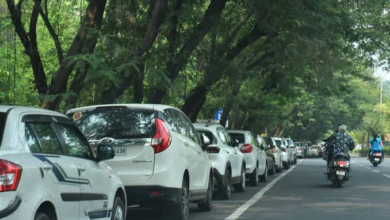
Nagpur NMC Vehicle Allotment Controversy: ₹60 Lakh Annual Expense Sparks Debate


Nagpur news: When public money is involved, every rupee matters. So, what happens when a civic body like Nagpur Municipal Corporation (NMC) faces allegations of spending nearly ₹60 lakh annually on vehicle allotments? Naturally, questions arise. People start asking—Is this necessary? Is it justified? Or is it just another example of misuse of taxpayer money?
This controversy has stirred discussions across Nagpur, with citizens demanding transparency and accountability. Let’s break it down in simple terms so you can clearly understand what’s going on and why it matters to you.
| Sr# | Headings |
|---|---|
| 1 | What is the Nagpur NMC Vehicle Allotment Controversy? |
| 2 | How Did the Issue Come to Light? |
| 3 | Breakdown of the ₹60 Lakh Annual Expense |
| 4 | Why Are Vehicles Allotted to Officials? |
| 5 | Public Reaction and Concerns |
| 6 | Political Angle Behind the Controversy |
| 7 | Is This Expense Justified? |
| 8 | Comparison with Other Cities |
| 9 | Impact on Taxpayers |
| 10 | Transparency and Accountability Issues |
| 11 | Possible Misuse or Systemic Problem? |
| 12 | What Reforms Are Needed? |
| 13 | Role of Media and Public Awareness |
| 14 | Future Implications for NMC |
| 15 | Final Thoughts on Governance and Responsibility |
1. What is the Nagpur NMC Vehicle Allotment Controversy?
At the heart of the issue lies a simple but powerful question—why is NMC spending ₹60 lakh every year on vehicle allotments?
Reports suggest that several officials have been provided vehicles, and the cost of maintaining, fueling, and managing these vehicles adds up to a significant annual expense. For a city already dealing with infrastructure and civic challenges, this raised eyebrows.
2. How Did the Issue Come to Light?
Like many public controversies, this one surfaced through media reports and internal scrutiny. Once the numbers became public, the reaction was immediate.

People began asking:
- Who approved this spending?
- How many vehicles are involved?
- Are these vehicles actually needed?
It’s like discovering your household budget is leaking money—you naturally want answers.
3. Breakdown of the ₹60 Lakh Annual Expense
Let’s simplify this. The ₹60 lakh isn’t just about buying vehicles. It includes:
- Fuel costs
- Driver salaries
- Maintenance and repairs
- Operational expenses
When combined, these recurring costs form a hefty financial burden. Imagine spending thousands every month on something you barely use—that’s how many citizens are viewing this issue.
4. Why Are Vehicles Allotted to Officials?
In government systems, vehicle allotment is not unusual. Officials often need to travel for:
- Site inspections
- Emergency response
- Administrative work
However, the controversy arises when the number of vehicles or their usage appears excessive. The key question is: Are these vehicles being used for official work—or personal convenience?
5. Public Reaction and Concerns
Citizens of Nagpur have shown strong reactions. Social media discussions, local debates, and public opinions highlight a common sentiment:
👉 “Public money should be used wisely.”
People are concerned because:
- Roads need repair
- Water supply issues persist
- Infrastructure projects need funding
So when ₹60 lakh goes into vehicles, it feels like priorities might be misplaced.
6. Political Angle Behind the Controversy
No civic issue stays purely administrative for long—it quickly becomes political. Opposition leaders have questioned the decision, while authorities may defend it as necessary.
This creates a classic tug-of-war:
- One side demands accountability
- The other justifies operational needs
In many ways, it’s like a courtroom debate where both sides claim to be right.
7. Is This Expense Justified?
This is the core of the debate.
Supporters say:
- Vehicles are essential for efficient governance
- Officials need mobility to function properly
Critics argue:
- Costs are too high
- Alternatives like shared vehicles or reimbursements could work
So, who’s right? The truth likely lies somewhere in between.
8. Comparison with Other Cities
When compared to other municipal corporations, questions arise about whether Nagpur’s spending is higher than average.
If similar cities manage with lower budgets, then naturally people wonder:
👉 Why is Nagpur spending more?
Comparisons often act as a mirror, showing whether something is normal or excessive.
9. Impact on Taxpayers
Here’s the reality—this money comes from taxpayers.
Every property tax, water bill, and civic charge contributes to such expenses. So when funds are used inefficiently, the burden indirectly falls on citizens.
It’s like pooling money for a community project, only to see it spent on something less important.
10. Transparency and Accountability Issues
One major concern is lack of clarity:
- Are vehicle usage logs maintained?
- Is there a monitoring system?
- Are audits conducted regularly?
Without transparency, even justified expenses can appear suspicious. Trust depends on clear communication.
11. Possible Misuse or Systemic Problem?
Is this a case of misuse—or just an outdated system?
Sometimes, policies continue without review, leading to unnecessary spending. Other times, misuse of resources cannot be ruled out.
The real issue might not be individuals, but the system itself.
12. What Reforms Are Needed?
Experts and citizens suggest several reforms:
- Limit number of allotted vehicles
- Introduce shared vehicle systems
- Use GPS tracking for accountability
- Encourage digital monitoring
These steps can reduce costs and increase transparency.
13. Role of Media and Public Awareness
Without media coverage, this issue might have gone unnoticed. Public awareness acts like a spotlight—it exposes problems and pushes authorities to respond.
In a democracy, informed citizens are the strongest force for change.
14. Future Implications for NMC
This controversy could lead to:
- Policy changes
- Budget revisions
- Increased scrutiny of expenses
It may also set a precedent for how civic bodies manage resources in the future.
15. Final Thoughts on Governance and Responsibility
At its core, this controversy is not just about vehicles—it’s about trust.
When people pay taxes, they expect responsible governance. Even small inefficiencies can feel like big betrayals.
Think of it like lending money to a friend—you expect them to use it wisely. The same principle applies here.
The Nagpur NMC vehicle allotment controversy has opened up an important conversation about public spending and accountability. While vehicles may be necessary for administrative work, the scale of expenditure raises valid concerns.
Going forward, the focus should not just be on criticism, but on solutions—better policies, transparent systems, and responsible governance. Because in the end, every rupee saved is a step toward a better city.
1. What is the Nagpur NMC vehicle allotment controversy about?
It involves allegations of ₹60 lakh annual spending on vehicles allotted to officials, raising concerns about misuse of public funds.
2. Why are officials given vehicles in the first place?
Vehicles are provided for official duties like inspections and administrative work, but the issue arises when usage seems excessive.
3. How does this affect common citizens?
The expense is funded by taxpayer money, meaning inefficient spending indirectly impacts public resources and services.
4. Are there any proposed solutions to this issue?
Yes, suggestions include reducing vehicle numbers, using shared systems, and improving monitoring through technology.
5. Will this controversy lead to changes in NMC policies?
It’s likely, as public pressure and media attention often push authorities to review and reform such practices.