Automated Vehicle Testing Station in Nagpur: A Game-Changer for Road Safety and Vehicle Fitness

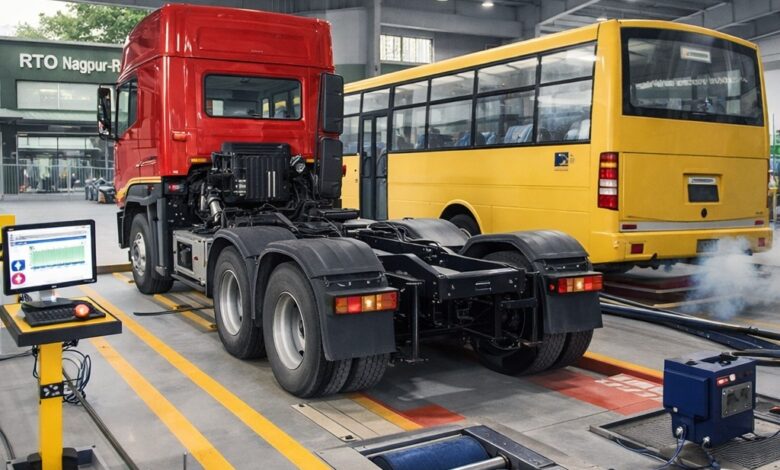

vehicle fitness test Nagpur: Imagine going for a vehicle fitness test and instead of long queues, manual checks, and uncertainty, everything happens smoothly with machines doing the job in minutes. Sounds futuristic, right? Well, that future is about to become reality in Nagpur, where an Automated Vehicle Testing Station (AVTS) is set to open on May 15, 2026.
This move is not just about convenience—it’s about transparency, safety, and efficiency. With increasing vehicles on Indian roads, ensuring that every vehicle is roadworthy is no longer optional—it’s essential. This new facility promises to revolutionize how fitness tests are conducted.
| Sr# | Headings |
|---|---|
| 1 | What is an Automated Vehicle Testing Station? |
| 2 | Why Nagpur Needs This Facility |
| 3 | Key Features of the New Testing Station |
| 4 | How the Automated Testing Process Works |
| 5 | Benefits for Vehicle Owners |
| 6 | Impact on Road Safety |
| 7 | Transparency and Corruption-Free System |
| 8 | Role of Technology in Vehicle Testing |
| 9 | Environmental Benefits |
| 10 | Comparison with Traditional Fitness Testing |
| 11 | Government’s Vision Behind AVTS |
| 12 | Challenges and Concerns |
| 13 | Future of Vehicle Testing in India |
| 14 | What Vehicle Owners Should Prepare For |
1. What is an Automated Vehicle Testing Station?
An Automated Vehicle Testing Station (AVTS) is a high-tech facility where vehicles are inspected using advanced machines instead of manual checks.
Think of it like a full-body health checkup for your car, where every part—from brakes to emissions—is tested with precision. No guesswork, no shortcuts—just accurate results.
2. Why Nagpur Needs This Facility
Nagpur is rapidly growing as a major urban and logistics hub. With more vehicles hitting the roads every day, manual testing methods simply can’t keep up.

- Rising traffic density
- Increased pollution levels
- Need for stricter safety compliance
The AVTS comes as a timely upgrade to ensure vehicles meet safety standards without delays.
3. Key Features of the New Testing Station
The upcoming facility is designed with state-of-the-art technology. Some standout features include:
- Automated brake testing systems
- Suspension and alignment checks
- Emission testing units
- Underbody inspection scanners
- Computerized reports
Everything is digitally recorded, leaving no room for manipulation.
4. How the Automated Testing Process Works
Curious about what happens when your vehicle enters the station?
Here’s a simple breakdown:
- Vehicle Entry Registration
- Automated Conveyor Movement
- Step-by-Step Machine Testing
- Real-Time Data Collection
- Instant Digital Report Generation
It’s almost like going through an airport security check—but for your vehicle!
5. Benefits for Vehicle Owners
This new system brings several advantages:
- Faster testing process (no long waiting hours)
- Accurate results without human error
- Transparency in inspection
- Easy digital records for future reference
For vehicle owners, it means less stress and more trust.
6. Impact on Road Safety
Unsafe vehicles are one of the major causes of accidents. With AVTS:
- Faulty brakes can be detected early
- Emission issues can be controlled
- Structural weaknesses can be identified
This leads to safer roads for everyone, not just vehicle owners.
7. Transparency and Corruption-Free System
Let’s be honest—manual vehicle testing has often been criticized for lack of transparency.
With automation:
- No human interference in results
- No chances of “adjustments”
- Complete digital records
This system ensures fairness for all vehicle owners.
8. Role of Technology in Vehicle Testing
Technology is the backbone of AVTS. It uses:
- Sensors
- Cameras
- AI-based analysis
- Real-time data processing
This ensures every vehicle is tested with scientific accuracy, not assumptions.
9. Environmental Benefits
Pollution is a growing concern in cities like Nagpur.
Automated testing helps by:
- Identifying high-emission vehicles
- Enforcing stricter pollution norms
- Reducing carbon footprint
It’s a step toward a cleaner and greener city.
10. Comparison with Traditional Fitness Testing
| Feature | Traditional Testing | Automated Testing |
|---|---|---|
| Accuracy | Low to Medium | High |
| Transparency | Limited | Full |
| Time | Long | Quick |
| Human Error | High | Minimal |
| Records | Manual | Digital |
Clearly, automation is a huge upgrade.
11. Government’s Vision Behind AVTS
The launch of this facility aligns with the government’s goal of:
- Modernizing RTO services
- Improving road safety
- Reducing corruption
- Promoting digital India initiatives
This is not just a local upgrade—it’s part of a national transformation.
12. Challenges and Concerns
While the system is promising, there are a few concerns:
- Initial cost of setup
- Awareness among vehicle owners
- Adaptation to new processes
However, these are short-term hurdles for long-term benefits.
13. Future of Vehicle Testing in India
Nagpur’s AVTS is just the beginning.
In the future, we can expect:
- More automated stations across cities
- Integration with vehicle databases
- AI-based predictive maintenance
India is moving toward a fully automated transport ecosystem.
14. What Vehicle Owners Should Prepare For
If you own a vehicle, here’s what you should do:
- Keep your vehicle well-maintained
- Ensure pollution norms are met
- Carry proper documents
- Be ready for digital reports instead of paper
Think of it as upgrading your vehicle’s report card system.
The upcoming Automated Vehicle Testing Station in Nagpur is more than just a new facility—it’s a major step toward safer roads, cleaner air, and a transparent system.
It replaces outdated methods with modern technology, making vehicle inspections faster, fairer, and more reliable. For everyday citizens, this means peace of mind knowing that every vehicle on the road is properly tested.
As the city embraces this change, one thing is clear—the future of transportation in Nagpur is smart, safe, and automated.
1. What is the launch date of Nagpur’s automated vehicle testing station?
The station is expected to open on May 15, 2026.
2. How is automated testing better than manual testing?
It offers higher accuracy, transparency, and faster results with minimal human intervention.
3. Will all vehicles need to go through this testing?
Yes, especially commercial and older vehicles requiring fitness certification.
4. Does automated testing reduce corruption?
Absolutely, since results are machine-generated and digitally recorded, reducing manipulation.
5. How long does the testing process take?
The automated process is much quicker, often completed within minutes compared to manual checks.