Flyover Project at Manewada Square in Nagpur

In a groundbreaking move, a Rs. 250 crore flyover is set to transform the landscape of Manewada Square in Nagpur. This strategic development is not just about infrastructure; it’s a testament to progressive urban planning and the commitment to enhance the city’s connectivity.

Enhancing Connectivity: The Need of the Hour

Solving Traffic Woes

The bustling Manewada Square has long been grappling with traffic congestion, causing inconvenience to commuters and residents alike. The introduction of the Rs. 250 crore flyover is a strategic move aimed at alleviating these issues and streamlining the traffic flow in this pivotal area.

Seamless Commuting Experience

One of the key aspects of this ambitious project is its emphasis on providing a seamless commuting experience. By strategically placing the flyover at Manewada Square, authorities aim to significantly reduce travel time, making daily commutes more efficient for residents and commuters.

Key Features of the Flyover Project

Architectural Marvel

The flyover is not just a means to an end; it’s an architectural marvel that combines functionality with aesthetics. The design incorporates modern elements, ensuring that the structure not only serves its purpose but also adds to the visual appeal of the surroundings.

Technological Advancements

Incorporating state-of-the-art technology, the project is poised to set new standards in construction. From smart traffic management systems to eco-friendly construction materials, every aspect has been carefully considered to make this flyover a model of sustainable urban development.

Community Impact

Economic Boost

Beyond the immediate benefits of improved traffic flow, the Rs. 250 crore flyover is expected to provide a significant economic boost to the region. Enhanced connectivity often translates to increased commercial activity, benefiting local businesses and fostering economic growth.

Quality of Life

Residents in the vicinity can look forward to an improved quality of life. Reduced noise pollution, smoother traffic, and the overall convenience brought by the flyover contribute to a more pleasant living experience for those in the community.

Project Timeline and Milestones

Rigorous Planning

The success of this monumental project lies in meticulous planning. Engineers, architects, and urban planners have collaborated extensively to ensure every detail is considered, from the initial planning stages to the ongoing construction.

Milestones Achieved

As construction progresses, key milestones are being achieved on schedule. The adherence to timelines showcases the commitment of the involved parties to deliver this transformative project efficiently.

Future Outlook

Setting a Precedent

The Rs. 250 crore flyover at Manewada Square is not just a local development; it’s a model for future infrastructure projects. As cities across the globe grapple with urban challenges, the success of this project could set a precedent for effective, forward-thinking solutions.

the unveiling of the Rs. 250 crore flyover at Manewada Square marks a significant stride towards a more connected and efficient urban landscape. Beyond the numbers and the budget, this project symbolizes a commitment to progress, innovation, and an improved quality of life for the community it serves.

Pernod Ricard Monumental Investment in India’s Largest Malt Distillery

In a groundbreaking move, French liquor powerhouse Pernod Ricard has inked a landmark memorandum of understanding (MoU) with the Maharashtra government, setting the stage for a colossal investment in a malt distillery nestled in the heart of Nagpur. This ambitious venture, with a daily production capacity of 60,000 litres, not only marks a significant stride for Pernod within its own portfolio but also stands as the largest malt distillery in Asia, potentially securing its position as the industry giant of the continent.

Toasting to Ambitions: Pernod’s Vision Unveiled

Unveiling India’s Brewing Marvel

Pernod’s Pledge: The liquor titan has committed a staggering 1,790 crore investment over the next decade, solidifying its dedication to this colossal project.

Capacity Reigns Supreme: Anticipated to take over two years for completion, the distillery’s impressive scale is matched only by its potential to age spirits to perfection.

Distilling Prosperity for Farmers in Crisis

In an exclusive statement, Deputy Chief Minister Devendra Fadnavis expressed optimism that initiatives like Pernod’s would offer a lifeline to farmers grappling with climate change-related crises. He emphasized that the distillery’s reliance on barley, a resilient crop thriving in Vidarbha’s diverse weather conditions, could potentially breathe life into a staggering 35,000 acres of farmland.

Sowing Seeds of Success: The Agricultural Impact

Barley’s Resilience Shines

Climate Change Mitigation: Fadnavis contends that the barley crop’s ability to endure diverse weather patterns positions it as a strategic solution in times of climate uncertainty.

Farmers’ Ally: With the distillery’s demand for barley, local farmers stand to gain, creating a symbiotic relationship between the industry and agriculture.

FAQs: Addressing Curiosities

1. What is the projected timeline for the distillery’s completion?

Answer: Pernod estimates a construction period of over two years, with additional time allocated for the spirits to age to perfection.

2. How much land has the state industries department offered for this venture?

Answer: The Butibori industrial estate has graciously provided the land for Pernod Ricard monumental distillery.

3. Why is barley the chosen grain for this distillery?

Answer: Barley’s resilience and adaptability to various weather conditions make it an ideal candidate, especially considering the challenges posed by climate change.

4. How will this investment benefit local farmers?

Answer: The distillery’s demand for barley is expected to stimulate the local economy, providing farmers with a reliable market for their produce.

5. What is the significance of this distillery on a regional scale?

Answer: Besides being the largest in India, it positions Nagpur as a key player in the ever-evolving liquor industry, opening doors for further economic development.

6. How does this initiative contribute to climate change mitigation?

Answer: By utilizing barley, known for its climate-resilient qualities, the distillery aligns with sustainable practices, offering a potential solution to climate-related agricultural challenges.

A Spirited Conclusion

In the spirit of progress, Pernod Ricard’s monumental venture promises not just a thriving distillery but a catalyst for regional development. As construction commences and barley fields ripple across Vidarbha, the fusion of industry and agriculture unfolds, creating a toast-worthy narrative for Nagpur and beyond. Here’s to the future, where prosperity flows as smoothly as the finest spirits crafted in India’s largest malt distillery. Cheers!

Nagpur Traffic Grinds to a Halt as 10 Key Roads Undergo Revamp

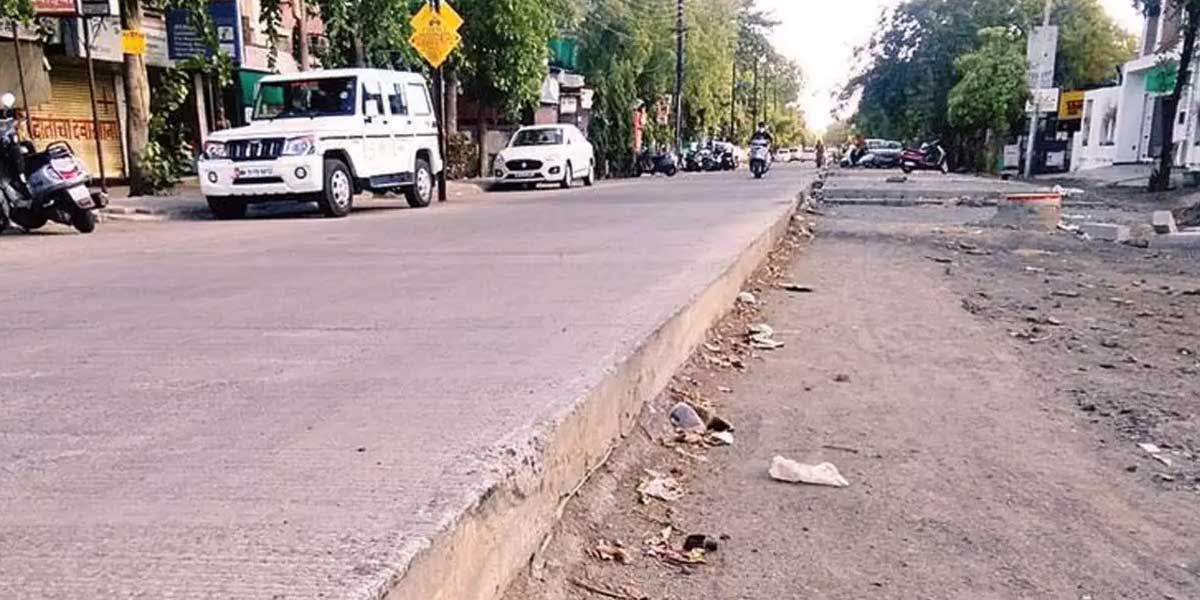
Navigating the vibrant city of Nagpur has become a daunting task for motorists, especially within the 3km radius of Rani Jhansi Square. The culprit? A simultaneous overhaul of 10 crucial roadways, causing a perfect storm of traffic chaos and congestion.

Nagpur Traffic Woes Unveiled: 10 Key Roads Under Works Throw Traffic Out Of Gear

In the heart of Nagpur, various agencies have embarked on a mission to revamp the city’s road infrastructure. From Civil Lines to Dhantoli, Ramdaspeth to Congress Nagar, and the Wardha road stretch from Variety Square to Chhatrapati Square, a multitude of projects is underway. This extensive revitalization, while promising a brighter future, has plunged Nagpur traffic into disarray.

The Busy Hotspots: A Closer Look at the Construction Zones

  1. Bole Petrol Pump Square: A Crucial Hub for Overhauling
    • Unveiling the changes that will reshape the traffic landscape.
    • Traffic rerouted: How commuters are adapting to the shifts.
  2. Rabindranath Tagore Marg: A Symphony of Construction
    • The melody of progress: Construction activities in full swing.
    • Challenges faced by motorists in the vicinity.
  3. University Library Square: An Intellectual Hub Amidst Construction
    • Balancing academia and construction: A challenging feat.
    • The impact on daily commuters and students alike.
  4. Rani Jhansi Square to Panchsheel Square: A Pivotal Connection Disrupted
    • Examining the strategic importance of this disrupted route.
    • Measures to alleviate congestion during this critical period.
  5. Munje Chowk to Mehadiya Square: A Commuter’s Quandary
    • Understanding the commuter’s perspective amidst ongoing works.
    • Strategies to minimize disruption during peak hours.
  6. Mehadiya Square to Congress Nagar: Navigating the Revitalization
    • An overview of the changes unfolding in this bustling corridor.
    • Collaborative efforts to streamline traffic flow.
  7. Rahate Colony Square: A Residential Hub in Transition
    • Balancing residential needs with infrastructure upgrades.
    • The impact on local residents and their daily routines.
  8. Rajiv Gandhi Chowk: A Central Nexus Under Transformation
    • Unveiling the vision for this central junction’s transformation.
    • The role of effective communication in minimizing inconvenience.
  9. Swami Vivekanand Square: Spirituality Meets Construction
    • Navigating the spiritual junction amidst construction upheavals.
    • Community responses and coping mechanisms.
  10. Rahate Colony Square to Deekshabhoomi Square: Connecting Pasts and Futures
    • Traversing the historical and modern significance of this route.
    • Strategies to balance heritage preservation with infrastructural needs.

Traffic Police’s Perspective: Chaos Unveiled

  • DCP (Traffic) Shashikant Satao Speaks Out:
    • Shedding light on the existing traffic chaos.
    • The role of ‘no-objection certificates’ in maintaining order.
  • Traffic Cop Insights:
    • The need for coordinated planning among various agencies.
    • Addressing concerns about inadequate diversion plans.

Impact on Motorists: A Plethora of Challenges

Navigating the city’s roadways has become more than just a daily commute; it’s a test of patience and adaptability. Motorists find themselves stranded in gridlocks, facing fuel wastage, increased running costs, loss of productive hours, and heightened pollution levels.

FAQs: Unveiling Solutions Amidst Chaos

  1. Q: Why simultaneous works on crucial roads?
    • A: Coordinated efforts for comprehensive urban development.
  2. Q: Why inadequate diversions?
    • A: Lack of thorough studies and planning.
  3. Q: What measures are in place to minimize inconvenience?
    • A: Ongoing collaboration with traffic departments to optimize diversion plans.
  4. Q: How long will the disruptions last?
    • A: Most roads to remain partially closed until March 31.
  5. Q: What’s being done to address fuel wastage and pollution?
    • A: Advocating alternative transportation modes and emission control measures.
  6. Q: Are citizens being informed about ongoing works?
    • A: Municipal efforts to keep citizens updated through notifications.

Navigating the Road to Progress

While the city undergoes a transformative phase, Nagpur traffic faces challenges that demand a delicate balance between development and convenience. As the construction symphony plays on, it is imperative for authorities to refine their strategies, ensuring a smoother journey for Nagpur’s motorists. In the midst of chaos, a roadmap to progress is being paved, promising a future where convenience and development coexist harmoniously.

Ajni Revamp Faces Roadblock as Squatters Stall, NMC Remains Inactive

In the bustling city of Nagpur, the ambitious redevelopment project of Ajni railway station (Nagpur) encounters a significant hurdle on its west side, where a row of shops impedes progress. This roadblock has emerged as a challenge for the Railway Land Development Authority (RLDA), throwing a wrench into their plans for station enhancement.

Ajni Station’s Struggle for Transformation

Shops Stall Redevelopment

At the forefront of Ajni station’s west side stand six shops, creating a hindrance to the redevelopment initiative spearheaded by RLDA. The obstruction, located on plot number 65/A and owned by the Nagpur Municipal Corporation (NMC), has become a focal point of contention.

NMC’s Leased Land Predicament

The NMC had leased this land, measuring 3,430 sqft, to Amarchand Jaichandji Jain on October 30, 1987, for a duration of 30 years. However, the lease expired on October 27, 2017, and a subsequent request by the Central Railway divisional railway (Nagpur) manager (DRM) on April 7, 2022, sought the plot for the Ajni station’s circulating area.

Despite the expiration of the lease, the land remains occupied, and no eviction notice has been served to the leaseholder, who, in turn, has sublet the shops. Pankaj Parashar, executive engineer of NMC’s estate department, informed TOI that despite demands from the Jains for a lease extension, NMC has not acceded. Plans are underway to propose the diversion of the land to Central Railway, accompanied by an impending notice to the Jains for lease agreement violations.

Ajni Station’s Unfolding Drama

Tussle Over Territory

As the redevelopment project seeks momentum, a tug-of-war ensues over the contested land. The clash between the RLDA’s vision and the current occupants’ resistance adds layers of complexity to the situation.

NMC’s Standoff

NMC remains firm on its decision not to renew the lease, citing the imperative need for the land in the station’s expansion plans. This firm stance, however, triggers a series of events leading to potential legal ramifications.

Ajni Station’s Future Hangs in the Balance

Delayed Progress

The standoff between the authorities and the occupants has resulted in a stagnation of the Ajni station’s revamp. The ripple effects of this delay extend beyond the immediate area, impacting commuters and stakeholders eagerly awaiting a transformed railway hub.

Commuters Left in Limbo

With the redevelopment timeline in jeopardy, commuters are left in uncertainty. The promised enhancements, meant to streamline their travel experience, now dangle in the balance.

Ajni Station: Frequently Asked Questions

Q1: What led to the expiration of the lease on plot 65/A?

A1: The lease on plot 65/A expired on October 27, 2017, with the NMC refusing to extend it, paving the way for the Central Railway’s requisition.

Q2: Why has the NMC not renewed the lease despite demands?

A2: Despite persistent demands from the Jains for lease extension, the NMC stands resolute in not renewing the lease, prioritizing the land’s allocation for Ajni station’s expansion.

Q3: Is there a timeline for the proposed diversion of the land to Central Railway?

A3: Plans are underway to propose the land diversion, with a notice to the Jains for violating the lease agreement. The timeline, however, remains unspecified.

Q4: How has the delay impacted commuters?

A4: The standoff has led to a delay in Ajni station’s revamp, leaving commuters in limbo and anticipating the promised improvements.

A5: The expiration of the lease may lead to legal actions, with NMC exploring avenues to regain possession and proceed with the redevelopment.

Q6: Are there alternatives being considered to resolve the deadlock?

A6: The authorities are actively exploring alternatives to break the deadlock, ensuring a swift resolution that aligns with the station’s redevelopment goals.

Conclusion

As the Ajni station revamp faces a roadblock, the unresolved lease expiration and the standoff with current occupants cast a shadow over its future. NMC’s decisive actions and the RLDA’s persistence will play crucial roles in determining the station’s fate. Commuters, eagerly anticipating a rejuvenated travel experience, are left with uncertainties, highlighting the need for swift resolutions in the interest of all stakeholders involved.

Nagpur Smart City: A Seven-Year Odyssey Towards Modernization

Unveiling the Lag in Nagpur’s Smart City Mission

Nagpur, Maharashtra – In a city that breathes history, the Smart City Mission was expected to be a revolutionary stride towards modernization. However, seven years after its initiation, the ground reality paints a different picture. The Nagpur Smart and Sustainable City Development Corporation Limited (NSSCDCL) finds itself grappling with the completion of 17 crucial projects out of the over 40 undertaken.

The Countdown to Deadline: A Race Against Time

With a mere four months left until the Smart Cities Mission deadline, the NSSCDCL faces the daunting task of wrapping up pending works. Originally slated for completion by June 2021, the deadline has undergone extensions, first to June 2023, and now to June 2024. The lingering projects stand as a challenge to the NSSCDCL, a special purpose vehicle (SPV) created for the Smart City initiative.

Financial Infusion and Government Collaboration

The NSSCDCL, backed by a substantial grant of Rs741.63 crore from the central government, also embraced state government projects under the Smart and Safe City initiative during the tenure of Chief Minister Devendra Fadnavis. A significant allocation of Rs524 crore was made for projects involving CCTV cameras and smart kiosks.

A Tale of Two Projects: CCTV Cameras and Smart Kiosks

The CCTV camera project emerged as a success story, aiding the Nagpur city police in crime-solving, traffic management, and flood monitoring. However, the narrative takes a turn when it comes to the 65 smart kiosks, also known as touch points. These kiosks, intended to provide a spectrum of services linked to central and state governments, civic bodies, and government departments, remain non-operational.

“The kiosks were not integrated with various government agencies, including the Nagpur Municipal Corporation (NMC),” concedes a senior official from the NSSCDCL. The installation of both CCTV cameras and smart kiosks was entrusted to a private firm through Maha-IT, a state government department.

A Desolate End for E-toilets and Other Unfinished Business

The much-anticipated NSSCDCL project involving the installation of 50 e-toilets faced an abrupt halt when the Kerala-based contractor discontinued the work. Only 12 units (6 men’s and 6 women’s) were installed, and they now stand closed due to non-maintenance.

Among the projects yet to see completion are the construction of 10 bridges, four elevated storage reservoirs (ESR) under Area Based Development (ABD), a sewage treatment plant on Pohra river, and the construction of four parking plazas at different locations.

Looking Back, Moving Forward

While NSSCDCL has achieved milestones in projects such as the resettlement and rehabilitation of project-affected persons and the procurement of 40 air-conditioned electric buses, the lingering incomplete ventures cast a shadow on Nagpur’s journey to becoming a Smart City.

In the race against time, with the deadline fast approaching, NSSCDCL has turned to NMC’s e-governance department for the integration of smart kiosks with civic services, hoping to salvage a semblance of success from the ongoing challenges. The saga of Nagpur’s Smart City Mission continues, with the city and its residents eagerly awaiting the promised transformation.

Revamping Nagpur Station: A Journey Through Heritage and Innovation

Introduction: Nagpur Station Redevelopment – Marrying the Past with the Future

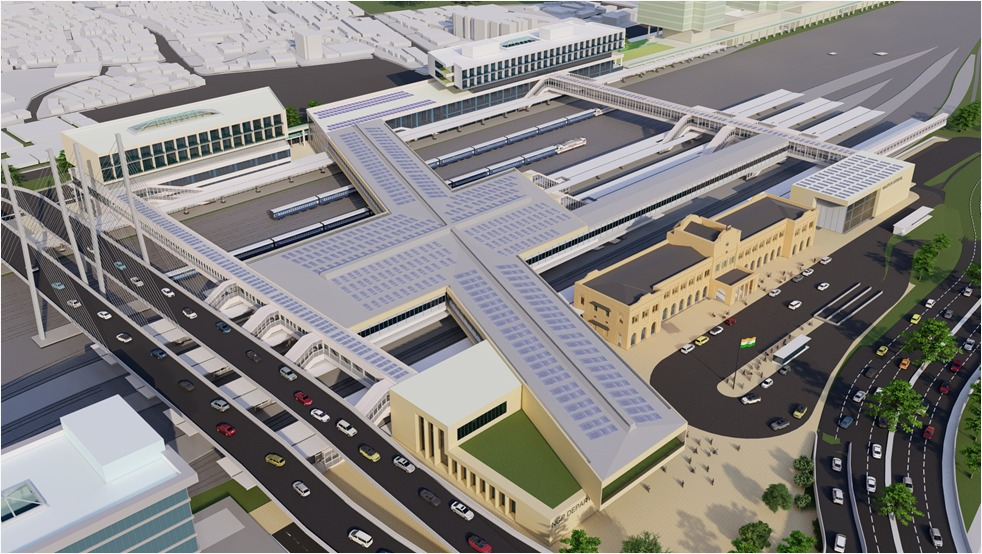
The bustling hub of Nagpur Railway Station, a crucial juncture in the vast Indian Railways network, is currently undergoing a remarkable metamorphosis. This redevelopment project aims not just for a facelift but a complete transformation, promising travelers a world-class experience that harmoniously fuses heritage charm with modern functionality.

Redevelopment Unveiled: A Glimpse into the Future

Iconic Structures Beckon: East and West Sides Transform

East Side Marvels: G+5 and G+2 Architectural Wonders

Passengers arriving at the east side (Nagpur Railway Station) will be greeted by the grandeur of a G+5 arrival building and a G+2 departure building. Meanwhile, the west side maintains its historical allure with a meticulously restored facade.

Rooftop Vista: 108×52 Meter Plaza Extravaganza

At the heart of this redevelopment, a sprawling 108×52 meter rooftop plaza will unfold, offering panoramic views and housing amenities like cafeterias. This space aims to redefine waiting areas, making them comfortable and convenient for passengers.

Streamlined Segregation: A Flow-Friendly Experience

The meticulous separation of arrival and departure zones ensures a smooth passenger flow, effectively reducing congestion and enhancing overall station efficiency.

Seamless Connectivity: Bridging Modes of Travel

Integration with the upcoming metro station and other transport modes establishes Nagpur Station (Nagpur Railway Station) as a central hub for seamless multimodal travel, making it a pivotal point in the region.

Accessible to All: Elevating Inclusivity

A commitment to inclusivity is showcased through 28 lifts, 28 escalators, and comprehensive infrastructure for passengers with disabilities, solidifying the station as fully Divyang-friendly.

Comfort Redefined: Illumination, Signage, and Modern Amenities

The passenger experience is at the forefront, with improved illumination, clear signage, ample waiting areas, and contemporary amenities ensuring comfort at every step.

Security in Focus: Vigilance Through Technology

CCTV cameras and access control systems are strategically placed, providing a heightened sense of security for all travelers passing through Nagpur Station.

Sustainable Living: Green Initiatives for Eco-Friendly Operations

The station is set to become a beacon of sustainability, incorporating green practices such as solar energy harnessing, water conservation, and rainwater harvesting.

Nagpur Station Redevelopment: In the Heart of Progress

East Side Evolution: A Rising Architectural Symphony

Elevated Buildings: G+5 Arrival and G+2 Departure

The east side unfolds with a G+5 arrival building and a G+2 departure building, intricately connected by a unified basement. This layout maximizes space, catering to passenger movement and essential amenities.

Skyward Plaza: A Panoramic Oasis

The grandeur continues with a 108×52 meter roof plaza offering a breathtaking view and a serene space for passengers. Cafes and amenities add the final touches, creating a delightful waiting area.

Seamless Segregation: Flow Efficiency

Clear-cut distinctions between arrival and departure areas facilitate a streamlined passenger flow, enhancing the overall station experience.

West Side Renaissance: Preserving Architectural Legacy

Heritage Building Resurrection

The historic building on the west side undergoes a meticulous restoration process, preserving its architectural legacy and inviting travelers into a bygone era.

Admin Block Shift: Creating Space for Passenger Comfort

A new administrative block behind the DRM office is under construction, aimed at relocating existing railway offices, thus freeing up space for enhanced passenger facilities.

Conclusion: A Journey Towards a Revitalized Nagpur

As the Nagpur Station Redevelopment project unfolds, a fusion of heritage and modernity takes center stage. Commuters can anticipate not just a railway station but an architectural marvel that seamlessly blends the charm of yesteryears with the efficiency of the future, promising a memorable journey for generations to come.

FAQs: Unveiling Nagpur Station Redevelopment

  1. What is the key focus of the Nagpur Station Redevelopment?
    • The redevelopment aims to transform Nagpur Station into a modern and inclusive travel hub, blending heritage elements with contemporary infrastructure.
  2. How will the segregation of arrival and departure areas benefit passengers?
    • Clear segregation ensures a smooth passenger flow, minimizing congestion and improving overall station functionality.
  3. What sustainability features are being incorporated into the redevelopment?
    • The station will embrace eco-friendly operations through solar energy harnessing, water conservation, and rainwater harvesting.
  4. Why is the west side heritage building being restored?
    • The meticulous restoration preserves the historical charm, allowing travelers to experience the architectural legacy of Nagpur.
  5. How is accessibility being addressed in the redevelopment project?
    • The station will be fully Divyang-friendly, with 28 lifts, 28 escalators, and infrastructure catering to passengers with disabilities.
  6. What changes can commuters expect on the east side of Nagpur Station?
    • The east side will feature G+5 and G+2 buildings, a spacious roof plaza, and improved segregation for a holistic passenger experience.

Smart Electricity Meters to Light Up Nagpur from March

Introduction

In a groundbreaking move, the Maharashtra State Electricity Distribution Company Limited (MSEDCL) is gearing up to unveil a transformative initiative – prepaid smart electricity meters in Nagpur, commencing March. This progressive step aligns with the Central Government’s Revamped Distribution Sector Scheme (RDSS) and falls under the umbrella of the ‘Smart Meter National Programme’ nationwide.

Survey and Installation Buzz in Nagpur

An official from MSEDCL disclosed that a private firm has kickstarted a comprehensive survey, laying the groundwork for the installation of these cutting-edge smart meters in Nagpur. Currently, the installation process is in full swing at critical locations like sub-stations, feeders, and crossover points, with an impressive 50% completion rate. Residents of Nagpur can anticipate the arrival of these smart meters starting in March, marking a pivotal shift in the city’s energy landscape.

The Ambitious Project Scope

The ambitious project aims to deploy over 57 lakh smart prepaid meters exclusively in the Nagpur region. These meters boast a unique feature – an automatic power supply cutoff upon depletion of the recharge amount, promising efficient energy consumption and resource optimization.

Budget Allocation and Tender Process Under RDSS

Under the RDSS, the Central Government has allocated a whopping budget of Rs 15,000 crore for smart meter implementation across Nagpur, Pune, Aurangabad, and the Konkan region of MSEDCL. Tenders were diligently floated to appoint Advanced Metering Infrastructure (AMI) service providers for this monumental project.

Phased Approach to Implementation

The official shed light on the phased implementation strategy. In the initial phase, smart and prepaid meters will be installed for customers experiencing more than 15% technical and commercial losses. The subsequent phase will focus on areas where power losses are below 15%. This strategic approach ensures a systematic rollout tailored to the unique needs of different regions.

Smart Meters: A Technological Marvel

Highlighting the game-changing benefits, the official emphasized that these smart meters will be seamlessly linked to a dedicated mobile application. This connectivity empowers users to monitor their power consumption in real-time, fostering a sense of control and awareness.

Automated Disconnection for Efficiency

The automated disconnection feature, triggered after the recharge amount is exhausted, is poised to curtail pending power bills and act as a deterrent against power theft. Drawing inspiration from successful implementations in foreign countries, the official expressed confidence that this technology will streamline processes, offer transparency to consumers, and elevate the overall power distribution system.

Contract Awards and Stakeholders

In September 2023, MSEDCL awarded a total of six tenders for smart meter installations. The Adani Group secured two contracts, NCC Limited secured two, while Montecarlo Limited and Genus Power Infrastructures Limited each clinched one contract.

Installation of Smart Electricity Meters in Nagpur from March

As Nagpur gears up for a technological revolution, the installation of smart electricity meters from March promises not just efficient power usage but also a leap into a future where consumers are empowered with real-time insights and control over their energy consumption.

Frequently Asked Questions (FAQs)

1. What is the purpose of introducing smart electricity meters in Nagpur?

Smart electricity meters are being introduced to revolutionize power consumption, enhance efficiency, and reduce technical and commercial losses.

2. How will the automated disconnection feature benefit consumers?

The automated disconnection feature, triggered upon recharge depletion, aims to reduce pending power bills and deter power theft, contributing to better revenue collection.

3. How does the phased implementation strategy work?

In the first phase, smart and prepaid meters will target areas with more than 15% losses, followed by areas with losses below 15% in the second phase.

4. How can users monitor their power consumption with smart meters?

Smart meters will be linked to a mobile application, allowing users to monitor their power consumption online in real-time.

5. Are smart meters a new technology?

Smart meters are not entirely new; they have been successfully employed in foreign countries and are expected to streamline processes in Nagpur.

6. Who are the major stakeholders in the installation process?

Companies like Adani Group, NCC Limited, Montecarlo Limited, and Genus Power Infrastructures Limited have secured tenders for the installation of smart meters in Nagpur.

Conclusion

As Nagpur embraces the future of energy consumption with the installation of smart electricity meters from March, this revolutionary project is poised to enhance efficiency, reduce losses, and empower consumers with unprecedented control over their power usage. The strategic phased approach, coupled with advanced technology, sets the stage for a brighter and more sustainable energy landscape in Nagpur and beyond.

Ajni Railway Station Undergoes Rs 300 Crore Transformation with New Features

Nagpur: In a groundbreaking development, Ajni Railway Station is set to undergo a massive makeover with a staggering Rs 300 crore project. The focal point of this transformation is the introduction of six cutting-edge travelators, a first-of-its-kind facility within the Indian Railways. Spearheaded by the Railway Land Development Authority (RLDA), the renovation will reshape the popular western entrance of the station.

From February 15 onwards, the old building, a relic from the 60s, will be dismantled to make way for a modern G+3 structure. This project is imperative as the railways are constructing a second entrance on the Eastern side of Ajni Railway Station. The new building, equipped with travelators, will span across platform 1 to 7, ensuring seamless connectivity for travelers navigating between the two ends of the platform.

Swanky Structures and Accessibility at the Core

The new structure promises a host of amenities, addressing contemporary needs and ensuring accessibility for all. Both entrances will boast swanky, modern designs, catering to the demands of the times. Essential facilities are being incorporated to guarantee a hassle-free experience for differently-abled individuals, emphasizing the commitment to inclusivity.

On the Western side, the ground floor will provide expansive open space, while the first floor will house the railway office, including the Station Master’s office and other key departments. The upper floors will feature lounges, waiting areas, and retiring rooms, aligning with the transformation of Ajni into a satellite terminal station. With plans to relocate services from the overcrowded Nagpur Railway Station, Ajni is poised to become a hub with all the modern conveniences.

Future-Ready Infrastructure and Timelines

The ambitious project also includes the construction of four additional high-level platforms to cater to future needs, ensuring a seamless experience for commuters. Work has already commenced on removing the old structure on the western end, causing temporary inconvenience to travelers. The new buildings on both the Eastern and Western sides are projected to be completed by 2025.

As part of the makeover, the dome added to enhance the aesthetic appeal of the old building on the western side will be removed. To facilitate the demolition process, the ticket booking office has been temporarily relocated 200 meters away on the Wardha end of the Ajni station. The Station Master’s office, Commercial Department, and RPF are also operating from temporary structures adjacent to the parking area on the station campus.

In conclusion, the Ajni Station’s Rs 300 crore transformation signifies a bold step towards modernization, ensuring a futuristic and inclusive railway experience for all commuters. The integration of innovative features and state-of-the-art infrastructure is set to redefine railway stations’ standards, marking a significant milestone in India’s rail network evolution.

Max Healthcare Expands Reach with ₹412 Crore Acquisition of Alexis Hospital in Nagpur

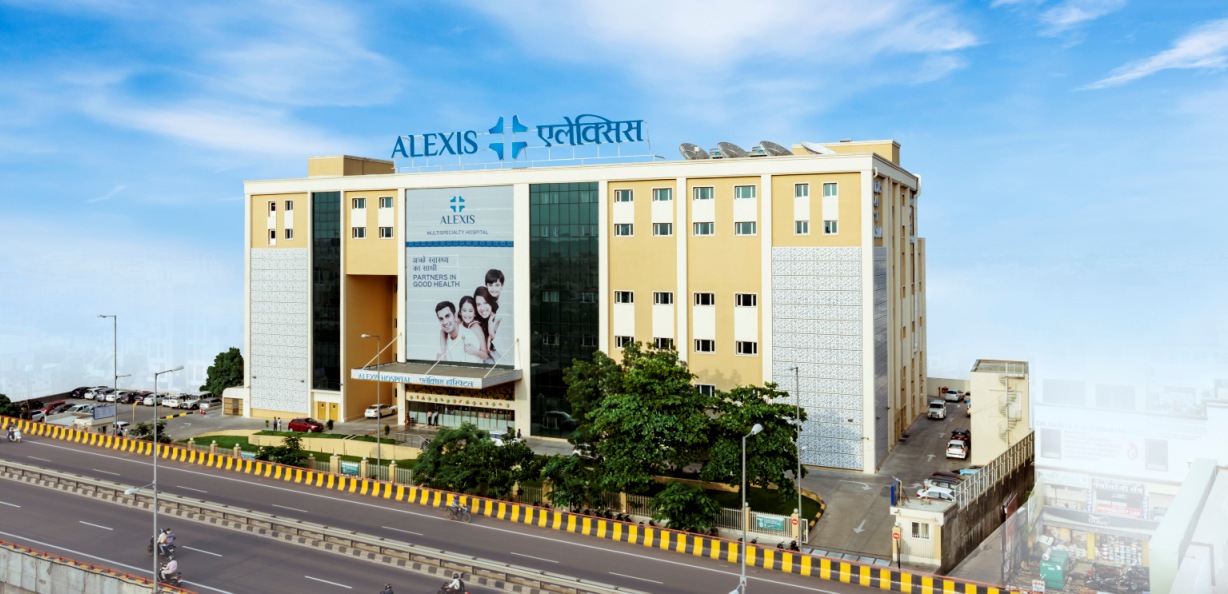
Nagpur witnessed a groundbreaking development in its healthcare landscape as Max Healthcare, based in Delhi, successfully acquired Alexis Multispecialty Hospital for a staggering ₹412 crore. This monumental deal, arguably the most significant in the city’s healthcare sector, underscores a strategic move by Max Healthcare to extend its influence and services.

Inaugurated by the renowned UAE-based Zulekha Health Care Group, the 200-bedded Alexis Hospital holds historical significance. Dr. Zulekha Daud, the founder of Zulekha Care Group and a Nagpur native, initiated this healthcare endeavor. Dr. Daud, an alumnus of Government Medical College, Nagpur, embarked on her medical journey in the UAE, eventually establishing a healthcare empire. The recent acquisition by Max Healthcare symbolizes the convergence of healthcare giants, reflecting a broader trend.

The healthcare landscape in Nagpur has been experiencing a surge in interest from listed entities, evident in the earlier alliance between Kingsway and Hyderabad’s KIMS Hospital. In this notable transaction, KIMS Hospital secured a 70% stake, investing around Rs300 crore. Following suit, private equity firm Black Stone acquired Care Group, encompassing the Nagpur unit. This trend points towards a growing preference among listed entities to establish a robust presence in Nagpur’s healthcare market.

Amit Somani, Chief of Strategy and Corporate Development at KIMS Hospitals, shared insights into the emerging trend, stating, “Listed entities’ keen interest in Nagpur as a market is set to drive healthy competition. The influx of major players promises benefits for patients, bringing enhanced facilities, diversified skill sets, and advanced technology to the forefront. Moreover, such acquisitions are anticipated to reduce the need for Nagpur residents to seek treatment in larger cities.”

Strategic Acquisitions Pave the Way for Enhanced Healthcare Ecosystem

The healthcare sector in Nagpur is poised for transformation, with Max Healthcare’s acquisition of Alexis Hospital marking a pivotal moment. This strategic move not only strengthens Max Healthcare’s foothold in the region but also sets the stage for a competitive healthcare ecosystem. With the precedent set by KIMS Hospital and Black Stone, more significant players are eyeing potential acquisitions in Nagpur, signaling a positive trajectory for the city’s healthcare landscape.

Civic Bodies Struggle to Eradicate 2,000 Illegal Constructions in Nagpur

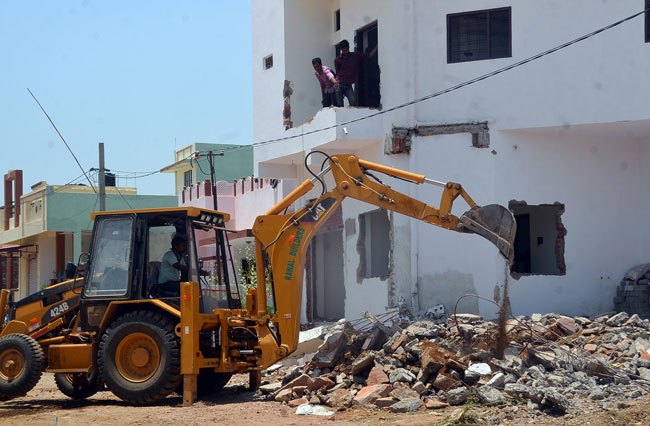
illegal constructions Nagpur: Nagpur continues to grapple with the challenge of over 2,000 illegal constructions in Nagpur, despite persistent directives from the Nagpur bench of the Bombay High Court. The Nagpur Metropolitan Region Development Authority (NMRDA) disclosed this unsettling revelation in an affidavit presented to the High Court on Thursday.

According to the affidavit filed by NMRDA Joint Commissioner Avinash Katade, who also serves as the Chairman of the Joint Supervisory Committee, various civic bodies, including NMT, NIT, and NMRDA, possess a comprehensive list of 4,668 illegal constructions in Nagpur that require immediate demolition. Surprisingly, only 1,403 of these structures were dismantled between December 7, 2023, and January 22, leaving a staggering 2,681 structures still standing.

Persistent Challenges Despite Demolition Efforts

The action taken report, submitted in response to the court’s inquiry from a PIL initiated by Ajay Tiwari, indicated that 588 structures had been transferred to other authorities such as Nagpur Smart and Sustainable City Development Corporation and various municipal councils, some of which are recently constituted.

Despite the concerted efforts of the supervisory committee, which includes Secretary Sunil Lahane and members Vijaya Bankar, Ashwini Patil, and Shriram Mundhada, the authorities involved were urged to push the demolition drive to its maximum extent. They directed the concerned authorities to address any legal impediments in subsequent meetings or face consequences.

Warning of Consequences and Police Support

Expressing dissatisfaction could lead to severe consequences, as the committee warned that failure in executing a satisfactory demolition drive might compel them to request disciplinary actions against officers who willfully defy High Court orders.

In their defense, all relevant authorities claimed that between December 7, 2023, and January 22, the police department provided ample and timely security for scheduled demolitions. DCP (Special Branch Additional Charge) Patil assured the committee of continued police support for pending demolition operations.

Despite these assurances, the pressing issue remains – a significant number of unauthorized structures still stand, posing a challenge to the city’s urban planning and development goals. The authorities now face the uphill task of not only removing the remaining structures but also ensuring that legal processes are followed meticulously to prevent future encroachments.

In the ongoing saga of illegal constructions, Nagpur’s civic bodies find themselves at a crossroads, balancing the demands of rapid urbanization with the imperative of upholding the rule of law.

Exit mobile version